Luckily, I lined up some excellent guest posts for you while I’m away. Here’s one from San Antonio based trainer, Jonathan Acosta.
“Put That Cookie Down!”
– Arnold
You hear that all the time from nutrition zealots. Shit, the legend himself, Arnold, said it and the interwebs even created a meme out of it.
But what if I told you rather than putting the cookie down……….Eat it!
Yes eat that cookie! Follow your dreams man!
No this isn’t the beginning of an Instagram supplement commercial.
Don’t worry I haven’t gone bat shit crazy….YET.
Listen: nutrition is one of my favorite topics. Fitness and nutrition is my profession. Im all for buckling down and getting your nutrition in check. You have a show or a competition you need to get ready for?
Cool, lets buckle down and get your nutrition in check.
I’m all for meal plans and strict adherence. My brother’s girlfriend likes to joke that we can eat the same thing day in and day out.
If you have an important goal or deadline, then hell yea I recommend a detailed plan and strict adherence…………….
But the reality is, most people don’t need that kind of strictness. At least not in the real world, or at the beginning of their journey.
A funny thing happened when I started training and working on people’s nutrition.
I would write a detailed plan out and by Week #2 it was out the door and back to old habits. Only my competitive clients would grit through it and last through the plan.
You see, this is the real world. And in the real world habits are king.
Most people juggle their jobs, families, kids, and everything in between. Just starting a workout plan alone is stressful enough.
Life happens and building better habits keeps you on point.
It’s not realistic to change your entire eating patterns to almost a robot like state and expect to hit your goals and stay like that forever.
Working on better eating habits works wonders.
Search Google for nutrition tips and what do you hear?
Cut out the sweets, eat chicken and broccoli, don’t drink alcohol. You name it.
You probably read that while rolling your eyes thinking duh we know all this.
Which brings me to my point.
All the above tips are practically common knowledge now. So why isn’t everyone rocking a six-pack or first in like to take part in a shirtless volleyball game at the beach???
https://www.youtube.com/watch?v=Zmfd9etbXGE
The answer to that is two fold.
Habits and consistency.
Creating habits that ensure this whole “nutrition thing” is life long.
All while being consistent. Day in and day out.
That’s what its all about. That’s the real secret.
It’s not about what diet plan you follow. Or if you’re paleo, warrior diet, or intermittent fasting. It’s about finding something that WORKS FOR YOU AND YOUR WORLD.
Right now the cool thing to do is follow what these peeps on the grams of Insta are showing.
Meal prep consisting of nothing but chicken and broccoli – CHECK
Taking selfies with meals – CHECK
Repeating the steps above – CHECK
Get paid – CHECK
That last step is for the Instagram peeps.
That step for most folks looks more like this….
Realizing that this isn’t realistic and its boring. Throw the meals away, go back to old habits and eat what you used to eat.
I’m gonna pause right here. All of this depends on your goals and the amount of time you give yourself for your goals and its urgency.
If you have a wedding or something that is a necessity then yes by all means, bite the bullet and have a PROPER plan of attack and go for it.
If your goal is similar but isn’t as urgent then you’re better off not worrying to much about your short game.
Think about your end game.
In the grand scheme of things, what makes more sense? Following a strict diet for 2-3 weeks then “relapsing” and go to F-it mode for 1-2 weeks. Then starting all over again.
OR
Gradually working on habits and cutting back on a few things here and there until eventually we’ve completely changed our entire nutrition approach.
I first learned about habits through John Berardi and the crew over at Precision Nutrition. I’ll be completely honest and say that when I first read a few articles and saw how they approached things I was dumbfounded.
How were their clients getting crazy results and they weren’t even following a strict diet?
They didn’t even know their macros!
There is no way adding in a small habit here and there bi-weekly created all that change.
In my defense I was young and naïve. The older I got, and the more people I worked with, the more I started realizing that habits are the cornerstone of everything.
Turns out Berardi really hadn’t lost his marbles after all. (I dived right into the Precision Nutrition certification the moment it became available)
In reality, what seemed so simple was actually pretty ground breaking.
Sure you can give someone a diet plan and they may or may not follow it. But if you change someones habits, I mean really rewire them from the inside.
That’s when you start changing lives.
So what can you do TODAY to improve?
Here are some action habits I’ve used with clients:
1) Add in Two Protein Shakes a Day.
One of the first things I see in peoples nutrition habits is lack of protein. For the sedentary person that doesn’t workout, this isn’t a huge priority. But if you workout frequently then this habit will go a long way.
2) Cut back slightly on starchy carbs.
Lets say you eat four meals a day and normally 3-4 of those meals contain carbs. Then cut back slightly by replacing starchy carbs with veggies for 2 meals.
3) Take notes on how you feel after a meal
Although this doesn’t directly help your results, finding out what foods make you feel like crap and which ones make you feel energized goes a long way in helping you make better food choices.
4) Save the reward.
Save the rewards for the last meal of the day.
I don’t know about you but come evening time I’m starving!
No matter how many meals I’ve eaten I’m ravenous. So saving a reward treat for the evening helps curb whatever cravings I have. If you’ve got a sweet tooth than this works especially well for you.
The trick is to make sure the rest of the day is on point and aligned with our goals.
This means making sure your protein intake is good, you’re mindful of the starches, and you workout. If all things go right then a small reward wouldn’t be too harmful. Remember this is temporary while were weaning off per say.
Bonus:
Finding less goal harming treats is even better. Some of my go to’s are:
Cool whip (a small serving is super low)
Almond butter, protein powder, heavy whipping cream pudding
Proscuitto and mozzarella (don’t ask me why but a slice of each kills any sweet or salty cravings I have, maybe itll work for you)
Sugar free chocolates (Be mindful on these as some people cant handle the sugar substitutes well and have G.I. issues. Bloating sucks.)
Small habits that build up to amazing results. Nothing fancy. No drinking a protein shake made with fresh milk from a grass fed intermittent fasting cow who was born on the summer solstice.
Just practical habits that cater to you in the real world. Habits that dont require you to sacrifice your social life and over stress about everything else.
So get your habits in check and eat that cookie if you need it.
Until you level up and its time to PUT THE COOKIE DOWN!!!!!
He likes lifting heavy things, reading books with big words in them, his steaks rare, funny stuff, writing stuff, hanging out with friends, and laughing.
You don’t have to be playing in front of thousands of people or sign a seven-figure contract in order to train like an athlete.
Although, lets be honest: both would be nice.
I’m often asked how I go about writing programs for my athletes as opposed to by everyday regular Joes and Janes; how much do they differ?
Well, not as much as you think!
Rest assured there’s a lot of attention to detail when training anyone – regardless of athletic background. It’s important to take into consideration one’s injury history, anthropometry (anatomical differences), training experience, goals, and a host of other variables.
However, with regards to athletes, I’d be lying if I said we didn’t have to be even more meticulous with their programming at times. When you’re dealing with a million dollar arm – literally – for example, the last thing you want to do as a strength & conditioning coach is place the athlete in peril, performing exercises with high-risk/low-reward value.
(For the record, peril in this case doesn’t mean life threatening or anything. Just, you know, you don’t want to do stupid shit with them, like juggling chainsaws on a BOSU ball, or using a BOSU ball in general).1
Not to mention you have to respect the ebbs and flows of off-season vs. in-season program design, and the unique stress each sport places on the body.
I.e, how you write a program for a football player will differ quite a bit from a baseball player…based off the demands of the sport.
All that said, the principles I follow whether I’m training an athlete or general pop client don’t differ much.
My male and female clients still squat, deadlift, row, press, perform farmer carries, toss med balls, push the sled, and otherwise vomit (not literally) strength and conditioning all over the place.
Likewise, while I may not clock their 40 yd times, I still have them skip, shuffle, jump, and move around like athletes.
Life = The Ultimate Game
Am I right, or am I right?
Training like an athlete provides many benefits: (generally speaking) improved muscle mass, strength, body composition, bone health, CNS inter/intra coordination, better balance, and an overall sense of athleticism.
It also makes you a better dancer. #truestoriesitellmyself
Lets face it: after a long day at work and using all your will power not to stab your boss in the throat with a stapler, what sounds more enticing….heading to the gym to perform a few sets of this and a few reps of that with no rhyme or reason or lifting something heavy with some purpose and tossing/dragging stuff around?
On a related note: wanna know what my litmus test is for athleticism in my “non-athletic” clients?
It’s not 1RM testing on anything, and it’s not testing their vertical jump.
It’s a simple drill that everyone has done at one point or another in their lives………….
Skipping
And I’m not talking about “Dorothy skipping down the yellow brick road” skipping. I mean, athletic skipping.
The saying is true: “if you don’t use it, you lose it.” (<– trying really hard to refrain from a penis joke here).
Athleticism is one of the first things to fade as we grow into adulthood. We trade in fields and courts for filing cabinets and coffee mugs that says “World’s Best Boss.”
One of the first drills I use with my general fitness clients to help build up their athleticism is plain ol’ vanilla skipping.
Along with shuffling, medicine ball drills, jumping, kettlebell swings, and uphill sprints (less wear and tear on joints).
Many people are programmed to think that training has to be analogous to calculus: “x”reps for “y” sets, done with the same machines, in the same order, time and time and time again. Boring.
It’s amazing to see my clients become invigorated and enjoy their training sessions again by having them perform more un-traditional exercises/drills. They think they’re training like athletes….
…..because they are.
Why You Should Train Like an Athlete
My good friend, Jen Sinkler, is involved with a new project coming out soon called Lighting & Thunder.
Below is a link to a short video you can watch explaining some of the benefits of training like like an athlete, even if you’re not.
NOTE: no spam involved here. Jen hates spam as much as she hates not wearing lip gloss.
Today’s guest post comes courtesy of Zak Gabor, a MA-based physical therapist and strength coach. His alma mater – Ithaca College – also happens to be my alma mater’s – SUNY Cortland – sworn enemy.
But he’s cool…;o)
Enjoy!
Not only can tapping into your posterior chain get you extremely strong, help improve athleticism and give you the butt of your dreams, it can leave you significantly less injury-prone, especially with low back and knee injuries.
Photo Credit: Dr. John Rusin
I am here to discuss how and why posterior chain strength needs to be a priority in training (that is, of course, if you want to decrease your chance of getting injured.)Training your posterior chain doesn’t guarantee injury prevention but it sets you on the right track for building a strong foundation.
What is the Posterior Chain?
In the strength and conditioning world, the posterior chain consists of the erector spinae, gluteal muscles, hamstrings, and gastroc/soleus complex.
Note from TG: “Posterior Chain” was also the original name of Thor’s hammer.
But it actually wasn’t.
Why is the Posterior Chain So Damn Important?
This is an area that I am extremely passionate about. What can I say, I’m a butt guy, but for good reason.
I truly believe that incorporating posterior chain strengthening into training can save tons of money on healthcare costs for low back and knee injuries, but more importantly, keep you healthy!
As the PT profession is constantly evolving, my goal is to get clients in the door and teach them ways stay healthier, versus having patients in for rehabilitative purposes.
Lets dive into two of the major joints that are especially vulnerable to injury in the lack of adequate posterior chain strength:
Low Back:
Oh yeah, baby.
Over $80 billion spent each year on low back in healthcare… simply unacceptable.
To me, if you know how to strengthen your posterior chain, that means you know how to hip hinge (i.e. load the glutes and hamstrings effectively while keeping lumbar spine neutral).For anyone who knows what a freak I am about preaching this movement pattern, this right here is the primary reason why!
Am I saying that if you can hip hinge you will never get back pain? No.I am saying that understanding the hip hinge pattern will give you a much better chance at preventing low back pain.The simplified reason is two fold:
1) Lifting loads from the ground with a neutral spine= less likely to hurt low back
-Now, now, not trying to be dogmatic, but research don’t lie.
Spines ARE resilient, we need to be able to tolerate both flexion and extension.
Yet, if you are like me, and respect the work of one of the most influential low back researchers (Dr. Stu McGill) then you know that repeated flexion especially under loads; leave the lumbar spine vulnerable to injury.
Therefore, learning how to properly hip hinge and maintain a neutral, stiff, spine throughout the movement can not only prevent injury, but can also get you the butt of your dreams.Enter strengthening the posterior chain.
2) Strengthening posterior chain = less likely to hurt low back
Simply put, a strong butt (Gluteals) will decrease your risk of low back injuries.
There is a ton of research out that indicates how important gluteal strengthening is for low back rehab.Lets simplify this in the pre-hab lens.
Glute Max is one of, if not the most, powerful muscles in the human body.Unfortunately, most individual’s glutes are offline thanks to endless hours of sitting.If we can strengthen the most powerful muscle in the body (which just so happens to neighbor and play intimately with the lumbar spine), wouldn’t it make sense that it would be good protection for the lumbar spine?Just sayin’
Knee:
The knee gets a little bit more technical, but I will try to keep it simple.
The knee as a joint is extremely vulnerable, to say the least.
It is literally two bones sitting on top of each other with little to no bony stability…meaning it gains its stability primarily from soft tissue structures both inert (meniscus, ligaments) and contractile (quads, hammies, and a whole lot more).
Believe it or not, the knee actually has more evidence online than low back for its correlation of posterior chain strength preventing injuries.
A lot of the research is specific to ACL injury prevention, but honestly, mechanics resulting in various knee injuries are often similar to ACL mechanics.
One of the predisposing factors to knee injury is what is known as dynamic valgus (knee collapsing inward) mostly brought on by quad dominance.
The other major way it can be brought on is by lack of posterior-lateral hip control.
Most individuals are quad dominant because of sitting all day, turning off the glutes and hammies, and leaving the quads as primary movers.Here is a photo of one of my favorite examples of a dynamic valgus brought on by quad dominance (i.e. the quads winning the tug of war on the femur and pulling into dynamic valgus:
This is called “RG 3’ing.” Named after NFL Quarterback, Robert Griffin III.
Notice how his knees cave in as he develops power, this is a great example of when even “healthy” people can be predisposed to injury. Don’t RG 3….
How do we combat this? Well, this answer is multi-faceted, but Ill give you a hint… one of the best ways it to strengthen the posterior chain.
It’s really that simple.
There are TONS of ways to strengthen and target the posterior chain.As a matter of fact, just peruse Tony’s awesome website, and you will find tons of exercises… as I did when I was just a newbie in the S&C world.
Here are a few of my favorites:
1) Glute-centric: Bridging, every bridge variation….
Note From TG: This is an older video. So, relax internet trainer who doesn’t even perform this exercise in the first place, but is quick to point out how it’s not perfect technique. Am I bending a little too much from the waist? Yes. Is the music on point? Yes.
Here’s a nice regression:
3) Compound post chain: DEADLIFT, RDL, KB swings
Conclusion
You still need to train your anterior chain too! However, in a world where we’re stuck sitting for hours on end and prone to training our “mirror muscles,” placing more of a premium on the posterior chain is never a bad idea. For many reasons.
Anyone who might be interested in learning more and truly mastering the hip hinge, we will be hosting workshop July 24th at RX strength training in Medford, MA.
Either way, feel free to email me should you have any questions or anything about this you would like to discuss!
Peace, love, and glutes
About the Author
Dr. Zachary Gabor, PT, DPT, CSCS, USAW, is a 2015 graduate from Ithaca College where he earned his Doctorate of Physical Therapy.
Prior to that, he earned his Bachelor of Clinical Health Science degree from Ithaca College in 2013. Zak is also a Certified Strength and Conditioning Specialist (CSCS) through the National Strength & Conditioning Association (NSCA), and a Sports Performance Coach through USA Weightlifting (USAW).
Throughout his doctorate program, Zak served as a Teaching Assistant for several physical therapy courses including gross anatomy and musculoskeletal examination and evaluation. He also spent over three years providing personal strength training to clients and athletes.
Zak is passionate about teaching and educating, both of which are very important cornerstones to any patient’s plan of care. In addition, Zak’s clinical experience is rooted in sports-based orthopedic rehabilitation and physical therapy, with an emphasis on strength training and sports performance.
A firm believer in continuing education to better serve the patients, clients and athletes he works with, Zak is dedicated to constantly learning. His future post-gradation coursework will include: manual therapy courses, dry needling certifications, and sports certification specialist designation.
I often joke that “lifting weights isn’t supposed to tickle.”
When you’re pushing, pulling, carrying, thrusting, and otherwise hoisting things around for the heck of it…you’re bound to end up with a few bumps and bruises along the way.2
Honestly, I can’t think of the last time my body was 100% devoid of any type of soreness or semi-nefarious “huh, well that doesn’t feel fantastic” sort of vibe.
I’m not referring to pain. Nothing that diminishes my ability to live my day-to-day life. Just, you know, sometimes my first step out of bed or sitting down to drop it like it’s hot isn’t the most enjoyable experience in the world.3
(Anyone who’s performed heavy squats the day prior can commiserate).
A lifetime of playing sports and training will do that to a body.
But that’s the point.
Lifting weights and pushing the body outside it’s comfort zone is what allows us to adapt and come back stronger and more resilient; to take on the world (or the squat rack) and tell it to GFY.
All that said: it still sucks donkey balls when the inevitable happens. We take things too far, go too heavy, or move juuuuust the right way for something wrong to happen.
Arguably, nothing stagnates or deflates progress more in the gym than a jacked up lower back.
Statistics will say that we’ve all been there. Or, alternatively, as fitness professionals, have worked with someone who’s been there.
So I figured today I’d shoot from the hip and fire back some quick-hitting suggestions/insights/alternatives to consider when working with someone dealing with low-back pain.
In No Particular Order
1) Except for this one. This is super important.
I’ll kick things off with the grandiose, off-kilter statement that if something hurts…don’t do it.
https://www.youtube.com/watch?v=a1Y73sPHKxw
Fucking profound, right?
Dr. Stuart McGill will advocate for provocative tests/screens to be performed – slump test, toe touch, McKenzie drills, etc – in order to figure out the root cause or possible source of someone’s back pain.
The stark contrast should be done outside of that window. It’s imperative as a coach, trainer, clinician, wizard, to demonstrate pain-free movement to the client/athlete. The objective should be to mute or pump the brakes on pain and start to mold more of a “movement quality” campaign.
Dr. McGill often refers to this as “spinal hygiene.”
A more “user-friendly” text would be his latest book, Back Mechanic.
3) Back to “spinal hygiene.”
The good Doc refers to this as:
“The daily upkeep of your back. It includes your recovery exercise routine as well as changes to your existing daily motions all day long. Success in removing back pain requires removal of the movement flaws that cause tissue stress.”
This could refer to something as simple and innocuous as teaching someone how to sit in a chair properly, or even how to stand up from a chair.
As counterintuitive as it seems, those who have more flexion-based back pain will feel more comfortable in flexion. Likewise, those with extension-based back pain will feel at home in extension.
It’s weird.
So, often, taking the time to clean up activities and endeavors outside of the gym will be of most benefit.
As the saying goes: “we as trainers/coaches have 1-2 hours to “fix” things, and the client/athlete has 23 hours to mess it up.”
Other things to consider:
Walking. This is an excellent fit for those with low-back pain. It’s just important to make sure they’re not defaulting in forward head posture and a slouched posture. McGill refers to this as the “mall strolling” pattern. One should be more upright and swing the arms from the shoulders (and not the elbows). This provokes more of a “pertubation” to the body helping to build spinal stability.
Grooving more remedial hip-hinge patterns like I discussed in THIS article. Getting someone to dissociate hip movement from lumbar movement is a game-changer..
Pigging back on the above, the hip hinge creeps its way into EVERYDAY things like brushing one’s teeth or bending over to pick something up off the ground (golfer’s lift). Anything that can be done to spare the spine (discs) and make it less sensitive to pain is a win – no matter how trivial the activity.
4) Synchronous Movement
Learning to “lock” the ribcage to the pelvis is another key element to managing back pain. The abdominal brace is of relevance here. Basically the entire core musculature – not just any one muscle (ahem, transverse abdominus (drawing in method) – needs to work in concert and fire synchronously to spare the spine and offer more spinal stability.
One drill in particular that hammers the point home is the Wall Plank Rotation.
Here an abdominal brace is adopted and the objective is to “rotate” the entire body as one unit, locking the ribcage to the pelvis. Many will inevitably rotate through their lumbar spine and then the upper torso will follow suite.
5) Neutral Spine – Always (But Not Really)
The spine IS meant to move.
Neutral spine is paramount, but it benefits trainees to tinker with end-ranges of motions (in both flexion and extension) if for nothing else to “teach” the body to know how to get out of those compromising positions – especially when under load.
During our workshops together, Dean Somerset will often demonstrate to the trainees how squatting into deeper hip flexion (unloaded, and to the point where butt wink happens) can be of benefit to some people. The notion of learning where a precarious position is (and how to get out of it) is valuable.
I’ll use the simple Cat-Camel drill to teach people that it’s okay to allow the spine move.
Also of Note: I’d argue we’ve been so programmed into thinking that all spinal flexion is bad and that a baby seal dies every time we do it, that it’s caused a phenomenon referred to as reverse posturing.
The idea that more and more people are now “stuck” in extension, and thus at the mercy of a whole spectrum of other back issues (spondy, etc).
Suffice it to say: we can’t discount Rule #1…helping to build improved spinal endurance/stability.
Plain ol’ vanilla planks come into the picture here.
This:
Not This:
This:
Keeping people honest and accountable on proper position (not “hanging” on passive restraints and dipping into excessive lumbar extension) is kinda of important.
Rule of thumb is to be able to hold a prone plank 120s, side plank (per side) for 90s. McGill will note it’s a RED FLAG if there’s a huge discrepancy between right/left sides.
I prefer more of an RKC style once someone is ready. This helps to build more bodily tension, to the point where everything – quads, abs, glutes, eye lids, everything – are firing. Ten seconds is torture when done right.
However, we can always graduate to less vomit in my mouthish exercises. As much as planks are baller and part of the equation to helping solve someone’s back pain, they’re about as exciting as watching a NASCAR race.
6) A few favs include:
Elbow Touches
https://www.youtube.com/watch?v=AUgz2U65KPc
Progressing lower and lower towards the ground.
Farmer Carries – all of them
Offset Loaded Exercises
I love offset loaded exercises for a variety of reasons. But most germane to this conversation is the fact that there’s a heavy rotary stability component when performing them.
Getting people moving and performing more traditional strength & conditioning drills – assuming they’re pain free and of high movement quality – will help to get them out of “patient mode,” and more excited to stick to the plan.
7) A Few Other Ideas to Consider
Don’t be an a-hole and marry yourself to the idea that everyone HAS to deadlift from the floor and that everyone HAS to pull conventionally.
Sometimes we have to set our egos aside and do what’s best for the client/athlete and what’s the best fit for them. I think the trap bar deadlift is a wonderful tool for people with a history of low back pain.
To steal a quote from Dr. John Rusin:
“Without sending you back to Physics 101, the forward position of the barbell causes a less than optimal moment arm to stabilize the core position in neutral while moving some serious loads off the floor.
During the traditional deadlift, the center of mass (barbell) falls in front of your body, therefore causing the axis of rotation of the movement to be farther away from the load itself. This all translates into increased shearing forces at the joints of the lumbar spine, putting all the structures, including intervertebral discs and ligaments at increased risk of injury with faulty mechanics of movement.”
The trap bar deadlift results in a better torso position for most people and less shear load in the spine. For anyone with a history of low back pain this is a no-brainer.
Use an incline bench rather than a flat bench when programming pressing movements. It’s just an easier scenario for most people and less “wonky” of a position to get in and out of.
Too, program more standing exercise variations – standing 1-arm cable rows, pull-throughs, landmine presses, Sparta kicks to the chest.
This past weekend I attended The Fitness Summit in Kansas City, MO. It was my third year in a row not only attending, but speaking as well. It’s easily one of my favorite events each year.
Not only for the huge honor of being invited to speak, but also for the people. It’s truly more of a “lets get together and hang out4” thing than it is a formal fitness event.
Ladies and Gentlemen: your 2016 Fitness Summit speaker panel.
I’ll spare everyone the words of adoration and brown-nosing (you can read that on my Facebook page), but suffice it to say: if you’re a fitness professional or just someone who enjoys watching Bret Contreras and Spencer Nadolsky’s man-crush for one another grow by the second lifting heavy things, than you owe it to yourself to attend.
As we boarded the plane early Thursday morning, Pete Dupuis (Cressey Sports Performance’s business director and fellow presentee) had a brilliant idea. If we were going to be stuck on a plane for 3+ hours, why not produce some blog content?
We decided to jot down a few fitness-business related questions for one another and then do a laptop exchange.
Note to Pete (after the fact): fingers crossed you didn’t click the icon labeled “Tony’s Titillating Tickle Fights” on my desktop.
If so: you’re welcome.
If not: shoot me a PM.
You can check out what I wrote for his website HERE.
And you can check out what Pete had to say below.
Enjoy!
TG – You have an MBA from one of the most prestigious business schools in the US – Babson College – which I know has served you well as an entrepreneur. Yet, I have heard you say several times that “business” is every bit as much about common sense and “feel” as anything else. Explain.
PD – I’ve been asked the question “was your MBA worth it” on more than one occasion in recent weeks.
I should probably start my answer by mentioning that I didn’t go back to school in 2006 with the intention of accumulating the skills necessary to run a profitable fitness facility. In fact, Eric was living and coaching in Connecticut when I enrolled, and I didn’t even know who Tony Gentilcore was at the time.
The idea of owning a fitness business was about as likely as me pursuing my dream job as the starting goalkeeper for the US Men’s National Soccer Team.
I had hit a point in my young career where it was becoming clear that my ceiling as a Marketing Manager in a publicly traded company was considerably lower than what I had in mind for my professional future. The economy (and job market) weren’t exactly thriving in 2007, so I decided pursuing an MBA at that moment in time was what made sense for me.
There were some skills acquired during my undergraduate and graduate level business school courses that have been immensely valuable, and others that have been filed away in the “stuff I’ll never apply” folder in the back of my mind.
One of the most useful learning experiences I covered would be the Introduction to the Microsoft Office Suite course that delved into the minutia of each application. I’d imagine that for a couple hundred bucks, anyone could enroll in a similar course at a local community college and suddenly become a rock star at writing macros in Excel.
As you’ve mentioned, I like to say that 99% of operating a profitable and efficient fitness facility is application of common sense. Don’t spend more than you collect, and you’re in business for as long as you can tolerate the entrepreneurial grind.
Lastly, and arguably most importantly, I’d encourage all fitness professionals to continuously embrace and develop the art of networking. If there’s one thing you fine-tune during an MBA program, it is the skill of professional small talk.
TG – One of the things that CSP has done very well, and prides itself on, is allowing the opportunity or “window” for the staff and coaches to use the CSP brand to build their own brand.
Can you explain why it behooves other small (fitness) businesses to follow suite? Personally, I think it’s a huge mistake when I hear stories of gyms telling their coaches/trainers that they can’t start their own website or generate other revenue streams.
PD – As it turns out, the answer to this question makes up just about 50% of my presentation content for this weekend’s event, titled “Empowering Your Fitness Team.” Here’s a look at the three big takeaways:
For starters, when your employees have the autonomy to explore the development of their own brand and identity within this industry, they are more likely to coach as the most authentic version of themselves on the training floor of your gym. I want my employees to influence the personality of my brand, and not the other way around.
The second reason that I encourage my team to pursue personal brand development is that it allows employees to increase earning potential through writing opportunities, speaking engagements, etc.
If I can assist an employee in increasing earning potential without it impacting the bottom line of my business, I’m going to do it.
Lastly, CSP coaches who successfully establish their own business within our business are more likely to think entrepreneurially as it relates to the growth and development of your gym. They also carry a little more credibility in the eyes of a new client who happens to remember having seen their name in the pages of an issue of Men’s Health or in a guest post on Eric Cressey’s website.
TG – How much does CSP miss Tony’s Techno Thursdays?
PD – About a 6 on a 100-point scale.
TG – I know it’s generic to ask, but it’s still a relevant question for any person contemplating opening their own facility: what are the TOP 3 things to consider/ask one’s self on the topic?
PD – These are the 3 questions I’d ask myself if considering starting a gym from scratch today:
Q1. Do I have something unique to offer?
Is my training model going to introduce something new to the existing set of gym options in my immediate area, or am I simply recreating the offerings of my future competition? If I’m not unique, I’m selling a commodity product. Commodity products compete on price, and that’s a horrible place to be as a gym owner.
Q2. Have I identified “my ten” and run it by them? I recently stumbled upon a fantastic blog post from Seth Godin titled “First, Ten.”
Godin explains that the best way to determine whether an idea or project is worthy of further pursuit is to run it by your ten most trusted confidants, and see if they bother to tell someone else about it.
If they decide to spread your message organically, you’ve got something solid on your hands.
Otherwise, you toss it in the trash and move on to the next endeavor. So, the question becomes: Did “your ten” bother telling friends you were thinking about opening a gym?
TG – Trainers/coaches/gym owners think that getting their names in national publications is the key to success, when in fact it’s LOCAL exposure that pays the bills. What are some hard hitting strategies you’d suggest to anyone looking to increase both their local exposure and lead generation?
I’m sad to say that I didn’t embrace Facebook advertising until just recently. It is quickly becoming an efficient and affordable tool for us. I can’t think of a more effective way to allocate our advertising dollars in a targeted manner, so investing in Facebook ads would be my first piece of advice to those looking to spend toward the pursuit of lead generation.
We’ve managed to minimize our marketing investment over the years by instead focusing on helping our brand to grow organically within our general area.
This happens quickly when you demonstrate how much you care first, and how much you know later.
We attend baseball games. We show up to watch our clients play a gig with their garage band. We make ourselves visible in the community outside of our facility. There’s a whole big world of potential clients outside the walls of your little fitness playground, and sometimes you need to leave your comfort zone and have actual conversations with people.
I hated P.E. class. I was a skinny, weird and uncoordinated kid.
I was the one who got picked on in the changing rooms about my lack of size, and we’re just not talking about muscles.
Whenever P.E. class was on my schedule, I dreaded it.I’d rather go to the dentist to get a tooth pulled or talk about my confused teenage feelings.
Our masochistic P.E teacher liked to put us through a series of fitness tests every few months to determine our grades. As far as I was concerned, showing up was an A.
One of the many tests was an isometric chin up hold for time. You were to hold the top position of a chin up for as long as possible.On this particular testing day, as soon as my name was called, the knives came out.
“You won’t last 10 seconds, McLean. You’re as weak as piss.”(That’s Australian for not strong and bad tasting beer.)
As I stepped up to the bar, I had a little extra incentive and was determined to prove my doubter wrong.I willed myself to a 40-second hold which was not bad for a weakling. I even got the nods of approval from the high school meatheads.
Ever since then I could always do a chin up.
In the gym, chin ups/pull ups are still great test of your relative body strength.You’ll never hear someone ask “How much to you row, dude?” However, you will hear in gyms around the world “How much do you bench?”
Not everyone can do a chin up (although it should be a goal), but everyone needs to build upper back strength because in today’s society we’re constantly looking down at our smart phones, tablets and computers.
Furthermore, we sit too much and move too little.
Over time this can wreak havoc on upper back strength, posture and spine. For instance, every inch our ears are forward from our shoulders (forward head posture) you increase the weight of the head on the spine by an additional 10 pounds. (Kapandji, Physiology of Joints, Vol. 3).
And while there’s no scientific correlation, forward head posture also increases one affinity for douchiness.
Upper back strength also plays a huge role in the big lifts such as squats, deadlifts and even the bench press, which is big deal for hardcore gym goers and for the everyday desk jockey who wants to look better naked.
That’s reason enough to include some old school and new age rows into your routine. Your back and biceps will thank you, and the chest will just have to wait its turn.
Old School Rows
1) Barbell Bent Over Row
This is the godfather of rows. Not only does this strengthen your upper back, shoulders, biceps and grip, it’s the perfect accessory exercise for improving your deadlift. Bent over row mimics the hip hinge, and holding this for time with help improve your lower/upper back endurance. More importantly, it will improve your ability to keep a neutral spine while pulling heavy.
The classic cues of shoulders down, chest up, grow tall or shoulders away from the ears work here. If you feel this movement in your lower back or upper traps, you’re missing something and should check your form.
Note From TG: Check out THIS baller post by Harold Gibbons dissecting a ingenious drill – the hamstring bridge hold – to help people learn to “feel” the hamstrings during a bent over row.
Programming – I’ve found doing this for strength (low reps 3-5 and more sets 5-6) will help improve your ability to pull from the floor and to keep a neutral spine under heavy loads.
If you’ve never done sets of 20 reps before, you don’t know what you’re missing.
2) Single Arm Dumbbell Rows
There’s a multitude of variations to choose from. From the classic single arm bench supported variety to this excellent variation from Eric Bach of Bach Performance.
Or this one from Tony himself:
Dumbbell rows in general are perfect for ironing out strength imbalances that often exist between sides and you’ll get some additional core work in the form of lateral stability.
Let’s face it, you cannot get enough core work.
Keeping the spine in neutral and not rowing with the upper traps is the key here. Please don’t go extremely heavy and short arm the weight because you’re not fooling anybody. It’s almost as bad as knee bend squats or poorly performed pushups.
Note From TG: Another point to consider is pinning or “glueing” the shoulder blade(s) in place. The scapulae should move around the ribcage, not stay in place. Read THIS for more information.
Programming – I prefer programming these for higher reps (8-15 range) and lower sets (2-4). Pairing these in a super set with any press variation or including these in a metabolic circuit works well.
Running the rack to murder the upper back is fantastic, if you’re a fan of pain.
New Age Rows
1) TRX Rows
Dan John sums up why we need to do TRX rows:
“TRX single arm and double arm rows target an area of the body that often gets missed or ignored. The whole upper back/rear shoulder area is probably the most underdeveloped area of people I’ve worked with.”
The beauty of the TRX is you can adjust the intensity simply by adjusting the foot position closer or further away from the anchor point. This makes this exercise accessible to almost everybody.
Here’s how to set up for a single arm row, one of my personal favorites.
Keeping your shoulders down and chest up and not shrugging your upper traps to pull yourself towards the handles is the key here, too.
Also, try the Hinge Row (which “nudges” a bit more upward rotation in the shoulders)
Or, if you’re really feeling fancy pants you can try this variation, which, technically, isn’t a TRX row, but uses the TRX so whateves:
Programming – TRX rows are a great change of pace from weighted rows and I’d recommend training these for higher reps (12-20) and fewer sets (2-4). The TRX makes exercise transition simple, so including rows in a superset or a circuit works like a charm.
If you’re looking to burn out the back and pump up the biceps, TRX mechanical drop sets are perfect.
2) Single Arm Landmine Row
Single arm landmine exercises such as the row will help reduce joint stress while maximizing shoulder tension and stabilization. In my experience you can use more weight than the traditional dumbbell/cable row set up without any undue stress.
The set-up and cues are similar to a barbell bent over row. A good hip hinge and a neutral spine are essential.
The landmine allows you to row from a variety of positions and grips which is great for hitting the upper back from different angles.
Programming – Holding the end of the barbell instead of the dumbbell will provide a greater grip challenge.
Use the same programming guidelines as for the dumbbell rows. Or if you’re hating life, include them in a landmine complex, like this one courtesy of Ben Bruno.
Wrapping Up
Just because you cannot see the upper back, shouldn’t mean the chest gets all the love. Keeping the upper back strong is necessity for good posture and healthy shoulders.Upper strength will help improve your deadlift, squat and bench numbers.
If that’s not reason enough, rows work the biceps. They’re always in need of extra attention.
Author’s Bio
Shane “The Balance Guy” McLean, is an A.C.E Certified Personal Trainer working deep in the heart of Dallas, Texas.
No, Shane doesn’t wear a cowboy hat or boots. After being told that his posture blows by Eric Cressey, he has made it his mission to rid the world of desk jockeys and have fun while doing so.
After all exercise is fun and never a “work” out.
You can follow Shane on Twitter HERE, and Facebook HERE.
If you’re like a lot of people, back on December 31, 2015 you vowed to make some changes in your life. You were going to quit smoking, drink more water, read more, spend more time with family, start a new hobby, stop watching porn5, or any number of equally nobel and novel things.
It’s likely, however, you (probably) made the decision to start exercising more or eating healthier.
“Tomorrow,” you thought to yourself, “January 1, 2016 starts a new day, a new year, a new me. For real this time.”
NO, for real, real.
And then January 2nd came (0r maybe you lasted a week, or hell, a month!) and inevitably, as is the case every year, you got hit with another case of the Eff Its.
As in, “fuck it, I’m out.”
Lets Hit the Reset Button
This is the part where I’m supposed to sit here and type comfy words like “develop a support network” or “find a workout with a buddy/friend” or “it’s okay,” or “don’t worry, you’ll get em next year, tiger!”
I’m not going to to that.
You’re a grown up, it’s time to act like one.
The onus is on YOU to make the change.
I’ll grant you you can find inspiration via an article you read, or an audiobook you listened to, and sometimes that’s what we need to hit that tipping point and push us into action.
But it’s still on you to start. To make things happen. To break the inertia of ineptitude.
You can read, renew your subscription to Audible.com, and re-watch all the same motivational workout videos on YouTube you want (and I’d encourage you to do so)…but it doesn’t mean anything unless you put things into action.
People speculate too much.
Since when do we have to “research” everything. I don’t need an article to tell me that sticking my finger in an electrical socket will hurt or that eating something that’s gluten-free will taste like sawdust dipped in anthrax.
Maybe that’s a dumb analogy, but I can’t tell you how many times I’ve had a conversation with someone about their health and fitness and come to find out…they’re really, really well-read.
They’ve read everything. They’re bookshelf would give the Health and Fitness section of Barnes & Nobles a run for its money.
Yet, they’re stuck, incapable of taking that first step; seemingly paralyzed by too much information.
Do you (we) really need a book or article or any sense of confirmation to tell us to just, you know, “show up?”
^^^ That’s today’s date as I type these words. Chances are, like many others, you fell off the New Year’s bandwagon a looooong time ago.
That “promise” you made yourself to get to the gym 3x per week, or to start training for a 5K, or to start cooking more meals at home instead of eating out?
Long gone.
So lets do something about it. Lets pony up. Lets hit the reset button.
Because, 1) why 2) the 3) fuck 4) not?
I get it: Me being all RAH-RAH telling everyone to “shut up and do the work” isn’t going to solve anything. It won’t help.
This is why marrying yourself to one ideology, or book, or person can sometimes be an epic failure. Because what works (or worked) for them, may not apply to you.
If you read a book about yoga and how it’s going to solve all the world’s problems from global warming to your waistline, yet you fucking hate yoga, what’s the likelihood it’s going to work?
For the record: you can switch out the word yoga with powerlifting, CrossFit, pilates, bodybuilding, Olympic lifting, kettlebells, or naked hula-hooping, I don’t care.
I find a lot of success with my own clients the more I give them a choice. Rather than me barking orders, I give them a sense of autonomy and it makes the experience more enjoyable.
Give yourself some choices. You don’t have to go to the gym to perform heavy squats or deadlifts. I think it’s pretty baller if you do, but you don’t have to.
Instead, maybe you want to head to the local football field and perform some 60 yd tempo runs. Or maybe summon your inner-Dan John and perform a day where you do nothing but carry variations and sled drags.
Heck, maybe it’s just a matter of going for a nice, leisurely walk. Exercise is exercise. Give youself some choices. Whatever you need to do in order to put momentum in your favor…..DO IT.
3) Stretch Your Goals
I’m currently reading Smarter, Faster, Better by Charles Duhigg and one of the things he hammers home throughout the book is the notion of stretch goals.
Stretch goals, in short, are goals that force people to commit to ambitious, seemingly out-of-reach objectives which can then spark outsized jumps in innovation, productivity, and progress.
Duhigg uses several examples in his book such as GE CEO, Jack Welch, setting the bar for the company to reduce manufacturing defects on airplane engines from 25% reduction to a 70% reduction; and to do it within three years.
This, of course, was seen as “ridiculous” by managers.
But they got it done.
And while he wasn’t used an example in this book, Steve Jobs was also notorious for pushing his employees to the point where things seemed impossible.
Helping turn Apple back around into one of the most respectable companies in the world? What’s next…1000 songs in your pocket?
Oh, wait.
The point is: sometimes we undershoot our goals, and the concept of SMART (Specific, Measurable, Achievable, Realistic, Timeline), while admirable and tested, isn’t enough.
We need stretch goals. Goals that seem unattainable.
Telling yourself that you want to try to hit the gym 2x per week is fine, but telling yourself “I want to hit the gym 5x per week so that I can rub it in my ex’s face (and possibly bang their best friend)” is even better.
“I want to learn to squat better” is cool. But setting a stretch goal for yourself and signing up for your first powerlifting meet at the end of the year is going to light a fire under your ass. It’ll get you out of your comfort zone and give you a sense of purpose and intent in your training.
You’re going to be more likely to kick-ass and take names. Shooting for the stars, may in fact, be exactly what you need.
I want to fight Jason Bourne. There, I said it…….;o)
I’m pumped to announce the inaugural Strong Body-Strong Mind Workshop featuring myself and my wife, Dr. Lisa Lewis.
*smoke bomb, smoke bomb*
TA-DA!
This is an event Lisa and I have been marinating on for a few months now, and something we’re really excited to explore and hopefully make into a “thing.”
The 10-second Elevator Pitch:
1) I’ll spend the bulk of my time speaking on the Art of Coaching, program design, as well as sharing pictures of my cat spending a fair portion of time dissecting common barbell lifts; going over technique cues, troubleshooting strategies, and regressions/progressions.
2) Lisa (Doctorate in Sports Psychology) will speak to the Psychological Art of Coaching, as well as peel back the onion with regards to behavior change and how fitness professionals can best set up their clients and athletes for long-term, consistent success. In short, she’s totally going to demonstrate some Jedi mind-tricks.
This workshop will be an asset to any fitness professional or enthusiast looking to not only hone their coaching/programming prowess, but it will also provide more depth into the art of mindset, in addition to helping attendees learn to create/develop better interpersonal skills (with themselves and their clients).
The Deets
When: Saturday, June 18th.
Where: Life Time Fitness – Austin South, Austin, TX.
Why: Because Lisa and I are the bomb to hang out with (and we want some good BBQ).8
Cost: Early Bird (until June 1st) – $149, and $179 thereafter.
As a fitness professional part of the job description is the ability to answer questions. Specifically those questions posed by your athletes and clients.
This makes sense given, outside of their primary care practitioner, you’re the person your clients are trusting with their health and well-being.
Granted, you’re not curing cancer or writing prescriptions for irritable bowel syndrome or anything9. But it stands to reason that as a personal trainer or strength coach you’re numero Uno when it comes to being most people’s resource for health & fitness information.
You’re it.
You’re the go to.
And like or not…You’re “the guy (or girl)” whenever someone says “I gotta a guy (or girl)” whenever they’re asked a fitness or health related question.
“Will intermittent fasting help me lose 20 lbs of fat while also increasing my squat by 55 lbs AND give me x-ray vision?”
“Is it normal not to be able to feel the left side of my face after performing last night’s WOD? Also, it stings when I pee.”
I don’t know about you, but it’s a “challenge” I don’t take lightly.
I want to be a reliable and valuable source of information for my clients. They have (a lot of) questions, and I want to be able to answer them to the best of my ability.
I don’t know everything.10 I’m not a pompous a-hole who’s afraid to say “I don’t know.”
It’s rare when I get stumped with a question, but when I do I’m fortunate to have a long-list of people I can reach out to to get the answer(s).
I know when to stay in my lane and refer out when needed. You want to train for a figure competition? Not my strong suit. You need some manual therapy? Definitely not my strong suit. That irritable bowel problem mentioned above? Don’t worry, I gotta guy.
Most questions I receive are generally un-original in nature and something I can handle on the spot.
One question I get on an almost weekly basis, while inert and mundane (but altogether apropos), is this:
“How much weight should I be using?”
It’s a very relevant question to ask. And one that, unfortunately, takes a little time to answer.
To be honest whenever I’m asked this question two things inevitably happen:
1) The theme music from Jaws reverberates in my head.11
2) The smart aleck in me wants nothing more than to respond with “all of it.”
That would be the dick move, though.
Like I said: it’s a very relevant question and one that many, many people have a hard time figuring out on their own.
As it happens I was asked this question last week by a client of mine during his training session. It wasn’t asked with regards to that particular session per se. Rather, he was curious about how much weight he should be using on the days he wasn’t working with me in person.
NOTE:the bulk of my clients train with me “x” days per week at the studio and also “x” number of days per week on their own at their regular gym. I write full programming that they follow whether they’re working with me in person or not. Because I’m awesome.
When working with people in person I have this handy protocol I like to call “coaching” where I’m able to give them instant feedback on a set-by-set basis.
I’ll tell them to increase/decrease/or maintain weight on any given exercise as I see fit.
The idea is to give them a maximal training effect using the minimum effective dose without causing harm or pain.
Challenge people, encourage progressive overload, but not to the point where they feel like they’re going to shit a kidney.
Pretty self-explanatory stuff.
Where things get tricky is when people are on their own and don’t have someone telling them what to do.
What then?
Here Are Some Options/Suggestions/Insights/WhatHaveYou
1) Write That Shit Down
In the case of my client above, when he asked “how much weight should I be using?” I responded with “how much weight did you use last week?”
[Crickets chirping]
He hadn’t been keeping track of anything.
He’d simply been putting a check-mark when he completed a set, and then moved on.
I, of course, was like “nooooooooooooo.”
I can’t blame him. It was on ME for not being clearer on the importance of writing things down and being more meticulous with tracking everything.
But the fix was/is easy: write down what you did, and try to do “more work” the following week.
I realize we like to overcomplicate things, but that’s part of the problem.
Write shit down. Really, it’s that simple.
2) What Is “Do More Work?”
What does that even mean? Do more work?
It means that in order for the body to adapt, you need to give it a stimulus and then nudge it, over time, to do more work. There are numerous ways to do this in the weight room, but for the sake of simplicity we can think of “more work” as more sets/reps or load.
Do the math. If you’re keeping track of things take your total sets and reps (and the weight you lifted) and figure out your total tonnage.
Try to increase that number week by week.
One strategy I like is something I call the 2-Rep Window.
If I prescribe 10 repetitions for a given exercise, what I really mean is 8-10 repetitions.
If someone picks a weight and they can easily perform more than 10 on every set, they’re going too light. If they can’t perform at least 8, they’re going too heavy.
The idea is to fall within the 2-Rep Window with each set and to STAY WITH THE SAME WEIGHT until the highest number within the range is hit for ALL sets.
**I’d rather someone cut a set short a rep or two rather than perform technically flawed reps or worse, miss reps.
If I have someone performing a bench press for 3 sets of 10 repetitions it may look something like this:
Week 1:
Set 1: 10 reps
Set 2: 8 reps
Set 3: 8 reps
Week 2:
Set 1: 10 reps
Set 2: 10 reps
Set 3: 9 reps
Once they’re able to hit ALL reps on ALL sets, they’re then given the green light to increase the weight and the process starts all over again.
Another simple approach is one I stole from strength coach Paul Carter.
Simply prescribe an exercise and say the objective is to perform 3×10 or 15 (30-45 total reps) with “x” amount of weight. The idea is to overshoot their ability-level and force them to go heavier, but within reason.
They stay with the same weight until they’re able to hit the upper rep scheme within the prescribed number of sets.
It’s boring, but it works.
Another layer to consider is something brought up by Cincinnati-based coach, PJ Striet:
“I’ve went over and above in my program notes to explain this subject. I used to just give 2 rep brackets, and, like you pointed out here, told clients to increase weight when they could achieve the high end of the range on all sets, and then drop back down to the lower end of the bracket and build back up again.
The problem though, as I soon figured out, was that people were doing say, 4 sets of 8 (bracket being 6-8) with a weight they could have probably gotten 15 reps with on their 4th set. This isn’t doing anything/isn’t enough of a stimulus. This isn’t meaningful progression. Feasibly, one could run a 12+ week cycle in the scenario above before the 4 sets of 8 actually became challenging. And this was on me because I should have realized most people will take the path of least resistance (literally).
Now, in my notes, I tell clients to do as many AMRAP on the final set of to gauge how much to progress. If the bracket is 4×6-8, and they get 8-8-8-9, weight selection is pretty good and a 2-5% increase and dropping back down to 6 reps is going to be a good play and productive. If they get 8-8-8-20, there is a problem and I should either stab myself in the eye for being a crap coach or schedule a lobotomy for the client.”
Brilliant.
3) Challenging Is Subjective
I feel much of the confusion, though, is people understanding what’s a challenging weight and what should count as a set.
Many people “waste” sets where they’re counting their warm-up/build-ups sets as actual sets, and thus stagnating their progress.
A few ideas on this matter:
I like to say something to the effect of “If your last rep on your last set feels the same as your first rep on your first set, you’re going too light.”
Using a Rate of Perceived Exertion (RPE) scale is useful here. Give them some criteria using a scale of 1-10. A “1” being “super easy” and “10” being “who do you think I am, Wolverine?” Ask them to be in the 7-8 RPE range for ALL sets.
And That’s It
There’s a ton of trial-and-error involved here, but it’s your job as the fitness professional and coach to educate your clients on the matter.
It’s important to consider context and everyone’s starting point, of course…comfort level, ability, past/current injury history, goals, etc.
However, beginners are typically going to have a much harder time differentiating “how much weight to use” compared to advanced lifters. There’s definitely a degree of responsibility on the trainer and coach to take the reigns on this matter.
But the sooner they realize it’s not rocket science, that there are some simple strategies that can be implemented to make things less cumbersome (and maybe even more importantly, that there’s a degree of personal accountability involved), the sooner things will start to click.
I am not a perfect coach. While I feel I’m above average in my abilities, I’ll be the first to admit I have many “gaps” in my knowledge-base.
Some things I’m good at: coaching the barbell lifts, assessment, hand-to-hand combat vs. zombies.
Some things, not so much: Olympic lifting, speed and jump training.
I’ve written about my thoughts on Olympic lifting in the past, and it’s been within recent months that I’ve decided to take a more proactive approach to addressing my gap in speed & jump training.
I’ve been devouring resources from Lee Taft and Adam Feit on the topic.
To that end, today’s EPIC post, written by strength coach Eric Bach, continues said gap narrowing.
FTY: his new resource, The Power Primer 2.0, just went on sale this week at 50% off the regular price. It jumps (<– HA, get it?) into jump training; and why, even if you’re not an athlete, is something you should be incorporating into your training program(s) to become a lean, mean, machine.
Enjoy. It’s a VERY thorough and informative post.
Jump Your Way to Power Development
Here’s a new twist that answers an old question: how can you bridge the gap between performance-oriented training and physique training?
Can you really look great and improve athletic performance, no matter who you are?
Put more bluntly, can you really have it all?
And does it matter where you train?
The surprising answer has more than a little to do with jumping, of all things.
WTF?
But let me back up to set the stage.
A few months ago, I moved from a sports performance facility to an independent facility. I work with fewer athletes and more people who just want to look great naked and stay healthy.
Note from TG: Hey! Just like me!
Most trainers try to move in the opposite direction. They train general population clients, but really want to train athletes.
It’s been quite a transition. But I noticed something interesting. None of my clients – old or new, in-person or online, athlete or ordinary Joe — JUST have physique goals or JUST have performance goals. Everyone wants the total package.
And why not?
Everyone wants to be confident struttin’ down the beach to jump into a Volleyball game, whether they are 26 year-old ex-athletes or 50-year-old executives.
Here’s the secret: explosive intent is everything. This blog post will explain how you can jump your way to success.
For every high-performance gym with turf and bumper plates, there are 30 “regular” gyms packed with machines and dudes reading the newspaper on a preacher curl.
Being jacked, tan, and strong is nice. But it’s best to top off your physique with real-world athleticism.
Jumps improve performance for recreational athletes.
Jumps build stronger, more powerful legs.
Jumping requires explosive hip and knee extension. It’s the same movement needed to accelerate in sprinting, crush a heavy squat, and to a lesser degree, get you from your Lazy Boy to grab leftover pizza.
Key Point: Jumps Increase Your Athleticism
You need to generate strength quickly to generate force that propels your body (or an object) through space.
That’s where jumps come in. Incorporating jumps into your training bridges the gap between the strength you have and the speed you need.
Get Powerful with a Minimal Learning Curve
Just load up and jump, right?
It’s not quite that simple, of course. But it’s a lot simpler than learning how to clean and snatch.
Jumps work the same athleticism-developing movement pattern as most Olympic lifts, squats, and deadlifts: explosive hip extension, sans the technicalities and steep learning curve.
Compared to mastering the Olympic movements, jumps provide the best bang for your buck to add an explosive component to your training in any gym environment.
Boost your Deadlift and Squat Numbers
Let’s get all rigorous and sciencey and stick to the irrefutable facts, backed up by the finest peer-reviewed literature. We know with certainty that:
Tony likes Star Wars and deadlifts (P.S: Imagine if they did deadlifts in Star Wars?)
Donald Trump’s mullet is the same color as mustard.
Strength serves as the foundation that allows you to improve every other quality in the gym.
Digging into my third point, maximum strength is vital. But lifters would benefit from an occasional change.
They should add explosive training to further improve their strength gains. Even the strongest lifters will derive huge benefits to adding jumps to their training.
The reason is improved nervous system efficiency. In both the deadlift and the squat, extending the hips and knees with power is key to performance. The same holds true for crushing jumps.
Adding jumps to your training grooves the same hip and knee extension movement with lighter weights and more explosiveness.
This is huge for two reasons: Intramuscular and intermuscular coordination.
Don’t let these complicated terms intimidate you. I’ll break it down:
Intramuscular Coordination is the ability of individual muscle fibers (say your quads in a jump) to fire and generate force together.
Intermuscular Coordination is firing of muscle groups to work together in a movement pattern, such as your quads, hamstrings, and glutes contracting and relaxing during the jump.
By training similar movement patterns with various loads, like a heavy squat and a jump squat, you’ll teach your nervous system to recruit more muscle fibers to fire faster. And you’ll groove agonist and antagonist muscles to produce smoother movement.
Training with explosive movements improves your muscles ability to work individually and concurrently with other muscles, producing stronger and more explosive movements.
This is important for a few reasons:
Lighter, more explosive exercises are less stressful than always lifting heavy ass weights.
Lifting heavy weights is still important to build strength, but for most lifters less Central System and joint stress is a good thing.
Replacing a heavy strength session with explosive, sub-maximal exercises opens the door for multiple training improvements.
Because stress is lower, you’re capable of practicing a movement pattern more often for faster improvements in technique.
By and large, less stress allows you to train with more volume. This sets the table for progressive overload and muscle growth.
Keep doing heavy strength work. But consider making it less frequent. Use explosive jumps or sub-maximal speed squats as an alternative.
Jump to Prevent Injuries
We all know someone who’s played flag football or pick-up basketball, only to land awkwardly and shred a knee.
Sometimes, these are the guys that look like they’re in the best shape.
Unfortunately, it doesn’t always matter how strong and athletic you are. If your mechanics stink, your injury risk will skyrocket.
If you’re not performing an exercise right or landing correctly, you’re grooving a technique that’s dangerous and inefficient, whether it’s a squat or a jump.
When you get out the gym and onto the field, fatigue can set in and form can go out the window, leading to injury
In the interest of not winding up thigh deep in a leg brace, it’s best to groove optimal mechanics every time you jump. Here are some guidelines:
1) Your feet should be flat, rather than in an anterior weight displacement on the toes. If you’re landing on your toes, you’re not getting full hip extension and limiting power. And you’re placing more stress on the knee joint due to greater shear stress.
2) Knees should be neutral, rather than in valgus or varus (knees diving in or diving out, respectively).
3) Abs braced: any rounding of the back and trunk shows a power leak that will cascade down the kinetic chain and place stress on the hips, knees, ankles, and feet. Keep the abs engaged so you can absorb force and transfer power.
4) Eyes ahead, chest up: Stand up, keep your head down, and walk ten stops. Starting to trip over your toes yet?
Wherever your head goes, your body will follow. Keep your head neutral and eyes ahead, otherwise the rest of your mechanics will go out the window.
Activate More Muscle Fibers For Growth
You can’t build muscle fibers that aren’t activated. That means step one to building muscle is activating a greater number of muscle fibers.
That happens in two ways:
First, Lift heavy weights. By being a dedicated reader to this blog I’d assume you already are. Just sayin’…
Second, lift lighter weights (or your bodyweight) faster, which…this case means jumping. TADA!
Now, you could argue that except for beginners, neither lifting explosively nor heavier weights directly builds muscle. What they do-do (Yay, a poop joke) is increase neural drive to your muscles, activate dormant fibers, and crank up the efficiency of your central nervous system.
Take it a step further. If you only lift heavy and moderate intensity weights, adding in lighter more explosive exercises improves muscle unit recruitment. You’ll be throwing a figurative lightening bolt to your nervous system.
This is where it gets cool! You’ve activated more muscle fibers and your strength should increase.
By being stronger, you’ll be able to lift more weight for more reps with more muscle fibers. This gets you progressive overload: the driving force for all progress in the gym.
Getting more explosive provides another tool to turn on muscle fibers. This allows you to more aggressively train the muscle building mechanisms needed to get jacked, tan, swole, and sexy.
This is all fine and dandy, so what the hell are we supposed to do…Jump Volume Training?
Not quite. We can’t jump to conclusions. First, lets cover different types of jumps and why each variety is important.
Static Versus Countermovement Jumps
Static jumps and countermovement jumps look similar, but there are distinct differences in how they train your body.
On static jumps you start loaded, just like the bottom of a squat before jumping. In this position you negate the storage of elastic energy, making the static squat jump a great way to build static strength and explosiveness. Further, because there’s no countermovement, these jumps are less complex and generally safer for most lifters.
Static Jump:
Countermovement jumps differ because you start tall, using a downward arm swing while dropping into a squat. Then, from the bottom of your squat you rapidly extend and jump.
This countermovement makes the jump more complex, adding a full eccentric motion (dropping into a squat) before rapidly transitioning to your concentric (going up).
Note: I’m using dumbbells in this case, hence no countermovement with the arms, but there is still a countermovement in the lower body.
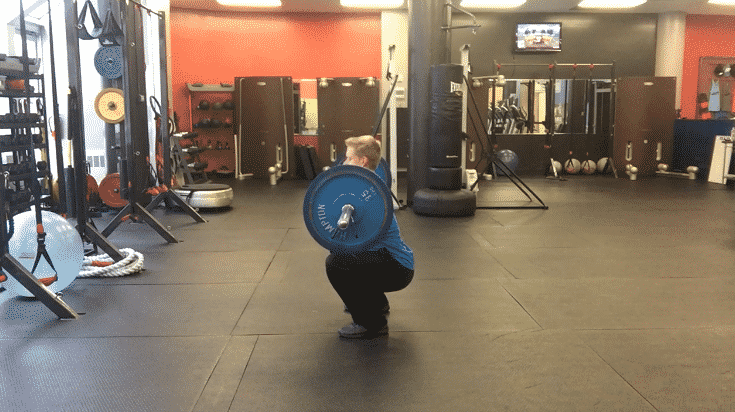
Countermovement:
I’d recommend starting with static jumps for at least 4-6 weeks to groove proper take off and landing technique. Then, as dictated by technique, incorporate countermovement jumps for more complexity.
Single Versus Multiple Jumps
As you guessed, single jumps are done as individual jumps within a set, with a re-set between each rep.
Most of the time, these are a better option to groove technique and train explosive power.
Multiple Jumps are a set of jumps performed in rapid succession. In this case, a set of 3 jumps would be 3 squat jumps performed with a consistent range of motion without spending too long in transition.
This transition time, known as the amortization phase, should be kept to a minimum. Otherwise, energy stored during the eccentric of each jump dissipates.
Bring in multiple jump sets gradually, grooving proper landing and takeoff mechanics before going all-out with multiple jumps.
Types of Jumps
If you haven’t squatted in years it would be a bad idea to load the bar with near-maximum weights and giver’ hell, right?
Right?
Well, the same thing applies to jumps.
Jumps are stressful, especially if you haven’t done explosive training or played sports in years. So ease into jumps, starting with jumping rope, building up to box jumps, squat jumps, and then broad jumps (if appropriate.) You’ll groove technique while conditioning the tissues in your lower body for the impact of jumps.
Jumping Rope:
Jumping rope is an exceptional tool to build foot speed, athleticism, and coordination with little space or equipment. Start by adding three to five minutes before and after your training. A huge benefit of jumping rope is it’s a rate limiting activity. The exercise ends when your technique breaks down, making it damn near impossible to jack yourself up.
Box Jumps
Box jumps, when done for power rather than a conditioning exercise, are a great tool to building explosiveness. Box jumps are an ideal candidate if you’re working on technique because they allow you to groove takeoff and landing technique while reducing joint stress on impact.
On each jump make sure you’re emphasizing hip extension—not testing hip mobility. Pause at the top of each rep to reinforce landing technique. Use another box to step down onto. Jumping off backwards defeats the purpose of focusing on technique and decreasing joint stress.
Squat Jumps
Squat jumps are an explosive lower body exercise with a short learning curve, making them perfect for most non-athletes. Start jump squats as static, single jumps before moving on to weighted or multi-rep jump sets.
Broad Jumps
Broad jumps are awesome for developing explosive hip extension in a more hip dominant manor than squat jumps. This may lead to more carryover on hip dominant exercises like deadlifts…along with activities that require horizontal power development, like sprinting.
But with a horizontal trajectory comes a caveat: increased shear stress on the knee, making broad jumps tougher on the joints.
To minimize joint stress, perform broad jumps for lower reps and focus on jumping up and out to reduce shear stress on your knees.
Adding Jumps into your Routine
Squat jumps are an explosive exercise ideally programmed after a dynamic warm-up and before lifting.
To increase your hops and potentiate your body pick one type of jumps once or twice per week.
Focus on technique and explosive intent, not high volume. Try 2-4 sets of 3-6 reps on lower-body training days.
1) Workout A: Lower Body, Squat Dominant
Full Dynamic Warm-Up
1a. Static Squat Jump 3×5 Rest 60 seconds
1b. Plank 3×45-60 seconds rest 60 seconds
2. Front Squat 4×6, 6,4,4 Rest 120-150 seconds
3a. Dumbbell Walking Lunge 3×8/each rest 60
3b. Half kneeling pallof Press 3×8 each rest 60
4. Dumbbell RDL 3×12 rest 90 seconds
2) Workout B: Upper Body
3) Workout C: Lower Body, Hinge Dominant
Full Dynamic Warm-Up
1a. Broad Jump 3×3, rest 90 seconds
1b. Single arm farmers walk 3×30 steps, rest 60-90 seconds
2. Deadlift 4×4, 4,2,2 Rest 120-150 seconds
3a. Barbell Single Leg RDL 3×5/side rest 30 between sides, 60 after set
3b. RKC Plank 3×20 seconds, rest 60 seconds
4. Goblet Bulgarian Split Squat 3×8 each, rest 30 between sides, 60 after set
Height isn’t the most important factor, form is.After all, there’s no point in building power on top of a faulty foundation. Keep your focus on full hip extension and sound landing mechanics.
Then, once you’ve nailed your technique, progress to dumbbell and/or multi-response jumps.
A progression of exercises would be:
Bodyweight single response –> bodyweight multi-response –> dumbbell/vest single response –> dumbbell/vest multi-response.
Next Steps: Power Up Your Training Today
May I offer additional help?
I’ve just written an eBook and compiled a video bundle that that elaborates on these concepts. It’s called The Power Primer 2.0.
And it will help you get strong and lean.You’ll supercharge your athleticism and build muscle, no matter who you are.
More than two years in development, The Power Primer 2.0 bridges the gap between your performance and looking your best.
It’s a package of four eBooks 200 pages over 50 videos that gives you the best of both worlds: A body that looks great and performs great — inside and outside the gym.
You will:
Increase training frequency and nervous system efficiency for strength.
Build more muscle due to greater training frequency and muscle fiber recruitment
Improve your athleticism functional ability for the long-term haul
Improve performance and maximize muscle retention while shredding body fat.
And I’ve offering everything for 50% off this week only. That’s less than a jig of your favorite protein powder.
If you’re like most people you’ve felt…
Discouraged by ineffective workouts that leave you discouraged from training and skipping training sessions
Unathletic and incapable of performing outside the gym
Like you couldn’t build lean muscle, despite training 5-6x per week
Plateaued in your strength, stuck lifting the same weight as last year
Help me, help you. You deserve a plan that gets you the best results.








 posterior chain strength preventing injuries.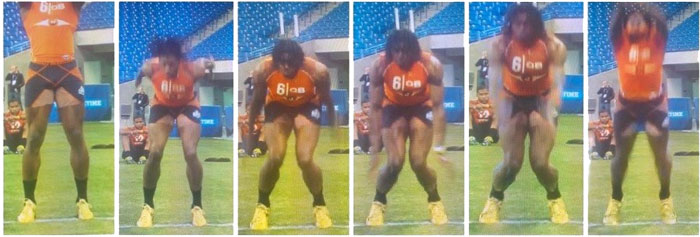

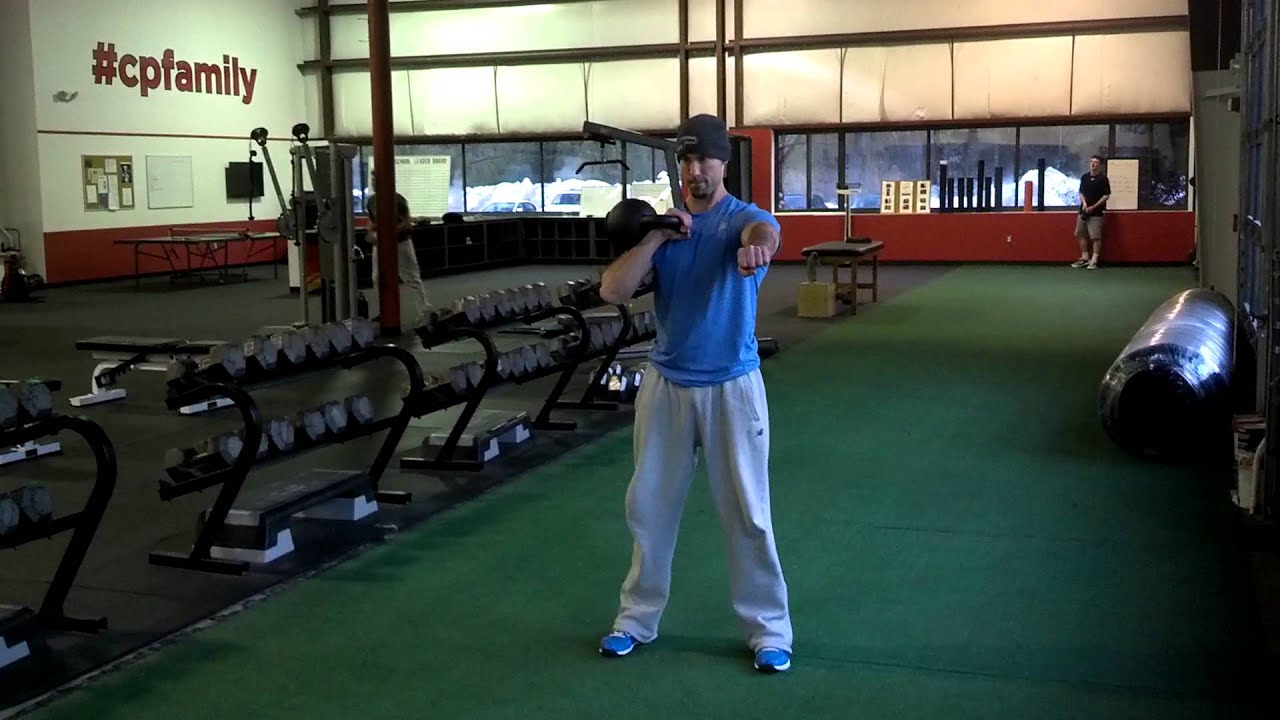


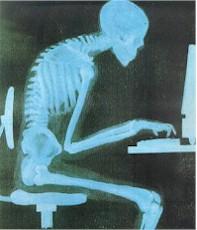 properly, or even how to stand up from a chair.






.svg/2000px-Facebook_New_Logo_(2015).svg.png)
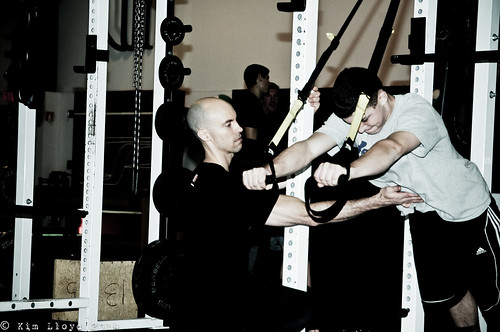
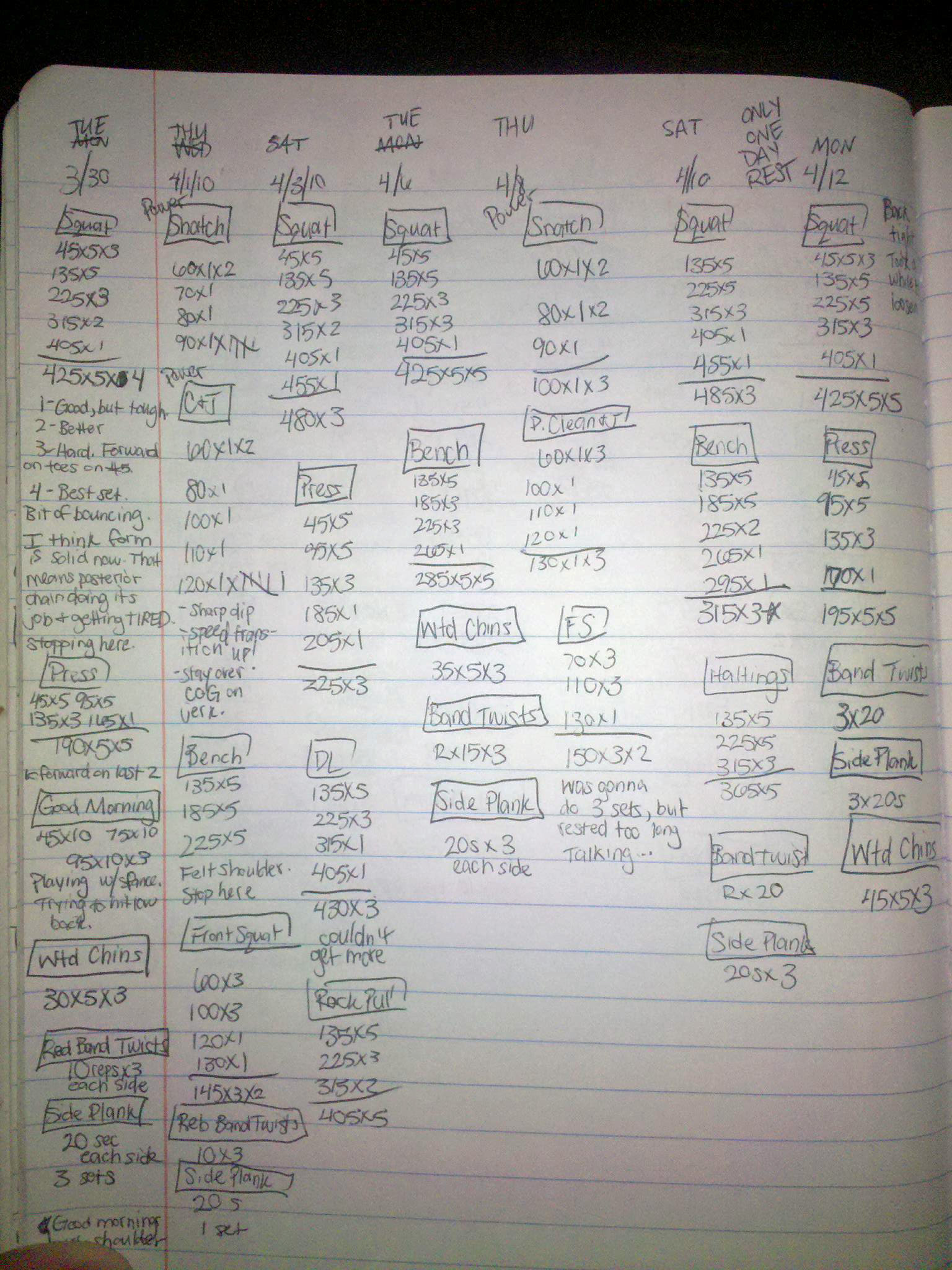 with “how much weight did you use last week?”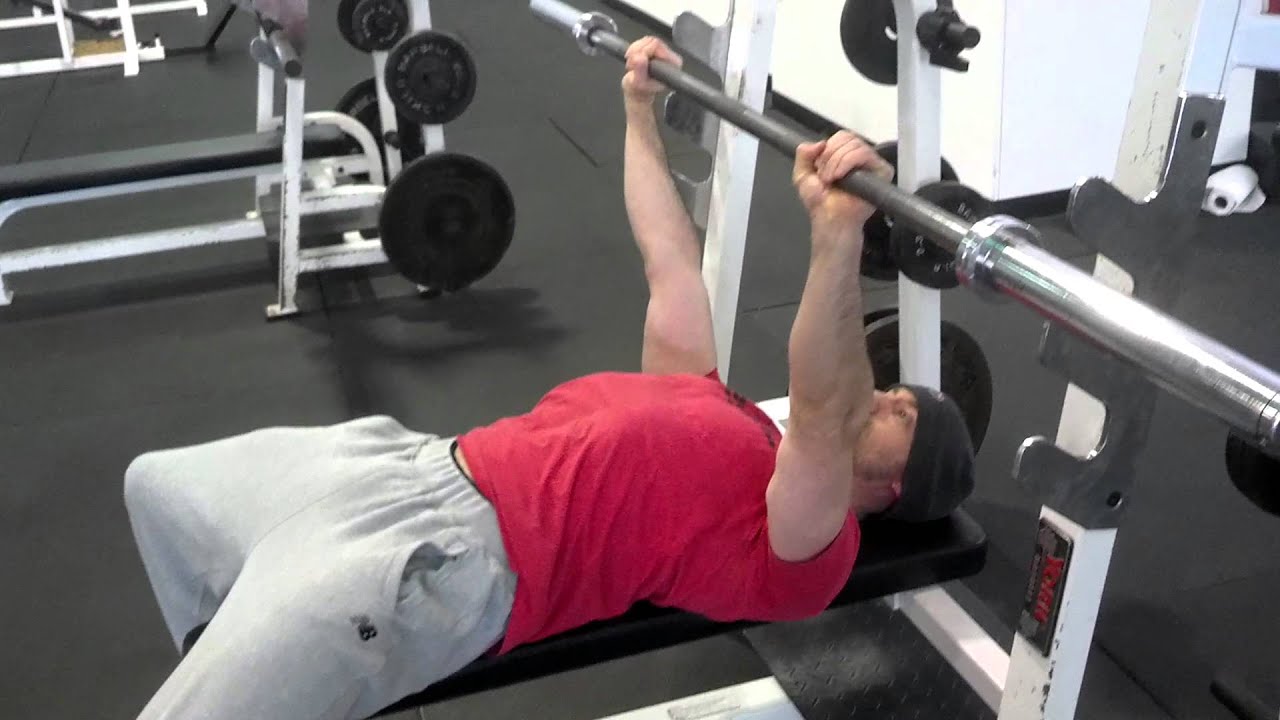
 change.
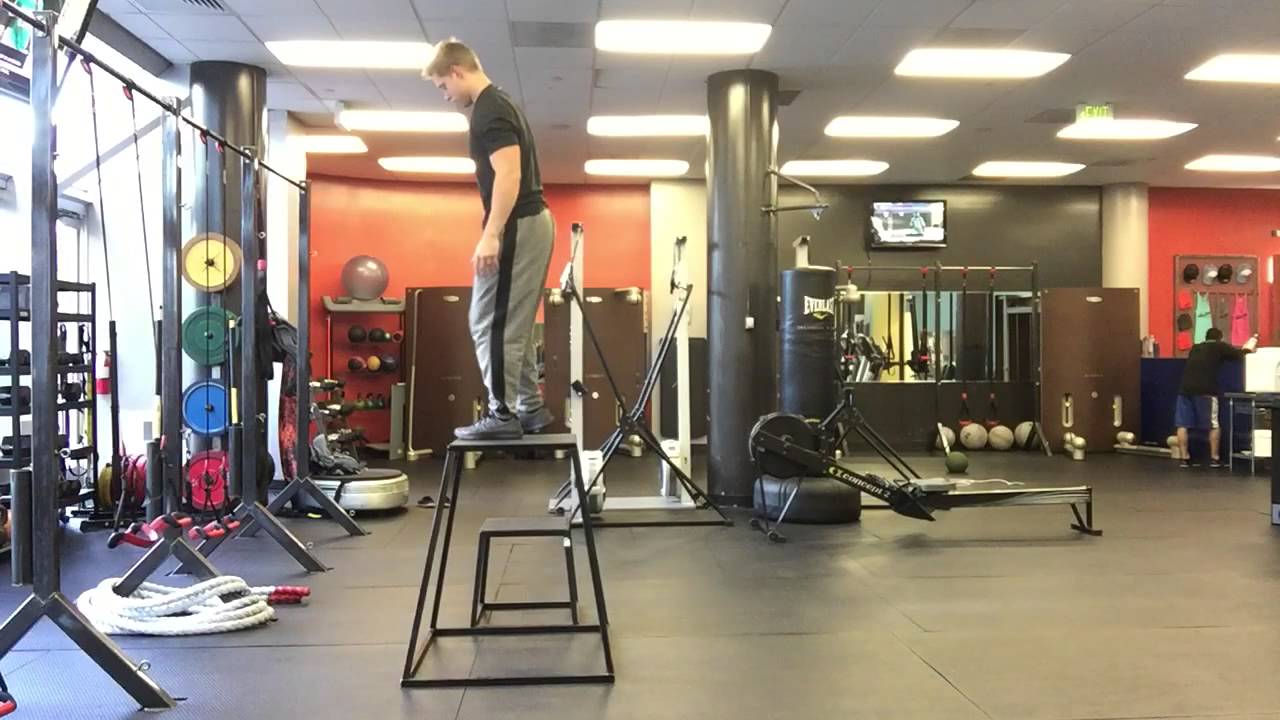 By training similar movement patterns with various loads, like a heavy squat and a jump squat, you’ll teach your nervous system to recruit more muscle fibers to fire faster. And you’ll groove agonist and antagonist muscles to produce smoother movement.