Well, it’s either that or I start breaking down plot points of some my favorite 90’s television shows like Melrose Place, Party of Five, or 90210.
For instance:
I’ll tell you right now, Billy and Allison were doomed to fail. Once you break the roommate-to-lovers barrier it’s all over and stuff starts getting weird. Plus when you throw Amanda (Heather Locklear) into the mix…well, shits bound to go down. (Melrose Place).
Sarah Merrin (Jennifer Love Hewitt): the greatest high-school girlfriend ever? (Party of Five).
Is this a scene from 90210 or an actual video from one of my high school dances?
These are all IMPORTANT QUESTIONS people.
Joking aside (but not really joking), one of the more prevalent snafus with regards to people’s deadlift technique is their inability to get their weight back. This can lead to a few issues:
One’s weight shifting forward (anteriorly) resulting in pulling through the toes rather than the heels.
The barbell, in this case, will often “get away” from the lifter.
Both scenarios resulting in a poor line of pull where the axis of rotation is further away from the barbell oftentimes compromising low back (spinal) integrity.
More to the point: the barbell feels like a goddamn magnet is attached to it.
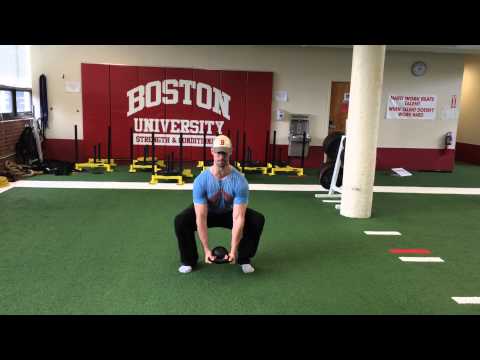
One trick I often use is to cue people to use the barbell as a counterbalance to get their weight back, as if they’re trying to wedge themselves into the floor:
https://www.youtube.com/watch?v=LdQGC-QwyAQ
But Wait, There’s More
However, different people learn shit differently. How’s that for putting something eloquently? While some people are more visual or auditory learners (either showing or telling them what to do), others are more kinesthetic learners. Meaning, sometimes, in order to understand what their body is doing in space, they may need a little more feedback.
This is where using props comes in handy.
One trick I like to use to teach people what it means to get their weight back is to use a box.
The idea is to set a box underneath so that when they grab the barbell they have to “sit back” until they feel the box. It’s important to note it’s more of less a hover than it is actually sitting back onto the box entirely.The objective is to maintain tension throughout. I.e., no relaxing on the box.
I don’t know, I find it works well for some people and it’s always cool to witness the “ah-HA” moment when they finally get it.
It’s the start of a new year and with it a proverbial reboot or rejuvenation towards one’s health and fitness. Well that, and a metric boat load1 of Facebook statuses of people complaining about all the “newbies” crowding the gym.
I am not one to complain because 1) I don’t typically work out in a commercial gym 2) Nah nah nana naaaaah and 3) I think it’s a good thing when people decide to be more proactive, take an active role towards their health and well-being, and join a gym. I mean, really? Are you that inconvenienced? I can appreciate it’s slightly annoying when there’s a traffic jam at the power rack (made worse when people are using it to perform bicep curls) or that it’s more or less an obstacle course to walk around all the meandering patrons doing this thingamajiggy or that whateverthef***.
Relax. Deep breaths. It’ll all be over by the second week of February…;o)
Nevertheless, as pumped as I am that people take the initiative to begin an exercise regime, I’d be remiss not to cringe – just a little bit – at the overzealousness of some as they begin their fitness journey.
Last week was one of the rare weeks where I trained every day in a commercial gym (my wife was on vacation and I joined her at her gym) and while it was great to observe people getting after it, the coach in me couldn’t help but start to hyperventilate into a paper bag want to be a coach.
For example I saw a lot of people deadlifting. It was cool. I wanted to go over and high-five every single person. However, that would have been weird and possible justification for a restraining order I kept to myself, but past all of that was an insatiable desire to want to fix a lot of deadlifts.
I admired their intent, but I’d be lying if I said a small piece of my soul didn’t die watching a few people doing their thing.
You see, for a lot of beginners what I “think” ends up happening is that they watch a re-run of the CrossFit games on ESPN or watch videos like this:
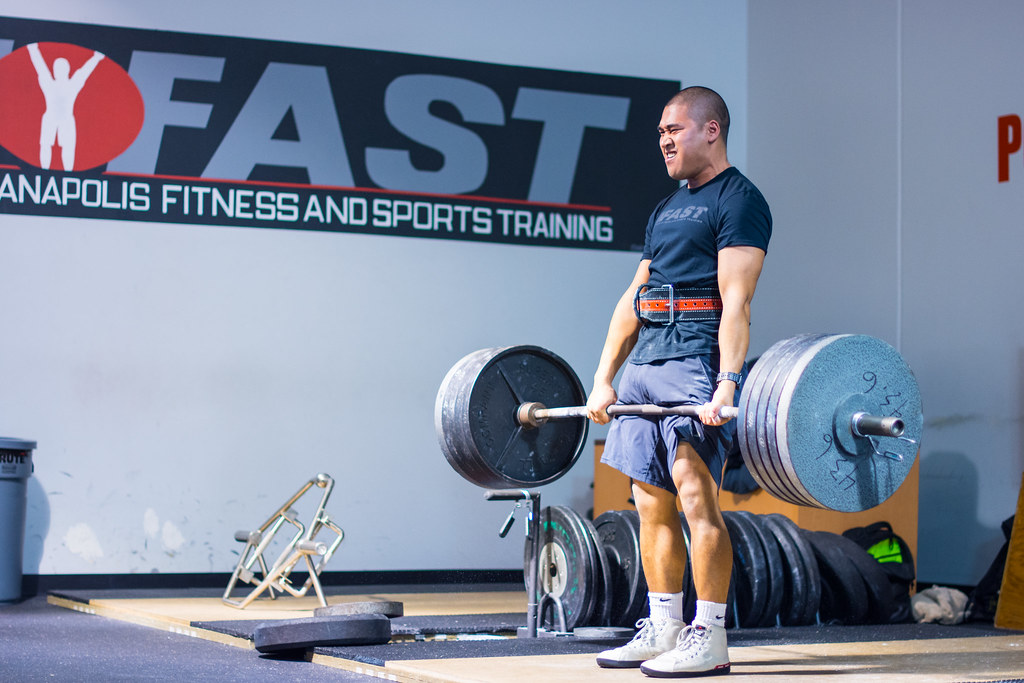
…and are all like “that’s badass, I want to do that,” not recognizing that 1) a deadlift is much more than just bending over and lifting a barbell off the ground (regardless of whether it’s 1000+ lbs or 50 lbs) and 2) a straight bar deadlift (from the floor) is the most advanced variation of a deadlift there is. Not many people are ready or prepared enough on Day #1 to perform this safely and with proper technique.
So I figured I’d offer a sort of “check-list” for beginners to consider, and what I feel would be the appropriate progressions to follow to work up to a straight bar deadlift.
Note to Internet Hero Trainer Guy/Girl Who Will Inevitably Call Me Out On Why I Didn’t Address This Thing Or That: This is not a dissertation, it’s a blog post highlighting a few candid thoughts and processes. This is no where near an exhaustive breakdown of deadlift technique or programming.2
Checks and Balances
Everyone is different and there’s no ONE right way or variation or cue that applies across the board. People have different leverages, injury histories, and experience levels and it’s important to take all those things into heavy consideration when coaching anyone up on the deadlift.
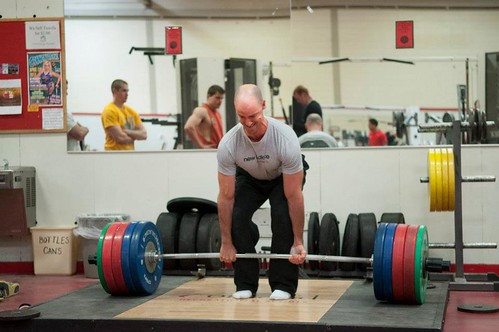
I will say: I know what I DON’T want to see. This:
That’s pretty much THE golden rule.
Because it makes me do this:
There are any number of reasons someone’s deadlift may look like the above picture:
Lack of hip mobility to “access” the hip flexion required to get that low to floor.
Lack of t-spine mobility (specifically extension).
Lack of ankle dorsiflexion.
Lack of kinesthetic awareness.
The novelty of the exercise.
They were born on a Wednesday. I don’t know.
Obviously step #1 would be to address and musculoskeletal/mobility restrictions that may be present.
Lack of Hip Mobility
Wall Hip Flexor Mobilization
Dynamic Pigeon to Half Kneeling
Shin Box
Lack of T-Spine Mobility
Side Lying Windmill
T-Spine Extension (Done Right)
Lack of Ankle (and Big Toe) Dorsiflexion
This is a component that’s often overlooked. If someone can’t access dorsiflexion it’s going to compromise their ability to get into deep(er) hip flexion to get down to grab the barbell.
Active Ankle Dorsiflexion
Metatarsal Active Squat Drill
Lack of Kinesthetic Awareness
Oftentimes it’s lack of awareness of what the body/joints are doing in space that’s the limiting factor. I like to use the Cat-Camel drill to build context and to demonstrate what I don’t want to see (rounded back) and what I do want to see (neutral spine)
Addressing Novelty (<— This is HUGE)
Here we have the nuts and bolts. Much of time, even though the stuff discussed above is very important, it comes down to the novelty or “newness” of the exercise as to why some people fail. To be blunt, and as alluded to earlier, much of the reason why many fail at deadlifting from the get go (and end up hurt and using the lame excuse that deadlifts are dangerous for everyone) is because they’re too aggressive and end up gravitating towards variations (and loads) they’re not ready for.
They either don’t understand what it actually means to hinge through the hips (which is all a deadlift really is: it doesn’t always have to mean pulling a heavy barbell off the ground) and/or they fail to progress accordingly based off their experience and leverages.
Learning what it means to dissociate hip movement from lumbar movement step #1 in grooving a bonafide hip hinge. One of the most popular drills to do so is the Wall Hip Hinge. Unfortunately, as harmless and innocuous as it looks it’s easily butchered. Here’s how I like to coach it up:
Another drill I like is the Tall Kneeling Handcuff Hip Hinge. Here we can take some joints of the equation and place a KB behind the back, which, for some reason, works. I think Gandalf made it up.
If you’re’ interested in learning some more hip hinge drills you can check out in THIS article I wrote a few months ago.
Assuming I’m comfortable with someone’s hip hinge now it’s time to start adding some load.
Remember: You DO NOT have to use a straight bar, and I’d caution against it for more beginners. The only people who have to use a straight bar are competitive powerlifters and Olympic lifters. Generally the people who say otherwise are those who don’t coach people. So if some Joe Schmo internet warrior tells you otherwise tell him to f off.
While there are always exceptions to the rules my progression series is as follows:
1. Master Hip Hinge Drills.
2. Cable or Band Pull-Through.
3. Kettlebell Deadlift: Elevated if need be. And from there we can progress to pulling from the floor as well as ramping things up to 1-Arm KB Deadlift (which adds an additional rotary component), 2-KB Deadlift, and even Hover Deadlifts:
4. Trap Bar Deadlift: The trap bar (or hex bar) deadlift is an excellent choice for beginners or those with limited experience because of its user friendliness. This is often my “go to” variation for everyone I begin working with.
https://www.youtube.com/watch?v=p-sA3PG1kGY
For starters one’s center of gravity is inside the bar, which makes it easier to maintain an upright torso angle and a better neutral spinal position. All of which translates to less shear loading on the spine.
The elevated handles make it easier for those with mobility issues/restrictions – such as limited hip flexion and/or ankle dorsiflexion – to perform in a safe and successful manner.
5. Rack Pulls or Block Pulls: Here we can start adding anterior load. With the barbell now in front of the body the axis of rotation is further away which can result in more stress on the lower back. This is fine so long as neutral spine is maintained.
I’d note here that I much prefer Block Pulls. I find they have more carryover to the actual deadlift as you’re still able to get slack out of the bar (which you’re unable to do with a rack pull). Both are great options, though, when introducing straight bar variations.
Is your spine still attached? Can you still feel your legs? Good. Lets move on.
6. Sumo Deadlift/Conventional Deadlift: Look at you, son! Pulling from the floor now. Whatever variation allows for the most success, feels better, and guarantees proper spinal position is the one I’ll run with.
Sometimes people picked the wrong parents and their anatomy dictates what will be the best fit long-term. Generally speaking those with mobility restrictions, longer torsos, and short(er) arms will prefer sumo style over conventional. I prefer a middle-ground approach for many and often use a Modified Sumo Stance with my clients/athletes:
https://www.youtube.com/watch?v=q6Xjb72gGTE
None of this speaks to the other particulars I like to go over with trainees with regards to foot placement, hand placement, leg drive, common mistakes with lockout and the descent, not to mention appreciating, getting, and maintaining body tension. You can do a search on the site and find an abyss of other deadlift articles that go over all those things.
The goal today was to showcase my (general) approach to deadlifting with beginners. I hope it helped.
Addendum (Other Stuff I Wanted to Say)
1. Consider hiring a competent coach to show you the ropes. A good litmus test to figure out whether or not they know what they’re talking about:
Ask them if they know who Andy Bolton is.
Have him or her point to their posterior chain. If they point to their abs. Walk away.
They can differentiate between a deadlift and a squat.
They actually look like they lift weights.
2. Stop BOUNCING your repetitions. It’s a DEADlift, not a BOUNCElift. On each rep, when you return to the floor, you should come to a complete stop. “Reset” your air and spinal position, and repeat.
3. I HATE high-rep deadlifts, especially for beginners. Fatigue is going to compromise form. Try to stick to no more than 5-reps per set.
4. Home base – in terms of loading – should be in the 65-80% range of 1-rep max. Not that this means you should test your 1RM right away. The thing to consider is that you don’t NEED to train heavy to start. Beginners or un-trained individuals can train with as low as 40% of 1RM (Hint: that’s super light) and still reap all the benefits and gain a training effect. Honing technique should be the main goal at this point.
Hope everyone’s New Years was fantastic and safe. Lisa and I celebrated our last Holiday as non-parents by being lame and going to bed at 9 PM New Year’s Eve. We figured we’d start a new hash-tag to highlight the fact: #sleepingwhilewecan.
2017 is here and with my first post of the year I wanted to discuss two common mistakes I see people make with their Turkish Get-Up.
Lisa has been on vacation from work since before Christmas and I’ve taken advantage of tagging along in the mornings to train with her at her commercial gym. I don’t make it into commercial gyms all too often, but when I do you can bet two things will happen:
I have to do everything I can to not want to gauge out my corneas.3
I always pick up some good ideas for blog fodder.
During the past week I’ve noticed a lot of people performing Turkish get-ups, which is awesome. I think it’s rad to see more and more people venturing out of their comfort zones. Unfortunately, I’ve also noticed a few common themes with regards to questionable technique while observing the same people. Mistakes that are very subtle in nature, but can make a profound difference when it comes to reduced injury risk when corrected.
1) Rolled Shoulder vs. Packed Shoulder
This is the one snafu I see the most often. When someone transitions from the forearm to the “T” position (to the hand) they’ll allow the shoulder supporting their weight to roll forward. Kinda like this:
Ouch.
With bodyweight or a lighter KB it won’t be that big of a deal. However, it’s a bad habit to fall into (even with light loads) and is going to place a lot of strain on the anterior shoulder, most notably the bicep tendon.
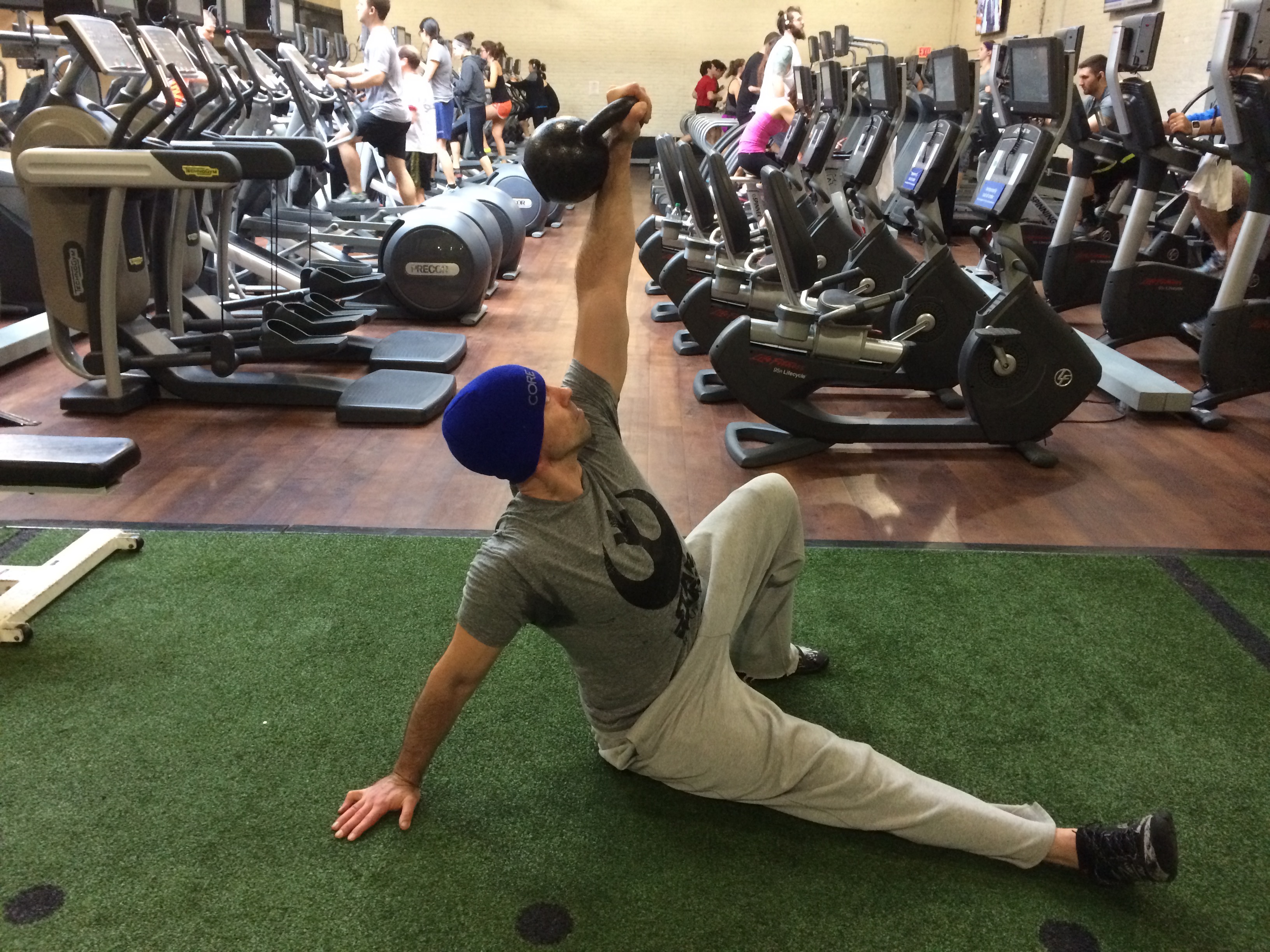
The better approach is to ensure a “packed” shoulder. Like this:
Bonus points for the sick Star Wars t-shirt. Demerit points for pitting out. My bad.
The simplest verbal cue I’ll use in this case is to tell the person to “place you shoulder blade in your back pocket” or maybe to say something to effect of “cork screw your hand into the ground.”
Both work equally well and place the shoulder in a far superior (and stable) position to transition forward.
2) Not Getting Under the Bell
Another common mistake I see often is people not getting underneath the bell when transitioning from the tripod/3-point stance to half-kneeling.
Most will perform more of “teapot” motion cranking through their lumbar spine (<– props to Artemis Scantalides for the teapot analogy) rather than hinging INTO their hips to get underneath the bell.
Here’s a quick 1:15 minute video explaining what I mean:
Learning to use the hips is crucial here and helps with getting a feel for what it means to “control” the bell. Not surprisingly some people struggle with this. Here’s simple way to groove things and get those hips nice a juicy:
Give the above suggestions a try and let me know if they make a difference. If not, I guess I’ll GFM…;o)
Today’s guest post comes courtesy of one of my favorite people in this world, Todd Bumgardner. Todd’s a straight-shooter (if you couldn’t tell from the title of this post) and a coach I respect a ton. He and Chris Merritt started The Strength Faction not too long and the premise is simple: it’s strength coaching for strength coaches.
As coaches we tend to put the health and well-being of our clients before our own. However, The Strength Faction helps to bring levity to the situation by fostering a unique environment where a support network is put in place coaches get coached by other coaches.
Basically, you’re amongst your people.
I’ve personally been involved with the Faction myself – I’ve been invited twice to speak and perform a Q&A with the group in an online forum – and it’s been wonderful to see its growth and how it’s helped a litany of coaches improve their assessment, program design, and coaching skills.
Todd and Chris just released their new resource The Strength Faction Super-Simple Guide to Writing Kick-Ass Training Programs so you could get a taste and closer look for the systems they’ve developed over the course of 10+ years in the industry which have allowed them to get to the point of writing hundreds of (individualized) programs monthly in an efficient manner without ever sacrificing quality.
I know every coach hits a boiling point where writing programs becomes a major chore and time-consuming endeavor. Wouldn’t it be great to learn a system to better streamline the process, make it less task-intensive, while at the same time allowing you to do what it is you do best?…coach.
Wouldn’t that be something?
How to Make Your Clients Super Fucking Strong (While Also Keeping Them Healthy)
Something crazy began to happen at the end of the last decade—getting strong was dubbed cool. And, as we approach the end of 2016, the coolness has gained popularity. Clients are approaching their coaches with objective, measurable strength goals instead of the traditional, I wanna lose fat from right here (points to body part), ambiguity.
Sure, we still get the body comp goals—as we should—and there are still a plethora of odd requests, but it sure is rad that people want to sling iron and kick ass.
In the spirit of helping other folks help other folks to hoist and reap the benefits, here are some tips to help you write training programs that kick ass, and make people fucking strong, while also keeping them in one piece.
Lower the Strength Volume
Holy simmering cat shit! We’re talking about strength and the first thing I’m telling you to do is keep the strength volume down? Yeah, baby, I am.
It doesn’t take grandiose training volume to make people strong—in fact many times we over do it in the name of strength volume while mistakenly sacrificing other qualities. I know because I made that mistake for years—hitting my own training ceilings far too quickly while also creating same, low plateau points for my clients. Reality is most normal folks don’t need a great deal of strength volume to get stronger.
On a three-day, concurrent training program, two strength-focused lifts, with eight to twenty-four total reps for each, are usually plenty. (I say usually because there are sometimes extenuating circumstances.) Precede the strength work with core and mobility work, and follow it with some energy systems development and you’ve given a lady or gent plenty of stimulus for strength, health, and positive change.
Use Concurrent Splits
While they may not have the same sexy appeal as advanced techniques like German Volume Training, or High-Frequency Strength splits, concurrent splits are the way to go when programming for general pop clients. Sure, super-specific training blocks may get our folks faster results, but their narrow focus doesn’t do our folks any favors in the long run.
Concurrent programming is more reflective of real life and helps folks accommodate stressors because none are toweringly more intense than the others. Making it more sustainable than block periodization. We can accentuate some qualities slightly more than others during training phases—and I bid everyone to do so—but maintaining all qualities throughout the training year does best to make our folks strong while also keeping them healthy.
During one phase per year, get a little strength heavy. During another bump up the conditioning volume and sacrifice the other variables. Use one training phase to include more load-free movement. But all the while train all of the qualities.
Educate Clients on Rate of Perceived Exertion (RPE)
A lot of folks don’t have a good concept of how hard they’re working—and they’re often not sure how hard they should be working. RPE solves that problem.
The common interjection is, what about percentage based training? Well, percentage-based training hinges on a one-day snapshot of a person’s nervous system that is extrapolated to the entirety of their monthly program. That dog just won’t hunt. RPE gives the client, and the coach, the ability to auto-regulate programs on the daily to match current training status, feeling like a bag of smashed assholes, etc.
Have that smashed asshole feeling? That’s great, back the RPE down today, champ.
RPE is also more educating—it gives folks the opportunity to ascribe a number to their subjective feeling. But what if they aren’t in tune with how hard they’re really working? We have to give them something a little challenging for them to sharpen their perception. When we push them to that point, we draw attention to it so that they can comprehend and internalize that feeling so that future training efforts have context.
At our Strength Faction-sponsored gyms (BSP NOVA in Dulles, VA and Rebell Strength and Conditioning in Chicago), as well as with our Strength Faction members, we use a simple RPE system that we borrowed from powerlifting coach Mike Tuchscherer. Here it is:
@10: Maximal Effort. No reps left in the tank.
@9: Heavy Effort. Could have done one more rep.
@8: Could have done two or three more reps.
@7: Bar speed is “snappy” if maximal force is applied.
@6: Bar speed is “snappy” with moderate effort.
Most of our work is done in the @7 to @9 range, with most of the strength sets done around @8 and assistance training @7.
Progressions, Regressions, and the Best Positions Possible
Our first job as coaches is to use our best judgment to put a person in the best possible position to be successful. It’s our coaching motto at BSP NOVA, and it would a great oath if fitness coaches were sworn in as doctors and lawyers are. The best position possible is an ideal that encompasses programming variables, exercise selection, and coaching’s psychological positioning.
Let’s think in terms of exercise selection. Our job is to choose exercises that put people in the best position to display their strength. For many folks the strength is in there, they’ve simply never been put in the right position to demonstrate it. That’s why progression/regression systems are so important—and why the 4×4 matrix is such a useful tool in constructing them.
Courtesy of Dr. Greg Rose
The body must feel safe and stable in order to generate force. If it feels neither, it employs a heavy governor that seriously limits nervous system output. So, if we ask someone to generate force from a position that they don’t “own” we’re doing them a disservice—there’s no way that they can optimally demonstrate their ability. People are often stronger than they realize—they just have to be put in the right positions to display their strength.
How about a hypothetical? Let’s use the deadlift/hip hinge as an example.
You program deadlifting for a client only to find out that they can’t dissociate their hips from their spine and round the ever-living bejesus out of their spine just to grab the bar. So, you decide to cut the range and elevate the bar. Rack pulls are the answer! But you try rack pulls only to find a similar, yet less offensive, problem. So you’re like, ‘goddamn, what do I do now?’
Well, you realize that gravity and load each pose a threat to the nervous system, so you decide to reduce the effect of both—you put your client on their knees and have them perform a handcuffed hip hinge (they hold a kettlebell behind their back and hinge their butt into it). Voila! They’re successful.
Note from TG: Here’s a great video of the standing handcuffed hip hinge by CSP coach Tony Bonvechio
They’re able to hinge well—moving at the hips while maintaining a relatively still spine. You’ve found the move that allows them to demonstrate their strength. Will they keep this move forever? Hell no. But at this point in time it’s the best place for them to be—for them to learn how to strongly move. And with time, and your coaching, they’ll progress to a more challenging hinge that suits their frame.
This is drastic case, but it’s a useful illustration. Progression/regression systems give us a simple, efficient means to put people in the best positions to train safely and develop strength.
Coach Toward Mastery
I take every chance I get to quote Dan John. He’s a good man.
I hope throughout my life I can give the world a quarter of the value that he has. He makes the profound simple and never comes from a place of superiority—he only wishes to share his experience. As our first guest on the Strength Faction QnA, he did just that.
He told us a story about a client that he was working with whose results were diminishing. When they had a conversation about the problems, the client said to Dan that it seemed as though he was getting bored when he wrote his programs. He was making too many changes. The client remembered that when he was making the best progress, Dan was keeping things simple, not doing anything fancy. He was making the minor changes that need to be made to challenge the body without the façade of circus tricks.
Dan quickly righted the ship and got his client back on the bath to mastery. After telling the story Dan impressed upon us the importance of coaching toward mastery—of not getting bored as the coach. In fact, he said, “Don’t YOU get bored.”
If we want to make our people strong, we need to make them good at lifting. Rather than a constant rotation of exercises parading through their programs, keep the productive staples and figure out how to load them in novel ways. As your clients grow in skill, they’ll grow in strength.
Make People Fucking Strong
This advice is, of course, not all encompassing. It’s the best I could do with 1,500 words. But if you heed this advice, and use it to frame your programming mindset, you’ll be on the right track toward making your people super fucking strong.
Super-Simple Guide to Writing Kick-Ass Training Programs is available now. Check it.
First things first: Lets address the obvious. If there were a contest for best blog title of 11/22/16 featuring a kick-ass alliteration starring the letter “D,” I’d totally win it today.
I got the idea the other day after listening to a popular segment on EW Radio called Diva Deep Dive.4
It’s a killer idea and I am woefully unoriginal, so I took it upon myself to steal it and replace the word “Diva” with “Deadlift.” Because deadlift.
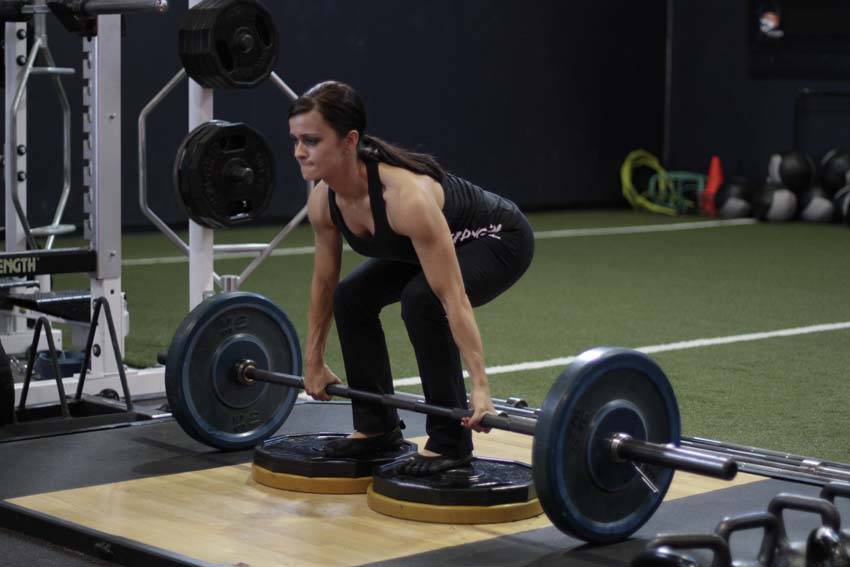
The deficit deadlift is a variation where the trainee stands on an elevated surface – a plate or some form of platform such as an aerobic stepper or stacked rubber mats – and tries not to shit their spleen lifts a barbell off the ground.
Photo Courtesy of BodyBuilding.com
It’s viewed as more of an accessory movement to the deadlift and is often utilized to address issues with the initial pull off the ground. The idea being the increased ROM (Range of Motion) will make the lift harder and help those who are “slow” off the ground.
Some coaches love it and feel it’s a valuable asset to anyone’s training repertoire, while others hate it and view any of the following…
Jumping into a live volcano.
Swallowing a cyanide pill.
Juggling chainsaws.
Watching an episode of Downton Abbey.
…as a more valuable use of one’s time.
As with most debates in the health/fitness world the answer always lies somewhere in the middle. So lets break things down shall we?
Origins
I’m pretty sure this particular variation was invented by Ernest Hemingway, but I could be making that up.5 Unlike, say, the Jefferson Deadlift (named after old-time strongman Charles Jefferson) or the Romanian Deadlift (invented by someone from Romania?), no one really knows where the deficit deadlift came from. Besides, who cares, right? The name itself implies what it is.
Unless, and this will blow my effing mind if this is the case, the deficit deadlift IS actually named after someone with the last name Deficit. Man, how ironic would that be?
Addressing the Elephant in the Room
Most of the naysayers of the deficit deadlift will usually chime in with something like “it’s dangerous.” To which I counter…..
There’s no better way for me to chime in on this matter than with this quote from strength coach Andrew Sacks taken from an article he wrote titled Defending the Deficit Deadlift:
“The main argument for dropping the deficit deadlift is that it’s dangerous, and by setting the bar at a height slightly below a traditional deadlift we’re turning a strength-training staple into a lower-back horror movie.
Consider that when we deadlift, the height of the bar is totally arbitrary. Nobody hired scientists to figure out the “ideal” diameter for 45-pound plates. Everybody just agreed that they all should be roughly 17.5 to 18 inches.
So if the diameter of the plates – and therefore the height of the bar – is arbitrary, does it matter where we pull from as long as we maintain form? The short answer is no.”
To that end, I don’t agree that the deficit deadlift is dangerous or that it should be contraindicated altogether. I do agree, however, there are contraindicated lifters, and that a lot of people – due to poor movement quality, anatomical factors, skill level, past or current injury history, and yes, their own stubborn stupidity – are unable to perform this variation with appropriate technique and therefore should avoid it.
^^^ That Stuff I Just Mentioned, Lets Talk About Em
Movement Quality: It’s a rare event when someone walks in on Day #1 and can perform a deficit deadlift flawlessly. I’d argue it’s rare someone can walk in on Day #1 and perform a conventional deadlift flawlessly. It’s human nature to think we’re all better than the average cat. Everyone thinks they’re a better driver than everyone else. It’s likely you’re just as horrendous at parallel parking as the next person.
This sentiment spills over into fitness too. Many people think they’re more advanced than they really are and like to skip over the seemingly “easy” stuff (Kettlebell Deadlift) and catapult themselves into expert level territory (Deficit Deadlift)…despite having the movement quality of a pregnant turtle.
By today’s standards, many people don’t move well and lack the mobility requirements to perform a standard deadlift, let alone one performed from a deficit. Getting down to the barbell requires a fair amount of hip flexion. And if someone lacks it (which is often), the end result is a compromised spinal position into lumbar flexion.
This is where good coaching comes into play. I’d caution people to jump to conclusions too quickly. It is possible to take someone in the picture above and cue them into a better position. However, taking that out of the equation, if it’s already a challenge for someone to bend over towards the bar and not look like their spine is going to break in half, why add more ROM?
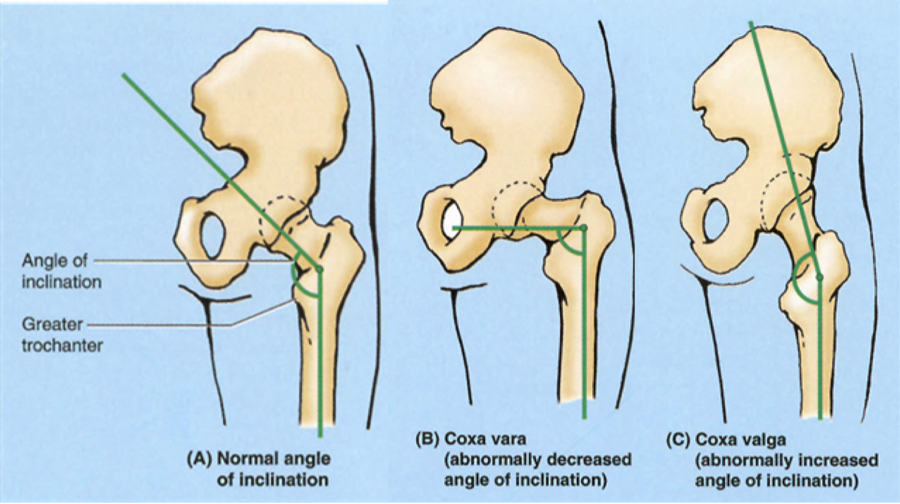
Anatomical Factors: pigging back off the above, we can’t dismiss the idea that everyone is different. There are variations in torso lengths, femur lengths, arm lengths, not to mention bony structure considerations in the hip itself (hip width, acetabulum retroversion/anteversion, how the femoral head sits within the acetabulum (retroversion/anteversion), variations in femoral neck lengths, etc) that make the deficit deadlift a good fit for some people, and not so much for many, many others.
Respecting individual differences is key to long-term success and it’s something you can read more about HERE.
Some people simply won’t have access to the requisite hip flexion necessary to, you know, get into aggressive hip flexion. Unfortunately, none of us are Superman and have X-ray vision…but we can perform a simple Rock-back Screen to ascertain one’s available ROM.
Kneeling Rockback – WIN
Notice I am able to maintain a good spinal position throughout the full-ROM (there’s no “falling” into spinal flexion).
Kneeling Rockback – FAIL
Now we’re in trouble. For someone like this – where losing spinal position happens quickly – it’s likely that going into anything that requires deep(er) hip flexion will be a bad idea.
Again, this doesn’t mean we always have be a Johnny Raincloud. It may be a matter of cueing someone to adopt a better bracing strategy in order to maintain position. If they can do so passively (on the floor) and can then emulate the same ownership actively (standing)…then we know they can access the ROM, we just have to be really diligent with technique and progressing appropriately.
If they can access passively but not actively, it’s likely a motor control issue or the exercise itself is too much of a novelty.
If they can’t access it passively, nor can they perform it well actively…we’re likely looking at a structural issue and we need to be more judicious with exercise recommendations.
To the last point, again, adding in more ROM (deficit deadlift) won’t be a good idea.
Skill Level: Call me crazy, but the Deficit Deadlift is an advanced variation.
https://www.youtube.com/watch?v=-2kL-7IpYz0
I’d have to be very comfortable with someone’s skill-set and ability before I dumped it into their program. And while it can be viewed as a bit generalist, my “flow” of deadlift progressions are as follows.
Meaning, when starting with a new trainee, here’s how I progress them:
1) Understand that the deadlift = hip hinge. Deadlift doesn’t mean “heavy” or that it has to be loaded at all times or that it has to be done with a barbell.
3) Trap Bar Deadlift – first with high-setting, then with low setting. Center of Mass is INSIDE the barbell which makes this a much more lower back and user friendly variations
4) Rack Pulls or Block Pulls
5) Sumo or Modified Sumo Deadlift.
6) Conventional Deadlift
7) Deadlift Whateverthefuck – Deficit Deadlift, Snatch-Grip Deadlift, etc.
Benefits of the Deficit Deadlift
Assuming this variation is “safe,” or a viable options what are the benefits?
1) I’ll concede that the increased ROM has merit, but it’s overplayed. More time under tension is rarely a bad thing, and considering many are weak in their posterior chain, the deficit deadlift is a good fit here.
BUILD THAT BOOTY!
2) I guess it can be argued that the deficit deadlift helps with the initial pull (with regards to the increased ROM). The idea being: make the lift harder and when one reverts back to “normal” ROM things will feel easier.
I’m not opposed to this train of thought. I get it. But to me, if I’m writing a program I want all accessory lifts to address a technique flaw or weakness in one of the big 3 (squat, deadlift, bench press). Making something harder for the sake of making harder won’t necessarily address anything.
Which leads to #3.
3) Being slow or weak off the floor with the deadlift is a thing. However, I find when this is indeed the culprit, utilizing the deficit deadlift here isn’t necessarily all about increasing the ROM as it is about better quadricep recruitment.
We’ve become so posterior chain-centric in the past decade or so that I find a lot of trainees have neglected their quads. And the quads DO play a role in the deadlift; especially with the initial pull (putting force into the ground). This, to me, is the main benefit.
Yes, smarty pants, squatting will help build the quadriceps. But the rule of specificity still reigns supreme. If I want someone to get better at deadlifitng, I’d rather they deadlift (and tweak it accordingly).
Some Closing Thoughts
As far as how much of a deficit to use: this can be individual, but I find 1-3 inches is more than enough for most trainees. So long as spinal position is maintained.
I’ll use sub-maximal weight on these (60-75%) for 4-8 reps.
Deficit deadlifts are aggressive – even for advanced lifters – so I’d caution anyone to use them for more than a few weeks or one training cycle (a month?)
If know someone with the last name Deficit, please tell me.
It’s a question I’m asked often. And I can’t say I have a definitive answer. I’ve had coaches who were laid back and patient and coaches who were not that, and made a tornado look like a gentle Spring breeze.
In health/fitness circles, much like athletics, there’s a gamut of coaching personalities. On one end you have those coaches who are more observant and calculated with their feedback, seamingly Obi-Wan’esque with their cues and commentary.
And on the other end you have those who, for lack of a better phrase, come across as bat-shit crazy.
To their credit (“their” = celebrity/tv trainers): they do motivate people, and they do get results. Kinda. And they’re on tv, so they clearly know what they’re doing. (<— note sarcasm).
Who am I to say which “version” of a coach is better than the other? There are success stories on each side of the spectrum. However, I find the most successful coaches/personal trainers, and the ones I respect the most, are those who get results, but are also empathetic towards their clients.
There’s a time and place to be the drill sergeant. But it’s a time that’s few and far between. And, just to toss it out there: if these so called “celebrity/tv trainers” many people look up to as the creme of the crop were so good and so effective, why then do a large percentage of their “clients” tend to regain their weight back?
But then the counterpoint can be made that many of these shows – like The Biggest Loser – only exist because the objective is to see who can lose the most amount of weight in “x amount of time.” In that sense, the coaches are doing their job. Very, very well mind you.
It’s a massive catch-22 of Hellerian proportions.
However, if you ask me…it’s less coaching and more a crash course in clusterfuckery. But I’m getting off on too much of a tangent. Shane McLean did me a solid and put together this excellent guest post today on the idea of what entails “good coaching?”
Enjoy.
What Does Good Coaching Look Like?
Recently, I was watching my 10-year-old son play his rec-league soccer game. To say they were getting beaten was an understatement, and everyone on our sideline was getting frustrated.
The coach was screaming at the kids, the refs and pretty much anything else that moved. In the second half, with the result absolutely in no doubt, one of our kids misplayed a ball and the coach snapped.
“SHIT,” he screamed, loud enough that everyone could hear. My oldest son thought this was hilarious, and I had to explain to him why this was not good coaching.
Swearing in front of children to get your point across is an example of poor coaching in my humble opinion.
However, people who haven’t been exposed to a lot of quality coaching in their lifetime may think all coaches behave like
Middle school P.E teacher.
Swearing soccer coach.
Weight loss coaches on reality TV.
Lou Gossett Jr in an Officer and a Gentlemen.
Or
All the above
Warning- Colorful language alert.
Since becoming a coach, I have witnessed the good, the bad and the ugly side of coaching. I’m inspired by great coaching. However, I wanted to beat my head repeatedly on a brick wall when I witnessed this incident back in 2013.
https://youtube.com/watch?v=MmD_KbwX8IE
No coach who draws a paycheck should ever behave like this. Intidation and fear is not the way to get the best out of people, and it’s coaching at its worst.
Good coaching, on the other hand, mostly happens behind the scenes. It is out of the spotlight where a coach motivates, inspires and pushes the athletes or clients to become the best they can be.
With that in mind, I reached out to some experienced coaches and asked them to give their thoughts on what good coaching is and what it should look like. You may be surprised that it’s nothing like drill sergeant Lou.
1) Tony Gentilcore (The man needs no introduction)
Good coaching should like coaching. How’s that for playing the Captain Obvious card?
What I mean is: good coaching is ACTIVE. It’s about being engaged and present. When I coach, I coach at 90 degree angles; I’m moving, I’m like shark. If someone’s squatting I’ll take a peek from the front, from the side, and from the back.
I’m not just standing there passively counting out reps like a drone.
Also, to speak candidly, I think a lot of shitty coaches’ mask how shitty they are by playing the rah-rah, excessively boisterous card. You know the type: always yelling and being way too loud.
There’s a time and place for that kind of behavior or course, but I find the “good” coaches tend to be more mild-mannered, meticulous, and reserved in their style.
They’ll watch a set, let the client/athlete marinate in their thoughts for a few seconds, and then offer feedback. Less is better often than not.
What’s the best pieces of coaching advice you’ve received?
“You have two ears, two eyes, and one mouth, use them in that order.”
Good coaching is making and building a connection with the athletes or clients you train. It’s not just counting reps and throwing some exercises together and calling it a program. It’s training people with an intent to make an impact on their lives.
What’s the best piece of coaching advice you’ve received?
Clients don’t know how much you know until they know how much you care. This is something that I’ve heard from several others and I think it took a while before I realized how true it was.
You can have all the certifications and education in the world but if you don’t know how to treat those you work with, they won’t stick around for long.
3) Pat Rigsby – Father. Husband. Entrepreneur. Coach. Author
Good coaching looks a bit like good parenting. It’s a combination of everything from teaching and motivation to providing boundaries and developing habits…all with a focus on helping the client become a better version of themselves and ultimately achieve their potential. So, coaching is no one thing…it’s a combination of many things.
The best piece of coaching advice you’ve ever received?
That it’s not about what you know, say or do. It’s about what the client or athlete gets from the interaction. Did they improve? Did they move closer to their goals?
As a coach, your role is to facilitate the improvement of those you serve, not simply to collect information.
Good coaching isn’t just about crunching the numbers. Appropriate exercise prescription and nutritional counselling are just a small part of a successful coach-client relationship – “Good Coaching” also considers client education, appreciates the value of effective communication and looks to empower the client in as many ways as possible.
The best piece of coaching advice you’ve ever received?
It’s very hard for me to pinpoint one single piece of advice – I’m fairly sponge-like when it comes to soaking up advice and information. However, I can honestly say that the tutelage I received from Dr. Mike Zourdos as a part of the SBS Academy completely revolutionized the way I write training programs.
I’ve also been incredibly lucky to spend time with the 3DMJ team, the Lift The Bar team and the other coaches who make up Shredded By Science – I’ve learnt countless things from all of them.
5) Nick Tumminello – CPT, author of Strength for Fat Loss and Building Muscle and Performance.
Coaching is about communication of your knowledge of the X’s and O’s of training and programming. So, “good coaching” looks like a good relationship between the trainer and the people they’re currently working with.
A good coach isn’t just someone who has great technical knowledge, but is also someone who recognizes how best to communicate with each individual in a way that they’ll buy into and get the cited about they’re training direction.
What’s the best pieces of coaching advice you’ve received?
The best piece of coaching advice I’ve received is from Bruce Lee. Although he was talking about different styles of martial arts, his advice to not be married to one style applies perfectly to the training and conditioning arena.
All training styles have different benefits and limitations, so taking a mixed approach to training – an approach that looks at different reasoning styles as mutually complimentary instead of as mutually exclusive – is ultimately a smarter approach.
As someone who has had some outstanding trainers guide me toward my goals, and now as a trainer myself, it is my belief that a good trainer is someone who avoids cookie cutter programs where they are doing the same exact workout with each and every one of their clients.
Each client has different goals and different needs based on those goals. Each client also has other personal considerations (including exercise background) and personal exercise preferences that should also be addressed when designing their client’s program.
To me a good trainer/coach will take all these factors into account and develop an exercise program individualized to the client, starting the client where they are and guiding them towards their goals in a safe, efficient and effective manner that will help the client successfully reach their goals.
What’s the best piece of coaching advice you’ve received?
One of the best pieces of coaching advice I have received is from my mentor Nick Tumminello: When working with a client, instead of trying to fit individuals to certain exercises, you should instead fit the exercises to the individual.
What Do YOU Think?
Share your comments, opinions, stories in the comments section.
The internet is a funny place. Regardless of the topic – Presidential elections, Black Lives Matter vs. All Lives Matter, GMOs, or debating the original Star Wars trilogy vs. the prequels6 – people tend to marry themselves to extremes. They’re either way over on the left or way the eff over on the right.
There’s very little middle-ground, when it’s the “middle ground” where the answer almost always resides.
I think my fitness and strength & conditioning bubble personifies this sentiment and is very applicable…especially when the topic revolves around the deadlift.
Some people feel the deadlift is the exercise to perform and is a compliment to everything: improved strength, muscle mass, athletic performance, posture, movement quality (dissociating hip movement from lumbar movement), and a whole host of other benefits including the answer to global warming and erectile dysfunction.
Others feel the deadlift – any variation of it – is the worst exercise ever, that no one should perform it under any circumstance, and that it will cause the world markets to collapse (not to mention everyone’s spine).7
I think it goes without saying I tend to err on the side that prefers not to make blanket statements and to demonize and proclaim an entire movement pattern as “dangerous” because, well, frankly, you either have very little experience with it (which is cool, you’re just naive and that can be remedied) or, more often than not, you’re probably just a really shitty coach.
Or you might not even be a coach and just someone who likes leaving angry, oblivious comments like this on my blog (a recent doozy I received in response to THIS article I wrote six years ago):
“Idiot. This is a poorly written article that will only appeal to the ignorant or existing proponents of this stupid exercise.
To begin with:
He never illustrates any health benefit from the outcome of a deadlift. And if he will, I challenge him to provide any scientific evidence, let alone anecdotal evidence, that supports his claim.
Moreover, the deadlift may have various effects of potential damage depending on a person’s anatomy and body-type. The only people i see doing DL’s are the short and squatty types with short legs and longer torsos. It’s easier for them to complete that range of motion due to their short legs bypassing the barbell as it ascends upward. This means that they can keep a more straight knee alignment without putting undue stress on the knee joint. If a person is tall and long-legged they run the immediate risk of knocking their shin on the barbell as it ascends upward in motion. Thus, forcing them to angle the thighs outward causing undue stress on the knee joints. The author fails to acknowledge this simple mechanical principle.
These articles that permeate the internet often have this ‘one size fits all’ modality that, if read by an uninformed or novice, will harm an unsuspecting person. These articles, whether, deliberately irresponsible or not, should be vetted and researched thoroughly and vigilantly.”
Um, how do you really feel?
In fairness: I didn’t address in the original article some of what he brought up in his rant. There was no talk about assessment, nor was there any commentary on anthropometry and individual differences in anatomy and how that would affect programming and what variations of the deadlift/hip hinge would be best suited for any one individual (based off goals, current/past injury history, and ability level).
So, yeah, he did bring up some valid points. For some people, deadlifts are a bad choice. And given their leverages and anatomy, certain deadlift variations may be more counterproductive than others. But that’s why we assess, progress accordingly, and cater the lift to the trainee (and not vice versa).
Then again:
1) The main point of the article was to point out that blanket comments suck – “all deadlifts are dangerous and no one should perform them” – and that, in the end, they do little service in helping the industry.
2) It wasn’t a fucking dissertation on everything and anything deadlifts. It was a blog post. Relax.
Ironically, I found it odd he commented “I challenge him (me) to provide scientific evidence that supports his claims” when, in the article, I not only direct people towards Dr. Stuart McGill’s work (the world’s most renowned spine researcher and mustache haver…and avid deadlift fan) but I also referenced seven studies within the text (admittedly through someone else’s quote).
But whatever. I guess I should just GFM.
What’s the deal with using “stress” as an argument against the deadlift?
Deadlifts place “stress” on the spine.
Deadlifts place undue “stress” on the knees.
Well, no shit. That’s the point of lifting weights. To STRESS the body.
We need to “stress” the body in order to elicit an adaptive response – whether it be corrective in nature or more on the performance side of things. We don’t live life in this “stress free” bubble. Lifting weights isn’t supposed to tickle.
Besides, stress is what makes the body more resilient to prevent injuries.
To steal a quote from the always blunt and to-the-point Alex Viada:
“The goal of exercise/training is adaptation. Adaptation is a result of applying a stimulus that is, either acutely or in the aggregate, more than the body can handle in its current state. Applying a stress that is more than the body can handle is almost by definition uncomfortable. It may hurt. It may cause a certain level of discomfort, or even suffering. In other words, it is anything BUT comfortable.
This process is not supposed to be easy or painless. Attempting to keep it so is quite possibly the number one reason many would-be athletes or trainees stagnate- they dislike discomfort, and tend to embrace the flawed notion that “training should be comfortable and enjoyable.”
And this, dear readers (and meanie head commenter), is why any competent fitness professional will use his or her’s assessment to guide their programming and to figure out what VARIATION of the deadlift will be the best fit.
(If they deem it a good fit).
And Guess What?
The word “deadlift” doesn’t always have to equate to a barbell being placed on the ground loaded to 90% of someone’s 1RM.
Deadlift = Hip Hinge
Hip Hinge = Dissociating Hip Movement From Lumbar Movement
That can mean any number of glorious “deadlift” variations (that don’t involve a barbell):
KB to Sternum Hip Hinge
Foam Roller Assisted 1-Legged RDL
Pull-Through
KB Deadlift w/ Hover (and an epic beard)
However, more cogent to the discussion, when we DO incorporate a barbell, it doesn’t always mean we have to 1) perform it from the floor or 2) perform it using a conventional stance or 3) load it heavy each and every time so we shit a spleen.
The only people that have to deadlift from the floor are competitive powerlifters and weightlifters. That’s it.
And no one has to perform only conventional style.
So, of course it behooves any fitness professional to match the proper variation to the needs and ability of the trainee. Conventional, sumo, modified sumo, block pulls, rack pulls, Romanian, trap bar, and Jefferson deadlifts are just the tip of the iceberg.
https://www.youtube.com/watch?v=q6Xjb72gGTE
[NOTE: All of this assumes one is able to maintain a neutral spine and that appropriate progressions (and regressions) are being utilized.]
Furthermore, none of this takes into consideration that foot stance, stance width, and hip structure will vary person to person. To assume everyone has to perform the same variation let alone point their toes the same way or use a symmetrical stance disregards everything mentioned above.
You’re not going to lose demerit points or be sent to Slytherin if you have the audacity to choose trap bar deadlifts over conventional. If someone does lack ankle dorsiflexion, hip flexion, and t-spine extension, yeah, the trap bar is going to be a better choice. Likewise, lifters with longer femurs and T-rex arms will be better suited with sumo style deadlifts.
It’s all okay. The world won’t end.
No one has to deadlift. Yeah, that’s right: I said it.
However, to say it’s “dangerous” and that it should be avoided at all costs is myopic and juvenile, and, frankly, just as bad as someone who feels the opposite.
Lets pump the brakes internet: the answer is always somewhere in the middle. Except for bacon. It’s always delicious.
It’s a Good Thing I Have a Resource to Help You Figure This Stuff Out
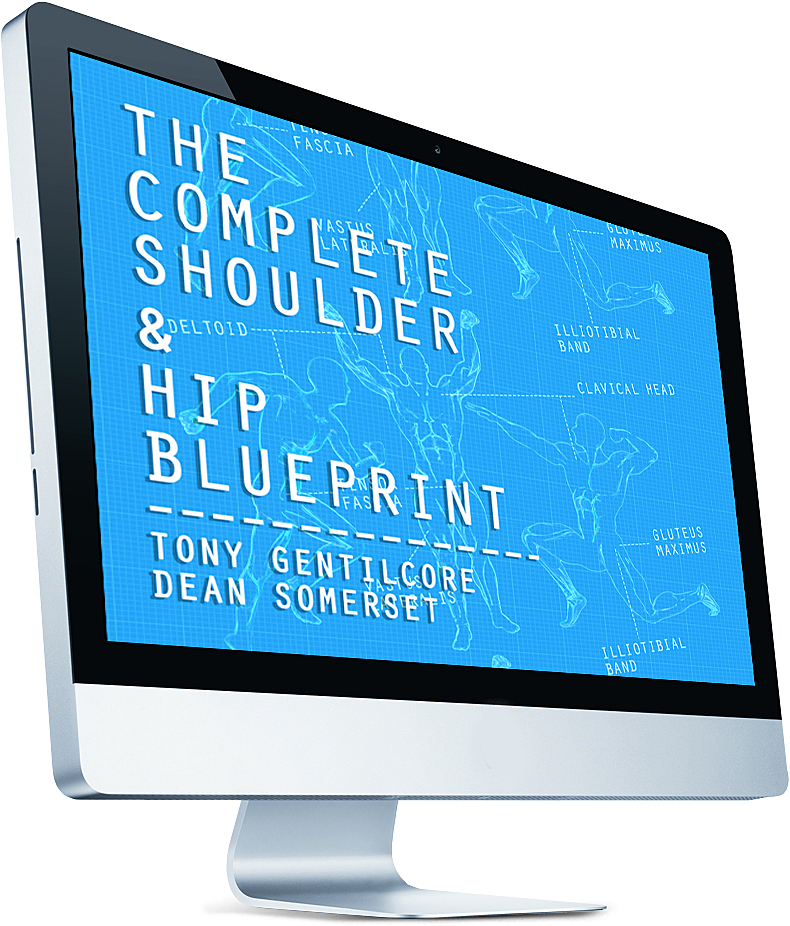
Dean Somerset and I made the Complete Shoulder and Hip Blueprint in part, to do just that. Help fitness professionals figure stuff out, understand that everyone is different, and that “it depends” is a very powerful phrase to keep in your back pocket.8I mean, only Siths deal in absolutes. And you’re not a Sith. Or, are you? OMG can we hang out?[/footnote
Want to learn our systems and strategies we use to “connect the dots” from assessment to badassery on the weight room floor? I thought so…;o)
Complete Shoulder and Hip Blueprint is on SALE this week at $60 off the regular. It ends this weekend. Go HERE now. Now I tell you.
WHEW – talk about a whirlwind day yesterday. I spent the bulk of it glued to my laptop9 making sure things ran smoothly with the launch, answering questions and emails, and trying to stay on top of social media engagement.
This sucker contains 11+ hours of content covering everything from upper and lower extremity assessment, corrective exercise strategies, numerous hands-on breakouts, as well as program design and exercise technique troubleshooting (with maybe, 37 seconds worth of Star Wars references).
Here are two sneak peak segment from both Dean and I.
The One Where Tony Discusses Scapular Motion
The One Where Dean Talks Hip Integration (and makes a bunch of fitness pros groan)
And there is tooooooons more where that came from.
If you’re a fitness professional I can almost guarantee you’ll pick up something valuable (hopefully several) that will help your clients or athletes. And even if you’re not a fitness pro, and just like listening to two dudes talk shop about training or you’re just looking to pick up some cool new exercise variations to keep your shoulders and hips healthy this resource would be a home run.
I mean, I spent eight years of my career at Cressey Sports Performance training predominantly men (baseball players). They were all lovely, if not a bit overzealous with the Axe Body Spray at times.
What’s more, given half the population on Earth has a Y chromosome it should come as no surprise that 50% of my current clientele at CORE are the proud owners of a “boy down there part.” Although I’m sure if I crunched the numbers the percent breakdown of female/male clients would skew a little higher on the female side.
I’ve always enjoyed training women. Men, too. But looking back at my coaching career I’ve always gained a greater sense of satisfaction and enjoyment from working with and training women.
Back in 2002, at my first job in corporate fitness, it didn’t take long for me to “recruit” a few women and to introduce strength training to them. The guys, for the most part, didn’t need much egging from me to pick up a barbell. Like me, they had been indoctrinated and encouraged at an early age – mostly as a result of watching Predator 3,987 times – to lift weights.
Most were lifting weights to some capacity already.
Because that’s what guys are supposed to do.
For the women, though, not all of them of course, the story was a bit different. Most were never encouraged to lift weights, and if they were it was always directed towards machines or “girl exercises.”
A Quick Aside (WARNING: you may want to drop kick something after reading this it will make you that angry): This reminds me of a story a female colleague of mine once told me about a local high school here in Massachusetts. She had offered to help out in the school’s weight room during the summer months and had asked the Athletic Director (a woman, who also happened to be the varsity coach for several of the women’s teams) if she could “target” the young girls and attempt to set up a strength training program geared towards them.
The AD said something to the effect of:
“Oh, well, you can try but it won’t do much good. The girls here aren’t interested in weight training and tend to only use the cardio machines. Besides, there aren’t any “female friendly” machines available.”
Mind you, she said this with 10+ empty power rack stations behind here.
Riiiiiiggggggggghhhhttttt.
This was the ATHLETIC DIRECTOR (Remember: a woman no less) saying something so egregious and asinine.
Is it any wonder then, after hearing that kind of bullshit, why so many young girls grow up thinking they’re not supposed to lift weights and that it’s just something guys do? And why many take the same mindset into adulthood?
Thanks for nothing worst athletic director ever.
So anyways, back to 2002, I started working with a lot of women and slowly but surly began to “de-program” them and helping them learn to debunk many of the common fitness myths they had fallen prey to:
Lifting weights will make you big and bulky.
Yoga/Pilates/etc will make your muscles longer, leaner, and more toned (<— again, feeding into the idea that guys do “that” (lift weights) and girls do “this” (yoga/pilates, etc).
Gazing at a barbell for longer than 15 seconds will make you grow an Adam’s apple, or turn you into this overnight:
This last point brings up a whole nother conversation of, 1) “Who gives a flying fuck if someone wants to look like this?” and 2) even if it is an admittedly extreme example, it implies the connotation that having any semblance of muscle is NON-feminine..
However, I hope most of you reading recognize the larger point I’m trying to make: that it’s not uncommon for women to think the above picture is the end result of performing a few sets of deadlifts over the course of a few weeks.
Spoiler Alert: It’s not.
It was very rewarding to start working with those women early in my career and to watch them make amazing progress in their strength – not to mention their confidence in themselves – and to finally see that switch turn on to where they wanted to work towards more performance based goals rather than worrying about aesthetics or looking a certain way to fulfill some BS societal norm.
Fast forward through a few girlfriends and questionable fashion choices on my end…to my time at Cressey Sports Performance. During my time there I worked with countless women, even started a “women’s only” training group (for beginners), and helped to procure an environment and culture where training was training regardless of gender.
Girls didn’t train any different than the guys.
We didn’t make it a “thing.” Girls just, you know, trained. And became badasses.
Fast forward, again, to today. I have my own studio in Boston (okay, technically, Brookline) and I still follow the same mantra as above: women, outside of a few circumstances, do not need to train differently then men.
I’m very fortunate in that I’ve been able to generate enough of a reputation (and following) that when women do reach out to me for coaching they tend to know what they’re getting themselves into.
Deadlifts, EDM, and plenty of Star Wars references.
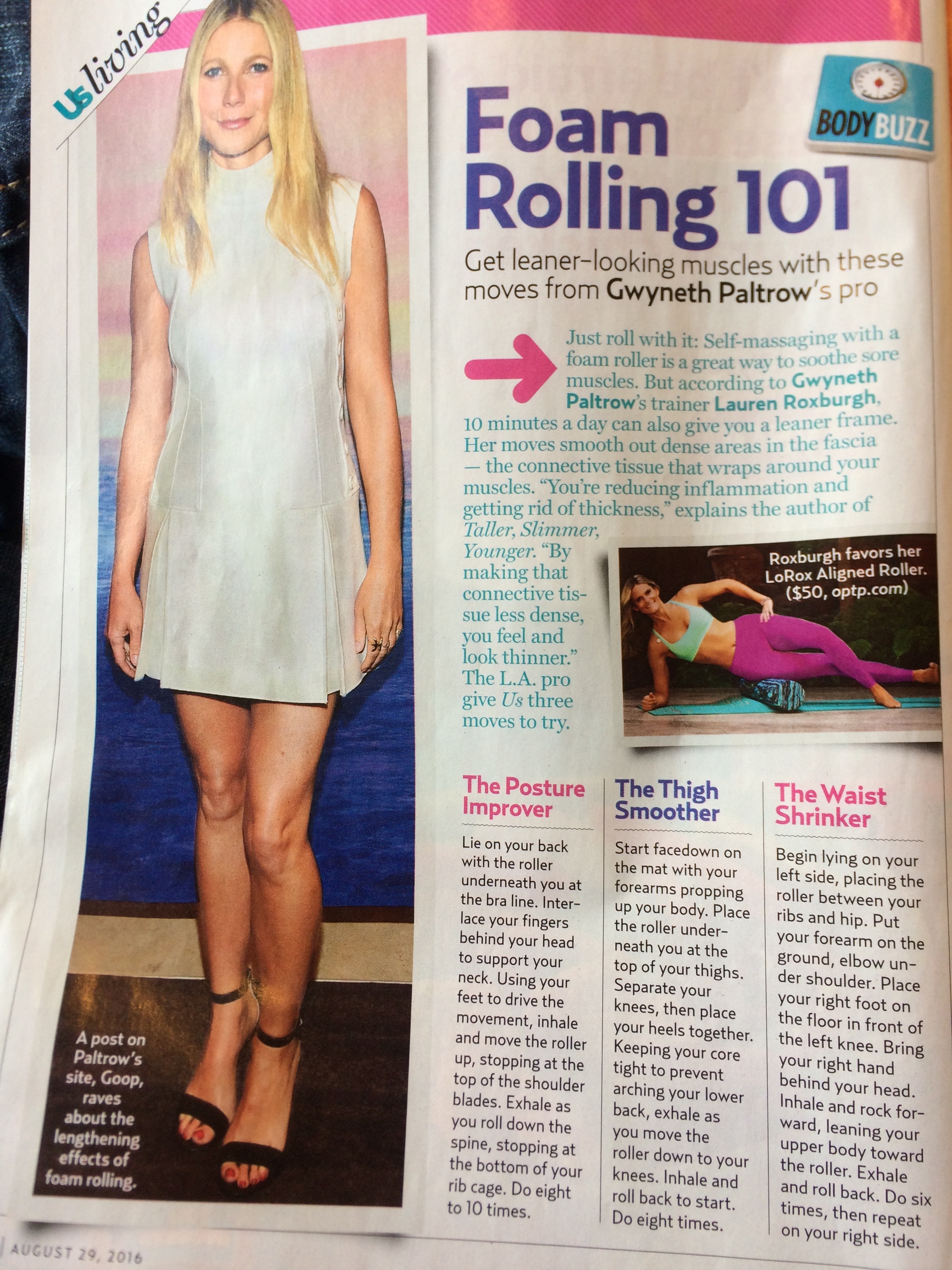
But that doesn’t mean I still don’t have my work cut out for me at times. Just the other day I came across this article while I was in the waiting room at the dentist’s office:
The article implies that foam rolling leads to “lengthening” of muscles and a leaner look (because, you know, it’s foam rolling, not calories in vs. calories out that gets rid of fat).
It was all I could do not to want to run through the pane glass window to my left when I saw this.
Here’s the deal: Whether or not someone should stretch and/or utilize the foam roller is up to them. There’s research and anecdotal evidence to back up both sides of the argument
I find value in both as a coach. Considering we’re talking about a 5-10 minute “investment,” and the abyss of benefits involved – improved tissue quality, increased tissue extensibility, decreased likelihood of injury, a more primed CNS, 1007% increase in general level of sexiness – I feel implementing both is a no-brainer.
There’s a degree of expectation management involved, however:
1. Foam Rolling – harder doesn’t mean better. People seem to be under the impression that the more you grimace and induce “pain,” the more benefit you’re getting.
Here’s the progression most people take:
“Soft” Foam Roller —> “Hard” Foam Roller —> Rumble Roller (the one with those spikey thingamabobbers) —> PVC Pipe —> Barbell or Straight Up Lead Pipe —> Live Grenade.
Some people take foam rolling to the next level, as if the goal is to earn a Badge of Hardcoreness. BTW: that badge needs to happen. I do not agree with this approach and find it defeats the purpose.
I also understand there are camps out there who feel foam rolling is a complete waste of time. I tend to call in like with THIS response from Kevin Neeld.
2. Stretching – Lets be honest: this is the first thing that gets “tossed” when there’s a time crunch with training. I hate doing it, you hate doing it, the Easter bunny hates doing, everyone hates doing it. However, it’s hard to discount the mountain of research and anecdotal evidence that it works and does help people feel better.
And I know most people reading along agree with my train of thought: “I should do more of it.”
A funny thing: people tend to stretch what “feels good” or what they’re good at. Or, more commonly, they stretch, but they’re not stretching what they think they’re stretching.
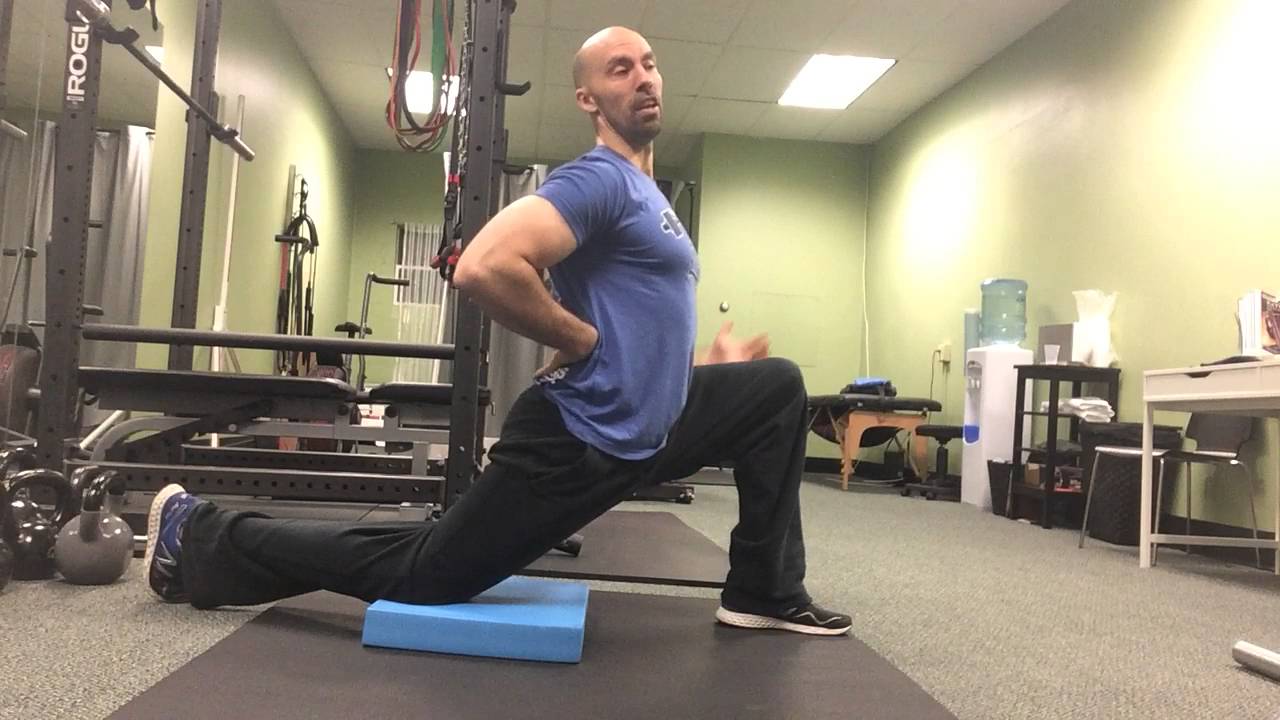
I.e., not a good hip flexor stretch
Nonetheless, while I could keep going on and on and on I want to defer to my colleague, Shane McLean, who offers up some of his insights and “go to” rolling and stretching strategies he uses with his clients.
Enjoy.
To Roll and Stretch Or Not To Roll and Stretch (That is the Question)
Foam Rolling
Don’t you love that person who grabs the foam roller, plonks himself in the middle of the gym and proceeds to twist, grunt and grimace like a game of Twister?
Yeah, that person definitely needs a talking too.
Foam rolling is either better than sliced bread or a complete waste of time depending on whose camp you’re in. However, there is plenty of middle earth ground.11
You should think of foam rolling as a poor man’s massage. Having hands on you with the massage therapist inflicting pain is definitely more effective than the roller. However, foam rolling is cheaper and more accessible.
Just don’t go overboard.
Mike Boyle explains his rationale for foam rolling in The New Functional Training for Sports2nd edition. He thinks foam rolling can help combat muscle creep.
Muscle creep is the extensibility of soft tissues which are those loaded under low pressure for an extended period of time.
A stretched muscle will attempt to go back to its resting length but will give up and in an attempt to bridge the gap will lay down more fibers. If the stretch is applied slowly enough the muscle will change its length and retain that change (Myers 2009, 36).
Doesn’t that sound creepy?
One study by back guru Dr. Stuart McGill concluded that “sitting with the back slouched for as little as 20 min can result in increased laxity in the posterior spinal ligaments” (McGill and Brown 1992).
Now if that doesn’t strike any fear into you to sit up straight this instant I don’t know what will. Prolonged spinal flexion can reduce back muscle protection of the underlying spine due to increased laxity. (1)
The muscles in the back already take a beating and going straight from the office to the squat rack would be as pointless as poking yourself repeatedly in the eye, for fun.
However, showing your muscles a little love with foam rolling to decrease muscular tension before crushing your squats and deadlifts sounds like a much better idea.
Foam rolling before warming up sets the table for a better warm up. A better warm up means a better training session and less chance of you ending up on the DL. Doesn’t that sound like a good idea? Thought you would see things my way.
Here are my five preferred must do rolls to help combat the creep and to feel and move well:
1) Foot Massage With Ball
2) Hamstring Roll
3) Piriformis Roll
4) Lower Back Roll
5) Thoracic Spine Roll
https://www.youtube.com/watch?v=LgNWSQx08Hw
Stretching
Stretching is one of those topics that fitness professionals will never sit on the fence about. It’s either the devil incarnate or it’s the cure all. Both sides will argue till their blue in the face.
When coaches get into a pissing match, it’s never pretty. There is plenty of name calling, hair pulling and chests puffed out. However, like with most polar opposite points of view, the truth lies somewhere in between.
Let Mike Boyle be the voice of reason here.
“A lack of flexibility seems to be a causative factor in many of the gradual onset injury conditions that plague today’s athletes. Overuse problems like patella-femoral syndrome, low back pain, and shoulder pain seem to relate strongly to long term tissue changes that don’t respond to dynamic stretching.” (2)
If static stretching good enough for Mike, it should be good enough for the rest of us. Besides, if you stretch for a few minutes it will feel good and the universe will not blow up.
Combining foam rolling for the back of your body with a few stretches for the front may help improve your range of motion and help the stretch tolerance of the foam rolled muscle.
Here my preferred “go to” stretches:
1) Hip Flexor
2) Half Kneeling Quad
3) Biceps
4) Chest
5) Anterior Deltoid
References
1. Is Activation of the Back Muscles Impaired by Creep or Muscle Fatigue? Daniel Sánchez-Zuriaga – Michael Adams – Patricia Dolan – Spine – 2010
2. The Effect of Static Stretch and Warm-up Exercise on Hamstring Length Over the Course of 24 Hours. Volkert Weijer – Gerard Gorniak – Eric Shamus – J Orthop Sports Phys Ther Journal of Orthopaedic & Sports Physical Therapy – 2003
About the Author
Shane “The Balance Guy” McLean, is an A.C.E Certified Personal Trainer working deep in the heart of Dallas, Texas.
No, Shane doesn’t wear a cowboy hat or boots. After being told that his posture blows by Eric Cressey, he has made it his mission to rid the world of desk jockeys and have fun while doing so.
After all exercise is fun and never a “work” out.
You can follow Shane on Twitter HERE, and Facebook HERE.









 the strength volume down? Yeah, baby, I am.
 While they may not have the same sexy appeal as advanced techniques like German Volume Training, or High-Frequency Strength splits, concurrent splits are the way to go when programming for general pop clients. Sure, super-specific training blocks may get our folks faster results, but their narrow focus doesn’t do our folks any favors in the long run.



 just counting reps and throwing some exercises together and calling it a program. It’s training people with an intent to make an impact on their lives.
 Good coaching looks a bit like good parenting. It’s a combination of everything from teaching and motivation to providing boundaries and developing habits…all with a focus on helping the client become a better version of themselves and ultimately achieve their potential. So, coaching is no one thing…it’s a combination of many things.
 nutritional counselling are just a small part of a successful coach-client relationship – “Good Coaching” also considers client education, appreciates the value of effective communication and looks to empower the client in as many ways as possible.
 Coaching is about communication of your knowledge of the X’s and O’s of training and programming. So, “good coaching” looks like a good relationship between the trainer and the people they’re currently working with.





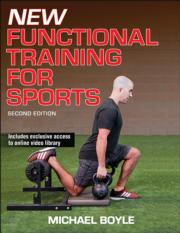 2nd edition. He thinks foam rolling can help combat muscle creep.

