CategoriesAssessment coaching Corrective Exercise

Porcelain Post: Building a Wider Base to Reach a Higher Peak

NOTE: the term “Porcelain Post” was invented by Brian Patrick Murphy and Pete Dupuis. Without getting into the specifics, it describes a post that can be read in the same time it takes you to go #2.

Huh, I guess that was more specific than I thought.

Enjoy.

Building a Wider Base to Reach a Higher Peak

13460109 - himalaya mountains

Copyright: kapu / 123RF Stock Photo

I received a pretty cool email this morning from a college athlete of mine (Division I baseball) whom I worked with this past summer.

To give a little back story he had trained with me at Cressey Sports Performance a few years ago when he was in high-school, and had reached out to me this past May after completing his Junior season at school.

He walked into CORE and after going through the particulars – a thorough assessment, discussing his season, what he felt he needed to work on, his nagging back pain, his favorite GI Joe character, you know, the important stuff – he had this to say:

“The time I felt best was when you were writing my programs.”

With my chest sticking out a little further we broke things down and came up with a game plan for the summer, particularly with regards to how we were going to tackle his chronic back issue that had been hampering him for a few seasons:

  • As with any baseball player (and pretty much every athlete in the history of ever) we were going to hammer anterior core strength/stability to encourage more posterior pelvic tilt and implement drills to learn to dissociate hip movement from lumbar movement. Read: a metric SHIT-ton of deadbugs and birddogs. Not sexy, but whatever.
  • Work on regaining appropriate scapular upward rotation via actual scapular movement and not extending through lower back or shrugging.
  • Learn to control rib-position (limit rib flair and thus excessive extension) via positional breathing drills. There’s a lot of magic that happens when you teach someone the importance of a full exhale.
  • Also, teaching the importance of the reach and allowing the shoulder blades to move around the ribcage (again this whole extension thing rears its ugly head).


  • And, last but not least…still lift heavy things. Albeit doing my job as the coach to “pump the brakes” when needed and not fall into the trap of “lifting heavy at all costs because that’s what athletes do.” Truth be told: this mentality is probably why this athlete kept getting hurt in the first place.

To this last point (not lifting “heavy”), I wanted to showcase that it was more about the QUALITY of the movement and taking the time to 1) do stuff right and 2) understand how building a wider base (via more volume with SUB-MAXIMAL loads) will help with reaching a higher (strength) peak.1

Now, most guys at this point would roll their eyes and think I was going soft. However, this athlete was on board and willing to trust the process. So went to work for three months.

I received this email this morning:

“How’s it going? I wanted to tell you that yesterday we had our first testing day and I got 515 on a one rep max for trap bar deadlift! The best part is my back felt good after!”

He nailed a 515 lb deadlift despite having never gone above 405 all summer (on the last week we trained together).2

We still got after it all summer. He had his fair share of squatting (2 KB Front Squats), single leg work, carries, glute bridges, rows, Pallof presses, push-ups, and me making fun of him for having never watched The Usual Suspects. That’s sacrilege if you ask me.

However, the vast majority of his “strength” work was done in the 60-80% range and we were meticulous with making sure that every rep was pain free and that technique was solid.

I’d make the case that because we addressed alignment and stability issues along with movement quality, and got him into a better position, that he was then able to express his “true” strength more effectively when the time came.

The answer isn’t always to “lift heavy.”

Something to think about.

Categoriescoaching Corrective Exercise Exercise Technique Program Design Strength Training

How Unilateral Strength Training Can Improve Your Squat, Bench, and Deadlift

Another fantastic guest post today from Shane McLean. This time he tackles the importance of unilateral strength training and offers some neat ideas as to the best accessory movements to compliment the “big 3.”

Copyright: vadymvdrobot / 123RF Stock Photo


Don’t you love “that” guy who always stands between you and the dumbbells while doing single arm curls and making faces only his mother could love? What if I told you that he’s actually on to something, minus the faces and grunting?

Bilateral exercises (not biceps curls) should form the foundation of your strength program because this is where you’ll get most of your gains. However, unilateral training often gets neglected in the quest to get bigger and stronger because it’s just not as sexy (or cool) as a big squat, deadlift or overhead press.

However, unilateral training will help you get stronger, improve the big lifts (by shoring up weakness) and provide the following benefits.

Reduce Muscle Imbalances

Due to activities of daily living almost everybody has a dominant and non-dominant side. For instance, carrying more groceries on one side over the other over time may get one arm stronger.

During bilateral exercises such as a press or squat variation, your dominant side can pick up the slack for the weaker side.

Have you ever seen a lifter struggle to lock out one side over the other during a barbell bench press? I rest my case. Improving your “weaker” side will reduce your injury risk and help increase overall lifting numbers.

Improved Muscle Recruitment

Unilateral training makes you work harder and recruit more muscle fibers to perform the exact same movement, such as a split squat.

Taking one leg out of the equation forces your abductors and core to stabilize your pelvis while the working leg performs a split squat. Working more muscle with less weight will help correct strength imbalances between sides, also.

Core Work Without Crunches

When training unilaterally, you automatically throw your body off balance, forcing your core muscles to engage in order to keep yourself upright.

Trust me when I say that’s a good thing.

And we can double-down on the core training ante by utilizing offset loading:


Programming Guidelines

Unilateral exercises are best performed as an accessory movement after your big lift for the day.

Choose one or two single limb movements per session and perform three to four sets on both sides. The repetitions performed will depend on your goal.

For example:

  • Strength: 4 – 6 reps
  • Hypertrophy/Fat Loss: 8 – 15 reps

If you have a strength or muscle size imbalance always start with the weaker/smaller side first and let the weaker side determine the weight/reps you do on the stronger side.

Without further ado, here are my top two accessory exercises you should be doing to improve your squat, dead lift and press numbers. Sorry, this is a biceps curl free zone.

1) Deadlift

 Suitcase Carries


Not only will carries change your life in three weeks, according to Dan ‘the man’ John, they can strengthen grip imbalances between hands which can be a limiting factor when pulling heavy from the floor or opening the pickle jar.

When you’re doing carries (you do, right?), pair them with a movement that doesn’t demand a lot of grip strength, so you can get more out of it. For example:

1A. Goblet squat/press variation.

1B. Suitcase carry- (25-50% of your bodyweight) 30 steps one hand then 30 steps with the opposite hand.

Form considerations – cues “shoulders down and back” or “chest up” work well here. Checking your form in a mirror will help if you having trouble knowing if you’re overcompensating or not.

Front Racked Kettlebell Bulgarian Split Squat

These were first introduced to me by Anthony Dexmier to improve my pulling ability from the floor. Let’s just say after doing them, we weren’t the best of friends.

Hardcore dead lifters knows that hip mobility, upper back strength and leg drive are essential elements for pulling heavy, and this exercise covers all those bases, if somewhat brutally.


Pairing this exercise with a single arm row variation is a real upper back whammy that you’re sure to enjoy. For example

1A. Front racked kettle bell elevated split squat – 12 reps on each leg

1B. 3 point dumbbell row – 12 reps on each arm


Form considerations – Perform a bodyweight elevated split squat and notice where your big toe is, and then place weight plate in front of it. This will give you a reference point and shorten your set up time between sets. This is courtesy of the one and only Jordan Syatt.

Keep a nice tall chest and your wrists in neutral during this entire movement and smile through the pain.

2) Bench Press

Landmine Press

The single arm landmine press is a mix between a vertical and horizontal movement which makes this great for individuals who lack the shoulder mobility for overhead pressing and for those looking to improve their press numbers.

Note From TG (to Shane): How could you not include a link to THIS article I wrote discussing how to assess overhead mobility and drills to help improve it?

Why Shane…….WHY?!?!?

The beginning of this exercise (initial push of the shoulders) is the hardest part of the movement. This will assist you with pushing the bar off your chest during the bench press or pushing the barbell overhead from a dead stop. The extra core work doesn’t go astray either.

This press can be done from a variety of positions. For example, it can be done standing, tall kneeling and this half kneeling variation courtesy of Eric Cressey:


Pairing this landmine variation with a hip flexor stretch works well and provides an active rest between sides and sets. For example

1A. Half kneeling landmine press (right hand)

1B. Half kneeling hip flexor stretch (right knee down) – 30 seconds

1C. Half kneeling landmine press (left hand)

1D. Half kneeling hip flexor stretch (left knee down) – 30 seconds

Form considerations- Make sure the barbell is close to the front of your shoulder and actively squeeze the barbell. This provides Irradiation, allowing you to produce more force and lift more weight. This also turns on the rotator cuff, which helps with shoulder stability.

Single Arm Dumbbell Floor Press

The reduced range of motion of the floor press makes this a great triceps builder (when the elbows are close to your side) and will assist you in getting stronger with the lockout part of any press variation.

The single arm variation will turn on your core and shoulder stabilizers due to the offset load that can get neglected during bench/overhead pressing. It’s a shoulder saver because it eliminates the lower half of the press where the shoulder is externally rotated and nasty things like shoulder impingements can happen.


Pairing this with a side plank or a suitcase carry gives your shoulders and core the extra work they deserve. For example

1A. Floor press

1B. Side plank variation 30 sec/ Suitcase carry – (25-50% of your bodyweight) 30 steps one hand then 30 steps in the opposite hand.

Form considerations- Grip the dumbbell tight or strangle the handle and keep the elbow close to your side but not touching. Touch the entire upper arm to the ground at the start of each rep.

3) Squat

Single Leg Negative Calf Raise

It’s a common issue to lack ankle mobility as we wear shoes that inhibit the movement of the ankles, like wearing high heels, for example. The ability to dorsiflex the ankle (how far the knees can go over the toes without raising the heel) can get compromised and this can show up in the squat.

As the squat movement has to come from somewhere, lacking dorsiflexion can negatively affect the joints further up the kinetic chain especially the knee, and who hasn’t had sore knees (and everything else) at the end of an intense squat session?

If hammering away at ankle mobility isn’t working for you, try this single leg negative calf raise drill from Dr. Ryan DeBell before your squat session. This will help with ankle dorsiflexion under load.


Form considerations- Having something solid to hold on to is a must. If you have pain bending the knee during this drill, please use a pain free range of motion. Do 5-10 reps on each leg before you squat. Your knees will thank you.

Barbell Reverse Lunge- Front Squat Grip

Most lunge variations are interchangeable because they work on knee stability (knees that go out instead of in) and core (reduced base of support) hip mobility (active stretch of the hip flexors) and help build your quad strength and size. Sounds like everything a good squat needs, right?

This variation does this and more. The front squat grip works on your anterior core upper back strength and thoracic mobility which are also needed for a strong squat.


Pairing this with an upper back or anterior core exercise in a superset works well. For example

1A. Barbell Reverse Lunge – Front Squat Grip – 8-12 reps on both legs

1B. Chin up

Or

1A. Barbell reverse lunge- Front squat grip 8-12 reps on both legs

1B. RKC Front Plank

Form considerations- Start on the light side until you nail the technique and feel confident that you’re not going to bite the floor. Keep the ears away from the shoulders and maintain an upright torso during this exercise.

Wrapping Up

Don’t forget about unilateral training when it comes to getting bigger, stronger and more awesome. Including these exercises into your routine will improve your lifting numbers and overall balance and will help keep you off the lifting DL.

You can throw in some single arm curls (for the girls) to keep Ron happy, if you must. J

Author’s Bio

 Shane “The Balance Guy” McLean, is an A.C.E Certified Personal Trainer working deep in the heart of Dallas, Texas.

No, Shane doesn’t wear a cowboy hat or boots.  After being told that his posture blows by Eric Cressey, he has made it his mission to rid the world of desk jockeys and have fun while doing so.

After all exercise is fun and never a “work” out.

You can follow Shane on Twitter HERE, and Facebook HERE.

Categoriescoaching personal training Program Design Strength Training

Are the Weights You’re Using Heavy Enough? Too Heavy?

Today’s post is more or less an addendum or brief update to THIS article I wrote a few months ago answering the question “how much weight should I be using?

Copyright: maximkostenko / 123RF Stock Photo


For many lifters – rookies in particular – it’s a perplexing task to figure out what’s an appropriate load to be using on any given lift or exercise. Is it too little, too much, just right? It’s a Goldilocks paradox to say the least.

Some people have an innate sense of intuition that kicks in and are able to figure things out over the course of a few weeks or months. They’re able to adopt the concept of consistent progressive overload (making the effort to do more work over time) and make continued improvements and progress towards their goal(s).

[NOTE: keeping a daily training log helps tremendously here. If you’re not doing this 1) please smack your forehead 2) do it again and 3) no, really, do it.]

Others, however, lack the Spidey-sense. I mean, I get it: walking into a weight room is daunting enough. You have some guys grunting louder than an elephant passing a kidney stone, and the fume of AXE body spray you have to walk through is enough to give you a contact high. Those two things alone are super intimidating for some people.3

What’s more, there are a bevy of other factors to consider: optimal # of sets/reps, rest periods, tempo, exercise order, and, of course, how much weight to use? And then, most important of all, is technique on point? It’s no wonder some people end up feeling like this:


To no fault of their own many fall into the trap of “winging it” and haphazardly choosing a weight to use for any particular exercise and stay there; week in and week out, month after month, and in worse case scenarios, even years, and often end up frustrated due to lackluster results.

How many times have you heard this from a friend, family member, or colleague:

“Can you please put some pants on? I’ve been working out for [insert “x” number of weeks/months/years here] and I never seem to get results.”

My suspicion is that 9/10 times the culprit is the fact most people are UNDERestimating their ability and not challenging themselves enough.

This is where AMRAP (As Many Reps as Possible) sets can be handy. If I program an exercise for 8-10 reps, I’ll sometimes have the last set be for AMRAP. If, on the last set, they hit 10, maybe 11 reps I know they’re using a weight that’s challenging enough. If they end up hitting 23 reps I know they’re low-balling themselves and we need to up the load.

I’m fortunate in that I live in this pretty baller strength & conditioning bubble where I can control most – if not all – the variables when it comes to the clients and athletes I train.4

Especially for those I work with in-person.

I’m there to observe how they’re feeling on any given day, to watch technique and bar speed, and I can serve a judge and jury when it comes to weight selection during any given session.

Where things become suspect is when I’m not there to offer advice in person or when I’m working with a distance-based client and am unable to provide instant feedback.

How do I help them gauge whether or not they’re using enough weight? Or maybe too much? What happens then?

In recent years I’ve grown to be more of a fan of using percentage-based training with the programs I write, particularly for those whom I do not work with in a one-on-one fashion. I’m a firm believer in programming out workouts with specific weight and rep guidelines – if for nothing else to give them a sense of purpose or “goal” for the day. Hit “this” number then do “that.”

That said, lifters don’t always feel the same everyday. Some days they feel like a rockstar and end up deadlifting a bulldozer for reps. Other days the feel like they got run over by a bulldozer, and what was planned for that day just isn’t going to happen.

35136856 - view of tired girl after weight lifting

Copyright: bialasiewicz / 123RF Stock Photo

This is where the concept of AUTOREGULATION enters the conversation. Coaches like David Dellanave and Jen Sinkler have done a fantastic job of speaking to this phenomenon (more specifically referred to as BIOFEEDBACK) in recent years and how it behooves trainees to use ROM testing to figure out what variation of a particular lift is the best fit for that day.

Here’s an example (say it’s deadlift day…yay):

  • Perform a toe touch screen, and note where you begin to feel tension.
  • Set up as if you were going to do a conventional deadlift and perform a few reps.
  • Re-test your toe touch. Is it better or worse?
  • If the former, you know you’re good to go with conventional deadlift that day. If it’s latter, maybe perform the same sequence, albeit with a sumo stance or Jefferson stance?

  • Re-test and see if there’s an improvement. If so, roll with that variation for the day.
  • Travis Pollen wrote an excellent review on the concept HERE.

We can take the idea of autoregulation and use it to dictate our loads on a daily basis too. More to the point: we can start to introduce the concept of Auto-regulatory Progressive Resistance Exercise (or APRE).

To quote the great Tim Henriques:

“A beginner gets stronger just by lifting. Any program works for a beginner. An intermediate powerlifter needs strength specific programming to get stronger. An advanced lifter with many years of competitive experience, lifting very heavy weights, needs to program recovery into his work outs. The beauty of the APRE (Auto-regulatory Progressive Resistance Exercise) programs is that all categories of lifters from novices to experts can benefit with this type of program.”

It’s by no means a new concept. Many coaches have written about it in the past (and I have linked to their respective articles in this post).

In short, APRE is a great way to introduce flexible training and to better match loads you use to how you feel on a daily basis.

It’s not so much a workout as it is a guideline.

Here’s an easy breakdown taken from Myosynthesis.com:

3RM Protocol 6RM Protocol 10RM Protocol
50% of 3RM – 6 reps 50% of 6RM – 10 reps 50% of 10RM – 12 reps
75% of 3RM – 3 reps 75% of 6RM – 6 reps 75% of 10RM – 10 reps
Reps to failure with 3RM Reps to failure with 6RM Reps to failure with 10RM
Adjusted reps to failure Adjusted reps to failure Adjusted reps to failure

And to adjust after the test set:

Reps in third set (6RM protocol) Adjustment for fourth set (kg)
0-2 -2.5 to -5
3-4 0 to -2.5
5-7 No change
8-12 +2.5 to +5
> 13 +5 to +7.5

I’ll explain in a second, but the cool thing about this approach – and as Eric Helms noted in THIS review via the NSCA – is that it proved very successful in one study compared to traditional linear progression with regards to strength gains.

“The APRE group improved by an average of 21 lb more in the 1RM bench press test, 35 lb more in the 1RM squat test, and three repetitions more in the bench press to fatigue test than the LP group.”

Granted it’s only one study – and a relatively short-lived one (6 weeks) at that – but holy shit.

APRE is a four set system. The first two are build-up sets with the second two involving two sets to failure. The third set is a “test” set where you perform as many reps as possible with your 3RM, 6RM, or 10RM. From there, depending on how many repetitions you get, you adjust the weight on your fourth (and last set).

This is a brilliant system, and one that can be implemented to help people better ascertain their weight selection on any given day depending on how they feel.

Lets use an example (squat – 6 RM protocol): 315 lbs

Set #1 = 50% of 6RM x 10 reps (155 lbs)

Set #2 = 75% of 6RM x 6 reps (235 lbs)

Set #3 (Test Set) = AMAP with 6RM (315)

Here is where day-to-day shenanigans come into play. How much sleep someone got the night before, hydration levels, stress at work, stress at home, and any number of other factors can affect performance on any given day. The TEST SET serves as a form or AUTOREGULATION.

Depending on the number of reps completed in the test set will dictate the load on the LAST set. See chart above.

Set #4 = ???

Can you see the value in this approach? Especially when it comes to weight selection with main lifts such as squats, deadlifts, and bench press?

I hope so, because it’s very effective and simple to implement. And I know what some of you may be wondering: “what about the 3RM and 10RM protocols?” Well, as it happens, Tim Henriques constructed a BOMB spreadsheet that you can download for free – HERE – which allows you to pluck in numbers at your discretion for each protocol. Holla!

Now you have no excuses not to push yourself harder in the gym. Go get it.

Categoriescoaching personal training Program Design

Program Design Considerations for the New Personal Trainer

With more and more personal trainers entering the industry faster than Marvel and DC Comics can resurrect D-list characters to put into their movies5, it’s becoming more readily apparent how ill-prepared some (not all) are when it comes to writing effective training programs.

Today’s guest post, courtesy of Tennessee-based coach, Andy van Grinsven, helps to shed some light on the topic and remedy the situation. Enjoy.

Program Design Considerations For the New Personal Trainer: What You’re Missing

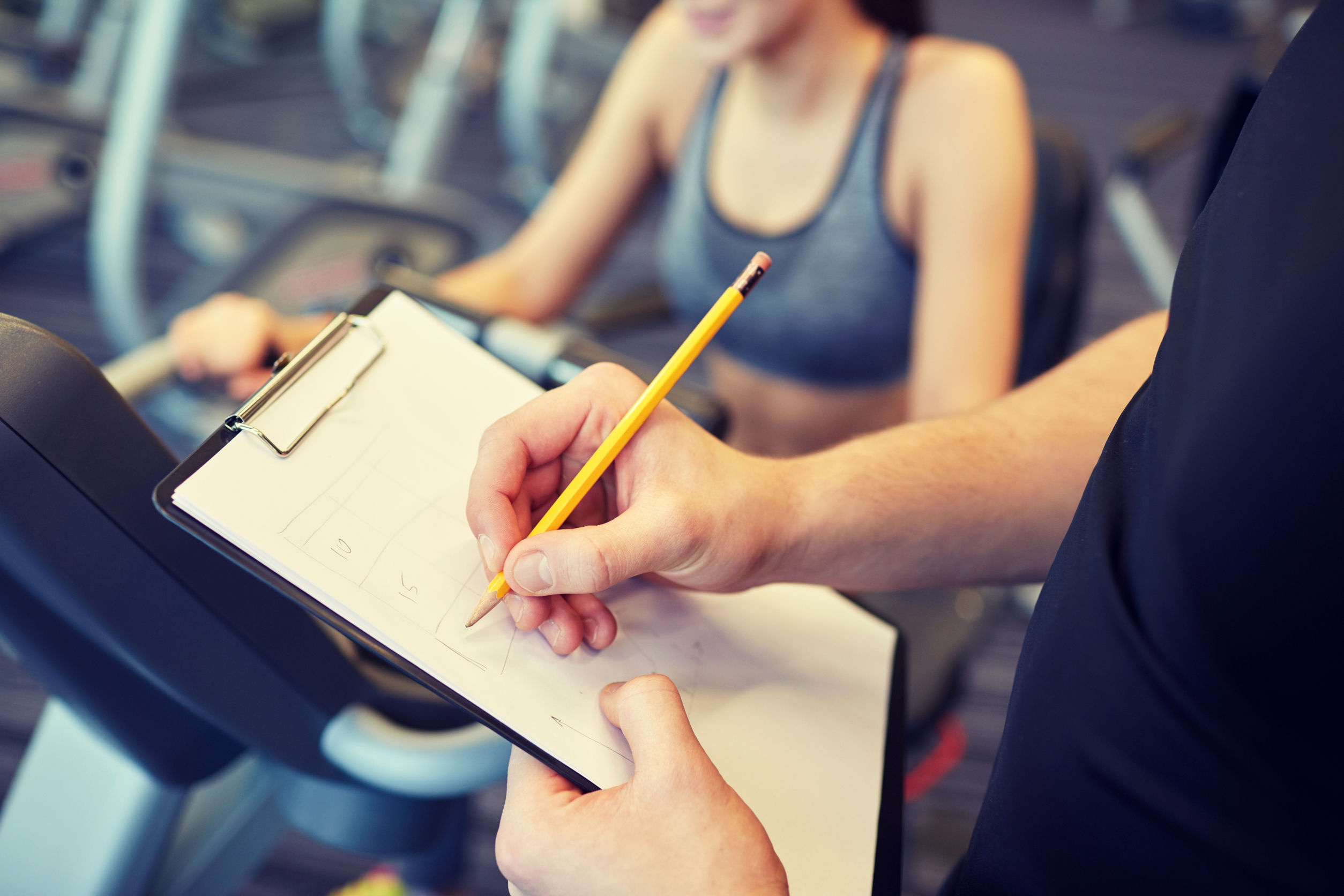
49090294 - sport, fitness, lifestyle, technology and people concept - close up of trainer hands with clipboard writing and woman working out on exercise bike in gym

Copyright: dolgachov / 123RF Stock Photo

It’s five after, and my client is running late. Like an owl I spin my head round and round checking first the door, then the suspiciously empty squat rack, and back to the door, tapping my clip board with feverish anxiety.

My client arrives. “Hey there! How was your weekend? Ready to get started?” Like Fred Jones I wave of my arm as if to say “come on, gang!” I’m listening to my client while trying to break the speed-walking world record on my way to the rack.

Then it happens. Like a swarm of vultures a group of teenagers snag the only squat rack in the gym. Nut punch. Now what?

Personal trainers and coaches pride themselves in their ability to write programs: sets and reps, rest periods, organization, periodization, and all the other details that make a program, a program. And at the end of the day, we hope this program turns our clients into card-carrying certified badasses.

50685511 - sport, fitness, teamwork, weightlifting and people concept - close up of young woman and personal trainer with barbell flexing muscles in gym

Copyright: dolgachov / 123RF Stock Photo

But here’s the thing:

Any trainer worth his weekend certification can put together a program. It’s not that hard: pick some exercises, assign some stuff to them, and voila! You’re a coach.

But what happens when you actually hit the trenches and start training these clients? Does your program actually work? Does it fit the context of the gym and client? Does it make them better?

I’ve been training, largely in community gyms, for the better part of 7 years. I’ve written countless programs. However, the number of times I’ve been able to execute a program 100% as written is likely less than 10.

Why?

Because when life throws you a bunch of teenagers in the squat rack, you make do with what you’ve got left (after cursing the Gods, and maybe, crop-dusting them).

Suddenly, your perfect program gets shot down because the equipment you needed is occupied.

Or your client just got back from a 2-week vacation. Or your client slept poorly. Or they stayed up late watching Friends reruns.

Your program means nothing if it can’t roll with the punches.

Exercise selection, sets, reps, and rest periods are great. But there’s a few things you ought to consider along with the meat and potatoes of your program:

Program Design Considerations: What Your Certification Course Forgot to Mention

1.) WHO is your client?

Are they an athlete? Are they a bodybuilder? Powerlifter? Or just some regular Joe trying to lose

Copyright: spotpoint74 / 123RF Stock Photo

belly fat?

This question might sound silly, but you may be surprised to see many coaches and trainers blindly fit all their clients to one style of training:

Powerlifters like the “Big 3,” so every client is barbell benching, squatting, and deadlifting.

Bodybuilders chase max muscle, and often write programs with titles like “chest day” or “leg day.”

This is, of course, appropriate, if the client is a powerlifter or bodybuilder. But what if they’re not? How do you write a program for the regular Joe?

Do both styles of training, and the tools they prefer, have a place in your program? (<–the answer is probably, yes)

2.) What’s Important?

You’ve got your exhaustive list of exercises: squat variations, different hand position, barbells, TRX, medicine balls, boxes, and the list goes on.

In this crazy world of fitness and exercises, which ones are most important for your client? What do you choose, and how do you implement them?

Develop your own “10 Most Important Things” list. This list will serve as the foundation for your program design.

Here are my 10 Most Important Things (in no particular order):

  • Squat
  • Hip Hinge
  • Push-ups
  • Chin-ups
  • Lunge
  • Row
  • Carry
  • “Power movement”


  • Crawl
  • Anti-movements (planks, Pallof presses, etc.)


For me, these 10 represent the most important things I need to coach all my clients. The style of squat; the type of hip hinge; how many push-ups they can do; and the “power movement” will all differ client-to-client, but they’re all things my clients will do with me. If I’ve covered these 10 things, we’re going to be in good shape for both the gym and life.

If you must leave your client with only 10 things, what would they be?

3.) What Are the Client’s Goals?

I get it: squatting is a ton is fun. Being super strong is awesome. But does your client want to squat a metric shit-load? Do they even know if they do or don’t? Further, how strong is “strong enough?”

Remember: you’re in business to help your client. If being as strong as humanly possible is their goal, then get after it. If not, reassess “why” you’re designing your program to include heavy squat sessions. They might not be appropriate for this client, or many of your others.

Now before you go writing me off as some soft coach, hear me out: I agree that everyone needs to be “strong.” Helping your client get stronger is helping them build muscle, boost confidence, and reduce their risk of injury.

But, how we get them stronger is through progressive overload, not necessarily the tool: dumbbells, barbells, and TRX each provide a stimulus to help your client get stronger.

I encourage you to evaluate how you define strong and evaluate the methods you use to make your clients strong.

Sometimes, a goblet squat is all you’re ever going to need.


4.) What Does Your Client Need?

You’ve established the client’s goals: shed body fat, get stronger, and look great naked again.

What if your client wants to squat a brick shit-house, but can’t squat to parallel with body weight?

Maybe they want to run next year’s full marathon, but they’re carrying an extra 50 pounds of fat.

Get your clients to their goals, but assess their needs along the way. If they have the body awareness of a 2-year old and joint mobility that would make the Tin Man cringe, we’ve got some work to do first.

Whether these things pan out during your first few sessions or are discovered through your screen is up to you, but make sure you’re using the safest and most effective methods for their abilities right now, and not where they think they are.

5.) What CAN You Do?

It’s not what you want to do, it’s what you can do.

There have been numerous times I’ve walked into the gym, program in hand, and had to make adjustments, X-out exercises, and switch my order.

Why? The teenagers in the squat rack. My client didn’t sleep well. The lat-pulldown is out for maintenance.

What are you going to do now?

1. Roll with it

Copyright: ammentorp / 123RF Stock Photo

I’m all for program writing and I love the enthusiasm but have progressions, regressions, and other options that can get the job done.

For most everyone, like 99% of the people you’re going to work with, it won’t matter whether you squat them with a bar, dumbbell, or kettlebell. It won’t matter if your hip hinge movement is KB swings instead of deadlifts. It won’t matter if you choose to do push-ups over DB presses.

All that will matter is that you’ve provided a stimulus and a fun training experience.

Why? Because good, hard work, trumps no work at all. And in the grand scheme of things, most of your clients just want to move well and feel well, get a good workout in, and be on their way.

2. Assess Readiness

Many coaches, many smarter and more experienced than I, will use Heart Rate Variability or some other tool to assess “readiness” of the client or athlete before the training sessions starts.

If you have the tools and like to use them, great. If not, borrow my “RPF,” or 0-10 Rating of Perceived Feels scale:

A zero (0) on the scale roughly means “Andy, I’d rather throat punch you than work out today.”

Ok. No problem. Maybe we’ll de-load or reduce the volume on some things.

A 10 on the scale roughly means “Andy, I’d like to fight Superman today.” Great! Let’s get after it: slap on more weight; more sets; and more intensity.

Your 0-10 might mean different things to you and your client, but make it fun and relatable. At the very least, you’ll get a laugh out of them with the silliness.

My RPF scale is a simple, subjective tool that gives you an idea of the state your client is in before you start hitting the weights. Make changes accordingly.

Conclusion

Writing a program doesn’t have to be complicated, however, these are considerations most don’t take into account when designing a program.

It’s easy to jot down the program that *you* would want to do, but is it appropriate for the client? Is it appropriate for the context of the gym and client’s goals?

Answer these questions before you even sit down to write the program, and have progressions, regressions, and built-in flexibility with your exercise selection.

If you can do that, I promise you’ll write better programs and rarely run into trouble.

About the Author

Andy is a personal trainer and strength coach based in Nashville, TN. He likes deadlifting, coffee, and BBQ. His clients range from college age to retirement, but the message is still the same: lift safely and progressively, then rule the world. You can find him on Facebook and Instagram, or on his website HERE.

CategoriesAssessment coaching Exercise Technique

When to “Fix” Someone’s Squat

I often joke I’m the worst handyman in history. Something breaks in our apartment? I’m the first one calling the landlord. A picture needs hanging? My wife is the go to aficionado in that realm.

A task calls for a Phillips screwdriver? Well, I’ll hand you a Phillips screwdriver. I’m not that much of a moron.

That’s the flat head one, right?…;o)

47626951 - old tools on a wooden table

Copyright: tatom / 123RF Stock Photo

Suffice it to say: I am not great at fixing things. As a matter of fact – and at the expense of losing a few points off my man card – the risk of me setting a fire increases exponentially with the arduousness of the task being asked of me.

Replace a knob on a cupboard = relatively safe. The cat may end up with her fur singed, but the building is still standing.

Change oil in the car = Obama may as well hand me the nuclear codes.

Outside of the weight-room I’m a HAZMAT accident waiting to happen. Put me within four walls, however, surrounded by squat racks, deadlift platforms, barbells, kettlebells, selectorized machines, and maybe a movie quality Chewbacca mask for good measure, allow me the opportunity to watch people exercise and gauge movement quality, and I miraculously turn into Gandalf.

I can fix anything.6

Well, I like to think I have a good eye and can catch wonky movement and fix it.

That’s Assuming Something Needs Fixing

I had a very interesting interaction last weekend at CORE. I was contacted by a dude here in Boston who reached out asking if he could stop by the studio to have me look over his squat and to discuss a few ideas that had been reverberating in his head about bar path, acceleration, and power development.

Specifically he noted he was a high-level powerlifter (600+ lb squat at 181) and that he had been tinkering with his technique of late and wanted another set of eyes on him to see if there was something he was missing.

My first thought was “holy fucking shitballs, that’s a sick squat,” and more importantly I felt compelled to tell him “um, just so you know…I’m not a competitive powerlifter and maybe you’d be better off contacting my boys at The Strength House for more detailed badassery?”

“Nah, I respect the way you’re able to analyze movement and feel you take a balanced approach.”

High praise.

What transpired was pretty cool. It was every bit an educational/learning experience for me as it was for him (I think. He left happy).

To Repeat: this guy squats over 600+ at a competing bodyweight of 181 lbs. An advanced lifter indeed. His approach is unconventional to say the least.

Take this little tidbit of our conversation as an example (not taken verbatim, but it’s close):

“So we see guys all the time squatting 225 lbs in the squat rack, often with poor technique, but then are able to walk over to the leg press and perform 800+ lbs for reps. What gives? How is that possible? I thought to myself “there has to be something there.” I train alone in my home gym which allows me all the time in the world to play mad scientist and to tinker with my technique.

Then it dawned on me: why not leg press my squat?”

Of course, in my mind I’m thinking “well the leg press provides a ton more external stability to the body so there’s your answer.” What’s more there’s typically less ROM involved too.

I was intrigued to see this in action nonetheless, anticipating some sort of leg press to squat Transformer to appear.

I ended up witnessing a meticulous set-up, as well as a masterful demonstration of someone who knows what his body is doing at all times. Unconventional without question. But it worked. A few highlights:

  • His “low bar” position was lower than low bar position. I’m talking mid-arm.
  • Purposeful in-out-in motion of the knees.7
  • A flexed spine. In deep hip flexion, he’d go into lumbar flexion.8
  • He used a staggered stance (left side was a bit behind the right).

For all intents and purposes, many coaches would look at squat like that and start hyperventilating into a paper bag and immediately go into “I gotta fix this” mode.

Guess what I didn’t fix?

My point: everyone is different. No one has to squat the same way. And he’s an a-hole for being a freak…..;o)

Besides, he squats 600+ freaking lbs. He’s obviously trained himself enough to be able to get into (and out of) precarious situations; and he’s never been hurt or in pain.

It was the last point, though, the staggered stance, that he had never noticed or considered.

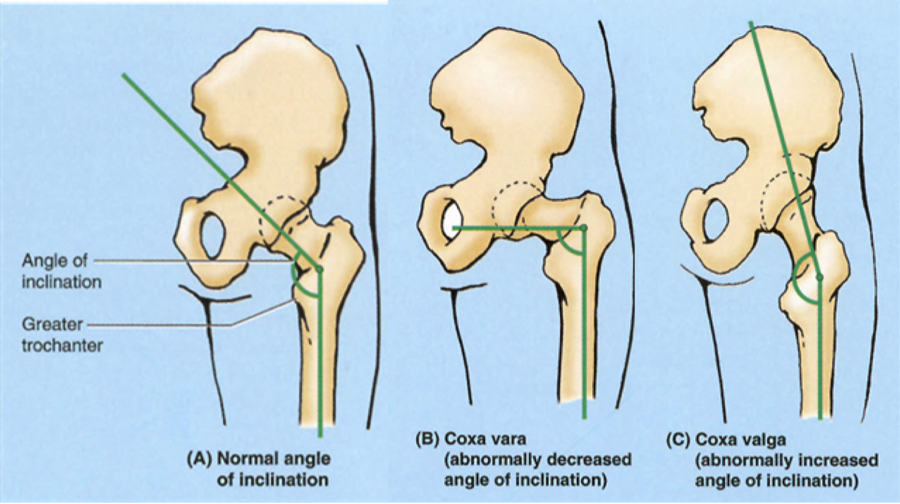
I don’t fall into the camp that says everyone must squat with a symmetrical stance. This defeats the purpose of individuality and respecting each person’s anatomy. When you factor in varying hip anatomy (varying degrees of APT/PPT, how this affects the ability to both flex and extend the hip, anteverted/retroverted acetabulums, anteverted/retroverted femurs, and varying femoral neck lengths), not to mention that you have two of them, not to mention other anthropometrical factors too, like torso length, femur length…it doesn’t take a genius to understand there’s no one right way to squat.

If a certain squat stance, width, depth, (whatever) feels better and more stable, why not run with it?

NOTE: I’d be doing a disservice by not linking to THIS article by Dean Somerset on the topic. He does a much better job at explaining things.

Back to the staggered stance.

600 lb squatter guy was trying to figure out why it seemed he couldn’t keep the barbell over mid-foot on his descent. I noted the staggered stance and he was like, “huh, I never thought of that.”

He then noted how he had always filmed his squats from the RIGHT side. I filmed from the left and his bar path looked to be on point. So maybe he was being a bit overcritical? Maybe the staggered stance evened things out? I’m sure there’s a biomechanical rabbit hole to be explored here (calling Greg Nuckols?).

When To “Fix” Someone’s Squat

I get it: Many of you reading aren’t elite level squatters, and much of the dialogue above has little merit in your training. The bigger picture, though, I think, is to avoid confirmation bias and sticking solely within camps that always agree with you. Everyone is a different, and there’s always more than one way to do something.

Last weekend, for me, was proof of that.

But I’d be remiss not to point out my standard or “comfort zone” is vastly different between an elite lifter and beginner/intermediate lifter.

Elite level lifters get much more leeway to mess up. More to the point: they’ve messed up enough to know what to do to not to mess up. Yeah, that makes sense. When I am coaching a beginner/novice, though, they’re rope for messing up is much, much shorter.

I still feel it’s important to avoid over-coaching and to allow an opportunity for newbies to figure things out.

But when it comes to squats I tend to have a few “No-No’s” initially.

1) You Round Your Back, a Part of My Soul Dies

Loaded spinal (end-range) flexion doesn’t do anyone any favors. Pick up a McGill book and join the party. I’d prefer to avoid it as much as possible in the beginning. If I see someone flexing their spine during a squat, it’s my job to figure out why?

From there I’m going to try my best to implement the modality or variation that’s going to best set them up for success.

Much of the time it’s getting someone to appreciate how to adopt a better bracing strategy and stabilize.

  • Brace your abs. <— Get “big air” and act as if someone’s going to punch you in the stomach.
  • Learning Active vs. Passive Foot, or spreading the floor with your feet (better yet, a cue I stole from Tony Bonvechio is “find the outside of your heels.”
  • Brace your abs.9


Full-body TENSION (trying to touch your elbows and pulling down on the bar helps here too) is the name of the game. The sooner a trainee learns this, the sooner he or she will clean up a lot of snafus in their squat technique.

Another easy fix is to implement an anterior load.

This is part of the reason why Goblet Squats or Plate Loaded Squats are so user-friendly and help to maintain a better torso position. The load is in FRONT which then forces the trainee to shift their weight and recruit/engage more of their anterior core, which then helps them remain more upright.


2) Knees Caving In (Past Neutral), Heels Coming Off Ground

The knees caving in aren’t always a deal breaker. Many trainees when they first put a barbell on their back and begin to squat for the first time resemble Bambi taking his first steps.

I don’t mind a little knee movement. Much of the time it’s just a matter of getting some reps in and whammo-bammo, the issue resolves itself.

It’s when it hits the point where they go past neutral and/or the heels come off the ground that it can become problematic.

Some things that have worked for me with knees caving:

  • Hey, don’t do that.
  • Think of your knee caps tracking with your pinky toe.
  • Place a band around the knees to provide some kinesthetic awareness. The band wants to push the knees in, they have to push the band out.

I want a squat to look like a squat. It requires ample ankle dorsiflexion, hip flexion, hip internal/external rotation, t-spine extension, among other things.

When someone’s heels come off the ground it’s often because they have no idea how to hip hinge.

Grooving the hip hinge and using props such as a box (box squats) to get someone to learn to “sit back” and use more of their posterior chain is a nice option. This will help keep the heels cemented to the floor.


NOTE: once they master that, the idea is to then perform an equal parts “knees forward, hips back” motion, learning to sit down into the squat (not so much back, back, back). Again, the squat should look like a squat

And That’s Really It

I’m not TRYING to find something wrong with everyone’s squat.

If the 2-3 things above are met from the get go we’re in a pretty darn good spot.

Things like bar position, foot stance/width, hand position, and everything else in between, while significant considerations for some people and staples for entertaining internet arguments, are all going to depend on several other factors (goals, anatomy, experience, ability level, injury history), and in the grand scheme of things are minute comparatively speaking.

Categoriescoaching Exercise Technique

Bench Press Technique: How to Not Hand-Off Like a Jackass

Remember those “The More You Know” PSA (Public Service Announcements) from the late 80’s and early 90’s?

They often ran during primetime shows on NBC and even during Saturday morning cartoons. Oh man, remember Saturday morning cartoons?

  • Transformers
  • GI Joe
  • Dungeons & Dragons
  • Alvin & the Chipmunks
  • Bionic Six
  • Captain Planet10

Those were the days.

The ads would typically feature a celebrity facing the camera and speaking in an earnest tone espousing the dangers of drugs, smoking, and not going to school.

All sound things to be earnest about, no doubt.

Sadly, a PSA was never made championing the idea that wearing a jean jacket with jeans wasn’t the key to gaining the attention of the opposite sex. Also, impressing girls with Star Wars quotes never worked either.11

But the “real” PSAs were always clear, concise, and cutting….scratching the surface of deeds that were for the greater good.

We should bring those PSAs back, albeit this time targeting the fitness crowd.

PSA #1: How to Hand-Off on the Bench Press

It sounds pointless and borderline trivial…but learning how to hand-off on the bench press is an acquired skill, and something that will drastically affect someone’s performance with the exercise.

Raise your hand if this has ever happened:

It’s bench day and as you work up towards your heavier sets it’s becoming a little harder to maintain appropriate upper back tightness as you un-rack the weight. Reluctantly, you decide to scour the gym floor to ask someone for a hand-off.

Finding someone who knows the intricacies of a “good” hand-off is on par with finding a ship other than the Millennium Falcon that can do the Kessel Run in less than 12 parsecs.

Note: I was a virgin till I was 21. Weird, I know.

What usually ends up happening is that after you spend time getting your shoulder blades in the right position (retracted and depressed/posteriorly tilted), driving your upper back into the bench, turning your lats on, and getting your foot position correct….it’s instantly negated when the guy/girl handing off haphazardly performs an explosive upright row with you attached to the bar.

They lift the bar up, rather than helping to “guide” the barbell into position.

Fail.

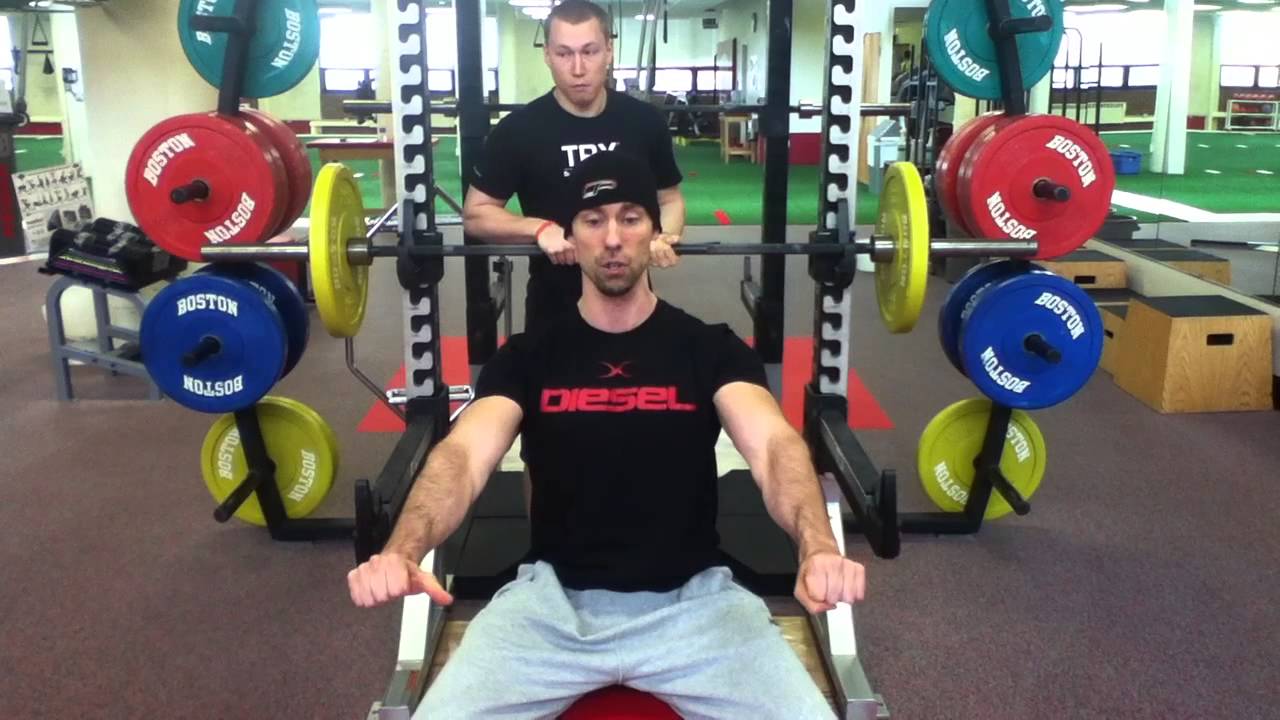
You have to get tight. Especially in the upper back. Without getting into the extreme details, I like to coach guys to place their feet on the bench (relax, it’s only for a few seconds), grab the bar, raise their hips, and drive their upper back into the bench. Simultaneously, I’ll tell them to consciously think to themselves, “together and DOWN” with the shoulder blades.

I then tell them to bring their feet to the ground – heels up/heels down is predicated on personal preference – and then “scoot” themselves up the bench to get even tighter.

It looks like this:

Why go through all that trouble to get tight, compact, and ready to hoist a barbell off your chest, only to NOT get a proper hand-off and/or lose all of it when you un-rack the bar?

Think about what happens when you un-rack a bar on your own, or you receive a piss-poor hand-off: the shoulders protract. As a result, the scapulae abduct and (most likely) anteriorly tilt as well, and stability is compromised.

Impressive bench press go bye-bye.

It’s my hope this video will help:


NOTE: I had every intention of filming a new video today, but then realized I had this one on my YouTube channel already. No sense reinventing the wheel.

A few points to consider that I didn’t cover in the video:

1. To reiterate: The “spotter” or hander-offer guy isn’t lifting the bar off the j-hooks, but rather “guiding” the bar to the starting position.

2.  Moreover, the lifter shouldn’t think of it as pressing the bar up and into the starting position, but instead “pulling” into position. Kind of like a bastardized straight-arm press down (albeit on your back).

3.  Getting down the cadence of 1….2….breath….lift off is the key here. It’s going to take some practice, which is why I highly advocate finding a training partner you trust.

3.  If at any point the guy providing the hand off starts chirping, “all you, all you, all you” when he’s clearly got his hands on the bar, immediately rack the bar and scissor kick him in the face.

Categoriescoaching Conditioning

Finishers That Will Finish You

Anyone familiar with the video game Mortal Kombat will appreciate the slight reference to it in the title of today’s post.

“Finish him.”12

Today’s guest post from Cressey Sports Performance coach and Strength Camp Coordinator, George Kalantzis, showcases some “killer” finishers that you can use at the end of your workout to add some extra conditioning or make you hate life.  Whatever floats your boat.

Enjoy.

46688753 - fit people working out in weights room at the gym

Copyright: wavebreakmediamicro / 123RF Stock Photo

You want to be shredded and understand that you need to train hard to get results. For many a great way to help expedite the process is to add high intensity short duration workouts to your training regimen.

What is A Finisher And How Do You Use Them?

A finisher is simply a short burst of high intensity training performed at the end of a workout that will drastically improve your conditioning levels and bring out that six pack. The cool thing about finishers is that you can use pretty much anything from your own bodyweight, to ropes, sleds, and barbells.

The sky is the limit when it comes to finishers.

When Do I Use Finishers?

For someone who is training 3x per week, full body routines, you could add those at the end of your workout for maximum fat burning effects. For those that prefer the traditional upper/lower split 4-5x’s a week, the type of finisher you would add depends on the amount of volume during your session.

For example, if you are lifting heavier earlier in the week, it would be wise to challenge your body in the same way so that your workout does not interfere with recovery. And on days that you have decided to take it lighter, maybe you could add in that extra finisher.

Lets say I squatted heavy on Monday, I would follow the workout with some 400 meter repeats for best results, and maybe towards the end of the week I would choose to do something less hellish like a slow intensity cardio based session.

Copyright: nndemidchick / 123RF Stock Photo

Everyone is going to be different and ultimately it is going to depend on your fitness level, the amount of time you have available, any other external stressors that you may have going on within your life.

The following workouts are designed to be finishers at the end of a workout and should last 5-10 minutes depending on your conditioning level.

You could also use them as an extra conditioning day during the week or when strapped for time. These circuits will be sure to jack up your heart rate and send your metabolism into overdrive.

Finisher City

1) Dumbbell Shoulder Carry/Renegade Rows

Grab a pair of dumbbells and choose wisely. This is a great circuit that can be used as pre-work to fire up the core and shoulders or as a finisher.


2) Kettlebell Complex Finisher

The KB finisher is probably one of my favorites to use in my own workouts and with clients. It really challenges your endurance and strength in one and is fun because you switch between three different exercises to prevent boredom.


3) Battle Rope Core Crusher

When you think about getting shredded, there is no better tool than the battle ropes. The cool thing about ropes is that you can pretty much take them anywhere from outside to inside, and they are so versatile that anything can go. Check out this core crusher . Be warned, it is not as easy as it looks, and 20-30 seconds of work can typically get the job done.


4) Sprints

What good would finisher be without sprinting? Sprint intervals have been shown to increase testosterone levels and prevent decline it’s decline so what are you waiting for?

Here is some of my sprint favorite to use:

  • 400 meter sprints for best time at least 90 second rest in between

Sprint for 15 seconds light job for 45 seconds Repeat 4-5x’s, increasing the number of rounds every week as you progress. This number is not set in stone, and any shorter interval bursts with a minimum a 2:1 rest to work ratio will do the trick.

Very tough : Want to really challenge your endurance and jack up your heart rate? Try 800 meter sprints, but you have been warned, these are not easy!

Conclusion

If you want to get shredded, will most likely help. They require a tremendous amount of effort but will be sure to boost your testosterone levels while elevating your fat loss levels. Use them at the end of the workout or during your off days for maximum results.

About the Author

George began his time at Cressey Sports Performance as an intern in the fall of 2013, and returned in 2014 as CSP’s Group Fitness Coordinator, overseeing all Strength Camp coaching and programming responsibilities.

George is a veteran of the United States Marine Corps and was awarded an honorary discharge after eight years of service. He possesses an MBA from Southern New Hampshire University and is currently attending massage school to become a licensed massage therapist.

Outside of CSP, George maintains a fitness-related blog that can be found at www.sgtkfitness.com.

He and his wife Shawna reside in Manchester, NH.

Categoriescoaching personal training rant

Porcelain Post: Jedi Mind Trick Your Way to More Clients and Better Retention

NOTE: the term “Porcelain Post” was invented by Brian Patrick Murphy and Pete Dupuis. Without getting into the specifics, it describes a post that can be read in the same time it takes you to go #2.

Huh, I guess that was more specific than I thought.

Enjoy.

35803741 - man sitting on a toilet seat with his pants and boxers down

Copyright: tuomaslehtinen / 123RF Stock Photo

While I know most mean well, I’m often amused by some of the posts and/or sponsored ads I come across on Facebook directed towards fitness professionals in an effort to teach them how to get more clients and better market themselves.

NOTE: For the record, I call BS on any person who says they’ve figured it all out and are willing to let me in on all their secrets for a mere $5000 weekend marketing bootcamp.13

The reality is, you don’t need to try to so hard. Well, you do…you just don’t need to overthink things and be a moron about it.

You Want More Clients or Wish the Ones You Have Would Work With You Longer?

1) Be Patient (and Be Good At What You Do)

Admittedly this is not a sexy answer. I might as well tell you the secret to getting better at deadlifts is to deadlift.

Success comes with experience. I hate to be the bearer of bad news, but if you’re an incoming personal trainer or coach it’s going to take months, if not years to establish yourself as a credible professional. Yes, there are exceptions and examples of people who do very well very quickly (and build a client roster that anyone would be envious of).

Tragic as it may seem, the likelihood this will describe you and your ascent within this industry is slim.

Get good, unapologetically good, at what you do (as in coach your clients well) and over the course of time, people will take notice.

When I worked in commercial gyms early in my career I can’t tell you how many clients I picked up as a result of them observing me over the span of several weeks. They’d watch how I interacted with my clients – how I was hands on, paid more attention, sometimes wore pants – and how my approach was different than how many of my colleagues interacted with theirs.

You’re always being watched and judged by your actions. The secret to separating yourself from the masses is to be better than the masses.

The act of giving a shit is profound, and people know it when they see it. So be patient, do the work (like everyone else has done in the history of ever), and see what happens.

2) Don’t Be Afraid to Say “I Don’t Know.”

The ol’ saying “fake it till you make it” has a time and place…until it doesn’t. People can smell a fraud a mile away.

Like it or not, you are a profound resource for you clients with regards to health & fitness information. Often times you’re THE resource, or at least top three:

  1. Google
  2. Their doctor
  3. Their friend who read something on the internet.
  4. You

Okay, so maybe top four.

That said, I don’t understand why some trainers and coaches are afraid to say “I don’t know” when they don’t know the answer to a question…as if they’re going to somehow lose personal trainer demerit points or Alex Trebek is going to pop out of nowhere and laugh in their face.

Here, let me show you how easy it is to say:

Example #1

Client: “Tony, why does my knee hurt when I do lunges?”

Me: “Maybe you lack ankle or hip mobility, or maybe keeping a more vertical tibia will help. Lets take a look.”

Example #2

Client: “Tony, what does the rotator cuff even do?”

Me: “Well, every anatomy book will tell you it’s involved with actions like glenohumeral external and internal rotation, as well as abducting the humerus. However it’s real function is to center the humeral head in the glenoid fossa. Also it helps with ninjaing.”

Example #3

Client: “What’s the point of kipping pull-ups?”

Me: “I don’t know.”

Photo Credit: T-Nation.com

See, it’s easy.14

3) Along the Same Lines, Don’t Be Afraid to Refer Out

The obvious talking point here is to refer a client out to a physical or manual therapist within your network when he or she experiences discomfort or pain when exercising.

Unless you went to school for physical therapy stop pretending to be one.

Too, why not refer someone out if or when their goals or needs surpass your level of expertise and knowledge? Again, I feel this bodes in your favor. Knowing your limitations as a coach is not something to be ashamed of. You can’t expect to be a jack of all trades.

If someone is interested in Olympic lifting I refer out.

If someone is interested in contest prep for a stage show I refer out.

If someone is interested in taking their DL from 600 to 700 lbs I refer out.

If someone is interested in training for the Laser Tag World Championships I own that shit.

46060017 - laser tag playground equipment close up view

Copyright: ideastudios / 123RF Stock Photo

When a client understands you have his or her’s best interests in mind, and are willing to refer them to someone who best fits their needs, I guarantee you nine times out of ten they’ll be back as a paying client or refer someone they know to you.

Win-win.

4) Practice Unrelenting Transparency

Here’s the Jedi Mind Trick of all Jedi Mind Tricks.

Be up front with clients that your goal is to make it so that they won’t need your services long-term.


One of my favorite books of all-time is Simon Sinek’s Start With Why. If you haven’t read it already, you should.

The idea is that instead of asking how or what or when, you should ask WHY? Everything begins with asking why and then you can hone on the how, what, and when.

Lately I’ve been starting each one of my speaking engagements by explaining my WHY behind what I do for a living. Coincidentally it’s the same message I relay to all new clients:

“There are any number of trainers and coaches out there you could hire. And like most of them, I too want to help you achieve your goals – whether it’s to get a little stronger, improve performance in your respective sport, shed some extra body fat, or help with a nagging injury.

I choose to do so with integrity and honesty, in addition to using equal parts evidence-based research and anecdotal “real-world” experience.”

I want to help you achieve your goals, but I also want to help you not have to rely on me long-term. I want to teach you, educate you, coach you. It’s my goal to make you your own best ally, asset, and advocate.”

A funny things happens: most tend to stay around for a while.

NOTE: Okay, so that was the opposite of a porcelain post and ended up being longer than expected. My bad.

Categoriescoaching Conditioning rant

Why CrossFit Doesn’t Make an Elite Athlete

Note From TG: I apologize in advance for the “click-bait” nature of this article.15 I have to assume that, based off the title, many of you have travelled a long distance across the internet to read what follows.

Welcome.

I hope you stick around. This is a guest post from strength coach, Travis Hansen. Do I agree with every word? No. Do I feel he brings up many valid points? Absolutely.

And on that note, happy reading. 

Without a shadow of a doubt, the question that I get asked more than any other as a coach, goes something like this: “Is your training style like CrossFit?”

Rather than get upset or start verbally bashing CrossFit like many do, I just simply inform the person that our training system is different in that it’s “athletic based” and CrossFit simply is not. But wait, Crossfitters are tremendous athletes right?

Unfortunately, they aren’t and by the end of this article you will know exactly why.
20110925 - crossfit fitness woman push ups pushup exercise and man weight lifting

Copyright: tonobalaguer / 123RF Stock Photo

Now if you have an extreme bias and preconceived notion regarding the CrossFit training philosophy, please try to stay objective and hear me out. I promise to stay completely objective even though it may come off harsh, and I will provide you with the facts for why we can’t and shouldn’t refer to Crossfitters as great athletes.

Athletic = CrossFit?

Lets begin with the actual definition of being athletic. What does it mean, who has it, and who doesn’t? Automatically, it is safe to say that we would associate this term with people like Calvin Johnson, Lebron James, Mike Trout, Yasiel Puig, Michael Jordan, Russell Westbrook, Serena Williams, and many more.

And we definitely should since these individuals undoubtedly epitomize athleticism. The definition of being athletic is the capacity to perform a specific skill set or series of skills at a high level to help improve sport performance. Below is a list of the predominant athletic based skills.  

Athleticism:                              

Power

Strength

Speed

Agility and Quickness

Conditioning

Now if a person can perform each of these at an ultra-high level they are going to be insane on the field, court, or wherever more times than not. Why? Because he or she will be able to express any specific sport skill, and research has shown that sport skill attainment is enhanced with increased athletic ability.

Next, I would like to also include some areas of training that serve as secondary and will help regulate performance in the athletic skill set. I will just call these secondary factors.

Secondary Factors:

Nutrition

Prehab-Rehab

Program Design

Muscle Building

Fat Loss

So taking into account just shear athletic skill, how should we rank CrossFit? I scored the system a 1 out of 5 or 20%. In other words it fails miserably for an actual athlete looking to perform better in a specific sport setting.
14158006 - young woman stretching her back after a heavy kettlebell workout in a gym

Copyright: ammentorp / 123RF Stock Photo

Words and opinion are very cheap, so I will show from a scientific and evidence based standpoint why they receive such a low score. Afterwards, I will elaborate on how crossfit fares with the support areas known as secondary factors, and finish by addressing any other areas of athletic development in which you didn’t see listed and how they fall into the puzzle.

Are You Still Reading?

The first skill on the list that we need to tackle is power. What is power? Power by definition is Force x Velocity. I like Strength x Speed which essentially means the same thing and is a bit easier to understand for most.

So it’s the ability to express as much force as possible as fast as humanly possible. Common displays or formal assessments for power that we use as athletic development or strength and conditioning coaches that you commonly witness in the sport realm is the Vertical Jump, Broad Jump, Running Vertical Jump, Throwing Velocity, Hang Clean/Snatch, etc.

Now how many people in CrossFit do you see perform a standing 40” Vertical Jump? How many do you see perform a 45-50” Running Vertical Jump? How about a 10’+ Broad Jump? Or a PROPERLY performed Hang Clean executed with a load that is 1-1.5 times that person’s bodyweight?

Before I continue, please don’t go out and scour the web desperately in an attempt to locate one individual who attained some of these values and had to have been practicing CrossFit at the time.

There are exceptions to every rule.

What’s important to note is that the system as a whole doesn’t come close to implementing the methods necessary to elicit these types of performances on a regular basis like so many athletic training systems across the country do. Keep in mind that these figures have become commonplace in team sport settings and scale MUCH MUCH higher in the elite population of athletes.

The next skill on the list is Strength. The ability of a muscle or muscle group to produce maximum voluntary force without time being a factor. A population that demonstrates this better than any other on the planet should immediately come to mind, and this is Powerlifters!

[Also, any athlete looking to become more athletic should adopt and perform a modified version of a powerlifting system such as Westside Barbell to maximize their athleticism.]

Lets stay on the topic at hand though. How does CrossFit as a whole score in the strength training department? Unfortunately, not very well at all. Without providing personal observations of this, I would way rather provide you with some valid “Strength Standard Charts” to reference as sound evidence HERE:

Now taking into account this solid reference which has factored in a legion of lifters across various federations at different body-weights, how would CrossFit score?

Not very good.

How many of these individuals do you know that can Bench Press 1.5-2x their bodyweight, or Squat and Deadlift 2.5-3x their bodyweight following a CrossFit training system? Not very many if you are being honest.

Ok this next one should not take too long. Speed! How many people in CrossFit do you know who can record an electronic 2.5-2.6 second 20 yard dash, or a 4-2-4.4 second 40 yard dash, or a sub 6.7 second 60 yard dash? Few and far between.

Agility and Quickness are next on the athleticism list. Also known as “Change of Direction Training” in many sectors, Agility and Quickness is the ability to accelerate and begin rapid motion in one direction, decelerate in that same direction, plant properly and then re-accelerate or “cut” in a new direction fast!

Exercises such as the 5-10-5, Cone Drill, 1-2 Stick Series, etc. are great variations that serve as Agility and Quickness Training Tests.

Note From TG: it kinda-sorta looks like this…..;o)

Moreover, guys like Barry Sanders and Darren Sproles are brilliant examples of this athletic skill at work. If you really watch it’s not very hard to identify that just the shear nature of CrossFit fails to deliver here.

Team sports such as football, basketball, baseball, soccer, hockey, lacrosse, etc. are so athletic and require that a male or female constantly move and react in all 3 planes of motion as fast as possible through the entire muscle contraction spectrum (concentric, eccentric, and isometric). CrossFit on the other hand lives on a tightrope as events are practiced in an exclusive linear fashion, omitting an essential athletic quality.

As I’ve visited different “boxes” just mainly out of curiosity, or heard Crossfitters brag to me about how athletic they were, I’ve never actually seen drills practiced that encourage the development of this athletic function. Have you? Therefore it’s only fair to discount this system as an option for enhancing Agility and Quickness.

Conditioning is obviously going to be the one area of performance where I would have to credit CrossFit absolutely.

Several Crossfitters possess tremendous work capacities and development of the 3 metabolic energy systems (Alactic, Lactic, and Aerobic) much like boxers and MMA fighters. This can be seen at any of the CrossFit Games on ESPN. In regards to strictly conditioning, the feats exhibited by these competitors is quite impressive.

What Next?

So as of right now I believe I’ve proven to you why CrossFit fails in terms of effectively enhancing athleticism. Next I think it’s important to briefly analyze all secondary measures which could impact the primary skills to show what else may or may not be missing for athletes looking to get more athletic and better in a particular sport, who regularly practice CrossFit.

The first element that I would like to discuss is Nutrition. Obviously, “The Paleo Diet” is the foundation for all of the CrossFit population. I must admit that I think there were quite a few positives I took away from both books. The intent of the content is very health-based, the food selection is very nutrient dense, and Dr. Loren Cordain disclosed some interesting scientific points surrounding the topic for sure.

In his book “The Paleo Diet for Athletes,” Dr. Cordain does a great job of adjusting the modern Paleo diet recommendations and states the need that athletes following the Paleo Diet could derive half of their total caloric intake for the day from healthy carbohydrate sources:

“For example, an athlete training once a day for 90 minutes may burn 600 calories from carbohydrates during exercise and needs to take in at least that much during stages 1, 2, 3, and 4 of recovery. This athlete may be eating around 3,000 total calories daily. If he gets 50 percent of his daily calories from carbohydrate, he would take in an additional 900 calories in carbs that day in stage 4, above and beyond the carbohydrate consumed in the earlier stages of the day.”1

And if you would like to know exactly why athletes need more carbohydrates than check out this series of articles I recently wrote:

5 Scientific Reasons to Eat Carbs

5 More Scientific Reasons Athletes Should Eat Carbs

Even More Reasons Why Athletes Should Eat Carbs

Prehab and Rehab Techniques are critical for competitive athletes who want to excel indefinitely, and it should be categorized as its own type of training if it officially is not already.

Techniques such as immersion baths, contrast, EMS, massage, tempo work, mobility/bodyweight circuits, meditation-relaxation, cat naps, static stretching, corrective exercises, and much more have been scientifically proven to hasten recovery from all the high intensity work and provide several benefits (Blood flow, nutrient and hormonal delivery, etc. etc.) to ultimately assist in athletic enhancement.

A majority of this should be implemented into a competitive athlete’s program from the get go, however, I’ve never really seen much discussion or emphasis of this type of training from Crossfitters, so I can only assume it’s not very important to this culture even though it’s undoubtedly essential to athletic performance.

Without a properly structured training program it would be very difficult to ensure that athlete’s are staying healthy and improving in all facets of performance over the long-term. Periodization is key and serves as the foundation for everything in the program.

However, I’ve never officially heard of any type of scientifically valid program design model being implemented for athletes who follow CrossFit. Do you guys elect a Linear, Alternating, Undulating, Concurrent, or Conjugate based System?

What I do know is that the works of famous programming researchers such as Tudor Bompa, Charlie Francis, and several others have shown us that having a pre-planned annual training model is a must for an athlete looking to reach his full potential. 2

A simple “WOD” which is arbitrarily designed to satisfy that particular day’s workout in the name of a male or female, will not suffice and the results will show.

Note From TG: here’s where I’ll chime in. The idea that all CrossFit boxes don’t adopt some semblance of programming structure is a bit harsh (not that I think that’s what Travis is implying). I’ve trained at and observed numerous CrossFit gyms and have been very impressed with numerous staff’s and their attention to detail on this topic. 

To say that Ben Bergeron – who coached both winners (male and female) at this year’s CrossFit Games – doesn’t implement a “plan” or pay special attention to detail with regards to how to best set up/periodize his athletes for success is unrealistic.

Just wanted to give some props when props is due.

The last two remaining secondary factors are fat loss and muscle building qualities. 

I must give kudos to CrossFit for creating a lot of fat loss testimony all over the world. I’m sure that thousands of people have lost weight/fat utilizing the CrossFit system. 3

However, what really bugs me is that you rarely if ever hear credit being distributed by CrossFit authorities on where specific training strategies were adopted. Did they just magically guess and innovate methods proven to work better than anything on the training market?

Hell no.

Furthermore, I see many specialized fat loss techniques being regularly implemented by CrossFit such as: HIIT, Metabolic Resistance Training, Timed Sets, Complexes, etc. but where the hell did that come from?

Not Crossfit unfortunately.

Ten years ago a guy by the name of Alwyn Cosgrove was busting out fat loss manuals left and right and disclosing drills and methods I nor anyone had ever seen before. The training concepts were brilliant and revolutionary at the time, but still hadn’t hit the mainstream yet.  He was also sending out newsletters at the time which validated these now popular methods through sound research and tremendous data he was collecting at his training facility in South California with his wife Rachel, who was also a proven expert. I still have them. But how many of you actually know Alwyn and Rachel Cosgrove? I guarantee not as many as there should be.

Muscle Building is the final remaining topic that needs to be discussed. It’s no secret now that the CrossFit system involves primarily a moderate intensity/high training volume approach for general fitness, conditioning, and fat loss purposes.

With that being said this form of training environment will lend well to acquiring quality muscle mass pretty fast and it’s also why so many of the guys that practice CrossFit are pretty jacked. If you want to know more in depth info on this topic then definitely checkout the research and works of guys like Jason Ferruggia, Brad Schoenfeld, Bret Contreras, and Lyle McDonald.
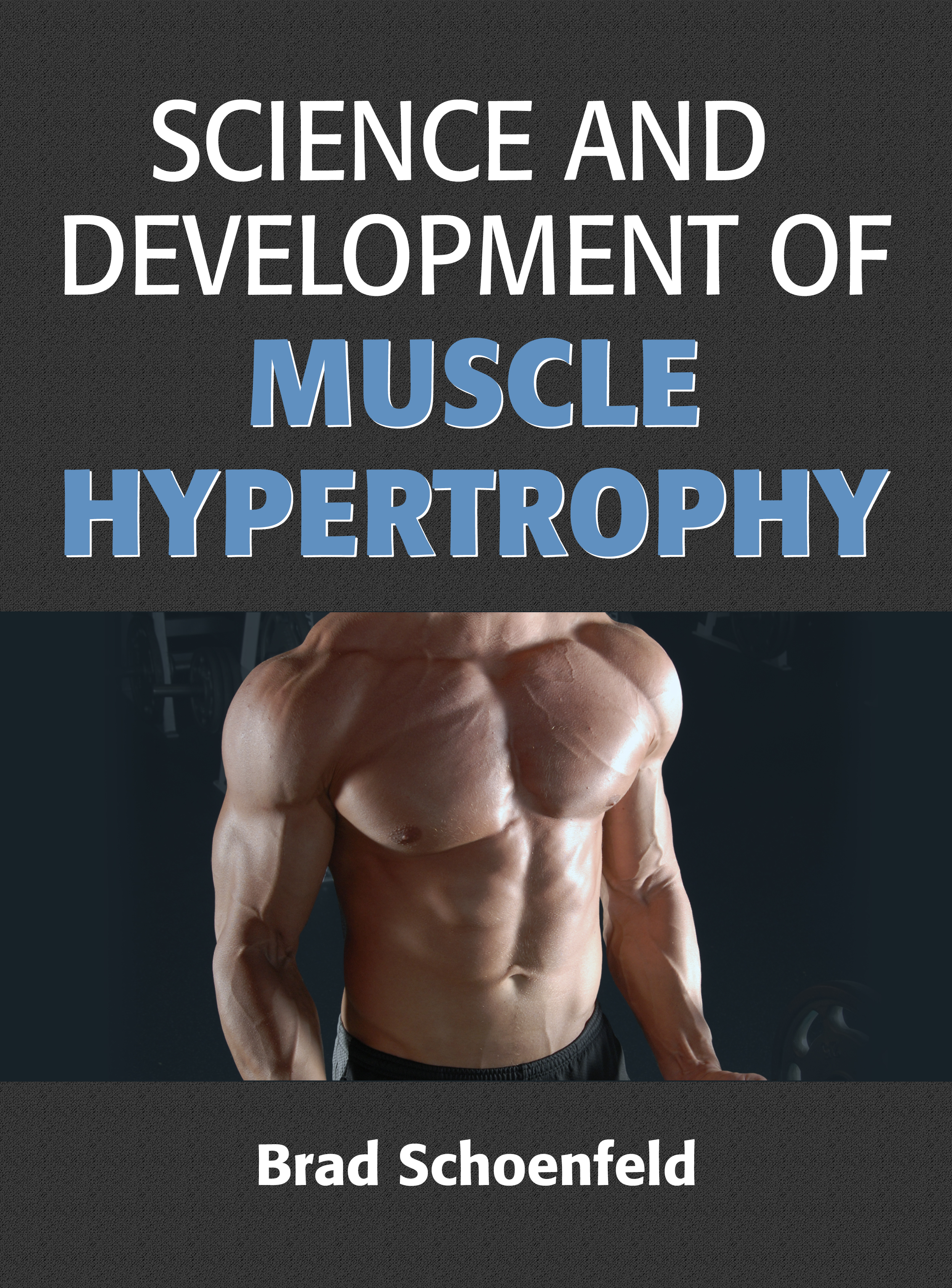
Specific muscle mass or cross sectional area is also going to be a very strong indicator of athletic success in many cases, so this is one area where CrossFit has a decent foundation laid out if they can implement all of the training concerns mentioned previously.

Inter and Intramuscular Coordination, balance and stability training, and core training are I’m sure other areas that coaches or anyone reading this would think needs to be a primary concern. Fortunately, the methods employed for the primary skill set I provided you will do a tremendous job of enhancing these qualities indirectly. Here is a piece I wrote for the ISSA awhile back which illustrates my point as it pertains to balance-stabilization training:

Does Balance Training Improve Speed?

Well That’s it Everyone.

I hope you enjoyed this piece and learned the distinction between CrossFit and real athletic training.

They are presently very dissimilar, although they get tied in together many times based on my experience for whatever reason. Too re-iterate I’m really not trying to demean or be destructive towards the CrossFit philosophy at all. Peer review should be overly critical and brutally honest. I’ve written many articles and a couple of books and I can tell you firsthand that this is the case from the experts that analyzed my work, and I wouldn’t have it any other way.

If CrossFit is really serious about crossing over into the athletic training realm, then they need to start taking science more seriously, credit the founders, and utilize methods that are actually intended for athletes that truly work.

Lastly, I really think we currently underrate just how great so many high level team sport athletes really are. Genes aside, contemporary team sport athletes are amazing. On a final note, understand that athletic development is a big puzzle, and there is a lot that has to come together for any one athlete to be successful.

SCIENTIFIC REFERENCES:

#1-Cordain, Loren. The Paleo Diet for Athletes. Rodale. Emmaus, PA. 2005.

#2-http://articles.elitefts.com/training-articles/sports-training/overview-of-periodization-methods-for-resistance-training/

#3-http://www.bjgaddour.com/what-do-you-think-about-crossfit

About the Author

Travis Hansen has been involved in the field of Human Performance Enhancement for nearly a decade. He graduated with a Bachelor’s degree in Fitness and Wellness, and holds 3 different training certifications from the ISSA, NASM, and NCSF. He was the Head Strength and Conditioning Coach for the Reno Bighorns of the NBADL for their 2010 season, and he is currently the Director of The Reno Speed School inside the South Reno Athletic Club. He has worked with hundreds of athletes from almost all sports, ranging from the youth to professional ranks. He is the author of the hot selling “Speed Encyclopedia,” and he is also the leading authority on speed development for the International Sports Sciences Association.


 

Categoriescoaching fitness business Motivational

You’re a Coach, You’re Busy, Lets Adapt

There’s a thick common thread that weaves throughout the fitness industry, for coaches in particular.

3839066 - bach of a coach

Copyright: venezolana74 / 123RF Stock Photo

This common thread is made of stress and loops its way through our daily schedules. It pulls on our time blocks and puts us in a crunch. We’re giving all of our time, and our energy, to our clients and leaving none of either for ourselves.

Our training isn’t consistent enough.

Meals are missed.

The stress compounds.

The frustration mounts.

Instead of carving out time to fill our bucket so that we may give to others, we exhaust our resources then burn through our reserves and leave our buckets empty, with a hole in the bottom. It’s no way to live, and it’s impossible to perform at our best in this condition.

Chris Merritt and I developed Strength Faction to help other coaches and trainers avoid this downward spiral that ends in the burnout pit.

It’s time to open the discussion about busy schedule training strategies.

Take A Deep, Lung-filling, Relaxed, Fucking Breath

It goes in through your nose, fills your belly and expands into your chest. It expands in 360 degrees through your thorax. It comes in for at least three seconds—four is even better. Then you release it for twice as long as it took to take it in.

You do this every time you feel hectic and scattered—when stress mounts and frustration overwhelms because your responsibilities to everyone else are overshadowing your own training desires. You do this until the frustration escapes from your head, releasing your body’s tension.

Break Up The Workout

We all suffer from a fitness industry cognitive condition I call the spreadsheet paradigm—we have to follow a program exactly as it’s dictated on a spreadsheet. There’s no shame in this thought process—it’s rote conditioning at its finest.

We’ve learned over time that if we don’t start the day’s programming at the top, and finish at the bottom, that we’ve failed. This line of thinking continues on. Since if we can’t begin at the top and finish at the bottom, and that denotes failure, there’s no use in doing anything at all.

Bag it. No training today.

The spreadsheet paradigm is bullshit. I mean, it’s totally real, but it’s a bullshit thought parasite that needs extermination—especially for busy coaches and trainers. Reality is we just need to do the work we can manage to do in the time we have to manage it in. We need consistency that fits our work and life.

(Before we move on, note that if you have the full blocks of time, and have the mental, physical and emotional resources to perform the program as is, do that.)

But if you can’t, that’s totally cool. We just have to break up the workout into smaller blocks.

Start by considering your goals. Is your main goal right now to move better, or is it to get stronger? Are you looking to be so hot that you frequently find yourself in precarious sexual situations? All are valid. All are worthy.

51458156 - couple in love, hot fire woman and cold man, romantic girl kiss lover

Copyright: inarik / 123RF Stock Photo

Consider your goals before we break up the workout so that you may prioritize which part of the programs you’ll accomplish. This implies that you may not get all of the components complete. Take a deep breath, one of those breaths we described above, because it’s O-fucking-K.

Now that you have your goals in mind, think of your schedule. Find your breaks and note them all.

Even if they’re miniscule, ten minute gaps between clients.

Now that you know your goals and have noted your breaks, look at the components of the program: warm-up/movement training, strength training, conditioning. Consider which components will most impact progress toward your goals.

Do you have your goals, your schedule blocks and the programming components written out in front of you? Cool.

Let’s hypothetically say that you have a client at 6 am then another at 7:30 am. It takes you a couple of minutes to set up for each client, and your current goal is to achieve ridiculous super hotness that makes underwear fall off everyone, guys and gals alike, as you walk your sweet ass down the street.

So the most impactful components to achieve your hotness are your warm-up, your strength work and your conditioning. Well, on this particular day you only have one break that you’re certain you’ll be able to get training in before other responsibilities overwhelm you and your energy is drained.

35753749 - attractive fit woman exercising in studio with copyspace. image of healthy young female athlete doing fitness workout against grey background.

Copyright: ammentorp / 123RF Stock Photo

So you say to yourself,

“Sexy, we’re going to get to the gym at 5:40am so we can get our warm-up in before our first client at 6. Then, when that client finishes, we’re going to get our conditioning done and grab a quick meal before our 7:30 client. Then we’re going to feel good that we made good use of the time that we had and we’re going to have a great rest of the day.”

See what happened there? We prioritized based on our goals and we made use of the little time we had. It was awesome.

Now, if you have more blocks of time, you include more components of the program.

Ten minutes here?—do your warm-up.

Another ten minutes there?—do your power and core training.

Oh boy! Another 20 minutes over there?—hit as much of your strength training as you can.

And so on. And so forth.

Most imperative is that we break the spreadsheet paradigm and accomplish what we can with the time we have while prioritizing our actions toward our goals.

What If You’re Just Wrecked?

If the more intense components of the program are too taxing based on your current stress level, bag them. Seriously, it’s O-fucking-K. You’re not going to do anything good by compounding the stress when you feel overwhelmed. Think recovery and regeneration instead.

Do some cardiac output.

Do your warm-up a few times.

Just get out of the gym and take a walk.

Meditate.16

11471407 - woman meditating yoga in lotus position on busy urban street

Copyright: mangostock / 123RF Stock Photo

Read.

Just do something that takes your stress level down. If you’re totally at a loss, do some cardiac output. The light neural stimulation promotes recovery and regeneration. The constant, low-intensity movement relieves stress.

Kicking Ass Is Doing The Right Things For Ourselves At The Right Times

You’re busy, adapt to your situation rather than trying to force something that isn’t there. Just because you’re not ripping barbells to and fro doesn’t mean you’re not kicking ass. Kicking ass is being intelligent and doing what you need to do for yourself right now. Use this article and do just that.

About the Author

Todd Bumgardner, MS, CSCS is a co-founder of Strength Faction, an online coaching program for strength coaches and personal trainers that helps fitness industry folks transform their bodies and their coaching. He and his partner, Chris Merritt, just released a great, free E-book on how to keep your training on track, even while you’re training all of your clients.

You can download it here: Train Yourself…Even While You’re Training Everyone Else.