Categoriescoaching fitness business psychology

Psych Skills for Fitness Pros II: Inside the Coach’s Mind Explained

In November my wife, Dr. Lisa Lewis, will be putting on a 2-day LIVE workshop in Boston that focuses on psychological skills geared toward fitness professionals.

I, admittedly, am a bit biased and think Lisa’s content is superb. I’ve stated on numerous occasions that what’s helped me develop most as a coach over the course of the past decade (+) is confiding in her and leaning into the idea that it’s the “soft skills” – empathy, compassion, listening, having a better understanding of the many layers of motivation –  where I had the largest gap to overcome in my growth.

And I wholeheartedly feel this is an area where most other fitness pros need to grow as well.

I’ve laid out in recent weeks the general outline of the upcoming workshop, but in hindsight can understand how my explanation may have come across as a bit nebulous if not incomplete:

  • Why do I need to learn about motivation?
  • I’m not a psychologist, why does this stuff even matter?
  • Did Tony mention something about a tickle fight?
  • I mean, what the heck am I walking into here?

Lisa was kind enough to go into much, much more detail on what you can expect from the upcoming weekend and how the information she’ll share will help you become a better coach.

Copyright: branche

Inside the Coach’s Mind – Explained

As a coach, your knowledge about programming, anatomy, physiology, getting people stronger, getting people leaner, and getting clients wherever they want to “go” is central to doing a good job. But your technical knowledge and acquired coaching skills aren’t the only tools you use. 

When you coach, you build a relationship, using:

  • Rapport.
  • Communication. 
  • Collaboration
  • Facilitation of change. 

You work hard to understand and help each client, with their own unique personality, tendencies, biases, and quirks. And, just as important, you are also a unique individual with your own tendencies, biases, and ways of thinking, feeling, and being in the world. In other words, you and your clients have a psychology – and that psychology directly affects the process and outcome of coaching. 
Psychology is the study of: 

  1. Cognition (Thinking)
  2. Emotion (Feeling)
  3. Behavior (Doing). 

Your psychology impacts how you: 

  1. Think,
  2. feel,
  3. and act about, toward, and with your clients.

In short, your psychology – and understanding it – matters.

In Volume I of Psych Skills for Fit Pros, we explored the nature of change, motivation, and the skills coaches need to facilitate those psychological phenomena. 

In Volume II, we explore the coach’s psychology:

  1. Your thinking style, strengths, and thinking “traps”
  2. Your emotions, unconscious tendencies, and processes
  3. Your professional boundaries, communication style, and self-care habits

You might be reading this and wondering, “What the heck does all this stuff have to do with me being a good coach?”

Good question. Two important reasons:

First, When you understand how your thoughts, emotions, and behaviors “work,” you can see people, problems, and situations more clearly. When you are familiar with your own biases, blind spots, triggers, and stressors, you can more effectively separate your issues from The Issue at hand. 

Second, the constant variable in all of your work as a coach is you.

The clients change, the setting may change, the point in time and context changes – but there you are.

By developing awareness of how your mind works and how you impact coaching relationships and coaching outcomes, you develop personally and professionally. And as everyone reading this knows, personal and professional development are central to career-long growth, effectiveness, and enjoyment of the coaching profession. 

On November 6th and 7th, 2021, Volume II of Psych Skills for Fit Pros will be live at Ethos Fitness and Performance in Boston, MA. 

(Register Now)

Curriculum Overview: 

Day 1 (Full Day)

I. Introduction

A. Psychology in Coaching: Why knowing your own mind matters
B. Self-Awareness: A long game – but worth it personally and professionally
C. Mindfulness: Mental Preparation for self-awareness and effective coaching
D. Psychology 101: A Primer

II. Cognition

A. Thoughts, and how they work
B. Thinking styles, tendencies, and traps
C. How to identify thinking traps, and use clear thinking to coach effectively
D. Character Strengths
E. Application

  1. Identify and correct thinking traps to improve coaching
  2. Leverage your strengths to maximize coaching effectiveness
  3. Case Study

III. Emotion

A. Feelings, and how they work
B. Unconsciousness, and how it impacts coaching

  1. There-and-then (your past influences how you see the present)
  2. Transference in coaching
  3. Countertransference in coaching
  4. Content and process in coaching

C. Application

  1. Identify emotions and processes that influence your coaching, triggers for negative emotions and processes, and a plan for correcting unhelpful emotions and processes. 
  2. Case Study

Day 2 (Half Day)

IV. Behaviors

A. Your actions, and how they work
B. Interpersonal Boundaries
C. Setting the “Frame” for coaching: Enactment of your mission, goals, and values
D. Self-Care: maintaining physical and mental health for optimal coaching and thriving
E. Application

  1. Understand and outline your boundaries, coaching “frame”, self-care practices, and how those maximize your performance as a coach
  2. Case Study

V. Bringing It All Together

A. Your psychology is the most powerful tool you have for helping clients
B. Top Take-Aways
C. Beyond the seminar

  1. Strengths to leverage
  2. Blind spots and biases to work on
  3. More to learn

Who is This Seminar For? 

  • Coaches who have the nuts and bolts competencies of coaching (sets, reps, programming), and want to further their skills and effectiveness as a coach. 
  • Coaches who are open to looking within themselves, identifying strengths and weaknesses, and working on their own psychology, even though the benefits and payoff might not be immediate. 
  • Coaches who get that professional and personal development is sometimes a “long game” and that investments you make in those areas can take time to yield positive results. 
  • Coaches who know that psychology and mindset are just as important as physiology and fitness. 
Who is This Seminar NOT For? 

  • Coaches who need to focus on the nuts and bolts of coaching (sets, reps, programming)
  • Coaches who do not like thinking about, talking about, or looking within themselves, and who thinking psychology is not a part of fitness. 
  • Coaches who want continuing education to yield immediate benefit, and don’t want to focus on longer-term improvements and change. 

If this seminar looks like it is for you, 

Come to Boston and join us! 

(Register Now)

Where: Ethos Fitness and Performance, 46 Wareham St. Boston, MA 02118

When: Saturday, November 6 (Full day) and Sunday, November 7th (Half day)

Cost: $699

Register HERE

Categoriescoaching continuing education Corrective Exercise

5 Ways I Include Single Leg Training In My Programs

Single leg training isn’t sexy to talk, much less write about. In terms of excitement factor I’d rank it somewhere between a watching a NASCAR race and picking lint out of your belly button.

I can understand the cacophony of subsequent eye rolls and yawns that are being directed my way.

“An article on single leg training?! Come on, Tony. What’s next keto recipes?”

I get it.

However, hear me out.

Copyright: vadymvdrobot / 123RF Stock Photo

5 Ways I Include Single Leg Training In My Programs

Single leg training is important shit.

Now, more often than not whenever there’s an article written on single leg training it’s under the guise or in congruence with taking a massive dump on bilateral training (think: squats and/or deadlifts).

The implication being one should avoid bilateral or two-legged training in lieu of performing only unilateral or one-legged training.

I think it’s a stupid argument to have on par with which is better: Low-bar vs. high-bar squats? Or mint chocolate chip vs. mint Oreo ice-cream?

With deference, almost always, the appropriate answer to the single leg vs. bilateral debate (and, really, any question in the history of ever) is “it depends.”

  • Some people are more concerned with being brutally strong with the “Big 3”  and are only worried about optimal force production. If that’s the case bilateral movements should make up the bulk of training.
  • Conversely, some people, especially athletes, need to marinate in a diverse pool of movement. In that case single leg training is going to take precedence and play more of an integral part in their training and programming.
  • Are there people out there who debate ice-cream? Don’t be cray-cray.

Suffice it to say, here’s my take on the debate: BOTH are important, BOTH play a significant role in a well-balanced program, and BOTH should be used simultaneously.

If we’re being honest, though, we generally don’t have to pull any arms behind backs in order to convince people to perform bilateral movements like squats and deadlifts.

It’s pretty much bro-code.

Single leg work on the other hand?

Well, that can be a bit of a harder sell.

It’s unfortunate because even if someone’s goal is to be a brick shit house (or a house of shit bricks, I’m not here to judge) single leg training has many benefits, mmmkay.

Including but not limited to:

  • Joint health and integrity (I have yet to find an individual with a history of knee, hip and/or back issues who doesn’t benefit from a healthy dose of single leg training).
  • Improved balance.
  • Improved foot/ankle/hip stability. Or, stability in general.1
  • A fantastic way to train rotary stability (<— a fancy schmancy way of saying something will work your core).
  • Greater specificity to sport (and real life).
  • Improved strength & hypertrophy (depending on how it’s implemented).
  • Helps address weaknesses and imbalances from limb to limb.
  • Reduced wear and tear via less axial loading.
  • More exercise variety.

And the list can go on.2

Below are (some) ways I like to include single leg training in my programs.

1) Treat Single Leg Training Like Eating Broccoli

It’s just, you know, something that has to be done.

It’s hard for me to peruse the list I made above of all the benefits and not include some semblance of single leg training in a program (regardless of someone’s goal).

There aren’t many scenarios I can think of off-hand where it won’t help.

  • Be a better athlete? Check
  • Be a better lifter? Check
  • Beat Jason Bourne in a knife fight? Check.

All the bases are covered.

That said, one pet-peeve of mine and something I notice all….the…..time as a coach is that people tend to go way too heavy.

I’ll watch some guys grab the 80+ lb dumbbells and perform walking lunges and think to myself “why?”

But this is after both my corneas jump out of their eye sockets and then proceed to jump into a bucket of battery acid.

Their knees are caving in every which way and it’s evident most are unable to control the load. This kinda defeats the purpose of doing it in the first place.

Stop training your ego and lower the load.

I’d rather people use a load they can control and perform it for high(er) reps than to grab the heaviest weight possible and make perhaps do more harm than good.

ALSO…..

It’s my own preference as a coach, but I much prefer people to adopt more of a forward lean when performing lunge variations.


When you assume a more upright posture during lunges it makes it easier to crank through the lower back which can also result in excessive rib flair; I.e., a more unstable position.

The inner dialogue should be more “shoulders over knees” than “shoulders over hips.”

2) Potentiation (Or, Turning “Stuff” On)

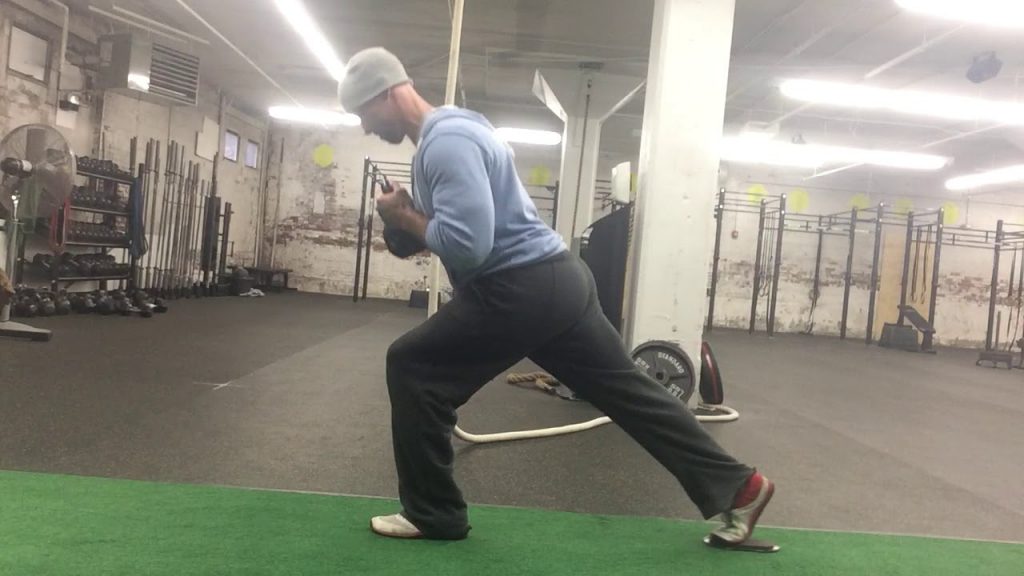
I often have my clients perform a single leg movement before squatting or deadlifting.

https://www.youtube.com/watch?v=a1Y73sPHKxw


I find it’s a nice way to turn “stuff” on and to prime the body for the extracurricular shenanigans going down shortly thereafter.

Goblet variations are my go to here (less grip intensive): Goblet Reverse Lunge, Goblet Forward Lunge, Goblet Reverse TO Forward Lunge, Goblet Split Squat, Goblet Bulgarian Split Squat, Goblet Whateverthefuck.


The idea is to go LIGHT and to OWN the movement.

I like to use 2-3 sets of 6-8 reps per side.

Pants optional.

3) Adding Isometric Holds

If you really want to humble someone (and to make their glutes scream for blood mercy) try adding in some isometric holds.


I LOVE using these with my clients/athletes as it forces them to use sloooooow down, to stay more cognizant of body position, and it also aids in more time under tension.

4. Combo Movements

Another way I like to include single leg training into my programs is to combine two movements into one.

This is a fantastic way to make the movements a bit more challenging and also serves as an opportunity to stroke my evil strength coach beard (despite the fact I don’t have one).

You want sore, I’ll give you sore.

Goblet Step-Through

Rear Foot Elevated Kang Squat

5) Fake Single Leg Training

Least we forget single leg training can be too advanced of an option for some people. Whether it’s due to novelty or “just because” we can incorporate “fake” single leg options to help ramp people to the real thing.

I’m more concerned with setting people up for as much success as possible rather than making them feel frustrated.

In that light here are two excellent options I use all the time:

Wall Press RDL

Here, we can still groove a single leg hinge pattern, but in a supported fashion.

For those who have balance issues this is an excellent choice.

B-Stance Squat


With the offset (or B) stance, we place more load on the front leg. Again, this is a great option for those with stability/balance issues and who aren’t quite ready for actual 1-legged squats (you sadistic bastard).

Categoriesbusiness coaching personal training

Success in the Fitness Industry: Reality vs. Expectations

Copyright: saknakorn

Success in the Fitness Industry: Reality vs. Expectations

People who know me well know how much I’m obsessed with movies. I enjoy reading about them (what’s coming out or on the horizon of coming out), debating them (what’s the better 1997 release: Boogie Nights or Good Will Hunting?), and whenever possible…

…watching them.

I’ll watch pretty much any genre – drama, horror, comedy, thriller, documentary, John Wick, anything.

However, what may be unexpected is how much of a fan of romantic comedies I am.

  • Notting Hill
  • You’ve Got Mail
  • Love Jones
  • Forgetting Sarah Marshall

Put a girl in front of a boy (or boy in front of a girl; or boy in front of a boy; or girl in front of a girl), add some sexual tension, witty dialogue, & ensuing high jinks and I’m there.

(Added intrigue if somehow there’s ninjas and/or a threat of a nuclear holocaust involved).

NOTE TO SELF: Begin screenplay for When Harry Met Sally meets The Sum of All Fears (with a supporting comedic role provided by a Xenomorph XX121, you know, the alien from Alien). 

That shit will just write itself.

One of my all-time favorites (and highly underrated) romantic comedies is (500) Days of Summer.

There’s much I love about the movie, but one thing that stands out is a scene right smack dab in the middle titled “expectations vs. reality.

In it, Tom (the protagonist) is meandering to a dinner party in the hopes of re-kindling a relationship with a recent ex (Summer).

The entire scene is shot as a split screen with one side of the television labeled expectations; or what Tom hopes to happen. A night where he & Summer flirt, are entrenched in captivating conversation, and, in fact, seemingly fall back into love.

Simultaneously, the other side of the screen showcases reality. A night where Tom and Summer exchange a few pleasantries, but in the end he’s off in the corner of the room sulking realizing Summer has moved on from their relationship, and he eventually walks home…

…alone.


GODDAMIT, who’s wearing the onion shirt around here?! I’M NOT CRYING, YOU’RE CRYING!

Anyway, I can’t help but notice a parallel theme in the fitness industry…

…an “Expectation vs. Reality” tug-of-war with regards to what REALLY yields success.

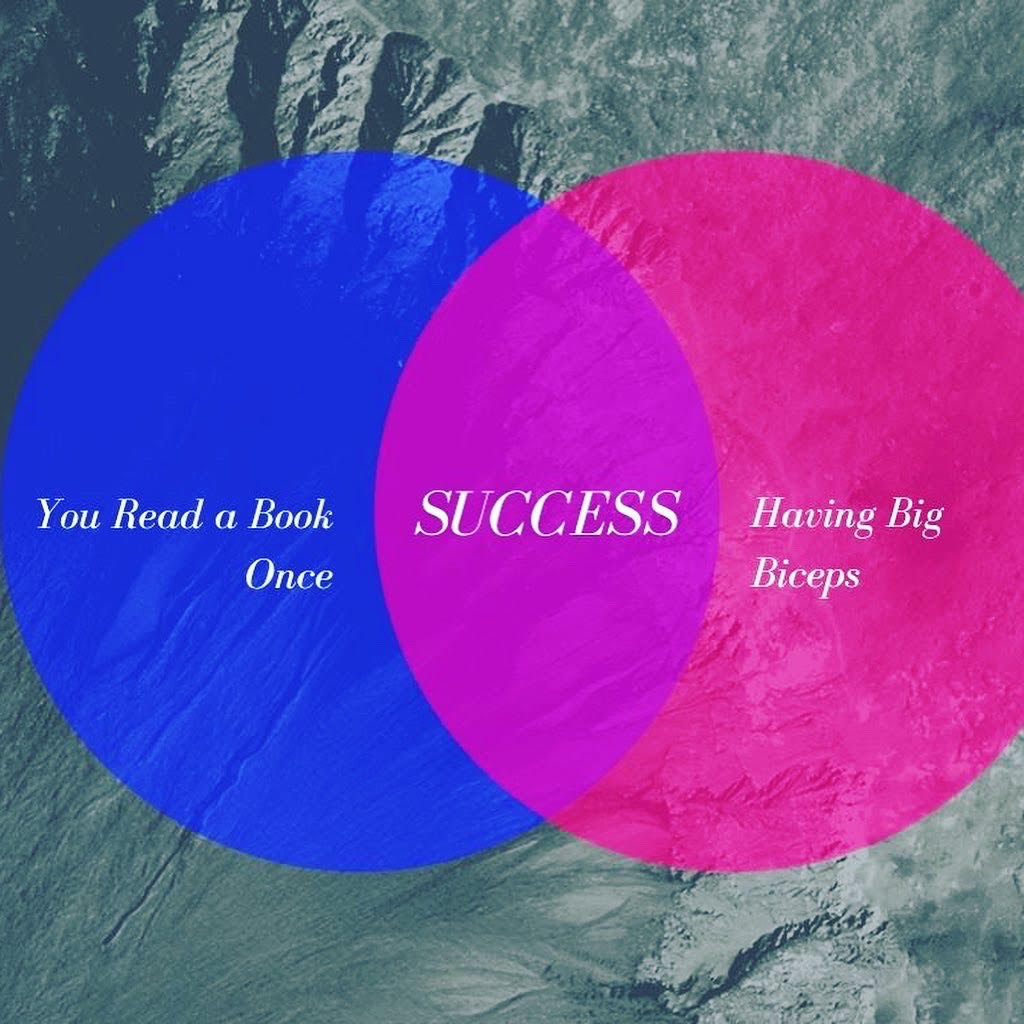
EXPECTATIONS: Many (not all) are intoxicated by the illusion that all you need to be “successful” is to have read a few books and to look the part.

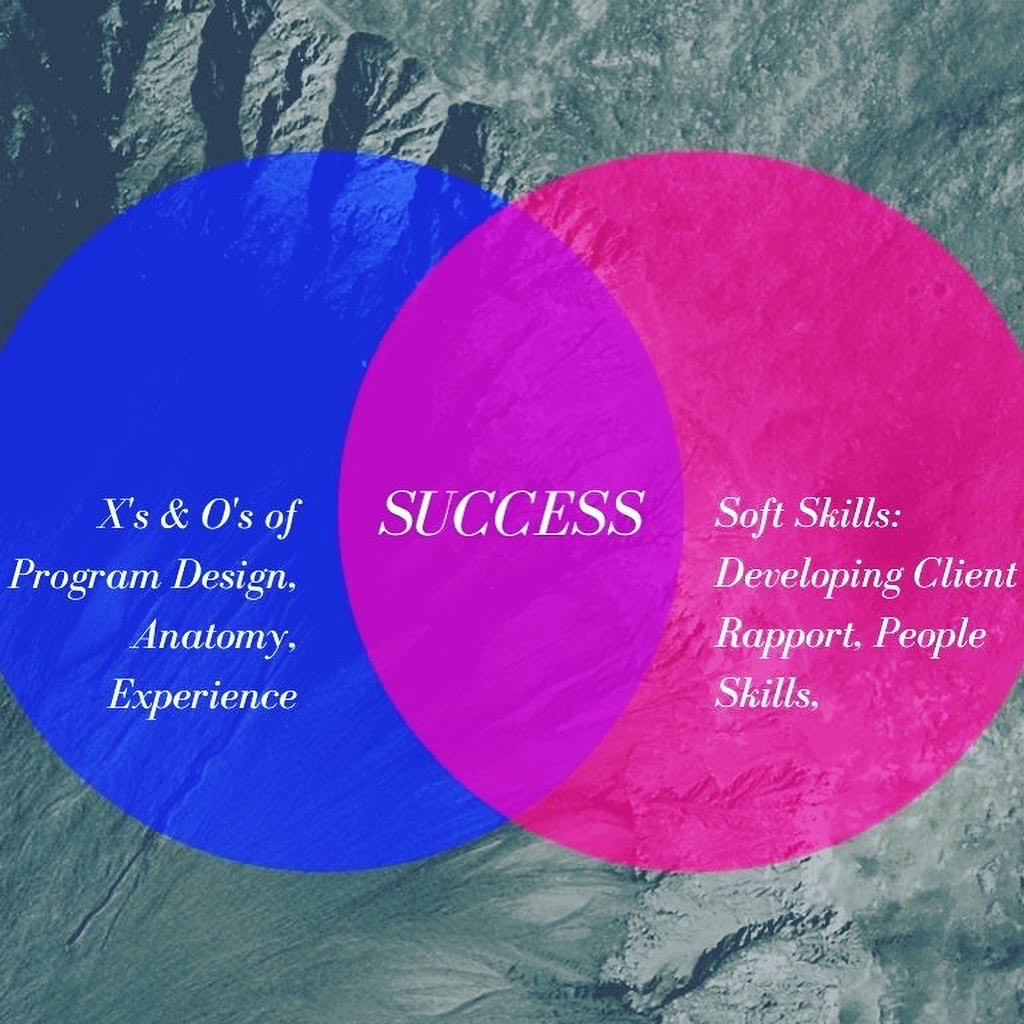
REALITY: Success is an overlap of the x’s & o’s of program design, knowing your functional anatomy, and having general competency when it comes to exercise technique & execution, to name a few.

But too, a large, and necessary (and often eye rolled at) part of the cog is the soft skills of coaching:

✅ Developing Client Rapport

Getting results for the people who pay you to do so is an important component of this. I mean, if we’re looking to build trust & rapport with our clients this would seemingly be step #1. However, I’d make the case that before that can even happen it is important (nay, crucial) to go out of our way to plant the seeds of “CONNECTION” first.

Meaning, be more relatable, accessible, and approachable.

What does that even mean?

Seek out other avenues/interests that you have in common with your clients. I obviously use movies a fair bit to do this. But you can also bring music or television into the mix. Maybe you’re a dog lover or think turtle neck sweaters are cool?

Finding common likes/dislikes – outside of exercise – amongst your clients is a wonderful means of building rapport.

✅ Listening

Admittedly, this is a hard skill to learn; we all loving hearing the sound of our own voice. However, as a fitness professional having a keen sense of knowing when to shut the fuck up is imperative.

For example, whenever I have an initial assessment with a potential new client I go out of my way to have him/her do the bulk of the talking.

Early in my career I’d do the exact opposite and try to “win” conversations.

“Wait, wait, wait, hold on, wait. Did you just say you do a lot of cardio to flush out lactic acid from of your system? Well, actually, lactic acid isn’t an acid at all and is actually a beneficial source of energy for your muscles. It’s pretty common knowledge. Anyway, you were saying?”

In hindsight I can’t imagine how many clients I lost because I was trying to impress them with big words.

Today, I just keep (most) of my thoughts to myself and do a lot more listening than winning.

✅ Basic People Skills

Smile, say hello, look people in the eyes, show empathy, be punctual, write programs that actually cater to THEIR goals, check in with your clients during their session (how do they feel? do they feel the exercise where they’re supposed to be feeling it?), never undervalue the power of a non-obvious courtesy laugh (😉), and always provide a safe space and an overwhelming sense of unconditional positive regard.

Also, when in doubt…more Wu-Tang!

✅ Not Being an Uppity Douche

Self-explanatory.

And That’s That

I don’t care if you can deadlift a bulldozer or that you sleep with a copy of SuperTraining underneath your pillow. If you’re not taking the time to flex, hone, and enhance your soft skills as a coach you’ll never separate yourself from the masses.

Categoriescoaching Motivational Nutrition

Carrots and Celery and Priming People to Kick-Ass

Do you recall a few years ago when (then) NYC Mayor, Michael Bloomberg, initiated a proposed ban on the sale of large-sized sugar-sweetened beverages such as sodas, sweetened teas and coffees, as well as energy and “fruit” drinks?

The Big Gulp Experiment

The idea was that by prohibiting restaurants, delis, sports arenas, movie theaters, and food carts from selling sugary beverages larger than 16 oz – with a hefty fine of $200 for failing to downsize – people would be less inclined to drink copious amounts of said beverages.

What’s more, they’d be healthier, happier, smile, and say “good morning” as they passed one another on the street3

It worked, right?

People stopped drinking those ginormous ‘Big Gulps’ and instead starting crushing almond milk kale smoothies laced with organic acai berries harvested from a unicorn’s rectum (<– I’ve been told they’re super delish).

Um, no…it didn’t work.

First: We’re talking about NYC here folks. A lovely city by most counts, full of diversity, sports, art, music, fashion, food, and an obsession with hip-hop loving dead Presidents.

Second: People in general, whether we’re referring to NYC or not, hate being told what they can and cannot do.

When this happens, we revolt.

Just look at teenagers. We tell them not to drink alcohol and not to have sex and we usually end up with more costly and less than ideal consequences.

In much the same way, the soda experiment didn’t work.

Consumption of sugary beverages DOUBLED!

Why?

It’s a topic I first heard a handful of years ago from Dr. Gnel Gabrielyan of Cornell University’s PHENOMENAL Food & Brand Lab.

In short, he brought up a litany of valid points with regards to our food biases and how (ir)rational we tend to be when it comes to the decisions we make.

Let’s just say the food industry is sneaky and shady as f*** when it comes to marketing their products. Portion distortion and how that interplays with recommended serving sizes comes to mind here.

Likewise, ever notice how many sugary cereals have their characters looking down?

Do you know why?

It’s to target the kids looking UP at the shelves. They feel the character on the box is looking at them.

“Tell your mom to buy me little Johnny. No, beg her. Fall to the ground and scream and flail your legs until she submits. Do it. DOOOOOOOOO It.”

I mean, talk about brilliant marketing.

However, one point I remember Dr. Gabrielyan highlighting – which I felt helped explained the phenomena of what happened during the soda experiment above (and why it failed so miserably) – is the concept of REACTANCE.

“Reactance is a motivational reaction to offers, persons, rules, or regulations that threaten or eliminate specific behavioral freedoms. Reactance occurs when a person feels that someone or something is taking away his or her choices or limiting the range of alternatives.”

Basically, you tell someone that they can’t do “x” or that they have to do “y,” and they’re going to get a little irritated.

Possibly punch you in the face. Who knows.

Framing

Another point Dr. Gabrielyan touched on was the idea of framing.

“The framing effect is an example of cognitive bias, in which people react to a particular choice in different ways depending on how it is presented; e.g. as a loss or as a gain.”

A quintessential example of framing would be the North Dakota Wine Experiment.

  • 117 Diners; Pre-fix meal of $21.
  • All diners given the SAME wine, but with two labels. One marked “Wine from California” and one marked “Wine from North Dakota.”
  • Post Meal Measures: People rate “California Wine” as tasting better than “North Dakota” wine and believe that the food served with the California wine tastes better too.
How we “frame” a product or service can absolutely effect its perception by the consumer.

Priming

Another Jedi mind-trick to consider when attempting to change people’s perceptions or behaviors is the concept of priming.

“Priming is an implicit memory effect in which exposure to one stimulus (i.e., perceptual pattern) influences the response to another stimulus.”

While a bit sensationalistic, here’s a good example from the Will Smith movie, Focus:

https://www.youtube.com/watch?v=XwS68ixemAQ


Another great example of priming people is a well-known grocery store study whereupon the premise was this: Can exposure to healthy samples lead to healthier shopping?

  • 118 participants at a large grocery store.
  • Conditions: Apple sample, cookie sample, no sample.
  • Amount spent on fruits and vegetables then recorded.
  • No surprise: people receiving an apple sample spent more money on fruits and vegetables.

Note to self: Figure out ways to “prime” my wife into buying me an Xbox for Xmas this year.

Even cooler (and bringing this whole conversation full circle), another well-known and relevant study to bring to light is one where participants were given a carrot prior to sitting down to eat at a restaurant to see if it would increase the likelihood of them making “healthier” good choices.

It didn’t go quite as planned, because, as we learned above, people don’t like being told what to do, and more to the point, people like CHOICES.

Not many people accepted the carrot(s).

The next layer to the study was to then offer participants a choice of either a carrot or celery.

Ding, ding, ding…..success.

More participants grabbed a vegetable prior to sitting down to dinner and subsequently were “primed” to ingest more vegetables at dinner.

How Can We Frame & Prime Our Clients?

As personal trainers and coaches, anything we can do to set our clients up for a higher rate of success and enjoyment in their training, the better.

Some Suggestions

1) Allow your clients to choose their main lift of the day. Squats or deadlifts?

2) Allow them to choose the variation of the lift: Back Squat vs. Front Squat? Sumo Deadlift vs. Trap Bar Deadlift?

3) Allow them to choose their mode of exercise: Barbells only? Kettlebells?  Maybe they dig Landmine exercises?

4) I often like to give my clients a window at the end of their training session to do whatever they heck they want. If they want to thrash their biceps, go for it. Add in some additional glute work? Go! Push the Prowler around (you psycho), have at it. Turkish get-ups dressed as He-Man? Whatever floats your boat, dude.

4) Here’s a cool trick I did with one of my female clients this week to “prime” her into lifting more weight. After a “top set” of deadlifts I was like “that looked awesome. Easy! Wanna maybe add 5-10 lbs and up the ante on your next set?” 

I gave her the choice to stay put or go heavier. Either way it was a win, but she chose correctly…and added weight.

[Cue evil strength coach laugh here]

Giving your clients a sense of autonomy and control over their own training is a powerful tool in their long-term success.

Don’t get me wrong, you should still be the boss. They’ve entrusted you to coach them and write programming that best fits their needs and goals.

However, it’s never a bad thing to give them a little of what THEY want.

Even better: Provide them a sense of choice.

Categoriescoaching Program Design Strength Training

How To Make Your Programs Programs Your Clients Will Actually Follow

This article is not going to dive into the x’s and o’s of program design.

For that you can peruse my Resources Page and find plenty of options to fit your fancy. Instead, today, I wanted to peel the onion (so-to-speak) and discuss the layers of program design that rarely get discussed.

Copyright: wavebreakmediamicro / 123RF Stock Photo

How to Make Your Programs Programs Your Clients Will Actually Follow

This post is going to hit on the more nitty-gritty and nuanced stuff.

The stuff that is the culmination of equal parts time under the bar, experience, and not sucking. The stuff that, while I feel are very important and what helps to separate the great coaches from the sub-par ones, might come across as trivial or inane to some, and certainly won’t win me any additional Instagram followers.

Wow, I’m really selling it here aren’t I?

Lets dive in.

1. It’s Not About You

No, really, the programs you write have nothing to do with you.

Copyright: sean824 / 123RF Stock Photo

Sure, you’re writing them and it’s your expertise and coaching people are paying for. However, the program should be about your client/athlete and reflect their needs and goals.

I think it was Alwyn Cosgrove who first coined the phrase

“You should write programs, not workouts.”

On top of that, and equally Earth shattering, is a common quote I often defer to from the great Dan John:

“The goal is to keep the goal, the goal.”

Any Joe Schmo with biceps and a weekend personal training certification can write a hard workout that will make someone hate life.4

Writing a program – one that’s individualized – serves a purpose, addresses one’s unique injury history, caters to his or her’s goals, takes into account ability level, and on top of all that, is flexible, takes some thought, professionalism, skill, and attention to detail.

Listen, I am all for getting people strong (which, granted, is subjective) and I can appreciate anyone who places a premium on having their clients squat, deadlift, bench press, and deadlift.

Deadlift is listed twice….because, deadlift.

However, if your client is a newbie or is just looking to lose 10-20 lbs, or could care less about benching 2x bodyweight, the program should reflect that.

There’s two extremes that generally end up happening:

1. Trainer/coach doesn’t give a shit. Client shows up, trainer is ill-prepared, and what follows is some smorgasbord of laziness, complacency, and fitness industry cliches. I.e., client is paying for a babysitter who just so happens to show them how perform a shitty looking lunge.

2. Trainer/coach does give a shit. Albeit is too much of a narcissist to recognize that because he or she prefers to train like a powerlifter, Olympic lifter, bodybuilder, or CrossFitter, doesn’t mean ALL of their clients need to train the same way too.

Before you know it you have:

  • 14 year old’s who have never mastered a squat performing Tri-Phasic 1-Legged Pistol Squats vs. Bands while dragging a sled
  • 35 year old house wives working on their quad sweep
  • 55 year old CEOs with poor shoulder flexion performing kipping pull-ups for AMRAP.

Makes sense.

At the end of the day people are more apt to follow and stay invested in a program – long-term – if they know it’s catered to them and has their best interests in mind.

Like it or not, this is a SERVICE industry….and while I recognize there’s a bit of head-butting between what people need to be doing and what they want to do, it’s your job as the fitness professional to find and include that balance.

2. Avoid Fitting Square Pegs Into Round Holes

Yo, check it.

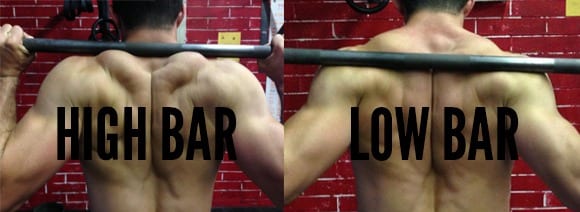
1️⃣ No one HAS to back squat. And if they do, no one HAS to use the low-bar position.

2️⃣ No one HAS to pull from the floor. And if they do, no one HAS to use a straight bar.

3️⃣ No one HAS to bench press. And if they do, no one HAS to use a crazy excessive arch. Or use a barbell for that matter.

4️⃣ No one HAS to listen to A Tribe Called Quest radio on Pandora. But you kinda do. Trust me.

Another “trap” I see a lot of fitness professionals fall into is marrying themselves to any ONE way to do or perform anything.

For lack of a better way of putting it: I fucking hate this way of thinking.

I lose a lot of respect for coaches who are that narrow-minded and unwilling to understand that there are other coaches out there getting just as good (sometimes better) results not doing what they’re doing.

Piggy backing on what was mentioned above (on individualization) – everything kinda falls under this umbrella…from exercise selection, order, and even the variation.

I mean, if someone has the shoulder mobility of a pregnant rhinoceros it makes zero sense to force them into back squatting, let alone using a low-bar position.

Photo Credit: Menno Henselmans

It won’t do them any favors and will likely frustrate them as it will feel weird (possibly even hurt) and will do little in building a greater degree of competency.

If I felt squatting was still important for them and it fit into their goals, a better way to build success (and competency) would be to use a SSB (Safety Squat Bar) variation or maybe even Anterior Loaded KB Front Squats:


Here I can still groove a sexy squat pattern but take the upper body restrictions out of the equation.

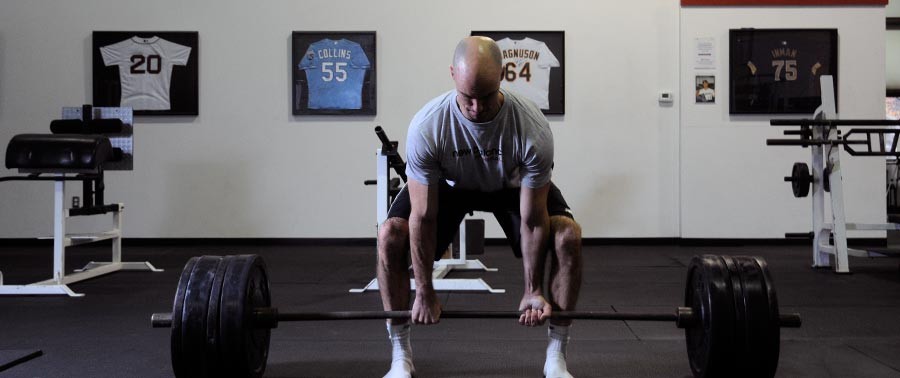
Likewise, with deadlifts, no one outside of a powerlifter or weightlifter must pull from the floor. It’s a rare instance – kinda like a Centaur or a vegan dish that doesn’t taste like wallpaper – when someone walks into my gym on day one and can demonstrate the mobility (and stability) requirements to do so safely.

Honestly, my first order of business with many people is to help them find their hip-hinge before I worry about lifting anything heavy off the floor.

To that end, if someone lacks the ankle dorsiflexion, hip flexion, or t-spine extension to get into proper position, maybe a trap bar would be a better option?

I find it’s a more “user-friendly” way of introducing the deadlift.

What’s more, in terms of stress and sheer loading on the spine, the trap bar will be a better option for most people anyways. With a straight bar the center of rotation is further away from the bar, whereas with a trap bar it’s right smack dab INSIDE.

https://www.youtube.com/watch?v=p-sA3PG1kGY


Want to make your programs programs your clients will actually follow?

One of the best strategies is to include exercises and movements that best fit their ability level, shows them success, and helps to build competency.

Everyone is different. Respect that.

3. Other Stuff I Was Going to Elaborate On But This Post is Already Long Enough

via GIPHY

1. Write Shit Down.

As in, write down and keep track of what your clients are doing per session (and encourage them to take ownership and do it themselves).

A funny thing happens when people start to keep track of what they do session to session. This little thing called progressive overload manifests and people start seeing results.

It motivates them.

Soon they’re lifting weights (for reps) they couldn’t sniff three months prior.

And it’s a beautiful thing.

2. Experiment with Semi-Private Training

My good friend and former business partner, Pete Dupuis, wrote a fantastic article on this topic that you can read HERE.

It’s not for everyone, but I find the semi-private training model works like a charm to help motivate people. There’s a lot to be said about being surrounded by like-minded individuals and training amongst a group of people who will push you, encourage you, and call you out when you skip sessions.

3. Know When To Back Off

This coincides with what I mentioned above when I said a program should be flexible.

You may have programmed for a client to work up to a few heavy sets of triples on their deadlift on a particular day, but they show up and it’s readily apparent they had a horrible night’s sleep, or maybe they’re just mentally exhausted from resisting the urge all day to Sparta kick their boss in the throat.

Regardless, whatever was planned is…just…not…going…to…happen.

You better have a plan B in your back pocket.

4. Don’t Forget To Put In Stuff They WANT To Do

It bears repeating, this is important: I’m all for playing the “there’s a reason why you’re paying me, I’m the expert” card.

But it’s only going to work in your favor to toss your clients a bone and not take yourself so seriously sometimes.

My female clients love it when I put in some extra glute specific work at the end of their training sessions. My male clients are 100% down for a quick 5-minute “Sun’s Out, Guns Out” arm finisher.

Pants optional.

5. Sprinkle in Some Markers

As in, don’t be afraid to write in prescribed loads you want your clients to hit.

I find many people are notorious for underestimating their ability (or maybe hesitant to push the envelop) and need a little nudge from their meanie head strength coach.

Here’s an example of what I mean, a snidbit of a program I wrote for one of my female clients last month:

Week 1: Trap Bar Deadlift

  • 3 sets of 5 reps @ 155 lbs

Week 2: Modified Sumo Stance Deadlift

  • Warm-up
  • Hit 200×1
  • Then 3 sets of 4 reps @ 180 lbs.

Week 3: Modified Sumo Stance Deadlift

  • Warm-up
  • Hit 205×1
  • Then 3 sets of 2 reps @ 190 lbs

Week 4: Modified Sumo Stance Deadlift

  • Warm-up
  • Hit 215-220×1
  • Fist pump x infinity
  • Then 3 sets of 5 reps @ 160 lbs

One of her goals, before the end of the year, was to hit a 200 lb (straight bar) deadlift. She crushed that goal, a few months early mind you, because I didn’t baby her and gave her some markers to hit.

Here she is hitting 210 for an (easy) single:

She’s been nailing her training sessions, and all because I used a little Jedi mind-trickery and told her what weights to use.

Want to motivate your clients? Challenge them and prove to them they can do stuff.

Categoriescoaching Motivational psychology

How Macho Bull and the Word Should Can Hold Back Your Training

Today’s guest post comes courtesy of UK based strength coach, Chris Kershaw, and lands on a theme I am a huge proponent of…

…Jennifer Lopez, Jason Bourne fight scenes, kitty cuddles people “should’ing” all over themselves.

  • I “should” life x amount of weight.
  • I “should” train x number of days per week.
  • I “should” workout despite being injured.

All of these so-called rules are made-up BS and nothing more than stories we tell ourselves. You may find that you fall prey to this line of thinking.

If so, read on…

Copyright: etiamos

How Macho Bull and the Word “Should” Can Hold Back Your Training

For the last six months, I’ve been trying to build my squat back up to my previous numbers prior to the pandemic. Not surprisingly, I got a little inside my head and decided I “should” add weight to the barbell every…single…week.

The result of this 100% made up “should” rule resulted in a steady escalation of a pesky back injury every six weeks.

Times were sucky.

Needlessly adhering to silly, arbitrary rules hurt me.

Why Is It Important to Manage Our Relationship With These Rules?

When our mental health becomes defined by our performance in the gym you risk everything blowing up and our head space becomes tethered to whether or not we have a bad session or two.

Good session (hit our numbers) = Everything is hunky dory. Don’t worry babe, I’ll make dinner and wash the dishes tonight.

Bad session (miss our numbers) =

via GIPHY

So the solution is you need to get better forever, yes?

No!

We are all getting older. One day, our performance will decline.

If you are defined by your gym performance, you will eventually run into problems.

Having an awareness of the “should” rules will hopefully keep you on the side of positive unconditional regard most of the time and help you to avoid dips in mental health relating to your training.

Another benefit to understanding your relationship with these “should” rules is better decision-making in training.

If you make better decisions, your training will be less self-sabotaging.

It’s not the answer to all your training woes, but it might allow you to train longer without injury, to be able to do your rehab without much resentment, and/or get you to the gym a few more times a year.

In short, staying cognizant of these “should” rules will give you the ability to perform poorly in the gym, to be unhappy about it, but still be able to turn the page, chill out, and accept yourself as being okay.


“Should” Rules That Aren’t Actually Rules

I should….

1. Lift More Weight Every Week

Macho bullshit.

You can’t lift more every week. You’re not He-Man (or She-Ra).

Most of the time, you’ll lift the same weight or less.

If you train regularly with a solid plan, your numbers will go up eventually. If you try to force the numbers up every week then you’ll likely end up frustrated and hurt.

Note From TG: I couldn’t agree more. I often call this expectation management, and it’s something I have to consistently remind my clients of. Like I always say…easy training is good training.

2. Lift More in Competition Than in the Gym

Some people lift more in the gym than in competition, others don’t. You need to compete a few times before you decide you are going to go for a massive PR in competition.

3. I Shouldn’t Get Injured

You’re not Wolverine.

Injuries are part of this journey.

The idea you’ll never get injured is a misguided idea.

You should do everything in your power to have good recovery, and to limit the risk of injury as much as you can, but it isn’t always possible.

4. Deadlift More Than I Squat

Not necessarily.

Josh Greenfield, (a world-record squatter) has a much bigger squat than his deadlift.

My squat and deadlift are around the same, and that is the case for many athletes around the world.

The difference between the two is decided by many factors, most of which are out of your control. Build great technique in them both, program them correctly, go at each lift with the same attitude, and see how they progress.

5. Front Squat

Unless you are training for a particular sport using a particular movement, you don’t need to do that movement if it’s causing you problems.

After a few weeks of front squatting, my knees want to explode.

What does this mean?

It means I don’t front squat often in favour of safety bar squats, goblet squats, or leg presses.

Trying to include a movement in your plan because you “should” is misguided. Quit banging your head against a movement that is hurting you.

6. Low Bar Squat

“LOW BAR SQUAT OR NOTHING!”

-Low bar squat extremist.

If your low bar squat sucks, and you keep hurting yourself then stop low bar squatting.

Find a squat variation you DO get on with.

7. Sumo Deadlift

If sumo deadlifts ruin your hips then the chances are sumo deadlifts don’t work for you. Don’t worry, you will be able to find a deadlift variation optimal for you.

The same goes for any other deadlift variation people say you “should” do.

If it hurts you consistently and your form looks good, switch it up. Maybe rack pulls or block deadlifts work better for you. That’s ok.

8. Max Out EVERY SESSION

Yes, you should, if you want to: 1) get injured 2) make training so mentally exhausting that you’ll burn out in 4 seconds.

This is macho bullshit hampering your training.

To make maxing out effective, you have to pick your battles. When you are in a competition is a great time to max-out.

When it’s something you do because it’s a Tuesday (or something equally as random and there’s no planning involved) you’re setting yourself up for trouble.

I like having my clients max-out infrequently as it’s hard to recover from and it’s risky.

I’d much rather a lifter got stronger while keeping some effort in the tank for another day unless they are competing.

9. Take Pre-Workout Before Every Session

Pre-workout supplements, when used diligently can work effectively.

When used perpetually to fuel sessions, we often see issues with anxiety, motivation, and other issues because of the knock-on effects on recovery.

via GIPHY

Too-much pre-workout makes people need to de-load more often and makes stupid decisions in training more likely.

My personal strategy is to have a black coffee or sugar-free energy drink before training rather than a specific pre-workout supplement.

10. Be Able to Train Hard All the Time

Life happens, we don’t sleep sometimes, we get injured, and we get ill.

Sometimes, you will train poorly, and the cold truth of it all is most sessions are going to be average.

Some sessions will be awful.

Sometimes bad sessions come out of the blue, other times it’s after doing something you wouldn’t usually do.

Often it’s due to things completely out of your control. Which means bad sessions are unavoidable.

You have to be able to cope with that if you are to succeed in making training a long-term habit.

11. Train “x” Amount of Times Per Week

Based on over a decade of working with people like you, can you guess what training frequency tends to work best for people?

  • 6 times a week?
  • 5 times?

The answer is 3-4 sessions of 30-90 minutes.

For most, trying to train more than this is wildly optimistic.

If your favourite athlete trains 18 times a week it doesn’t mean you should.

Typically when people with lives end up training hard more than four times per week they end up under-recovered and over-injured.

For most people, I’d encourage you to train 3-4 times per week with various non-gym walks/steady cardio sessions dispersed throughout the week, with a little bit of HIT training .

12. Train Through Injury or Illness

You can safely train around an injury with careful exercise selection, and the correct application of rehab work.

Expecting to push through a program without factoring in your injury is macho bullshit.

When injury strikes you have to adapt to the circumstances, not steamroll ahead without changing course. The course correction may only need to be small, but a change of course will be needed to accommodate an injury.

With illness, there are times when you have to train, especially with chronic illness.

But with cold, flu, coronavirus, or whatever other short-term illness you have you to rest 1) so you don’t spread it to others and 2) so you don’t end up more unwell.

Conclusion

Good training is built upon hundreds of good decisions. Trying to adhere to rules because you “should” derails those decisions and makes it more likely you will make bad decisions and mess up your training.

When you begin training, many of these bad decisions will crop up.

By avoiding these bad decisions and rules that aren’t rules, your training is likely to be more consistent, more productive, and less stressful.

This is a good thing.

About the Author

Chris Kershaw is a certified personal trainer located in Leeds, England.

Known as The Heavy Metal Strength Coach, Chris aims to show as many people as possible that consistently lifting weights and working with a coach “isn’t that bad.”

He works with clients to improve their lives via the medium of the barbell (and the occasional kettlebell.)

Website: HERE                 Instagram: HERE

Categoriescoaching personal training

What Planning For a Dinner Party Can Tell You About Program Design

It’s not lost on me that not many people are having dinner parties of late.

World pandemic and all…😒

For the past year the closest my wife and I have gotten to a bonafide dinner party is ordering take-out every Saturday night with our 4-year old, and then sitting at the table with his army of super hero action figures.

Excuse me Hulk, can you pass the garlic sauce?

That said, here in the States we’re inching ever so closer to some semblance of normalcy and my wife and I are beginning to make plans with friends for get togethers in several weeks.

And it got me thinking…

…planning for dinner parties is very much analogous to writing competent training programs.

Copyright: Cathy Yeulet

What Planning for a Dinner Party Can Tell You About Program Design

No surprise, there’s a lot to consider and plan for when constructing a classy dinner party:

  • Picking the perfect Canva template for the invitations.
  • Should you get catering or will this be a self-culinary event?
  • What kind of playlist for background music?
  • Should there be any board games involved?5
  • Finally, and I’m just spitballing here, but what about maybe requiring a password to enter? We could go all Eyes Wide Shut and make things weird:

Annnd, Get Me the Fuck Outta Here

via GIPHY

All of the above are important things to ponder.6

(Don’t you dare forget about the cheese board).

Above all else, of course, would be ensuring your place is spic and span for your guests.

Think about it this way: If you’re planning on having guests over for dinner, and you need to tiddy up the place, where are you going to concentrate your efforts?

  • Vacuuming the floors?
  • Dusting?
  • Cleaning (and putting away) all the dirty dishes in the sink?
  • Making sure there isn’t any dirty laundry laying around?
  • Fluffing the pillows on the couch?
  • Lighting a few scented candles for some added ambiance, perhaps?

Those all sound like winners to me.

You’re likely not going to focus on iron pressing your ties, scrubbing down the shower, or, I don’t know, organizing your spice rack alphabetically.

The point is: You’re going to focus on the “big rocks” and save the superfluous, extraneous minutiae for another time.

By comparison, when working with a personal training client and you only have, if you’re lucky, two, maybe three hours per week with them, what should be the priority with regards to their training program?

More globally, what THEMES should be emphasized to help him or her make long-term progress that sticks?

NOTE: The answer to both questions can (and should) be dictated by one’s goal(s), injury history, and ability level (to name a few)…

…but let’s briefly take fat-loss as an example.

Speaking for myself, if a client of mine expresses interest in focusing on fat-loss, from a programming standpoint I’m going to concentrate my efforts toward the BIG ROCKS:

1️⃣ Discuss Strategies to Promote a Caloric Deficit

I’d rather jump into a shark’s mouth than go down the rabbit hole of discussing calories here.

There’s a myriad of things to consider and take into account:

  • Lifestyle
  • Social Support
  • Medical History
  • Favorite Color
  • Socioeconomic Considerations
  • Food Likes and Dislikes
  • One’s “Relationship” With Food
  • And Other Psychological Factors

Instead I’ll just direct you toward people like Andy Morgan, Sohee Lee, and Dr. Spencer Nadolsky who are more authorities on this topic than I.

Needless to say…if fat loss is the goal, a caloric deficit needs to happen in some fashion.

2️⃣ Strength Training

Sure, we can have a discussion on the efficacy of utilizing approaches such as supersets, compound sets, intervals, finishers, circuits, AMRAP sets, and so on and so forth to help promote more metabolic type training.

However, for me, I’m still going to have my client lift appreciable weight to “remind” the body to keep as much muscle as possible during a caloric deficit, which means I’ll still emphasize compound movements such as deadlifts, squats, rows, and various presses in order to hit as many muscle groups as possible in a minimal amount of time.

Seems pretty logical, right?

Again, if I only have a limited number of hours per week with a client, I’m going to use that time as efficiently as possible.

Why, then, would having your client perform 15 lb. standing tricep extensions followed by 1-legged lateral raises while standing on a wobble board even enter the equation?

Sadly, I see this type of programming a lot.

Going back to the dinner party analogy, that’s akin to me vacuuming the insides of my shoes in the in the bedroom closet.  It makes absolutely no sense!

Stop Majoring in the Minors

Far too often I see trainers focus on the minor, sweating the details to the detriment of actually giving their clients lasting results.

When you think about it, it’s the Pareto Principle to a T.

“80% of your results are going to come from 20% of the work.”

My good friend, Bryan Krahn, said it about as succinctly as possible recently:

As far as GLOBAL themes are concerned (the stuff that most people would bode well following), you’d be hard pressed to do any better.

(Maybe add some bicep curls?…haha)

I am by no means suggesting I know the best way to train every client – particularly yours.

All I’m saying is that when it comes to program design – and by default, exercise selection – trainers need to take it upon themselves to think critically and ask: “is this really going to get my client the best results in the quickest, most time efficient way possible?”

If not, then start over.

Now, excuse me while I go organize my He-Man underoos.

Categoriescoaching Female Training personal training

Failures Hurt. Here’s What I Learned From One

Today’s guest post comes courtesy of good friend, colleague, and past contributor to this site, Kim Lloyd. 

If you’re a coach/personal trainer you’ve likely experienced what Kim describes below…

…being “fired” by a client.

It never feels good. But did you take it as an opportunity to reflect, learn, and grow or to just shrug off, turn the page, and repeat the same mistakes?

Copyright: Marek Uliasz

Failures Hurt. Here’s What I Learned From One

A funny thing happened on my way to losing an online training client.

By funny, I mean I rocked in a corner for two days eye-opening.

Regardless of the industry in which you work, failures hurt.

This client was an acquaintance I’d met when I lived in Boston, and after following my blog for a few years, she decided that she wanted to ditch Zumba (not that there’s anything wrong with Zumba) and start strength training.

Win.

We hopped on a phone call, got down to the nitty gritty, and after talking through her goals, injury history and why Bob Dylan’s Blood on the Tracks is one of the best vinyl records ever, I set her up with a program and off we went.

Except…well…we didn’t.

After a few weeks, she very kindly sent me the break-up email that no one likes to get. It’s not you, it’s me, I just need more space, Keene shoes are not a fashion statement…

Ultimately, she was too overwhelmed to even start the program, and she was headed back to Zumba (again, not that there’s anything wrong with Zumba).

But in the breakup email, she very graciously offered me a breakdown of all of the challenges she had in trying the program I’d written.

Her reaction to the cable machine was perhaps the most telling:

“I have never used the cable pull-down thing. That’s in the boy-area, and one feels one should be carrying a gallon container of blue liquid to even be admitted. How will I approach it? How do I change the weight? How long can I stay on it? I will completely break into the boy area, of course, I don’t care, but it’s somewhat intimidating unless someone shows you first.”

I was disappointed to lose a client, sure. But once I got over myself, I also came face-to-face with all of the nuances about strength training that I take for granted.

I forgot what it felt like when I first started to train seriously.

What it felt like to walk into the free weight room (not the Nautilus room), with a bunch of dudes who were all getting after it and panic about where I should put my gym bag and do my warm up and why is that man in the corner wearing a pro wrestling costume? (This really happened.)

I forgot what it felt like when I couldn’t get the bar off of my chest that one time in the weight room when I was 24. What it was like when I couldn’t press 15lbs for more than three reps during a softball practice when I was 15.

I forgot how long it took me to grasp how to read and understand a program. Sets, reps, tempo and wtf is a Pallof Press? And a Landmine? And what do I do if my gym doesn’t have one?


When it comes to strength training, I live in a bubble and this client reminded how difficult it is for many people to get over the humps that I got over so many years ago. Worst of all, I forget that there are those humps.

I try to give people a roadmap, but sometimes forget that they don’t know how to drive the car.

What I want most is for people to fall in love with strength training the way I fell in love with it.

Because it’s good for them.

As a coach, I think the worst thing that can happen is for someone to be interested in the idea of strength training, to be bought in to trying it out, only to feel so intimidated, defeated and frustrated by the process that they quit before ever getting started.

My client’s break-up email reminded me of the people out there, especially women, who are trying to figure out what good information is in a world full of Insta-trainers and infomercials.

Who are battling old feelings of inadequacy every time they set foot in a gym environment because 7th grade gym class experiences are never as far away in our brains as we think they are.

I’m grateful to this client for so many reasons – but perhaps most of all for reminding me as a coach that I have to help clients understand how to drive before I send them on their way.

Cue This Is Why I Wrote a Book Portion of the Article

Believe me when I say this: I feel a bit timid being all like “and that’s why I wrote a book,” even though the truth of the matter is…

…that that’s exactly why I wrote a book.

I did so not to self-aggrandize7, but to legitimately help people (particularly women) that are too intimidated to ask for help, much less step foot in the weight room.

I wanted to show them that they CAN, but in a way that meets them where they are.

Note From TG: It’s a fantastic guide and I HIGHLY recommend it to anyone interested in learning in’s & out’s of lifting weights in a safe, efficient, and results driven manner. Kim is a phenomenal coach.

Start Where You Are: A Beginner’s Guide to Lifting Weights and Feeling Great

About the Author

After spending her first two decades out of college working 29 different jobs (English major for the win), Kim Lloyd settled into a career in fitness and is an ACE Certified Personal Trainer as well as an Online Certified Trainer. She coaches full-time at Spurling Fitness in Kennebunk, Maine and trains online clients through Kim Lloyd Fitness.

You can find Kim and her plethora of inflatable costume videos HERE.

Categoriescoaching personal training Program Design

Putting the Pro In Fitness Professional

What does it mean to be a fitness professional?

The definition (or more to the point, the expectation), admittedly, has gotten a bit less clear cut in recent years.

Copyright: Lupin ALEKSANDER

Putting the “Pro” In Fitness Professional

I could sit here and wax poetic that what separates a “true” fitness professional from someone who’s pretending to be one is that the former actually practices what they preach.

Meaning: They 1) actually workout and/or 2) actually DO the workouts and exercises that they espouse on their respective websites and social media feeds.

Or they don’t.

I mean, I could make the case that a “true” fitness professional is less likely to post asinine videos of circus-act like exercises (that they’d never do themselves) in the name of accolades and attention.

You can spot the fake trainers from a mile away. They write the most ridiculous looking routines.

A Competent Trainer’s Program

A1. Trap Bar Deadlift: 3×5
A2. Pallof Press: 3×10/side
B1. Goblet Step-Through: 3×12,10,8/leg
B2. Pull-Through: 3×12-15
C1. Goblet Squat (50 lb): 2xAMAP (up to 20)
C2. Suitcase Carry: 2×40 yd/arm

An Instagram PhD’s Program

A1. Trap Bar Deadlift Contrast Tempo Set vs. Chains (From a Deficit): 5×10
A2. 1-Arm Landmine Press w/ Contralateral Ossillatory Facilitation: 5×10/side


B1
. Barefoot Walking Lunges Over Broken Glass: 2×400 m
B2. Or Until Your Pancreas Fails (whichever comes first)
C1. Pull-Ups: 10×10
C2. Ice Bath: 10x30s

I’m obviously going out of my way to be facetious here, but therein lies my point.

As my friend and colleague, Nick Tumminello, has so succinctly stated in the past:

“A master trainer (I.e., someone who’s a “pro”) can also be referred to as an Exercise Prescription Specialist.”

He or she has a high level of expertise doing the following:

  • Exercise Individualization
  • Exercise Application 
  • Exercise Prioritization 

1. Exercise Individualization

This can simply be boiled down to figuring out the correct stance for someone on their squats. For example, despite what most textbooks would insinuate, not everyone is going to have the luxury of having the “correct” anatomy to squat with a narrow stance and their toes pointing straight a head.

NEWSFLASH: People don’t live in textbooks.

Hip anatomy tends to have the most variance given a broad swath of the population. Things that come into play are:

  • Hip socket depth
  • Hip socket orientation – retroverted (outward facing) or anteverted (forward facing).
  • Femoral neck orientation (retroverted vs. anteverted)
  • Femore neck angle
  • Femur length
  • Amongst other things

There are a bevy of variables to consider and to expect every person to fall into one set pattern or way of executing a lift is a bit of a stretch.

In fact, there’s a number of permutations that manifest when you allow for individualization of squat stance.

Exercise individualization can also come down to figuring out the correct grip for someone to use during their bench press. Someone with sub-acromial pain syndrome (SAPS) will often have pain in the front of their shoulder. Conventional wisdom would suggest that such an individual should adopt a narrow(er) grip during the bench press to “protect” the shoulder.

However, a narrow grip will require more glenohumeral extension, which for these individuals can be problematic. Instead, a wider grip may be more germane to reduce the amount of GH extension required and to place more stress on the pec muscles.

A “pro” leans into and pays more attention to these sort of things.

2. Exercise Application

Should everyone squat to the same depth?

Short Answer: No. Tha fuck outta here.

A Less Short Answer: As I noted above, hip anatomy varies person to person and it shouldn’t be your expectation that everyone, all the time, with no exceptions, should squat to the exact same depth.

I have some clients who squat ass to grass.

I have others who squat to parallel.

And, indeed, I have others who squat above parallel.

Come at me, bro.


They all still count as a squat.

Depth is more or less arbitrary and is contingent on one’s goal(s), unique injury history, ability level, and, in case you haven’t picked up on the theme, individual anatomy.

No one should get demerit points because they don’t fit some fictional standard.

Moreover, what about when the conversation switches to sets and reps?

  • What’s the determining factor between prescribing 3×10 for any particular exercise or 5×5?
  • What about 8×3? 6×4?
  • 4×6?

Are you using a dartboard to ascertain a client’s set/rep scheme or intelligent program design catered to the needs/goals of the athlete/client?

A “pro” knows the difference.

3. Exercise Prioritization

Which exercises should be done first in a workout?8

Which ones should be done last?9

Which exercises should be performed most often?10

The eloquent answer is past the scope of this blog post. However, a fitness professional can easily provide a “why” for each example.

In Short

What really separates a true fitness professional from the IG PhD is that the former knows how to DESELECT things. What makes a great chef isn’t the fact they have every ingredient in the bowl.  They’re great because they know what ingredients to (de)select, they understand what order they need to be applied, and they know how much of each to use.

Categoriescoaching

Do Bad Workouts Exist?

I liken this question to pizza.

Is there such a thing as “bad” pizza?

Sure, we’ve all had a sub-par slice of pizza here and there. I mean, pizza made in middle-of-no-where Montana cannot be held in the same regard as one born from a brick oven in Manhattan.

I have zero doubts the former is still good pizza,  but let’s be honest…

…it’ll pale in comparison to the latter.

That said, salt, fat, tomato sauce, and gluten will always be tasty.

Copyright: hquality / 123RF Stock Photo

Do Bad Workouts Exist?

To quote a good friend of mine, Nia Shanks, who wrote a similar article recently:

There’s no such thing as a “bad” workout.

“Every workout, regardless of performance improvements or decreases, is a productive workout.”

Every time you step foot in the weight room or on the track or beat Jason Bourne in a street fight (that’s a workout, right?), you did it.

You won.

You (likely) did something good and productive for your body that day.

The metric that every workout has to set some sort of personal record or that it wasn’t an effective use of your time unless you’re swimming in a pool of your own sweat or you can’t feel the right side of your face is, well…

…ludicrous.

The 80% Rule for Workouts

Note: I originally got this “rule” from coach Paul Carter.

The gist is as follows:

  • 10% of your workouts you’ll feel like you can beat The Mountain in an arm-wrestling match.
  • 10% of your workouts you’ll feel like you got run over by a Mack truck.
  • 80% of your workouts you’ll just show up.

Those 80% workouts are where the magic happens and where you’ll actually make progress. There’s no glory, smelling salts, or Instagram highlight videos involved.

You show up, do the work, and leave.

Sometimes this means completing what was planned for the day.

Sometimes this means completing what was planned, albeit with the weights adjusted slightly lower.

That’s okay.

You didn’t besmirch your family name because you didn’t add ten pounds to your bench press this week.

You did work.

That’s the real “win.”

Stop “Should’ing On Yourself”

We’ve programmed ourselves into an endless game of comparison (in no small part to social media). Many of us form these beliefs and inevitably turn them into doctrine:

  • I “should” be working out 5x per week like “so and so.”
  • I “should” be performing “x” exercise.
  • I “should” be lifting “x” amount of weight.
  • I “should” look a certain way.
  • I “should” attack every workout as if I were Leonidas leading the Spartans to battle.

via GIPHY

Even if a reliable source makes a professional recommendation about what you “should” be doing – does that mean it’s come down from the mountain?

It’s All Made Up

The thing to point out – especially as it relates to YOUR goals and YOUR happiness – is that there are no rules. Everything – more or less – is someone else’s belief.

Someone else’s opinion.

[Not coincidentally to help sell a book, course, or, I don’t know, Gluten-free, GMO, organic, Acai Pills soaked in Unicorn tears.]

That doesn’t mean it’s right for you.

So, bringing this conversation full-circle.

I don’t believe bad workouts exists.9

“Bad” (lofty, force-fed, unattainable) expectations do.