Categoriespersonal training Program Design

The Best Approach to Writing Effective Programs When You’re a New Trainer: Trial and Error

Copyright: Johannes Mattern

Trial and Error = An Underutilized Way to Learn

About a two weeks ago I received an email from a newly minted trainer in the industry who had read THIS article on program design I wrote not too long ago.

Sheepishly, he admitted that program design was one of his weak points and that he felt he was ill-prepared to write effective one’s despite having recently completed the certification process.

I could relate.

I recalled how in the first few months of my personal training career I felt like an abject failure when it came to writing programs for my clients.

Here’s how it went:

Client: “Hi.”

Me: “Hi.”

Client: “Can you write me a program to help me reach my goals?”

Me: “Brb.”

(cooly turns around and heads off to the back room to hyperventilate into a paper bag)

(10 Minutes Later) Me: “Yes, I can do that.”

In the time between those initial few months and now I’ve written roughly, I don’t know, 5,000-7,000 (+/- infinity) programs for a menagerie of individuals and backgrounds. Many have been influenced by books I’ve read, lectures I’ve listened to, and/or conversations I’ve had with other colleagues of mine.

Moreover, many have their roots in me just spit-balling and experimenting with an idea of concept. There’s a thought process behind them of course; I’m not just blindly tossing things at the wall and seeing what sticks.

However, I’d be remiss if I didn’t just come right out and say that a portion of my program writing process is me just saying to myself, “let’s see what happens if I do this.”

No one has died or lost an appendage yet…😉

More to the point: I’ll be the first to say that NONE of my programs have been perfect. Even today I am constantly x’ing stuff out, changing this exercise to that, adjusting loads, regressing, progressing, or otherwise flat out changing my mind.

Sometimes I’m overzealous, sometimes I’m too reserved.

Sometimes I’m wrong.

I’m not scared to admit it.

Nevertheless, the point is: I am always leaning into the process and accepting the fact that I am (and will always be) thiiiiiiis close to grabbing that paper bag.

Which brings me back to the new trainer from above.

As he and I were corresponding back and forth he proposed something to me. He wanted to see if I could help him find another coach to mentor him and to possibly write programs for a few of his current clients.

  • He’d provide the details.
  • The other coach would write the program
  • Then he’d want to “dissect” the program with the other coach to ask more of the why’s and how’s behind the program.

I gave him two pieces of advice:

1. To seek out a local trainer/coach that he could shadow/observe on a semi-regular basis. This is something I wish I would have done earlier in my career.

It would have helped tremendously.

There’s an abyss of value in having the ability to watch another coach in real-time do his or her thing and to also have the opportunity to ask questions.

Most coaches are more than willing to have people stop by and shadow.

2. JUST DO IT.

Oftentimes the best way to learn or get better at something is by doing.

  • If you want to get better at playing chess you play chess.
  • If you want to get better at a particular type of dance you do that dance.
  • If you want to get better at not getting laid, you go to Anime conventions.
  • Juuuuuuust kidding.1

I reminded him that he won’t write perfect programs. That’s an awful expectation to put on himself. I reiterated to him that his client’s wouldn’t need “perfect” programs, but rather just some semblance of progress.

Let’s be real: Most people see improvements in spite of what their program has them doing.

It’s more about being consistent with something, anything than it is whether or not they’re following an undulated, block periodization plan centered around quasi-isometric eccentrics.

If you’re a new trainer the best way to learn how to write programs is to jump in and do it.

Trial and error is a great learning tool.

CategoriesProgram Design

Putting on a Show vs. Just Coaching

A few weeks ago my good friend, Luke Worthington, and I were texting back and forth on why I hate him so much because I’m not him (6-4, 230 lbs, ripped, smart, British, pfffft whatever Luke) programming and coaching.

Specifically, we both commented on the facade that some (not all) fitness professionals seemingly lean into on social media

Even more specifically, we attempted to excavate the difference between what I would refer to as “putting on a show” and actually coaching people.

Copyright: tonobalaguer

Circus Tricks

Our conversation took root when we brought up something we had both observed on another colleague’s Instagram account and the abject silliness it projected.

Now, I’m not going to name names; it’s not my nature to do so. And, to be honest: I try to always keep an open mind whenever I see something eyebrow raising from other coaches.

I mean, who am I to say what’s a legitimate exercise/drill for their client?

  • I don’t know their client’s injury history.
  • I don’t know their client’s goals.
  • I don’t know their client’s ability level.
  • I don’t know the purpose of that day’s session.
  • Maybe there’s a perfectly fine rationale for that particular exercise (even though running over their right arm with a Prius for AMRAP would have been a better use of their time).

I keed, I keed.

Nevertheless, Luke is based in London and works with a number of high-profile people ranging from Hollywood actors/actresses, models, magazine editors, and various professional soccer players.

During our chat he mentioned he had started working with a well-known actor who’s currently prepping for a rather significant action role.

Nope, not Jason Bourne.

Alas, not James Bond.

In the name of discretion, I can’t reveal the actor’s name. It would be uncouth for me to do so, and I certainly wouldn’t want to divulge anything that Luke himself hasn’t divulged.

Negative, not him either. But OMG, I wish.

I haven’t come close to working with the same volume of “high-end” clientele that Luke has worked with in his career. That being said, I’ve worked with many professional baseball players throughout the years (especially during my time at Cressey Sports Performance), and did happen to rub elbows with Hollywood recently.

And I have to say…

…it’s hard not to put on the facade.

To quote Luke:

“When you were working with Rosamund (Pike) did you find it hard not to put on a show? Did you feel you had to impress her with new and innovative exercises? That you had to provide more of wow factor? I find it exhausting sometimes working with people in the entertainment industry.”

At first, yes.

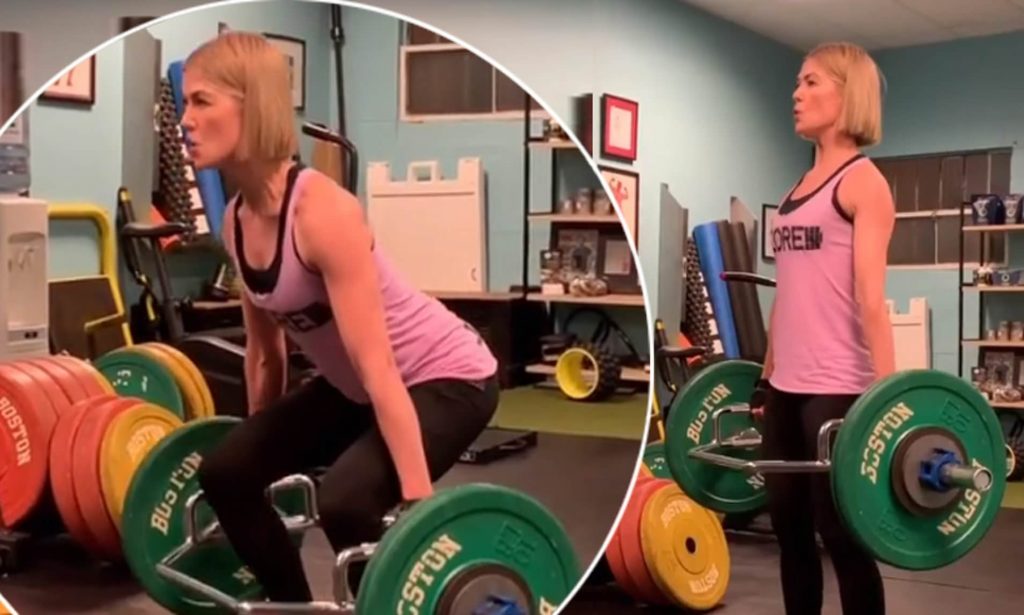
Rosamund joining the 100 lb deadlift club working with me at CORE.

But then I realized that she was just a person like everyone else and needed the same shit as everyone else.

Moreover, once I understood that all she was looking for was a solid training session where she could have an hour to herself to be away from the movie set and away from the chaos, it became much less daunting to me.

I kept things simple.

  • She deadlifted.
  • She squatted.
  • She carried stuff.
  • She hoisted stuff.
  • She threw stuff.
  • She listened to sick techno beats.

All I did was to ensure the exercises were coached well and that they matched her ability level.

I didn’t feel the need to put on a show.

And she and I had a lovely time together.

Back to Luke, though.

In addition to texting back and forth about the pressure to perform and avoid reneging on our mutual intuition to just keep things simple, we also went back and forth a bit on his client’s programming.

Luke noted that his client’s role will require a number of shirtless scenes and that the expectation is that he must look the part; broad shoulders, pecy pecs, cut arms, etc.

The caveat, however, is that this client also has a number of shoulder issues that limits his ability to perform certain exercises pain free.

Luke’s a more than capable coach to devise a suitable trainable menu for his client. That said, he and I were going back and forth on some ideas when he noted that during a prior session he had his client perform a double landmine press.


For most coaches this exercise is quite standard or even inane. It’s nothing extraordinary or flashy (especially by social media standards).

However, Luke’s client loooooooooved it.

It targeted parts of his body he needed to bring up for the role AND he was able to perform it pain free. Luke could have easily made the exercise more sexy by setting the barbells on fire, or, I don’t know, having his client press with one arm while juggling a chainsaw on the other.

Instead, what Luke did was be a coach.

And, frankly, that’s what most people need whether they’re Thor or Tina.

CategoriesProgram Design Strength Training

Why You Should Lift Heavy Weights. Yes, Even In Season

I tend to avoid certain things at all costs:

  • Making eye contact with my cat.
  • Pineapple upside down cake (don’t ask).
  • Uttering the phrase “looks like someone has a case of the Mondays.”
  • Cocaine
  • Partaking in social media drama, buffoonery, and general hijinks.

For me there’s a cost/benefit to all of the above. Take my cat, Dagny, for example. I love her to pieces. But I still get the feeling, whenever she looks at me for more than three seconds, she’d murder me in a nanosecond with a machete if only she had opposable thumbs.

I have my reasons for the other stuff too.

With regards to the latter, however, I was recently lured in like a moth to a flame when I saw a Tweet from a well regarded and highly respected fitness professional commenting on “lifting heavy” and playing sports…

…and how people should avoid the former if participating in the latter.

Copyright: Jesus Trillo Lago

What in the What?!?!

In the name of full transparency here’s the actual Tweet:

I have to say, before I dive into my own thoughts on Dan’s thoughts, reading the subsequent comments was quite entertaining.

They ranged from people agreeing to the statement2 to what can only be described as a few peacocks spreading their feathers.

I.e., Triggered!

A few coaches read the comment and reacted as if someone informed them creatine was the same as steroids or, I don’t know, one of their athletes didn’t squat to depth.

I could just smell the inflated lat syndrome emanating from my screen.

Admittedly, I too rolled my eyes a bit.

That said, I felt the initial statement was a bit too ambiguous. To me, it was more about garnering eyeballs & drawing attention to his funnel link than providing anything of real substance.3

  • What sports are we referring to? MMA? Lacrosse? Backyard wiffleball?
  • What level of sports are we referring to?
  • What’s the ability level & experience level of the athletes in question as it relates to the weight-room?
  • What’s considered “heavy.”
  • Is there no such thing as in-season and off-season training modifications in this mysterious world where athletes shouldn’t lift heavy things?

To Dan’s credit, he did elaborate further:

“The reason is because both are taxing to the nervous system. Mind you when I talk “sport” I mean one played at a high intensity (ie. basketball, soccer, surfing). Trying to play your best while chasing PR’s will likely cause injury.”

I didn’t quite understand where he was going with his sport examples. I’d make the argument that any athlete of any sport – particularly if it’s being performed at a high level – needs to be prepared for that sport. I don’t care if we’re talking about soccer or bowling.

Okay, maybe bowling is a stretch…;o)

Much of that preparedness comes from a well-rounded, properly progressed IN-SEASON and OFF-SEASON strength & conditioning program.

Off-Season Training = Initially focuses on recovery to combat a long competitive season as well as to address any deficits/weaknesses that accumulated along the way. That then transitions to a more traditional strength & conditioning program catered to helping the athlete improve strength, speed, movement capacity, ROM, ability to run through a brick wall, etc.

In-Season Training = Reducing training frequency/volume – depending on playing time (starter vs. 10th-11th man off the bench in basketball), position (everyday player vs. pitcher in baseball), game schedule (football vs. softball) – albeit under the guise that the objective is to LIMIT as much drop off as possible of the gains made in strength, speed, etc during the off-season.

Not to mention, in-season strength training is a splendid way to help reduce the incidence of injury as a season progresses and fatigue and wear-n-tear on the body accumulates.

KEY POINT: Reduction in frequency (volume), not intensity.

It’s my experience – and that of many other coaches – that intensity (as a percentage of one’s 1-rep max) is far less taxing on the CNS than volume (sets x reps x frequency). In fact, it behooves most athletes to keep intensity somewhat high during SOME of their in-season training.

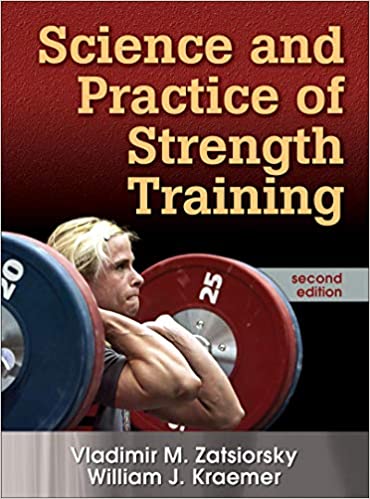
As Vladimir Zatsiorsky states in his seminal book, Science and Practice of Strength Training:

“Training with weights ~90% of one’s 1-rep max (I.e., heavy, but no anywhere near PR heavy):

  1. Recruits the maximum number of motor units.

  2. Ensures the fastest MU’s are activated.

  3. Discharge frequency (rate coding) is increased.

  4. Activity is synchronous.

  5. Improves coordination between synergistic muscles.

  6. Increases potential for future hypertrophy gains.”

Moreover, Zatsiorsky notes that from a velocity standpoint, it’s been shown that power output increases as the weight lifted decreases from 100% of 1RM to 90% of 1RM. In fact, for the back squat and deadlift, power output for a load at 90% 1RM may be twice as high as the 1RM load due to the large decrease in the time required to complete the exercise with the lighter load.

In other words: Lifting light(er) loads faster = best of both worlds?

Additionally, strength “lingers.”

You don’t have to do a lot of it in order to maintain it.

In his book, Block Periodization, Dr. Issurin notes that maximal strength has a “residual duration” of 30 +/- 5 days.

In non-Klingon all this means is that, in order to maintain strength, you only really need to remind the body every 2-3 weeks (or so) of what it takes to keep it. This is splendid news for in-season athletes.

This means that 2-3 heavy(ish) sets of 2-5 reps (in the 85-95% range) every few weeks is enough to maintain most of their strength levels.

Australian strength coach, Nathan Kiely, sums things up nicely:

“Maintaining neuromuscular strength in-season is critical. And a load that wouldn’t have developed it in the first place, won’t do enough to retain it either.”

To that end, NO COMPETENT COACH is chasing PR’s in-season. I just wish Dan would have said THAT initially instead of the blanket statement of “if you play sports you shouldn’t lift heavy.”

Because, I agree – it makes zero sense to max out or chase PR’s during a competitive season.

As one commenter commented:

“Chasing PRs and 1 RM in season are pointless. But if you program correctly and tailor workouts to your athletes sport intensity, schedule and allow recovery time. PRs are just going to happen organically.”

The statement reminded me of something I heard renowned strength & conditioning coach, Buddy Morris, say during a presentation years ago:

Tony, can we be BFFs? Whenever an athlete of mine hits a PR – especially in-season – I shut em down for the day.”

Word.

In Short: When dosed intelligently you can do both.

Play sports AND lift heavy.

Categoriescoaching personal training

What Planning For a Dinner Party Can Tell You About Program Design

It’s not lost on me that not many people are having dinner parties of late.

World pandemic and all…😒

For the past year the closest my wife and I have gotten to a bonafide dinner party is ordering take-out every Saturday night with our 4-year old, and then sitting at the table with his army of super hero action figures.

Excuse me Hulk, can you pass the garlic sauce?

That said, here in the States we’re inching ever so closer to some semblance of normalcy and my wife and I are beginning to make plans with friends for get togethers in several weeks.

And it got me thinking…

…planning for dinner parties is very much analogous to writing competent training programs.

Copyright: Cathy Yeulet

What Planning for a Dinner Party Can Tell You About Program Design

No surprise, there’s a lot to consider and plan for when constructing a classy dinner party:

  • Picking the perfect Canva template for the invitations.
  • Should you get catering or will this be a self-culinary event?
  • What kind of playlist for background music?
  • Should there be any board games involved?4
  • Finally, and I’m just spitballing here, but what about maybe requiring a password to enter? We could go all Eyes Wide Shut and make things weird:

Annnd, Get Me the Fuck Outta Here

via GIPHY

All of the above are important things to ponder.5

(Don’t you dare forget about the cheese board).

Above all else, of course, would be ensuring your place is spic and span for your guests.

Think about it this way: If you’re planning on having guests over for dinner, and you need to tiddy up the place, where are you going to concentrate your efforts?

  • Vacuuming the floors?
  • Dusting?
  • Cleaning (and putting away) all the dirty dishes in the sink?
  • Making sure there isn’t any dirty laundry laying around?
  • Fluffing the pillows on the couch?
  • Lighting a few scented candles for some added ambiance, perhaps?

Those all sound like winners to me.

You’re likely not going to focus on iron pressing your ties, scrubbing down the shower, or, I don’t know, organizing your spice rack alphabetically.

The point is: You’re going to focus on the “big rocks” and save the superfluous, extraneous minutiae for another time.

By comparison, when working with a personal training client and you only have, if you’re lucky, two, maybe three hours per week with them, what should be the priority with regards to their training program?

More globally, what THEMES should be emphasized to help him or her make long-term progress that sticks?

NOTE: The answer to both questions can (and should) be dictated by one’s goal(s), injury history, and ability level (to name a few)…

…but let’s briefly take fat-loss as an example.

Speaking for myself, if a client of mine expresses interest in focusing on fat-loss, from a programming standpoint I’m going to concentrate my efforts toward the BIG ROCKS:

1️⃣ Discuss Strategies to Promote a Caloric Deficit

I’d rather jump into a shark’s mouth than go down the rabbit hole of discussing calories here.

There’s a myriad of things to consider and take into account:

  • Lifestyle
  • Social Support
  • Medical History
  • Favorite Color
  • Socioeconomic Considerations
  • Food Likes and Dislikes
  • One’s “Relationship” With Food
  • And Other Psychological Factors

Instead I’ll just direct you toward people like Andy Morgan, Sohee Lee, and Dr. Spencer Nadolsky who are more authorities on this topic than I.

Needless to say…if fat loss is the goal, a caloric deficit needs to happen in some fashion.

2️⃣ Strength Training

Sure, we can have a discussion on the efficacy of utilizing approaches such as supersets, compound sets, intervals, finishers, circuits, AMRAP sets, and so on and so forth to help promote more metabolic type training.

However, for me, I’m still going to have my client lift appreciable weight to “remind” the body to keep as much muscle as possible during a caloric deficit, which means I’ll still emphasize compound movements such as deadlifts, squats, rows, and various presses in order to hit as many muscle groups as possible in a minimal amount of time.

Seems pretty logical, right?

Again, if I only have a limited number of hours per week with a client, I’m going to use that time as efficiently as possible.

Why, then, would having your client perform 15 lb. standing tricep extensions followed by 1-legged lateral raises while standing on a wobble board even enter the equation?

Sadly, I see this type of programming a lot.

Going back to the dinner party analogy, that’s akin to me vacuuming the insides of my shoes in the in the bedroom closet.  It makes absolutely no sense!

Stop Majoring in the Minors

Far too often I see trainers focus on the minor, sweating the details to the detriment of actually giving their clients lasting results.

When you think about it, it’s the Pareto Principle to a T.

“80% of your results are going to come from 20% of the work.”

My good friend, Bryan Krahn, said it about as succinctly as possible recently:

As far as GLOBAL themes are concerned (the stuff that most people would bode well following), you’d be hard pressed to do any better.

(Maybe add some bicep curls?…haha)

I am by no means suggesting I know the best way to train every client – particularly yours.

All I’m saying is that when it comes to program design – and by default, exercise selection – trainers need to take it upon themselves to think critically and ask: “is this really going to get my client the best results in the quickest, most time efficient way possible?”

If not, then start over.

Now, excuse me while I go organize my He-Man underoos.

Categoriescoaching personal training Program Design

Putting the Pro In Fitness Professional

What does it mean to be a fitness professional?

The definition (or more to the point, the expectation), admittedly, has gotten a bit less clear cut in recent years.

Copyright: Lupin ALEKSANDER

Putting the “Pro” In Fitness Professional

I could sit here and wax poetic that what separates a “true” fitness professional from someone who’s pretending to be one is that the former actually practices what they preach.

Meaning: They 1) actually workout and/or 2) actually DO the workouts and exercises that they espouse on their respective websites and social media feeds.

Or they don’t.

I mean, I could make the case that a “true” fitness professional is less likely to post asinine videos of circus-act like exercises (that they’d never do themselves) in the name of accolades and attention.

You can spot the fake trainers from a mile away. They write the most ridiculous looking routines.

A Competent Trainer’s Program

A1. Trap Bar Deadlift: 3×5
A2. Pallof Press: 3×10/side
B1. Goblet Step-Through: 3×12,10,8/leg
B2. Pull-Through: 3×12-15
C1. Goblet Squat (50 lb): 2xAMAP (up to 20)
C2. Suitcase Carry: 2×40 yd/arm

An Instagram PhD’s Program

A1. Trap Bar Deadlift Contrast Tempo Set vs. Chains (From a Deficit): 5×10
A2. 1-Arm Landmine Press w/ Contralateral Ossillatory Facilitation: 5×10/side


B1
. Barefoot Walking Lunges Over Broken Glass: 2×400 m
B2. Or Until Your Pancreas Fails (whichever comes first)
C1. Pull-Ups: 10×10
C2. Ice Bath: 10x30s

I’m obviously going out of my way to be facetious here, but therein lies my point.

As my friend and colleague, Nick Tumminello, has so succinctly stated in the past:

“A master trainer (I.e., someone who’s a “pro”) can also be referred to as an Exercise Prescription Specialist.”

He or she has a high level of expertise doing the following:

  • Exercise Individualization
  • Exercise Application 
  • Exercise Prioritization 

1. Exercise Individualization

This can simply be boiled down to figuring out the correct stance for someone on their squats. For example, despite what most textbooks would insinuate, not everyone is going to have the luxury of having the “correct” anatomy to squat with a narrow stance and their toes pointing straight a head.

NEWSFLASH: People don’t live in textbooks.

Hip anatomy tends to have the most variance given a broad swath of the population. Things that come into play are:

  • Hip socket depth
  • Hip socket orientation – retroverted (outward facing) or anteverted (forward facing).
  • Femoral neck orientation (retroverted vs. anteverted)
  • Femore neck angle
  • Femur length
  • Amongst other things

There are a bevy of variables to consider and to expect every person to fall into one set pattern or way of executing a lift is a bit of a stretch.

In fact, there’s a number of permutations that manifest when you allow for individualization of squat stance.

Exercise individualization can also come down to figuring out the correct grip for someone to use during their bench press. Someone with sub-acromial pain syndrome (SAPS) will often have pain in the front of their shoulder. Conventional wisdom would suggest that such an individual should adopt a narrow(er) grip during the bench press to “protect” the shoulder.

However, a narrow grip will require more glenohumeral extension, which for these individuals can be problematic. Instead, a wider grip may be more germane to reduce the amount of GH extension required and to place more stress on the pec muscles.

A “pro” leans into and pays more attention to these sort of things.

2. Exercise Application

Should everyone squat to the same depth?

Short Answer: No. Tha fuck outta here.

A Less Short Answer: As I noted above, hip anatomy varies person to person and it shouldn’t be your expectation that everyone, all the time, with no exceptions, should squat to the exact same depth.

I have some clients who squat ass to grass.

I have others who squat to parallel.

And, indeed, I have others who squat above parallel.

Come at me, bro.


They all still count as a squat.

Depth is more or less arbitrary and is contingent on one’s goal(s), unique injury history, ability level, and, in case you haven’t picked up on the theme, individual anatomy.

No one should get demerit points because they don’t fit some fictional standard.

Moreover, what about when the conversation switches to sets and reps?

  • What’s the determining factor between prescribing 3×10 for any particular exercise or 5×5?
  • What about 8×3? 6×4?
  • 4×6?

Are you using a dartboard to ascertain a client’s set/rep scheme or intelligent program design catered to the needs/goals of the athlete/client?

A “pro” knows the difference.

3. Exercise Prioritization

Which exercises should be done first in a workout?6

Which ones should be done last?7

Which exercises should be performed most often?8

The eloquent answer is past the scope of this blog post. However, a fitness professional can easily provide a “why” for each example.

In Short

What really separates a true fitness professional from the IG PhD is that the former knows how to DESELECT things. What makes a great chef isn’t the fact they have every ingredient in the bowl.  They’re great because they know what ingredients to (de)select, they understand what order they need to be applied, and they know how much of each to use.

CategoriesProgram Design

Simple Training Programs = OMGSTOPOVERCOMPLICATINGTHINGS

pixelvario@123rf.com

I’ve been writing training programs since 2002, and in that time I’d say I’ve written roughly 10,717 of them.7 Not coincidentally that’s also the total number of times I’ve wanted to toss my face into an ax whenever someone waxes poetic on their 1) killer CrossFit workout and/or 2) keto diet.

We get it, you’re better than us.

Suffice it to say…

…I’ve written a lot of programs, I’ve helped many people from all walks of life get results, yet I still need to often remind myself to stop overcomplicating things.

Seriously, It’s Not Long Division

I think it comes with the territory that we often want to “wow” our clients and athletes with complicated looking programs that require an Enigma machine to decipher.

I mean, which looks more impressive:

A1. Goblet Squat – 3×8
A2. Seated Cable Row – 3×10

OR

A1. 1-Legged Snatch Grip Deadlifts – from deficit (w/ Intraset Tempo: Reps 1-3 = 3s pause at mid-shin, Reps 4-6 = 3s lowering, Reps 7-9 = blindfolded)
A2. Up, Up, Down, Down, Left, Right, Left, Right, B, A and Start

If you’re a fitness professional it’s inevitable you’ll end up mirroring Dug (the dog) from the movie Up. Whenever he sees a squirrel he can’t help himself and becomes distracted.

via GIPHY

Similarly, we’re seduced by bright, shiny, and new objects.

Or, in this case…exercises.

I’m no different.

I, too, am an amalgamation of shortcomings that can’t help himself when it comes to cool, zany looking thingamajigs I come across on Instagram.

Recently I was updating a program for a long-standing client of mine. This is someone whom I’ve been writing programs for coming up on four years. Our relationship is at the point where whenever it’s time to write a new program for him I am sometimes flummoxed as to what to do…and I try to get cute.

I feel I have to toss in something new or idiosyncratic.

I feel this is pretty normal behavior and comes with the territory when working with a client/athlete for so long. They’re paying good money to work with us and there’s sometimes I feeling of guilt when we don’t go out of our way to spice things up on the programming front.

We don’t want to come across as too repetitive.

In lieu of this I opted to go with my gut instincts and ended up writing a seemingly “vanilla” program (at least in my eyes) for my client this month.

No tomfoolery or shenanigans.

Wouldn’t you know it…

…at the end of one of our more recent sessions he raved at how awesome the workout was. This was followed by an email the following day raining over me with accolades.

“That session yesterday was really something.”

“Your arms looked jacked BTW.”

Okay, that last one was made up.

Nevertheless, I was pleasantly surprised if not somewhat vindicated. “Huh,” I thought to myself. “I guess I need to get out of my own way more often and just stop overcomplicating things.”

This is not an indictment on utilizing more advanced or “sexy looking” exercises.

Novelty is fine (every now and again).

However, this recent experience was a stark reminder that most people, most of the time prefer (and even thrive) on simplicity.

Categoriespersonal training Program Design

3 Mistakes Intermediate Lifters Make When Continuing a Fitness Program. And How to Fix Them

Last week personal trainer, Shane McLean, wrote a guest post for this site titled “4 Mistakes Beginners Make When Starting a Fitness Program (and How to Fix Them).”

In case you missed it you can check it out HERE.

When I read it I was like, “goddammit, this is good.” How dare you Shane, HOW DARE YOU, SIR, FOR WRITING SOMETHING SO SIMPLE AND ACTIONABLE AND THEN MAKING ME LOOK BAD ON MY OWN SITE.

YOU’RE RUINING MY LIFE!”

(throws chair through window).

After my tantrum (and explaining to my landlord why a chair was tossed from the 13th floor) I got to thinking: “What about the intermediate lifter? They make mistakes too. A lot of them, in fact. How about an article directed towards them?”

I suck at intros.

Let’s go.

Copyright: langstrup / 123RF Stock Photo

4 Mistakes Intermediate Lifters Make When Continuing a Fitness Program (and How to Fix Them)

I guess the first order of business is to define what the heck an “intermediate lifter” is.

The definition of intermediate is as follows:

In-ter-me-di-ate (adj): Having or suitable for a level of knowledge or skill between basic and advanced.

So, an intermediate lifter:

  • Has 2+ years of consistent (serious) training experience.
  • Can perform the basic barbell lifts (deadlift, squat, bench press, among others) with competency and acceptable technique.

NOTE: You’re still a beginner if this is my reaction after watching you perform a set of deadlifts:

via GIPHY

  • Has achieved a decent level of strength.9
  • And, most important of all, refers to a kettlebell as a kettleBELL and not kettleBALL

I’d garner a guess that most people reading this site identify as an intermediate lifter. You know, past the point where merely looking at a dumbbell makes you stronger, but not quite to the stage where you’re deadlifting 3x bodyweight or competing at the Arnold Classic.

In short, we could likely make the case that most people will stay in the intermediate category their entire training career. More to the point, I’d make the argument that unless you’re competing at a high-level – whether it’s in powerlifting, bodybuilding, Olympic lifting, Strongman, CrossFit, Hunger Games, etc – and either placing and/or getting paid to do so, you’re an intermediate lifter.

I mean, I still consider myself an intermediate lifter and I started lifting weights when New Kids on the Block were telling us to ‘hang tough.’

I’m such a Danny.

Nevertheless, it should be noted that most intermediate lifters are legit lifters and have a fair amount of experience. It’s just, much like beginners, they have their own set of mistakes they fall prey to as well.

1. Emulating the Programs of Elite Lifters

I get it.

We’re often inspired (or better yet enamored) by what we see our idols doing (or have done) in books or on Instagram and YouTube. It’s hard not to study the likes of Ed Coan, James Fitzgerald, Eddie Hall, Jen Thompson, or Arnold, to name a few, and not want to start a Smolov squat cycle, like this afternoon.

Clearly, if only we followed their programs and what they’re currently doing, the harder and more advanced the better, we’d reap the same result. We’d be the envy of everyone at the gym…

…jacked, diesel, and maybe, just maybe, Tina at the juice bar will actually make eye contact with you.

*fingers crossed*

Unfortunately, things don’t quite work this way. Mirroring what your idols do in the gym is the wrong approach. And, quite frankly, is probably going to get you hurt.

What You Should Do

A better, more cogent, reframe would be to think to yourself:

“I need to follow the program(s) that so and so did when they were a beginner/intermediate lifter. What did (s)he do 5, 10, 15 years ago that allowed them to build their base wide enough to attain a higher peak in order to do what they do now? “

I guarantee it was a program that was very basic and vanilla.

Here’s a simple example of a protocol I use with many of my own clients/athletes. I revolves around the concept of “Inverted Sets,” where you flip-flop sets/reps of a given exercise during the week.

Let’s use squats in this example.

Day 1

A1. Front Squat – 2×5 @ 75%
A2. Filler Exercise

(the rest of the day’s program goes here)

Day 2

A1. Front Squat – 5×2 @ 75%
A2. Filler

One way to periodize week to week is as follows:

Week 2: Day 1: 2×5 @ 77.5%, Day 2: 5×2 @ 77.5%

Week 3: Day 1: 2×5 @ 80%, Day 2: 5×2 @ 80%

Week 4: Day 1: 3×5 @ 75%, Day 2: 5×3 @ 75%

The idea is to increase exposure to QUALITY reps which is a concept I feel gets lost in the weeds with many intermediate lifters. More often than not the mentality is that the only way to progress is to make every workout as hard and challenging as possible.

Stealing a line from Dan John, “easy training is good training.

2. But Training Still Needs to Be Hard

Serving as nice counterpoint, I love this quote from John Meadows I saw on his Facebook Page recently:

“Stop saying the only way to get bigger is to get stronger!

This is ABSURD.

Getting stronger is awesome and can work…do it!

BUT do you realize that when you get to an advanced stage, and have trained for years, you wont just keep piling up the reps and amount lifted. If you can congrats on benching 2000 lbs or repping 1000 15 times (and having adamantium for connective tissue), cause that’s what will happen.

You will have to find other ways to tax the muscle, for example judicious use of high intensity techniques that some people like to say do no good. So get strong, gain muscle, but realize at some point you are gonna stall and you must now actually think and include other ideas in your plan.

Please stop saying stimulating a muscle is all it needs. No it is not. The daily 3×10 with many reps left in the tank on barbell curls will not give you massive biceps. It’s called a warm-up. You will need to activate, LOAD, and EXHAUST fibers to get the desired affect once you get past the novice stages of training.”

I recognize he was directing his ire towards “advanced lifters,” but I do feel it’s a message that should resonate with intermediates as well.

As much as I’m a fan of not making a habit of training to failure or missing reps incessantly, I do find a lot of trainees fail to make continued progress in the gym if for no other reason than they don’t push themselves.

Ever.

What You Should Do

Strain.

Struggle.

You don’t have to shit your spleen or anything, but get uncomfortable from time to time.

Try this:

  • On your next bench press session work up to a challenging set of FIVE (meaning, take as many sets as you need to in order to work up to a weight heavy enough where you can’t complete a sixth rep).
  • Whatever that weight ends up being, drop the load by 10-15% and on your next set or two (or three) perform as many reps as possible (AMRAP).
  • That sucks.

Or this:


That really sucks.

3. Being Too Strict With Technique

I encourage proper technique with all exercises.

I’m on your side.

Really, I am.

But being too strict with technique – to the point where someone becomes that asshole nun from Game of Thrones and shames everyone within a block radius whenever they see the slightest deviation from perfect form on any exercise – isn’t doing anyone any favors.

via GIPHY

Yo, relax.

Listen, I want my clients (and you) to stay as safe as possible when lifting heavy things. When working with beginners (and holding them accountable with regards to their technique) I am that nun.

Much less assholey, of course, but I’d be lying if I said I wasn’t adamant they use strict form at all times.

That being said, there comes a point where it behooves everyone to loosen the reigns a bit.

Take the DB row for example.

Now, it’s one thing for someone to look as if they’re having an epileptic seizure – or as if they’re using an industrial strength Shake Weight – when performing the exercise.

It’s another thing altogether for me to permit “some” body english in order to allow progressive overload or time under tension to occur.

The strength curve of the DB Row – as broken down in THIS article by Nick Tumminello – almost guarantees that, at some point, a little shimmying is inevitable.

And it’s okay. The world will continue to spin.

Moreover, it’s important to lean into the fact that as you get strong(er) the more likely it is your body will explore precarious positions when performing compound movements like squats, deadlifts, overhead presses, etc.

I’m fine with that.

It serves as a vaccine in a way.

The more small doses of these precarious positions the body is “introduced” to the more likely it’ll be able to defend against them when shit really hits the fan.

All of this to say…

…be relentless and practice good technique. Be a champion of it.

But understand that there will be a small window (say, 5% of the time) where it’s okay to deviate.10

Categoriespersonal training

5 Reasons You Aren’t Getting the Results You Want in the Gym

Today’s guest post comes courtesy of Syracuse, NY based personal trainer/strength coach, Ricky Kompf11

If you lift weights as your main mode of exercise you’re bound to experience ruts that can be frustrating, and there are many factors to consider. 

Ricky weighs in (<— see what I just did there?) on several things to consider on why you may not be seeing the fruits of your labor.

Enjoy!

Copyright: pressmaster / 123RF Stock Photo

5 Reasons You Aren’t Getting the Results You Want

This is a constant battle everyone interested in getting fitter or healthier deals with: You start working out a lot, you get a lot of initial gains in your strength, speed, power, endurance and overall performance, and you think “Wow this is awesome!”

You continue to work out the same way and over time you stop getting results. Or, at the very least, progress takes a major nose dive.

You’ve hit a plateau.

This is one of the hardest things to overcome. Many people give up, stop being as motivated, and try to work harder, but crash and burn, leaving a bad taste in their mouth because they aren’t getting the gains they were before.

Sound like you?

via GIPHY

Let’s be clear with one thing, reaching peak performance is a marathon not a sprint.

To get past sticking points in your program it will require you to look at your daily actions much more deeply. It will force you to painfully analyze the things you’re really not good at.  As long as you can approach this with an open mind of getting better you’ll be able to push through your plateaus.

What follows are the top 5 things I’ve found to be the leading reasons why most people fail at attaining the results they want. Read them over, ponder, let them marinate, and then let’s get to work.

1. You’re Training Too Hard

Believe it or not, there is a such thing as training too hard.

Not that it will always result in “overtraining” but it can and absolutely will result in diminishing rate of returns in the gym.

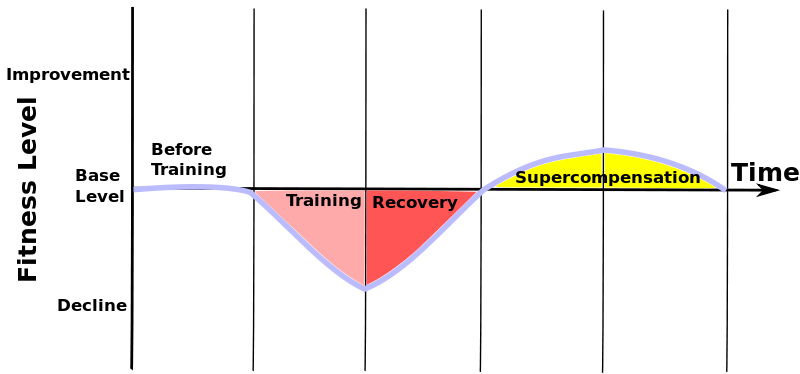
At a micro level your body can only recover from so much stress on a daily basis and if you consistently go above that threshold every day you’re not going to recover and become stronger. The stronger you become the more likely this can happen.

It’s called the Law of Supercompensation and it helps you to achieve the results that you want.

When you first workout your body becomes weaker, and after you eat, sleep and give you body time to recover you become stronger as an adaption to prevent damage to the body.

Your body literally adapts so you don’t die.

As you continue to ramp up the stimulus of training your body needs more time to recover, or it needs to optimize its ability to recover.

If you fail to allow either to happen the body will stop recovering to baseline and you’ll be in a constant state of fatigue.

Fatigue will mask your true fitness level.

Going into the weeds on this topic with a simple blog post is impossible, but the idea here is to champion RECOVERY. Your results in the gym are directly proportional to how well you allow yourself to recover.

Yeah, yeah, yeah, I can sit here and wax poetic on the importance of sleep, proper hydration, and ensuring ample calories to support your training but…

…zzzzzzzzzzzzzz.

Boring.

NOTE: All there are THE most important factors to consider when discussing recovery. I just know most people tend to black out or lose interest when anyone starts to discuss topics.

One of the best ways to ensure ample recovery and to prevent plateaus in the gym is to “lean into” the ebbs and flows of training volume. Some days/weeks should be hard, some days/weeks should be easy, some days/weeks should be right in the middle (what I like to call Goldilocks days), and then, yes, some days should absolutely make you hate your fucking life.

Here’s an excellent video via Chad Wesley Smith of Juggernaut Training outlining the concept:


2. You’re Not Training Hard Enough

This seems to be an obvious one but it’s very common for someone to get stuck into a routine doing the same thing every time they go to the gym, operate at the same level of intensity, and do the same weights every…single…day.

Your body is very good at adapting to what you do on a regular basis and if you continue to do the same thing day in and day out your body will become so efficient at it that, not only will you stop seeing results, but you actually may begin to regress.

Your body needs novel stimuli that it’s not used to, and you need to change the intensity of your workouts on a regular basis.

If you program calls for you to perform an exercise for eight repetitions and when you’re done you could have completed eight more, you’re not training hard enough…

…and you’re likely seeing sub-optimal results.

I always like to tell people you should leave 1-2 reps in the tank after each set. This tends to be a nice compromise because

  • You’ll ensure good technique with each rep.
  • You’ll still be lifting an appreciable amount of weight in order to elicit an adaptive response from the body
  • And lastly, to piggy back from above, you’ll ensure ample recovery between workouts

Figuring out how much weight you should be using can be a bit of a quagmire.

THIS post from Tony should help those of you who need a little direction.

3. You Have Too Many Daily Stressors

Your body recognizes all stressors as the same thing, and when you have too many stressors – good or bad – it will influence your recovery and results.

These stressors can include: working out, a lack of sleep, fighting ninjas, financial stress, friends and significant other, sick kid, your boss is an asshole, and everything and anything in between.

If it feels like the stress is piling up chances are you won’t be recovering very well either.

Maybe taking a day or two off from working out is what’s needed. However, I recognize that for a lot of people heading to the gym on a daily basis IS stress relief. To that end, maybe something like a Bloop, Bloop, Bloop workout is in the cards?

Meditation is lovely idea.

Or, I don’t know, maybe try some yoga.

Try Neghar Fonooni’s Wildfire Yoga (I.e., yoga for meatheads) which provides a plethora of quick 10-20 minutes “yoga flows” that’ll help declutter your mind but also loosen up that pesky piriformis that’s been nagging you for years.

The idea is that you don’t always need go full-boar, DEFCON 1, OMG-this-workout-was-so-awesome-I-can’t-feel-the-right-side-of-my-face.

If daily stress is high, temper your workouts accordingly.

4. You Need to Change the Focus of Your Program

Many people fall victim to this.

Humans are creature of habit and if something worked in the past, it stands to reason it’ll work today, tomorrow, next week, next year, next decade, you get the idea.

Whether it’s strength training, being a cardio bunny, or going on a bodybuilder body part split…

…everything works until it doesn’t work.

The answer to your past problems – when overdone – will be the source of your new issues. 

This is why having a basic understanding of periodization and focusing on different qualities of strength and fitness at different times is so important.

This means taking time to have phases where your main focus is strength, or Hypertrophy, or endurance, or power/speed, or just having better movement.

Change the focus of your program so you can be well rounded and avoid plateaus.

Progress feeds more progress.

5. Do More of What You Suck At

Stop always doing what you’re good at or what you’re familiar with.

If you write your own programs you’ll inevitably lean towards those exercises you’re comfortable with and good at. If you’ve always had a straight bar deadlift and a barbell back squat in your program, I have news for you…

…you don’t need either of them to be strong and get awesome results.

via GIPHY

The body doesn’t know what a deadlift or a squat is.

All that happens is a stimulus and an adaptation to the stimulus.

If the stimulus is the same all the time, the adaptation will be less and less significant. Change your variations, go from a straight bar deadlift to a trap bar deadlift, use specialty bars, use accommodating resistance with bands and chains, use eccentrics and isometrics in your training.


There’re so many things you can change or tweak in your program; the options are endless!

Here’s a list of things you can change to create a different stimulus and continue to allow your body to make adaptation:

  1. Use eccentric and isometrics to limit mechanical stress and master movement of your lifts
  2. Use chains and bands to overload the top of your lifts, mimic the strength curve, and teach acceleration in your lifts
  3. Use specialty bars to change the lift slightly and work on weaknesses
  4. Change your rest periods
  5. Use unilateral exercises as your main lift (ie, Bulgarian split squats, reverse lunges, single arm presses, etc)

About the Author

Ricky Kompf is the head coach/owner of Kompf Training Systems where we work primarily with team sport athletes like baseball, football, lacrosse and basketball.

He’s also a Head Trainer for a corporation for Bankers Heath Care.

You can give him a follow on Instagram HERE.

You can check him out on Twitter HERE.

CategoriesConditioning Program Design

Conditioning That Won’t Make You Hate Life *That Much*

Lets get right to the point.

Conditioning – how much to do?, how “hard” should it be?, what modalities are best? – can be a conundrum for many.

As with any question the appropriate answer is “it depends.”12

That said, the questions above are no different but are predicated on a number of things: one’s goal(s), injury history, current ability/fitness level, and whether or not they’re Bo Jackson.

Okay, that’s the epitome of “it depends.”

Even still, there’s no way a simple blog post can appropriately articulate the expansiveness of this topic and all the components at play.

However, I will say this:

  1. Conditioning as a means to AID RECOVERY is crucial.
  2. Conditioning is not more effective the harder you make it. I.e., it shouldn’t make you shit your spleen. If it does, you may want to head to the nearest hospital.

Conditioning That Won’t Make You Hate Life (That Much)

At the expense of making things a bit too over-simplistic, in my opinion, conditioning is more about helping to increase one’s work capacity (or ability to do more work in a given time).

Watering it down further and directing my train of thought to most of you reading: low(ish) intensity conditioning can help in the weight room and improve recovery and performance.

But if you prefer a more smarty-pants explanation, I like Alex Viada‘s say on the matter:

“If the goal is to improve work capacity (ability to do more work in a given time) it’s crucial to employ modalities that aid and promote general recovery which also create positive adaptations in durability, energy stores, cardiac output and cardiac perfusion, and other general components of overall endurance that essentially provide the foundation for an athlete to train and compete for longer while recovering better.”

The key, though, is not to be an asshat and turn something that’s supposed to, you know, help you recover…and turn it into loaded Prowler sprints paired with 400m handstand walks over broken glass for AMRAP.

Again, I can’t say this enough…

AIDING RECOVERY IS THE GOAL.

Here are a handful of my favorite go to protocols.

1. You Haven’t Been An Athlete For 20+ Years So Lets Stop Pretending You Are One Movement Circuit

Sprinting, more often than not, will not be my first choice for most trainees.

It’s too aggressive and most people just aren’t prepared for it. Repeatedly stabbing themselves in the neck with a cactus would likely be more beneficial.

I keed, I keed.

At some point I may venture into opening things up and introducing some sprint work into the mix.  But in the meantime, for most people, a more down to Earth approach to movement training/conditioning would be to implement more basic calisthenics like skipping, side shuffling, and the like into the mix.

  • 20 yd Forward Skip
  • Walk/jog 20 yd
  • 20 yd Reverse Skip
  • Walk/jog 20 yd
  • 20 yd Lateral Skipping/direction
  • Walk/jog 20 yd
  • 20 yd Side Shuffle/direction
  • Walk/jog 20 yd
  • 20 yd Carioca/direction
  • Walk/jog 20 yd
  • Rest 1-2 Minutes
  • Repeat for 3-5 Total Rounds

2. Tempo “Sprints”

My expectation isn’t that everyone has to look like Tom Cruise sprinting from an alien in order to perform sprints:


However, there should be a “base” level of competence involved which is where coaching comes into fruition. That said, sprinting doesn’t always have to be an-all-out-holy-fucking-shit-that-skyscraper-is-going-to-collapse-on-my- head-if-I-don’t-high-tail-it-out-of-here endeavor.

Strength coach Mike Boyle has always championed “tempo runs/sprints” as a conditioning method for his athletes AND regular Joe’s and I agree wholeheartedly.

I think they’re fantastic.

Basically all you do is perform sprints at 60-75% effort with walking recovery.

A basic template would look like this:

  • Tempo Sprint 50 yd
  • 50 yd walk back
  • Repeat for “x” number of rounds

A good rule to follow is no more than a 10% increase in volume (distance or time) each week.

3. Add a Prowler

There are a thousand and one different ways to implement conditioning with Prowler Sled.

One that I like is this:

  • 20 yd (loaded) Prowler Sprint (or whatever is best suited for the person: loaded, un-loaded, sprint, walk, pants on, pants off, you’re the coach, figure it out)
  • 40 yd Jog
  • 80 yd Walk (recover)
  • Repeat 8-10 Rounds

4. Something I Stole From Chad Wesley Smith

Strength coach Chad Wesley Smith defines tempo as the following:

“Tempo activity is done at 60-75% of max intensity and while the duration will vary based upon the nature of the activity you’re performing and your requisite fitness levels, 15-45 seconds of work is a good guideline. These work intervals are interspersed with low intensity calisthenics like push-ups, ring rows, abs, or can just be rest periods.”

One of Chad’s favorite protocols (and one I stole from him) is as follows using a stationary bike:

  • 1st Rep: 30 seconds of riding (~110 rpm) followed by 10 push-ups, rest until heart rate returns to bottom aerobic development zone OR you can speak normally.
  • 2nd Rep: 3o seconds of riding (~110 rpm) followed by abs, rest until heart rate returns to bottom aerobic development zone OR you can speak normally.
  • 3rd Rep: 30 seconds of riding (~110 rpm) followed by 10 push-ups, rest until heart rate returns to bottom aerobic development zone OR you can speak normally.
  • 4th Rep: 3o seconds of riding (~110 rpm) followed by abs, rest until heart rate returns to bottom aerobic development zone OR you can speak normally.
  • 5th Rep: 30 seconds of riding (~110 rpm) followed by 10 push-ups, rest until heart rate returns to bottom aerobic development zone OR you can speak normally.
  • 6th Rep: 3o seconds of riding (~110 rpm) followed by abs, rest until heart rate returns to bottom aerobic development zone OR you can speak normally.

Rest 3-5 Minutes and begin Set 2.

Two sets of SIX is a good starting point and over a number of weeks build up to TWO sets of TEN and maintain there.

5. Juarez Push-Up Inverted Circuit

This is a doozy I stole from another strength coach, Josh Bryant, of Jailhouse Strong (which should give away where the name of this circuit came from).

  • Perform 10 Push-Ups
  • Get up, walk/jog 20 yds
  • Perform 1 Push-Up
  • Get up, walk/jog back 20 yds
  • Perform 9 Push-Ups
  • Get up, walk/jog 20 yds
  • Perform 2 Push-Ups
  • Get up, walk/jog back 20 yds
  • So on and so forth

Perform any of these conditioning workouts on “off” days between your regularly scheduled workouts and I am willing to bet you’re going to see some drastic improvements in your ability to recover and work harder in the gym.

Categoriesmuscle growth Program Design

6 Week MASS Building Routine: Your Quest for a Bigger, Stronger Physique Begins Here

I’m traveling back to Boston from London today. I’ve been away for two weeks presenting at three different workshops. I’ve had a lovely stay, but am looking forward to heading home and my wife handing Julian over to me as soon as I walk through the door.

Thanks to Boston based personal trainer, George Kalantzis, for contributing today’s guest post.

Copyright: shevtsovy / 123RF Stock Photo

6 Week MASS Building Routine: Start Here

Labor day has come and gone, the days are shorter, and the nights are colder.

That means it’s bulking season.

But you don’t come to Tony’s website for some cookie-cutter bullshit program. Over the next six weeks, you will craft a new physique using intense workouts, discipline, and commitment to add mass.

via GIPHY

Setting the Expectations For A Clean Bulk

Nothing gets me more fired up than people who are not willing to put in the work to get desired results.

When I competed in natural bodybuilding last year, I heard questions like “how do you gain muscle and shred down,” how can I look bigger without gaining fat?” What supplements did you take?

The list goes on.

I hate to burst your bubble, but the universe does not bend at the whims of your desire. Contrary to popular belief, you cannot have your cake and eat it too.

So how do you bulk without gaining excessive weight?

To achieve a clean bulk, you must learn how to gain 2-5 pounds per month with half of that weight being muscle, and half of that weight being fat. This will keep your composition in an ideal state for optimal performance.

So just eat more food, right?

Not quite, too much junk food during a bulk is one of the biggest mistakes you can make. Nutrition does matter, and most people will either eat a surplus of shitty food or not eat enough. That is one of the toughest things about adding solid mass.


You can expect to gain some body fat during a bulk, but not an excessive amount.

We are aiming to build a stronger engine so that you can increase size, which means you’ll need to gain healthy amounts of body fat.

Don’t get discouraged if you see others gain size quickly or achieve different results, gaining mass is about putting in the work, and for some, adding quality size can take time.

Your Blueprint For Success

Life is motion.

The world continues to rotate on the axis, and every day is an opportunity to grow. Your body is the secret to many things. Yet more often, many of us cheat our way through training, going through motions and we never achieve the results we look for.

Today is the day we put an end to all of that.

Very specifically, this template is designed to form the basis of your training to put on size using bodybuilding methods. Because this is a hypertrophy program, it will help with putting on size, but if you are a powerlifter or strong man, this might not be the best program for you.

An additional benefit of this program is that it will help raise your work capacity and thus prepare you even better for the strength phase training you’ll do after.

What’s more, this program will help spare muscle loss when you decide to cut back down.

This will be your blueprint for a six-week mass building phase.

You’ll notice it is broken down into two three-week phases, each phase using a combination of compound exercises and machines to maximize your results. It is these movements where we will construct a blueprint for adding some serious size.

Phase I

Our first phase consists of flooding the muscles by using compound exercises performed in the optimal range to transform your energy into muscle mass.

During the first three weeks, you’ll be training five days a week in a split that is three days of training, with two days off.

You’ll repeat 3/2 for three weeks in the following format: legs, push, pull.

The great thing about a 3/2 cycle is you can alternate it according to your life.

As long as you train three out of every five days, you’ll provide enough stimulus for growth.

At first, you’ll notice that the program does not look lie much, but to prevent overtraining and generate the highest anabolic response, you’ll stick to three working sets, not including your warmup sets.

Phase II

Now that your muscles are primed for growth, this phase makes insane changes to your physique.

You’ll go from training five days to six days, and you’ll do different exercises and reps ranges. As with the first phase, adjust the days according to your lifestyle, but keep the days in order and make sure to train all six days.

Conclusion

It is human nature to fear the unknown, but it would be inhuman to not yearn for something greater. If you want to experience changes in your physique, you must pushup yourself past your comfort zone. This six-week bulk will give you the tools you need to pack on some serious size.

About the Author

George Kalantzis began his career as decorated Marine with over ten years of faithful service and deployments to Iraq and Afghanistan. He’s worked with everyone from professional athletes, celebrities, busy executives, and alongside some of the top strength coaches in the world.

Today he spends most of his time coaching at Equinox in Boston, and outside of work with his gorgeous little daughter. Please feel free to say hi over on Instagram, Facebook, Twitter, and YouTube, as he loves meeting and connecting with new people.