Categoriescoaching personal training psychology

The Subtle Art of Shutting Up and Listening

Today’s guest post comes courtesy of TG.com regular, and my 1-day-per-week training partner1, Justin Kompf.

Listening, I mean really listening, is a learned skill and takes a lot of (purposeful) practice to master. Those who are able to so, however, are often the ones who separate themselves from the masses in the fitness industry.

This is a quick read, but worth your time

Copyright: aaronamat / 123RF Stock Photo

The Subtle Art of Shutting Up and Listening

I take a deep breath before I knock on my advisor’s office door.

“Keep it together Justin, whatever you do don’t cry”

I take a seat in his office and immediately start crying. We don’t need to go into details, but I was in a tough place.

Fine, my girlfriend broke up with me and I had no idea where I was going with my career. Okay, great, sharing feelings, my favorite.

Can we move on?

I’m sitting in his office, which mind you is surrounded by other offices, just balling.

But as I’m talking, I’m starting to feel better.

Why?

Well, here’s what he was doing. Just listening, providing me with enough silence to think thoughts and say them out loud. He asked me open ended questions without giving advice. That was special for me because up until then I don’t recall ever really being heard like that.

via GIPHY

Of course, there are friends I could say anything to, but I never really had this kind of experience before. This experience profoundly changed the way I interacted with people and even changed my approach on coaching.

Empathetic Listening

The other day in a lecture I hammered home the importance of forming relationships with the people you coach.

Given enough time in anyone’s life, something stressful (which is not necessarily bad) or crappy is bound to happen with different magnitudes of crappiness.

Sometimes I like to think of God as Donkey Kong from Nintendo just throwing barrels filled with crap (like bad or stressful events not actual poop) at people. It’s not a bad thing, that’s just life and it happens to everyone but it’s nice when you have someone to help you work through it.

Low levels of crappiness might be failing to get a promotion at work whereas high levels of crappiness might mean going through a divorce or a death in the family.

Many of the clients I train I’m close with, especially those close in age to me. I’m sure lots of other trainers are the same. Over time, trust forms and when things that bother them come up, they know I’ll listen.

This isn’t to say that a lift should turn into a therapy session, because it shouldn’t. But imagine how much a client would appreciate it when something came up and you just said:

“Hey, it sounds like you’re going through some tough stuff, let’s grab a coffee after the session”

How to Do This Empathetic Listening Thing

I don’t have set in stone guidelines on how to accomplish this, but I know when I’ve done it the right way and I know when I’ve failed.

I think one of the biggest issues people have in conversations is that they wait for their turn to talk. They have already concluded what they are going to say next even before the person in front of them has finished talking.

Yes Karen2, you’re guilty of this so pay close attention.

As soon as you’re thinking about what you are going to say next, you’re not fully engaged with the person, so that means you’re not listening.

Side Note: This is also super important for a successful initial consultation with a client if you want to truly understand their goals and why their goals are important.

If you’re going to be a good listener, you need to suspend your thoughts.

via GIPHY

Good listeners don’t jump to give advice or relate their experiences to the person in front of them. If you feel like you have something that the person can relate to, try saying:

“You know, everyone’s experience is different, and I don’t want to pretend like we’ve gone through the same thing, but I’ve got a story that I think you might relate to.”

People don’t always talk to get advice back.

They just want to talk because things are tough, and they want to get it off their chest. If they want advice, they’ll probably say “what do you think I should do?”

The last thing that I know for sure is that if you want to be a great listener you need to put your phone down.

All the incredible memes will still be there when your conversation is over.

The Subtle Art of Shutting Up

Listen…

Listening is incredibly important. Yea, sometimes it can be just about as comfortable as being single for the third year in a row at your families Thanksgiving get together.

Right…

But in order to be a good listener, you need to shut up.

Something great happens when a person feels accepted and can speak their mind. You might find out way more about the person you are working with, whether it’s about their goals or about their life, by saying nothing.

Just like lifting, writing, or slipping high brow poop jokes into casual conversations with your highly successful clients, listening is a skill that needs to be practiced.

So, I would encourage all of you to go out their and in the appropriate times, just shut up.

About the Author

Justin Kompf is doctoral student studying exercise and health sciences. He is a personal trainer in Boston at CLIENTEL3.


You can follow Justin here and here.

Categoriescoaching Conditioning

The Problems With Youth Fitness. With Solutions

I’ve got a guest post from Baltimore based strength & conditioning coach, Erica Suter today. She’s someone I respect a lot not only for her writing prowess (she gives me a run for my money with Lord of the Rings references), but also for her steadfastness in sticking to her guns.

She could easily train professional athletes given her own athletic background, but more to the point because she’s a gifted coach.

However, her preference is to work with youth athletes

And she crushes.

I am always impressed with Erica’s content and commitment to serving our younger generation of athletes. She’s recently released her first product – Total Youth Soccer Fitness – and it’s fantastic.

It’s really a manual for all young athletes and not just soccer, and I think it does a superb job at bringing the pendulum back to the middle. It provides a detailed strength & conditioning component, of course, but emphasizes something sorely lacking in today’s culture…

….fun!

It’s on sale for $67 for the next three days and then jumps to it’s full price of $97. Coaches, parents, Nazguls, act quickly. You won’t be disappointed. Get it HERE.

Copyright: matimix / 123RF Stock Photo

The Problems With Youth Fitness (With Solutions)

Besides J.R.R. Tolkien book themes, snowboarding trips, and triple shots of espresso, nothing lights me up more than youth fitness.

After seven years of coaching kids, I guess I have a lot to say on the topic. As a self-proclaimed introvert, my extrovert side certainly shines through any time strength and conditioning for youth athletes comes up. Here’s a common conversation I’ve had countless times:

Parent: “Can you do conditioning for my 10-year-old?”
Me: “Like take them to the playground?”
Parent: “No, like suicides, laps, timed miles.”
Me: “Find another coach.”

(hangs up phone abruptly)

via GIPHY

Okay, okay, maybe it’s not this dramatic, but you get my point.

Look. I love working with kids. There’s something magical about teaching a beginner the ropes of training and seeing them all the way through their athletic development to college and beyond.

But what I love more is teaching everyone involved in youth fitness that there are safe, fun, and effective ways to get kids better at their sport.

Still, some of these kids are in the wrong training hands. With overuse injuries, sports drop-out rates, lack of passion for sport, and sedentary lifestyles on the rise, I fear the future of the youth athlete.

More often than not, kids are trained wrong.

Whether a coach is misinformed, parents are Googling Messi workouts for their 10-year-old too much, or a new trainer wants to grow his social media following, kids are doing some ridiculous things (most that are unsafe) in the gym and on the field.

With that said, besides sitting at the DMV, there’s nothing worse than perusing Instagram and seeing these things:

– an 8-year-old sprinting up a hill carrying a medicine ball.
– a 10-year-old attached to a sled while dribbling through cones.
– a team of 8-year-olds running sprints around the field as punishment.
– a high school kid doing CrossFit box jumps without mastering jumping and landing mechanics.

Of course, I could make a laundry list here, but instead of complaining, I want to shed light on some of the biggest problems in youth fitness as well as provide actionable solutions.

Let’s do this:

1. People Aren’t Keeping Youth Fitness Simple.

When it comes to training kids, I like to be guided by this mantra: keep it simple, stupid.

A training session with kids should focus on 1-2 skills or performance components you want them to improve, then progress from there. There’s no need to be all over the place and complicate things. If you’re a coach who is trying to teach speed and jumps right into the speed resistance bands, harnesses, sleds, and unicorns to look flashy, who the hell are you?

Worse yet, the kid’s reps are terrible, form is weak, and coordination is non-existent.

So.

I have an idea: tell kids to skip or march and see the whacky coordination show. If they can’t do these simple tasks, what makes you think their linear and multi-directional mechanics will be clean?

Besides asking yourself what skill you want to teach that day, I’d also argue you should ask yourself: “am I developing athletes or social media stars?” before you jump to posting flashy videos on your Instagram.

*drops mic*

2. Youth Athletes Don’t Learn the Basic Motor Skills Enough.

Speaking of keeping it simple, always start with the basics.

Here are some staples to my youth fitness programs:

– Balance
– Contralateral Coordination
– Core Stability
– Jumping and Landing Mechanics
– Athletic Stance

What’s funny is, these basics set youth athletes up for the “cool” things they get to do later on in their development, like power cleans, deadlifts, pull-ups, lunge variations, and more. Behind every healthy, athletic youth athlete is someone who masters the basics.

Relentlessly.

Vertical Jump Tutorial


Because this much I know: motor skill learning is REAL. Like anything else in life, such as learning math, an instrument, or a soccer skill, this stuff takes a long time frame to master. Like as long as it took Frodo to trek across Middle Earth time frame.

Reflexive Strength


Being able to be coordinated (contralateral) is critical for not only developing optimal speed mechanics, but also for blending the left and right hemispheres of the brain.

Kids who can connect across their bodies through movements like Bird Dogs, Crawls, and Marches can tap into their logical and creative sides. A great book to check out on the benefits of coordination for brain development in youth is Smart Moves.

Here is a fun drill that touches on coordination, balance, and core stability to try:


3. Youth Athletes Aren’t Strength Training Enough.

Let’s get this out of the way: youth strength training does not mean throwing a kid under a barbell right off the bat.

Here are several things that could mean “strength training” for kids:

– Bodyweight
– Resistance Bands
– Free Weights (dumbbells, kettlebells)
– Barbells
– Prowlers
– Peg Boards

Now that you see you don’t have to sign your kid up for CrossFit to become the next Lebron, how should we gingerly go about strength training?

Taking the conversation back to the basics, always start with bodyweight first to ensure the kid can move well and execute good form.

Split Squat


Then, once bodyweight looks as pretty as a Starbuck’s peppermint mocha, you can progress to more crazy shenanigans like this:

Bulgarian Split Squat


Here’s a rough template I like to use as far as when to strength train:

– Girls 11-years-old and up
– Boys 12-years-old and up
– However, this may vary based on physical maturity and mental readiness.

How do we know a kid is mentally ready to enter a gym setting with clanking barbells?

– Ask them why they want to go in the gym.
– Notice their body language (proud, head up upon leaving gym)
– If they can’t stop talking about how awesome Coach Erica’s Pull-Up competitions were, they’re a green light. ;-O

4. Youth Athletes Aren’t Having Fun.

While structured training and coaching should done in a controlled environment, sometimes we need to set the seriousness aside and have some fun.

After all, don’t we want kids to fall in love with fitness?

Not just to get better for their sport, but to be inspired to move for a lifetime. In the midst of today’s Fortnite culture, it’s pretty freaking scary how little kids move nowadays.

Think about it: most sports teams practice a few times a week, amounting to a total of 2-4 hours a week of activity. This is meager compared to what we did back in my day. By “my day” I mean the 90s.

Shout out to those of you who played Dodgeball, Capture the Flag, Four Square, and Tether Ball.

Alas, I digress.

We don’t see this anymore. So to inspire kids to move, let’s lean into our creativity as coaches and make fitness fun. Here are several examples of games I’ve come up with over the years:

Example #1


Example #2


Example #3


Of course, these are just glossing over the tip of the iceberg. The good news for coaches is that yes, keep things simple, but sprinkle in creativity as you go to keep kids passionate and engaged.

Teaching must be done to some degree so kids learn, but we have to be cognizant of peppering in the fun.

To that end, let kids be kids.

Total Youth Soccer Fitness

If you’re a coach of young athletes this is for you.

If you’re a parent of young athletes this is for you.

Kids aren’t professional athletes and they should NOT be treated as such. Erica has provided a stellar resource that will help guide you step by step on how to build a well-rounded athlete, but remain cognizant that kids are kids.

Take advantage of $30 off the regular price HERE.

Categoriescoaching Exercise Technique

5 Dumbbell Row Mistakes and What To Do Instead

The dumbbell row is a common exercise performed in gyms everywhere and is a splendid choice for anyone interested in building a back the size of Nebraska.3

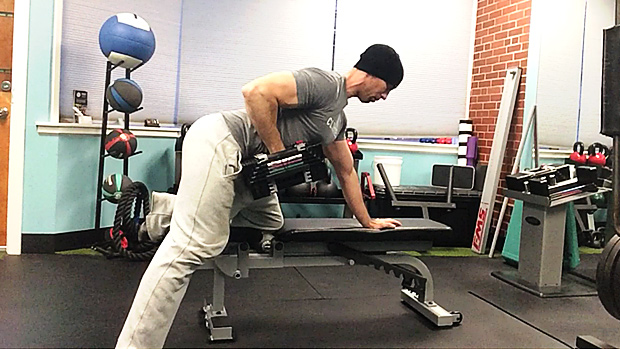
It’s a staple in my own programming (and that of my clients) because it offers a bevy of other benefits – shoulder health, emphasizes unilateral strength, promotes increased eccentric loading (they’re superb for accentuated eccentric sets), and it’s undeniably versatile, to name a few.

However, it’s an exercise that’s often butchered in terms of its execution, and as a result many trainees lose out on all those benefits

I wanted to highlight a few of the more egregious culprits in today’s post.

Copyright: huurah / 123RF Stock Photo

There’s No One Perfect Way, and I’m Not Saying You’re Wrong

Let me set the record straight out of the gate.

This post is not meant to be the end-all-be-all-Tony’s-right-and-you’re-wrong-so-STFU answer to everything dumbbell row.

I’ll be the first to admit there are many nuances of the exercise I’m omitting from this post. Truth be told I didn’t want to write a 3000 word article on the dumbbell row and make people want to commit seppuku out of sheer boredom.

  • 3ooo words on Why The Gummi Bears Were the Best Saturday Morning Cartoon of the 80’s = Pulitzer material.
  • 300o words on the DB Row = someone toss me a sword.

That said, my main objective here is to 1) point out a handful of technique flaws I’ve observed over the span of a 15+ year coaching career, 2) suggest some “fixes” and 3) hopefully keep my pants on in the process.

DB Row Mistake #1: Not Pushing Away


Understandably, when we’re performing a DB Row we should emphasize and be cognizant of what the working/moving arm is doing (more on this below).

However, it’s important to recognize that the supporting/non-moving arm is also a major player and is very much involved in the proper execution of this exercise.

Mike Robertson has pointed this out in the past, and it makes a ton of sense. I watch a lot of people “hang out” on their supporting side when performing a DB Row…more or less “dumping” into that shoulder.

This places the scapulae in a precarious position –  anteriorly tilted, often in more of a shruggy pattern – which isn’t doing anyone’s shoulder any favors.

Instead, you want to protract or “push away” on the supporting side for better positioning, stability, and, as a bonus, Serratus Anterior activation.

DB Row Mistake #2: The Path


Many people view the DB Row as two things:

  • A straight up and down motion.
  • An exercise that targets scapular retraction, namely the Rhomboids.

I view the DB Row as two things:

  • More of an arc motion (forward and backward).
  • An exercises that, yes, can (and kinda-sorta does) hit the rhomboids, but due to the increase line of pull (arc motion), is actually a superb exercise for maximal Lat engagement.

Strength coach Lee Boyce has hammered home this concept in the past, but it bears repeating here: the force angle of the DB Row – especially if it’s performed straight up and down – doesn’t lend itself as a great scapular retraction exercise.

Simply put: There are better options (Seated Row variations, bent over row, jumping into a live volcano).

Instead, you should treat the DB Row as more of Lat exercise.

Implementing more of a sweeping action or “arc” pattern with your arms allows you to match the fiber orientation of the Lats.

And that’s what it should target.

No diggidy, no doubt.

DB Row Mistake #3: Too Much ROM


More ROM isn’t always better.

A common mistake I often see trainees doing when performing a DB Row is allowing their elbow to travel too far past the midline of the body (glenohumeral extension).

Excessive glenohumeral extension (as what happens when the elbow travels past midline) can lead to excessive scapular anterior tilt and Anterior Humeral Glide, both of which will likely kill you.

Just kidding.

But they’re not going to make your shoulders (or elbows for that matter) feel great.

I like to cue my trainees to bring their elbows towards their hip or “back pocket” and that’s it. I’ll often have to place my hand just off the small of their back so they know when to stop.

Once they understand that, it’s makes all the difference in the world.

DB Row Mistake #4: Pinning the Shoulder Blade


Many people are cued to retract their shoulder blade at the top of the movement when they perform a DB Row.

Cool.

But then they keep it pinned there, in place, throughout the duration of a set.

Not cool.

And then this is how I react.

via GIPHY

When I coach the DB Row I encourage people to feel a slight stretch at the bottom of the movement.

The shoulder blades are meant to move around the rib cage.

Pinning them in place can lead to a litany of other situations – like Downward Rotation Syndrome – which you’re better off avoiding.

There are situations where I may cue someone to hold a retracted position more, but it’s rare.

Don’t be afraid to let those bad-boys explore their full movement capability.

DB Row Mistake #5: Going Too Heavy

Here’s a nice rule of thumb: If you look like you’re having an epileptic seizure – or it looks like you’re using an industrial strength Shake Weight – when performing a DB Row you’re likely not doing it correctly (or gaining much benefit other than stroking your ego)

I understand there’s a time and place for body english.

I do.

But as Eric Cressey poignantly Tweeted the other day:

Moreover, and as my colleague Chris Cooper succinctly reminded me of the other day, the DB Row is just as much of an upper back exercise as it is an ANTI-ROTATION exercise.

I prefer to encourage as rigid of a torso as possible during a set. There’s going to be “some” movement, mind you, but it shouldn’t be too prevalent.

When it is it’s often a sign someone is using too heavy of a load.

For a bit more of a the science and biomechanics of what I’m getting at – especially as it relates to the Resistance Curve and Strength Curve of rowing – I’d encourage you to check out THIS article by Nick Tumminello.

1100 Words

Boom shaka-laka.

Categoriescoaching

Coaching: The Fine Line Between Building Toughness and Being Destructive

Jordan McNair, a (former) University of Maryland football player, died a few weeks ago during practice as the team was completing conditioning drills.

All signs pointed towards him being in distress.

Yet, the cloud of “being tough” and persevering through a grueling workout seemed to have overcast common-sense.

We can learn from this tragic event as fitness professionals and be more cognizant of what our roles truly are. Thanks to NYC based strength coach, David Otey, for sending this article my way to post.

Copyright: oskanov / 123RF Stock Photo

Coaching: The Fine Line Between Building Toughness and Being Destructive

It shouldn’t take a devastating loss to rattle the heads of everyone in an industry.

The death of Jordan McNair, a 19-year-old sophomore football player at the University of Maryland is one that got shockingly little attention until recently.

Jordan died a couple weeks after a conditioning incident when running 110’s with the team.4

While there is much to be seen regarding specifics of the circumstances the part that is clear is this happened under the watch of their Strength and Conditioning staff.

We work in a field where bigger, stronger, faster, and more resilient is the goal.

With increased expectations can come increasingly negligent practices or, at the very least, less attention to the factors we can control. I bring this up because this is just a concerning situation when looking at Personal Trainers and instructors who have less education, experience, and want to show what they can do.

This isn’t to say that less education or experience can make someone more dangerous, but someone may be less in tune with the risk factors and signs showing that someone can be in distress.

The symptoms of a heat illness include:

  • High body temperature
  • Nausea
  • Vomiting
  • Rapid breathing
  • Flushed skin
  • Headache
  • Racing heart rate
  • Confusion
  • Agitation
  • Slurred speech and irritability (1)

Don’t the top seven symptoms look like what a “tough workout” would lead to when working out outdoors in the summer?

While heat stroke symptoms are the example I use above, this can be similarly associated with any client that is thrown too far into a program without the proper baseline. As I would compare it, throwing someone into the deep end who doesn’t know how to swim. While there are many factors we cannot control, there are many we can control.

1) Communication

An open line of communication is paramount to gaining success and identifying everyone’s boundaries.

Self-awareness is not a trait that every individual comes equipped with when they begin working out.

At the end of the day, the risk of an exercise should never outweigh the reward it pays out.

There are always options to improve the health and performance of someone while avoiding some dumb shit you saw on Instagram.

The phrase I commonly use with all my clients or potential clients is…

“If at any point in time you feel tired, sore, fatigued, dizzy, or just generally uncomfortable, please let me know.”

I say this so frequently it becomes a natural part of their program dialogue.

Creating a line of communication where the athlete, individual, or child you are working with understands they can trust you to be open is when real progress begins.

2) Hydration

I think we all have at one point in our life had that coach that used “no water” as a form of punishment.

That is an awful and ridiculous idea.

To be sufficiently hydrated it is recommended to drink 16-20 oz of fluid prior to exercise and replenish every pound of weight lost in a training session with 20-24 oz of water afterwards.

While hydration numbers are often changing based on many variables, it is safe to say 8-12, 8 oz glasses of water are recommended daily (2). Water effects everything from cognitive function do muscular activity so, yeah, its kind of a big deal.

3) Symptoms

Identifying when someone you have been consistently working with just isn’t themselves comes with time and attention.

Understanding what these signs look like can help avoid injury or regrettable overexertion.

The following examples pertain to system overload scenarios:

  • High respiratory rate
  • Wheezing
  • Blurred Vision
  • Clammy skin
  • Not sweating during vigorous activity
  • Headache
  • Uncontrollable HR

The following examples pertain to potential injuries (Muscular/Joint):

  • Wincing
  • Compensation to one side
  • Irregular gait pattern
  • Verbal cues (grunts or moans)
  • Visible cues (facial expression)

Unsure? Don’t Pass Go

Ultimately, we cannot avoid all situations.

We try out best to avoid every wrong turn to get the most out every person we have the privilege to work with. The best we can do is keep our eye and attention at making sure we keep our clients and athletes in the safest position possible.

Mental toughness is built in dealing with adversity and pushing the current limits.

Generic training and standards of what we expect can be thrown out the window. Arbitrary training protocols and “toughness” challenges are a thing of the past.

With all the advances we have seen in the fitness industry we can avoid some of the circumstances we have seen ourselves in over the past few years. We need to develop individuals from where they currently stand to where they can eventually thrive.

Because I said so is never a good response.

Don’t find yourself to be the health professional who neglects health.

For those who’d like to help you can go HERE to contribute to the GoFundMe account that has been set up to support the McNair family.

Resources

  1. “Heat Illnesses.” Korey Stringer Institute, ksi.uconn.edu/emergency-conditions/heat-illnesses/
  2. Roy, Brad A. “Exercise and Fluid Replacement.” ACSMs Health & Fitness Journal, vol. 17, no. 4, 2013, p. 3

About the Author

David Otey is a Strength and Conditioning specialist based out of New York City. David is the 2015 Fitness Manager of the Year for Equinox and has been featured in several major fitness publications on the topics of strength and Conditioning. David will be presenting at this year’s NSCA PT Conference on the topics of Rotational Power and Hex Bar Protocols.

Instagram: HERE.

Categoriescoaching Program Design

The Underrated Value of Mediocrity

Remember that iconic and hilarious scene from the movie Billy Madison when Billy (Adam Sandler), upon realizing one of his classmates embarrassingly peed his pants, attempts to “normalize” the situation by pretending to also pee his pants, thus reframing the unfortunate situation into something that’s not only desirable to do, but something everyone thinks is “cool” and will make you popular.

Remember that?

Well, in fitness, we encourage people to pee their pants.

Copyright: goodmoments / 123RF Stock Photo

Wait, Stop, It’s Just a Metaphor

Please don’t go and pee your……..

Goddamit.

I can’t take you anywhere.

Now, for those of you who didn’t take my words literally (which I hope is all of you), let me attempt to elaborate further on the point I’m trying to make.

It’s a bit of a reach, but I think it’ll make sense.

  1. Peeing your pants isn’t normal.5
  2. Similarly, hitting PR’s every day in the gym (or the expectation that you have to) isn’t normal.

To be clear: I am not saying we shouldn’t work hard or strive to push ourselves in the gym. As I’ve been known to say time or two:

“Lifting weights isn’t supposed to tickle.”

Likewise, it’s that drive to do better or to “do more work” week-by-week, month-by-month, and hopefully, because consistency matters most, year-by-year…that will make all the difference in the world.

Not that it needs repeating to my regular readers, but if you’re new (welcome!), the “doing more work” part is kinda important if you want to see continued progress in the gym. You have to provide enough of a (recoverable) stimulus to the body in order to force it to adapt to the demands placed upon it.

If on Day #1 of your fitness journey you found pressing the 30 lb. dumbbells hard, and here it is, Day #287 (<—no small feat) and it’s still hard, you may want to audit your program (or effort).

There has to be a degree of uncomfortableness and/or sucktitude in the process.

It’s just the way things are.

via GIPHY

However, Not Always

And this is where things get interesting.6

There’s always been this prevailing notion – especially in this social media age – that workouts have to, at all times, be ballbreakers.

We watch these amazing feats of strength on Instagram and YouTube, or read about someone’s insane workout on Twitter, and we believe that’s what we should be doing also. We’ve been desensitized into believing our workouts don’t count or are pointless unless we leave the gym crawling on all four or we can’t feel the right side of our face.

“Average” workouts are dull, prosaic, and for lammos who don’t really want to work hard and can’t hang with the big dogs.

I could not disagree with this viewpoint more.

The only thing I could possibly disagree more with is Becca choosing Garret over Blake in the latest season of The Bachelorette.

80% Workouts and Why Mediocrity Matters

Giving credit where it’s due, I want to point out that what follows is a concept I stole from strength coach/bodybuilder/fellow brother in baldness, Paul Carter.

There’s a time and place for workouts that crush us, and there’s a time and place to push the envelop with training.

In fact if we did the math, 10% of the time you’ll walk into the gym feeling like a million bucks and that you could beat Rambo in a staring contest.

Conversely, 10% of the time you’ll walk into the gym feeling like a bag of dicks and weights you pwned a week ago suddenly feel like they’re being lifted against the gravitational pull of a Black Hole.

I.e., There’s also a time and place to back off, not be a hero, and listen to your body.

The other 80% of the time – which is almost always – you’re going to show up and just do the work. You’re going to hit all your reps, strain (but not too much), and for all intents and purposes you’re going to complete a mediocre workout.

These are the workouts that matter most.

These are the workouts that build the grit, resiliency, and the base for pretty much all future outcomes.

My friend, Ben Bruno, reverberated a similar message a few days ago:

Battling through the mundane – and accepting it as a necessary component of progress – is a tough pill to swallow for many trainees.

I can’t tell you how many conversations I’ve had with athletes and clients over the years trying to make this concept stick.

“That workout was easy,” for some coaches, is the last thing they want to hear.

For me it’s a sign we’re headed down the right path. A path everyone, in the history of ever, has also travelled and navigated to get where they are today.

Show up, do the work, strain (but not too much), and don’t think you have to pee your pants…;o)

Categoriescoaching Strength Training

Stack the Rings For Better Squat Performance

There’s a lot that can go awry with the squat.

  • Knees caving in too much.
  • Excessive rounding of the back.
  • Getting stapled to the ground.
  • Explosive diarrhea.

There’s one cue, however, I believe has carryover to pretty much anyone and it’s almost guaranteed to make your squat look and feel better.

Copyright: spotpoint74 / 123RF Stock Photo

Stack the Rings

It’s not lost on me there’s an easy Lord of the Rings reference to be had here, and I’m going to try my best to be professional and abstain and….

Fuck it.

One ring………..to bind them.

Okay, with that out of the way, what do I mean when I say “stacked rings?” and how how can that possibly help your squat?

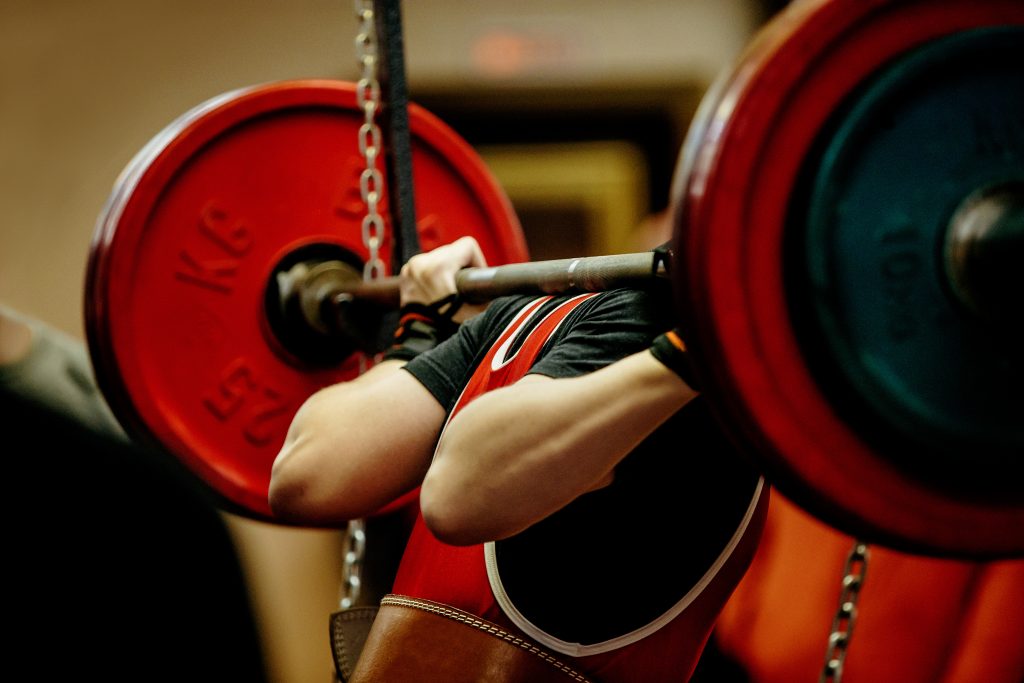
I had to audit myself a few years ago when it came to coaching the squat. After being introduced to the concepts of PRI (Postural Restoration Institute) and listening to other strong dudes like Chad Wesley Smith speak on the topic, I wondered if cueing people to “arch, hard!,” and to” sit back” were the right things to be saying to the bulk of my athletes/clients when they were getting under the bar?

Very few were competitive powerlifters and even fewer were geared lifers. I.e., none wore squat suits when training (which require an aggressive arch and sitting back to reap the benefits).

To be clear: There are still many very strong dudes (and coaches) who advocate squatting with a hard arch, and that’s their prerogative. The thing to appreciate, however, is that what works and is ideal for a geared lifter won’t necessarily (read: rarely) ever translate well to a non-geared lifter.

If I were to balance the “I want to be brutally strong AND not shit my spine on this next set” teeter-totter, I’d opt for not arching (aggressively).

Like this.

The ribs & diaphragm are pointing in one direction (up) and the hips & pelvic floor are pointing in another (down).

Put simply, this is all sorts of fuckeduppery not a stable position.

We’re placing a ton of shear load on the spine.

What’s more, this will invariably force the lifter to initiate the movement by sitting back (rather than down, you know, like a squat). As a result, often, the chest will fall forward, and the cue we default towads is “arch, arch, arch, chest up, chest up, chest up, you crap you’re going to fall on your face, too late.”

This only feeds instability.

A better approach, I believe (again, for non-geared lifters) is to tone down the arch and adopt what’s been referred to as the “canister” position or to “stack the rings.”

Giving credit where it’s due, the first person I ever heard use this phrase was Dr. Evan Osar. A simple analogy he used was to think of your pelvis as one ring and your rib cage as a bunch of other rings.

We want all those rings to be stacked.

This will nudge us into a more stable, joint-friendly environment

Now, a minor glitch in this way of thinking is that some people think this infers going into posterior pelvic tilt, where we flatten out the lumbar spine.

This is not what’s happening. As you can see in the picture above, my hips are still behind the bar (still very important) but there’s less of an aggressive arch. Telling people to posteriorly tilt their pelvis towards spine neutral is different than telling them to flatten out their spine.

From there it’s a matter of owning the canister position and to squat down rather than back.

Maybe this quick 3-minute video will help:

Want More Tips Like This?

Yeah, I thought so.

My friends Dr. Sarah Duvall, Kellie Hart, and Meghan Callaway released a stellar product this week – Glutes, Core, and Pelvic Floor Online System – and it hammers home points like the one above. It’s often necessary to break down movement(s) into their respective parts to make certain we’re getting motion from the right areas and that we’re using/engaging the areas we want to use/engage to perform exercises well.

GCPF is a 12-week online course that will teach you how to assess movement and how to implement the correct drills and exercises to help you (or your clients) get stronger and to move better.

TODAY (6/29) is the last day to get it at it’s FULL sale price. You can still get it at a discount until Monday (7/2), however today is your last chance to get it at $200 OFF.

It’s a great resource and one I feel will help a lot of people.

—-> I Like Saving Money, Tony. Thank You <—-

CategoriesAssessment coaching Corrective Exercise

Low Back Pain: Habitual Movement Can Have Greater Influence Over Intentional Exercise

We’ve all seen the statistic: 80% of the population will experience low back pain in their lifetime.7

Back pain is the single leading cause of disability worldwide. Americans spend upwards of $50 billion per year on back pain. Back pain is the nemesis of all ninjas.

The struggle is real folks.

Given how pandemic the issue is and the sheer number of resources there are on the topic, why is LBP still such a nuisance and the Bane of many people’s existence?8

Copyright: kudoh / 123RF Stock Photo


When it comes to low back pain there is no one clear cut answer or way to explain things. As my good friend David Dellanave would say “different shit is different.”

It’s impossible to definitively point the finger at one or two things and say “there, that’s it. THAT’s why everyone’s back feels like a bag of dicks.”

Certainly we can proselytize, but at the end of the day we’re mostly just guessing at what may be causing someone’s low back pain. We’re using an amalgamation of relevant anecdotes, experiences, expertise, and evidence based research to make those educated guesses.

But it’s guessing nonetheless.

[BEFORE WE MOVE ON: Another good friend, physical therapist Zak Gabor, sent me THIS rather thorough paper on management of low back pain. To quote Zak…”Movement is key, but EDUCATION on false beliefs about the body is arguably most important.”]

A week or so ago as I was watching an episode of VICE News on HBO and one of the main stories that night was on opioid addiction and of a former drug representative who, sadly, because of debilitating low back pain, had become addicted to the very pain killers that had made him so successful years prior.

In the story he described a seemingly endless barrage of treatments ranging from massage therapy and acupuncture to ultrasound treatments, physical therapy, and traction.

It was a hefty list and I can’t remember all of it.

In the end he ended up having back surgery, yet unfortunately was still reliant on pain killers to help with his chronic low back pain.

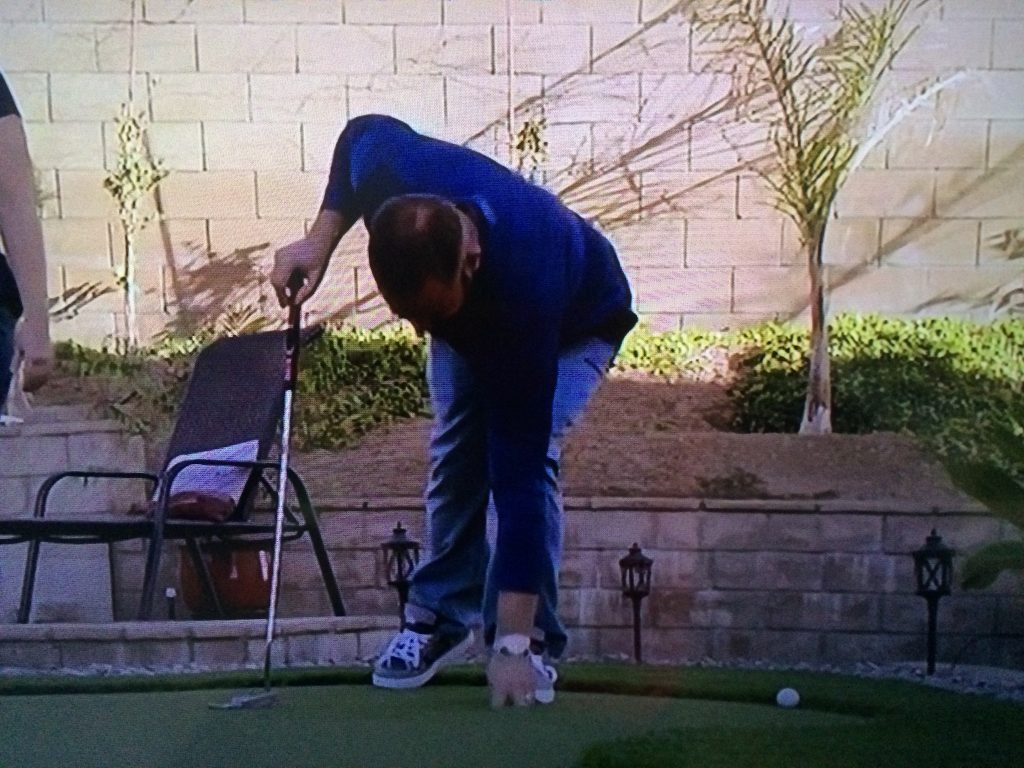
As the story unfolded they panned to the same individual miniature golfing with his family and I ended up taking a screenshot of him bending over to pick up the ball after sinking a shot.

If I could add sound it would be accompanied with a cacophony of painful grunting akin to a rhinoceros passing a kidney stone.

Now, what follows is not an attempt at me diminishing his experiences, and I’m fully cognizant my only source of info regarding his “treatment” was/is the five minute snap shot I was given from the story.

That said, I wonder how much agony and frustration might have been prevented in his lifetime if someone took the time to show him some basic “spinal hygiene” (to steal a phrase from Dr. Stuart McGill and his book Back Mechanic) tactics to clean up his daily movement?

What might have happened (what can happen?) if, instead of acupuncture, he was shown how to hip hinge well or given a healthy dose of Deadbugs, Birddogs, and Breathing Side Planks?


Repetitive (aberrant) flexion, as shown in the still shot I took, certainly isn’t doing his back any favors. And, I have to assume this type of thing is happening dozens (if not hundreds) of times per day, whether he’s picking up a golf ball or getting out of a chair.

It glaringly demonstrates how we often neglect to address the obvious and simple everyday “hammers” in our lives that can (not always <— this is important) lead to back pain.

Nope, not those hammers.9

I’m talking about the kind of hammers – repetitive movement (repeated spinal flexion, and extension for that matter) – that start off as innocuous nothings (the twist there, the bending over there), yet manifest into something far more nefarious once one’s tissue tolerance is surpassed.10

As my friend and strength coach, Joy Victoria, notes:

“Habitual daily postures and movement strategies have a greater influence, than intentional exercise.”

Massage, ultrasound, etc, while likely part of the puzzle (and can provide immediate, albeit temporary relief), are just band-aids.

I think exercise, and to be more specific, strength, can play an integral role in the grand scheme of things.

However, as fitness professionals it’s imperative we keep a keener eye. Deadlifts don’t cure everything. Recognizing run-of-the-mill wonky movement and attacking that, as trivial as it may seem, can make all the difference in the world for those who suffer with low back pain.

Categoriesbusiness coaching

What You Didn’t Expect When You Opened Your Gym: 6 Lessons On Building a Team

It must be “gym ownership week” on TG.com this week.

Yesterday’s post on the effect social media has on the perception of gym ownership – everything is seen through rose colored glasses – was a huge hit.

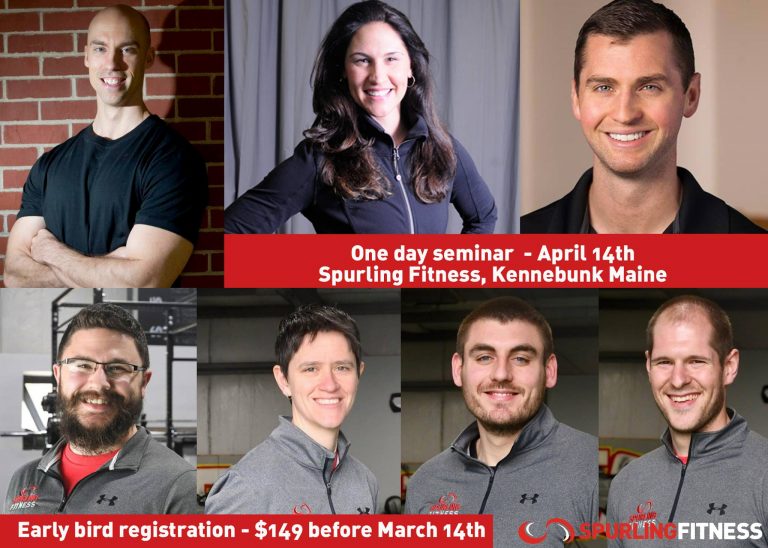
Today I have guest post by another gym owner, Doug Spurling of Spurling Fitness located in Kennebunk, ME, discussing how to best build a team to help your business thrive.

Doug’s done an amazing job building a successful fitness business and he’s someone I respect a ton. Read what he has to say. He’s smart.

NOTE: Next month I’ll speaking alongside Doug (along with his staff, and my wife, Dr. Lisa Lewis) at the Spurling Spring Seminar. It’s going to be a great event and tonight (3/14) at midnight is your last chance to take advantage of the early bird registration of $50 off.

Copyright: eugenelucky / 123RF Stock Photo

6 Lessons On Building a Team

Hang out in sweats all day long…

Listen to cool music all day long…

Talk shop and change peoples lives…

Life of a gym owner, right?

That’s part of it.

But they don’t tell you about the “other” stuff.

Getting good at marketing, financial statement analysis, strategic planning, holding good meetings, putting out fires, and that you’ll never be able to actually shut it “off.

I’m sure the list could go on and on, but today I want to focus on one particular aspect that I don’t think we spend enough time on as an industry.

HUMAN RESOURCES.

More leads, more clients, and more growth usually means….

More team members.

They are our biggest asset, but can also be our biggest headaches if you don’t know how to lead them.

We thought we got into this business to train people, change some lives, and do it all hanging out in comfy gym clothes.

Now I’m telling you if you want long-term success you need to get really good at human resources.

Today I spend the majority of my time on human resources, team development, holding meetings, and making sure our margins are strong as I run a payroll that exceeds a half a million dollars a year.

I love it, but it’s not what I expected as a gym owner.

I now have seven families I am responsible for, only one of which is mine.

With six full-time team members, that means six people that look up to me, six people that count on me running a successful business so they can get a paycheck next week, six people who live their life mission through my business, and six people who support their families with my business.

Woah!

via GIPHY

That’s a big responsibility when we think about it.

That being said, I’ve made some major mistakes as a leader, but I also feel that I have one of the strongest teams around.

Here are six lessons I’ve learned so far…

1. Hire for Personality, Train for Skill

I want driven, hard-working,  value-focused people, I don’t really care if you can coach a squat.

I can’t train a smile, I can train you how to coach a squat.

We aim to hire people that fit our core values, and then have a strong onboarding system that teaches them the technical stuff like how to coach.

2. Have Clear Systems

We have a master folder called “The Spurling Way.”

Every process in our business is documented under that folder.

There’s no questioning how to do things.

We get feedback when we create a new process, but once it’s put into this folder the team has agreed that this is the way we do things.

We don’t want people that want to do it “their way.”

Follow the system.

Run the play.

3. Hold Good Meetings

I think good meetings are totally underutilized.

Every day we have a meeting.

It starts each day with a daily huddle-a quick 5-minute accountability meeting about what each team member is doing that day and what that needs help with.

We have a leadership meeting every Monday, a coaches meeting every Tuesday, individual meetings every Wednesday, and a team meeting every Thursday.

Now, notice above I said, “good meetings are underutilized.”

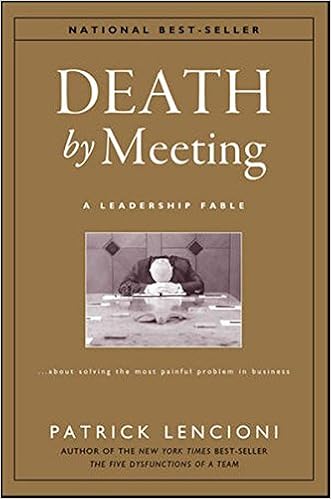
Read a book like “Death by Meeting” and learn how to hold good meetings.

They can be some of the most productive hours of the week, or if done wrong, they can be the biggest waste of time.

4. Balance Multiple Personalities

We can’t have a universal leadership approach.

Each team member is different.

How you talk to one team member is different than how you talk to another.

One may be motivated by public praise, one may want a small note left on their desk.

We use things like the DISC profiles and the 5 Languages of Appreciation to understand how each of us functions and how each of us gives and receives appreciation.

As your team continues to grow the possible communication flaws, the potential drama, and headaches can quickly multiply if you don’t stay on top of it.

Understanding each team member, what they value, how they tick, treating them as an individual, and not have a universal leadership approach is key.

5. Communication Is Key

Communication is not what’s said, but what is understood.

Nothing drives us crazier than when we tell someone something and they don’t do it or don’t follow through with it the way you wanted it to be done.

  • Or you tell Coach A how to do something, they nod their head, and then don’t go it the way you taught them.
  • Or you come in and hear the Coach A hates Coach B but isn’t doing anything about it.
  • Or Coach A is annoyed because they feel they’re working so much harder than Coach B.
  • Or Coach A is complaining about something but then isn’t doing anything about it.

I’m sure you can think of a million scenarios that cause you to pull your hair out as the leader.

However, as the leader, you have to take extreme ownership (good book, btw), and take charge of the situation.

Quite often if you hire good people (see number one), most situations come down to poor communication and/or assumptions.

  • Someone makes an assumption that someone else took care of it.
  • Someone makes an assumption that the person understood what they just told them.

We need to over-communicate with our team, never make assumptions, and make sure that we understand each personality (see number four) and how they like to receive communication.

6. Treat Them the Way You’d Want To Be Treated

Seriously.

Seems like common sense, but as they say, sometimes common sense is not so common.

I get a lot of questions on why I have an all full-time staff, all salaried, all fully benefited, have unlimited time off, and they all work a “normal” 40ish hour work week.

It’s the culture I’m trying to build.

I don’t want people that want to train “their clients.”

I don’t want people that are just here for a paycheck.

I want people that are going to devote their lives to our mission.

I want people that are here for more than just a job.

In order to do that, I need to treat them really well.

That means a good salary, a good schedule, good benefits, constant leadership, constant appreciation, and a constant pitch of why we’re doing this.

Is it easy?

No.

Most months I shed a few tears when the payroll gets withdrawn.

It’s my biggest expense, but I also know it’s my biggest ROI.

The most common message we get from client always comes back to something along the lines of…

“You have the most cohesive team I’ve ever met. You can tell they are here for the right reasons.”

It all comes back to driving the mission, communicating clearly, leading them, and treating them the way you want to be treated.

We all got into this business to change lives, and depending on what kind of impact you want to make, if you want to change the lives of hundreds of people, you’re going to need a team to support you in your mission.

Hope this helps.

Want More?

Next month Doug will be hosting the Spurling Spring Seminar in Kennebunk, ME alongside myself, my wife, Dr. Lisa Lewis, and the entire Spurling Fitness staff.

There aren’t many events outside Boston that cater to the fitness community, so this will be an awesome opportunity for any personal trainers, strength coaches, gym owners, or anyone interested in assessment, program design, business, and mindset skills to enjoy a day of learning.

You can read all the details HERE.

ALSO: If you register by TONIGHT (3/14) at midnight you can still take advantage of the early bird registration and save $50.

Categoriescoaching

3 Choices All Coaches Must Make

All I have to say is that this article would have helped me tremendously if I had access to it the week I started my first personal training gig out of college.

Looking back I was such a mess.

Excellent guest post today by NY-based (Capital district) strength coach Mike Sirani.

Copyright: michaeljung / 123RF Stock Photo

3 Choices All Coaches Must Make

As a student or aspiring professional, you’ll often hear that preparation is the key to success. If you put in the hours studying and practicing, you’ll surely reap the rewards later on.

Flash-forward a couple years later: you’ve graduated school and just finished your first session with a personal training client.

Do you still feel like the above statement rings true?

The answer is likely no. Nothing can prepare you for your first time training another human being — not all the anatomy, physiology, chemistry, or Call of Duty you spent hours on in college.

Why’s this the case?

You’re now being asked to combine the science with the art. You can write the perfect program and explain all of the physiological adaptations that will come from it, but what happens when your client steps into the squat rack for their first set and the first five reps look as coordinated as a Charles Barkley golf swing?


What you choose to do next will either make you look like a Jedi genius or make you seem confusing and unhelpful. In the above scenario, you have three choices to improve the client’s technique:

  1. Cue the individual and see if it improves their technique
  2. Regress the exercise and see if the movement improves
  3. Use a corrective exercise to break down the movement and help the client get a better grasp on what they should be doing.

Below, we’re going to review these three choices and discuss when it’s best to use each of them, depending on the individual, their personality, and the setting they’re training in.

Choice #1: Cueing

This should always be your first option to correct an exercise as a strength coach or personal trainer.

Anyone can move around and sweat on their own. It’s your job to coach and educate clients on the correct way to do an exercise in order to help them reach their goals faster and stay healthy while doing so.

Good cueing is something that most clients will take note of and appreciate. A great coach will keep these short and sweet and cater to the client’s learning style, whether that’s:

  • Auditory
  • Visual
  • Kinesthetic

Understanding the client’s personality type can also make cueing more effective.

If a client has a Type A personality, they may want more details about the exercise and why you’re making certain corrections. Someone who’s more laid back may simply want to be told a correction and then left alone.

Remember, this is where the science and the art meet. The more people you train, the better intuition you’ll develop as to what amount of cueing is too much vs. too little, whether to give internal or external cues, or if a specific cue works or not.

Choice #2: Regress the Exercise

What happens when you’re cueing and what you’re trying to convey isn’t registering with your client? This can result in a frustrated client, but hopefully you don’t let it get to this point. If you sense it’s heading in this direction, there’s nothing wrong with regressing an exercise.

Regress the back squat to a front squat, or the push-up to an incline push-up.


When regressing, it’s important to put the regression into context for the client.

This helps keep their confidence up and set the stage for progressing back to the exercise you originally programmed. Let them know why you’re regressing it, how the regression will improve their technique, and what needs to be done to progress back to the original exercise.

Regressing an exercise is also a strategy that may be utilized more quickly in a group setting when you don’t have the same amount of time to cue someone, like you would in a semi-private or one-on-one setting.

Choice #3: Use a Corrective Exercise

Too often, coaches will skip choices one and two and move right into bringing clients through the gamut of corrective exercises.

If you feel like a client needs a laundry list of correctives, it’s more beneficial to refer them out to a physical therapist or another healthcare professional that can better handle their issues. That way, you can use regressions to ensure the client continues getting a training effect when they’re with you, while the physical therapist helps get them back on track towards progressing specific exercises.

I have found using corrective exercises beneficial in certain scenarios, such as speeding up a client’s motor learning of a specific movement via chunking (breaking bigger movement down into component parts).

Let’s say a client is having a hard time learning the deadlift.

You’re giving excellent cues and have regressed the client from the trap bar to a Kettlebell Deadlift. However, their technique still isn’t pretty. Here, I may break down the movement with two corrective exercises.

One is used to teach the client to extend through their thoracic spine, while the other teaches movement at the hips without movement in the lumbar spine.

Thoracic Extension on Foam Roller


Hip Hinge Teaching Tools


In Summary

Unfortunately, there’s not one quick fix to improve someone’s technique on any exercise. There are too many variables in play for it to be that simple.

Appreciate the science of a program and spend time in the coaching trenches making choices from the three options above. The more you’re forced to make that choice, the better artistic instinct you’ll develop, and the better you’ll be at quickly making the best choice with a client.

About the Author

Mike Sirani is the Co-Owner of Capital District Sport and Fitness in Round Lake, NY. He’s an experienced strength and conditioning coach and massage therapist who has spent the majority of his career in Boston training professional, collegiate, and high school athletes of various sports, as well as helping general fitness clients of all backgrounds learn to move better and get stronger than ever before. He earned his Bachelor of Science Degree in Applied Exercise Science, with a concentration in Sports Performance, from Springfield College and completed a highly sought after six-month internship at Cressey Sports Performance. Mike specializes in teaching athletes and general fitness clients to get the most out of their bodies by enhancing their movement quality and creating exercises programs that allow you to get stronger, faster, and more powerful in a safe and effective manner.

Facebook: Capital District Sport and Fitness

Instagram: @capitaldistrictsportandfitness

Twitter: @CDSFSportandFit

Categoriescoaching Program Design

Programming Considerations: Training Volume

We live in a world of dichotomous abundance.

In literature we see it all the time in the form of heroes (Beowulf) vs. villains (Grendel), good (Gryffindor) vs. bad (Slytherin), or real (Milwaukee) vs. imaginary (Minas Tirith).

We see it all the time in real life too:

  • Democrats vs. Republicans
  • Science vs. People Who Make a Ham Sandwich Look Intelligent
  • Autobots vs. Decepticons

The idea behind dichtomy is to demonstrate or showcase a contrast between two things that are represented as being opposed or entirely different.

Who’s right?, who’s wrong?, what’s better?, what’s worse?, bacon is delicious, no, fuck that, you’re going to hell…

….it can all spiral into a garbled mess.

Copyright: badmanproduction / 123RF Stock Photo


The fitness industry sees no shortage of it either.

All you have to do is spend 17 seconds on Twitter before you want to jump into a shark’s mouth  you witness people on both sides of the fence – low-carb vs. high-carb, CrossFitters vs. powerlifters, back squats vs. no squats – tear each other to shreds.

Both sides are adamant their position is the right position, “how can you not see it?,” and the dichotomous divide seemingly grows larger and larger.

I’m going to skip the mental gymnastics today, and instead focus my attention on something else that’s a liiitle less dramatic and less of a dumpster fire to talk about…

Training volume.

Disclaimer: This will not to be a deep-dive into the nitty-gritty, nerdtastic world of program design and volume. It’s a rabbit hole to say the least. I’m gonna get into some of the particulars, but not too much. Sorry.

My goal is to just offer a few talking points and ideas.

For a nice amuse-bouche on the topic, however, I’d recommend THIS article by Greg Nuckols.

Training Volume, Defined

For all intents and purpose training volume (as it relates to lifting things) can most easily be calculated as such:

Sets x reps x load

The final number can be labelled as total tonnage (or total amount lifted).

For example if someone performs 3 sets of 5 reps with 225 lbs on the bench press it can be broken down as 15 total reps x 225 lbs = 3,375 lbs.

Congratulations. You just benched a Volkswagen you savage.

The idea, then, is to adopt the concept of progressive overload (via performing more sets, reps, load, or any combination) to do more work in subsequent workouts.

Using the same example, lets say it’s a week later (or tomorrow if you’re a man under the age of 40) and you wanted to bench press again. To increase training volume you’d incorporate one of following scenarios:

  • Increase Load: 3 sets of 5 reps @ 230 lbs = 3,450 lbs
  • Increase Reps: 3 sets of 6 reps @ 225 lbs = 4,050 lbs
  • Increase Sets: 4 sets of 5 reps @ 225 lbs = 4,500 lbs
  • Increase All Three: 4 sets of 6 reps @ 230 lbs = 5,520 lbs
  • Increase CrossFit: 24 sets of 17 @ Scaled # = Can’t feel the left side of your face

That’s a very watered down and simplified explanation, but should get the gist across.

In short: Ensure that you’re doing more work by tracking stuff and good things will inevitably happen.

As an umbrella theme, however, it’s important to understand that this approach does have limitations.

We’re humans, not Kryptonians.

There’s an inevitable “tipping point” that’s bound to take place. Adding more and more training volume (a poor periodization scheme in the long run) will eventually have deleterious effects.

I like what Mike Boyle has to say on the matter:

“Periodization might be the most overstudied subject in the training world. Tens of thousands of pages have been written detailing the complexities of microcycles and mesocycles. And this has only served to confuse what should be a fairly simple concept, as articulated by strength & conditioning legend Charles Poliquin in the 1988 article “Variety in Strength Training”: Phases of high volume (accumulation, extensive loading), high intensity (intensification, intensive loading) and unloading should be modulated within the program.“

In other words:

Higher volume, low load periods should be alternated with higher-intensity, lower-volume periods.

[Smoke bomb, smoke bomb, exit stage right]

To give a brief example I’ve always liked fluctuating training volume on a weekly basis, which is something I gravitated towards from my years as a coach at Cressey Sports Performance:

Lets use the deadlift as an example here with the main goal being to improve strength:

A. Deadlift

Week 1: 1×2 @ 83%

Week 2: 1×2 @ 85%

Week 3: 1×2 @ 87%

Week 4: 1×1 @ 90%

B. Deadlift – Speed(ish)

Week 1 (High Volume): 4×3 @ 70%, 1×5 @ 65%

Week 2 (Medium Volume): 3×3@ 70%, 1×5 @ 60%

Week 3 (High Volume): 5×3 @ 70%, 1×5, @ 60%

Week 4: (Low Volume): 3×3 @ 65%

To reiterate: taking into account sets/reps/load and trying to use any permutations you wish to ensure someone is doing more work is never a bad place to start.

It’s training volume 101. And it works.

HOWEVER

I’d encourage you to heed this Tweet from Eric Cressey from a few days ago:

When trainers/coaches place too much emphasis on overall volume and use that as their only metric to measure progress it can be problematic.

It reminds me of something strength coach and physical therapist, Dr. Quinn Henoch, has discussed on numerous occasions. We’re quick to pump the brakes and implement any number of corrective exercises when one of our client’s shoulders starts to hurt.

Okay, not the worst thing in the world. I’m not going to cry afoul if a trainer/coach wants to toss in a bit more soft tissue work on someone’s pecs or lats:

I’ve even heard of instances where people are encouraged to get blood work done; as if finding out they’re allergic to grass-fed acai berries will miraculously cure their lack of scapular upward rotation.

The fuck?

Instead, what Quinn is quick to point out is this: Maybe you need to audit your program and adjust total training volume?

It could be as simple as you’re prescribing too much training volume compared to what someone is able to recover from.

That’s why they’re hurt.

Not because they need more Ipsilateral Birddog Balloon Breathing.

Which begs the question: What are some ways in which to increase overload that doesn’t entail just increasing volume?

Well, two come to mind.

1. Get People Into Better Positions

I’d argue the reason many trainees are unable to make much progress in the gym to begin with is because they’re unable to get into appropriate positions to express their “true” strength.

Take the squat.

I see something like this:

Any asshat coach or trainer can tack on more volume to the above walking (or, rather, squatting) ball of fail.

Physical Therapist Gray Cook would refer to this as “adding fitness on top of dysfunction,” which isn’t doing anyone any favors.

Rather, taking the time to actually coach someone so they’re in a better position to be successful is what’s going to make a difference.

And this will often entail LESS volume (using sub-maximal loads).

A funny thing will happen.

Trainees are given a massive piece of humble pie when they’re getting sore from a load that’s 50-75% less than their perceived one-rep max.

2. Change the Center of Mass

Bringing a load closer to the ground makes an exercise easier. A prime example is any single leg variation where DBs are held at the side(s):


If I wanted to make this harder and as a result increase overload without necessarily adjusting training volume all I’d have to do is move the DBs to a higher position or maybe revert to something like a Barbell Reverse Lunge w/ Front Squat Grip.

That’s That

Training volume, too, has a very dichotomous vibe to it.

On one end of the spectrum there’s the “do more” mentality (which is a thing, and an important part of strength & conditioning). But on the other end there’s a delicate balance of what amount of volume a particular person can handle as it relates to their ability to recover.

And finally it’s important to have other tricks in your bag other than adding more of it in order to help your clients/athletes get better.

Like I said, I didn’t want to get too far into the weeds on the topic of training volume, but I hope this helped.