
CategoriesUncategorized

Seeking a Strong MOFo

We need your help.

Copyright: mearicon / 123RF Stock Photo


Strong MOFo (That’s You)…Apply Here

Strong Man Over Forty

Who’s “we?

For the past year myself and Bryan Krahn (you know, the meathead writer guy with the bulldogs and the second best hair in the fitness industry1 have been meshing together ideas to curate what we believe to be the “ultimate” training program to finally service what we consider to be the most neglected demographic out there:

Basically guys like us.

Men (and women) over 40…who are experienced lifters, yet are now a bit beat up. (The days of chasing PR’s are now taken with a big grain of salt and a fat dose of ibuprofen).

NOTE: I know full well we’ll be getting a bunch of men and women writing something to the effect of “Hey Tony & Bryan, I’m 38 can I still participate?” To which I say, “Hell no. See you in two years punk.

Just kidding. Of course you can!

Really, our goal is to target men/women who are 35+ years old. It’s just there was no witty acronym that coincided with the number 35.

YOU are a man (or woman) who still cares about getting or being strong, however you also have other goals:

  • You wanna have good symmetry (big arms, pecs, maybe a badonkadonk), bring up lagging body parts, and/or otherwise look good naked.
  • You wanna move well and not roll out of bed feeling like a broken down tin man.
  • You wanna gain back or maintain some semblance of athleticism. Not Bo Jackson Tecmo Bowl levels of athleticism, but it would be nice to be able to sprint 30 yards without pulling a hamstring.

  • More importantly, you want training to be both productive and fun.

But above all, you’re really busy…not just with work, but with family (or maybe you’re not busy, in which case I hate you), and you want to see the fruits of your labor.

FYI: Both Bryan and I are newly minted dads as of 2017, so we know how easy it is for training to take a back seat when “life” gets in the way.

However, we didn’t let life (or age) prevent us from still making progress and gains in the gym.

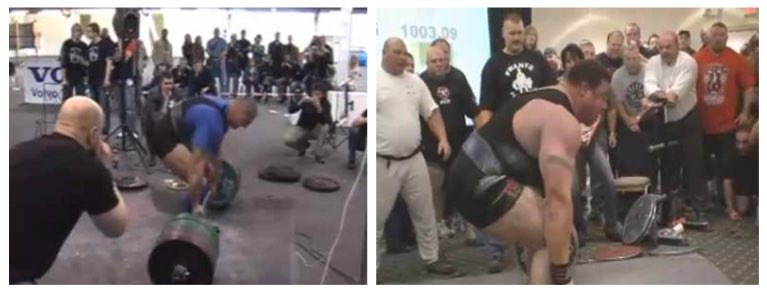
Here’s me hitting my first 600 lb deadlift a few weeks ago a month away from turning 41:

Here’s Bryan looking diesel as shit (and that hair!) at 44:

Sleeveless September.

A post shared by Bryan Krahn (@bryankrahn) on

Many training schedules nowadays aren’t realistic and are hard to stay committed to due to time requirements. We recognize that for many Strong MOFo’s training needs to be efficient….45 minutes to an hour, max.

Get in, get out, get jacked.

If you haven’t figured it out yet, Bryan and I think we have a solution, and we’re ready to transition to the next stage and elicit some help.

And that’s where you come in.

Beta Testing Strong MOFo

We would never send a client a training program unless we first used it ourselves to work out the kinks.

Similarly, we’d never even consider putting together a product of this nature out for sale unless we had dozens of real-life beta testers following it to the letter and offering their feedback (and especially their criticisms):

  • What did they like? Dislike?
  • What phases worked best for them?
  • Which felt too long? Too short?
  • Which days made them feel invigorated, excited to train, or otherwise prefer to jump into a live volcano?

All of this feedback is gold and can help turn a decent program/product into a high-selling industry changer.

One that will help people get stronger, move better, feel less shitty, and more confident.

Which is why we’re making this baller offer:

We’re looking for highly committed, experienced lifters to follow our Strong MOFo program for four months.


The Deets

The program will be hosted by Tony’s CORE Online app, which in an online service he provides via his website. This offers a few benefits:

  • This will allow you to follow the program on your phone (but relax, you’ll also have the option to print it out too, you geezer).
  • You’ll have immediate access to video tutorials and explanations of all exercises.
  • You’ll also have access to a community forum to converse with other beta testers as well as to ask questions to Bryan and Tony.
  • Selfishly, it’s more convenient for us to go this route rather than deal with a plethora of Excel spreadsheets and emails. This way, there’s a “home-base” for everything.

Cost: We’re offering this beta program at a price of $249. This will cover four months of programming (and is less than what Bryan and I charge for one month of distance coaching).

Start Date: The start date is Monday, December 18th. We’re announcing this now for a few reasons:

  1. This will allow for enough time to wrap up any current program you’re plugging through.
  2. Thanksgiving is right around the corner and we know that entire week is usually a wash for most people.
  3. You have ample time to get acquainted with the software/system.
  4. Because we said so.
  5. End Date = four months later.

Requirements

  • You have to be a minimum of 35 years old.
  • You have to have experience lifting weights. If you’re unable to deadlift, then, um, this may not be the program for you.
  • You have to have access to a well-equipped commercial or home gym. The last thing we want to be doing is tweaking someone’s program who only has access to dumbbells up to 40 lbs, a treadmill, and a rubber ducky.
  • You have to be relatively injury-free. Aches and pains are one thing. A frozen shoulder or six-months post back surgery is another

We’re so excited for this and can’t wait to have you on board.
—> Sign Up For Strong MOFo <—

Categoriescoaching Exercise Technique

Plan On Lifting or Squatting Something Heavy? Check Your Neck

Today’s guest post comes courtesy of frequent contributor, Dr. Nicholas Licameli. He covers a topic that’s sometimes controversial:

Neck position when lifting heavy things.

Some people play close attention to it (as they should), while others play it off as “no big deal” and point towards really strong people who seemingly have never had any issues with their neck(s).

“See! They do it.”

Yeah, well, you’re not them. And most other people aren’t either.2

Copyright: olegdudko / 123RF Stock Photo

Plan On Lifting or Squatting Something Heavy? Check Your Neck

One of the most common issues I see in the deadlift and squat (and plank, push-up, bent over row, etc.) even in experienced lifters, is forgetting to “set” the head and neck.

  • Feet gripping floor with 3 points of contact? Check.
  • Pelvic floor engaged? Check. Transverse abdominis braced? Check. Diaphragm engaged? Check.
  • Shoulders and scapulae tucked down and back, squeezing the armpits? Check.
  • Neck straight and chin tucked?…

The hip hinge is the foundation to all movements that involve bending over or squatting. A proper hip hinge starts at the hips (naturally) with your spine in a neutral position.

But “spine in neutral position” does not just refer to the lower back. It includes the often-neglected cervical spine, too.

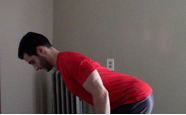
Too often I see the head and neck extended in an otherwise perfect hip hinge (see image below). I lie awake at night wondering why we lose so many good men out there (playing for the Yankees?3) to poor mechanics and why this mistake is so common…here’s what I came up with.

The extended position of the cervical spine can be very dangerous.

It is akin to having a hard arch in the lower back (the facet joints and neural tissues become compressed) except that the joints, muscles, nerves, and other structures of the neck are smaller and more delicate.

Add the maximal contraction of pretty much every muscle, as seen when performing a deadlift or squat, and it is clear to see why this can be dangerous.

So why do so many of us assume this faulty position?

Part of the reason is because our heads always want to be looking upright. Our brains subconsciously want to position our heads so that we are looking at the horizon.

We all know that the end goal is to stand up straight. We feel as if “looking where we’re going,” will help us get there. In order to maintain proper cervical positioning, we have to fight our subconscious, which is never easy.

[Another reason could be that we want to catch ourselves in that perfect lighting for that perfect selfie…]

But I think a big reason why extending the head and neck is so common is because it creates a shortened lever arm, which improves the biomechanical efficiency of the lift.

Let me explain.

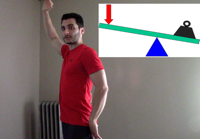
When you bend forward in a proper hip hinge, the hip becomes a fulcrum. As a result, a lever is formed from the hip to the top of the head. The longer the lever arm, the harder the load is to move.

Think of the difference between picking up a dumbbell out to the side of your body (as in a lateral raise) versus tucked into your side (as in a shrug).

When lifting out to the side, the shoulder joint is the fulcrum, the lever arm is the arm, and the load is in the hand at the end of the lever.

Lifting with your arm straight out to the side produces a longer lever arm than lifting close to the body, which makes the load more difficult to lift. This is the same reason why many coaches cue lifters to keep the load as close to your shins as possible during a deadlift. The further the load is from the fulcrum (your hip), the harder it is to lift.

What does it all mean Basil?4

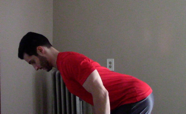
It means that extending the head and neck during a deadlift may be the body’s subconscious attempt to improve the biomechanical efficiency of the lift. It essentially shortens the lever arm by about a “head’s length.” (see images below).

             Shortened lever arm by about a “head’s length

To ensure proper positioning, tuck the chin and align the neck with the rest of your spine before lifting the load (see image below).

So next time you deadlift, yes, make sure your hip hinge is on point (and you get that perfect lighting for that selfie), but don’t forget about your vitally important and often neglected head and neck.

Resist the urge to look up!

Your discs, joints, muscles, and nerves will thank you.

Video Explanation


About the Author

Every single thing he does, Nick believes in giving himself to others in an attempt to make the world a happier, healthier, and more loving place. He wants to give people the power to change their lives. Bodybuilding and physical therapy serve as ways to carry out that cause. His knowledge of sport and exercise biomechanics, movement quality, and the practical application of research combined with personal experience in bodybuilding and nutrition allows him to help people in truly unique ways. Love. Passion. Respect. Humility.   Never an expert. Always a student. Love your journey.

Youtube:

Instagram:

Facebook

CategoriesStuff to Read While You're Pretending to Work Uncategorized

Stuff To Read While You’re Pretending To Work: 11/3/17

The baby fell asleep at his normal time last night and Lisa wasn’t going to be home for two hours.

What to do? What to do?

Stranger Things season 2 ya’ll.

I watched two episodes and am trying really hard not to put my laptop down and watch two more at this moment.

Must……keep…….typing.

Lets get to this week’s stuff to read.

Copyright: wamsler / 123RF Stock Photo

But First

1) Mid-Atlantic Regional NSCA Conference – Philadelphia

I’m excited to be presenting alongside some other prominent coaches at this year’s Mid-Atlantic NSCA Conference in Philadelphia, PA this coming December.

Hope to see you there.

2) 6 Mistakes You Make When Deadlifting That Are Screwing Up Your Back

Men’s Health reached out and asked if I’d be willing to chime in on this one?

  • Does a bear shit in the woods?
  • Does Han love Leia?

Of course I’ll chime in.

3) Online Trainer Academy – Early Bird Ends

Building a successful online training business can be daunting. There’s a lot of noise out there and it can be hard to separate yourself from the masses.

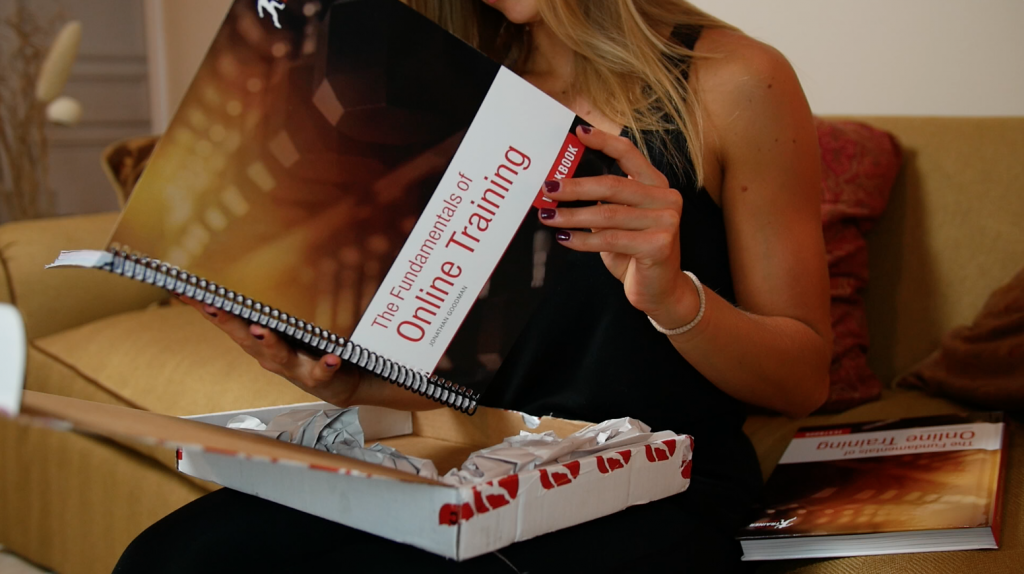
My good friend, Jon Goodman, has produced the most complete and thorough resource on the topic. If you’re looking for help on the what’s and why’s and how’s on the particulars of building a online business, one with integrity and that will help give you some financial freedom, look no further.

This course is only offered twice per year and the early bird opt in (which saves you $200) ends tonight. What’s more, since they’re always adding and updating information, next year the course will be $500 more expensive. So this is your last chance to save a boat load of cash.

Improving Shoulder Motion: Lat Inhibition – Dr. Quinn Henoch

My new man-crush is Quinn Henoch.

LOVE his work.

Awareness Is Great, Action Is Better: Here’s How To Just Do the Damn Thing – Jill Coleman

When I made the decision to leave Cressey Sports Performance a few years ago it scared the shit out of me. I used that fear to help motivate me not to fail.

It worked. I think.

In this article Jill does a much better job of articulating how to handle tough situations.

Unorthodox Core Strengthening Exercises – Andrew Millett

1. That’s a piss-poor looking plank. 2. There are no plank variations in this article.  I just chose this picture because it was free….;o)

Social Media Shenanigans

Twitter

Instagram

It was either this or a ridiculously cute Ewok.

A post shared by Tony Gentilcore (@tonygentilcore) on

CategoriesFemale Training

Fitness During Pregnancy: What’s a Girl To Do?

It’s not lost on me I have a Y chromosome and that discussing pregnancy and how to train during and after it can be a bit, well, peculiar. I mean, it’s something my body will never experience, so how can I discuss the topic without coming across as some mansplaining a-hole?

Simple.

50% of the human population is female. Surprise!, roughly 50% of my clientele are female. And, as it happens, I have worked with several women through their pregnancies (and after) and have always felt it important to understand and respect the nuances that manifest during this delicate time in a woman’s life – both pre and postpartum. 

While I very much operate under the umbrella that every pregnancy is different regardless of one’s previous fitness level and experience and that how someone feels during any exercise or workout should dictate the path taken – progressions, regressions, loading, volume, etc – I also feel there’s a strong stigma that women shouldn’t train during and after pregnancy. 

Come on. 

The body is preparing for something a helluva lot more traumatizing than a set of squats or deadlifts. It’ll be okay.

What’s more, as my colleague and women’s health expert, Dr. Sarah Duvall, often says with regards to postpartum considerations: “women need to lift shit to fix shit.”

And it’s on that note I’m gonna take my little Y chromosome and STFU. I’m elated to introduce to you another woman whom I feel is generating a ton of useful information on the topic of training during and post pregnancy: Terrell Baldock.

She wrote today’s guest post and it’s awesome.

Enjoy.

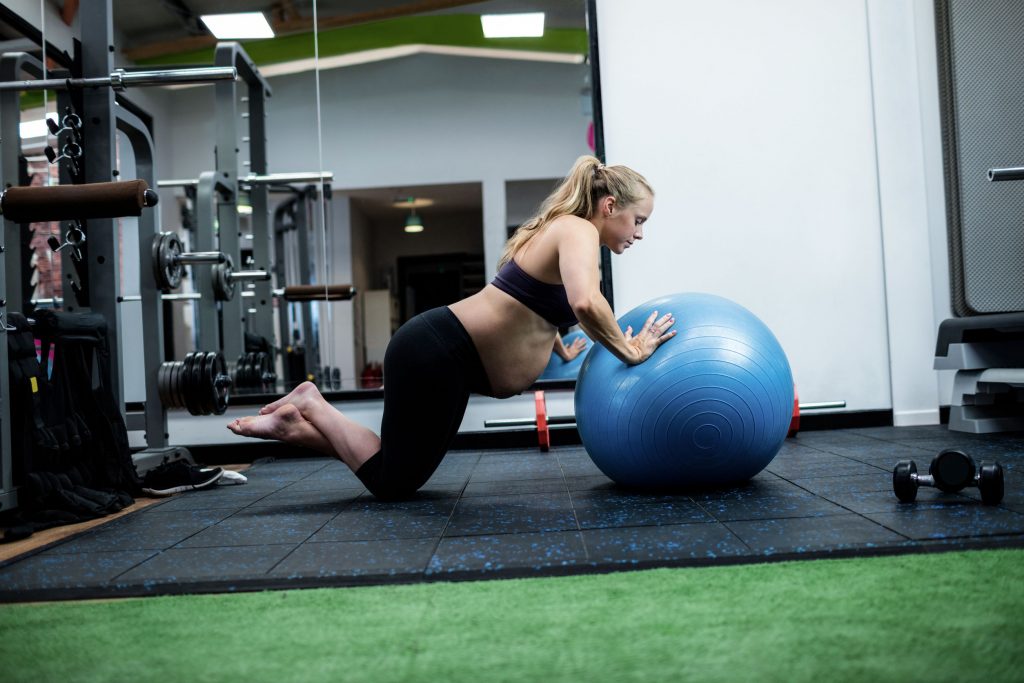
Copyright: wavebreakmediamicro / 123RF Stock Photo


Fitness During Pregnancy: What’s a Girl To Do?

With all the random misinformation out there it’s tough to know how you should workout – or heck, whether you should even workout at all – during and after pregnancy.

Here’s the good news:  The short answer is yes.

You should continue to exercise during and after pregnancy.

You can keep being the best version of yourself. And isn’t that what it’s all about?

But exercise during and after pregnancy needs to be done the right way.

Lindsey’s Story

My client Lindsey was a competitive volleyball player who wanted to get right back into hard training and competition after her daughter was born.

Then, reality set in.

Lindsey noticed when she was working at a high level of intensity, she’d pee a little.

Still, she pushed through.

That continued until she became pregnant with her second baby.

When she went through the same experience, Lindsey knew she needed to see her doctor.

Bad News: She had a grade-two bladder prolapse. She was told: “Lindsey, you can’t play volleyball anymore.”

Lindsey was crushed.

This is when Lindsey and I started working together. My role as a coach is to show women like Lindsey exactly how her prenatal fitness and postnatal fitness programming could affect her body both during and after pregnancy.

Unfortunately, women are cleared for exercise at the six-week checkup with little to no information regarding rehab, their core, or pelvic floor.

As you can imagine, women like Lindsey feel betrayed by their body. It’s as if they have an entirely new body to “figure out” as they begin their new lives as mothers.

I want to help you avoid common problems such as pelvic organ prolapse, incontinence, and even other issues such as diastasis recti that haven’t healed postpartum.

Training Before Pregnancy

With up to 50% of the female population experiencing pelvic floor dysfunctions like incontinence and pelvic organ prolapse, the combination of pregnancy and childbirth along with high level exercise are leaving women vulnerable.

Even more shocking?

Most women who train hard during pregnancy never have symptoms until they’ve had their baby.

Training During Pregnancy

Generally speaking, you can continue to train the way you did before you were pregnant in your first trimester.

But adaptations need to be made in the second and third.

A common misconception that you’ve probably heard is that you can continue to do what you’ve always done during your pregnancy because your body is well conditioned.

Big mistake.

First trimester

Pregnancy brings on structural change that impacts your fitness performance and how you move naturally, which begins in the second trimester.

In the first trimester, the core and pelvic floor isn’t a big concern but this is a time where rapid change is happening physiologically. Energy is low and nausea may be a factor.

Women also tend to experience breast tenderness which may make exercise feel impossible.

If the symptoms are intense, exercise may be sporadic at best.

Second Trimester

In the second trimester, symptoms usually subside or disappear completely, and because of this, women are ready to return to their regular program. This is also where the body starts to visibly change and the Transverses Abdominis becomes inhibited (Hodges et al 2003).

Alignment changes begin to put more pressure on the core on pelvic floor. This is generally when the pelvis anteriorly tilts, the ribs shift and move behind the pelvis.

If this isn’t taken care of and training is continued, the glutes become inactive and the low back, adductors, abductors, and hip flexors take over.

Many women will begin to experience pelvic discomfort and/or pain like pelvic girdle pain, SI pain, and lower back pain which occurs in 45% of pregnant women and 25% of postpartum women (Wu et al 2004).

Third Trimester

In the third trimester, 100% of pregnant women will experience diastasis recti which is classified as the “unnatural separation of the abdominal wall” (Mota et al 2014).

DR is a completely natural part of the pregnancy process, but it can be exacerbated by the nature of the training as well as alignment in addition to the growing baby.

The pelvic floor is vulnerable, especially in the third trimester because of the physical and physiological changes. The pelvic floor isn’t designed to carry the load of a 200 pound back squat and meet the demands of pregnancy. This is where women experience issues postpartum.

Combine that with stretched and a weakened core and the impact of vaginal delivery (Sleep et al 1984), this can lead to pelvic floor complications like incontinence or pelvic organ prolapse if a woman returns to her fitness program before taking the steps to recover, rehab, and recondition first.

Training Post Pregnancy

The body doesn’t completely heal in six weeks postpartum.

It has taken nine months to adapt to the changes that occur during pregnancy. It takes at least that much time for the body to completely heal.

And that’s with rehab.

In fact, if Diastasis Recti hasn’t completely healed within the first 8-weeks postpartum, research shows that it won’t heal on itss own (Coldron et al 2008).

Whether you’re a lifter, runner, or enjoy taking classes at your local gym, you can still partake in your favourite activity. But you will need to cut back during your pregnancy.

Retraining following birth to optimize your performance long term.

New moms are often eager to return to high impact fitness, boot camps, or athletics before their bodies are ready.

Most skip the rehab and retraining process.

This leaves some of these women with less than desirable results like peeing their pants, pelvic organ prolapse (where the pelvic organs descend through the vagina), back/hip discomforts or pain, and lagging performance when working at a high intensity.

As your pregnancy progresses, you’ll find that you’ll need to make modifications to your lifts. In this video, I will show you how to modify your deadlifts using a barbell and kettlebells.


And there’s a lot more information in my Barbell Training For Pregnancy: Your 3 Step Guide For Maximizing Performance During and After Pregnancy.

It features simple and actionable steps to maximize your core and pelvic floor function, improve performance, and most importantly, avoid the complications that can arise from postnatal exercising.

Click HERE to access your free guide today.

About the Author

Terrell Baldock is a Prenatal and Postnatal Exercise Specialist in London, Ontario, Canada. She specializes in working with women with core and pelvic floor dysfunctions, and prepares them for the demands of pregnancy, birth and postpartum recovery. Check out her award-winning website Mom’s Fitness Boutique.

CategoriesStuff to Read While You're Pretending to Work Uncategorized

Stuff To Read While You’re Pretending To Work: 10/27/17

Lets dive right into things.

Copyright: wamsler / 123RF Stock Photo


But First

1) Mid-Atlantic Regional NSCA Conference – Philadelphia

I’m excited to be presenting alongside some other prominent coaches at this year’s Mid-Atlantic NSCA Conference in Philadelphia, PA this coming December.

Hope to see you there.

2) Strength House Podcast – The One Where They Dissect My 600 lb Deadlift

I’ve had a lot of people ask me about my 600 lb deadlift that I hit a few weeks ago: How did I  prepare? What did my programming look like? Did I destroy the back of my pants? You know, all the important stuff.

My coach, Greg Robins, and his partner in crime, Tony Bonvechio, go into great detail on my technique and programming in their latest episode of The Strength House.


3) How To Build a Strong Online Training Business 

There are few things I’m steadfast on:
1. No one has to back squat.
2. Bacon is delicious.
3. Attack of the Clones is the worst of the Star Wars movies. It just is.

Oh, and there’s one more thing: I think any trainer who is serious about pursuing online training should FIRST spend 2+ years training people in person.

There are so many variables and nuances one learns from coaching people in person that it’s pretty much impossible to appreciate them if you end up bull-charging into online coaching out of the gate.

That being said, in this day and age, online coaching is kinda-sorta a thing. Actually, it’s more than that. For many it’s a viable and extraordinary way to add an additional revenue stream to compliment your income, or in some cases to make into your livelihood.

My good friend, Jon Goodman, author of the world’s only textbook on online training, has a free 4-day course on building a successful online business. I checked it out and it’s awesome, but free registration ends on October 29. Grab it while you can, and you’ll learn…

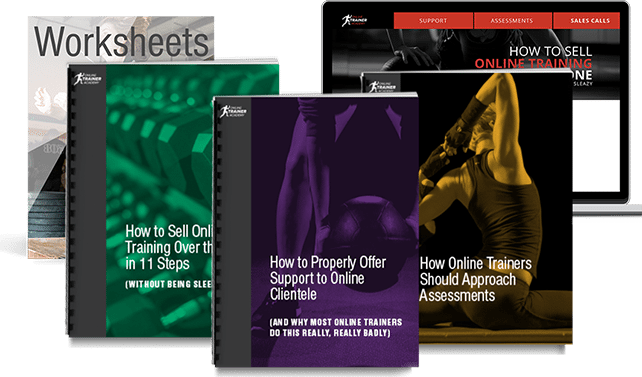
* Lesson 1: How to properly offer support to online clientele (and why most online trainers do this really, REALLY badly).

* Lesson 2: How online trainers should approach assessments (and the key mindset shift you MUST make).

* Lesson 3: How to sell online training over the phone in 11 steps (without being SLEAZY).

* BONUS: You’ll also get a free copy of Jon’s ebook, “The 16 Lasting Laws of Online Training”

The LAST day to download this FREE 4-day course is October 29th. Don’t miss out.

Stuff To Read While You’re Pretending To Work

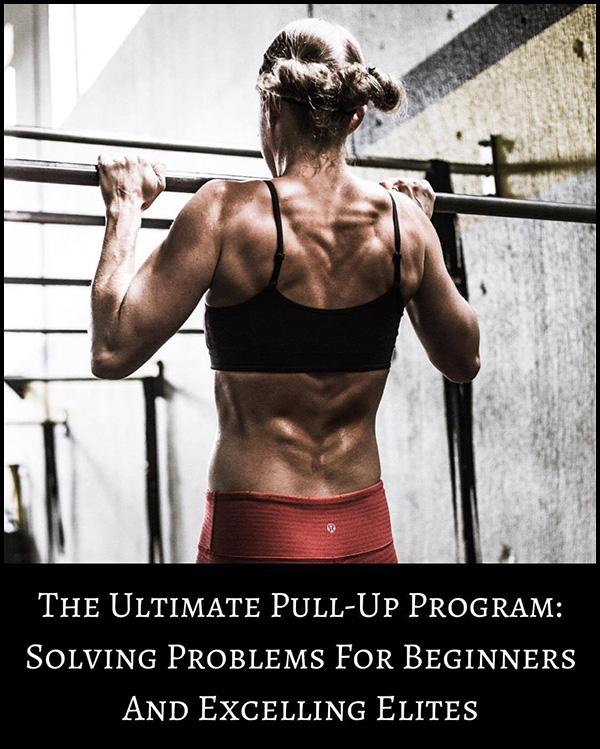
The Ultimate Pull-Up Program – Meghan Callaway

This is one of the best resources I’ve ever come across on the topic of how to make pull-ups/chin-ups your bitch.

Meghan is a fantastic coach and I know of zero people who are more passionate about the topic than her.

She looooooooves pull-ups. And, honestly, there aren’t many people who can do what she can do. It’s pretty impressive.

If you’re looking to conquer your first pull-up (and then some), look no further. Last day to save $50 off the regular price is today (hint, hint, nudge, nudge).

Should You Squat Tall Athletes? – Mike Robertson

Mike’s written many phenomenal articles throughout the years. This one may be in his Top 5. Really, really good.

So You Want To Be a Writer? – Tim Henriques

There are many coaches and trainers out there wondering whether or not that have the chops (maybe “prose” would be a better word here?) to write.

Strength coach Tim Henriques provides some excellent insights in this post.

Social Media Shenanigans

Twitter

Instagram

CategoriesProgram Design Strength Training

3 Unique Drills to Help You Conquer Your First Pull-up and Then Some

When you see the name Elon Musk it’s a safe bet adjectives like “smart,” “intelligent,” and “revolutionary” come to mind. Jason Bourne? “Badass,” or maybe “guy I wouldn’t want to pick a fight with.”

Meghan Callaway?

Well, if you ask me, when I see the name Meghan Callaway I think “amazing coach and the World’s #1 ranked pull-up connoisseur.”

Copyright: korarkar / 123RF Stock Photo


To put it lightly: Meghan likes pull-ups.

She likes them a lot.

via GIPHY


And, to speak truthfully, there aren’t many coaches I’d tip the hat to when it comes to pull-up mastery and programming than Meghan. She consistently impresses me with her content and knowledge on the topic, and as it happens she just released her latest resource, The Ultimate Pull-Up Program, today.

If you struggle with the pull-up and/or are looking for a little direction on how to become more proficient with them (not to mention learning a TON of awesome variations) than I can’t recommend this resource enough. It’s on sale this week at $50 off the regular price for this week only.

3 Unique Drills to Help You Conquer Your First Pullup

Performing your first pull-up is a unique experience.

In fact, when many people conquer their first pull-up and get their chin over the bar (of course without straining their neck to do so), they often experience far greater feelings of empowerment, accomplishment, and downright badassery than when they hit PR’s on max deadlifts, squats, and other heavy meat and potatoes exercises.

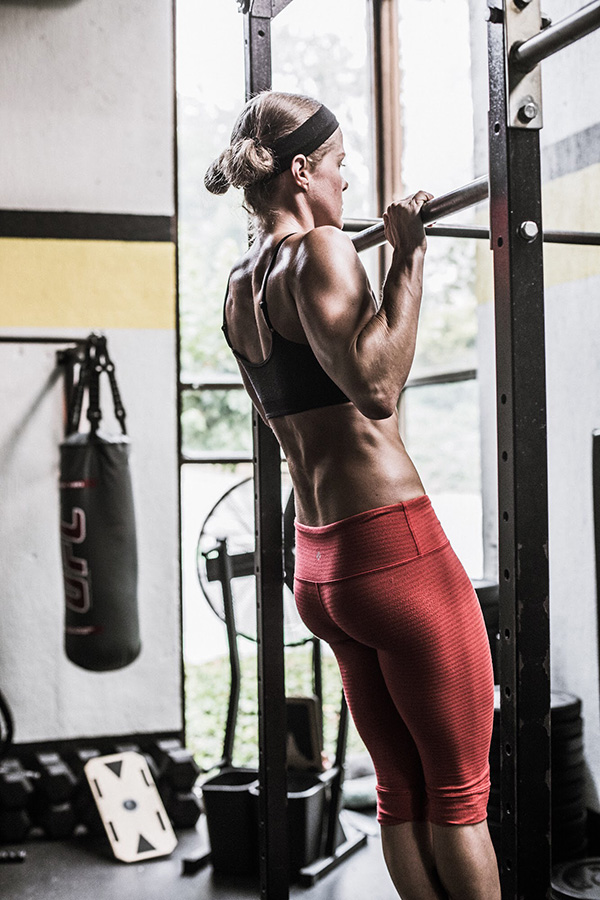
Meghan showing off.

Maybe I’m a little biased, but with pull-ups it is just different.

When it comes to tackling pull-ups, many people quit long before they’ve achieved their first rep. Others hit their first rep but are never able to string together multiple reps and become frustrated.

Let me tell you, it does not have to be this way.

In most cases, people fail to reach their pull-up goals not because they are weak, but because they are not training for the exercise the right way.

Many people possess enough upper body strength that they should be able to do pull-ups, but they often suffer from technical deficiencies. Other people know what to do but they do not possess the requisite levels of lumbo-pelvic stability or the ability to control the movement of their shoulder blades.

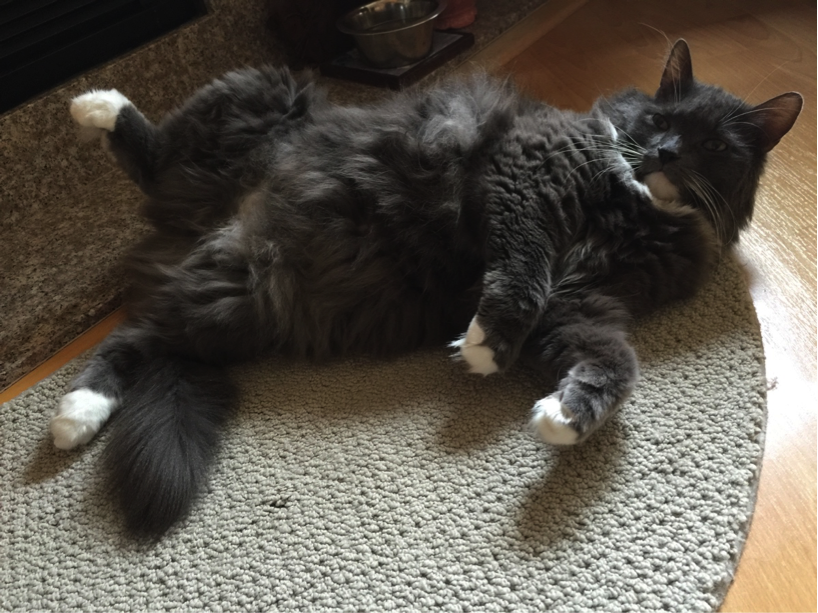
So essentially, instead of moving a stable object to and from the bar in a shorter and more efficient straight line, they are forced to move a heavy, floppy and limp body to and from the bar and in a longer and inefficient arc. Kind of like Erick here. Tony likes cats so I know he understands.

In this article I will provide some of my favorite exercises that address various areas that are holding many people back from performing their first pull-up ever, or from performing multiple reps and feeling like a total badass, or perhaps Wonder Woman.

Without further ado, here are some of my go-to exercises for conquering the pull-up.

1) Scapula Pull-Ups

If you cannot hang from the bar or control the movement of your shoulder blades, you will not be able to perform a pull-up.

This exercise will help lead you to your first pull-up as it develops grip strength, scapular and shoulder controlled mobility, and lumbo-pelvic stability.

While this is a pull-up regression, it is a definite stepping stone towards doing your first pull-up. If you are performing this exercise correctly, the muscles in your mid and upper back, not your arms, should be doing the majority of the work.


Key Coaching Cues:

  • Grab onto the bar so your palms are facing away from you and are slightly greater than shoulder width apart.


  • Before you perform your first rep, make your body as stable as possible by bracing your core, tucking your ribs towards your hips (closing the space in your midsection), squeezing your glutes, straightening your knees/flexing your quads and hamstrings, and dorsiflexing your feet. This will stabilize your pelvis, spine, and legs, and will prevent your body from swinging.


  • In terms of the pull-up, without bending your elbows or initiating the movement with your arms, use the muscles in your shoulder blade area and draw your shoulder blades together and down (bring each shoulder blade in towards your spine and down towards your opposite hip), and lift your body a few inches. Pause in the top position, really contract these muscles, and lower yourself to the starting position in a controlled manner. Fully extend, but do not hyperextend your elbows.


  • On the lowering portion of this movement, your shoulder blades will perform the reverse movements as they did on the way up.


  • Do not allow your lower back to hyperextend or ribcage to flare. Keep your chin tucked and neck in a neutral position.


  • As for your breathing, exhale just after you have initiated the scapular movement and have drawn your shoulder blades together and down; inhale and “reset” as you are descending, or do a full reset when you are in the bottom position.

2) Pull-Up Regression: Eccentric Pull-Ups (from a bench)

Many people falsely assume that when they have accomplished the awesome task of “pulling” their body to the bar their job is done, and they allow their body to free-fall to the bottom position with reckless abandon.

This exercise will help you improve your pull-up technique (lowering component), and develops upper body strength, grip strength, scapular and shoulder controlled mobility, and lumbo-pelvic stability.

Owning the ability to lower your body with control and ease will make your transition into the next rep much more seamless, and will thus improve your ability to perform multiple reps.


Key Coaching Cues:

  • Grab onto the bar so your palms are facing away from you and are slightly greater than shoulder width apart.


  • Stand on a bench or box so your chin is already at (or close to) the height of the bar. Or if you are already able to, jump from the floor and pull yourself up the rest of the way by using the muscles in your mid and upper back and drawing your shoulder blades together and down (bring each shoulder blade in towards your spine and down towards your opposite hip). Do not initiate the movement with your arms.


  • When your reach the top position, it is important that you stabilize your body as quickly as possible as this will prevent your body from swinging back and forth and will allow you to focus on the lowering portion of the exercise. You will achieve this full body stability by taking a deep breath in through your nose (360 degrees of air around your spine), bracing your core, tucking your ribs towards your hips, squeezing your glutes, straightening your knees/flexing your quads and hamstrings, and dorsiflexing your feet.


  • Repeat the breathing, bracing, and rib tuck that I described above; now perform the eccentric movement and slowly lower yourself down to the bottom position in 3-5 seconds. Use the muscles in your mid and upper back, anterior core, glutes, and legs to control the movement. Your shoulder blades should move in a controlled manner. Do not allow your lower back to hyperextend or ribcage to flare. Keep your chin tucked and neck in a neutral position.


  • Let me reiterate that this exercise is not for the arms. The muscles in your mid and upper back should be performing the vast majority of the work, and the muscles of your anterior core, glutes and legs will help keep your body in a stable position.

3) Dead Bugs With Double Kettlebell Resistance

A huge number of people fail to excel at the pull-up because they treat it like an upper body exercise when in fact it is a full body exercise that demands a lot of lumbo-pelvic stability.

This bang for your buck dead bug variation accomplishes just that, and helps you develop the necessary level of tension that is requisite to optimal pull-up performance. This exercise also develops scapular and shoulder controlled mobility.


Key Coaching Tips: 

  • Lie on the floor. Grab onto two kettlebells or dumbbells, and extend your arms so they are in a vertical position, and so your hands are above your chest.


  • Lift up your legs so they are in a vertical position, straighten your knees, and point your feet toward you (dorsiflex). Keep your chin tucked and neck in a neutral position.


  • Before you go, take a deep breath in through your nose (360 degrees of air around your spine), and tuck your ribs towards your hips. Now forcefully exhale through your teeth, contract your anterior core muscles as hard as you can (10), and slowly lower the kettlebells and one leg towards the floor and to a range where you can maintain proper form. Return to the starting position. Reset and repeat with the opposite leg.


  • Make sure you don’t allow your ribcage to flare or lower back to hyperextend.


  • Keep your legs relaxed so they do not dominate.


  • Make sure that your knee remains in a fixed position and that the movement occurs from your hip.


  • One key I like to look for is that if your shirt is wrinkled it likely means your ribs are in the right position. If your shirt suddenly becomes smooth, you have likely disengaged the muscles in your anterior core and have flared your ribcage. This defeats the purpose of the exercise.

Now that I have given you some extremely useful exercises that will help you accomplish your first pull-up ever, or several consecutive reps, it’s time to let the cat out of the bag and get started on achieving this amazing goal. Apologies for the cat references, but my cat is snoring while I’m trying to write this.

The Ultimate Pull-Up Program

Whether you’re male, female, Klingon, whatever….getter better at pull-ups is never a bad option and will almost always carryover to other endeavors you pursue inside the weight room (and out).

  • Improved ability to squat and deadlift a metric shit-ton of weight? Check.
  • Improved body composition? Check.
  • Harder to kill as a whole, especially during the impending zombie apocalypse? Check.

This is undoubtedly one of the best resources on the topic I have ever come across. If you’re looking to up your pull-up game you’d be hard pressed to find a more thorough resource.

—> Save Yourself $50 and Get to Work <—-

Categoriescoaching

Addressing My Coaching Gaps

I am an imperfect coach.

I don’t know everything and I don’t pretend to.

One of the most admirable qualities I think any coach should possess is having a modicum of humbleness that acknowledges their “gaps.”

Copyright: convisum / 123RF Stock Photo


Some coaches are stellar at teaching the “big 3” but are unable to break down sprint mechanics.

Others are nutrition nerds and can break down the Kreb’s Cycle by heart, yet have limited experience coaching the nuances of the Turkish Get-Up.

And then there are those who feel the kipping pull-up is a good exercise:


I keed, I keed5

As coaches we can’t be everything to everyone. However, that doesn’t mean we should avoid making our coaching gaps less “gappy” altogether.

Throwing myself into the fire I’ll be the first to admit I’m garbage when it comes to coaching the Olympic lifts. In fact I wrote an entire article on why I don’t use them in any of my programming.

A few weeks ago I had a client ask me if I could coach him up on the ballistic KB movements: I.e., kettlebell cleans and snatches.

[Cue crickets chirping]

I was honest.

I told him I could probably finagle my way through it and demonstrate a competent clean and snatch, however I knew he’d benefit from keener eyes on the matter. So I set my client up with a few sessions with Coach Justice Williams, a local StrongFirst certified coach here in Boston.

To that end, I wanted to narrow my own coaching gap and asked Justice if he’d be willing to film a few videos with me breaking down the clean and snatch.

He enthusiastically agreed.

Today is video #1….breaking down the swing/hip snap. Because, first and foremost: if you don’t own the swing/hip snap, you will not own the clean or snatch.

In this short tutorial we go through his coaching tips as well as common mistakes people may make along the way.

Enjoy.

CategoriesStuff to Read While You're Pretending to Work

Stuff To Read While You’re Pretending To Work: 10/20/17

Today’s a big day.

1) We’re taking Julian apple picking for the first time in his life. Cue cute baby pictures on Instagram at some point later today.

2) We’re paying off the rest of Lisa’s student loans which means we’re both now 100% debt free. Holla.

This is actually something I may write about in the near future as I think debt and the burden it casts over a lot of fitness professionals is stifling. Maybe people would be interested in how we got ourselves out of debt? Yes, no, maybe so?

Lets get to this week’s stuff to read.

Copyright: gregorylee / 123RF Stock Photo

But First

1) Two T-Nation Cameos

2) Why Your Core Sucks and How to Fix It

A few years ago I wrote and article on T-Nation titled Building a Superhuman Core. It’s one of my most popular articles and three years later it’s still getting some love. The guys over at Strength Students Podcasts did an entire episode discussing the concepts in the article. Quite the honor (and thanks fellas!)


3) Appearance on My Sugar Free Journey Podcast

Aarn Farmer invited me onto his popular podcast and you can listen in on the episode HERE.

Stuff To Read While You’re Pretending To Work

Understanding and Training Hip Flexion – Mike Boyle

I’m pretty sure this is a classic Mike Boyle article and that I’ve read it before, but a colleague of mine forwarded it to me yesterday with the note “this is awesome, have you read this?”

I “think” so. But I read it again anyways. Because, you know, it’s Mike Boyle.

Mindset Mastery Methods – Jon Goodman

In this FREE pdf, Jon Goodman breaks down some of the strategies he’s used through the years to dissuade people from distraction as well as how to adopt certain skills to keep you focused and to become a productivity machine.

It’s a five minute read and definitely worth your time.

There’s No Such Thing As Perfect Form – David Dellanave

As I’ve noted in the past, “textbook technique doesn’t exist.” SO STOP TRYING TO FORCE PEOPLE INTO POSITIONS THAT PROBABLY AREN’T A GOOD FIT FOR THEM ANYWAYS.

Also…….MA, THE MEATLOAF. WE WANT IT.

Social Media Shenanigans

Twitter

Instagram

CategoriesAssessment coaching Program Design speed training

Bottoms-Up Squat Patterning Is the Jam

splitov27@123rf.com

I was livid.

Not long ago I had a female client come in for an initial assessment and she divulged to me the previous coach she had worked with, in not so many words, inferred she was “dysfunctional” and that she’d likely never be able to perform a decent squat.6

What kind of BS is that? Within ten minutes of the first session you tell someone how much of a walking ball of fail they are? Awesome business model, dude.

I took it as my mission to use that initial session with her and demonstrate to her success; to prove to her she could squat. Maybe not with a barbell on her back, ass to grass, but I wanted to show her that 1) not many people are able to do that in the first place and 2) there are many different iterations of the squat and it was my job to showcase what her best options were given her ability level, injury history, and goal(s).

Screw that coach.7

The interaction above took place several months ago.

And, not to be too braggadocious, I was able to successfully get her to “squat” within that first session after taking her through a thorough screen and using more of a bottoms-up approach to pattern her squat.8

It all came down to getting her nervous system comfortable in the bottom position and to own it.

Cliff Notes Version:

  • Perform a hip scour to ascertain general anatomy limitations
  • Assess both passive AND active squat pattern(s).
  • See if active “matches” passive ROM (Range of Motion).
    • If so, do they demonstrate enough motor control to, well, control that ROM?
    • If not, is it a mobility or stability issue? I find it’s rarely the former. However mobility tends to be everyone’s “go to” scapegoat.
  • Implement appropriate patterning drills that match the trainee’s ability level and don’t bore them to tears with too many corrective drills that don’t accomplish much of anything.

Non-Cliff Notes Version:

Read THIS —-> Building the Squat From the Bottom

Bottoms-Up Is the Jam

Using the BOTTOMS-UP approach to introduce specific movements – in this case, the squat – is a foolproof way help build your client’s confidence in the movement and to start to nudge a training effect.

NOTE: a baby dolphin dies every time you default to 30 minutes of “ankle mobilization” drills.

This past weekend I was fortunate enough to attend the Clinical Athlete Workshop in Springfield, MA with Dr. Quinn Henoch, Dr. Zak Gabor, and Matthew Ibrahim.

Quinn brought to light two more drills I’m immediately going to add to my arsenal and I wanted to share them with you here.

Check these bad boys out.

Quadruped Rockback Squat Patterning


Tall Kneeling Squat Patterning


Pretty cool, right?

Play around with them yourself. Use them with your clients. Demonstrate to your clients that they can do stuff, and that oftentimes it’s just a matter of breaking down movements into more digestible parts to show them success.

Go to work my Padwans.

CategoriesStrength Training

Stuff That Works But People Think Doesn’t But It Does: Submaximal Training Edition

The movie The Bourne Identity, based off the novel of the same name written by Robert Ludlum, was released in the summer of 2002 and starred one Matt Damon.

Up until that point Damon wasn’t a no-name actor. He was most recognized for his roles in Good Will Hunting, Rounders, The Rainmaker, and Ocean’s 11, to name a few.

I, like many others upon hearing the news Matt Damon was going to be playing Jason Bourne – an iconic, bonafide, badass – had this reaction:

“The fuck?”

Matt Damon?

Matt Damon the same guy who was in The Talented Mr. Ripley and All the Pretty Horses? That Matt Damon?

“Pfffft, no way it’ll work,” I thought. “A piece of french toast comes across as more badass than Matt Damon.”

Clearly I, and everyone else, didn’t know what the hell we were talking about.

15 years and four installments later (five if you count The Bourne Legacy) it’s hard to think of anyone else playing Bourne.

Damon was/is a legit boss.

https://www.youtube.com/watch?v=pJz7P1V3_M4


Needless to say it worked.

People didn’t think it would, but it did.

So what does this have to do with anything? Well, I notice the same parallel in the strength & conditioning world.

People think something won’t or doesn’t work, but it does.

Take for instance sub-maximal training.

Sub-Maximal Say What Now?

Loosely described, maximal (or max-effort) training is a load – usually a one, three, or five rep max – that can’t be completed for an additional rep.

For example if you squat 275 lbs for three reps, but attempted a fourth and know you’ll perform the world’s fastest face plant, that’s your 3-rep max.

I.e., you’re unable to complete an additional rep.

Alternatively, sub-maximal training is best described by strength coach Todd Bumgardner:

Submaximal effort training is simply work done with heavy loads that don’t require maximal effort. The weights exist in the range between seventy-five and ninety percent of one rep maximum and each set finishes with a few reps left in the tank.”

There’s been a shift in recent years of people always training to failure and always utilizing maximal loads, because, you know, #peoplearefuckingstupid.

While I can appreciate one’s desire to want to train hard and at maximal effort, for many, most of time, it’s a less than optimal approach to take (long-term).

For starters, maximal training beats up the body. Now, before some snooty internet warrior chimes in with something like “but Tony, isn’t that the point of lifting weights? To challenge the body and force it to adapt?” let me explain.

Yes, I’d agree with that comment. Most people could benefit from training a little more savagely. Often, when someone says he or she isn’t getting results there’s a convenient correlation to how “hard” they’re working in the gym.

I.e., they’re not.

However, if you’re someone who’s routinely training at “max-effort” and/or training to failure and missing reps all the time I’d garner a guess you’re routinely compromising your ability to recover.

Ergo, unless your name is Wolverine or you’re *cough, cough* taking supplements, sustained max-effort training isn’t a smart choice.

Utilizing loads in the 75-90% range tends to be spot-on for the bulk of trainees. It serves as an obvious option for adding volume, which is an important component to adding muscle.

Moreover, sub-maximal training, when implemented intelligently, won’t brutalize your joints and it’ll allow you to train more frequently.

It’s a win-win.

NOTE: All this is not to insinuate maximal-effort training should be avoided at all costs. Don’t be cray-cray. If that’s how you’re interpreting things please take your face and throw it against a wall.

Training with sub-maximal loads isn’t only great for adding mass, but it’s also a great way to get strong.

Think of it this way: If you make your 3 rep-max your 5-rep max, it’ll also likely result in your 1-rep max seeing a boost too.

Don’t believe me? Here’s a real-world example.

Two months ago I started working with a female client, a coach herself, who walked in on day one with a 300 lb (straight bar) deadlift.

She was already very strong.

She wanted to work with me to help “audit” her deadlift and to help prep for her first barbell competition – not a powerlifting meet.

Some Brief Context: she’s actually a co-owner of a gym here in Boston that specializes in kettlebell training and is StrongFirst certified herself. The name alludes me at the moment (sleep deprivation sucks), but she and a few of her colleagues/co-workers are competing in a StrongFirst “event” that includes some barbell lifts, with the deadlift as the main course.9

Like I said, she walked in on day one with an already impressive pull of 300 lbs. Nevertheless, I was up for the challenge and wanted to see how much progress we could make in two months.

For eight weeks, we never pulled anything heavier than 250 lbs. In fact, I had her perform all sets based off 90% of her 1-rep max.10

This allowed us to utilize a bit more volume (she deadlifted 2x per week: one “heavy” day and one “light” day), albeit under the premise technique was going be at a premium (honing in on attaining a lifter’s wedge) while also ensuring reps stayed snappy.

For deadlifting success (and for a spine that won’t hate you) this is mucho important. Top video = zero lifter’s wedge. You’ll notice when I initiate the pull my armpits are way in front of the bar and subsequently shear loading on spine is significantly higher. Bottom Video = what the lifter’s wedge should look like (a term popularized by @backfitpro). I use the barbell as a counterbalance to pull my chest up (upper back extends) in addition to getting my weight back and armpits above the bar. Likewise I push my feet into the ground to generate more stability and force. Resultantly my back is placed into a much more biomechanically sound position (less shear) and I’m pretty sure this guarantees I’ll be nominated for People Magazine’s Sexiest Man Alive. Pffffft, who needs pecs that can cut diamonds and an 8-figure bank account. Overrated if you ask me. NOTE: load used in both videos was 390 lbs. You should notice a much smoother & faster bar path with the latter video.

A post shared by Tony Gentilcore (@tonygentilcore) on

The Result?

This past Monday marked the “ten days out” point from her competition and I wanted to test the waters.

Jessica ended up hitting a pretty damn clean 330 lbs (with more in the tank). We’re hoping she’ll match that number (if not add another 15-20 lbs) when it’s go time.

Remember: she hadn’t touched anything heavier than 250 lbs for eight weeks.

I know some of you reading will clamor for the meat and potatoes of her programming. That’s NOT the point of this post.11

The point is that you don’t have to shit a spleen and hoist max effort loads every time you walk into the gym. More often than not you should focus on quality reps (but strain sometimes), end each session kinda-sorta refreshed, and wanting more.

Sub-maximal training is a thing.

And it works.