
CategoriesExercises You Should Be Doing

Exercises You Should Be Doing: Transverse Landmine Snatch

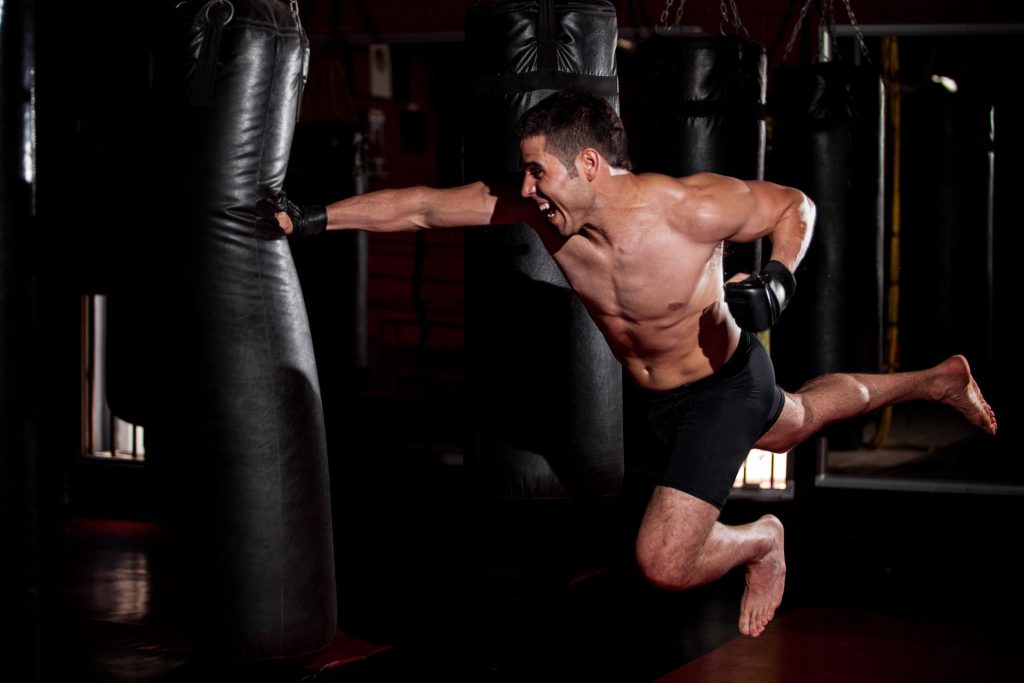
All I have to say is that today’s Exercise You Should Be Doing will make you make this face.

It’s that cool.

Copyright: bowie15 / 123RF Stock Photo


Or, I don’t know, if that doesn’t do the trick, what if I told you I’m not wearing a shirt as I write this post, maybe that would help?1

Anyways, today’s exercise I want to share is pretty neato.

Transverse Landmine Snatch

Here’s one of my athletes, Rishi, who’s part of the USA Men’s Field Hockey Program, performing it during last night’s training session.

Who Did I Steal It From? – Stanford University Strength & Conditioning coach Cory Schlesinger.

HERE’s his Instagram page. You should follow him.

What Does It Do? – In short, it’s an excellent introductory drill that trains explosiveness and power; albeit in multiple planes AND in a manner that’s very joint friendly and relatively easy to learn.

I’ve never been shy or reluctant to admit I’m a coach who’s not in any way, shape, or form competent in the OLY lifts.

When I was at Cressey Sports Performance we never prioritized them with our athletes – instead leaning very much on things like medicine ball throws, KB swings, bounding, and sprinting – and even now, at CORE, I still don’t prioritize them.

This is not to insinuate I feel the OLY lifts aren’t wonderful or that they don’t work. To speak candidly I’m at a point in my coaching career where I know what I’m good at and if someone I’m working with really wanted to learn them (or I felt they could benefit from learning them) I have many colleagues in the area I can refer to.

NOTE: If you’re interested you can read more about why I don’t use the OLY lifts HERE.

What I like most about using the landmine in this instance is that it kinda-sorta keeps things predictable; I.e., the barbell will more or less stay in the same path each and every repetition.

This makes the learning curve infinitely shorter.

What I also like about this variation is that it combines a lot of “good” things into one movement: Hip hinge, split stance, rotary stability, transverse (multi-planar) motion, and fake “overhead” pressing.2

The latter makes this an excellent exercise for those who play sports with a heavy overhead component (baseball, basketball, swimming) or for those who may lack the requisite mobility to go completely overhead.

Key Coaching Cues: This isn’t something a lot of people can perform on Day 1. Sure, you’ll get some athletes/clients who will be able to pick it up quickly, but typically I’ll first need to take the time to coach someone through a proper hip hinge, progressing them from a deadlift to a KB swing, KB/DB clean, and also pepper in a fair amount of anti-rotation movements (carries, for example) alongside landmine pressing variations.

In short: it’s important to master the “parts” of the movement before you train the whole enchilada.

Only then will the movement make sense or “click” with someone.

Once there, though:

  1. The move should start with the plate “hovering” a few inches above the ground, with the inside leg (leg closest to the bar) staggered.
  2. It’s important not to “lose” the shoulders; upper back stiffness is crucial.
  3. They’ll then clean the barbell, rotate, and “catch” it in an extended squared-stance position. Like I said above it’s one of those exercises that’s best broken down into its parts. Once the novelty of those have been addressed it makes the actual exercise a bit easier to handle.
  4. I tend to stick in the 3-5 reps/side range and take into account I want this to be explosive. For most people loading 25-45 lbs on the bar will be more than enough.
CategoriesExercises You Should Be Doing

Exercises You Should Be Doing: Anchored T-Spine Extension

There’s few things people need more of:

  • Bacon
  • Sex
  • That’s pretty much it

Oh, and more thoracic extension.

Copyright: woodoo007 / 123RF Stock Photo

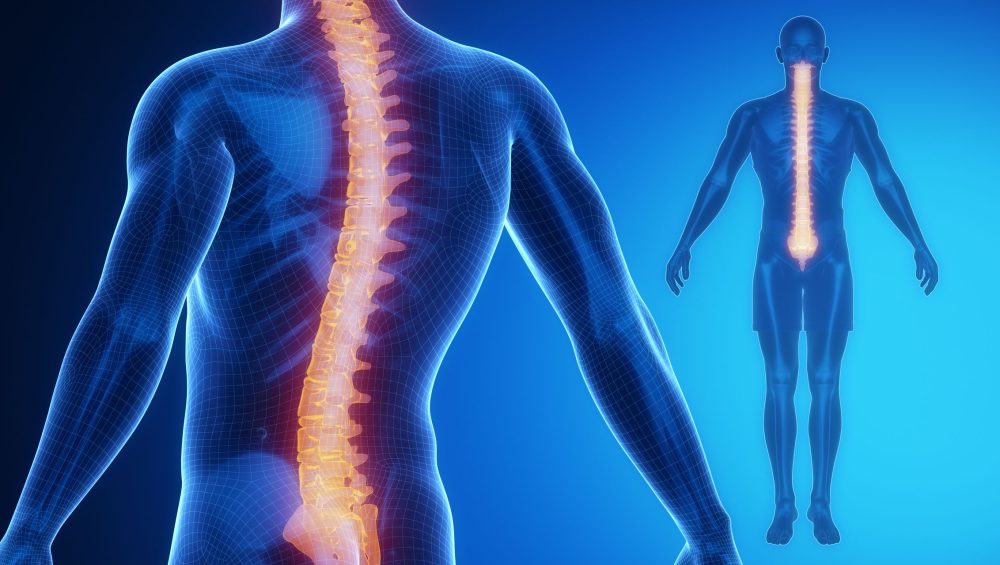
Many people spend an inordinate amount of their time in a ball of flexion that having “access” to requisite amounts of t-spine extension is a commodity it today’s day and age.

What’s more, many of the drills and exercises prescribed to people in order to gain that extension is so poorly executed or altogether the wrong fit that it’s not uncommon for some people to spend years chasing their tail.

Take for example the plain ol’ vanilla t-spine extension off the foam roller.

It’s a great exercise, and a simple one, when done right.

Thing is: many people do it wrong, which I explain in THIS article from last year.

In the same light, I want to highlight a similar drill I came across recently that I really like and have been implementing with my own clients.

Anchored T-Spine Extension


Who Did I Steal It From? – Zach Long of TheBarbellPhysio.com.

What Does It Do? – Allows to “lock” people in position to get movement from the area we actually wan to get movement from.

The T-spine isn’t really supposed to extend that much; to the point where it emulates the picture shown above. In that scenario said person is allowing the rectus to lengthen too much – resulting in excessive rib flair – and gleaning motion from the lumbar spine.

The Anchored T-Spine Extension tries to eliminate all of that.

Key Coaching Cues – First, it’s important to “clear” people for adequate shoulder flexion. If they’re unable to extend their arms overhead without compensating through RA, lumbar spine, or even via excessive elbow flexion, then this won’t be a good fit for them.

Second, I like to tell people to picture an imaginary line from their belly-button to nipple line, and that as they lower their hips that that line shouldn’t lengthen too much.

In effect, much like the regular t-spine extension drill off a foam roller most are accustomed to, when done right, most will be very surprised at how little motion there actually is with this drill.

But that’s the thing: This is not a ROM drill per se. It’s a getting motion from the right area(s) drill. 

I like to use this drill as a catch-all warm-up drill. It’s relevant for any upper body work that requires scapular retraction, depression, or even upward rotation, as well as any lower body work that requires someone to maintain an upright/extended torso.

It can also be used as a filler exercise during rest sets.

Have at it.

CategoriesExercises You Should Be Doing

Exercises You Should Be Doing: Anchored KB Row

I’ll be the first to admit my brain is a little lackluster. It doesn’t work in the same fashion as other coaches like, say, Ben Bruno, BJ Gaddour, or Meghan Callaway.

I’m often dumbfounded by all the practical (and inventive) ways they’re able to put their own spin on certain exercises and/or methodologies. I’ll watch a video or read an article and immediately think to myself “Well, I guess I’m an idiot for never thinking of that.”

Now, granted, giving credit where it’s due, when it comes to movie quotes or 90’s hip-hop trivia I’d be able to hang with the best of them:

  • What was director Paul Thomas Anderson’s second feature film and is generally considered Mark Wahlburg’s breakthrough role?3
  • What two albums were released on November 9, 1993 and are both considered hip-hop classics? ADDENDUM: These same albums were also the one’s I listened to most as a teenager in my bedroom, alone, not hanging out with chicks, ever. 4

But since we’re currently not hanging out in a bar playing Stump Trivia or on the set of what would arguably be the greatest game show of all-time, lets just chalk things up to me being an exercise comer-upper buffoon.

Today is no different.

Copyright: karmiic / 123RF Stock Photo


In today’s iteration of Exercises You Should Be Doing I want to share a row variation I’ve been using a lot with my clients of late and one I think you’ll enjoy as well.

Anchored KB Row


Who Did I Steal It From?: Strength coach and co-owner of Ethos Fitness + Performance, Jessica Schour.

What Does It Do?: Jessica is a local coach here in Boston who reached out to me late last summer to help her with some programming/coaching.

She’s been working with me for several months on her barbell lifts and around month two or three we had the following interaction.

Me: “Here’s your program.”

Jessica (37 minutes later): “What’s this?” [Points to whatever single-arm row variation I had originally written down.]

Me:Oh, that’s The-Most-Perfectly-Implemented-Variation-Of-a-DB-Row-Ever-Written-Into-a-Program .” [<— not the actual name].

Jessica:Naw, fuck that, I’ll do these instead.” [Proceeds to perform KB Anchored Rows].

Me:

via GIPHY

Okay, that’s not exactly how things went down.

In reality I think what ended up happening was Jessica was like “hey, I’ve been using these lately and really like them. What do you think?”

So, here’s what I think:

1. They’re a superb upper back/lat exercise. I’ve always liked “deadstart” or “deadstop” variations because:

  • They help to “standardize” the exercise: Everyone has to start and stop at a given point.
  • I like the subtle “reach” involved with the bottom portion of the lift. This helps aide better scapular mechanics/movement (shoulder blades moving around the rib cage and not stuck in place glued together the entire time).
  • The fact one KB stays “anchored” on the floor at all times helps to keep people a little more honest and prevent too much body-english from coming into play.

2. The set-up very much mimics the deadlift. To that end I think this is a great accessory movement for anyone A) has a weak upper back and B) has trouble with too much rounding of the upper back during their deadlift.

Key Coaching Cues: I like to tell people to “find their hamstrings” upon the initial setup. As they bend over to grab the kettlebells on the floor, they should be situated in way where they feel a lot of tension in their hamstrings.

From there they’ll “row” the kettlebell up making sure their elbow doesn’t go past the midline of their body (avoid excessive glenohumeral extension) in addition to trying to maintain a 45(ish) degree torso angle throughout the duration of the set.

In short: try to limit torso rotation or creeping up as the set progresses.

Aim for 6-10 repetitions per side. Get jacked.

CategoriesExercises You Should Be Doing

Exercises You Should Be Doing: These 2 Brutal Core Exercises

Fair warning: the two exercises described below seem easy to perform and kinda give off the “huh, that’s it?” vibe.

But trust me, they suck.

They suck hard.

Like, really suck.

Okay, you get the point.

Copyright: eenevski / 123RF Stock Photo


I’d like to preface this by saying I’m not a fan of the term “core training.” Some coaches like to play the uppity card and say such and such exercise “trains your core,” but in my view, everything, to some capacity, trains or hits the core.

  • When you deadlift you train your core.
  • When you perform a set of push-ups you train your core.
  • When you Sparta kick someone in the kidney for talking during a movie you train your core.

Your core is namely made up of everything that’s not your appendages (arms, legs) and it’s responsible, mostly, for transferring force from your lower extremity to your upper extremity (and vice versa), and also for helping you look hella good in a bathing suit.

Another way to think about things is that your core is this interconnected “web” of muscles and connective tissue that’s designed to resist force or prevent “unwanted” motion.

There’s a bit more to it than that, but all in all…….there you go.

There are a million and one different ways to train your core. Personally, I am not someone who says “well, if you deadlift and squat that’s all the core training you need.”

I think that’s a very narrow-minded and reductionistic way of viewing things. Most people are very good compensators and I’ve seen some very strong individuals struggle mightily when asked to perform a deadbug

Conversely, I do feel we should include “core-specific” exercises into our training arsenal; but exercises that take all of the above into account.

Give these a try.

Hollow Position Landmines


Who Did I Steal It From: Strength coach and my ice-cream eating BFF, Ben Bruno.

What Does It Do: I LOVE hollow position holds to help people learn and appreciate what it REALLY means to get (and maintain) full-body tension.5

Adding in the landmine adds a stability and anti-rotatory component that kicks things up a notch.

Key Coaching Cues: Watch THIS video if you’re unfamiliar on how to perform a basic hollow hold.

Also, and this should go without saying, if you’re unable to perform a hollow body hold, master that before attempting this exercise.

Set up the landmine so that you’re holding the barbell just above sternum level and assume the hollow body position. From there rotate the barbell side to side trying to limit movement in your torso and hips as much as possible; a little is okay (and will likely be the case for most people).

This is a self-limiting exercise in that you should only use whatever ROM you have available and that you can control. As you become more accustomed to the exercise and the novelty wears off, you should be able to access more range of motion.

I like to perform anywhere from 5-10 repetitions/side.

Foam Roller Rollouts


Who Did I Steal This From: My bald brother in arms, Dr. John Rusin.

What Does It Do: Much like other rollout variations this is a superb exercise that trains the anterior core musculature, albeit, specifically, trains anti-extension.

As an added bonus, we could also make a case this is a great exercise to hit the Serratus Anterior. So, anyone who needs to work on their scapular upward rotation….you’re welcome.

Key Coaching Cues: Assume a strict plank position with forearms on top of a foam roller:

  • Abs and glutes engaged.
  • I like to start people with their hips a liiiiitle higher (so as they fatigue they end up in a “neutral” spine position).

Begin with a slight retraction in the shoulder blades and then protract/abduct away from the foam roller. From there “push” the foam roller forward/backward in a manner that allows you to maintain proper spinal position (there shouldn’t be any excessive over-arching or rounding of the back).

Be sure to MAINTAIN scapular protraction throughout the duration of the set.

You can perform this exercise for time (start at 10 seconds and work up to 30. I see no reason to go above that number) or for repetitions (10-20).

CategoriesExercises You Should Be Doing

Exercises You Should Be Doing: Skater Deadlift/Hip Hinge

I’m a huge fan of the single-leg deadlift (or hip hinge, if we wanted to be technical), and feel it’s an exercise that offers a bevy of benefits.

However, as ubiquitous as the exercise is I do feel it’s a very advanced movement for people to master. Even for trainees with a fair amount of experience under the bar, single-leg deadlifts are about as advanced as they get as far as single leg movements go.

Here, a lot of things have to harmoniously come into play (core stability, hip stability, upper back strength, balance, etc) in order to perform the movement effectively, and it’s not something you just haphazardly throw into someone’s program.

Copyright: alekc65 / 123RF Stock Photo


Today I want t break down a regression of the single-leg deadlift I feel works really well.

Skater Deadlift/Hip Hinge


Who Did I Steal It From? – Dean Somerset actually brought this one up during our Complete Shoulder & Hip Blueprint in Boston last weekend.

What Does It Do? – Another name for this exercise could be “Fake 1-Legged RDL.”

It’s a fantastic option for those who struggle with balance yet would still gain a lot of benefit from a single leg deadlift (hip stability, grooving the hip hinge, core engagement/stability, posterior chain activation/strength).

Moreover, holding a load anteriorly (in front of the body in the form of a kettlebell, dumbbell, sandbag, heavy med ball, person) really forces the anterior core musculature to fire and helps to “lock down” the ribs and pelvis.

Subsequently it makes it harder to move through the lumbar spine (which we don’t want) and places more emphasis on the work/stabilizing hip (which we do want).

Key Coaching Cues: Grab something, anything (a boulder for all I care) and hold it in front of the body and think about pushing through the sternum. The idea is to keep the load tight to the body.

Place a ValSlide, furniture glider, paper plate – anything that will slide – underneath one foot and “glide” it back behind the body. I prefer using a straight leg, but I don’t see any major issues with bending the moving leg either.

This is a self-limiting exercise – meaning the ROM used is whatever any one individual as available to him or her. The idea is to HINGE through the standing/supporting leg while keeping the chest up and a “neutral” spine throughout.

Try to “pull” through the heel on the way back up and finish at the top with the same side glute. Aim for 5-8 repetitions per side.

CategoriesExercises You Should Be Doing

Exercises You Should Be Doing: Standing Band Hip Thrust

They way I see it when your 8-month old is up most of the night coughing and battling his first cold, and you’re not really that inspired to write something “meaty,” there’s only one direction to take things:

The glutification of glutes.

Copyright: dolgachov / 123RF Stock Photo


Standing Band Hip Thrust


Who Did I Steal It From: Who else? The Glute Guy himself (and the guy that every guys hates because they’re not him), Bret Contreras.

What Does It Do?: Makes your butt feel swole.

In more professional or scientific terms: it’s a fantastic exercise that trains the glutes in a more posteroanterior fashion.

It also serves as a “different” way to train the Hip Thrust with bands if you don’t have access to a Hip Thrust apparatus (or don’t feel like dilly-dallying with a cumbersome setup via a bench, band(s), and a bunch of DBs.

But, mostly, it makes your butt feel swole.

Key Coaching Cues: Using as thick of a band as you want, set it (or them) up by wrapping them around a pair of J-hooks on the squat or power rack. You’ll then reach for the far end of the rack and situate yourself far enough forward so you feel enough tension coming from the band.

Holding on, push your hips back until you feel a nice stretch in the hamstrings and then thrust those bad boys back home making sure to squeeze your glutes in the standing position with each repetition.

For added effect, you can match the cadence of each rep with some sort of quote:

Spar……..ta………Spar…….ta…….Spar……..ta.

Or, I don’t know…..

You……Don’t……Want…….None…….Of…….This.

Depends on how awkward you want to make things.

Nevertheless, I’ve been playing around with these myself and like them. I do prefer to use then for high(er) reps (15-20) and I think they’re best served as part of 3-4 exercise glute finisher.

CategoriesExercises You Should Be Doing

Exercises You Should Be Doing: Offset Shouldering Squat

I’m not someone who feels everyone needs to squat with a barbell on his or her’s back. I kinda lose a lot of respect for those coaches who have a knack for putting their ego and bravado a head of individual variances in anatomy, ability/skill level, injury history, not to mention goals.

Call me old-fashioned but I’d rather STFU and listen to my client/athlete’s preferences and what feels best to them (and what will breed immediate success) than to force my ideologies and way of doing things into their mix….and then expect they’re going to apply to every…single…individual I work with.

They’re not.

Copyright: rawpixel / 123RF Stock Photo


That being said I’m still very much a fan of squatting. And yes, a fair portion of my clientele do back squat.

However, a fair portion do not.

And that’s cool.

The world will continue to spin.

There are numerous ways I can have people squat that will take into account the premise of minimal load/maximal training effect. For long-term, consistent progress the idea is to load people juuuuust enough that they nudge the body to adapt, but also take into account it’s ability to recover.

NOTE: Just so the internet doesn’t have a conniption or shit a copy Supertraining, I want to reiterate that I do like traditional barbell squatting (back and front squat) as well as any speciality bar variation that suits your fancy – SSB squat, GCB squat Duffalo bar squat – and feel all should be considered the first “tier” if the goal is to add mass or get stronger.

That said, we don’t always have to crush people. And, to be honest, the more “joint-sparring” modalities I can incorporate or pepper in the better.

Offset Shouldering Squat


Who Did I Steal It From? – Aw, snap. I can’t recall. One of my female clients showed this variation to me off of someone’s Instagram account that she follows.

It wasn’t God. It wasn’t John Cena.

Man, I can’t remember.

Sorry whoever I “stole” this from.

What Does It Do? – This variation is a close cousin to the traditional Landmine Goblet Squat – where the barbell is held at chest height right against the sternum. What’s makes that such a nice iteration is that the bar path is somewhat (not completely) fixed which makes the movement easier to control and groove.

In addition, the Landmine Goblet Squat helps reinforce the “chest up” cue and more or less organically teaches people to sit “into” a proper squat position.

By moving the barbell to one shoulder or the other – in an offset position – we now add a significant rotary stability component to the movement.

In other words: your core stability will be like “whaaaaaaaat?”

Key Coaching Cues: You don’t have to use one, but I like to place a squat or hip thrust pad on the end of the barbell so that it can rest on the shoulder without any major discomfort. The idea is to let the barbell rest in place – don’t actively hold it there.

And then, you know, squat.

Like I said, the advantage of using the Landmine is that the bar path is pretty much set. There isn’t much thinking involved and the squat will come instinctively to most.

I’ve been having my clients perform 5-6 repetitions PER SIDE trying to emphasize being explosive with each one. I’ll also add these would probably be best served as a nice accessory squat movement to the traditional back or front squat.

Give it a try and let me know what you think.

CategoriesExercises You Should Be Doing

Exercises You Should Be Doing: Viking Chest Supported Row

SPOILER ALERT: There are no actual Vikings involved in this post or with the execution of this exercise.

Sorry.

However, that doesn’t mean we can’t up the general level of badassery of this post by including a picture of a Viking.

Copyright: khosrork / 123RF Stock Photo


A few weeks ago I watched a video a friend of mine, Luka Hocevar, put up on his FB page showing a landmine press variation I had never seen before using an attachment I had also never seen before.

The Viking Press

Anyone who’s read this site for any length of time knows I’m a huge fan of landmine pressing variations as I feel they’re a more joint friendly less vomit in my mouthish way of performing “overhead” pressing.

The Viking Press is an old-school strongman event that people the size of Mack trucks perform with an insanely absurd amount of weight.6

It’s not a practical exercise to perform in a commercial gym setting. It can be done, it’s just cumbersome, usually ends up annoying a bunch of people because it takes up a lot of space and equipment, and the asshats who like performing it are obnoxious and wear way too much Axe Body Spray.

Anyways, I saw Luka’s video and immediately got an erection got excited.7

In it he was performing the Viking Press with an attachment he purchased from Blackwidowtg.com.

I contacted Luka to find out where he found the attachment.

It was HERE, and I purchased one that day.

FYI: I receive ZERO kickback from this company for pointing you in their direction. I just feel it’s a solid product many of my readers would be interested in.

So I’ve been fiddling with it for a few weeks now and love it. My beat up meatheads and general pop clients are appreciative, as are my athletes. It’s been a great addition to the gym.

But are there any other exercises you can perform with the attachments other than the Viking Press?

Yup.

Viking Chest Supported Row


Who Did I Steal It From: Boston-based strength coach Jarrod Dyke. Jarrod’s a coach who also works out of CORE and he’d been experimenting with the attachment and come up with this doozy.

What Does It Do: It serves as a decent alternative to chest supported rows for those who don’t have access to an actual machine or apparatus either at their commercial or home gym.

Now, admittedly, it shouldn’t be seen as a straight up substitute for the chest supported row. This variation, while still great for hitting the upper back, doesn’t quite nail the lats as much as the real thing.

That being said, it does still hit the upper back (retraction), as well as the biceps and forearms. And, if you’re going to purchase a piece of equipment, it’s nice to know it can be used for other things outside of it’s intended purpose: Presses, rows, single leg variations (RDLs), squat thrusts, paper weight, bludgeoning weapon during the zombie apocalypse.

Key Coaching Cues: Set up is pretty seamless. The only snafu is for people with shorter arms. You may need to use a stepper (or something similar) to elevate the plates so people can reach. Also, I don’t foresee this as something you’d be loading 4, 45 plates on. However, you should still be able to load this up fairly heavy and perform for high(er) reps.

You can also perform ISO holds at the top, or even controlled eccentrics to add a little more time under tension.

All told, the attachment is great for what it’s designed to do; I think it’s well worth the price. However, this is just something else you can utilize it for as an added option in your exercise toolbox.

CategoriesExercises You Should Be Doing

Exercises You Should Be Doing: Serratus Punch

Got a cool exercise for you today: the Serratus Punch.

Copyright: antoniodiaz / 123RF Stock Photo


NOTE: Actual exercise not pictured. More power to you if you want to pull it off though. I mean, it does work the serratus…;O)

But First – A Rookie Parenting Mistake

It was a consortium of errors this past weekend. Lisa and I were supposed to head to Toronto for our Strong Body-Strong Mind workshop.

We were pumped to go, but what made the trip an even bigger of a deal was the fact it was going to be our first attempt at bringing our almost 5-month old, Julian, with us. On a plane. Did I mention on a plane?

On a plane.

With no where to go if he acted up.

You could say we were both a little nervous. But we took solace in that the plane ride from Boston to Toronto is a pretty short one and we had a kick-ass weekend a head of us hanging out with 25+ fitness professionals.

That is until we got to the airport, through security waiting at our gate, and were then informed Julian needed a passport.

Whaaaaaaaaaaaaaaaat?8

In the end we had to postpone our workshop, and head back home with our tail between our legs.

Sorry Toronto. We’ll see you later this year, I promise. The man can’t keep us down.

We have a tentative date planned in September, but will confirm shortly.

Lets get to the exercise….

Serratus Punch


Who Did I Steal It From: This is an exercise I’ve done for several years with clients off the floor. The addition of the stability ball, though, is something I snaked from Dr. Joel Seedman.

What Does It Do: The serratus anterior is the muscle located alongside the ribcage and plays a crucial role in shoulder health and performance. Specifically, it’s main role is to aid in upward rotation of the scapulae via protraction.9

It’s a relatively innocuous muscle, but I’d venture a guess the bulk of shoulder “issues” you come across as a personal trainer or strength coach can be remedied with a little more TLC given to it.

It’s a BIG deal.

It’s a big deal especially when we start discussing one’s ability to raise his or her’s arms overhead. In order to do so, safely, three actions need to happen with the shoulder blades:

  • Upward rotation
  • Posterior tilt
  • Protraction

I feel protraction is a lost movement. More and more we’re finding people “stuck” in an extension pattern which has a domino effect up and down the kinetic chain. With regards to upper extremity movement and mechanics we find people with a more depressed (low, not sad) shoulder girdle, excessive rib flair, and shoulder blades that tend to be more adducted/retracted and downwardly rotated.

In no small part the culprit can often be pointed to execution of common strength training movements. True, in order to lift BIG weight with the “big 3” it behooves anyone to “pack” the shoulder blades together and down when setting up to bench press, deadlift, or squat.

Getting and maintaining full-body tension requires “stuff” to be locked down tight.

That being said, it’s still important to be able to access movement. While we may coach people to clamp their shoulder blades down when bench pressing, as an example, to provide more stability to the joint, that doesn’t mean this should be the case 100% of the time.

Protraction or reaching is a vital component for shoulder health and performance.

And the serratus anterior is an often neglected muscle that can have profound effects on how one’s shoulder feels.

Also, not for nothing, this is also a solid core stability exercise.

Key Coaching Cues: Since the successful execution of this exercise is predicated on one’s ability to perform a plank position that doesn’t make me want to throw up a little, lets discuss that first:

  • TENSION! – everything should be firing. Your abs, your glutes, your quadricep muscle, your eyeballs, everything.
  • You should not be “hanging out” on your lower back.

Once you’ve got that down, from there the idea is to “punch” or push away from the stability ball making sure to stay fully engaged throughout.

NOTE: I’d start with performing these off a more solid surface – like the floor – if you’re new to this.

I like to add a full exhale as I push away which will help with keeping the ribs down (and serve as a kick-ass ab workout).

Under control, lower yourself back down by retracting the shoulder blades making sure not to poke your head forward. You should still be engaged here.

Don’t relax.

Repeat for a total of 8-12 repetitions.

CategoriesExercises You Should Be Doing

Exercises You Should Be Doing: Rack Pull-Up

I’m a huge fan of pull-ups/chin-ups. Pick your flavor. I find the ability to perform either of the two is a great litmus test of one’s upper body strength and overall body composition.

Copyright: dolgachov / 123RF Stock Photo


For many of my female clients both points are particularly true:

  • Getting strong enough to bang out one, if not several reps, is never going to be a bad thing from a strength standpoint.
  • And if they can perform several reps, it’s likely they have their body composition in check.

Unfortunately, not many women (and men too) can conquer the exercise on Day #1. It’s then on me to implement progressions that not only build context and prepare for the movement, but also builds confidence and elicits a training effect.

Priority #1 is MORE frequency. You’re not going to get better at hitting a pull-up/chin-up if you only train it once per week.  To that end there are several ways to break things down with floor-based drills (hollow position holds, push-ups, rollouts) in addition to drills hanging from an actual bar (straight-arm hangs, flexed-arm hangs, eccentric only, accommodating assistance).

One pulling variation I’ve been having my female clients perform of late is this:

Rack Pull-Up


Who Did I Steal It From: Fellow T-Nation contributor Paul Carter.

What Does It Do: This is an excellent exercise for a few reasons: it forces the feet out front which helps maintain “canister” position throughout (preventing excessive ribs flaring out and cranking through lumbar spine) in addition to allowing more t-spine extension and scapular retraction.

It’s also an excellent exercise that hammers the lats and I love how you can accentuate the “stretch” at the bottom.

Also, to steal a line of thinking from Paul, at the top, the legs should be parallel to the floor. Any higher and you gain a leverage advantage and they’re not as difficult.

My client Sara makes these look easy, but trust me they’re more difficult than she makes them look.

Key Coaching Cues: The foot position noted above is important, so don’t skip that part. I also like to tell people to think about “pulling through their elbows” and to think about keeping their shoulder blades in their back pocket.

This drill can be used for people who can’t yet perform a chin-up/pull-up or are looking to increase that number by building a little more pulling strength/volume.