Not that I’m complaining. I actually like to travel and enjoy the opportunities I get to visit various cities and towns, meet new people, and catch up with old friends/colleagues.
It’s just, you know, sometimes you feel like you’ve been run over by a Mack truck.
So I’m really looking forward to a weekend home with my wife and enjoying the beautiful weather we’re expecting to have in Boston.
After that, though, it’s game on:
PHILADELPHIA – Sunday, April 24th @ War Horse Barbell
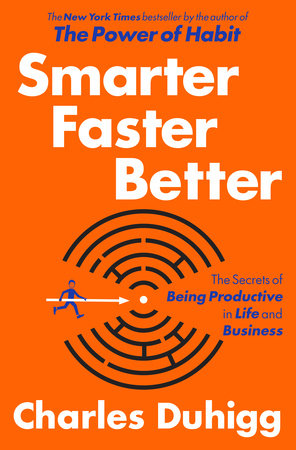
I thoroughly enjoyed Mr. Duhigg’s first book, The Power of Habit, so it wasn’t a hard sell for me to swipe this book off the bookshelf when I saw it a few weeks ago.
We all know someone in our lives who can seemingly juggle responsibilities of work and home life, yet still have time to coach three different youth teams, read poetry to orphans, and still workout 5x per week.
Eric first spoke on the Perform Better Tour when he was 25.
Unreal.
Another fun fact about Eric: when he and I lived together, while I’d be in the living room watching Lord of the Rings for the 47th time, he’d be in his room writing Maximal Strength.
The man had unparalleled work ethic even then.
This was an awesome read by Eric, and something I hope the bulk of fitness pros reading take the time to read themselves.
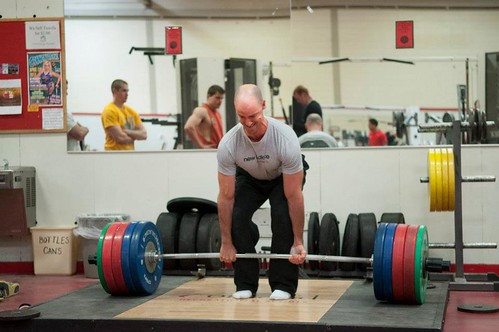
I posted a video on my IG account a few weeks ago of a woman I had just started working with – literally, it was her first session with me – and I was able to get her to deadlift from the floor without any pain for the first time in years.
I had her perform a modified sumo-stance deadlift.
She crushed it. It looked good, it was pain-free, and I was able to show her SUCCESS on day #1. Win-win-win.
Of course, several coaches chimed in questioning my coaching abilities because I didn’t have her perform a conventional deadlift. Apparently they deemed me an inferior coach because of it.
It’s the internet. It’s to be expected.
Anyways, this is why I LOVED this article by Mike. Not everyone HAS to deadlift conventionally, and not everyone HAS to deadlift from the floor.
At the end of the day: any competent coach will understand that the BEST approach is one that’s best suited for the individual, and not to stoke his or her’s ego.
Note From TG:Today’s guest post comes from good friend, Todd Bumgardner. Todd’s written several articles for this site, and when he reached out recently asking me if he could write something I, of course, obliged.
After all, Todd was the inspiration behind THIS post I wrote several months ago which resonated with many people who read it. He’s a deep thinker, and I really respect his approach to life.
So I said, “Sure! How about something on what it means to be a man?”
This is what he sent back. Enjoy.
Are We Men?
My maternal grandfather’s name was Alfred C. Traxler. He was born in 1926 and died in 1964; he didn’t reach his thirty-eighth birthday.
Unconscious at the wheel, he was a truck driver, his truck swerved from the road and he crashed.
I’ve heard the story a hundred times from my childhood to now, but I can’t remember if he died before he wrecked or if the wreck took his life. He left behind four children, including my mother who was eight years old, and a wife two years his junior. I was born in April of 1986. I never got to meet him, all I know is relayed to me through a vague family mythology.
In 1944, before he finished high school, he enlisted in the army. Within the year he found himself in Europe, fighting in World War II as a member of the field artillery. Don’t ask me to list the battles he fought in, I can’t catalogue them. The only one I’m sure of is the Battle of The Bulge. I’m also sure that he came home with two Purple Hearts, one for being shot in the head.
I’m not certain of his other wound—maybe he was hit in the head twice—or how normal his life was after coming home with a head injury.
My mom tells a story about a time she and her sister were fighting in the basement. As he was walking down the basement steps to stop them, he lightly tapped his head on the ascending staircase that climbed from the first floor to the second, in opposition of the basement staircase’s descent. His 6’3”, thin frame crashed on to the steps, unconscious.
I’m certain that, were we matched; thirty year-old Al Traxler would kick thirty year-old Todd Bumgardner’s ass. It’d be a lopsided thrashing, despite me having around forty pounds on him. Despite having my jaw tested throughout my childhood and college years. Despite me being a physically strong human being.
Alfred Traxler would beat my ass.
Guess what? Your grandfather, were it possible for you to be paired at the same ages, would monkey stomp your goofy ass in a hurry.
Things were different when my grandfather grew up. Men then had something men now don’t have.
Men, and manhood, were different.
I’m not here to reminisce on good ol’ days that I never saw, or to say we need to return to a time when men were men while extolling bravado’s benefits. But there are differences between then and now—some good, some bad, some indifferent. My goal is to create a contrast in behavior so we that we may compare.
We’re struggling to understand what it means to be men.
The problem is, there is no ideological man.
The definition, man, is a derivative of culture and context.
What it means for us in Western culture is different from that of Middle-Eastern cultures. It’s different from how Eastern men define themselves. As we derive our definition, gender roles are evolving.
Male and female don’t carry the same connotations that they once did. We’re evolving, it seems, into androgyny and some folks are struggling with this.
To cope, we’re constructing a lot of empty definitions.
My grandfather grew up during the Great Depression, voluntarily entered himself into the greatest destruction the world’s ever seen and was doing his best to raise a family when he lost his life. I’ve never put my ass on the line for anything that I didn’t want to do.
That’s a stark contrast.
Of course, I’ve stepped up when my family’s needed me. And I’ve taken an ass whooping or two to defend a friend. But I haven’t really done a damn thing that laid my ass on the line. Not like he did.
It’s generational.
My experience isn’t atypical—unless a man or woman of my age has chosen to enter the armed forces, we’ve never had to truly experience a great deal of sacrifice. That’s why we’re struggling to define a lot of who, and what, we think we are—especially males.
Men of my grandfather’s age faced the scarcity of The Great Depression and the horrors of killing, watching your friends die and the reconciliation of all of it. Even if a guy was a pussy, he had an ideal to work from.
While men then were outwardly tougher, had thicker skin and better prepared to deal with adversity, they also orchestrated a world with more misogyny, more racism and less tolerance.
Past generations provided us the stoic ideation of manhood while also demonstrating negative behaviors and beliefs that contrast our current evolution toward tolerant humanism. There is no concrete ideology. While manhood is built on certain principles, at least in my belief, there is no ideal example.
It’s increasingly amorphous and it confuses us.
We talk a lot of shit.
We have the internet in all it’s amazing, constructive glory. Despite its opportunity-bearing beauty, it’s also an open pulpit for empty pontification. An endless array of diatribes on what men should be able to do. We make up silly little trials because we have so few real trials to overcome. Mostly, it’s look what I can do. I’m a man. Do this and you’re a man too.
Beyond that, and even sleazier, men propagate to other men that they can help them engineer a personality, a new life, a new body if they follow the advice in their book. Get laid. Get money. Be a stud. It’s cunttastic marketing at its worst. Deny self-acceptance and progression toward something worthy, something that teaches us about ourselves, and work your dick off to become something that you’re not. Horse-fucking-shit.
Lifting weights doesn’t make you tough/hardcore or any other cockamamie masculine ideation. An outrageous expression of physical strength or capacity, while beautiful and worthy, doesn’t qualify anyone as a man. Hardcore is working a job for twenty years so your kids can eat and getting up every day, and going to that motherfucker and kicking ass with a smile on your face, and perspective in your mind, because that’s what you have to do.
We idolize the image of the alpha, and dudes sure do a lot of talking about being one. Alphas don’t have to talk about being alphas. They are just alphas. And in most instances we do our best to segregate them from society: they become Navy SEALs or go to jail.
Please distrust any individual that tells you, via conversation or via print, that they can help you become an alpha. Nine chances out of ten, you’re not an alpha. And that’s totally cool.
You are who you are.
Kick ass at being that dude, accept him and develop him as much as you so desire. But don’t listen to some dick-head that tells you that you can become something that you’re not if you simply listen to his advice.
These are examples of our continual strivings for a male identity in a world of limited trials, a famine of opportunities to construct a real identity chisled out of struggle and strife. This is the bullshit that we imagine to placate ourselves…and we sell it to each other every day.
It’s an adolescent screaming and yelling, an upheaval originating from male frightened immaturity, despondent because, collectively, we’re afraid to take responsibility for our own lives in a world with so much opportunity and so little direction.
Many males are frightened of blurred gender roles and assertive women. And, of course, by acceptance of homosexuality that’s nearly universal. Which is one of our best cultural achievements. It leaves insecure males with the inability to define manhood along side those that also love other men.
Maybe it’s a step in the progression toward evolving into better humans. We’re trying to understand what is happening around us and we need some kind of self-definition. So we devolve slightly so that we may move forward.
I like to believe we’re collectively ascending as a species. But there’s a lot of vacuous dick measuring that makes me ask some questions.
Especially when it’s realistic to believe that most men under forty have never been punched in the face.
Again, I’m not extolling bravado as manhood’s end-all-be-all, but exuding machismo comes with certain prerequisites.
Let’s also not revert to ‘good ol’ day’ thinking, but something tells me Alfred Traxler would have a hard time relating our modern male squabbling to define ourselves after coming home from Europe as a twenty year-old man with battle scars and two Purple Hearts.
So, after all this opinion bearing, what does it mean to be a man in 2016?
This is, of course, one man’s take, extrapolated to the entire Western world equipped with external human plumbing.
It’s the best ideal I could construct.
Take it for what it is; maybe I’m an asshole.
Being a man starts with giving a shit about yourself. Not the faux self-care that fills space with materialistic yearnings and celebrating the “cult of me”, the tending to every somatic and sensational need.
No, not that, but true self-care.
The kind that gives you the strength to embark on your own hero’s journey to find out what’s actually inside of you, to define physical and mental feats for yourself, disregarding aggrandizement and celebrating self-validation.
It’s finding the inner solace, the inner core that gives a guy the ability to define himself without the need for anyone else to adopt his definition. It’s this core that solidifies manhood.
A man is compassionate.
Compassion is the truest expression of strength. From compassion emanates kindness. Each is the product of a deep serenity that allows us to give others what they need because we’ve done all we need for ourselves. All are the product of taking responsibility for our own lives.
Manhood is having the nuts to act on our individual constructs of the “right thing” all of the time. No matter who is watching. No matter if no one is watching. It’s consistency of purpose and alignment with deep routed personal ideals that firmly extend a middle finger in the face of that which we independently believe is wrong.
And while we contain this ferocity, we encapsulate it with respect, respect and openness toward other cultures and points of view.
Respect for other humans.
Respect for life.
Men have fierceness of purpose, a deep connection with why they’re here and what they’re going to do about it.
Being a man, when distilled clearly to its essences, is a balance between confidence and humility. It’s having the balls to take responsibility for your own life and take action to shape it into an art worth sharing. It’s an ever-present consideration that we’re damn lucky to be alive and a grateful use of the time we’re granted. It’s authenticity.
These are the musings of a lucky thirty year old that’s done his best to develop himself into someone worth being around, a man people would be proud to know. It’s my definition of manhood, no one else’s.
But fuck, man, I don’t know. I’ve never been shot in the head.
I’m currently 34,000 feet in the air as I type these words.3 I’m on my way to Seattle to meet up with my boy, Dean Somerset, so he and I can teach our 2-day Complete Hip & Shoulder Workshop. (< — be sure to go HERE to check for future CHSW dates and other speaking shenanigans).
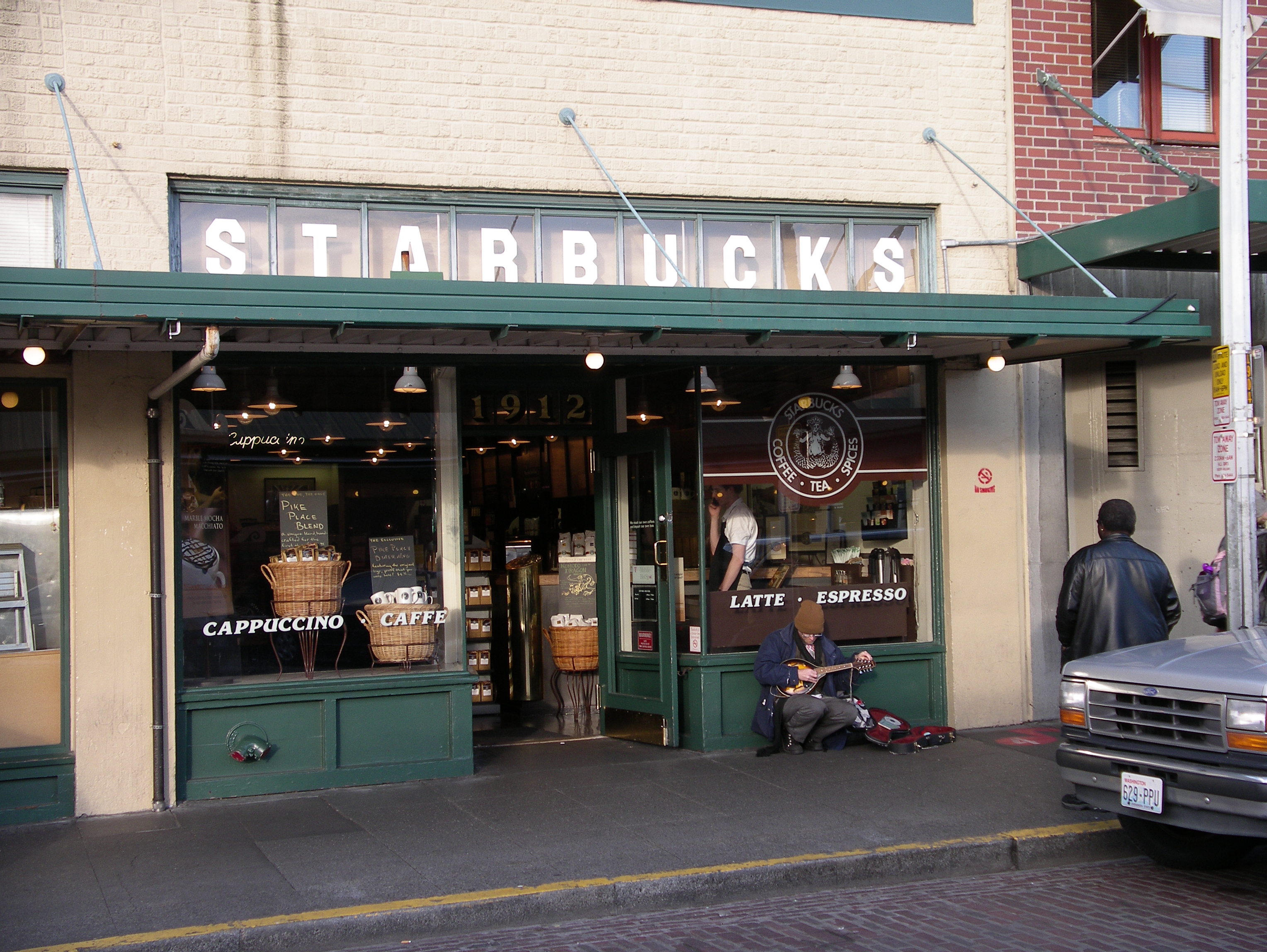
It’s my first time visiting Seattle. I’ve always wanted to go, have heard nothing but wonderful things, and can’t wait to hoist my backpack over my shoulders and explore since I have a few hours to kill after I land.
I heard Pikes Market is legit. Maybe I’ll catch a fish or two.
I was hoping to hit up a Mariners game and say hello to long-time CSP athlete, Steve Cishek, but alas, I won’t have time for that.
I guess I’ll just have to find a coffee shop to chill out at. I “think” Seattle has a few of those, right?
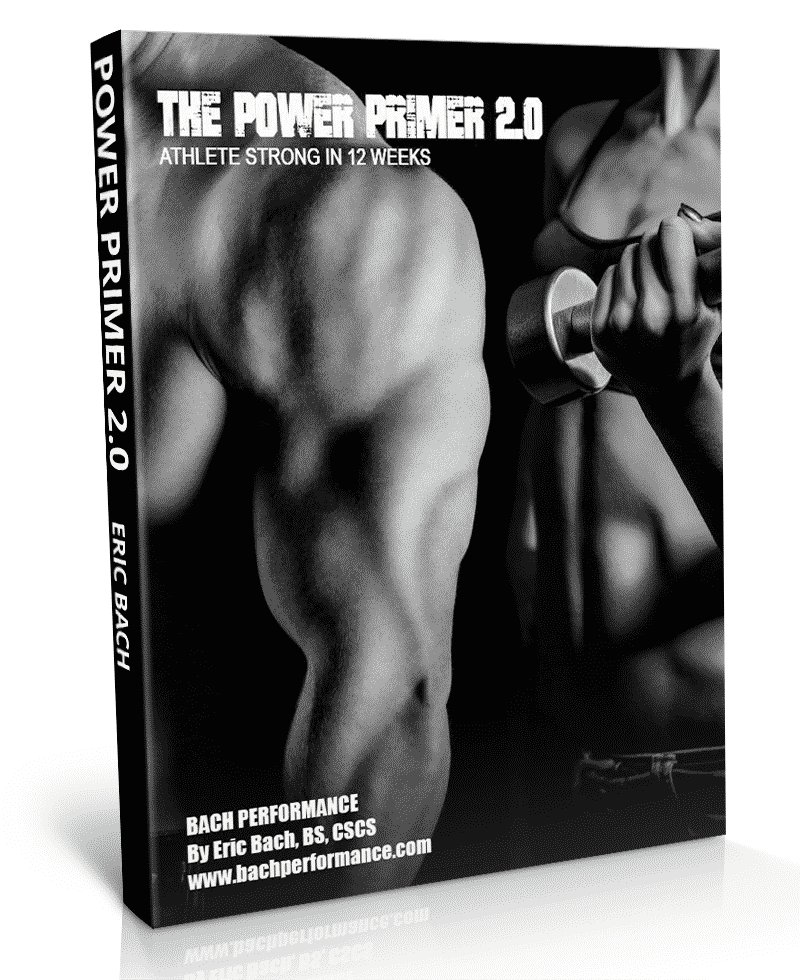
Today is your last day to take advantage of the 50% off sale of Eric Bach’s excellent resource, The Power Primer 2.0.
Do you train athletes or just like to pretend you’re one yourself? Give this manual a look. What I like about Eric’s approach is that is not only about power development. Even if you’re only interested in looking good nekid, this manual will help get you there.
With apologies to any 90s hip-hop and R&B fans, today’s exercise has nothing to do with Aaliyah’s hit “Rock the Boat.”
OMG – such a classic song.
I listen to this song – as well as other songs from all her albums (Age Ain’t Nothing But a Number, One in a Million, Aaliyah) – and can’t help but wonder “what might have been?” if she hadn’t died so tragically back in 2001 in an airplane crash.4
Alrighty then, lets move away from the somber tone shall we?
I’ve got a quick-n-dirty exercise for you to try this week.
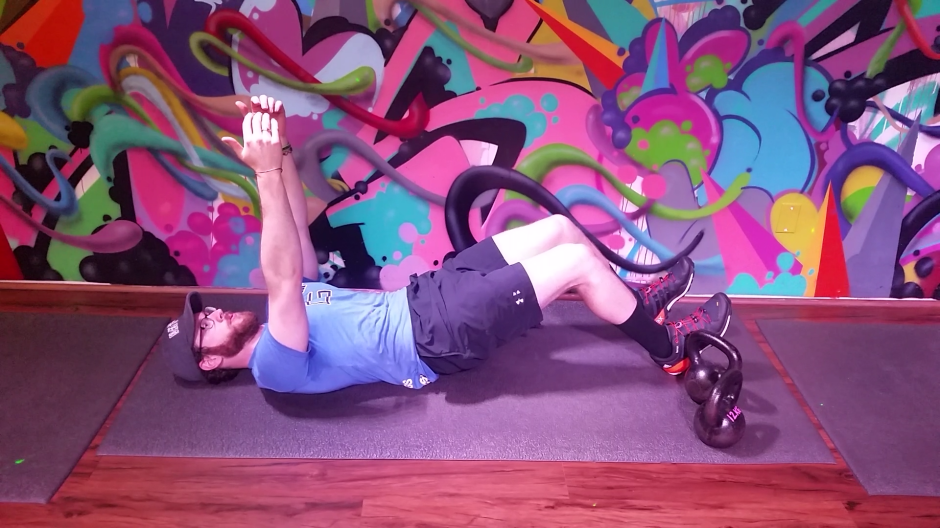
Rock the Boat
Who Did I Steal it From: Surprisingly, not Ben Bruno (the landmine Jedi that he is).
Last week, before heading to NY, I stopped by Mike Reinold’s place, Champion Physical Therapy & Performance (in Waltham, MA), to film a few podcasts and to get a quick lift. Strength coach Rob Sutton showed me this bad boy, and I really liked it.
Outside of that, it’s an excellent drill that trains the abdominals (core) in a more “functional” manner. I.e., anti-extension, not to mention there’s a high degree of resisting rotation (loop stress) as you, you know, “rock the boat” moving the barbell from side-to-side.
Key Coaching Cues: This is a self-limiting exercise in that the ROM used by each individual is going to be determined by his or her’s ability level. The idea, however, is to “lock” things down and place a premium on lumbo-pelvic-hip control (no excessive lumbar flexion or extension).
Foot width will vary (closer together = harder).
Shoot for 5-8 repetitions per side. But you could also make this a timed event, say, 15-20s, working up to 30-40s.
I am not a perfect coach. While I feel I’m above average in my abilities, I’ll be the first to admit I have many “gaps” in my knowledge-base.
Some things I’m good at: coaching the barbell lifts, assessment, hand-to-hand combat vs. zombies.
Some things, not so much: Olympic lifting, speed and jump training.
I’ve written about my thoughts on Olympic lifting in the past, and it’s been within recent months that I’ve decided to take a more proactive approach to addressing my gap in speed & jump training.
I’ve been devouring resources from Lee Taft and Adam Feit on the topic.
To that end, today’s EPIC post, written by strength coach Eric Bach, continues said gap narrowing.
FTY: his new resource, The Power Primer 2.0, just went on sale this week at 50% off the regular price. It jumps (<– HA, get it?) into jump training; and why, even if you’re not an athlete, is something you should be incorporating into your training program(s) to become a lean, mean, machine.
Enjoy. It’s a VERY thorough and informative post.
Jump Your Way to Power Development
Here’s a new twist that answers an old question: how can you bridge the gap between performance-oriented training and physique training?
Can you really look great and improve athletic performance, no matter who you are?
Put more bluntly, can you really have it all?
And does it matter where you train?
The surprising answer has more than a little to do with jumping, of all things.
WTF?
But let me back up to set the stage.
A few months ago, I moved from a sports performance facility to an independent facility. I work with fewer athletes and more people who just want to look great naked and stay healthy.
Note from TG: Hey! Just like me!
Most trainers try to move in the opposite direction. They train general population clients, but really want to train athletes.
It’s been quite a transition. But I noticed something interesting. None of my clients – old or new, in-person or online, athlete or ordinary Joe — JUST have physique goals or JUST have performance goals. Everyone wants the total package.
And why not?
Everyone wants to be confident struttin’ down the beach to jump into a Volleyball game, whether they are 26 year-old ex-athletes or 50-year-old executives.
Here’s the secret: explosive intent is everything. This blog post will explain how you can jump your way to success.
For every high-performance gym with turf and bumper plates, there are 30 “regular” gyms packed with machines and dudes reading the newspaper on a preacher curl.
Being jacked, tan, and strong is nice. But it’s best to top off your physique with real-world athleticism.
Jumps improve performance for recreational athletes.
Jumps build stronger, more powerful legs.
Jumping requires explosive hip and knee extension. It’s the same movement needed to accelerate in sprinting, crush a heavy squat, and to a lesser degree, get you from your Lazy Boy to grab leftover pizza.
Key Point: Jumps Increase Your Athleticism
You need to generate strength quickly to generate force that propels your body (or an object) through space.
That’s where jumps come in. Incorporating jumps into your training bridges the gap between the strength you have and the speed you need.
Get Powerful with a Minimal Learning Curve
Just load up and jump, right?
It’s not quite that simple, of course. But it’s a lot simpler than learning how to clean and snatch.
Jumps work the same athleticism-developing movement pattern as most Olympic lifts, squats, and deadlifts: explosive hip extension, sans the technicalities and steep learning curve.
Compared to mastering the Olympic movements, jumps provide the best bang for your buck to add an explosive component to your training in any gym environment.
Boost your Deadlift and Squat Numbers
Let’s get all rigorous and sciencey and stick to the irrefutable facts, backed up by the finest peer-reviewed literature. We know with certainty that:
Tony likes Star Wars and deadlifts (P.S: Imagine if they did deadlifts in Star Wars?)
Donald Trump’s mullet is the same color as mustard.
Strength serves as the foundation that allows you to improve every other quality in the gym.
Digging into my third point, maximum strength is vital. But lifters would benefit from an occasional change.
They should add explosive training to further improve their strength gains. Even the strongest lifters will derive huge benefits to adding jumps to their training.
The reason is improved nervous system efficiency. In both the deadlift and the squat, extending the hips and knees with power is key to performance. The same holds true for crushing jumps.
Adding jumps to your training grooves the same hip and knee extension movement with lighter weights and more explosiveness.
This is huge for two reasons: Intramuscular and intermuscular coordination.
Don’t let these complicated terms intimidate you. I’ll break it down:
Intramuscular Coordination is the ability of individual muscle fibers (say your quads in a jump) to fire and generate force together.
Intermuscular Coordination is firing of muscle groups to work together in a movement pattern, such as your quads, hamstrings, and glutes contracting and relaxing during the jump.
By training similar movement patterns with various loads, like a heavy squat and a jump squat, you’ll teach your nervous system to recruit more muscle fibers to fire faster. And you’ll groove agonist and antagonist muscles to produce smoother movement.
Training with explosive movements improves your muscles ability to work individually and concurrently with other muscles, producing stronger and more explosive movements.
This is important for a few reasons:
Lighter, more explosive exercises are less stressful than always lifting heavy ass weights.
Lifting heavy weights is still important to build strength, but for most lifters less Central System and joint stress is a good thing.
Replacing a heavy strength session with explosive, sub-maximal exercises opens the door for multiple training improvements.
Because stress is lower, you’re capable of practicing a movement pattern more often for faster improvements in technique.
By and large, less stress allows you to train with more volume. This sets the table for progressive overload and muscle growth.
Keep doing heavy strength work. But consider making it less frequent. Use explosive jumps or sub-maximal speed squats as an alternative.
Jump to Prevent Injuries
We all know someone who’s played flag football or pick-up basketball, only to land awkwardly and shred a knee.
Sometimes, these are the guys that look like they’re in the best shape.
Unfortunately, it doesn’t always matter how strong and athletic you are. If your mechanics stink, your injury risk will skyrocket.
If you’re not performing an exercise right or landing correctly, you’re grooving a technique that’s dangerous and inefficient, whether it’s a squat or a jump.
When you get out the gym and onto the field, fatigue can set in and form can go out the window, leading to injury
In the interest of not winding up thigh deep in a leg brace, it’s best to groove optimal mechanics every time you jump. Here are some guidelines:
1) Your feet should be flat, rather than in an anterior weight displacement on the toes. If you’re landing on your toes, you’re not getting full hip extension and limiting power. And you’re placing more stress on the knee joint due to greater shear stress.
2) Knees should be neutral, rather than in valgus or varus (knees diving in or diving out, respectively).
3) Abs braced: any rounding of the back and trunk shows a power leak that will cascade down the kinetic chain and place stress on the hips, knees, ankles, and feet. Keep the abs engaged so you can absorb force and transfer power.
4) Eyes ahead, chest up: Stand up, keep your head down, and walk ten stops. Starting to trip over your toes yet?
Wherever your head goes, your body will follow. Keep your head neutral and eyes ahead, otherwise the rest of your mechanics will go out the window.
Activate More Muscle Fibers For Growth
You can’t build muscle fibers that aren’t activated. That means step one to building muscle is activating a greater number of muscle fibers.
That happens in two ways:
First, Lift heavy weights. By being a dedicated reader to this blog I’d assume you already are. Just sayin’…
Second, lift lighter weights (or your bodyweight) faster, which…this case means jumping. TADA!
Now, you could argue that except for beginners, neither lifting explosively nor heavier weights directly builds muscle. What they do-do (Yay, a poop joke) is increase neural drive to your muscles, activate dormant fibers, and crank up the efficiency of your central nervous system.
Take it a step further. If you only lift heavy and moderate intensity weights, adding in lighter more explosive exercises improves muscle unit recruitment. You’ll be throwing a figurative lightening bolt to your nervous system.
This is where it gets cool! You’ve activated more muscle fibers and your strength should increase.
By being stronger, you’ll be able to lift more weight for more reps with more muscle fibers. This gets you progressive overload: the driving force for all progress in the gym.
Getting more explosive provides another tool to turn on muscle fibers. This allows you to more aggressively train the muscle building mechanisms needed to get jacked, tan, swole, and sexy.
This is all fine and dandy, so what the hell are we supposed to do…Jump Volume Training?
Not quite. We can’t jump to conclusions. First, lets cover different types of jumps and why each variety is important.
Static Versus Countermovement Jumps
Static jumps and countermovement jumps look similar, but there are distinct differences in how they train your body.
On static jumps you start loaded, just like the bottom of a squat before jumping. In this position you negate the storage of elastic energy, making the static squat jump a great way to build static strength and explosiveness. Further, because there’s no countermovement, these jumps are less complex and generally safer for most lifters.
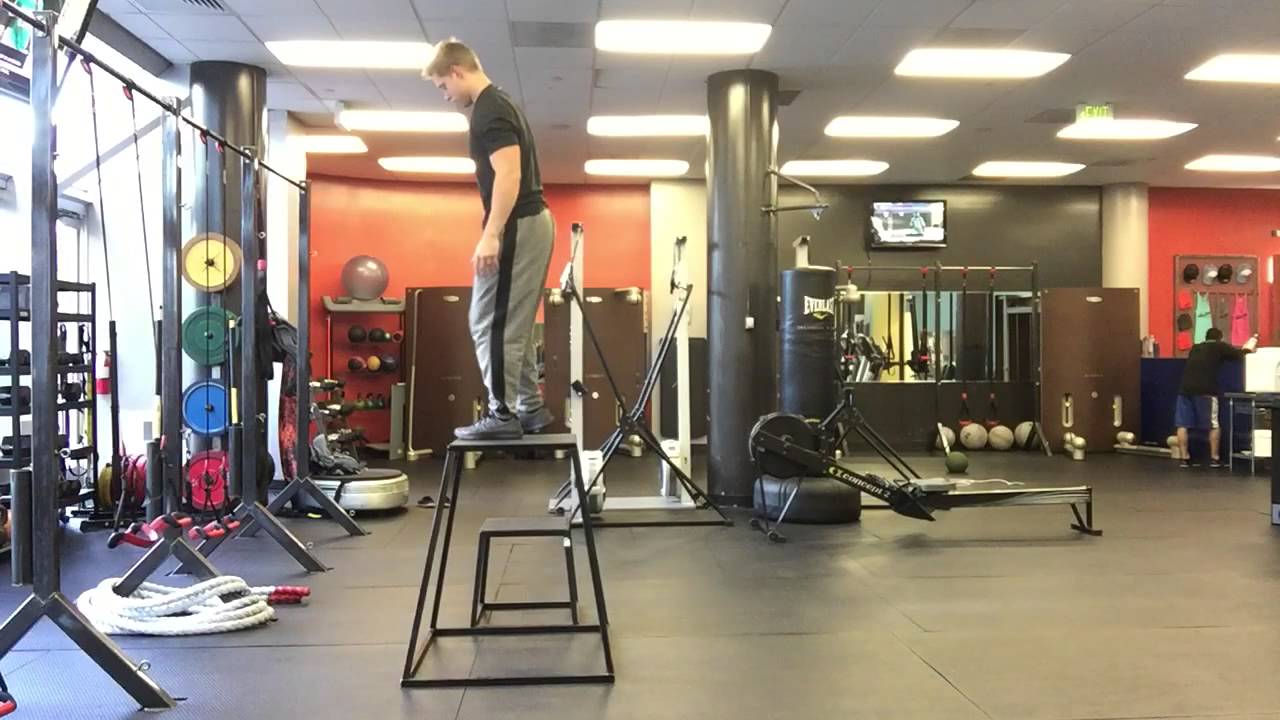
Static Jump:
Countermovement jumps differ because you start tall, using a downward arm swing while dropping into a squat. Then, from the bottom of your squat you rapidly extend and jump.
This countermovement makes the jump more complex, adding a full eccentric motion (dropping into a squat) before rapidly transitioning to your concentric (going up).
Note: I’m using dumbbells in this case, hence no countermovement with the arms, but there is still a countermovement in the lower body.
Countermovement:
I’d recommend starting with static jumps for at least 4-6 weeks to groove proper take off and landing technique. Then, as dictated by technique, incorporate countermovement jumps for more complexity.
Single Versus Multiple Jumps
As you guessed, single jumps are done as individual jumps within a set, with a re-set between each rep.
Most of the time, these are a better option to groove technique and train explosive power.
Multiple Jumps are a set of jumps performed in rapid succession. In this case, a set of 3 jumps would be 3 squat jumps performed with a consistent range of motion without spending too long in transition.
This transition time, known as the amortization phase, should be kept to a minimum. Otherwise, energy stored during the eccentric of each jump dissipates.
Bring in multiple jump sets gradually, grooving proper landing and takeoff mechanics before going all-out with multiple jumps.
Types of Jumps
If you haven’t squatted in years it would be a bad idea to load the bar with near-maximum weights and giver’ hell, right?
Right?
Well, the same thing applies to jumps.
Jumps are stressful, especially if you haven’t done explosive training or played sports in years. So ease into jumps, starting with jumping rope, building up to box jumps, squat jumps, and then broad jumps (if appropriate.) You’ll groove technique while conditioning the tissues in your lower body for the impact of jumps.
Jumping Rope:
Jumping rope is an exceptional tool to build foot speed, athleticism, and coordination with little space or equipment. Start by adding three to five minutes before and after your training. A huge benefit of jumping rope is it’s a rate limiting activity. The exercise ends when your technique breaks down, making it damn near impossible to jack yourself up.
Box Jumps
Box jumps, when done for power rather than a conditioning exercise, are a great tool to building explosiveness. Box jumps are an ideal candidate if you’re working on technique because they allow you to groove takeoff and landing technique while reducing joint stress on impact.
On each jump make sure you’re emphasizing hip extension—not testing hip mobility. Pause at the top of each rep to reinforce landing technique. Use another box to step down onto. Jumping off backwards defeats the purpose of focusing on technique and decreasing joint stress.
Squat Jumps
Squat jumps are an explosive lower body exercise with a short learning curve, making them perfect for most non-athletes. Start jump squats as static, single jumps before moving on to weighted or multi-rep jump sets.
Broad Jumps
Broad jumps are awesome for developing explosive hip extension in a more hip dominant manor than squat jumps. This may lead to more carryover on hip dominant exercises like deadlifts…along with activities that require horizontal power development, like sprinting.
But with a horizontal trajectory comes a caveat: increased shear stress on the knee, making broad jumps tougher on the joints.
To minimize joint stress, perform broad jumps for lower reps and focus on jumping up and out to reduce shear stress on your knees.
Adding Jumps into your Routine
Squat jumps are an explosive exercise ideally programmed after a dynamic warm-up and before lifting.
To increase your hops and potentiate your body pick one type of jumps once or twice per week.
Focus on technique and explosive intent, not high volume. Try 2-4 sets of 3-6 reps on lower-body training days.
1) Workout A: Lower Body, Squat Dominant
Full Dynamic Warm-Up
1a. Static Squat Jump 3×5 Rest 60 seconds
1b. Plank 3×45-60 seconds rest 60 seconds
2. Front Squat 4×6, 6,4,4 Rest 120-150 seconds
3a. Dumbbell Walking Lunge 3×8/each rest 60
3b. Half kneeling pallof Press 3×8 each rest 60
4. Dumbbell RDL 3×12 rest 90 seconds
2) Workout B: Upper Body
3) Workout C: Lower Body, Hinge Dominant
Full Dynamic Warm-Up
1a. Broad Jump 3×3, rest 90 seconds
1b. Single arm farmers walk 3×30 steps, rest 60-90 seconds
2. Deadlift 4×4, 4,2,2 Rest 120-150 seconds
3a. Barbell Single Leg RDL 3×5/side rest 30 between sides, 60 after set
3b. RKC Plank 3×20 seconds, rest 60 seconds
4. Goblet Bulgarian Split Squat 3×8 each, rest 30 between sides, 60 after set
Height isn’t the most important factor, form is.After all, there’s no point in building power on top of a faulty foundation. Keep your focus on full hip extension and sound landing mechanics.
Then, once you’ve nailed your technique, progress to dumbbell and/or multi-response jumps.
A progression of exercises would be:
Bodyweight single response –> bodyweight multi-response –> dumbbell/vest single response –> dumbbell/vest multi-response.
Next Steps: Power Up Your Training Today
May I offer additional help?
I’ve just written an eBook and compiled a video bundle that that elaborates on these concepts. It’s called The Power Primer 2.0.
And it will help you get strong and lean.You’ll supercharge your athleticism and build muscle, no matter who you are.
More than two years in development, The Power Primer 2.0 bridges the gap between your performance and looking your best.
It’s a package of four eBooks 200 pages over 50 videos that gives you the best of both worlds: A body that looks great and performs great — inside and outside the gym.
You will:
Increase training frequency and nervous system efficiency for strength.
Build more muscle due to greater training frequency and muscle fiber recruitment
Improve your athleticism functional ability for the long-term haul
Improve performance and maximize muscle retention while shredding body fat.
And I’ve offering everything for 50% off this week only. That’s less than a jig of your favorite protein powder.
If you’re like most people you’ve felt…
Discouraged by ineffective workouts that leave you discouraged from training and skipping training sessions
Unathletic and incapable of performing outside the gym
Like you couldn’t build lean muscle, despite training 5-6x per week
Plateaued in your strength, stuck lifting the same weight as last year
Help me, help you. You deserve a plan that gets you the best results.
I’m heading back to my old stomping grounds this weekend in Upstate NY.
Tomorrow I’ll appear at my alma mater – SUNY Cortland – along with Mark Fisher, Dr. Cassandra Forsythe, Dr. Spencer Nadolsky, and Dr. John Brand for the SUNY Cortland Personal Training Conference.
[If you’re in the area – Syracuse, Rochester, Ithaca, Hoth – you should totally stop by. Day of registration is super affordable.6]
And then on Sunday I’ll head down to Elmira, NY to hang with my boy Jim “Smitty” Smith for a 1-day workshop I’ll be doing at New York Sport & Fitness.
Introducing new exercises to people is all about building context. This was a brilliant idea from Harold on how to use a hamstring bridge to better build context for the bent-over row.
Note From TG: Today’s guest post comes courtesy of Long Island based personal trainer and coach, Chris Cooper. I had the pleasure of meeting Chris in person a few weeks ago in NYC during the Motivate & Movement LAB hosted by Mark Fisher Fitness.
We discussed training, programming, and, of course, unicorns.8
Enjoy. I think you’ll like this one a lot.
6 Unconventionally Simple Exercises
Simple equals easy, right?
Wrong.
Simple almost rarely means easy. When it comes to exercises, simple just means there is a lot less that can go wrong. Which in most cases leads to a surprisingly difficult yet effective exercise.
One look at the exercises below without experiencing them may lead you to believe they are easy. Test them out for yourself – with proper form and focus – and you will change you opinion instantly.
Last year, while presenting at a personal training conference, I discussed with the attendees the subject of simple exercise selection for their clients. The Pallof press was given as an example as the exercise that appears “simple” however not necessarily easy.
I further explained how countless clients have given me odd looks as I demonstrated and explained it, thinking there is no way it has any effect on their bodies.
Low and behold, they end up shocked by it, exasperated, and boasting about how much they felt it.
Fortunately, there were trainers present who had not been familiar with the Pallof press and thus proved my point, exercises that are “simple” may not be easy to perform. Especially, with the ever changing variations that the Pallof press holds.
Notorious BIG
My programming and exercise selection are notorious for having such exercises…the ones that look clearly simple or as though the client has to do absolutely nothing to complete the task.
That is until the client performs the exercise for themselves.
After finishing the exercise correctly, they are then amazed by the intensity and express that it was the hardest thing they have ever done. Such as the Pallof Press above. Those are incredible moments because you have just taught the client something important about their training:
Not all exercises have to be elaborate or complex.
Simple can get the job done.
Circus Tricks Gone Wild
Many of the exercises that you see being performed in the gym or in workout videos are so complicated and involve many moving parts that it’s hard to know what to concentrate on, let alone the benefit.
Take a look at any ‘Gym fail’ type video, you see people attempting to squat and deadlift on Swiss balls.
It looks as though they were taping a submission for the circus.
Now stop and think, Why?
What training effect are you going to achieve from that? How long did it take to setup that exercise and how many sets did he do that for?
That time and energy could have been used more efficiently and safer by taking a simpler approach to their training, even if it didn’t look as impressive for the internet.
Remember: Simple.
Simple is usually more effective and potentially jaw dropping. A deadlift isn’t complex. It’s simple.
Pick the bar off the floor.
Sure there are subtle nuances to a deadlift that will increase your lift and make it efficient. It boils down to the simple act of picking a bar off the ground.
Listen to Yoda
“Control, control, you must learn control” – Yoda
Maintaining core control in simple movements will carry over into core control in other exercises.
Here are some simple exercises to use in your programming that will leave your clients scratching their heads, wondering what just happened:
1) Elevated Quadruped Hip Extension
Take the quadruped position, elevate one of the knees off the ground as though you’re going to crawl with the other on a yoga block.
Then throw in a hip extension drill on the non-supported leg.
Now you have a great core exercise that forces you to control any side to side hip shift.
Want an even bigger test? Put a ball on your back and don’t let the ball fall.
2) Yoga Block Hip Extension
Lay prone with the knees bent at 90°, place a yoga block between your feet.
Squeeze the block with your feet, then lift towards the ceiling. You should feel your glutes all the way.
This is almost like a reverse hyper extension, with limited range of motion.
3) Ring Hold & Tap
A great drill that teaches how to keep the upper back tight, which will carry over into multiple exercises, like the deadlift, pullups, or front/back levers.
The key to this exercise, besides keeping tension through the lats and upper back, is to actively maintain core stability.
When you release your hand from the ring unilaterally, there will be a shift in your weight, core and glute tension will prevent this.
4) Single Leg Foam Roller Bridges
Similar to a single leg glute bridge, which is another simple option, the glutes need activation for many people.
With one leg bent at 90° and the other extended with the calf on the roller, brace your core and press into the roller to elevate the hips off the ground.
Concentrate on the glute firing, and keep the hips from shifting.
5) Rolling Bug
Credit for this one goes to Perry Nickelston. How often are you rolling on the ground? Or better yet, when was the last time you rolled around on the ground? A long time? I thought so. Give these ago, they are harder than they look. Once again, focus on control throughout the exercise.
6) Torsional Buttressing
This a is (Dr. Stuart) McGill exercise through and through.
It is the epitome of simple, yet such a struggle.
The key, much like the other exercises in this list is maintaining core control and not letting the hips shift.
Notice a trend?
Keep the hips from shifting as most of these are unilateral exercises.
Remember, don’t judge a book by its cover. When it comes to simple exercises, looks can truly be deceiving. Just give any of theses a try and you’ll learn firsthand. Complicated exercises leave room for complications. Keeping things effective and simple.
About the Author
Chris Cooper, NSCA-CPT, LMT is a personal trainer with over 9 years of experience in the fitness profession. He is co-owner of Active Movement & Performance, a training facility on Long Island. In addition to being a trainer, he is also a New York State Licensed Massage Therapist, which has allowed him to blend the two worlds to not only get his clients stronger and in better shape, but to also fix dysfunctions to make them better movers overall. His firm belief in education is manifested as an educator for Fitness Education Institute, presenting at their yearly convention, as well as participating as an expert contributor for watchfit.com.
Based off last week’s article on Building the Squat From the Bottom and today’s apropos titled post, you may think I’m obsessed with bottoms.
Kim Kardashian and J-Lo jokes aside, you’re 100% correct.
When I was coaching at Cressey Sports Performance and working with numerous overhead athletes, utilizing bottoms-up exercises was a daily occurrence…many times serving as a starting point for guys traveling to Massachusetts to train after a tenuously long baseball season or maybe recovering from an injury.
1) Better Shoulder Health and Rotator Cuff Activation
With regards to shoulder health and rotator cuff activation, there aren’t many things more effective than holding a kettlebell upside down. Because grip becomes more of a “thing” here, a phenomenon called irradiation comes into play. Simply put: grip strength helps the shoulder to “pack” itself, providing more stability to the area.
Don’t believe me?
Hold your arm out in front of you making a fist. But don’t do anything, just hold it there.
Now, MAKE A FIST (as if you were going to thunder-punch a T-Rex). Notice how your shoulder kinda tensed up and “packed” itself. That’s irradiation.
Moreover, when we start talking about the rotator cuff muscles and what the anatomy books tells us their function is we get this:
Internal/external rotation of the humerus.
Abduction of the humerus
Humeral depression (counteract pull of delts)
All of this is correct. And, I defy anyone to put this bit of trivia in their Match.com profile and not be beating people off with a stick.
However, the RC’s true “function” is to keep the humeral head centered in the glenoid fossa.10Bottoms-up KB carries are an excellent choice to train the rotator cuff in this fashion.
https://www.youtube.com/watch?v=PnpS41ag5ME
2) De-loading
I am a firm believer in lifting heavy things. The slogan of this site is “Because Heavy Things Won’t Lift Themselves” for crying out loud.
That said, it’s important to pump the brakes from time to time and understand (and respect) that lifting “heavy,” all the time, isn’t necessary to build a strong, durable, aesthetically pleasing body.
It’s the backbone, of course. But the “go heavy, or go home” mentality can be just as deleterious and stagnating as going too light.
What I also love about bottoms-up exercises is that they serve as a built-in “de-load” mechanism for many trainees, not to mention a tricky way to place a spotlight on any glaring side-to-side strength/muscular imbalances.
Have someone perform a 1-arm Bottoms-Up Bench Press or Overhead Press and watch as it becomes abundantly clear which arm is stronger than the other.
What’s more, because so many trainees like to “muscle” their exercises11, many of the smaller, stabilizing musculature gets the shaft. And thus, nagging injuries may occur.
Relax: I’m not going all Tracy Anderson and saying something asinine like “it’s important to use lighter weights so we can target our deep, less angry, stabilizing muscles. Also, dipping your left hand into a bucket of unicorn tears detoxes the body of sadness.”
What I am saying, however, is that it’s okay to use an exercise such as this as an accessory movement to help address a gross imbalance or weakness, or to even help build some muscle. The Bottoms-Up KB Overhead Press is actually one of my favorite shoulder exercises to build mass because it forces people to be strict with their technique.
Squeeze glutes, quads, and abs.
Lock rib cage down.
Press
3) Core Stability
I don’t feel I need to spend a lot of time on this one. Performing any unilateral movement (upper or lower body) has obvious core training benefits.
Here, not only are we getting all the benefits described above, but we’re also getting the benefit of challenging our core musculature to prevent any un-wanted motion (in this case: lateral flexion, rotation, extension, etc).
Bottoms-Up Split Squat
Bottoms-Up Bulgarian Split Squat
Bottoms-Up Reverse Lunge
With all these drills the objective is to stabilize the kettlebell so that it stays upright throughout, while at the same time maintaining a good thoraco-pelvic canister (minimizing rib flair and excessive anterior pelvic tilt).
[A good way to visualize this is to think about an invisible line being drawn from your nipple line to your belly button. You want to “connect” your rib cage to your pelvis and LOCK IT DOWN. The invisible line should stay the same throughout the duration of a set and not get longer].
You’ll notice on all the examples above I make a fist with my free hand to help increase bodily tension. This is important to help maintain that canister
4) And Lastly, Because I Said So
How’s that for a legit reason to give these exercises a try?
I don’t know about you, but I’m looking forward to a nice, relaxing weekend at home. Maybe do a little writing, take anywhere from 1 to 17 power naps, read a book perhaps. Just, chill.
Riiiiggggggggghhhhhhhtttttttt.
We ALL know what’s really going down this weekend……….
Batman vs. Superman is going down this weekend.
Yeah, yeah…I agree that the trailers gave away way too much of the plot. And, much like what happened in Man of Steel when Superman and General Zod exchanged fistacuffs, I have a feeling I’m going to be super annoyed at the notion that punching Superman in the face actually means anything.
But whatever.
There’s going to be fighting, there’s going to be a bunch of explosions, and I’m keeping my fingers crossed that maybe, just maybe, we’ll see zombie ninjas.12
Despite some of the early negative buzz, I’m optimistic that the movie will be two and a half hours of nerd Viagra. My boy, Lee Boyce, had this to say about it on Twitter:
BATMAN V SUPERMAN: I want to give Snyder a hug for HUGE effort. GOOD,but a rushed 1st act &a few too many characters for clear plot focus. B
I had the chance a few weeks ago to get an early trial run with a new self-massage tool called the Mysseuse.
Now, I get it: nothing will trump the skilled hands of a professional massage therapist, and there are a million and one “self-massage” tools out there…so what makes this one so special?
Well, what if I told you that it’s two things in one?
Yeah, that’s right: it’s basically a Transformer.13
Cortland for the SUNY Cortland Personal Training Conference (along with Mark Fisher, Dr. Cassandra Forsythe, Dr. Spencer Nadolsky, and Dr. John Brand). It’s a kick-ass line-up of speakers and it’s $60 for professionals and $20 for students. You can’t use price as an excuse not to come. Nice try.
On Sunday, April 3rd I’ll be at NY Sport & Fitness in Elmira, NY for a 1-day workshop titled The Athletic Shoulder. For more information you can contact Jim “Smitty” Smith: [email protected]
SEATTLE (April 9-10th) – Complete Hip and Shoulder Workshop w/ Dean Somerset
PHILADELPHIA (April 24th) – The Athletic Shoulder: From Assessment to Badass, at War Horse Barbell Club.
3) TG Apparel
You can now purchase TG t-shirts, hoodies, and sweatpants and make all your friends, colleagues, and family members jealous of how jacked you look.
I met Lori a few years ago at Cressey Sports Performance while she was still an active member of the USA Women’s National Soccer team.
In the years since she and have interacted sporadically via social media, and it’s been cool to see her take the role of fitness ambassador, helping to spread other’s (and hers!) knowledge on Twitter, IG, and Facebook.
This article describes her transition from professional athlete to bonafide fitness professional.
This was an excellent article written by a regular follower of mine on the site and Twitter. I always see her sharing my stuff, and figured it was high-time I reciprocate.





 change.
 By training similar movement patterns with various loads, like a heavy squat and a jump squat, you’ll teach your nervous system to recruit more muscle fibers to fire faster. And you’ll groove agonist and antagonist muscles to produce smoother movement.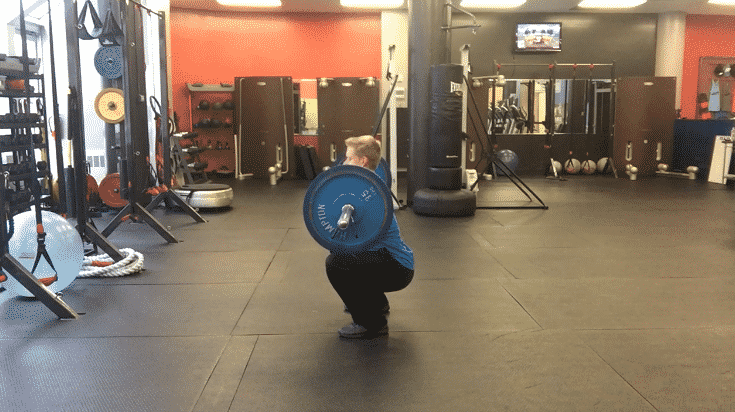
 selection for their clients. The