
olegdudko@123rf.comCategoriesAssessment coaching Exercise Technique Rehab/Prehab

The Post Where I Tell You It’s Okay to Move Your Spine

Back pain can be tricky. First off, anyone who’s ever dealt with it (pretty much everyone) knows it’s no fun. Second, there’s no overwhelming agreement as to what actually causes it. One person says weak glutes, another says tight hip flexors or hamstrings, and yet another may point to a bad hair day (NOTE: read this footnote, it’s a doozy —>).1

Third, if the stock photo I chose is any indication, back pain can also put a real damper on what can only be described as an Old Spice or Abercrombie & Fitch ad shoot.

In my career as a personal trainer and strength coach I’ve worked with hundreds of athletes and clients battling low back pain. It comes with a territory as a fitness professional. I’ve tried my best to arm myself with the best skill-sets possible (within my scope of practice) to help my clients work through their low back shenanigans. I can assess – not diagnose – and try to come up with the best game plan possible to address things.

And, to be honest, addressing one’s lower back issues can be mind-numbingly simple.

In short:

“Find what movements hurt or exacerbate symptoms, don’t do those movements, and then find movements that allow for a degree of success or pain free training.”

I’d be remiss not to mention Dr. Stuart McGill’s work here. Not only is he one of the world’s Godfathers of spine research, but he’s also one of the world’s best mustache havers.

He’s co-authored hundreds of studies and written several books on the topic of low-back pain – with Ultimate Back Fitness & Performance (now in it’s 6th Edition) and Low Back Disorders being his flagship pieces of work.

Speaking of Ultimate Back Fitness & Performance, look who makes a cameo appearance on pg. 289 in the latest edition.

HINT: It’s a bald strength coach whose name rhymes with Macaroni Flentilzore

For the Record: TG Life Bucket List

  1. Get to a point in my career where Dr. Stuart McGill not only knows who I am, but emails me out of the blue and asks permission to use a picture of me in his latest book update.
  2. Appear in a Star Wars movie.
  3. Become BFFs with Matt Damon
  4. My bedtime becomes 8 pm.

I’d have to say, however, that his most “user friendly” book is Back Mechanic. In it, he breaks down his entire method for “fixing” low back pain covering everything from spinal hygiene, assessment, corrective exercise, and strength training.
I’m not going to belabor anything, you can purchase the book and peel back the onion on his protocols (seriously, the assessment portion is gold).

I’ve noticed a trend in recent years, though. Dr. McGill has done so much for the industry and his work is so ingrained in our thoughts as fitness professionals that I feel the whole idea of “avoiding spinal flexion (sometimes at all costs)” has bitten us in the ass.

Yes, avoiding spinal flexion is a thing, especially if someone is symptomatic and flexion intolerant.2. It’s that point, though, “avoiding spinal flexion” that has gotten the best of us for the past decade or so.

We’ve done such an immaculate job at coaching people to know what “spinal neutral is” via prone planks, side planks, and birddogs, and then used strength training to engrain that motor pattern, that (some, not all) people transitioned into more extension-based back pain because they lost their ability to move their spine into (pain free) flexion.

Dr. Ryan DeBell discussed this phenomenon recently where he discussed his own back pain history. He started as flexion intolerant, trained himself into “spinal neutral,” (which is what you should do), started to avoid all flexion like an episode of Emily in Paris, and after awhile, extension-based movements & positions started to hurt…because he was locked into extension.


As a corollary, I see this quite often myself: someone comes in to see me and both flexion and extension based movements hurt. It’s so frustrating for the person and I can understand why.

My job, then, as the coach is to garner confidence and self-efficacy with my client/athlete and work with him/her on what I know tends to work….find movements that do not hurt and work from there.

Dr. McGill has his own version of the “Big 3,” or his go to exercises when first starting with a low-back person:

  • The Curl-Up (I.e., not a sit-up)
  • Side Bridge or Plank
  • Birddog

Even when we master those movements, which are often very challenging for people when performed right, I’ll stick with them for a couple of weeks and just up the ante with appropriate progressions.

Lets take the birddog for example.

Birddog w/ RNT


The band adds an additional kinesthetic component where increased stiffness or engagement occurs in the anterior core and glutes. Truthfully, it’s not uncommon for me to START with this variation so the person can feel what their limbs are doing in space.

Birddog – Off Bench


Doing the birddog off the bench takes away a component of stability (feet off the floor) and forces people to slow the eff down and learn to control the movement. If they don’t, they fall of the bench. And I laugh.

Your Spine, Move It!

Going back to the assessment for a quick second, it’s not uncommon for me to assess someone and to find that their spine doesn’t move. Whether it’s because of a faulty pattern or they were coached to avoid flexion at all costs (even when asymptomatic) it’s as if their spine is Han Solo frozen in carbonite.

One screen I like to use is a the toe touch drill. When someone bends over to touch their toes there should be a consistent curvature/roundness of the spine. Often, what I’ll see is more of a “V” pattern where they’ll bend over, but instead of seeing a nice curve I’ll see their lower back stay flat throughout the movement; as in zero movement.

This can be just as detrimental as anything else. It may or may not be a root cause of their low-back pain, but I know it’s a red flag I’d like to address.

Segmental Cat-Cow

Below is a drill I’ve been using more and more with my low-back clients. We’re all familiar with the Cat-Cow exercise, where you round and arch your spine moving through a full-ROM.

Cool, great. The human body is great a compensating, and unless you have a keen eye for detail it’s easy to assume that if someone can round and arch their back they’re good to go. But

But are they? Often, if you SLOW PEOPLE DOWN it’ll become abundantly clear that they may move well in certain areas of their spine (thoracic), but not in others (often lumbar).

Coaching them through the movement – point by point, segmentally – is a fantastic way to hammer this point home and to help nudge them to move their spine in a slow and controlled fashion.


Give this one a try with some of your clients. COACH THEM. This drill doesn’t require more than two passes (up and down) per set, for a total of 3-4 sets. Helping them understand that they are allowed to move their spine – assuming it’s pain free – is a sure fire way to set them up for long-term healthy spine success.

Final Note (Because, #douchebagswillbedouchebags)

To appease the hoity toity internet warriors, couch coaches, and fitness influencers who have never coached an actual person (let alone a ham sandwich) out there. All of this DOES NOT insinuate that I am not ALSO using regular ol’ strength and conditioning to address things. All of the drills showcased above are just entry-level ideas or starting points. 

I’m actually a massive fan of introducing unloaded rotational and/or spinal flexion/extension movements into the mix as well as loaded exercises such as Jefferson Curls to help build more resiliency within the spine and the musculature that supports it. In addition I’ll introduce things like tempo deadlift and squatting variations, various hip/low back dissociation exercises (I.e., other hinging alternatives), as well as a consortium of single leg exercises to help build overall strength.

As I always like to say…

You need to lift shit to fix shit.

It’s usually not a one or the other scenario. Both sides of the spectrum (motor control strategies and lifting heavy shit) need (and should) be considered.


Categoriespersonal training Program Design Uncategorized

How Much Weight Should I Use? (revisted)

There are few questions that illicit my inner Jaws theme music than the title of this blog post. Other nominations include

Hey, do you do CrossFit? – DA NUM

So I saw something on Instagram about this detox tea that supposedly makes you shit out your spleen, but whatever. I heard it’s totally healthy and worth it. Thoughts? – DAAAAAA NUM

Babe, can you empty the dishwasher? – DA NUM, DA NUM, DA NUM, DA NUM, DA NUM…

Admittedly, it comes across as a bit weird and hoity toity that I’d roll my eyes at such an obvious question I’d receive given what I do to pay my bills. I mean, would an accountant be so crass as to be annoyed at a client asking whether or not they deducted business expenses from their taxes? Would a family doctor not expect to be pelted with questions about cholesterol or how to manage diabetes on a daily basis?

Would Han Solo be irked about constantly bragging about completing the Kessel Run in less than twelve parsecs?

I think not!

It all comes with the territory and is part of the job.1

To that end, I try my best to be a reliable source of information for my clients and I try to keep things as simple as possible. We live in an era where OVER information is a thing and it’s not surprising to me that so many people are confused and seemingly paralyzed over something as inane and common sense as to whether or not an apple is viewed as a viable snack (and that eating it, despite (evil word) glyphosate!, you won’t cause you to grow a third nipple).

One question I receive on an almost weekly (if not daily) basis is can your pecs cut diamonds? how much weight should I be using on this exercise?

Again, it’s a very relevant question to ask given what I do for a living, and one that, unfortunately, takes a little time to answer. When working with people in person I have this handy protocol I like to call “coaching” where I’m able to give them instant feedback on a set-by-set basis.

I’ll tell them to increase/decrease/or maintain weight on any given exercise as I see fit.

Sometimes I give them a sense of autonomy and allow them to choose how much weight feels comfortable to them (and allows them to execute good form), and then we just make an effort to increase the load in subsequent sessions.

The idea is to give them a maximal training effect using the minimum effective dose without causing harm or pain. Challenge people, encourage progressive overload, but not to the point where they feel like they can’t feel the right side of their face during their workout.

Pretty self-explanatory stuff. Also, here’s a hint: if your client can’t feel their face, please call an ambulance.

Where things get tricky is when people are on their own and don’t have someone telling them what to do.

What then?

Here Are Some Options/Considerations/Whathaveyou

For Beginner Lifters

I like two options:

1. Pick Something

As I alluded to above, just have them (or you yourself) choose a weight that you KNOW can be done with good technique and feels “doable” to them. The research is pretty hefty on this front…

…beginners can use as low as 40% of their 1-rep max on any given exercise and still see strength gains.

In other words, they can look at a dumbbell and get stronger.

You DO NOT need to load them very aggressively at the start. The goal should be to acclimate them to what it feels like to be under load and to build familiarity with the exercise.


Progress from there.

2. Provide a Rep Window

Once the initial shock of lifting heavy things has passed and you’re gaining some competence then what I prefer to do is give a “rep-window” to adhere to. In simplest terms let’s say someone’s program says to perform three sets of bench press at 8-12 repetitions (the rep window).

The goal would be to stay with the same load until the upper rep limit is attained on every set. This could take anywhere from one session to several weeks. With the latter it may look something like this:

Week 1

  • – Set #1: 175×12
  • – Set #2: 175×10
  • – Set #3: 175×9

Week 2

  • – Set #1: 175×12
  • – Set #2: 175×10
  • – Set #3: 175×10

Week 3

  • – Set #1: 175×12
  • – Set #2: 175×12
  • – Set #3: 175×10

Week 4

  • – Set #1: 175×12
  • – Set #2: 175×12
  • – Set #3: 175×12

NOW the weight can be increased 5-10 lbs. and you start the process all over again.

ADDENDUM: While this approach works very well 95% of the time, one thing you have to consider is that some people will invariably undershoot themselves. You’ll give them a rep range to follow (8-12) and they will follow it (increasing load accordingly), but they’ll end up using a load that they can easily perform 20 reps with. Alas, it’s human nature to take the path of least resistance. In this case what I like to do is to toss in a pop-quiz of sorts and to test them to see if they’re pushing themselves enough. On their last set I’ll instruct them to do an AMRAP (As Many Sets As Possible) set. Ideally, if they’re locked in it should look something like 12-10-9-8. If they’re fudging it, it will look something like 10-10-10-17.

Cue death stare here.

For Intermediate Lifters

To set the tone, to me, an intermediate lifter is someone who has had at least 2+ years of (serious) strength under their belt. Meaning, they’ve made a concerted effort to consistently train with barbells, dumbbells, kettlebells, machines, not Orange Theory for a minimum of two years.

At this point we’re likely past the point of utilizing a rep window to direct loading and we need something that takes into account day to day and week to week fluctuations in energy levels, stress levels, and general fuckery.

As I have been known to say in the past: some days we show up to the gym feeling like Thanos with all the Infinity Stones in hand and we can push the envelop with our training. Other days, not so much.

The stronger one gets and the more stress they’re putting on their body, the more important it is to understand that the “juice” isn’t always going to be there and that sometimes it’s just a matter of getting some quality reps in rather than hitting a pre-prescribed load or rep range. To steal a saying from a long-time colleague of mine, and owner of Bonvec Strength (located in western Massachusetts), Tony Bonvechio:

You need to teach people how to load themselves rather than telling them.

One tool to accomplish this is using the RPE or Rate of Perceived Exertion (although I prefer to say Effort) system.

Popularized by renowned strength coach, Mike Tuchscherer, the RPE system is a rating system that describes how hard or how much effort you should be applying to a lift.

Lift heavy things

Generally speaking it looks like this:

RPE 10: Maximal, no reps left in the tank

RPE 9: Last rep is tough but still one rep left in the tank

RPE 8: Weight is too heavy to maintain fast bar speed but isn’t a struggle; 2–4 reps left

RPE 7: Weight moves quickly when maximal force is applied to the weight; “speed weight”

RPE 6: Light speed work; moves quickly with moderate force

RPE 5: Most warm-up weights

RPE 4: Recovery; usually 20 plus rep sets; not hard but intended to flush the muscle

An RPE below four isn’t important.

So for example I may write in a program something like this:

A. Work up to 1×5 @ RPE 8 on Deadlift

B. then accumulate 15 total reps at 90% of top set above (3×5 or 5×3)

In this case if someone ends up ramping up to 1×5 @ 275 on their deadlift (at an RPE 8), then that means they’ll follow that with 3×5 or 5×3 at 90% of 275 which is 245-250 lbs. In this scenario I know that all subsequent repetitions are likely going to be “fast,” clean, and pristine and give the lifter an opportunity to accumulate training volume that won’t destroy him or her in the long-run.

To quote Coach Tuscherer:

If the RPE system seems awkward at first, don’t worry. You’ll get used to it and be able to use it quickly. An easy way to gauge the RPE of a set is to ask yourself how many more reps you could’ve done with a particular weight. This tends to be tough for the training hotheads who always want to go heavy but also for the timid who are afraid to push themselves. You must be disciplined to use this method effectively!

Is this approach perfect and a panacea for everyone. No. But I do find it provides a sound base for trainees to work off of and teaches them to listen to their bodies.

  1. But like many people, I just haaaaaate repeating myself. I can thank the PTSD I got from working at Hollywood Video while in college and having to incessantly repeat myself on a Friday night to annoyed customers that Shrek 2 wasn’t available to rent. ↩︎
Categoriespersonal training

Vetting Your Personal Trainer

I became a personal trainer and coach back in 2002. Shows like Alias and 24 were all the rage, *NSYNC still had Justin Timberlake, and The Two Towers was rocking my world. So much so that I went to the theater to see it like four times.1

Admittedly, it seems like eons ago. I mean social media didn’t exist back then. Or Warby Parker for that matter!

Needless to say in the 20+ years I’ve been in “the biz,” I’ve seen my fair share of good trainers which make me proud to be in the industry, and bad trainers who make me sometimes want to light my face on fire.

I could sit here and type endlessly about the traits I feel any “good” trainer should encompass: a basic understanding of anatomy, movement, and program design would be a swell start. Do they look the part? As callous and nebulous as it may come across – what does looking the part even mean? – my friend Bryan Krahn hits the nail on the head:

“In the fitness industry, appearances matter. Now, that doesn’t mean six-pack abs or muscles the size of boulders need to be prerequisites for the job. But your trainer should be healthy with a physique that suggests some level of mastery in his chosen field. If they talk the talk, they should walk the walk.”

Do they dress professionally or as if they just stepped out of an MMA class? Are they punctual? Are they prepared and organized? Do they take the time to ask questions and perform some semblance of an initial assessment? Unfortunately I’ve witnessed a few trainers in my time do nothing more than demonstrate how to insert the pins on various Cybex machines as part of their “thorough assessment.”

Why not just make paper airplanes for an hour?

Are they friendly, personable, able to exhibit some empathy, and maybe most important of all, just generally a non-douchy person to be around? Because, lets be honest, no one wants to train with an asshole, much less pay for it.

All, I believe, in a slightly tongue-in-cheek way, are relevant questions and observations to note when deciding who to hire as your personal trainer. I find it weird how some people are more diligent with who changes the oil in their car more so than who’s in charge of telling them what to do with their own body.

Some Other Stuff to Consider

Finding the right personal trainer that fits your goals and needs can be just as much of a nuisance as car shopping. Granted few things are as annoying as car shopping – save for an uncontrollable eye twitch or yet another Taylor Swift song about breaking up with a dude (all of our fingers are crossed Travis) – and you (generally) don’t have to deal with the shady salesmen antics when seeking out a quality trainer.

However, this doesn’t mean you shouldn’t be on guard and go out of your way to be a more proactive consumer when hiring a personal trainer. Consider many people shell out upwards of $60-$90 per session (sometimes more depending on one’s location), it only makes sense to try to get the most for your personal training buck.

Two Questions to Ask a Trainer

Omitting the obvious questions such as “are you certified?(1)” or “do you have any references/testimonials to share?(2)” or “what’s your favorite hip hop album of all time?(3)” here are a handful of less common (albeit no less important) questions to ask a someone you’re considering in hiring.

(1) = Being certified is a “must have” when vetting a trainer. Gold standard certifications in the industry are NSCA, ACE, ISSA, NASM, and ACSM. Also, I believe any trainer who has gone through the Show Up Fitness course(s) is more than qualified as well.

(2) = Just having a few letters next to their name doesn’t mean much. Do they place a premium on continuing education? When’s the last time they attended a national conference? What’s the last book they read? Do they have a list of current clients you can contact about their own experience with this trainer? All are pertinent questions to ask, and questions any trainer should be able to answer without hesitation.

(3) = anything by Tribe Called Quest, Wu-Tang Clan, Gang Starr, or not anything past 1996 are acceptable answers here.

“Do You Workout Yourself?”

I understand it comes across as a bit uncouth or oxymoron(ish) to ask a trainer/coach if (s)he workouts. It’s analogous to asking Jason Bourne whether or not he knows where all the exit routes are when he enters a room, but it’s unsettling how often this happens.

Before co-founding my own facility in 2007 I worked in numerous commercial gyms beforehand, and it amazed me how many colleagues never worked out.

I’m not referring to looking the part (I.e., fit), which has already been covered above.

I’m referring to personal trainers who literally do not exercise themselves!

It’s a blunt question to ask, but if you’re going to spend good money hiring a trainer, do you really want someone to be in charge of your body who doesn’t practice what they preach?

“What’s Your Training Philosophy?

Likewise, it’s also smart to ask what a trainer’s general training philosophy is.

Are they someone who places an emphasis on strength training or are they more endurance based?

Do they include a thorough assessment – movement screens, going over injury and training history, etc – as part of their approach? If not, I’d say “bye, Felicia” and shop elsewhere.

More importantly, if they’re a competitive powerlifter, bodybuilder, figure competitor, or CrossFitter (to give a few examples), do they have the ability to separate their own training preferences to yours?

What good does it do you if you’re interested in improving your deadlift and squat numbers and your trainer has you performing a “bicep day” because it was his bicep day?

Or maybe you’re goal is to add some strength training to help you prepare for a half marathon. If so, why are you doing all these crazy MetCon workouts and kipping pull-ups?

The point is: your trainer should cater to YOUR training towards YOUR needs and goals. Not their own

Bonus: One Question a Trainer Should Never Ask You.

I can’t begin to tell you how many times I heard this question being asked when I worked in various commercial gyms.

A client would walk in, greet their trainer, and the trainer would then ask….

“So, what do you want to do today?”

Um, isn’t that what you’re paying THEM to figure out? That’s like me walking into my accountant’s office and him looking at me and saying, “so, you read up on all those new tax codes?”

This comes down to my comment above regarding organization and preparedness. Whomever you hire should have a game plan.

They should be writing programs not workouts!

This isn’t to say they shouldn’t ask for your feedback or insight on any given day – maybe you were up late the night prior with a sick kid or you had a long day at work and were thiiis close to ending your boss’s life – which may require tweaking that particular day’s session.

However, in the grand scheme of things, they should be prepared a head of time. With few exceptions they shouldn’t be “winging it.”

  1. And, as you can guess, I was a massive hit with the ladies. ↩︎

wirestock@123rf.comCategoriesUncategorized

Peaks and Valleys of Training

Oh, hello.

Remember me?

It’s Tony.

You know, the guy who used to joke about having pecs that could cut diamonds1 and who also wrote a ton of content on this site?

Well, as you can see 1) I’m still alive, and 2) the website has had a bit of a facelift since I’ve last posted anything. I’m still getting used to it myself. Looks pretty legit, right? RIGHT???

To update you on my life:

  1. I opened a brand spankin new 5500 sq. foot gym here in Boston with my wife, Dr. Lisa Lewis, called Core Collective.2
  2. Julian is now in the 2nd grade.
  3. The best movie I’ve seen so far this year is Sing, Sing.
  4. I’m still jacked.
  5. That’s pretty much it.

Although, if I am being honest, on that last point (the still being jacked part), I’ve been a little more “jacked up” than “jacked.”

I.e, the Cambridge Dictionary definition:

Having strong, well-developed muscles, especially as a result of working out

The fitness industry is likely one of the most fake and fickle industries out there. No where will you find more photoshopped images, self-aggrandizing, and exercises NO-ONE actually performs once the publish button has been pressed.

All of it in an effort to accrue maximum “likes,” comments, and/or potentially more clicks on that industrial strength diarrhea inducer detox tea affiliate link. More to the point, social media tends to be a facade of everyone’s best life. Decadent looking dinner plates on tables. Cat pics. Our best feats and accomplishments. Our best angles under good lighting.

I’m not judging or bemoaning anything. I do it too…to a degree.

Which segues into the inspiration behind my first piece of writing since the last solar eclipse.

Training (and by extension…Progress) Comes in Peaks and Valleys

Lift heavy things

This past March, while walking from my car to the gym, I slipped on a patch of black ice and did what can only be described as the “World’s Fastest and Most Un-Graceful Sissy Squat.”Both of my knees slammed into the pavement and I felt a slight pop in my right.

Needless to say it didn’t feel great. Thankfully, when all was said and done, I didn’t suffer a catastrophic injury, having ruled out any ligament tears or obvious structural damage. However, in the month’s since it’s been an on-going nuisance working around things in order to train and workout the way I am accustomed to.

While I have still been consistent with my training…

#findyourtrainablemenu
#trainablemenu

…to say that I haven’t been frustrated would be an understatement. I’d say that from March of this past year to roughly two weeks ago, it’s been the worst stretch of training in my adult life. My desire to train was less than exemplary, there’s no question I was going through the motions, and not surprisingly all of my lifts took a bit of a hit.

And that’s kinda what I want to highlight.

I want to keep it real and remind people that there are always going to be inevitable speed bumps, road blocks, and general windows of clusterfuckery that will affect your training.

Progress is never going to be linear.

Photo by Nathan Dumlao on Unsplash

There will always be peaks AND valleys

Now, what causes those valleys to occur can be anyone’s guess:

  1. Injury
  2. Work and family obligations
  3. Vacation
  4. Season four of Slow Horses started.
  5. Explosive diarrhea
  6. It’s a Tuesday

The important thing to keep in mind is that, 1) despite what social media will lead you to believe, even those coaches/trainers/influencers you look up to the most have setbacks in their training (trust me) and 2) setbacks are normal and will undoubtedly happen.

There are a handful of strategies I’d encourage you to try when this happens.

1. Again, I can’t reiterate this enough…it’s normal

It won’t last forever, it will pass

    2. Reframe and Prioritize a New Lift or Body Part

    If your knees are cranky and you can’t hit your lower body as aggressively as you’d like, it might be an opportune time to prioritize your bench or overhead press or, I don’t know, your kipping pull-ups.

    Except, there’s never an opportune time to prioritize kipping pull-ups because they’re absurd.

    Photo by Alora Griffiths on Unsplash

    3. Find Your Trainable Menu

    Pigging back on the above, focus on what you CAN do rather than what you CAN’T do. I have never had a client who was working around an injury show up for a session and not feel better by the end of it because they did something.

    4. Choose One Lift, Do That, and Leave

    I actually like this approach a lot when I am feeling beat up (or traveling). Psychologically speaking there’s something to it. I know that if my intention is to train one lift hard and that’s all I plan to do for that particular training session it helps set me up for success. As an example it may look something like this:

    A. Barbell Romanian Deadlift – Work up to 1×5 @ RPE 8

    B. Accumulate 15 total reps at 90% of top set above.

    C. Wu-Tang is for the children.

    Photo by Erik Mclean on Unsplash

    Of course there are a plethora of other scenarios and options to choose from, but those are the ones that come up at the top of my head. I hope they help.

    1. But I wasn’t really joking ↩︎
    2. It’s pretty legit. Half of the space is dedicated toward appointment only personal training. The other half has dedicated “wellness” offices for physical therapy (Ripple Boston), chiropractic services (Stephen Laski), pelvic floor therapy (Dr. Mariam Taha), nutritional services (Cristine Seitz), and mental health therapy. Of note, 2% of the space is sequestered off for freestyle rap battles, Jason Bourne fight scene reenactments, and the occasional hug. Just because. ↩︎

    Categoriespodcast

    Gym Ownership, Evolving Your Coaching, and the Value of Consistent Training

    I had the opportunity to catch up with my good friend and long-time colleague, Mike Robertson, on his Physical Preparation Podcast earlier this week.

    [email protected]

    Just Two Dudes Talking

    He and I go back to the early 2000’s. You know, when smart phones didn’t exist, cold plunges and eye rolley alpha-male behavior was (less) of a thing, and the show Alias was my life (due to an insatiable crush on Jennifer Garner).

    I think this was my third time on his podcast which means I’m approaching Ryan Gosling 5-timer club on Saturday Night Live territory. We approached this as more of a “two dudes just catching up” conversation as opposed to doing something more traditional like going into the weeds on deadlifting mechanics or why improved scapular upward rotation helps with everything from shoulder ouchies to curing gluten intolerance.3

    In this show, Mike and I talk about the power of consistent training, how my philosophy has changed over the years, and why after years of reluctance, I finally decided to become a gym owner.

    We had a few technical difficulties throughout the show, so apologies because the audio is a bit suspect. He did his best to clean it up and I hope you still enjoy the show!

    Check it out HERE.

    CategoriesProgram Design

    Subtle Tricks to Increase Motivation With Personal Training Clients

    Being married to a psychologist has it’s disadvantages:

    • I have to talk about my feelings.
    • All
    • of
    • the
    • time

    There are some perks, however. Most of what “drains” me as a coach isn’t so much the x’s and o’s of writing programs or the ability to figure our what may be the root cause of someone’s shoulder pain. Those are pretty much second nature at this point in my career.

    No, what drains me the most is figuring out people.

    Specifically, what motivates one person to workout (and stick with it) as opposed to what makes the next person do the same?

    It’s a quagmire to say the least, and often takes far too much mental gymnastics for my liking.

    Copyright: seventyfour74 / 123RF Stock Photo

    Autonomy = The “It” Factor to Getting Results

    This is where my wife, Dr. Lisa Lewis, comes in.

    Before we met, anytime I worked with someone who seemingly lacked discipline or “chutzpah” to get after it in the gym…I’d often resort to some tough love.

    I’d assume (s)he didn’t want it enough and my default was to question their work ethic. I wouldn’t be a dick or anything, but I also didn’t go out of my way to demonstrate much compassion or empathy.

    When my wife and I started dating I’d often bring up work with her and I’d attempt to commiserate on how this client wouldn’t work hard during their session or how that client just seemed to not care about getting results or how it just really, really sucked that I had to wear pants.

    I’d be all like “what the hell!?!” and then throw a chair through a window or something, and then she’d be all like…

    via GIPHY

    and then say something like:

    …“you know, maybe you just need to do a better job at learning about what actually motivates people?”

    And this was when I was first introduced to the Self-Determination Theory.

    There’s no need to go too far into the weeds. All you need to know about SDT is that it was popularized by psychologists Edward Deci & Richard Ryan and that it revolves around…

    “a macro theory of human motivation and personality that concerns people’s inherent growth tendencies and innate psychological needs. It is concerned with the motivation behind choices people make without external influence and interference. SDT focuses on the degree to which an individual’s behavior is self-motivated and self-determined.”

    The three main components are:

    • Competence
    • Autonomy
    • Relatedness

    For the sake of brevity I’m going to hone in on autonomy or the power of choice.

    In short, people don’t like to be told what to do.

    In the fitness industry this comes across as bit absurd given that that’s exactly why most people hire us in the first place.

    However, one of the biggest changes I’ve made in my coaching philosophy – in no small part due to my wife’s nudging through the years – is working on autonomy and offering clients more choice in their programming.

    It’s not only made a profound difference in helping clients stay motivated to workout, but it’s also helped to expedite their results and progress.

    Here’s a few suggestions and examples.

    1. Allowing Them to Choose the Main Lift of the Day

    I live in a bit of a strength & conditioning bubble. Most people who start to work with me already know what they’re getting themselves into.

    They’re going to lift heavy things and they’re going to listen to some EDM while doing it.

    via GIPHY

    One “trick” I’ll use – especially with beginners – is to let them choose their main lift of the day. If performing some squats will fill their training love tank that day, that’s what we’ll do.

    Likewise, if they want to deadlift, we’ll deadlift.

    The only exercise I’ll say a hard no to is kipping pull-ups.

    I’d rather them jump into a shark’s mouth.

    But can you see the inherent advantage this approach provides?  If you have a client who’s having a hard time with motivation or just can’t seem to get “jazzed-up” for a particular session, maybe all you need to do is give them a bit more choice.

    Assuming, of course, you’re taking into consideration their goals, injury history, and ability level.

    2. Choosing the Variation of a Particular Exercise

    It’s squat day.

    [Cue the cacophony of moans]

    Admittedly, not many people – outside of the truly masochistic – draw a sense of butterfly kisses and rainbows from squat day.

    That being said, another trick to employ is to allow clients to choose what variation of a particular exercise they’re going to perform that day.

    Squat

    • Box Squat
    • Back Squat
    • Front Squat
    • Goblet Squat
    • Landmine Squat
    • 2-KB Front Squat

    There are many options; and we haven’t even discussed things like ladder sets, drop sets, rest/pause sets, or even tweaks that can be made with stance, tempo, or even utilizing speciality bars (SSB, Duffalo, Cambered, etc).

    Giving clients some say on the variation they’re going to perform that day is a game changer in terms of creating more  “buy in” in that session.

    3. Free Time

    Another tactic I use often to help increase motivation is to give clients a 5-10 minute “window” at the end of their session to do whatever they want.

    Most of my male clients choose to do some additional arms or “Gun Show” work.

    Most of my female clients choose to do some additional glute or “badonkadonk” work.

    Caucasian woman making workout at the gym

    And, not coincidentally, most of the wizards I work with prefer to use their time pecifying their pecs.

    Science.

    #dumbledoreisswole

    All told, this approach serves as a nice compromise. So long as the client completes what’s on their program – and does what I want them to do – I am more than happy to give him or her some free time and choose their fate at the end of the session.

    If they leave with a bicep or glute pump, and are happy, I am down with that.

    There’s obviously a lot more that can said here, but I’ll defer to the expert on motivation, my wife!, in this case. Her popular course, Psych Skills for Fitness Pros is now offering open enrollment at $60 off the regular price.

    There’s a degree of bias here, so take this however you wish…

    …but THIS is the shit most fitness pros need to be educating themselves on. Yes, it’s important to know anatomy, assessment, and the intricacies of effective program design. But what really separates the good from the great is understanding people and how to navigate the human psyche.

    Click HERE, choose your preferred payment method, and enter the coupon code PSYCH24 to receive your discount.

    /

    Categoriespersonal training Program Design Strength Training

    The Illusion of Infinite Progression: 3 Strategies to Evolve Without Increasing Weight

    I have an excellent guest post for you today. I was recently invited back onto the More Train, Less Pain Podcast hosted by my good friends Dr. Michelle Boland and Dr. Tim Richardt.

    This season on their show they’re focusing on training around injury. This is one of my wheel houses (alongside deadlifts, how to look jacked even while wearing sweatpants, and Ted Lasso), as I am always preaching the benefits of finding each client’s or athlete’s TRAINABLE MENU.

    My episode – #13 – dropped today (links below), but in concert with that Tim was kind enough to write a little “companion piece” that ties in nicely with the overall theme of the show.

    I hope you check both of them out.

    Copyright: rawpixel

    3 Strategies to Evolve Without Increasing Weight

    If you’re reading this blog, chances are you’re a big fan of lifting heavy things. On this we can agree, and be friends. 

    via GIPHY

    Think back to the first time you consistently trained a squat- Linkin Park blaring, a thin haze of aerosolized pre-workout and chalk filling the air – and being able to add 5-10 pounds, like clockwork, week after week after week.

    It’s the honeymoon phase of strength training- nothing hurts and there’s seemingly no impediment to riding this sweet, sweet train of linear progression to, inevitably, being able to sit down and stand up with the weight of a Honda Fit on your back.

    But, like all marriages, reality eventually has to settle in.

    Over the years, aches, injuries, and movement limitations accumulate and the simple strategy of adding more pounds to the bar is suddenly not so viable.

    What, then, is an iron warrior to do?

    sports man thinking, feeling doubtful and confused, wondering which decision to make

    I host a podcast called More Train, Less Pain (on which the venerable Tony Gentilcore has guested twice), along with another contributor to Tony’s blog- Michelle Boland- where we dive deep on strategies to keep people training hard in the gym despite injuries and mobility restrictions.

    The focus of our current season is on maintaining a strength training practice in the setting of persistent pain, something of personal obsession of mine as I’ve struggled with persistent hip pain due to congenital structural hip defects for virtually my entire adult life. Over the past dozen or so episodes, we’ve talked with some of the brightest minds in the industry (Mike Boyle, Bill Hartman, some schlub we’ll call “Tony G”) about this very problem, and one theme keeps re-emerging over and over. We can’t keep progressing load forever. Infinite progression, in the weight room or any other endeavor, is a myth.

    NOTE From TG: You can listen to my most recent chat with Tim HERE – titled “Easy Training, Stoplights, and Making Bigger Cups.”

    In order to stay in the strength training game and continue to build muscle, power, and movement quality, we need to find ways to evolve our exercise selection and programming strategies so that we can continue to train without creating undesirable tissue damage or reducing access to comfortable range of motion.

    Below are three strategies to do just that, lifted directly from this season’s podcast guests and thoroughly vetted by my own personal and professional experience.

    1. Timed Sets

    In the most straightforward manner of progressing lifts, we add load to the bar every week, keeping the set/rep/rest scheme the same, essentially the missionary of the strength-training world.

    An old bible on a wooden table

    Not THAT missionary. Head out of the gutter

    As we stated – this works…until it doesn’t. What if, instead of increasing load, we simply increase time under tension? In fact, what if we throw away the conventional “rep” dosing structure and just endeavor to dose an exercise by time, increasing the time (under tension) over the course of a 6 week training block.

    In practice, that progression might look something like this.

    Exercise                                        Week 1         Week 2         Week 3        Week 4

    Foam Roller Wall Squat                   3×1′                4×1′               4×90″             4×2′

    In this way, we can accumulate absurdly high amounts of workload (and stimulus) with reduced axial loading. If you struggle with SI joint pain every time you get under a bar loaded with over your bodyweight, give a single set of a 2’ timed Roller Wall Squat a try.

    With only a fraction of the loading required for a conventionally-dosed barbell back squat, you’ll still feel every bit as fatigued, and continue to stay engaged with the training process as you build time under tension across a program.

    This strategy works particularly well for exercises where increasing weight isn’t convenient due to the nature of the position or loading- think anything with a zercher or goblet hold OR a position that requires a more involved set up.

    2. EMOM Supersets

    People in our industry love talking s&^t about CrossFit, but they’ve popularized several things that have impacted the general fitness landscape for the better – gymnastics skills, concurrent training, snorting lines of grass fed whey protein isolate before a set of 30 hang snatches, and EMOM sets.

    In an EMOM set, you’ll keep the load of an exercise the same but perform a certain number of reps every minute on the minute (EMOM).

    In my own training, I’ve found it useful to combine two exercises into an EMOM superset – meaning that every minute we’ll do a predetermined number of reps for each exercise, rest for the remainder of that minute, and repeat. In practice, a 6 week progression might look like this:

    Exercise                                       Rest                      Week 1   Week 2    Week 3     Week 4   

    A1. Trap Bar DL                         0′                                   4×3            5×3              6×3              7×3

    A2. Alt. 1-Arm DB Bench         Remainder of 60″      4×8            5×8              6×8              7×8

    Trap Bar DL EMOM

    1-Arm DB Bench Press EMOM

    The cool thing about EMOM sets, especially for athletes making the switch from conventional, load-obsessed strength training, is that they possess an entirely novel strategy for dramatically ramping up total load in a program without increasing axial load for any one particular set.

    Mathematically, we can contrast a session of EMOM deadlifts with a session of conventionally-progressed deadlifts, which would look something like this:

    Exercise            Week 1               Week 2            Week 3            Week 4            Week 4  Workload

    TBDL                     6×3 @ 225           8×3 @ 225        10×3 @ 225       12×3 @ 225          8,100 lbs

    TBDL                     6×3 @ 255           6×3 @ 275         6×3 @ 295         6×3 @ 305            5,490 lbs

    Over time, this may represent a more sustainable long term strategy for continuing to progress workload when absolute loading on any given repetition can no longer be increased. Additionally, plugging a few EMOM supersets into your training each week can serve as a mild conditioning stimulus for those who struggle to fit in aerobic work.

    3. Feel-Based Training

    The previous two strategies have emphasized unconventional strategies for increasing the overall workload of a training session, but our final strategy is a different beast altogether.

    We love to think about increasing an exercise’s output via weight on the bar or overall pounds lifted throughout working sets. But what if we got “stronger” simply by executing an exercise more efficiently, potentially using a larger range of motion, while making no changes to dosing or loading throughout a cycle?

    Depending on a client’s goals and injury history, somewhere between 20%-50% of exercises I program will be progressed by “feel” alone. This means they’re not allowed to do anything “more” over their 4 week cycle. Not more load, not more reps, not faster reps, not even more cowbell.

    via GIPHY

    We’re deliberately freezing these variables to clear cognitive bandwidth for getting as close as possible to *flawless* execution of the drill.

    In something like a FFESS, for example, I may stick to 4 sets of 8 reps per leg throughout the entire cycle, loaded with a #25 KB in a goblet hold, but endeavor to improve other aspects of performance. Can a client maintain foot contacts on both the front and rear foot? Does their pelvis stay fairly level in the frontal plane? Do they control the degree of anterior and posterior pelvic tilt at the top and bottom of the range of motion, respectively?

    Can they get the back knee further down towards the ground? Are they able to push UP and BACK to take advantage of the retropropulsive, joint-opening qualities of this drill?

    In some ways, this is the most boring option for “progression,” but if you can get it into your and your client’s respective heads that we can freeze dosing and simply work on movement integrity and fidelity, a myriad of other training options open.

    And options, more than anything else, help folks train consistently for years to come.

    If you liked the content in this article, I’d recommend checking out More Train, Less Pain; Engineering the Adaptable Athlete- S3E13 with Tony drops today.

    Available on both Spotify and Apple Podcasts.

    About the Author

    Tim Richardt is a Colorado-based Doctor of Physical Therapy and Strength and Conditioning Coach. He works with runners, climbers, CrossFitters, and tactical/mountain athletes to better help them manage long standing injuries and reach higher levels of physical performance. He also mentors young clinicians and coaches to help them develop their own unique treatment/training model. You can find out more about him at TimRichardt.com or through his IG HERE.

    CategoriesUncategorized

    CORE Collective is Happening: So Much Room For Activities!

    After two failed attempts since 2019 – one due to a pandemic, and the other to what I’ll simply chalk up to as a bunch of shit-fuckery – CORE Collective is finally going to happen.

    What Is CORE Collective?

    Well, just so we’re clear: My first choice for this project was to call it “Tony’s Techno Palace of Deadlifts & Dreams,” but to no one’s surprise, that idea was quickly de-flamed when I realized that there was zero chance the Town of Brookline (where I live) would approve that for the name of a gym.

    As most who read this blog know, my training studio is called CORE. I’ve been training people out of the space since 2015 after I left Cressey Sports Performance. It’s a space that serves its purpose…

    …appointment only semi-private training where people get after it and do their best to increase their general levels of badassery.

    In addition, I also sublet the space to other coaches in the Boston area. In this sense, the space is still generating revenue when I am not there using it myself, and, more importantly, it allows the opportunity for other fitness professionals to build and grow their own brand & respective businesses with limited risk.

    In reality, their only responsibility (I.e., overhead) is to pay their monthly rent for usage of the space. And to also KNEEL BEFORE ZOD every time I walk into the room.

    via GIPHY

    It really isn’t too much to ask.

    For the past few years I have had an itch to expand my business. For starters, and admittedly, selfishly…to scale things and to (hopefully) increase my ability to generate more revenue as I ween away from coaching. Secondly, I have always felt there was a large gap in this industry between the commercial gym trainer and gym owner.

    Commercial trainers sometimes (not always) feel trapped in their situation, stuck playing the corporate game with limited (if any) leeway to build autonomy and increasing their earning potential without having to put in more, and more, and more hours.

    Gym ownership seemingly makes sense and the obvious “next step,” but many lack the means to make that happen.

    CORE Collective will be designed to bridge that gap.

    For Real This Time, Now I’ll Tell You About It

    CORE Collective is a work environment for independently operating coaches and healthcare practitioners – physical therapy, massage, nutrition, psycho therapy, etc – who share a belief in holistic, synergistic care of people.

    (And maybe also have an affinity for sick 90’s hip-hop beats).

    via GIPHY

    We work to improve health, wellness, performance, and life for our clients.

    And we operate under the core values of:

    ✅Autonomy
    ✅Competency, and
    ✅Connection.

    CORE Collective is a working environment in which we hope health & fitness coaches and practitioners can do their best work, and enjoy the benefits of working independently while also having the advantage of nearby and accessible colleagues & complimentary practices.

    The new 5500 sq foot space, which is slated to open in March/April 2024 in the heart of Brookline Village with easy access to Boston, will be a combination of a strength & conditioning facility and healthcare offices.

    The S&C facility will be managed by myself and the healthcare offices by my wife, Dr. Lisa Lewis.

    Coaches and practitioners interested in becoming a part of the collective can “apply” to become a collaborator and to start the journey to grow their own brand & business. Collaborators are independent entities (LLC, INC, etc) who apply to sublet space at the Collective, who align with our mission, values, and culture.

    A “team” spirit is encouraged and supported. Collaborators will have the opportunity to work together on client cases, and to learn from one another.4

    If you’re interested in learning more or to apply please shoot me an email via the contact form on this site.

    Categoriescoaching

    How to Curate A Winning Gym Culture

    What separates good gyms or trainers from the mediocre ones?

    Some would make the case it’s a certain style of training, access to state-of-the-art equipment and amenities, the results  their clients/athletes are able to achieve, or even their knowledge on topics like anatomy, assessment, program design, or, I don’t know, long division.

    Don’t get me wrong: All of the above can help with separating yourself from the masses, but what really drives client loyalty (as well as woos new ones) isn’t the fancy equipment or the fact you’ve read Mel Siff’s Supertraining 47 times and can cite every page.5

    No, what gives you the competitive edge is the culture you create.

    Copyright: vadymvdrobot

    How To Create a Winning Culture (<– Not An Exhaustive List, But You Should Continue Reading Anyways)

    1. It Starts With You, Sherlock

    Nothing wraps this message in a nice, neat, eloquent bow than something I read from Alwyn Cosgrove not long ago:

    “A team that is tanking brings in a new coach and they totally turn things around.

    A company like Apple, removes Steve Jobs, starts to take a nosedive, then brings back Steve Jobs as the leader and the company starts crushing it again.

    Or alternatively, an assistant coach takes over a program when the head coach leaves, and even though that assistant is running the same system, that team never reaches the level of where they were before.

    Why does this happen?

    It all starts at the top.

    It all starts with you.

    It’s more than just the systems that were in place, it was the culture (or lack thereof) that was created.”

    I think it’s safe to say everyone, at some point or another, has experienced the dichotomy between a good leader and a godawful one. It might be hard to put a finger on the exact characteristics that divide the two, but it stands to reason you know it when you see it.

    Back in 1997 I earned a scholarship to play baseball at Mercyhurst University in Erie, PA. I loved the the coach who recruited me to transfer there. During my recruiting visit he came across as someone who was a straight-shooter and someone who demanded (and received) the respect from his players.

    I spent an entire weekend watching practices and hanging out on campus with guys from the team and there wasn’t one instance where they talked smacked behind the coach’s back.

    They described him as someone who was strict, albeit fair, and as someone who stayed consistent with his expectations of everyone. He wasn’t someone who said one thing one day and did a complete 180 the next.

    He exemplified leadership.

    The guys enjoyed playing there and spoke highly of the program as a whole. And, as it happened, at the time, the team was coming off a successful 40-6 season and a Top 10 ranking in the Division II baseball polls.

    Without going into too many details, I arrived in the Fall of 1997 and within a few months the coach who recruited me to come to Mercyhurst left to take over another program.

    via GIPHY

    I was bummed and more than a bit agitated. But I was confident I had still made the right decision (Humblebrag: I turned down a full-ride at a Division I school to go there) and that the team would still be competitive moving forward.

    I was wrong.

    The coach who was subsequently brought in was the antithesis of leadership. A ham sandwich would have been a better leader.

    He was nothing but a blowhard and an egregious asshat.

    By the end of his first (and only) season at Mercyhurst he had burned a lot of bridges with the players and administration at the school, not least of which because it was discovered he had lied about his previous playing and coaching career.

    Keep in mind: This was the pre-internet days so it was the Wild West of making shit up. I mean, I once struck out Ken Griffey Jr three times in one game and also made out with Rosario Dawson once.6

    Look it up.7

    Anyways, as far as culture was concerned…the proof was in the numbers:

    1997 Team: 40-6

    1998 Team: 26-18.

    Now, 1998 wasn’t a complete horror show of a season from a Win-Loss perspective (most teams would love to finish 8 games above .500)…but it was clear the vibe and culture of the program was tainted.

    And, honestly, it was the first time I had personally witnessed how poor leadership bred a toxic environment.

    Now, as a trainer or coach, think about how this parallels with gym environments you’ve been in? I’ve worked in places that gave zero thought or value in building great trainers, who gave two shits in providing any continuing education, and reneged on cultivating a winning culture, and it showed:

    • High turnover.
    • More concern over whether trainers hit quotas on packages sold rather or even how to hold a genuine conversation with potential clients.
    • General clusterfuckery.

    Taking it a step further (and taking the corporateness out of the equation), what does it say about you as a fitness professional if you constantly show up late, you forget appointments, you aren’t prepared, and/or you show up dressed like a homeless pirate?

    Leadership always and concretely starts at the top.

    And, whether you work in a commercial gym or you’re your own boss, leadership and the culture you curate starts with you.

    2. Stop Being a Cantankerous Curmudgeon

    One of my favorite comedies of all-time is Grumpy Old Men.

    In a nutshell the movie is based around two friends, John (Jack Lemmon) and Max (Walter Matthau), and their lifelong rivalry.

    via GIPHY

    It’s filled with “old guy” cliches, humor, and amazing Burgess Meredith (of Rocky fame) quotes.

    The movie’s theme often reminds me of the fitness industry today and how it’s rife with the same antics and toxic hostility.

    We expect a lot from our athletes and clients. We want them to show up and give us their undivided attention and full effort. Moreover, in many ways, we aim for them to be more responsible and to take accountability for their actions…

    …to be leaders in their own right.

    Yet, we (the so-called integrity police) will hop on Twitter (er, excuse me “X”) the second Dieselchest2277 has the audacity to disagree with us on anything from squat technique to achilles tendinopathy protocols to best keto recipes that taste like sawdust.

    It’s kinda hard to develop a civil culture, one that’s respectful of other’s backgrounds and experiences (and opinions), if you have the temperament of a twelve year old. Or, more to the point, a cantankerous old man.

    Grow up.

    Recognize that not everyone has to agree with you and that maybe, GASP, you may be wrong or out-dated in your line of thinking.

    This epitomizes good leaders.

    3. Be Human. Not Superhuman

    Lastly, I’m a firm believer that people don’t respond well when we demand perfection from them.

    It doesn’t bode well for culture and camaraderie when you’re an insufferable douchehole and expect all your athletes and clients to be Captain America 100% of the time.

    • It’s okay if they’re unable to nail that hip hinge on their first try.
    • It’s not the end of the world if they miss a lift. (but it also shouldn’t be happening on a consistent basis)
    • Eating carbs isn’t a punishable offense.

    Part of building a winning culture, especially a winning gym culture, is encouraging PROGRESS not perfection.

    What’s more, I think relatedness is an underrated component of building a winning culture. Part of the reason why I think some of my clients like training with me is because I’m just as excited to talk about deadlifts and scapular upward rotation as I am There Will Be Blood quotes.

    Client: “So, after this set of incline presses what’s next?”

    Me: “I…DRINK…YOUR…MILKSHAKE!”

    Client: “Huh?”

    Me: “I DRINK IT UP!”

    via GIPHY

    Talk about movies, gossip about the latest season of The Bachelorette, go crazy and listen to boybands radio.

    Show your human side. Be authentic to who YOU are. Demonstrate you’re vulnerable and that sometimes you’re wrong, aren’t perfect, and don’t know all the answers. Your athletes and clients will love you for it.

    That’s the key to a winning culture.

    Come Listen to Me Talk in Person About This Stuff

    I’m heading to Europe this fall to put on two separate in-person workshops:

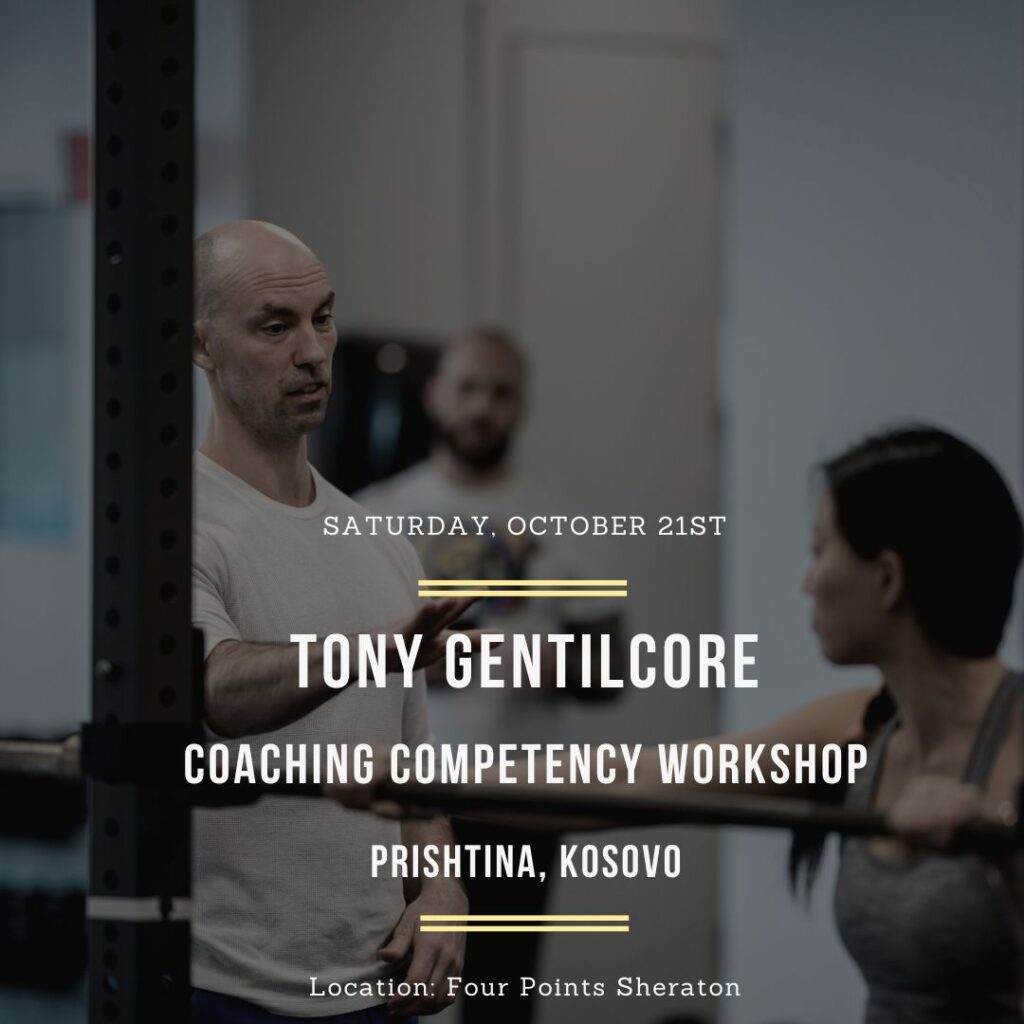
    1. Coaching Competency Workshop – Prishtina, Kosovo: Saturday, October 21st

    This will be my first visit to Kosovo and I couldn’t be more excited. Topics covered in this event range from how I assess clients and go about writing (strength) programing for gen pop clients to how to work around common injuries and trouble-shooting common exercises like squats and deadlifts (of course).

    For more info and to register please email my host Dr. Rita Parashumti at: [email protected].

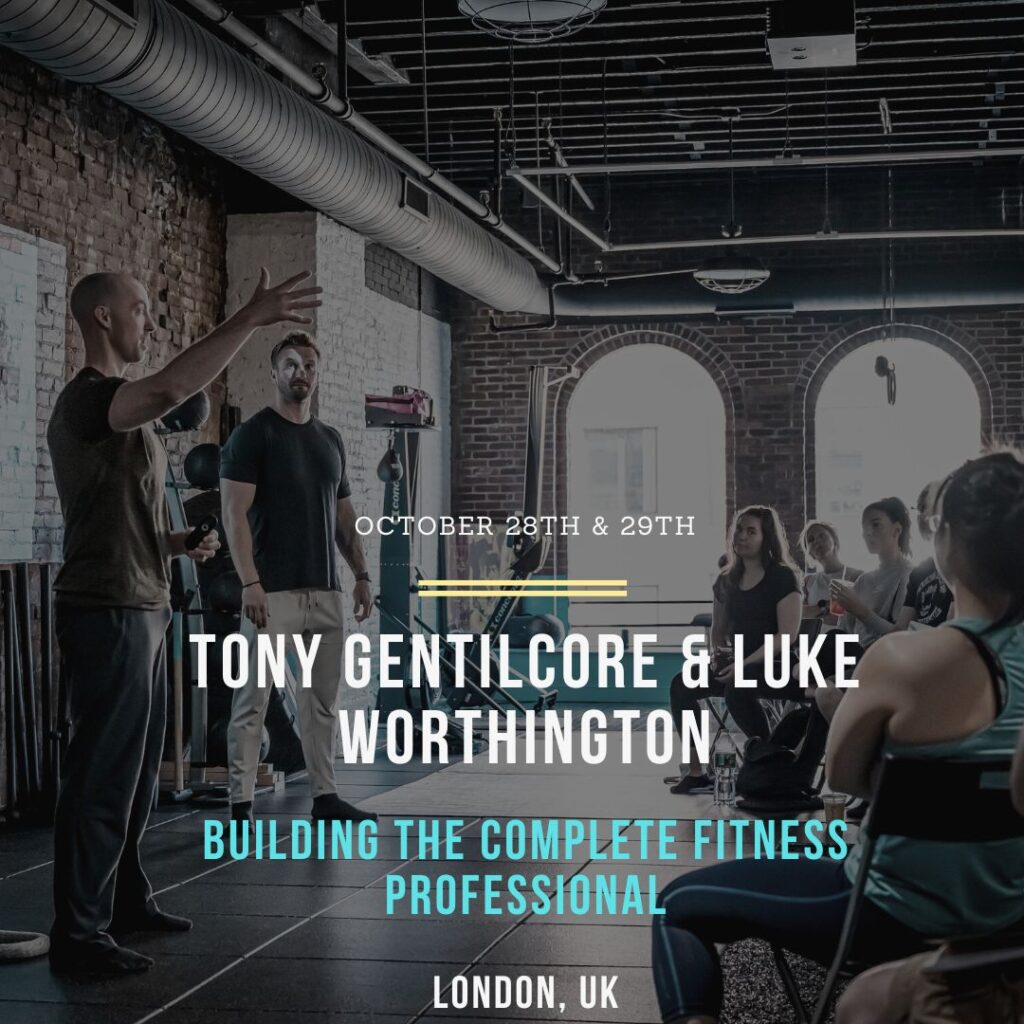
    2. Building the Complete Fitness Pro – London, UK: Saturday & Sunday, October 28th & 29th

    Full details (including itinerary) can be checked out HERE.

    (NOTE: Very limited early bird spots are available for this event, so if you’re even remotely interested pounce NOW)

    Categoriespodcast

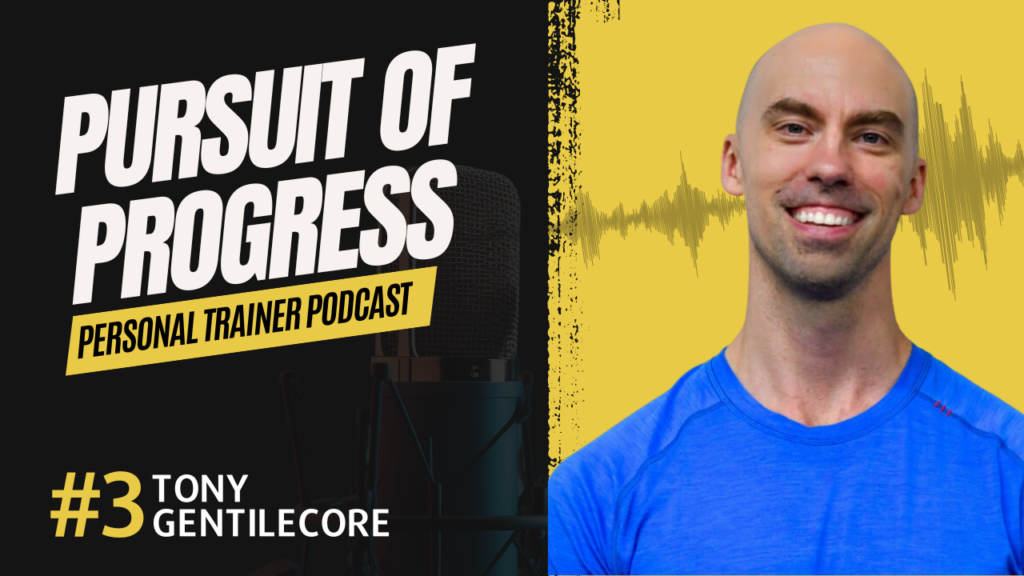
    Coaching is the Answer: Appearance on the Pursuit of Progress Podcast

    For those of you who celebrate it, I hope you have a happy 4th this weekend. Not that it compares to a delicious bbq or fireworks display, but I to help get everyone in the mood I wanted to share my latest media appearance.

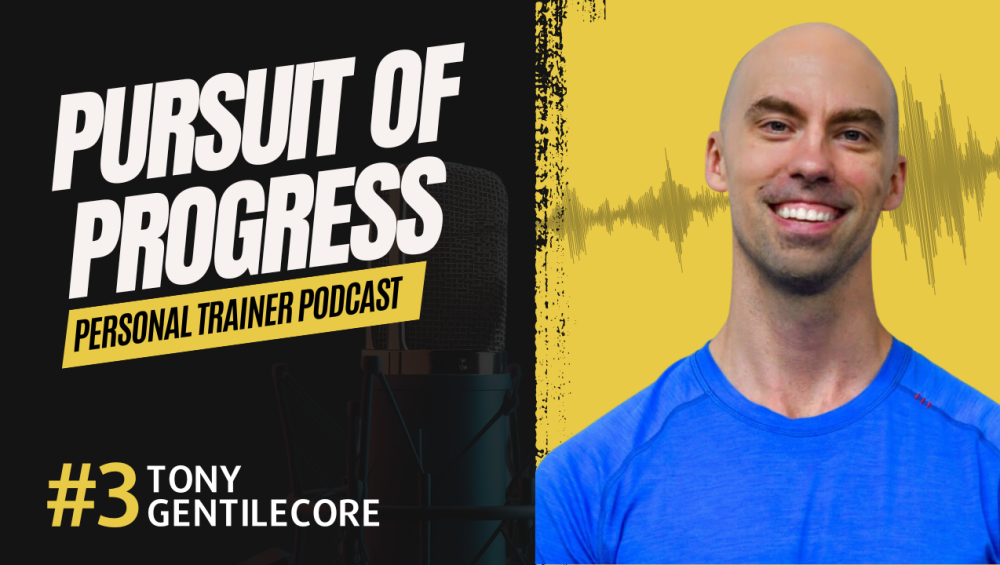
    This time on the Pursuit of Progress Podcast hosted by Joe Drake

    Coaching is the Answer

    In this episode Joe and I discuss the simple strategies personal trainers can use to attract more clients and what it takes to really become a successful coach in the fitness industry.

    HINT: Exposing more skin isn’t the answer…;o)

    You can listen in HERE