I’d like to preface this by saying I’m not a fan of the term “core training.” Some coaches like to play the uppity card and say such and such exercise “trains your core,” but in my view, everything, to some capacity, trains or hits the core.
When you deadlift you train your core.
When you perform a set of push-ups you train your core.
When you Sparta kick someone in the kidney for talking during a movie you train your core.
Your core is namely made up of everything that’s not your appendages (arms, legs) and it’s responsible, mostly, for transferring force from your lower extremity to your upper extremity (and vice versa), and also for helping you look hella good in a bathing suit.
Another way to think about things is that your core is this interconnected “web” of muscles and connective tissue that’s designed to resist force or prevent “unwanted” motion.
There’s a bit more to it than that, but all in all…….there you go.
There are a million and one different ways to train your core. Personally, I am not someone who says “well, if you deadlift and squat that’s all the core training you need.”
I think that’s a very narrow-minded and reductionistic way of viewing things. Most people are very good compensators and I’ve seen some very strong individuals struggle mightily when asked to perform a deadbug
Conversely, I do feel we should include “core-specific” exercises into our training arsenal; but exercises that take all of the above into account.
Give these a try.
Hollow Position Landmines
Who Did I Steal It From: Strength coach and my ice-cream eating BFF, Ben Bruno.
What Does It Do: I LOVE hollow position holds to help people learn and appreciate what it REALLY means to get (and maintain) full-body tension.1
Adding in the landmine adds a stability and anti-rotatory component that kicks things up a notch.
Key Coaching Cues: Watch THIS video if you’re unfamiliar on how to perform a basic hollow hold.
Also, and this should go without saying, if you’re unable to perform a hollow body hold, master that before attempting this exercise.
Set up the landmine so that you’re holding the barbell just above sternum level and assume the hollow body position. From there rotate the barbell side to side trying to limit movement in your torso and hips as much as possible; a little is okay (and will likely be the case for most people).
This is a self-limiting exercise in that you should only use whatever ROM you have available and that you can control. As you become more accustomed to the exercise and the novelty wears off, you should be able to access more range of motion.
I like to perform anywhere from 5-10 repetitions/side.
Foam Roller Rollouts
Who Did I Steal This From: My bald brother in arms, Dr. John Rusin.
What Does It Do: Much like other rollout variations this is a superb exercise that trains the anterior core musculature, albeit, specifically, trains anti-extension.
As an added bonus, we could also make a case this is a great exercise to hit the Serratus Anterior. So, anyone who needs to work on their scapular upward rotation….you’re welcome.
Key Coaching Cues: Assume a strict plank position with forearms on top of a foam roller:
Abs and glutes engaged.
I like to start people with their hips a liiiiitle higher (so as they fatigue they end up in a “neutral” spine position).
Begin with a slight retraction in the shoulder blades and then protract/abduct away from the foam roller. From there “push” the foam roller forward/backward in a manner that allows you to maintain proper spinal position (there shouldn’t be any excessive over-arching or rounding of the back).
Be sure to MAINTAIN scapular protraction throughout the duration of the set.
You can perform this exercise for time (start at 10 seconds and work up to 30. I see no reason to go above that number) or for repetitions (10-20).
Ten days till Christmas. Like a bonehead I haven’t started any shopping yet. And by “like a bonehead” what I really mean is “like 97% of the population that has a Y chromosome.”
Apologies for the lame intro this week, but I got things to do/need to go help make Jeff Bezos richer.
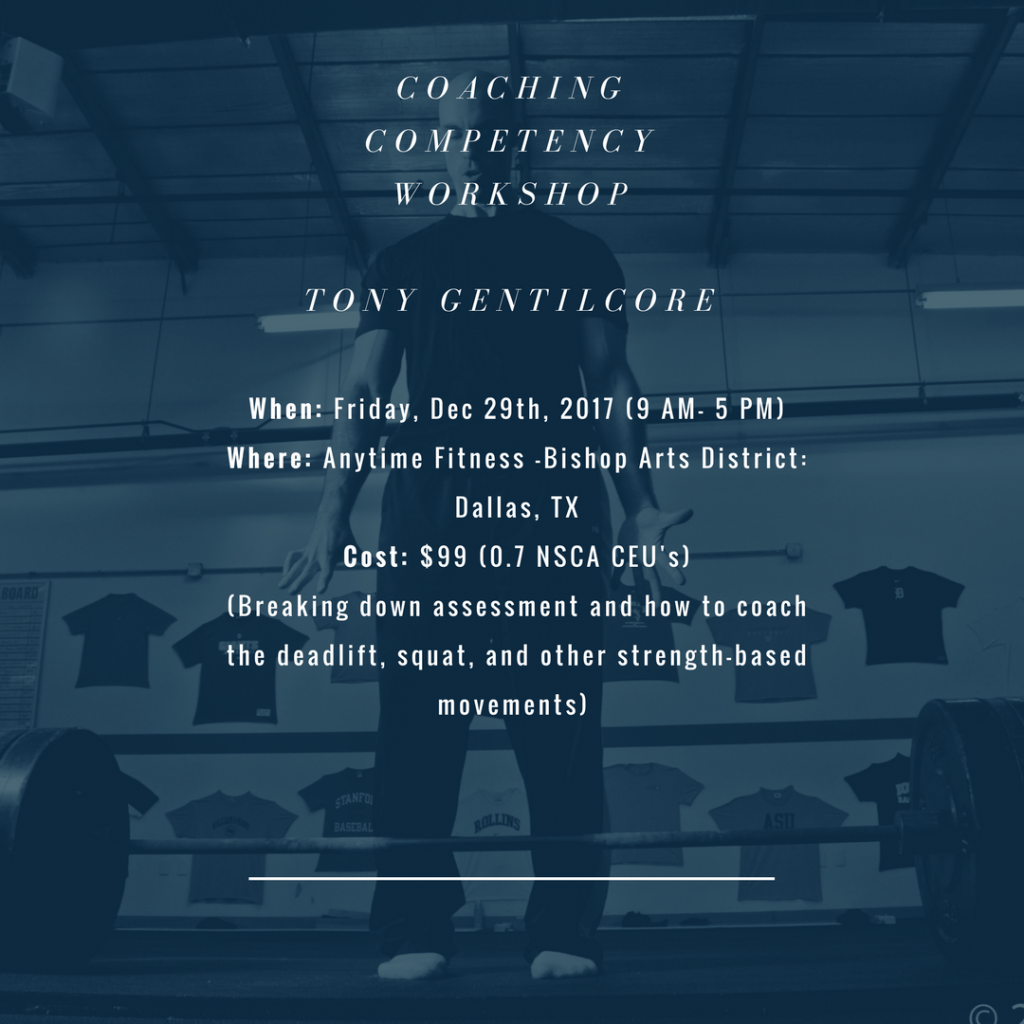
I’ll be in Dallas, TX later this month to put on my Coaching Competency Workshop.
I’ll break down assessment in addition to troubleshooting common strength-based exercises such as deadlifts, squats, shoulder-friendly pressing, to name a few.
This is ideal for any personal trainer, coach, or regular ol’ Joe or Jane looking to learn more on my coaching process.
Details are located on the flyer above, and you can purchase HERE.
2) Pedestals Make For Superior Stocking Stuffers
Speaking of ideas for gift shopping, give Pedestal Footwear a look. I’ve been a fan for years and think they’re THE most comfortable socks ever.
Plus, the added benefit is that they’re well-suited (and were actually designed) for meatheads who like to lift heavy things.
I make ZERO commission off pointing you in their direction. I just feel they’re a great company with a great product.
This was an excellent article. And given a trove of people will likely be heading to the gym at the start of 2018 to kickstart their fitness goals, I’d mark this one as a MUST read.
If you lift things up and down chances are your knee(s), elbow(s), achilles, etc, at some point or another, will get an ouchie.
Here’s your crash course on how to remedy the situation.
Social Media Shenanigans
Twitter
One of the more underrated concepts to getting stronger is the practice of sub-maximal training. Technique, quality of reps, and intent to be fast is vital. Plus something to be said about ending a session and knowing you “could” of done more.
My name is Tony Gentilcore and I am over 40 years old.
41 to be exact.
Old enough to remember when He-Man ruled Saturday morning cartoons, Back to the Future was released in theaters, and when shows like Knight Rider and Air Wolf were network tv staples.3
Too, I’m also the same age now that, in some demented version of paying it forward, I feel I’m obligated to tell every 25 year old I pass at the squat the following words of wisdom I used to receive ad nauseam when I was their age….
“You wait till you’re my age, kid. You won’t be training like that.”
Needless to say, I think that statement is peppered with a degree of malarkey 4
I know when I used to hear it my eyes would roll so hard to the back of my head I’d look like Bran Stark/the Three-Eyed Crow.
“Pfffffft, whatever grandpa,” I’d think to myself. “I’m still going to be getting after it well past the age of 40. I’m not going to use age as an excuse to take it easy.”
Well, now that I am “of age”…I can say two things with confidence:
I’ve never uttered the “wait till your my age” line to anyone, ever.
There is a bit of truth to it. Training, for most guys, most of time, will require a degree of tinkering once the big FOUR-O hits.
Given all the 80’s-90’s remakes in Hollywood of late, when the hell is Air Wolf going to get some love?
You’re 40, Not Dead
My friend and colleague, Bryan Krahn, sums it up nicely:
“Few things are as divorced from reality as your typical “over 40” fitness article.
It shouldn’t come as a surprise, as their respective authors are typically 25 year-olds with social media profiles filled with self-serving selfies yet very few actual mid-life clients.
What really irks me though is the whole “one size fits all” approach.
Certainly there are a few universal truths that apply to most every 40-something fit person (or wanna-be fit person).
Age requires more attention be paid to cardiovascular health, lipids, and joint mobility, all while keeping both day-to-day and overall recovery in check.”
While there are exceptions to the rule, in my experience, most articles or training programs geared to the 40+ lifter can be summarized as follows:
Knee pain? No squatting, lunging, running, walking, or breathing for 4 to 317 weeks.
Low back pain? No deadlifting whatsoever. And obviously…creatine, BCAA’s, Jack3D, and a Starbucks Grande mixed in apple cider vinegar.
Shoulder pain? Surgery…there’s no other way.
In a nutshell, you’re relegated to a program filled with nothing but cable pull-throughs, hip flexor stretches, and shoulder external rotation drills.
Make no mistake: the various nuances that come into play when discussing the over 40 lifter – career, kids, prostate exams – do require our consideration and attention when designing a competent, well-thought out training program.
However, lets not toss in the towel and start the countdown to Hospice Care just yet.
Frequency of Workouts May Trump Length
In my twenties and early 30’s I used to pride myself on the length of my workouts.
2-2.5 hour training sessions were not outside the norm.
Then again, back then, my life revolved around reading Vonnegut novels and watching Alias re-runs. I had nothing but time to workout.
And, as you can probably surmise, I was a major hit with the ladies.
Today the idea of workouts running that long make me cringe. In fact whenever I hear about anyone bragging about a workout that rivals the running time of Titanic my inner “Sweet Brown” can’t help but take over:
“Ain’t nobody got time for that!“
Once family, work, and never-ending extra-curricular activities for the kiddos start to enter the equation, having 60-90 minutes available to squeeze in a training session is a rare commodity.
Vegas has better odds of you spotting a unicorn
To that end, I’ve found it behooves many trainees (with a life) to make the switch to shorter, more frequent training sessions – 30-45 minutes – throughout the week in lieu of marathon sessions.
While not always the case, it tends to be more palatable to tell someone to squeeze in a “quickie” – maybe a “meathead” session where they get an arm pump – than it is to force-feed a workout that takes 90 minutes to complete.
What’s more, and from what has been my experience, those quickie 30 or so minute sessions tend to be money workouts.
Meaning, people will work hard. And, I’d rather someone work hard for 30 minutes, 4-5 times per week than to half-ass 2-3 90 minute sessions.
Flirt With Performance, Don’t Have a Relationship With It
Forgive the potty mouth, but this is probably the one thing that will mind-fuck a lot of people.
I’ve always championed the notion that having a performance-based goal is a game changer for most trainees, as it provides purpose and intent with training.
It prevents incessant meandering around the weight-room, which is always a progress killer.
That being said, I came across this Tweet from strength coach Jim Laird the other day that really hammers home a key point:
If longevity is your number one goal. You only want to flirt with performance, not have a relationship with it.
You should train for performance. Just not year round.
Case in point, I finally hit a 600 lb deadlift just before my 41st Birthday last month.
NOTE: This may or not be the 512th time I’ve posted this video.
While this had been a long-time goal of mine I’d be remiss not to note that it came with its parade of setbacks.
I’d go very long stretches hitting my deadlift pretty hard. And, inevitably, my back would be like “Um, fuck you, Tony.”
It wasn’t until I took a step back and realized it would help to intermittently pump the brakes, not to mention take breaks, specifically, from training for this one goal that I really started to make headway.
(In no small part this revolutionary breakthrough came as a result of hiring another coach to write my programs.)5
You Don’t Want To Hear It, But Mobility Matters
Nobody wants to do their mobility work.
I’d soon rather wash my face with broken glass than do it myself.
But I do it anyways.
The key, I found, is to attack it in one of two ways:
1. Understand that the quickest way to guarantee your clients (probably) won’t do it is to include a warm-up at the start of a training session that A) includes a list of 20 exercises and B) takes far too long to complete.
2. Instead, either include more “hybrid” based mobility drills that combine several exercises into one which will help expedite the process:
Pigeon to Half-Kneeling
Seated 90/90 Flow Drill
Yoga Push-Up Complex
OR
Include more “fillers” – low grade mobility/activation drills – INTO the program itself.
As an example:
A1. Trap Bar Deadlift 3×5
A2. Rocked Back Adductor Stretch w/ Extension-Rotation 3×6/side
The “filler” approach is great because it still sprinkles in exercises that target problematic areas – glute activation, T-spine mobility, hip flexors that need a crowbar to release – yet it doesn’t feel too “correctivey.”
It’s the perfect way to trick people into doing the stuff they need to be doing, but otherwise wouldn’t.
Now if only there were a program that was designed for the 40+ lifter in mind…..
Strong MOFo Program
Bryan Krahn and I are looking for highly committed, experiences lifters to beta-test our Strong MOFo program for four months.
The Deets
The program will be hosted on my CORE Online app, which in an online service via my website. This offers a few benefits:
This will allow you to follow the program on your phone (but relax, you’ll also have the option to print it out too, you geezer).
You’ll have immediate access to video tutorials and explanations of all exercises.
You’ll also have access to a community forum to converse with other beta testers as well as to ask questions to Bryan and myself.
Selfishly, it’s more convenient for us to go this route rather than deal with a plethora of Excel spreadsheets and emails. This way, there’s a “home-base” for everything.
Cost: We’re offering this beta program at a price of $249. This will cover four months of programming (and is less than what Bryan and I charge for one month of distance coaching).
Start Date: The start date is Monday, December 18th.
Requirements
You have to be a minimum of 35 years old.
You have to have experience lifting weights. If you’re unable to deadlift, then, um, this may not be the program for you.
You have to have access to a well-equipped commercial or home gym. The last thing we want to be doing is tweaking someone’s program who only has access to dumbbells up to 40 lbs, a treadmill, and a rubber ducky.
You have to be relatively injury-free. Aches and pains are one thing. A frozen shoulder or six-months post back surgery is another
Man, I’ve got a treat for everyone today. Charles Staley, mentor, strength and conditioning connoisseur, and titan in this industry, reached out recently and asked if he could write a little sumthin, sumthin for the site.
Is water wet?
Is grass green?
Is Aragorn, also known as Strider, and son of Arathorn II, the High King of Gondor and Arnor?
It’s probably just natural to assume that in a teacher/student relationship, the transfer of knowledge only travels in a single direction. Over the years however, I’ve found that this assumption is far from the truth. In fact, there’s even a well-known saying that you may have heard:
“When one teaches, two learn.”
In fact, if I’m being honest, the primary reason I became a coach in the first place was to learn more about the subjects I intended to coach. I’ve often remarked that you might be confident in your knowledge of a topic, but only when you attempt to teach this topic successfully do you discover the gaps in your understanding.
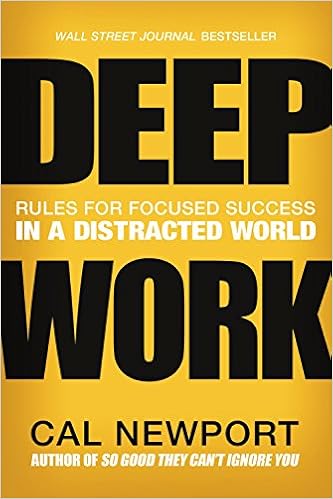
In fact, Cal Newport, the best selling author of the highly acclaimed book Deep Work, passionately advocates a studying technique that he claims will dramatically reduce the time it takes to learn a subject — it’s called Active Recall.
This method is disarmingly simple, yet it requires a very high level of discipline.
Very simply, you first read the materials you’re attempting to learn, and then (this is where the rubber hits the road) you stand up in front of an imaginary classroom and teach what you just learned (or more often than not, what you thought you just learned).
Very quickly, you’ll be painfully aware of the gaps in your understanding. So, back to the books, then deliver another lecture to your imaginary students, rinse and repeat until you’ve got it down cold.
In a very real sense, the methods and philosophy I currently impart to my clients is almost entirely built upon the backs of my previous clients: these are the people who, through their successes and failures, not to mention their often challenging questions, are largely responsible for what I know today.
So with those thoughts as an introductory backdrop, here the top 3 lessons I’ve learned from my clients over the years:
Lesson # One: The Clients Who Communicate With Me The Most, End Up Doing The Best
It’s very common for my clients to apologize when they think they’re asking too many questions, but what they probably don’t appreciate is that I’m actually relieved when clients ask lots of questions, because that demonstrates that they are highly invested in what they’re learning.
Translation: long-term, happy client.
Translation #2: Happy coach.
By contrast, the worst thing I can hear from a new client is along the lines of “Please just tell me what to do.” Words to this effect send a strong signal that my client need a high level of external reinforcement, which leads me to…
Lesson # Two: I’m Not Everyone’s Cup Of Tea (And That’s OK With Me)
Now don’t miss my point — there’s nothing “wrong” with just wanting to be told what to do. If I were to hire someone to help me with something I found particularly challenging, I’d probably do the same thing.
Of course, whenever you need significant external support from a teacher or coach, your chances of long-term success are reduced. Thankfully however, there are some very good coaches who are remarkably successful with clients like this — I’m just not one of them.
And that’s OK — a cardinal rule of marketing is to avoid trying to be all things to all people.
Identify and constantly reinforce your specific strengths, and then restrict your marketing efforts to that narrow slice of the population who can benefit most from what those strengths happen to be. My primary market is highly-motivated (although not necessarily advanced) “over-40” men and women (And, for reasons that continue to elude me, for some reason, nearly all of my local clients are women, and nearly all my online clients are men. Seriously, I have no idea why).
It’s very common for new coaches and trainers to feel they don’t know enough to train other people, and while that may be true, I’ve been studying my craft for over 30 years, and in complete honesty, I have never had more questions than I have today.
Sure, I’m very good at a small handful of things, but I’m also completely incompetent in a much, much larger number of subjects and topics. The key to managing your competencies and shortcomings is to 1) know the difference between the two, and 2) stay within your wheelhouse when working with your clients. When issues arise that you’re not qualified to deal with, refer them out to other pros who are.
Both client and colleague will respect you for this.
Lesson # Three: It’s OK To Be Weird
In case you haven’t noticed, the fitness marketplace is a very crowded place. If you’re just like everyone else, well, you kinda get lost in the sauce, don’t you?
Lots of coaches have insecurities about the various idiosyncrasies and/or perceived inadequacies that they may have, but to them I say, embrace and even promote whatever makes you stand out.
In my own case, I don’t know if I’m weird exactly, but compared to most trainers, I probably stand out in a couple of different ways:
I’m older than most trainers (58 to be exact). Yes, the average age of the American population is slowly increasing, but fitness coaching is still a young person’s game by and large.
I’m not especially well-built. Don’t get me wrong — my physique probably puts me in the top 1% of guys my age. But, compared to some of the guys I respect and look up to, I’m nothing special at all.
The previous two points actually work in my favor as it turns out, and here’s why: Although I’m of retirement age and “skinny” (6’2” and currently 190 pounds), I’m actually pretty strong. And (I almost forgot to include this point) I’m not all busted up like a lot of my older lifting buddies. In recent months, I’ve deadlifted 465 for 3 reps, done 8 pull-ups with 25 pounds strapped to my waist, and I’ve benched a pair of 90-pound dumbbells for 10 reps. And, I have no pain at all, ever. Nothing hurts. Now what’s interesting about all this is that, as much as I’d love to be a conspicuously muscular 240 pounds, I’ve found that many of my current male clients hired me specifically because they know they can’t be, or don’t want to be big muscular dudes. But, they DO want to be strong and athletic. And those guys my age who are bigger and stronger than me? I’m not their cup of tea obviously, and that’s perfectly understandable.
Finally, although I assure you that I’m not terribly smart, I do seem to attract an intelligent breed of client. This is no doubt due to all the writing I’ve done over the years, or it may also be because I probably resemble a university professor more than a bodybuilder. Or (and I’d like to think this is closest to the truth), through my writing and coaching, it’s clear that I’ve thought a LOT about what I teach. And it’s also abundantly clear that I walk my talk. I’ve been living and breathing this stuff for over 3 decades now, and I’d like to think it comes across to prospective clients.
I don’t really give a shit what other coaches do or don’t do. Now just to clarify, there are MANY coaches who I deeply respect and who I seek to learn from whenever I get the chance. What I mean here is that I am confident in my approach and what teach, and it doesn’t sway me one bit that my methods are different than many of my colleagues. I don’t have clients do direct arm, calf, or ab work when they train with me — most trainers do. I don’t use “functional training,” whatever that is. I don’t use stabilization exercises. I don’t like forced reps, and I don’t text with my buddies or perv on nearby women as I’ve seen many, many trainers do. Again, I’m not everyone’s cup of tea.
Bottom line: You might view some of your unique characteristics as shortcomings, when in truth they may actually be strengths. Be yourself and embrace whatever makes you “weird,” because that’s what will help you stand out to all the folks who actually appreciate your weirdness.
Coaching Is A Privilege That I’m Deeply Grateful For
One sad aspect of my professional community that I sometimes notice is an unsettling tendency for some trainers to view their less-fit clients as somehow inferior, simply because they might be carrying a few extra pounds, or because they don’t know how to lift.
As if fitness is the only thing that matters in life.
News flash: You can (and many people do) live a perfectly long, healthy, and satisfying life without EVER exercising or counting carbs — crazy right? Imagine — some people actually focus their energy on their careers, or their family, or other hobbies. The idea of a perfectly balanced life sounds good in theory, but it’s terribly difficult to pull off in reality.
So to my trainer friends, please remember that your clients have lots of skills and talents (and challenges for that matter) that you probably don’t even know about. And to my client friends, thank you for all you teach us during our time together in the gym. We can’t do what we do without you.
About the Author
Charles Staley is known as an iconoclast and a leading influencer in the fitness arena. His reputation and self-effacing style have lead to appearances on NBC’s The TODAY Show and The CBS Early Show, along with numerous radio and podcast appearances. He has authored more than 1000 articles for leading fitness publications and websites, and has lectured to eager audiences around the World.
Charles is not only a thinker, but also a doer: At age 58, he competes in the sport of raw powerlifting, and is a 3-time World Champion (220 and 198-pound weight classes). His popular online coaching program (Staley Strategies) allows people to train under his expert guidance, regardless of where they live.
I’ll be in Dallas, TX later this month to put on my Coaching Competency Workshop.
I’ll break down assessment in addition to troubleshooting common strength-based exercises such as deadlifts, squats, shoulder-friendly pressing, to name a few.
This is ideal for any personal trainer, coach, or regular ol’ Joe or Jane looking to learn more on my coaching process.
Details are located on the flyer above, and you can purchase HERE.
Dean Somerset and Dr. Mike Israetel released a killer resource this week. In a nutshell they filmed a workshop they did together earlier this year. It’s 11 hours and it’ll melt your face.
Dean takes half the time and breaks down assessment, and then Mike takes over and spends the other half talking about how to get people swole.
Smart-n-swole.
It’s on sale right now for $50 off the regular price (however, it only lasts until 12/10).
I’d make the argument that this compilation article that was featured on T-Nation earlier this week – featuring myself, Chris Shugart, TC Luoma, Paul Carter, Tom Morrison, Mark Dugdale, and Akash Vaghela – may be the best and most important one to date.
My man Lee Boyce, a friend and colleague, ruptured both his knee tendons playing in a pick-up game of basketball earlier this year.
Ruptured….both….knee….tendons.
I.e., He couldn’t fucking walk.
Not only did he basically keep the entire ordeal to himself – he purposely didn’t tell many people about it7 – but he made mental notes along the way to write this amazing piece.
His resiliency astounds me.
Social Media Shenanigans
Twitter
Two fool-proof and commonsense pairings in a strength program: Deadlift paired with a push-up OR front squat paired with a pull-up variation (or any row for that matter).
Today’s post is a teachable moment. At least I hope it will be. It covers an uncomfortable albeit important topic and something that, up until this past weekend, I thought I’d never get called out for.
And that is….
The sexualization of women in the fitness industry.
Last weekend I presented at the NSCA Mid-Atlantic Regional Conference just outside of Philadelphia, PA.
It was a splendid event.
A record breaking event in fact, with well over 500+ attendees, making it the most highly attended NSCA event in the organization’s history outside of a national conference.
I was asked to present on both days of the conference, choosing to do the following 50 minute presentations:
The Deadlift (breaking down my preferred hip hinge progressions and general coaching concepts as it relates to the deadlift, and how to go about choosing the right variations for people).
The Shoulder: From Assessment to Badass (the main theme here was how to improve overhead mobility).8
I arrived back in Boston early Sunday morning feeling great about the weekend and pretty good about my performance overall.
While I could nitpick a few things I would have said or done differently, all in all, I felt I did a good job and was able get my message across. And the feedback I received from people at the conference was phenomenal.
Later that same day, however, while sitting at home, I received the following email from a female attendee, Amy:
“Hi Tony –
I just returned from the NSCA conference in PA. this weekend, where I was fortunate to hear you speak on both the deadlift and the super-exciting shoulder. I had the opportunity to meet your fabulous wife a couple of years ago when she presented the ‘I Am Not Afraid to Lift’ workshop with Artemis Scantalides in Severna Park, MD.
I follow you on the interwebs and really admire both the quality of the information you provide, as well as the generosity you show toward the coaches and trainers who are trying to get to where you are. I have to tell you, though, that I was thoroughly disappointed during your deadlift presentation when you chose to use a gratuitous and offensive ass-shot of a woman doing a cable pull-through.
None of your other slides featured women and you made some lame joke about Googling ‘cable pull through’ and that was the first hit that came up. It’s 2017.
I (and I know several other women in your audience shared my opinion) am fairly tired of attending strength seminars and workshops and being repeatedly confronted by presentations that (a) don’t attempt to equally represent women as examples/study participants/research subjects (b) objectify/sexualize women and (c) actually demean women in a public forum of fitness professionals.
I guess I was mostly surprised because I think you generally do a great job of supporting the strong women in your life. That slide and your presentation of it came across as exceedingly tone-deaf and I hope you will consider replacing it for future presentations on the deadlift. You have great information to share and you’re a talented and charismatic speaker. It’s a shame that you chose to offend a significant percentage of your audience in order to get a laugh.”
Needless to say, the second after I finished reading that I got a pit in my stomach.
I…felt…horrible.
It’s been four days since I received that email and I’ve been thinking about it a lot. I’ve emailed back and forth with the woman who sent the email (to apologize, to thank her for the constructive feedback, and to say this topic deserves discussion), I’ve discussed it with a few of my female clients, and I’ve broken it down at length with my wife, a psychologist.
I’ve purposely spent a few days digesting, un-packaging, and reflecting upon what Amy had to say in her email before I put fingers to keyboard.
So, I guess the best place to start is with the image itself:
In the middle of my presentation, as I was breaking down hip-hinge progressions, this is the image I used as an example of the cable pull-through.
Even though my first inclination was to be defensive – that’s Dani Shugart (the wife of my editor at T-Nation.com, Chris, and amazing writer herself), it was used in an article I wrote for the site titled “Pull-Throughs For Elite Strength,” the picture was taken at an angle, she’s wearing appropriate gym attire, and she’s demonstrating correct hip-hinge technique, that’s why I used it – Amy’s comments and feelings were/are valid.
Here’s why.
I don’t feel it was about the picture per se. It’s fairly neutral in nature.9
However, what wasn’t neutral was my momentary lack of tact and professionalism.
By chuckling when the slide first appeared on screen, making light of the situation with my “Google image” commentary, and making a joke out of it…I can see how it came across as objectifying and demeaning.
In our subsequent email exchange I clarified with Amy that I DID use another image of a female in my presentation – I included a slide of a woman attempting a heavy sumo deadlift – however, the mere fact I chose to use that picture for that particular slide should come under scrutiny.
More to the point, the bigger theme at play here, I think, is that my commentary colored Amy’s experience. Those 20-30 seconds influenced what she got out of my presentation and what she remembered.
It wasn’t good, and that sucks.
It’s my goal to train women. To empower them. To show them that strength has its roots everywhere (and that the weight room is a wonderful place to harvest it).
In the end this was a teachable moment for me.
The last thing I want to do is sexualize women. It’s not lost on me that what happened in that room, in those 30 seconds, was, in some ways, a microcosm of what’s happening in today’s society.11
I don’t want any woman I work with or speak in front of to feel embarrassed, uncomfortable, objectified, or ashamed.
Ever.
It’s our responsibility, especially as men, to lean in, listen, and be open to change.
In fact, if I broke down my client roster I’d say it’s about a 50/49/1% split (women/men/Centaur12). I live in a little strength & conditioning bubble where the bulk of women I work with don’t blink an eye at the idea of adding muscle to their frame.
In fact, most want that to happen.
Today’s guest post by my boy, Dean Somerset, explains why most women can (and should) want the same thing.
NOTE: Dean and Dr. Mike Israetel released an amazing resource this week, The L2 Fitness Summit Vol 1, which delves deep into assessment and how to get your clients results (specifically, how to get them diesel).
It’s really, really good (and it’s on sale for this week only)
Women and Hypertrophy: Why Should Jill Get Jacked?
The vast majority of my clients are female, somewhere around 70% at any given time. The reason these women are training with me varies a lot, either they’re working against some medical disorder, an injury, or other significant problem, or they’re training for some performance goal like running a faster marathon or deadlifting twice their bodyweight.
In most of their goals, the thought of getting bigger muscles often ranks somewhere between stubbing their toe and waxing their eye lashes off.
In some instances it’s a pragmatic element.
If a client has invested a significant amount of money into their wardrobe and suddenly their lats are just too gunny, they’re going to have to spend a lot of money on alterations or worse, go shopping for new clothes.
It might come down to spousal support too.
It’s all too common for a female client to say their husband told them they don’t want them to turn into a man, a statement so ridiculous to hear that it’s hard to bite my tongue.
Guys, 3 lbs of muscle on a female will not make them manlier than you. Maybe you should put on a couple pounds of muscle and not worry so much about your girlfriend or wife out lifting you.
In any case, training to gain some muscle (read, some. It’s very hard for anyone to gain a lot, male or female) is very much a good thing for most if not all goals you could have in the gym.
Muscle looks better at almost any body fat percentage than not having it.
Muscle helps performance goals, like doing a chin up or deadlifting a dump truck
Muscle improves cardio performance, making you a faster runner, cyclist, or whatever the rage is these days
Muscle demands calories, which means you can justify eating a little more without affecting your body composition
Muscle can improve bone density, hormonal function, and sleep quality.
Muscle helps yoga pants or your favorite pair of “butt jeans” fit better.
Science.
Now, will training for hypertrophy make you bulkier?
Possibly, but there’s a lot of factors that have to go into that.
First, it’s a long process to see notable increases in muscle, and for the purpose of this article we’ll assume a 5% increase in body mass as notable.
So for someone who weighs around 130 lbs, a 5% increase would be around 6.5 lbs.
Male or female, an individual would look notably different with an extra 6.5 lbs of muscle on their build.
If you talk to most competitive physique or figure competitors, a 6.5 lbs gain of muscle can take a very long time of very dedicated workouts, nutrition, and frequency. What would be reasonable would be to see about 3 lbs a year of actual muscle gain in a caloric surplus, so if you’re looking to gain, you’ll likely be dedicated to 4-6 hypertrophy-focused workouts a week for a full 12 month phase while eating enough to support that development.
This isn’t to say it’s impossible to gain more than this in shorter time frames, but just what seems reasonable for a lot of female lifters.
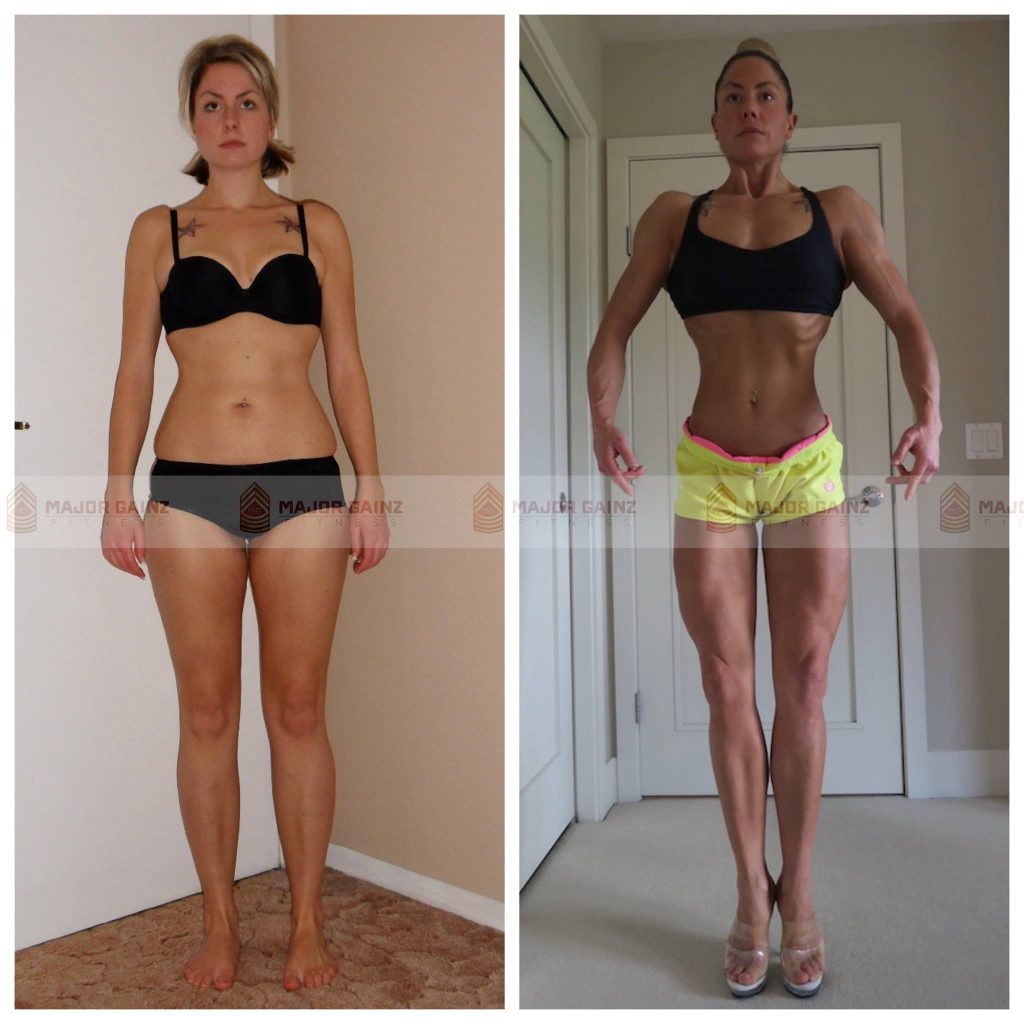
Here’s an example of this process in action with a friend of mine, Kait Cavers. She looks to compete in figure competitions and dedicates a large portion of her training calendar to gaining muscle.
She recently posted a before and after pic of her at the same weight, and you should see how awesome a comparison it is:
To be clear, as she stated in her post, it’s not about one being better than another, or which one would be preferred, but just showing that you can look vastly different at the same body weight with differences in muscle and body fat.
She’s considerably more muscular in the right pic, but her waist and hips are miniscule compared to the left.
Now if you didn’t want to dedicate to this kind of work load, the gains of muscle will be much less, and if you wanted to phase in hypertrophy training for a few months out of the year versus make it your whole focus all the time, you could do different things without worry about packing on some lat muscle or thicker delts.
That’s the great thing about training: you don’t have to do the same thing all the time and can cycle your training calendar throughout the year to focus on different stuff as you see fit. Hypertrophy can fit into the flow, be the entire goal, or just have a sprinkling for flavor on other stuff as you go.
This is a concept used by another friend, Ben Bruno, when he trains a lot of Victoria Secret supermodels. None of them would be judged to be too bulky, but most of their training uses heavier resistance training, hypertrophy protocols, and intense conditioning elements.
Aside from gaining muscle, what other good could training for hypertrophy offer?
If you’re training for a specific goal, such as powerlifting, running, or even weight loss, shifting gears for a phase or two can offer a type of cross training that can help refresh your mind about training, and give your body a break from the stuff you were doing consistently.
An example of this is my own wife. 10 months of the year she puts in a lot of miles on her bike as a competitive road and track cyclist. During the bulk of her in-season, she’s on the bike upwards of 15-20 hours a week with a mix of long duration low intensity rides and max effort sprints.
During the offseason, she wants to jump into some heavier weights, which definitely have their place in her program, but going straight from cycling and minimal weight training into maximal resistance training isn’t that great of an idea, so we involve a phase of 6-8 weeks of hypertrophy training due to the lower relative loads, and easier recovery compared to max lifting.
This helps to prepare her for the heavier stuff, give her body a break from the bike, and still look to gain a small amount of muscle after a hard in-season, which will help her performance on the bike next year, but also prepare her for the heavier weights of the off season.
Another example was a recreational skier who tore her ACL and needed surgery to fix the injury. During the pre-op phase, we involved work to keep some muscle mass through the quad with lighter loading and moderate volume, and following the surgery her workouts progressed from next to no loading, through to loading to technique failure, and then on to muscular failure through drop sets or extended set options.
A major goal of ACL rehab is to regain quad volume, so we went after it, using the progressive range of motion her knee was re-establishing, and as her strength development allowed.
She’s back on the ski hill now and having a great time 6 months after her surgery.
Gaining muscle can be a very challenging goal, especially if someone is already somewhat well established in their training and have been at it for a while. Because of the requirements to see notable increases in muscle, women shouldn’t fear training for hypertrophy, but should involve it in their programming on a regular or even occasional basis to help augment their goals, what ever those may be.
Having some extra muscle is often a major benefit under any goal set, including fetching water from up the hill.
Maybe if Jill lifted a bit more, she wouldn’t have come tumbling down after Jack, but would have farmer carried that shit all the way back home with Jack on her shoulders, straight up Medal of Honour style, so he could get some medical attention to fix that broken crown.
She could use that water to make some tea to sip while thinking if only Jack had trained he wouldn’t have fallen from such a simple task, but that’s none of Jill’s business.
Special Limited Time Offer
Dean Somerset and Dr. Mike Israetel filmed 11 hours of amazing content at the recent L2 Fitness Summit and it’s nuts.
Half of it is Dean breaking down assessments and the other half is Dr. Mike talking about getting people jacked and swole.
It’s on sale THIS WEEK ONLY (12/5-12/10) at a heavily discounted price of $50 off the regular price. As if the content and quality of presenters isn’t enough to entice you: If you’re still seeking CEUs to finish off your certification requirements this bad-boy offers 1.2 CEUs via the NSCA.
Being or not being healthy, by and large, is rarely an information problem. Most people know regular physical activity is good for their health, as is not crushing an entire bag of Doritos right before bed.
Why, then, are so many of us struggling with attaining a “healthy” lifestyle?
Simple (but not really): Lack of behavioral interventions.
In today’s guest post strength coach and PhD to be, Justin Kompf, discusses the dilemma.
Four facts keep me thinking on a consistent basis.
The majority of us are overweight or obese
The majority of people who lose weight will gain it back
The majority of us are getting insufficient amounts of exercise; and
The majority of people who start an exercise program will quit within six months
Physical inactivity contributes to 9% of premature deaths.
Maintaining a healthy body weight and exercising regularly are two of four health behaviors (the other two being not drinking your face off and not smoking) that can extend a person’s life by over a decade.13
Mathematically, the odds of a person doing two behaviors is lower than doing one behavior, and the percent should keep getting smaller as more behaviors are added on.
Still, the number is staggeringly low.
Only 4.8% of us do all of these health behaviors. Stated otherwise, 95.2% of people either have a poor diet, are insufficiently active, drink too much, smoke, or do some combination of the four behaviors.
Why Don’t People Do These Health Behaviors?
I was recently at an interview for a new training job and my interviewee asked me why I train people.
It’s because we sell time. We can give people additional high qualities years on their life so that they can continue doing what they love to do.
The question of why; as in, “why don’t people do these healthy behaviors” sits around in my mind a lot. The question of adherence also hangs out up there.
The environment exerts such a strong influence on us that it makes it challenging to be healthy. I would also say that most people lack an appropriate plan and a strong enough form of behavioral regulation.
Environmental Influence
We live in an ‘obesogenic environment’.
The term “obesogenic environment” refers to an environment that promotes gaining weight and one that is not conducive to weight loss. This environment helps, or contributes to, obesity.
So, quite literally when we try to lose weight or exercise there is a fight against the environment.
Imagine going to work, trying to get a project done but Jim the cubicle invader keeps barging into your office to talk about his weekly Tinder dates. Then, because he thinks it’s funny, he flips your desk too.
That’s what weight loss is like in our environment, keeping focus despite distractions and going back to work despite setbacks.
What to do Then?
Full disclosure, I don’t have all the answers. Everyone is different so a one size fits all answer would be a disservice. All I have is experience and a decent understanding of behavioral research.
So, what to do?
In my opinion, the best thing a person can do no matter what is to simply start.
That being said, as people start, there are things I would encourage them to do in regards to their behavioral regulation.
Whenever someone sets a goal, they have a motive.
For example, “I want to lose 20 pounds” or “I want to gain 10 pounds of muscle” are both motives. They are a person’s WHAT and are a part of a person’s goals.
WHAT’s also have WHY’s.
A person’s WHY is their form of behavioral regulation.
People can be extrinsically motivated or they can be intrinsically motived.
Intrinsic motivationrefers to doing an activity out of sheer enjoyment. But, let’s face it most people won’t always run, lift or eat broccoli for sheer enjoyment.
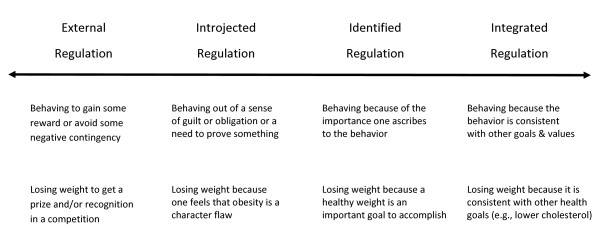
Within extrinsic motivation are four different categories. They are (see chart above and below) external regulation, introjected regulation, identified regulation, and integrated regulation.
Regulation type
Description
Example
External regulation
Achieve an external reward or avoid punishment
Compliance with demands from others
Exercising because of doctor’s orders
Introjected regulation
Avoiding shame, enhancing ego or pride
Exercising to avoid feeling guilty
Identified regulation
Acceptance of the value of the behavior
Exercising because it is important to do so
Integrated regulation
Behavior is congruent with a person’s values and needs
Exercising because the outcome is valuable
Being fit is part of one’s identity
Behavior Change is Like Battle
Recall, the obesogenic environment is programmed to make us fat. In order to overcome it there must be a ‘fight’ against it.
Most behavioral theories discuss a motivational phase and a planning phase.
Motivational phases are the precursor for a planning phase. A person has to have some form of motivation (i.e. not be amotivated) to make a plan.
However, it certainly helps in the planning phase to have a strong form of behavioral regulation (why you are motivated to do a behavior).
Here’s how I think about it; when a person goes to battle they have their own strengths as well as a weapon of choice.
Thor doesn’t go into battle without his hammer (RIP Mjolnir), Luke Skywalker doesn’t leave his light saber at home, and the Punisher (watch this series14) is always packing.
These heroes also have their plan.
The Punisher doesn’t just go in guns blazing, he’s tactical. Luke Skywalker blows up the death star with a good plan (Thanks Rogue One) but gets his hand cut off when he takes on a challenge that is too big for him.
Think of motivational regulation as a person’s strength and think of the plan of attack as the strategy for success.
The more powerful your weapon (or the weaker the adversary), the less necessary a specific plan becomes.
If a person loves weight lifting (intrinsic motivation), they wouldn’t really need instructions to make a specific plan because nothing can stop them. Odds are they would make plans with no help.
In geek language, Superman wouldn’t need a plan to beat a common criminal. His strength is sufficient to just get the job done.
Strength and Plans
Any form of motivational regulation is enough to get a person started. However, there are some forms that are more likely to keep a person going.
If motivational regulation is closer to the extrinsic side, the challenge shouldn’t be made too hard. Barriers are likely to derail people like this.
To me, having external regulation to fight the obesogenic environment would be like Luke Skywalker going to fight Darth Vader with a rubber chicken.
He’s going to need a damn good plan to win, and even then, it’s likely that he will get his other hand chopped off.
Regulation type
Description
Metaphor
External regulation
Achieve an external reward or avoid punishment
Compliance with demands from others
Rubber chicken
Introjected regulation
Avoiding shame, enhancing ego or pride
sling shot
Identified regulation
Acceptance of the value of the behavior
One of those laser guns Chewbacca has
Integrated regulation
Behavior is congruent with a person’s values and needs
The force and a lightsaber
On the other hand, if a person wants to achieve a goal because the behavior is congruent with their life values (i.e. to be a better parent) that’s the same as going into a fight with the full use of the force and a lightsaber.
You still need a plan, but you’re better equipped to win.
Planning Phases
Planning phases dictate specifically when, where and how a behavior is going to occur.
For example, if someone decides that eating more vegetables will be beneficial to their health, they should plan exactly when and where they are going to eat vegetables.
These plans are called implementation intentions. They link situational cues to desired behaviors.
If a person wants to eat more vegetables they might say “when it is my lunch break I will have the bag full of baby carrots I brought to work”
I propose that a stronger motivational foundation when paired with specific planning will contribute to more favorable outcomes.
Motivational foundation
Planning phase
Predicted behavioral outcome
External regulation
Weak
Introjected regulation
Implementation intention formation
Moderate
Identified regulation
Strong
Integrated regulation
Very strong
What to Do?
With a weak foundation (i.e. external or introjected) plans are more necessary but still likely not as effective as if they were based on a strong foundation (i.e. identified or integrated).
There are many reasons why people fail but I consider behavioral regulation to be an especially important one.
Changing motivational foundations is challenging. A weight loss goal is great. However, as people go through the process they should try to find activities that they love doing. For example, they could do the following:
Try a variety of exercises and see which one makes you feel great, ones you love
Set a small goal: (1) do 1 pull up (2) do one perfect push-up (3) run a 5k (4) learn how to master a squat or a deadlift
Learn to make new foods that taste good and are also healthy
Try connecting your goal to a different value. Sure, losing weight will make you look better but it will also make you healthier which means you will have better quality time to do the things you love doing. Try making the link between your goal and life values.
Reference
Ford, E.S., Zhao, G.Z., Tsai, J., Chaoyang, L. (2011). Low-risk lifestyle behaviors and all-cause mortality: Findings from the national health and nutrition examination survey III mortality study. American Journal of Public Health 101(1): 1922-1929.
Author’s Bio
Justin is a PhD student in the exercise and health sciences department at the University of Massachusetts at Boston. He is a certified personal trainer and certified strength and conditioning specialist. Justin blogs at Justinmkompf.com.
I’m sitting here in my hotel room as I type this, in my comfy bed, enjoying SportCenter, and getting mentally prepared for this weekend’s NSCA Mid-Atlantic Conference I’m speaking at.
I’ve got two presentations prepared and there always seems to be some tweaking and fine-tuning involved up until it’s “go” time:
Shuffling slides.
Changing titles.
Shirt or no shirt?
You know, stuff like that.
So while I hunker down and do all of that, why don’t you enjoy this week’s list of stuff to read.
I’ll be in Dallas, TX later this month to put on my Coaching Competency Workshop. I’ll break down assessment in addition to troubleshooting common strength-based exercises such as deadlifts, squats, shoulder-friendly pressing.
This is ideal for any personal trainer, coach, or regular ol’ Joe or Jane looking to learn more on my coaching process.
Mostly, in part, to the rise in popularity of things like CrossFit, Tabata Training, and bootcamps…by and large people are training harder than ever before.
Putting oneself through brutal or intense workouts is the metric many now use to gauge its effectiveness.
Joel sounds off on why we may have gotten it all wrong.
I’ve been woefully vacant with writing content of late, and I am so sorry.
Life. Is. Busy.
As I type these words I’m sitting in Logan Airport waiting for my flight to Philly where I’ll be speaking at the Mid-Atlantic NSCA Conference this weekend.
Who ever thought that having a 10-month old cruising around the apartment would be time consuming?
All of this isn’t to imply I haven’t been busy in other avenues of fitness. Last week I was invited back onto the Cut the S#!t Get Fit Podcast with host Rafal Matuszewski.
This time, though, there was a special circumstance.
I was part of a DOUBLE GUEST episode alongside my man Lee Boyce.
We had a blast.
We spent the first 15 or so minutes catching up and discussing our favorite movies and tv shows of 2017. You know, important shit that any fitness podcast would want to cover.
But after that we get into the nitty gritty particulars of lifting heavy things and just go off.
So sit back, relax, and listen to the succulent sounds of strength & conditioning’s version of Ebony and Ivory.





 passionately advocates a studying technique that he claims will dramatically reduce the time it takes to learn a subject — it’s called