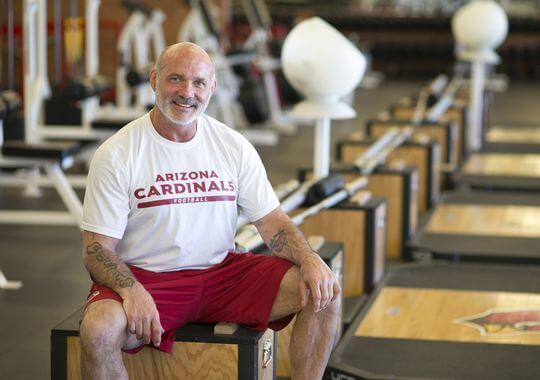
Recently I was invited onto The Breakthrough Secrets Podcast hosted by Chris Abbott and Mike Kurkowski. I know I say this every time I’m invited onto a podcast, but this time I really mean it.
I thoroughly enjoyed this conversation.
This is not just three dudes talking about lifting heavy things (although there’s a teeny tiny bit of that). This is three dudes hitting on a litany of topics ranging from authenticity to the intimacy of writing to that time I had to take a young athlete aside for disrespecting his parent.
A few weeks ago my good friend, Luke Worthington, and I were texting back and forth on why I hate him so much because I’m not him (6-4, 230 lbs, ripped, smart, British, pfffft whatever Luke) programming and coaching.
Specifically, we both commented on the facade that some (not all) fitness professionals seemingly lean into on social media
Even more specifically, we attempted to excavate the difference between what I would refer to as “putting on a show” and actually coaching people.
Our conversation took root when we brought up something we had both observed on another colleague’s Instagram account and the abject silliness it projected.
Now, I’m not going to name names; it’s not my nature to do so. And, to be honest: I try to always keep an open mind whenever I see something eyebrow raising from other coaches.
I mean, who am I to say what’s a legitimate exercise/drill for their client?
I don’t know their client’s injury history.
I don’t know their client’s goals.
I don’t know their client’s ability level.
I don’t know the purpose of that day’s session.
Maybe there’s a perfectly fine rationale for that particular exercise (even though running over their right arm with a Prius for AMRAP would have been a better use of their time).
I keed, I keed.
Nevertheless, Luke is based in London and works with a number of high-profile people ranging from Hollywood actors/actresses, models, magazine editors, and various professional soccer players.
During our chat he mentioned he had started working with a well-known actor who’s currently prepping for a rather significant action role.
Nope, not Jason Bourne.
Alas, not James Bond.
In the name of discretion, I can’t reveal the actor’s name. It would be uncouth for me to do so, and I certainly wouldn’t want to divulge anything that Luke himself hasn’t divulged.
Negative, not him either. But OMG, I wish.
I haven’t come close to working with the same volume of “high-end” clientele that Luke has worked with in his career. That being said, I’ve worked with many professional baseball players throughout the years (especially during my time at Cressey Sports Performance), and did happen to rub elbows with Hollywood recently.
And I have to say…
…it’s hard not to put on the facade.
To quote Luke:
“When you were working with Rosamund (Pike) did you find it hard not to put on a show? Did you feel you had to impress her with new and innovative exercises? That you had to provide more of wow factor? I find it exhausting sometimes working with people in the entertainment industry.”
At first, yes.
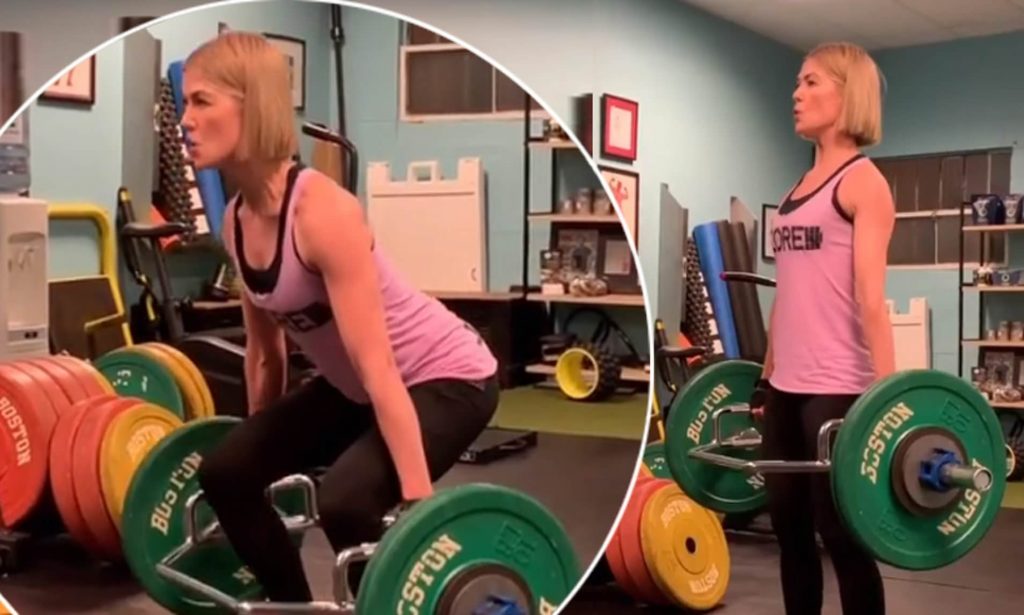
Rosamund joining the 100 lb deadlift club working with me at CORE.
But then I realized that she was just a person like everyone else and needed the same shit as everyone else.
Moreover, once I understood that all she was looking for was a solid training session where she could have an hour to herself to be away from the movie set and away from the chaos, it became much less daunting to me.
I kept things simple.
She deadlifted.
She squatted.
She carried stuff.
She hoisted stuff.
She threw stuff.
She listened to sick techno beats.
All I did was to ensure the exercises were coached well and that they matched her ability level.
I didn’t feel the need to put on a show.
And she and I had a lovely time together.
Back to Luke, though.
In addition to texting back and forth about the pressure to perform and avoid reneging on our mutual intuition to just keep things simple, we also went back and forth a bit on his client’s programming.
Luke noted that his client’s role will require a number of shirtless scenes and that the expectation is that he must look the part; broad shoulders, pecy pecs, cut arms, etc.
The caveat, however, is that this client also has a number of shoulder issues that limits his ability to perform certain exercises pain free.
Luke’s a more than capable coach to devise a suitable trainable menu for his client. That said, he and I were going back and forth on some ideas when he noted that during a prior session he had his client perform a double landmine press.
For most coaches this exercise is quite standard or even inane. It’s nothing extraordinary or flashy (especially by social media standards).
However, Luke’s client loooooooooved it.
It targeted parts of his body he needed to bring up for the role AND he was able to perform it pain free. Luke could have easily made the exercise more sexy by setting the barbells on fire, or, I don’t know, having his client press with one arm while juggling a chainsaw on the other.
Instead, what Luke did was be a coach.
And, frankly, that’s what most people need whether they’re Thor or Tina.
Today’s guest post comes via TG.com regular Travis Hansen.
I’ve long championed the notion that most people, most of time fail to understand the significant power that dedicated strength training has on one one’s ability to lose body fat.
We’ve been programmed to think the key to fat loss success is “surviving” endless, laborious hours on a treadmill. That approach “can” work, but speaking personally I’d rather swallow live bees.
Thankfully, Travis uses less hyperbole to explain why strength training should be a staple in anyone’s fat loss endeavor.
At this point it’s pretty obvious that nothing is going to give you more leverage with regards to getting results (and results that will stick long-term) than proper strength training.
There’s a bevy of real-world examples around the world, and the science & research back it all up too.
There are several studies that have investigated the effects aerobic and anaerobic training have on weight loss, fat loss, and the maintenance or increase of muscle mass.
The consensus among the scientific community is that both methods contribute to fat loss, but anaerobic training (weights, sprinting, etc.) is hands down better.
Per unit of time, anaerobic training is better. However, it cannot be utilized/practiced as much because of fatigue factors, so you need a blend of both.
Just so we’re all on the same page: Me stating I feel most people should focus a little more on strength training to help with fat loss is NOT me saying I am against performing cardio. This is akin to an analogy I recently saw Dr. Spencer Nadolsky make:
“When I say “weight lifting is good for you” and then people say “I can’t believe you’re not promoting aerobic training!” It would be like me saying “strawberries are good for you” and someone saying “I can’t believe you’re not promoting broccoli!”
The best approach to fat loss is a synergistic one: Eating for your goals as well as performing BOTH strength training and cardio.
Just remember that anaerobic training can (and should) be primary and aerobic is a far secondary.
And the science heavily supports this stance.
Science also supports that Tony is jacked (👈 Tony wrote that)
When it comes to training, a great analogy for attempting to create as much caloric expenditure as possible can be derived from establishing a proper foundation of training methods from the bottom up.
You can refer to this as The Fat Loss Pyramid.
The most potent and powerful contributors to total fat loss start at the bottom and then decrease in their value as you climb the pyramid.
We still seem to have this model backwards.
As counterintuitive as it may seem to some, a majority of calorie burn should come from weight training as the vast majority of research over the decades have showcased it’s superior effects that can’t be entirely achieved or replicated through other popular methods (i.e., HIIT, steady state, fasted cardio, etc).
It’s not lost on me the the notion of weight training being a primary method for fat loss is still dumbfounding to some people. But it shouldn’t be if you consider the science on the topic.
Note From TG: This is why I’m a fan of the saying “what makes muscle, keeps muscle.”
“Fat loss plans should alternatively be referred to as “muscle maintenance” plans. The idea should be to maintain or keep as much muscle as possible while in a caloric deficit. The easiest way to do so is to lift heavy things – remind the body to hold on to precious lean tissue.”
The Science
The infamous study by Dr. Schuenke tells us exactly why strength training should be first and foremost when it comes to optimal fat loss training. (1).
Schuenke and his team took seven healthy men and had them perform a 3-exercise circuit utilizing the squat, bench press, and power clean.
The circuit was performed three times amounting to twelve total work sets and lasted 31 minutes.
The results were remarkable!
Aside from the few hundred calories the subjects burned during the session, they burned about 600-700 calories in addition to that number over the next 38 hours post-exercise. This phenomenon is known as “Excessive Post-Exercise Oxygen Consumption,” or EPOC for short.
EPOC is the amount of energy required to return our metabolism back to pre-exercise levels. It can take minutes with certain training types such as aerobic training and hours to days with high intensity work such as resistance training and max effort sprinting. There are at least five studies that clearly show weight training increases EPOC for 1-48 hours above resting levels. (2)
Through heavy resistance training and sprinting, the amount of energy needed by the body to recover the damage has been said to be much higher than with “traditional” cardiovascular training. The damage itself requires energy and time to repair, which increases our body’s protein turnover and calorie burn.
Protein turnover is simply the amount and rate of protein that is lost per day. There is also an increase in the activity of our body’s functional battery, which is the nervous system.
Also, several fat burning enzymes and hormones elevate as well.
Along these same lines, the recently popular “constrained energy” study showed that individuals who possessed more muscle mass had a substantially high RMR (Resting Metabolic Rate), contrary to popular belief.
Recall that muscle mass in and of itself doesn’t burn a whole lot of calories, but the higher RMR could help explain all of the energy cost from repair that is being done on days that follow strength training. To help really put all of this into perspective, using strength training as an unparalleled and superior form of cardio creates a “2 workouts in 1” training effect until your body begins to adapt to training later on down the road.
On a final note, the increase or maintenance of your muscle will also burn a few extra calories per day as well, which could add up over time.
Another study had researchers assign overweight subjects to three groups; diet-only, diet plus aerobics, diet plus aerobics plus weight training.
The diet group lost 14.6 pounds of fat in 12 weeks.
The aerobic group lost only one more pound than the diet group. (Their training was three times per week beginning at 30-minute sessions and progressing to 50 minutes over the 12 weeks).
And the weight training group lost 21.1 lbs. of fat, resulting in 30-40% more than diet and aerobic-only groups.
What’s revealing is that the addition of aerobic training didn’t result in significant fat loss over just dieting alone. (3)
Now it’s only fair to also point out that even though these studies above do highlight the superiority of weight training for creating the most EPOC, and perhaps even calorie burn and fat loss from a workout, from the data I’ve collected with clients and the protocols we’ve utilized for years, the effects of EPOC may begin to diminish over time as you become more experienced and adapted to weight training according to at least one study by Abboud et. all 2013. (2)
Losing Muscle on a Diet = 👎
On a final note, it should be recognized the effects of losing muscle mass can have on hunger levels, weight regain and energy regulation long-term, so make sure you and or your clients make strength training the foundation of your training program.
But here is one more nail in the coffin if you aren’t sold yet.
Dr. Brad Schoenfeld provided a study a while back through social media that demonstrated what is called “Collateral Fattening” when muscle mass is lost on a diet.
Basically, the body perceives muscle loss as a threat which drives up fat gain through different pathways and hunger signals.
If that last couple sentences isn’t enough to make resistance training your primary option when it comes to fat loss training I don’t know what else to say. Only heavy lifting can preserve and grow muscle, even though similar blood marker responses can be seen with interval training, minus actual muscle growth and maintenance, unfortunately.
One Final Word
And now that you’ve clearly seen what the science has to offer, let’s talk about some other equally important factors that should seal the deal when it comes to strength training for fat loss.
Frankly, aerobic training is FAR more limited when it comes to training options and it’s safe to say this is going to drive quicker adaptation and lower energy outputs. The availability of exercises for resistance training splits and circuits is literally infinite.
Some people like repetition and monotony, and others vouch for constant variety, and both are fine and will yield results. However, if you or someone you know wants to absolutely incinerate body fat then find a comfortable and effective resistance training protocol from a reputable professional and you wont be disappointed.
About the Author
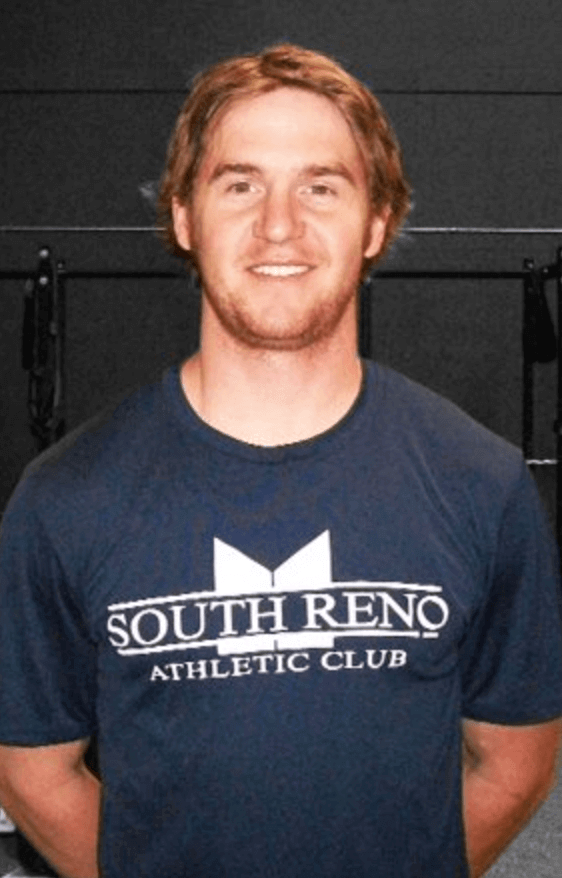
Travis Hansen has been involved in the field of training for over a decade, and he has over 60,000 hours of hands-on training experience.
He graduated with a Bachelor’s degree in Fitness and Wellness, and he holds three training certifications—from the ISSA, NASM and NCSF.
He was the Head Strength and Conditioning Coach for the Reno Bighorns of the NBA D-League during their 2010 season, and The University of Nevada-Reno golf team in 2015.
He was the former Director of the Reno Speed School. He has worked with hundreds of athletes from almost all sports, ranging from the youth to the professional ranks.
He is also the leading authority on speed development for the International Sports Sciences Association. For more info check out his website.
References
#1-Schuenke MD, Mikat RP, and Mcbride JM. Effect of acute period of resistance exercise on excessive post-exercise oxygen consumption; implications for body mass management. European Journal of Applied Physiology 86: 411-417, 2002.
#2-Abboud, George. Effects of Load-Volume on EPOC After Acute Bouts of Resistance training in Resistance-trained Men. Journal of Strength and Conditioning Research: July 2013-Volume 27-Issue 7-p 1936-1941.
I had the lovely experience of being invited onto the Your EPOCH Life Podcast hosted by Jason Dowse recently. They’ve had quite the eclectic mix of guests appear on their show with backgrounds ranging from strength & conditioning and nutrition to psychology and entrepreneurial shenanigans.
It was a thrill to be invited amongst so many other well known names.
I have confirmed that I’ll be coming to England this September to do not one, but TWO separate workshops.
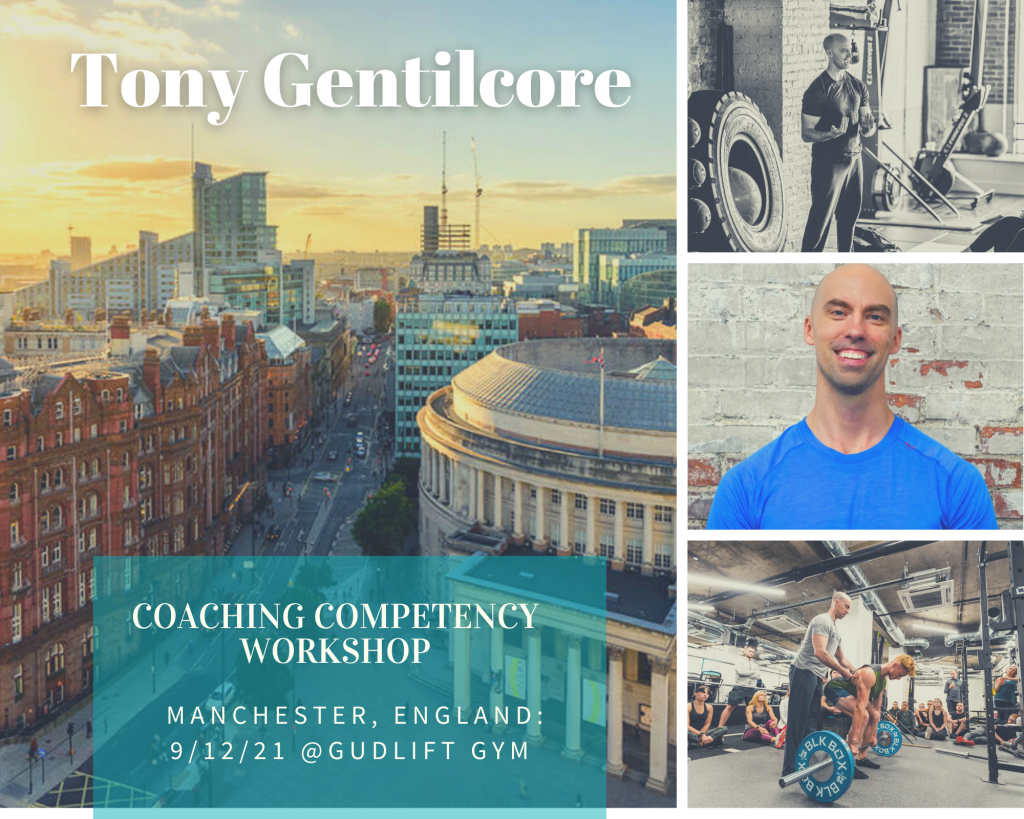
I’ll be doing my 1-day Coaching Competency Workshop at Gudlift Gym in Manchester on Sunday, 9/12 – click HERE for itinerary and to register.
The following weekend (9/18) I will be in London alongside Luke Worthington to put on our 2-day Strategic Strength Workshop (host location is still being figured out)
It feels extraordinary to finally be putting events INTO my calendar rather than taking them off.
I hope to see you there!
SIDE NOTE: I’ve tossed Charleston, SC out there, as well as Philadelphia, PA (the latter would likely be a Strong Body Strong Mind Workshop with my wife, Dr. Lisa Lewis).
I’m hoping I can pull them off, but am also open to other options as well – Milwaukee, Memphis, Mordor, whatever.
If you’re interested in possibly hosting me for a day or two (or know of a gym who’d be a good fit), please reach out and let’s chat.
SOCIAL MEDIA SHENANIGANS
Twitter
Shut up.
No, really, it’s okay to not say a word during a set of something when coaching your clients/athletes.
Ruling out risk of injury…
Let them marinate in feeling what a wonky rep feels like and what a good one feels like. They’ll figure it out without your 17 cues.
“My job is to find the trainable menu for my clients and my athletes. I try to see given their injury history, given their ability level, given their goals, let’s find their trainable menu. What can we train and how can we train? Let’s find the right dosage, and let’s attack it.” – Tony Gentilcore
👆👆👆
See? Sometimes I sound smart.
I really enjoyed being invited back onto Clinic Gym Radio hosted by Josh Satterlee.
Topics Covered Include
Why asymmetry is normal
The importance of an assessment, and what types of assessments Tony uses
Tony’s fitness background and how he trains
How the fitness industry has come a long way in accepting variations
How variations can even support a return to normal range or position
Why Tony believes that easy training is good training
What “The Complete Shoulder Hip Blueprint” is and where to find it
What it means to “earn” a lift
What’s considered the gold standard stance of deadlifting and its disadvantages
The stance that Tony chooses for his deadlifts and why
How to know when it’s the right time to regress someone
Watching a client realize they’re stronger than they thought they were
How expectations and tracking progressions work towards motivation
How Tony manages clients who are training after an injury
Variation options for clients with back injuries
How some trainers go about uniquely meeting a client’s goal
Why glute bridges are great for introducing hip exercises to beginners
Tony’s advice for new strength coaches who want to improve their career
It’s been 15 months since I’ve put on an in-person workshop.
** Cue the trumpets **
I have confirmed that I’ll be coming to England this September to do not one, but TWO separate workshops.
I’ll be doing my 1-day Coaching Competency Workshop at Gudlift Gym in Manchester on Sunday, 9/12.
The following weekend (9/18) I will be in London alongside Luke Worthington to put on our 2-day Strategic Strength Workshop (host location is still being figured out)
It feels extraordinary to finally be putting events INTO my calendar rather than taking them off. I”ll have more details about the two workshops in the coming weeks, including links to register.
In the meantime: Consider this your “save the date” notice…
SIDE NOTE: I’ve tossed Charleston, SC out there, as well as Philadelphia, PA (the latter would likely be a Strong Body Strong Mind Workshop with my wife, Dr. Lisa Lewis).
I’m hoping I can pull them off, but am also open to other options as well – Milwaukee, Memphis, Mordor, whatever.
If you’re interested in possibly hosting me for a day or two (or know of a gym who’d be a good fit), please reach out and let’s chat.
SOCIAL MEDIA SHENANIGANS
Twitter
I recently saw a fitness professional state that if you’re playing sports on a regular basis you shouldn’t lift heavy. I normally read said Tweets and move on with my life.
The fitness industry is a dichotomy. On one hand we help people look, feel, and move better. (good!) On the other, we “pressure” & compare ourselves if we don’t look, feel, or move like others (bad).
This was a great read from Izzy on why you shouldn’t tether yourself to a number.
I dig anything that delves into the nature of helping people get strong(er). That said, there are many things that can go awry when seeking more plates on the bar.
Some great advice in this one from Josh (a brick house himself).
Uttering the phrase “looks like someone has a case of the Mondays.”
Cocaine
Partaking in social media drama, buffoonery, and general hijinks.
For me there’s a cost/benefit to all of the above. Take my cat, Dagny, for example. I love her to pieces. But I still get the feeling, whenever she looks at me for more than three seconds, she’d murder me in a nanosecond with a machete if only she had opposable thumbs.
I have my reasons for the other stuff too.
With regards to the latter, however, I was recently lured in like a moth to a flame when I saw a Tweet from a well regarded and highly respected fitness professional commenting on “lifting heavy” and playing sports…
…and how people should avoid the former if participating in the latter.
I have to say, before I dive into my own thoughts on Dan’s thoughts, reading the subsequent comments was quite entertaining.
They ranged from people agreeing to the statement1 to what can only be described as a few peacocks spreading their feathers.
I.e., Triggered!
A few coaches read the comment and reacted as if someone informed them creatine was the same as steroids or, I don’t know, one of their athletes didn’t squat to depth.
I could just smell the inflated lat syndrome emanating from my screen.
Admittedly, I too rolled my eyes a bit.
That said, I felt the initial statement was a bit too ambiguous. To me, it was more about garnering eyeballs & drawing attention to his funnel link than providing anything of real substance.2
What sports are we referring to? MMA? Lacrosse? Backyard wiffleball?
What level of sports are we referring to?
What’s the ability level & experience level of the athletes in question as it relates to the weight-room?
What’s considered “heavy.”
Is there no such thing as in-season and off-season training modifications in this mysterious world where athletes shouldn’t lift heavy things?
To Dan’s credit, he did elaborate further:
“The reason is because both are taxing to the nervous system. Mind you when I talk “sport” I mean one played at a high intensity (ie. basketball, soccer, surfing). Trying to play your best while chasing PR’s will likely cause injury.”
I didn’t quite understand where he was going with his sport examples. I’d make the argument that any athlete of any sport – particularly if it’s being performed at a high level – needs to be prepared for that sport. I don’t care if we’re talking about soccer or bowling.
Okay, maybe bowling is a stretch…;o)
Much of that preparedness comes from a well-rounded, properly progressed IN-SEASON and OFF-SEASON strength & conditioning program.
Off-Season Training = Initially focuses on recovery to combat a long competitive season as well as to address any deficits/weaknesses that accumulated along the way. That then transitions to a more traditional strength & conditioning program catered to helping the athlete improve strength, speed, movement capacity, ROM, ability to run through a brick wall, etc.
In-Season Training = Reducing training frequency/volume – depending on playing time (starter vs. 10th-11th man off the bench in basketball), position (everyday player vs. pitcher in baseball), game schedule (football vs. softball) – albeit under the guise that the objective is to LIMIT as much drop off as possible of the gains made in strength, speed, etc during the off-season.
Not to mention, in-season strength training is a splendid way to help reduce the incidence of injury as a season progresses and fatigue and wear-n-tear on the body accumulates.
KEY POINT: Reduction in frequency (volume), not intensity.
It’s my experience – and that of many other coaches – that intensity (as a percentage of one’s 1-rep max) is far less taxing on the CNS than volume (sets x reps x frequency). In fact, it behooves most athletes to keep intensity somewhat high during SOME of their in-season training.
As Vladimir Zatsiorsky states in his seminal book, Science and Practice of Strength Training:
“Training with weights ~90% of one’s 1-rep max (I.e., heavy, but no anywhere near PR heavy):
Recruits the maximum number of motor units.
Ensures the fastest MU’s are activated.
Discharge frequency (rate coding) is increased.
Activity is synchronous.
Improves coordination between synergistic muscles.
Increases potential for future hypertrophy gains.”
Moreover, Zatsiorsky notes that from a velocity standpoint, it’s been shown that power output increases as the weight lifted decreases from 100% of 1RM to 90% of 1RM. In fact, for the back squat and deadlift, power output for a load at 90% 1RM may be twice as high as the 1RM load due to the large decrease in the time required to complete the exercise with the lighter load.
In other words: Lifting light(er) loads faster = best of both worlds?
Additionally, strength “lingers.”
You don’t have to do a lot of it in order to maintain it.
In his book, Block Periodization, Dr. Issurin notes that maximal strength has a “residual duration” of 30 +/- 5 days.
In non-Klingon all this means is that, in order to maintain strength, you only really need to remind the body every 2-3 weeks (or so) of what it takes to keep it. This is splendid news for in-season athletes.
This means that 2-3 heavy(ish) sets of 2-5 reps (in the 85-95% range) every few weeks is enough to maintain most of their strength levels.
Australian strength coach, Nathan Kiely, sums things up nicely:
“Maintaining neuromuscular strength in-season is critical. And a load that wouldn’t have developed it in the first place, won’t do enough to retain it either.”
To that end, NO COMPETENT COACH is chasing PR’s in-season. I just wish Dan would have said THAT initially instead of the blanket statement of “if you play sports you shouldn’t lift heavy.”
Because, I agree – it makes zero sense to max out or chase PR’s during a competitive season.
As one commenter commented:
“Chasing PRs and 1 RM in season are pointless. But if you program correctly and tailor workouts to your athletes sport intensity, schedule and allow recovery time. PRs are just going to happen organically.”
The statement reminded me of something I heard renowned strength & conditioning coach, Buddy Morris, say during a presentation years ago:
“Tony, can we be BFFs? Whenever an athlete of mine hits a PR – especially in-season – I shut em down for the day.”
Word.
In Short: When dosed intelligently you can do both.
A few weeks ago I was invited by my good friend and colleague, Justice Williams, a trans body positive activist (and one hell of a coach and human being), to participate in a conversation on masculinity & the fitness industry with his Fitness4AllBodies community.
I was very interested in just listening, because as a straight, white, cis male there’s myriad of things I don’t have to worry about and, quite frankly, take for granted.
Moreover, as a part of what Justice refers to as the Fitness Industrial Complex, without litigating the past, there’s a handful of things I’ve said, written, and done (with zero intention to purposely denigrate or cause malice to anyone), that, as I came to realize as I listened in, did just that.
By no means was it a “point all our fingers at Tony” party. Rather, it was a much needed wake-up call on my end that I can do better, and I was appreciative for everyone’s insights and calls for action.
The fitness industry is a wonderful community filled with a cornucopia of well intentioned, positive, and open-minded individuals. However, as is the case with any community, is rife with ignorance and its own array of imperfections.
I encourage anyone reading to absorb what Justice has to say below and to consider lending him your attention and participating in some of his upcoming courses (one of which is highlighted below).
Desired Feats of Manliness: The Roots of Performative Masculinity
Looking back at history gives us a deeper understanding of the convention and showmanship of manliness. We can’t escape the roots of how we attained these ideas, perspectives, and behaviors of masculinity. It is the desire of wanting to be valued and coveted in this theater we call life.
In this brief essay, I’d like to explore the performative nature of manliness and how these ideas and toxic values are maintained within the Fitness Industrial Complex.
By understanding that the ideas deemed valuable about masculinity have been socially constructed throughout time, it shows us that these ideas are not innate, yet malleable, and can be changed.
Mens’ ideas about aesthetics, strength, and what it means to be a man comes from the 19th century “Physical Culture” performances that erupted in England.
These performances ranged from weightlifting, wrestling or boxing at local clubs to incredible feats of strength like bending bars and metal pans, as well as lifting carts at the vaudeville strongman shows.
This performative masculinity became the desire of men and these shows the propaganda of masculinity.
Judith Butler, writer, activist philosopher, theorized on gender performativity and explains to us how…
“…gender is a social construct, a set of behaviors in everyday life that define and comply with how we perceive these social norms.”
During this time, idolizing masculinity (or manliness) spread like wild fire and soon became akin to what it meant to be “close to God and what it meant to be in his image.”
Some of the performers became huge celebrities, like Eugene Sandow, who, recognized as the father of bodybuilding, changed the ideal image of what a man’s body should look because he was deemed beautifully perfect and godlike from his symmetric aesthetics and power.
These ideas have become cemented norms within the Fitness Industrial Complex.
What is the Fitness Industrial Complex?
The Fitness Industrial Complex defines and maintains power over our bodies through the lens of privilege. These mainstream ideas teach us what it means to be fit and well in our bodies…
…determined, predominately, by race, gender, identity, ability, and body shape.
These mainstream ideas reinforce stereotypes about the identities and bodies of BIPOC, Queer, poor, and communities with disabilities.
“The Fitness Industrial Complex is maintained by private companies that gain huge profits from diet and fitness culture as well as the propaganda it spreads about health and wellness; increasing influence of athletic bodies and sports; and eliminating any social dissent to prevailing ideas about bodies, health, and wellness that illuminate our true experience of the industry.
Within the fitness industry we reinforce these ideas that have become the norms within a global society.
These ideas are valued within the fitness industry and is what we as men (and masculine identified individuals) should all achieve. It is the desire of wanting to be valued and coveted in this theater we call life.
The Fitness Industrial Complex helps us to see the ways that performative masculinity limits information about the ways that we conform and maintain these toxic ideas.
We have to understand the problem if we are to truly change the toxic ideas that we hold about ourselves and others. Let’s all take our bodies back and reframe the ways that we see masculinity in relationship to ourselves and others.
Reframing Masculinity & Gym Culture
This 3-week course will dig deeper into the journey through performative manliness, the history and construction of masculinity, and how fitness is both a product and agent of producing specific forms of masculinity.
Remember, this is not just a course for cisgender men! We all internalize and reenact dominant ideologies of power, which in a white supremacist patriarchal society includes hegemonic forms of masculinity.
This cohort will take place from May 12-26th and will be capped at twenty participants, so please help us get to know you, your background, and what you hope to get out of this course in our time together.
Justice Roe Williams (he/him) is a Certified Personal Trainer, head coach at Kettlebell Justice, founder of The Queer Gym Pop Up and BodyImage4Justice, and Executive Director of Fitness4AllBodies.
He is a trans body positive activist and has been actively creating safe spaces for queer and trans bodies in fitness in the Boston area since 2013. Williams actively advocates for fitness being for everyone and the importance of trainers and fitness professionals using their status as gatekeepers to “act as a shield” to protect their clients and create safe, affirming practices and spaces.
A key component of his work has been working with people of all backgrounds to address and dismantle toxic masculinity and how it operates within white supremacist patriarchal culture—particularly in fitness. His work has been featured in Refinery29, Good Housekeeping, NPR, PinkNews, and Boston Neighborhood Network News.
It’s been 15 months since I’ve put on an in-person workshop.
** Cue the trumpets **
I have confirmed that I will be coming to England this September to do not one, but TWO separate workshops.
I’ll be doing my 1-day Coaching Competency Workshop at Gudlift Gym in Manchester on Sunday, 9/12.
The following weekend (9/18) I will be in London alongside Luke Worthington to put on our 2-day Strategic Strength Workshop.
It feels extraordinary to finally be putting events INTO my calendar rather than taking them off. I”ll have more details about the two workshops in the coming weeks, including links to register.
In the meantime: Consider this your “save the date” notice…🙌
SIDE NOTE: I’ve tossed Charleston, SC out there, as well as Philadelphia, PA (the latter would likely be a Strong Body Strong Mind Workshop with my wife, Dr. Lisa Lewis).
I’m hoping I can pull them off, but am also open to other options as well – Milwaukee, Memphis, Mordor, whatever.
If you’re interested in possibly hosting me for a day or two (or know of a gym who’d be a good fit), please reach out and let’s chat.
SOCIAL MEDIA SHENANIGANS
Twitter
I dislike tethering clients to a number. I.e., strength “standards” (you should be able to squat 1.5x bw, etc).
It sets ppl up to the comparison game, which is rarely helpful. Instead, champion progress, ANY progress.
I did a podcast a few weeks ago titled Deadlifts, Dogs & Dad Jokes. It was everything you’d expect from a podcast with that particular title.
Fucking baller.
Toward the end of the episode, one of the hosts (a new dad) asked me fitness advice for other new dads. Admittedly, I was an abject failure in coming up with anything inspirational or sage to say.
And then I recalled I actually wrote something on the topic. If you’re a new dad or know of someone who is, and you/they are in a fitness rut…







 Travis Hansen has been involved in the field of training for over a decade, and he has over 60,000 hours of hands-on training experience.