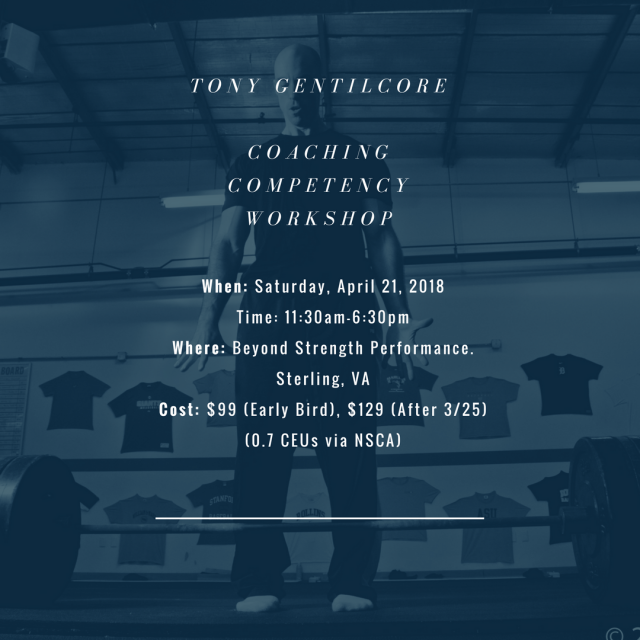
Spots are still available for my Coaching Competency workshop in Sterling, VA next weekend.
For $129 you get to hang out with me for seven hours, talk about assessment, program design, deadlifts, and LOLCat memes. This event has been approved for CEUs via the NSCA.
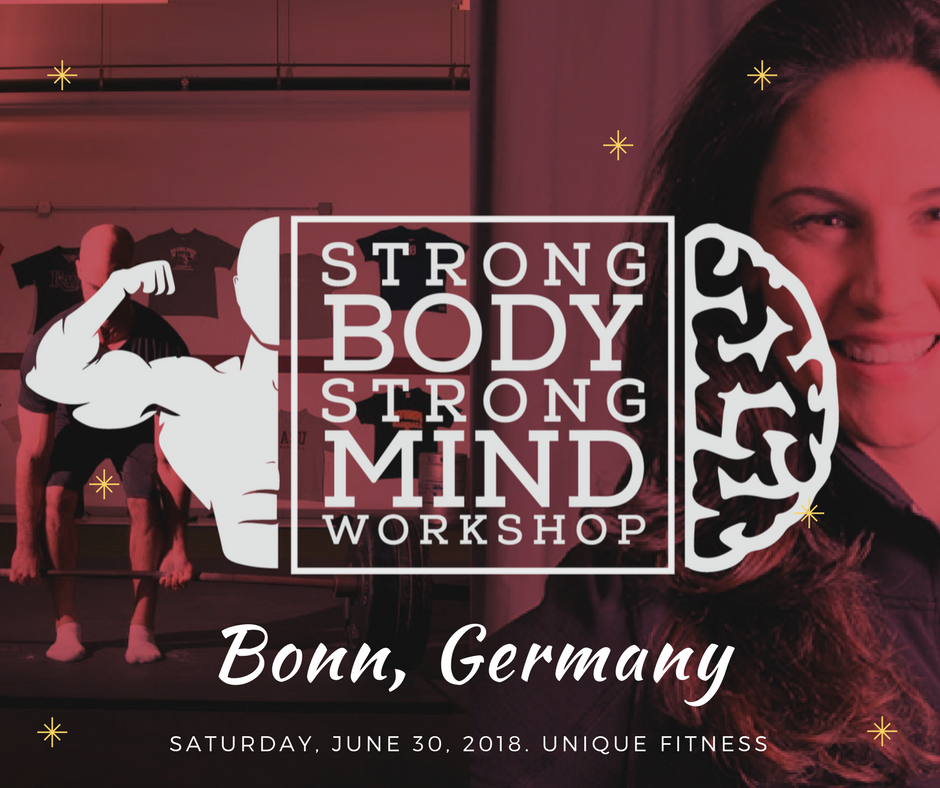
My wife and I will be in Bonn, Germany on Saturday, June 30 to put on our 1-day Strong Body-Strong Mind workshop.
I’ll be speaking to assessment, coaching up common strength exercises (squats, deadlifts), and how to better “match” your programs to your client’s abilities and goals.
Lisa will be discussing how to better manage client expectations, motivation, and how to adopt better mindset strategies for success.
And then we’ll have a beer….;o)
Spots are limited and the Early Bird rate is still in effect (but not for long).
For more details (including itinerary and registration) go HERE.
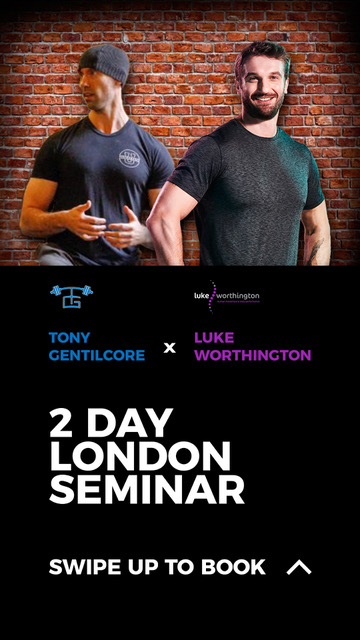
After my workshop in Germany I head over to London to take part in a 2-day event (the weekend of July 7th) with my friend and colleague (and handsomest man alive) Luke Worthington.
This one is filling up fast…..go HERE for more info.
If you’re someone who works with teams or maybe are in charge of a staff at a gym, or, I don’t know, are part of SEAL Team 6 and just looking for some solid information on how to develop better leadership skills and systems to breed a winning culture you can’t go wrong with Pat Rigsby’s new resource.
I love Greg for always writing such informative, well researched articles though. This is a must read.
Social Media Shenanigans
Twitter
Exercises most people need to do more of: deadbugs, push-ups, rows, carries, single leg work, not kipping pull-ups. Exercises most people could do away with: weekly 1RM tests.
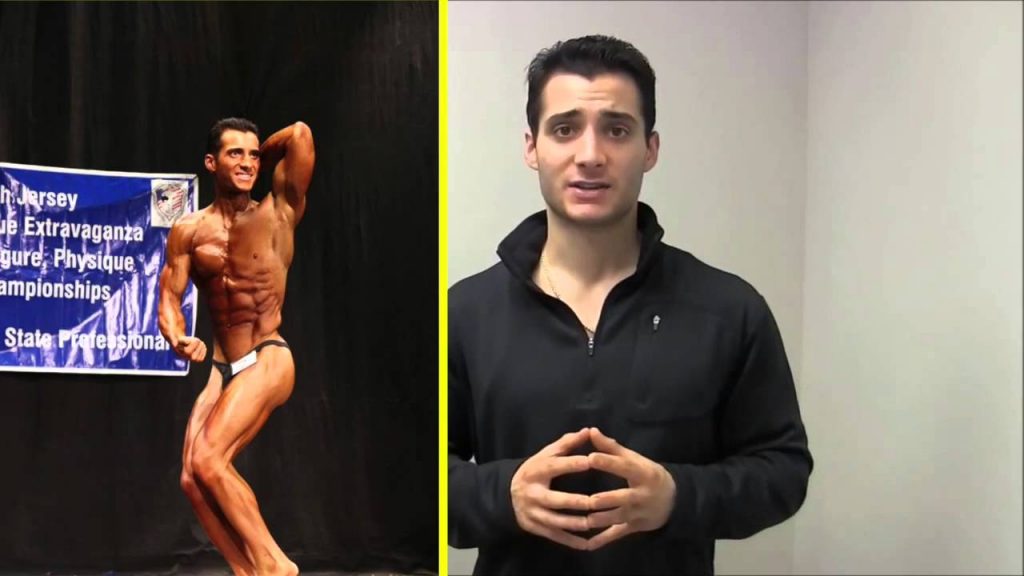
Today’s guest post comes courtesy of TG.com regular, Dr. Nicholas Licameli.
Nick normally writes about stuff like how not to eff up your shoulders during a bench press or how to address your low back pain when you sit in front of a desk all day.
Today, however, he’s throwing us a curveball and discussing a topic that’s a little more nuanced, albeit something that we can all appreciate: the “grind” and the work-life-training “tightrope.”
One of my least favorite sayings is, “everything in moderation.”
Everything in moderation makes you mediocre at everything.
But we must realize a truth that is self-evident, undeniable, and timeless: saying yes to one thing is saying no to another.
Whether you’re Betty White, Barry White, or White Goodman, we are all given the same number of minutes each day.
Life, then, is a constant series of choices and decisions as to how we spend our time. There is no arguing that dedicating time to each of our roles is essential. However, everything in moderation makes you mediocre at everything. Instead of creating balance, which is usually the reasoning behind taking everything in moderation, it creates mediocrity.
Some of my roles, in no particular order, are bodybuilder, husband, son, brother, friend, and medical professional. I would venture a guess that majority of those reading can relate, at least somewhat, to these roles.
At the core, they are sport, family, friend, and profession.
When walking across a tight rope, one does not stay perfectly straight for the duration of the walk. While still maintaining balance, the walker is able to lean this way and that way with each step. Similarly, a plane does not remain on a straight path for the duration of its flight. The pilot makes adjustments up, down, left, and right depending on weather, air traffic, etc., but it manages to stay the course and eventually reach its destination.
Life is sort of a balancing act, leaning this way and that way, with each step. Think about your life. There will be times along your journey when you’ll have to grind in certain areas.
Sometimes that’s going to be sport. Other times it will be family. Other times it will be your profession. Sometimes you will have to dive 100% into one role in order to accomplish something great.
So yes, you may be sacrificing, but you’re just leaning, not falling.
Side note: When I say, “grind,” what I mean is a temporary grind. The grind occurs due to special or unusual circumstances. If you’re always grinding, you need to find a way to improve efficiency and effectiveness because at the end of the day, there are always people who are better than you, busier than you, and have accomplished more than you who have never missed a training session, a birthday party, or a day of work. So remember that next time you feel yourself grinding.
Ask yourself, “Is this grind necessary or are there things I can do to better organize my day?”
If you’re training for a bodybuilding competition, you’re going to have to grind. Training, nutrition, sleep, and more will all take you away from other areas of your life in one way or another. For that time, you will be leaning toward bodybuilding on your tight rope, understanding that saying yes to bodybuilding is saying no to other roles.
Death in the family? Special birthday party? Holiday or family tradition coming up? Get ready to lean toward family on your tightrope, understanding that saying yes to family is saying no to other roles.
If there’s a big project coming up at work that you are passionate about, you’re going to have to grind, understanding that saying yes to work is saying no to other roles.
How Do We Make It All Work?
Here’s the key to making this work: while leaning on the tight rope and grinding in one area of your life, be sure to truly be present and give it your all.
There is a very good chance that other people will not “get it.”
They won’t understand why you’re so passionate about bodybuilding or that family tradition or that silly project at work.
That’s fine.
Being truly present in each moment will help lessen negative kickback from different aspects of your life. Thinking about training or work while you’re spending planned time with family won’t help training or work and will hinder family time. It doesn’t make sense to choose to grind at work but fog your brain with guilt that you are not with your family.
Similarly, it doesn’t make sense to miss a birthday party to finish that work project if you’re not going to be fully present and committed to it in that moment. You’re essentially becoming a mediocre professional and mediocre family member.
You are limiting your productivity at work and wasting quality family time. When you choose to grind, proceed with confidence and understand that those other areas of life will have their time, it’s just not now.
1. For example, if you have to sacrifice family for work or for training, it’s going to be OK as long as the time that you do give your family is 100% undivided attention, presence, and love.
2. When you sacrifice from work, it’s going to be OK as long as you’ve given work your 100% time and effort when it was work’s turn.
3. If you can’t stay late for that meeting because your son has a baseball game, it will be OK because you’ve grinded for work during work’s time and have made it clear to everyone at the office the type of person you are.
4. If you have to sacrifice training/nutrition to give time to your family or work, it’s OK so long as committed and productive work has been put toward training during its time.
Being 100% committed and present to a role during its allotted time will lessen the sting when the time comes to grind in a different role. While grinding in a particular role, think of making deposits of trust.
Stephen Covey uses the metaphor of an “emotional bank account,” which describes the amount of trust that has been built up in a relationship1. For the purposes of this article, we can call it a “role bank account.”
While leaning on the tight rope, pennies are deposited into each role’s account if and only if you are 100% present and committed to it. Being partially present or dividing your attention results in no deposits at best and a withdrawal at worst. Debt will never be accumulated while grinding in a certain role so long as you’ve been making genuine and consistent deposits in each role.
What Are Some Deposits?
For a bodybuilder, deposits may be meal prepping ahead of time, hitting macros while at a social event, keeping perfect form during the last set of deadlifts as fatigue sets in, or getting a full 8-9 hours of quality sleep.
As a member of a family or as a professional, deposits can be as simple as saying a kind word, going out of your way to offer a compliment, going above and beyond the job description, being honest and truthful, doing a favor without expectation of something in return, being present, listening with the intent to understand rather than be understood, showing deep empathy, saying, “I love you,” apologizing sincerely, and much more.
By making these deposits, we are able to grind in certain areas of our lives without feeling guilty or hurting people and/or roles we love.
Go build up those accounts!
Don’t Fall
Keep in mind that if you lean too much on a tight rope, you will fall.
If you lean too much to one side for too long and neglect the principles of physics, you will fall and once you fall, no amount of counter balance will help. If you excessively withdraw trust, you will accumulate debt.
Understand, however, that it’s okay to grind every once in a while. You are not a bad person. You are a person who aspires to be great, not in one role, but in all roles. You are a person who understands that at times it is necessary to sacrifice and grind in order to achieve and exceed high reaching goals and dreams.
Take what I say with a grain of salt. I don’t know everything. I could be completely wrong. I may look back on this (maybe when I have children some day!) and feel differently.
However, right now, I truly feel that everything in moderation makes you mediocre at everything. The occasional grind, together with confidence and steady deposits into our various accounts, will allow you to achieve balanced greatness in all of your roles. Don’t settle for mediocre.
Go get ‘em!
About the Author
Nicholas M. Licameli
Doctor of Physical Therapy / Pro Natural Bodybuilder
Every single thing he does, Nick believes in giving himself to others in an attempt to make the world a happier, healthier, and more loving place. He wants to give people the power to change their lives. Bodybuilding and physical therapy serve as ways to carry out that cause. Nick graduated summa cum laude from Ramapo College of New Jersey with his bachelor’s degree in biology, furthered his education by completing his doctoral degree in physical therapy from Rutgers School of Biomedical and Health Sciences (previously the University of Medicine and Dentistry of New Jersey) at the age of 24, and has earned professional status in natural bodybuilding. His knowledge of sport and exercise biomechanics, movement quality, and the practical application of research combined with personal experience in bodybuilding and nutrition allows him to help people in truly unique ways. Love. Passion. Respect. Humility. Never an expert. Always a student. Love your journey.
Spots are still available for my Coaching Competency workshop in Sterling, VA in a few weeks.
For $129 you get to hang out with me for seven hours, talk about assessment, program design, deadlifts, and LOLCat memes. This event has been approved for CEUs via the NSCA.
My wife and I will be in Bonn, Germany on Saturday, June 30 to put on our 1-day Strong Body-Strong Mind workshop.
I’ll be speaking to assessment, coaching up common strength exercises (squats, deadlifts), and how to better “match” your programs to your client’s abilities and goals.
Lisa will be discussing how to better manage client expectations, motivation, and how to adopt better mindset strategies for success.
And then we’ll have a beer….;o)
Spots are limited and the Early Bird rate is still in effect (but not for long).
For more details (including itinerary and registration) go HERE.
After my workshop in Germany I head over to London to take part in a 2-day event (the weekend of July 7th) with my friend and colleague (and handsomest man alive) Luke Worthington.
This one is filling up fast…..go HERE for more info.
4. Appearance on the Fitness Marketing Alliance Podcast w/ Eric Malzone
I first heard Chris use the phrase “trainable menu” on Mike Robertson’s podcast a year or two ago and immediately wanted to make out with it.
It’s 100% in line with my own coaching philosophy in that you can ALWAYS train around an injury. As a coach/trainer focus more on what your clients can do – their trainable menu – and less on what they can’t.
“Why do so many coaches act like grumpy old men these days? Factions, disputes and cliques abound; but we are the ones telling our athletes that THEY need to learn how to be better leaders?”
Lisbeth wrote this in the latter part of last year (August) but my assistant sent it to me the other day for consideration for this week’s list.
It’s excellent with a very sage message.
Social Media Shenanigans
Twitter
Was asked by someone why I, a strength coach, hire my own coach to write my programs? 1. I hate the mental gymnastics of writing my own programs. 2) Accountability. 3) Because if I didn’t it would be “deadlift and bi’s day” everyday.
Today’s guest post comes courtesy of Sydney, Australia based strength coach Meer Awny.
There’s a common theme in the fitness industry, especially amongst young and upcoming coaches/trainers, that in order to gain recognition or notoriety there’s some “deep state” secret algorithm that exists:
Social media follows + number of letters you can squeeze next to your name in your bio / (selfie to shirtless pic ratio) x (# of days you brag about either going to CrossFit or how you feel so UHmazing you feel going ketogenic1)
In fact, it’s pretty simple: get good at what you do, be consistent, and consider some of the strategies Meer points out below.
Is Age Just a Number? Is There a Way To Be Taken Seriously Before 30 In the Fitness Industry?
You’ve graduated with a piece of paper and want to work with athletes.
I mean of course they should work with you, you’re now one of the exclusive 15,000 fresh graduates who have inundated the industry and you…are…important.
But you quickly realise that’s not the case.
The title of “Sports Scientist” doesn’t hold career certainty and so you find yourself working on a gym floor, putting weights away and training general population clients. Now, there should be no shame in being able to apply good coaching principles to a wider audience.
But you also wanted to train the sports stars and get recognition.
With the advent and saturation of social media, it’s easy to feel pressured to have a voice and make a contribution to the field you’re so passionate about.
But often we fail to contextualise and ask how did the person I look up to get to where they are?
Instead of asking the harder questions and actually doing the work, the list of books to read gets larger, and the search for the perfect Instagram filter continues.
That’s not always the answer.
Eventually you come to realise the ‘big names’ in the industry aren’t the same age as you, have a lot more experience, and go out of their way to provide consistent, quality content for free and don’t complain about it.
You just want to be taken seriously despite the “Oh you’ve got plenty of time” diatribes every time you announce you’re a 24-year-old coach.
But what is experience?
We’re told that it’s learning through trial & error and that with more relative experience, through the years, you gain wisdom. And so you vision the day you’re a 35-year-old coach working with all the people you hoped you would from day one.
Age is wisdom, right?
Or is the value of the time spent more important then the time itself?
Here are some ways to add more value to the time you have rather than waiting for the clock to provide you with experience.
1. Volunteer
Get comfortable with this.
If you aren’t willing to give up your time, as precious as it may seem, then things aren’t going to bode well for you. It doesn’t necessarily mean an internship (we’ll get to that), but it does mean being genuine and selfless when it comes to learning and working with people.
This includes taking the time to talk and to have conversations with your athletes and clients.
Remember: To steal a well-known quote from strength & conditioning icon, Mike Boyle:
“Your athletes don’t care about how much you know until they know about how much you care”.
2. Internship/Mentorship
One of the best pieces of advice I ever received was “Find the person that is doing what you want to do and go and learn from that person.”
In 2017 I packed up for five weeks and flew across the world to Denver, Colorado (I’m an Aussie).
In those five weeks I grew new branches on my tree of networks (BTW – I didn’t know what a metaphor was until I was 17), made friends, and had the opportunity to learn from one of the best strength coaches in the field…Loren Landow.
Not to paint a smooth picture, the process in making this happen took time, patience and persistence.
Words can’t describe how much I learned and how indebted I feel for the opportunity. Also, internships allow an opportunity to “ooch,” or to test out and dip your toe into an area or field you’re not too experienced in.
You may feel like you want to work with athletes (or circus performers or pre & postpartum women)…but how do you really know?
An internship offers an opportunity to gain experience, but also a way to get a taste for whether or not you want to be in this field or work with a particular demographic.
3. Networks
The cliché will always stand:
“Who you know is more important than what you know.”
Reading all the books and knowing every muscle insertion and programming variable will not trump the friends you have in the industry.
Act on this by attending conferences, worthwhile seminars, and giving up your time to learn from people who can improve your attributes as a practitioner and more importantly, as a person.
Attendance alone is not enough.
You need to be active in introducing yourself (even if your bio isn’t ‘Hot’), taking emails/phone numbers, asking questions and then following up within two weeks post event.
Getting good at this will open opportunities, and also give you some credibility as a young coach.
4. Patience & Expectations
Setting realistic goals and expectations are important.
Don’t expect to work with world champions in the first year.
But don’t deny that you will eventually.
Put in the work, get good at what you do, be consistent, and it stands to reason people will seek you out.
5. Hobbies & Yourself
Being immersed in the ‘field’ is great.
Know the content and all the science.
But understand that this job involves communication with lots of different people; so being broad in your knowledge will help. Spend time away from reading sport related material, develop new hobbies, read outside of the common ‘self development’ section of the bookstore, and you’ll find a heightened ability to connect with people from all ages and sorts.
A strong mantra to apply daily is:
“How you do anything is how you do everything.”
Constantly show up and make it clear that you care about the people you work with. It shouldn’t be too hard; otherwise you might be in the wrong field. Gary Schofield did a great presentation and used the metaphor of “dogs and monstah’s” (He had a pretty cool Boston accent-almost as cool as Matt Damon”) to describe two types of people (10s mark).
The dog needs guidance, treats, and their hand to be held.
The monstah asks ‘What more can I do?’ and gets after it. Time is not irrelevant, and experiences will come with years of effort. That can’t be denied. What you can do is be a monstah and apply some of the mentioned principles to be taken seriously before 30.
About the Author
Meer Awny is a Strength & Conditioning coach & Personal Trainer from Sydney, Australia.


His work is primarily centred on working with combat sport athletes, ranging from amateur levels to national competition, as well as top #10 ranked athletes in the world; across a variety of martial arts.
Meer has travelled the world to better his development of the ‘fighter’ and himself as a coach, and has spent time with multiple UFC fighters and learnt from some of the best combat sport performance coaches in the field.
In his spare time Meer likes to attend coffee tastings, scuba dive, read, cook, travel and continually practice Brazilian Jiu Jitsu and boxing.
Spots are still available for my Coaching Competency workshop in Sterling, VA in a few weeks.
For $129 you get to hang out with me for seven hours, talk about assessment, program design, deadlifts, and LOLCat memes. This event has been approved for CEUs via the NSCA.
ButcherBox may be my most favorite thing outside of kitten cuddles and a Lord of the Rings marathon.
How it works is so simple it’s silly:
You go to the site and curate your own box of delicious cuts of meat.
It’s delivered to your doorstep.
Cook that shit and eat it.
My wife and I have been using the service for a while now and it’s always serves as a monthly highlight.
For a limited time only, all new subscribers to ButcherBox will receive free Filet Mignon AND Bacon AND $10 off their initial order.
All you to do is click THIS link. Fist pumps optional.
3. Even More Complete Shoulder & Hip Blueprint – Coming Soon
Dean Somerset and I are currently in the throes of drumming up new content for our staple workshop series.
We’ve presented this workshop all over the world – London, Vancouver, Oslo, Prague, Boston, LA – and even turned it into a popular digital product HERE so everyone can enjoy it.
We’ve already nailed down dates in Slovenia, Houston, and LA this fall (2018) and are also in talks to bring it to Detroit, Philadelphia, Australia, and Singapore in 2019.
If you’re someone who’d like to host this event/participate in a tickle fight please reach out to either Dean or myself.
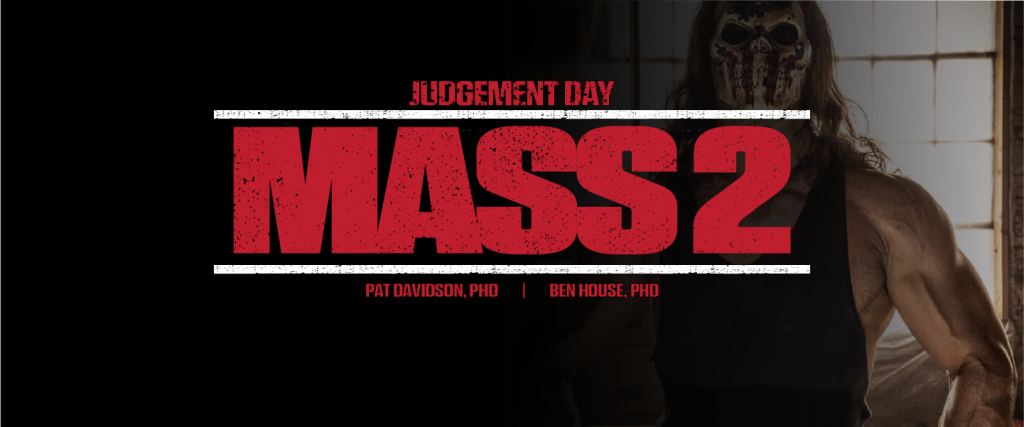
Pat Davidson made people cry with MASS, his phenomenally popular program he released a few years ago.
MASS 2 will make people weep.
For a limited time only, you can get in on the action at 15% off the regular price if you go HERE and type gentilcore15 in the coupon area at checkout.
He’s a few days short of turning 14 months old and I have to say, at the expense of coming across a tad braggadocious, I’m pretty darn proud of myself and my wife: Julian’s happy, healthy, and has only been caught once running around with a pair of scissors.
Far be it from me to describe every parent’s first year with their first child in the same light, but for us the past 365 days and change can best be described as somewhere between organized chaos and a dumpster fire.
Lack of sleep, colic, blowouts, lack of sleep, breast feeding, lack of sleep, 10 pm “how to swaddle” Google searches, lack of sleep, 11 pm walks in a blizzard (goddam colic!), more blowouts, lack of sleep, he just pissed all over the place, Llama Llama Red Pajama, lack of sleep, what did he just put in his mouth?, scissors, and lack of sleep.
Okay, it wasn’t all that bad. In hindsight Lisa and I did a pretty damn good job.
That said, lifting heavy things was/is probably last on most guys’ minds during this period of time, let alone the notion of actually making progress in the gym.
What follows are some tidbits and insights on what most dads can expect to accomplish on the training side of things in year one.3
I’ll be the first to admit I’m a bit of an outlier here.
I’m going to wax poetic below on how most guys need to pump the brakes with regards to their training and that training will often take a backseat to life (and laundry) once they become a Dad.
However, this past year was arguably one of my best training years in recent memory, highlighted by the fact I finally achieved a long-time goal of hitting a 600 lb deadlift.
40 Years Old + (A Then) 9 Month Old at Home = #humblebrag
To put things into perspective, though:
I work in a gym. I have/had no excuse not to train.
I had a wonderful support system in place.
I did implement much of what I write about below.
I’m pretty awesome.
1. Expectation Management
Lets cut to the chase: The idea of training 5-6x per week needs to be given the kibosh right out of the gate.
Well, you can train that often; it just won’t be good training.
It behooves everyone involved to have some feel and a degree of expectation management in the weeks (if not months) after baby is born. Think less “I’m going to train for my first powerlifting meet while also competing in my first Ultra-marathon while also following a ketogenic diet” and more “lets try to get through 20 minutes without falling asleep in the power rack.”
In short, attaining a minimal effective dose is the name of the game.
For most guys a reasonable goal would be to aim for 2-3x per week of full-body training revolving around the compound lifts
2. What Does Minimal Effective Dose Even Mean?
Basically, it means doing as little work as possible while still creating a training effect.
You don’t have to kill yourself in the gym in order to make or even maintain progress during this time.
For most guys who are stressed and woefully sleep deprived, a reduction in both training volume and intensity is warranted (and wise).
Most will read that and assume they’ll lose all teh gainz; that the diminished training frequency (and loading) will turn them into small, weak, girly men.
Actually, no.
On the contrary I’d make the case those 2-3 training sessions per week can and will be very productive sessions.
Counterintuitively, as an example, it’s rather “easy” to maintain strength levels with a reduction in both training frequency and intensity.
As Dr. Vladmir Issurin notes in his book, Block Periodization, in order to maintain maximal strength, there’s a window of 30 +/- 5 days to work with.
Meaning, regardless of any secondary emphasis you can leave alone and maintain certain qualities for “x” days without much (if any) reduction in performance.
If you’re still not picking up what I’m putting down let me put it like this:
“You don’t have to do a lot of something in order to maintain something.”
When it comes to maintaining strength, the body (or, more specifically the central nervous system) just needs to be nudged or reminded every 30 +/- 5 days that you’re into it and maybe want to make out.
For the sake of brevity, the bulk of my training hovered in the 60-85% range most of last year with some 90-95 percenters peppered in every 3-4 weeks.
That’s pretty much it.
3. Okay, That’s Cool Tony….But I Could Give Two S***ts Jars of Pureed Beef Pilaf and Vegetables About Being Strong.
I can respect that.
I got your back.
I wrote an article a few months back on BodyBuilding.com catered to the newly-minted Dad and it described what I felt would be a highly effective – and reasonable – 2-3x per week training program most could follow without batting an eye.
I like this concept for a lot of dudes, but especially for sleep deprived ones who feel like a bag of dicks for a lengthy period of time.
Utilizing a bit of auto-regulation in your training and taking into account day-to-day fluctuations in energy and one’s ability to recover is key.
The key advantage to EDM sets is they still allow you to lift some challenging weight…albeit based on how you feel that day.
Here’s an example:
A. Squat Variation – 5 EDM
Work up to challenging set of 5. Pretty self-explanatory.
B. Same Squat Variation – 3×3
Whatever your 5 EDM ends up being, use the same weight and perform 3×3.
Those nine reps should be crisp, beautiful, relatively fast reps that will make me roughly 65-70% aroused.
2. Embrace Your Meathead
There’s a lot to be said about utilizing more isolation, bodybuilding type exercises to keep guys motivated to train, improve their ability to recover, and to help maintain training economy.
This can be as simple as tossing in a little “gun show” work at the end of a session in order to feel a pump.
Here’s a favorite (stolen from the guys over at The Strength House):
DB Hammer Curls x eight reps, rest 15s, repeat for six minutes.
You can also utilize Density Sets. Here, all you’ll do is set a timer for 8-12 minutes, pair two exercises together (or maybe a circuit of 3-4), and do as much work as possible during that time.
Lower Body Example:
DB Goblet Step-Ups x 8/leg
Cable Pull-Through x 10
Foam Roller Bodysaw x 10
Upper Body Example
DB Bench Press x 8
TRX Row x 12
Upper Cut a Grizzly Bear x2/side
The permutations are endless and what you choose is dependent on goals, what hurts, what doesn’t, and equipment availability. The bigger picture to appreciate, though, is that something is better than nothing.
And your workouts don’t have to be marathon sessions. You can get quite a bit done in 30 minutes.
3. Sub-Maximal Training Works, Trust Me
Even when a baby isn’t thrown into the mix, sub-maximal training (60-85% of 1RM) is something that should be stressed more often.
You need to build strength, not test it.
What’s more, hanging out in this range won’t beat up the joints as much
4. You May Think It’s Lame…But Walking Will Prevent You From Wanting To Kill People
Baby can’t sleep? Go for a walk.
Baby is aimlessly meandering around whining? Go for a walk.
The Price is Right just ended? Go for a walk.
Going for walks is what keeps parents sane. Exercise doesn’t have to be in the form of lifting things. Walking is actually a very underutilized modality and something I did often with my little guy.
I’d put him in the stroller, put on a podcast, and walk around the neighborhood.
It served as an easy way to get out of the apartment and to get my Zone 2 work in.4
In addition my walks spawned the #popupjulian phenomenon, which initially started as a way for Lisa to keep tabs on us when she went back to work after maternity leave. During my walks I’d send Lisa videos of Julian “popping up” around Boston.
Training is every bit as important to her as it is me…so it wasn’t a hard “sell” to ask her to take over watching Julian so that I could go train; and vice versa.
We were (and are) a team.
Teamwork is vital during this time. Sacrifices and compromises are par for the course.
“Sure, babe, you can go have drinks with the girls…for a small fee of 37 foot massages.“
Moreover, and this is something Eric Cressey wrote about when he was a new father, many guys will balk at the notion of asking for or taking help as if it’s a strike to their ego to do so.
To that I say, “bull to the shit.”
Someone offers to watch your kid for a few hours so you can have a date night? Take it. Emphatically.
Hire someone to write your programs. That’s what I did.
It’s okay to ask for help and/or to delegate tasks when needed. I mean, shoot, Batman had Alfred.
Even he didn’t do things all alone.
6. You’re Going to Fail…and That’s Normal
Sometimes you’re going to have a case of the “Eff Its” and not want to train. And that’s okay.
Sometimes you’ll prefer to order a pizza. And that’s okay too.
My friend, colleague, and new(ish) Dad himself, Bryan Krahn, put things into perspective:
I have ZERO insight. From day of birth to month 6, I was an abject failure at training/nutrition. Though the past month has been better — I sent the kid off to Pyongyang for his “education” — so I’ll be jacked again soon. https://t.co/rKJxn50nfu
Pat Davidson is the best interview on the internet.
He developed one of the most badass training programs in recent memory – MASS – a few years ago, and the interview(s) he and I did – Becoming a Brick Shit House HERE and HERE – were the most popular in this site’s history.
Well, he’s back. This time to discuss his sequel…MASS 2.
If you want to skip the foreplay and get straight to business…you can click THIS link to purchase. However, I’d encourage you to read the interview because you’ll want to punch through a brick wall after the fact. That, and there’s a special offer at the end for a discounted price only available to reader’s of this site.
TG:Okay, obvious question: What’s different in MASS 2?The original MASS program was a beast. I know many coaches and people who followed it with great success. What’s different about MASS 2?
How much (more) will it make people hate life?
Who’s the target demographic?
PD: What’s different about MASS 2? MASS 1 was my version of writing the most stupid program I possibly could. It was originally written for an intern at Men’s Health who had never lifted weights before and wanted to put on as much mass as possible in 16 weeks.
I wasn’t going to be able to coach this intern on a day to day basis, but I knew I would have to give him feedback. To be able to give him more accurate feedback, I started doing the program with him. I put the video of a couple workouts on social media and people started asking about them. I sent the program to some prominent coaches in our field, and they started doing the program, and they started posting videos.
Men’s Health was going to do a story on the intern, because he gained a ton of muscle on the program and they were going to name it best new program of the year.
I figured I could make some money out of the situation, so I turned the program into a book, and the MASS concept was born. The book got out into the world, and people started to have great results from it. I had to really start thinking about why the program was so effective for so many people.
My conclusion was that it made people do more mechanical work in less time than they were doing before, so it was an overload, and that the game like structure of the workouts was incredibly motivating for people and made them increase their effort.
The other major factor is that it forced people to be more consistent with their lifestyle factors. The workouts were so hard and punishing that people ate better food, more of it, got more sleep, drank less alcohol, etc, simply to reduce the punishment of the workouts…physiology drives behavior.
MASS 1 features the same workout four days a week for four straight weeks. Like I said, it’s kind of moronic…don’t get me wrong, there’s some brilliance in the simplicity, but it’s also wicked dumb too.
To me MASS 2 is real deal training. It’s the kind of program I would write for myself (it is what I write for myself).
MASS 2 takes lessons learned from MASS 1, and then flips the script on you a little bit, because rather than doing the same workout four days per week, there are four different workouts on the four training days each week.
MASS 2 uses a heavy day, a light day, and a moderate weight day kind of approach, and therefore trains different physiological pathways associated with strength, power, and hypertrophy. There are no easy days in MASS 2, rather different kinds of suck thrown at you across the week.
So in some ways, MASS 2 might not make you hate life as much as MASS 1, because you’ll have some variation and novelty across your weeks, but you’ll re-appreciate the way that shit can be served to you in slightly different stylings.
What’s the shit du jour?
It’s the shit of the day. Great, I’ll have that. That is MASS 2 in a nutshell.
The demographic that MASS 2 is written for is two fold in my mind. It’s for strength coaches, intelligent trainers, and exercise aficionados, but it’s also for regular people who want to learn the truth about things.
MASS 2 is written for those amongst us who are not cowards.
The weak like to skim the surface of topics in life. They like to read blurbs and watch two minute selfie videos on social media. Cowards don’t dig their heels into the ground and try hard when things get difficult.
They want CLIFF notes on everything.
Thankfully the world also has other people in it who are tough, resilient, and truly appreciate depth and challenge. They want the whole story, and the deeper the rabbit hole goes, the more excited they get about the dig. I wrote MASS 2 for this latter group, because very few people in fitness are writing books for them. There’s plenty of crap that regurgitates the same superficial shit that’s been around forever, and basically I want to light that stuff on fire and then put it out with a nice long piss.
TG: What have you added or taken out compared to the first iteration? Why?
^^ This pic shows Pat actually is a very lovely person ^^
PD: One of the most obvious things that I added to this book is that I tell the reader some of my own life story. I talk about coming from a lineage of drunks and drug addicts, and personally being a recovering alcoholic and drug addict.I also talked some about being fired from Springfield College. Those experiences are part of my identity, and they’re elements that bring a lot of shame to me when I think about myself.
At the same time though, those two experiences have been powerful lessons for me to learn some much greater truths about myself. I’ve learned that I’m immature, arrogant, thin skinned, low in self esteem, resentful, and self destructive. At the same time I’ve learned that I can face uncomfortable truths, learn my tendencies and habits, and actually change my persona and behaviors with disciplined deliberate practice.
I’ve also learned that you can reframe what some would consider character flaws into strengths. Drug addicts are in fact the most goal directed amongst us. They want one thing and one thing only, and they usually do whatever it takes to acquire that thing. When you’re a recovering drug addict and you take that same capability and aim it at other things, there’s nothing you can’t acquire.
The other obvious difference is that MASS 1 was thematically inspired by Rocky IV. MASS 2, the sequel uses the greatest action movie sequel as its muse, Terminator 2.
Let’s face it, if you’re going to write a sequel to a badass book involving a Stallone movie, the only way you can follow that up is by channeling Arnold.
MASS 2 is bigger, badder, and stronger than the OG book. In my opinion, everything about the sequel is better than the original…the program, the content of the book, and the writing style.
TG: I know you like to go into the weeds as it relates to program design…..what do you feel are the most common mistakes most coaches make when it comes to writing programs?
PD: In this day and age, it’s actually criminal to not include something about, Start with the Why, in your response to your approach to things in life in 49 out of the 50 states (sorry Tennessee).
If you don’t include something from this book in a fitness based answer, you’re ostracized from the fitness world, and on your way into exile you get tarred and feathered, the shame bell nun walks you out of town, and even your mother throws rocks at you while you trudge head down and cry to the rhythm of Celine Dione’s, My Heart Will Go On.
Essentially most coaches don’t explain why they’re asking you to do something.
If you don’t tell people why something is important, they don’t believe in the concept. Belief will drive effort, and effort will drive physical performances that will cause the body to change.
What I just said doesn’t mean you can throw a shit program on paper, and then tell a magical story about it, and that will work. I think those of us who love training and science will work harder to learn better information, try those approaches out in our own training, and discover what really works, and why it works.
Those same people are usually so passionate that they want to tell other people about what they’ve learned. So I see great story telling about program design and actual knowledge about training science as being a symbiotic relationship that creates a positive feedback loop.
Great science ultimately ends in an explanation of the mechanisms.
The mechanisms of how things work is usually the most interesting part of the story…and those mechanisms are usually complicated, deep, and intertwined with other systems and stories. Great stories have multiple dimensions to them, often times come full circle, leave you with cliff hangers, make you want more, seamlessly weave a common thread throughout the plot, stretch your ability to question your previous assumptions, and inspire you to take action.
To me program design is story telling, and I get people to reach for the stars because they want to after the story affects them.
How many coaches do you know that try to explain everything to the people they work with?
I’ve definitely seen some do it, and they’re usually the great ones. There’s nothing else they want to do more than talk training. They’re excited about it, and if you let them, they’ll never stop passionately explaining every detail of what they think about the things they’re doing.
That’s how I felt meeting Rusty Jones. That’s how I felt hearing Al Vermeil talk. Those guys weren’t spring chickens at those points in time, but they had more energy and passion than 99% of 20 year olds I’ve met.
Something else that people make mistakes on is that they pick shit exercises or put things in a bad order.
Here’s a list of things that I think make something shit in no particular order.
The TRX is involved.
It’s a complex with light dumbbells.
There’s a band around your knees and no barbell is in sight.
Your first movement of the day is an isolation exercise for arms.
The heaviest thing you did involved a cable.
More exercises in your training day used a band than bars or dumbbells.
You spent more than two minutes using a PVC pipe.
The Viper (aka, the weak man’s log) made an appearance.
At some point you did super man’s.
The BOSU was stood upon.
Finally if you write a program and don’t physically try it, I really worry about that thing. I personally don’t put anything out into the world that I don’t test on myself. At some point I’ll probably get too old and fat to self test, but hopefully that isn’t until I’m 80 or something.
The Early Bird rate for my Coaching Competency workshop in the DC area ends THIS weekend (3/25).
For $99 you get to hang out with me for seven hours and talk about assessment, program design, deadlifts, and LOLCat memes. Price increases to $129 after this weekend.
Registration for this highly competitive certification opens on April 4th. However, I’ve got some good, nay, fucking amazing news.
I’ve negotiated some awesome perks for you:
Early access to enroll on April 3rd (24 hrs before they open to the public), increasing your chances of getting in.
A huge discount (up to 33% off the regular price).
This is without question one of the best certifications any fitness professional can possess, offering incredible value and helps to separate you from the masses.
3. Even More Complete Shoulder & Hip Blueprint – Coming Soon
Dean Somerset and I are currently in the throes of drumming up new content for our staple workshop series.
We’ve presented this workshop all over the world – London, Vancouver, Oslo, Prague, Boston, LA – and even turned it into a popular digital product HERE so everyone can enjoy it.
We’ve already nailed down dates in Slovenia, Houston, and LA this fall (2018) and are also in talks to bring it to Detroit, Philadelphia, Australia, and Singapore in 2019.
If you’re someone who’d like to host this event/participate in a tickle fight please reach out to either Dean or myself.
4. Cobra Kai – This Looks Fucking Awesome
I can’t even begin to tell you how many times I watched The Karate Kid when I was, well, a kid.5
I am PUMPED for this. I am 65% aroused.
Shout out to my boy, Chad Landers, who helped prep star (and 1980’s Movie Douchebag 1st Team All-Star) William Zabka, for this role.
For starters, I can tell you without hesitation that in my 15+ years working with athletes, general population, and the occasional wizard, it’s a rare find when someone shows up on Day #1 and can impress me with their push-up prowess.
Most of the time I end up watching something like this:
Which makes me do stuff like this:
SIDE NOTE: This is also how I react when my wife tells me to make the bed in the morning.
Suffice it to say, the push-up – or rather, someone’s ability to do one without making me go batshit crazy – provides me with a lot of information.
Sure, it gives insight on their upper body strength. But that’s just the tip of the iceberg and not really what I’m after. More importantly it provides valuable data with regards to someone’s lumbo-pelvic-hip control/stability and their ability to 1) maintain a good position and 2) to do so once motion comes into play and fatigue sets in.
Secondly, I’m a firm believer that push-ups are one of the keys to healthy shoulders. On one end of the spectrum it’s standard procedure to cue trainees to lock the shoulder blades in place – retract and depress – during basic strength movements like the bench press, squat, and deadlift.7
In short: In order to “protect” the shoulder and to move appreciable weight you have to be dialed in with scapulae positioning.
And on the other end of the spectrum we take everything I just said and toss it out the window.
Unlike the bench press, push-ups are a closed-chain movement (hands don’t move).
As much time as we spend cuing people to “glue” the shoulder blades in place – especially during bench pressing variations – it’s equally as vital to allow them to experience moving around the ribcage (protraction) and gaining access to their full range of motion.
That’s what the shoulder blades are designed to do….
…to move.
I have a simple approach with most of my lifters:
1. Lock those fuckers down when lifting heavy things.
2. However, do your push-ups. Those shoulder blades need to move.
To that end, one of the other advantages of push-ups is that they can be done anywhere and there’s no shortage of iterations to regress or progress them according to someone’s ability level.
Here’s a variation I think will pique some interest.
What Does It Do? – Here I take away a base of support (an arm) and try to hold a 3-point position without allowing my torso or hips to rotate.
This is a killer core/rotary challenge.
Key Coaching Cues – I’m gonna throw myself under the bus a little and say I should have held my elbow tap a tad longer in the video above. I rush things in an effort to get in a more stable position and not make out with the floor.
The idea here is to keep a controlled tempo.
No rushing.
Slowing things down is paramount to the effectiveness of this exercise.
Any sort of mild elevation will work here: an aerobics stepper, the bar set at the lowest position on a Smith Machine, a medicine ball (if you really want to up the ante), or anything similar.
Feel free to alternate which hand comes off the ground.
Pregnancy can be an arduous and delicate time in a woman’s life. To be a bit more colloquial…shit goes down.
Shit goes down hard.
I’m a firm advocate of strength training during pregnancy. It’s a great way to keep the body healthy and strong during those nine months, and to (hopefully) expedite the recovery process once the little one arrives.
There’s a small sentiment out there that exists where women are told strength training is bad or altogether dangerous during this time, and that it should be avoided at all costs.
Lifting weights during pregnancy dangerous? No.
Lifting weighs during pregnancy different? Yes.
Today’s guest post by Pre and Postnatal Exercise Specialist, Terrell Baldock, helps to shed some light on the issue.
If you’ve been lifting for a while, you know the back squat is essential to any strength training program.
But What If You’re Pregnant?
Squatting will become a way of life in motherhood and you will need all of the squat training you can get during pregnancy. Squats are mostly known for their work in the lower body but they’re fantastic as full body movement as well.
A few years back, “I would have said absolutely no, there is no way you should be back-squatting during pregnancy.”
But I’ve come around a bit since then.
Instead of omitting exercises like the barbell back-squat all together, making modifications and learning how to safely execute a barbell back-squat is far more important.
The barbell back squat is fantastic to do during your pregnancy, but you will need to monitor your pelvic floor for any downward pressure as well as your overall stability.
You may also notice your “butt wink” creeping in. This is typically because as your belly is growing, additional weight is being placed onto the pelvic floor.
As a result, your hip flexors, adductors, and abductors tend to become tight and take on more work, plus your glutes become inactive due to the shift in your alignment.
In this article, I’m going to give you strategies to not only maintain your squat, but keep you back-squatting throughout your entire pregnancy.
Your Core
As your belly grows, your abdomen will begin the separation process known as Diastasis Recti. This is completely normal and there is nothing to fear, but you can minimize the effects and keep your hips more stable.
Diastasis Recti is classified as the unnatural separation of your left and right rectus muscles. This process is different for every woman, but research shows that 100% of women will have diastasis recti by their 35th week of pregnancy (Mota et al 2014).
Yes, you can still train your core during pregnancy, but this looks a little different than traditional core training methods. Personally, I like anti-rotation exercises like the Half-Kneeling Pallof Press because it provides both hip and core stability which is perfect for your entire pregnancy.
Many people commonly think of their core as the “six-pack” abdominal muscles, but it’s a bit more involved. Your “deep core system” is made up of your diaphragm, pelvic floor, multifidus, and your transversus abdominis and they need to work synergistically along with the glutes to provide a stable foundation for all of your movements patterns.
So if you happen to notice some coning, or tenting in your abdomen during your back-squat, you’ll need to address your lifting strategy.
Hip Mobility
Your hips can become tight to compensate for the weight of your growing baby. And this is a biggie for your squat pattern because that “butt wink” will be a result.
Not to worry my friend. If you see that “butt wink” it may not the end of your back-squatting days.
In this video, I’m 26-weeks pregnant and back-squatting 70 lbs in the 12 to 15 rep range. As I go into the eccentric part of the squat, you can see the “butt wink” almost right away.
Note From TG:To toss my keen coaching eye into the foray – and this is NOT to call out Terrell in any way, shape, or form – if you watch how she sets up to squat you’ll notice she starts with an aggressive arch (or anterior pelvic tilt) which means she’s likely running out of hip flexion “room” sooner than she normally has access to. As a result the lumbar spine is going to compensate by going into lumbar flexion (butt wink).
The “fix” may be to cue her to start with a little more posterior pelvic tilt first and then to squat with her hips more underneath her. Or, I can just STFU and recognize she’s 26 weeks pregnant and understand that things are a bit wonky at the moment….;o)
At 26-weeks in my most recent pregnancy, I had a “butt wink” in my back squat almost immediately. This is a good indication that I was dealing with muscle tightness in my hips.
At this point, I switched up my strategy by using goblet and sumo squats with kettlebells or dumbbells as well as incorporating soft tissue release of my hips, quads, hamstrings, glutes, abductors, and adductors.
To be perfectly honest, when I switched up my strategy, I had no intention of improving my back squat. I wanted to begin preparing my pelvis for childbirth by releasing the tightness, which is critical when it comes to labour and delivery.
Note From TG:Viola! Goblet Squat = more of an anterior load = anterior core turns on = posterior tilt = Tony does need to STFU.
However, at 33-weeks pregnant, I attempted a back squat and something pretty cool happened.
After down-training for several weeks, my squat improved. Same load, same rep rage and there was a significant difference in my squatting pattern.
Goodbye butt wink!
This means, you may not have to give up your back squat at all.
But if you notice your hips rolling under during your back-squat, it would be a great time to add some release work into your fitness regime.
Using a foam roller to roll out your hips and glutes are a great way to release the tightness. It may not feel good, so remember to breathe.
Your Breathing
A proper breathing technique can help to balance out the pressure in your core which will ultimately provide better protection to your core and pelvic floor. When you have a core and pelvic floor that is functioning well, you will have a strong and healthy foundation for all movement pattern including your back squat.
The breathing technique that you want to master along with your squat is a diaphragmatic breath with a light pelvic floor engagement or “kegel”.
On the eccentric phase or on your way down, inhale deeply through your nose making sure you have good expansion through your rib cage.
On the bottom of your squat, you’re going to begin your exhale through your mouth like your blowing through a straw, engage your pelvic floor, and then press yourself up. Julie Wiebe calls this “blow before you go” because this signals your brain to engage your core and pelvic floor naturally if your core system is functioning properly.
And there’s a lot more information in my Barbell Training For Pregnancy: Your 3 Step Guide For Maximizing Performance During and After Pregnancy.
It features simple and actionable steps to maximize your core and pelvic floor function, improve performance, and most importantly, avoid the complications that can arise from postnatal exercising.
As your pregnancy progresses, you may find your pelvis starting to anteriorly tilt. Now, you want to nip this in the bud in your first trimester or as soon as possible because this can affect how you squat.
Not only that, but your alignment affects your breathing and your coordination.
Ideally, you need to maintain a neutral posture.
This means your ribs stacked over your hips. This keeps the diaphragm seated directly above the pelvic floor allowing it to work with the multifidus and the transversus abdominis together as a team. A neutral pelvic position will optimize the availability to the pelvic floor making it easier to for the pelvic floor to work in unison with the rest of the system.
You know what else your alignment does?
It keeps your deep core system including your pelvic floor functioning optimally, helping to manage the intra-abdominal pressure. However, if you’re feeling downward pressure in your pelvis and your alignment is spot-on, it may be time to make modifications.
Here’s how to stand in neutral alignment in your back squat.
Stand with your legs just outside hip width apart (or a narrower stance if that’s where you’re comfortable) and toes angled at about 15 degrees and knees slightly bent
Squeeze your shoulder blades together, you don’t want the bar sitting on bone. It won’t feel good!
Stack your ribs over your hips and make sure that your pelvis is in neutral position and not anteriorly tilted.
Load and Range Of Motion
Generally speaking, you can continue to use the same load you were using before pregnancy during the first trimester and early into your second trimester (if you’re feeling up for it, of course!).
However, when your belly begins to grow, you will need to monitor your squat for pressure on your pelvic floor and range of motion.
It’s best at this point to lighten the load.
Let’s say you’re working in the 8-10 rep range. Drop the weight to where you can lift 15 reps comfortably.
The goal isn’t to work to fatigue.
If you find that you feel pressure in the pelvic floor after lightening the load, decrease your range of motion so that you don’t come down as far. If that still isn’t helping with the pressure, it’s time to modify.
Listen To Your Body
This is the most important step to any movement during your pregnancy. If you feel overexerted, fatigued, dizzy, faint, or you need extra support in your belly, it’s best to lighten the load or swap your barbell for kettlebells or dumbbells.
Additionally, pay attention to your pelvic floor. If you’re feeling bulging, heaviness, pain or pressure, or leak a little–or a lot, it’s time to modify. If it doesn’t feel quite right, don’t do it.
Seeing a pelvic health physical therapist (pelvic health physiotherapist if you’re in Canada), is a great defense in your prenatal and postpartum training. They can get an internal perspective of how your pelvic floor is functioning, look for any pelvic organ prolapse, and give you the best possible guidance when it comes to prenatal training when it comes to your pelvic floor.
When troubleshooting your back-squat (pregnant or not) make sure you start off unloaded to train the squatting pattern properly along with all of the strategies listed.
First and foremost is safety.
I suggest not training alone and working or consulting with a coach who is trained in prenatal and postnatal exercise. Pregnancy isn’t the time to set personal records and egos need to be set aside. How you train during pregnancy matters in maximizing your postpartum performance, maintaining a well balanced pelvic floor, and keeping you injury free.
About the Author
Terrell Baldock is a Prenatal and Postnatal Exercise Specialist in London, Ontario, Canada. She specializes in working with women with core and pelvic floor dysfunctions and prepares them for the demands of pregnancy, birth and postpartum recovery.
With over a decade of coaching experience, she trusted by Maternity Doctors and Pelvic Floor Physiotherapists as well as a regular speaker at the University Of Western Ontario.
If you have questions about training during pregnancy, feel free to reach out on Facebook, Instagram, or check out her website.