
Categoriesbusiness coaching personal training

Success in the Fitness Industry: Reality vs. Expectations

Copyright: saknakorn

Success in the Fitness Industry: Reality vs. Expectations

People who know me well know how much I’m obsessed with movies. I enjoy reading about them (what’s coming out or on the horizon of coming out), debating them (what’s the better 1997 release: Boogie Nights or Good Will Hunting?), and whenever possible…

…watching them.

I’ll watch pretty much any genre – drama, horror, comedy, thriller, documentary, John Wick, anything.

However, what may be unexpected is how much of a fan of romantic comedies I am.

  • Notting Hill
  • You’ve Got Mail
  • Love Jones
  • Forgetting Sarah Marshall

Put a girl in front of a boy (or boy in front of a girl; or boy in front of a boy; or girl in front of a girl), add some sexual tension, witty dialogue, & ensuing high jinks and I’m there.

(Added intrigue if somehow there’s ninjas and/or a threat of a nuclear holocaust involved).

NOTE TO SELF: Begin screenplay for When Harry Met Sally meets The Sum of All Fears (with a supporting comedic role provided by a Xenomorph XX121, you know, the alien from Alien). 

That shit will just write itself.

One of my all-time favorites (and highly underrated) romantic comedies is (500) Days of Summer.

There’s much I love about the movie, but one thing that stands out is a scene right smack dab in the middle titled “expectations vs. reality.

In it, Tom (the protagonist) is meandering to a dinner party in the hopes of re-kindling a relationship with a recent ex (Summer).

The entire scene is shot as a split screen with one side of the television labeled expectations; or what Tom hopes to happen. A night where he & Summer flirt, are entrenched in captivating conversation, and, in fact, seemingly fall back into love.

Simultaneously, the other side of the screen showcases reality. A night where Tom and Summer exchange a few pleasantries, but in the end he’s off in the corner of the room sulking realizing Summer has moved on from their relationship, and he eventually walks home…

…alone.


GODDAMIT, who’s wearing the onion shirt around here?! I’M NOT CRYING, YOU’RE CRYING!

Anyway, I can’t help but notice a parallel theme in the fitness industry…

…an “Expectation vs. Reality” tug-of-war with regards to what REALLY yields success.

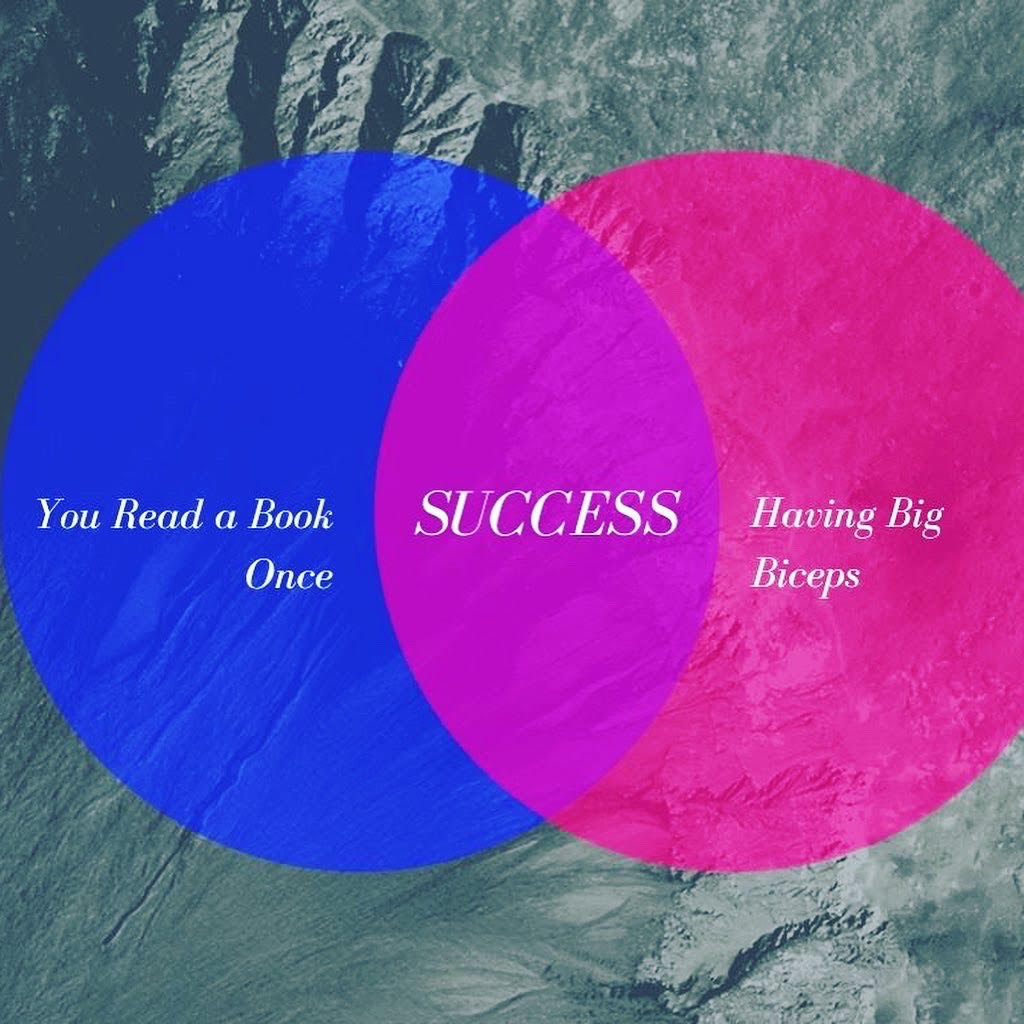
EXPECTATIONS: Many (not all) are intoxicated by the illusion that all you need to be “successful” is to have read a few books and to look the part.
REALITY: Success is an overlap of the x’s & o’s of program design, knowing your functional anatomy, and having general competency when it comes to exercise technique & execution, to name a few.
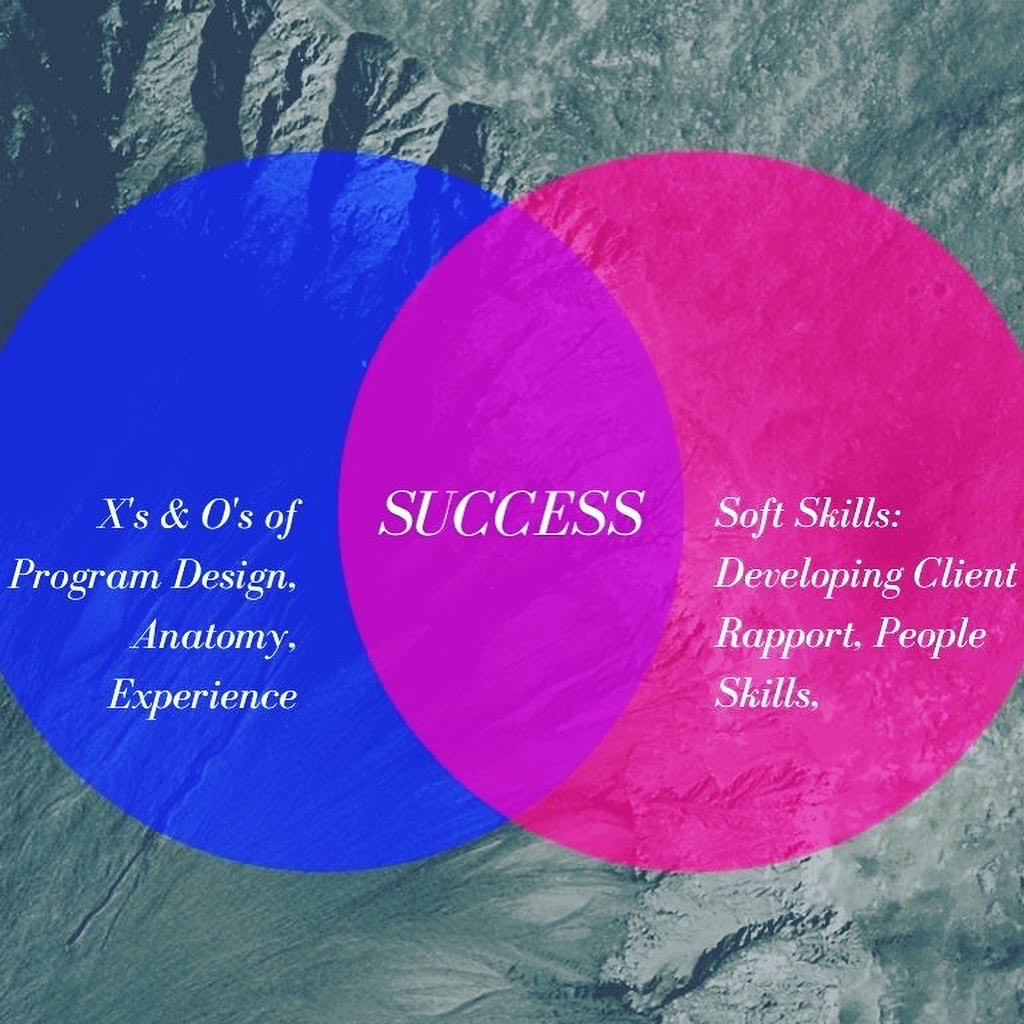
But too, a large, and necessary (and often eye rolled at) part of the cog is the soft skills of coaching:

✅ Developing Client Rapport

Getting results for the people who pay you to do so is an important component of this. I mean, if we’re looking to build trust & rapport with our clients this would seemingly be step #1. However, I’d make the case that before that can even happen it is important (nay, crucial) to go out of our way to plant the seeds of “CONNECTION” first.

Meaning, be more relatable, accessible, and approachable.

What does that even mean?

Seek out other avenues/interests that you have in common with your clients. I obviously use movies a fair bit to do this. But you can also bring music or television into the mix. Maybe you’re a dog lover or think turtle neck sweaters are cool?

Finding common likes/dislikes – outside of exercise – amongst your clients is a wonderful means of building rapport.

✅ Listening

Admittedly, this is a hard skill to learn; we all loving hearing the sound of our own voice. However, as a fitness professional having a keen sense of knowing when to shut the fuck up is imperative.

For example, whenever I have an initial assessment with a potential new client I go out of my way to have him/her do the bulk of the talking.

Early in my career I’d do the exact opposite and try to “win” conversations.

“Wait, wait, wait, hold on, wait. Did you just say you do a lot of cardio to flush out lactic acid from of your system? Well, actually, lactic acid isn’t an acid at all and is actually a beneficial source of energy for your muscles. It’s pretty common knowledge. Anyway, you were saying?”

In hindsight I can’t imagine how many clients I lost because I was trying to impress them with big words.

Today, I just keep (most) of my thoughts to myself and do a lot more listening than winning.

✅ Basic People Skills

Smile, say hello, look people in the eyes, show empathy, be punctual, write programs that actually cater to THEIR goals, check in with your clients during their session (how do they feel? do they feel the exercise where they’re supposed to be feeling it?), never undervalue the power of a non-obvious courtesy laugh (😉), and always provide a safe space and an overwhelming sense of unconditional positive regard.

Also, when in doubt…more Wu-Tang!

✅ Not Being an Uppity Douche

Self-explanatory.

And That’s That

I don’t care if you can deadlift a bulldozer or that you sleep with a copy of SuperTraining underneath your pillow. If you’re not taking the time to flex, hone, and enhance your soft skills as a coach you’ll never separate yourself from the masses.

Categoriesbusiness fitness business

Coach and Grow Rich: Building Wealth

This is the third and final installment of fitness financial expert Billy Hofacker‘s Coach and Grow Rich series on TonyGentilcore.com. However, unlike most trilogies (ahem The Matrix Reloaded & Revolutions) this doesn’t suck.

Financial literacy is a topic that’s not emphasized (much less taught) to fitness professionals. What’s your plan for retirement? Do you have short or long-term disability? How about a 401k? SEP IRA? How do you handle debt?

The gist is: If you have a better handle on your rolodex of Russian weight training manuals or keto recipes than you do your budget, you may want to consider readjusting your priorities.

Here’s the first two installments in case you missed them:

Coach and Grow Rich

Coach and Grow Rich: A Simple Plan for Debt Destruction

I hope you enjoy the third.

Copyright: Chingching Saewu

Coach and Grow Rich: Building Wealth

Just like our clients need to learn proper squatting technique before we throw a heavy bar on their back, we need to have some foundational principles in place for building wealth.

Before we dive into part 3, here’s a quick re-cap of the first two installments.

Part 1 of Coach and Grow Rich was all about developing a money mindset. Since we’ll never outperform our self image, it’s crucial to pay attention to what we’re thinking about. Most people wind up where they expect financially, which isn’t far. By improving your mindset, you can set and achieve greater goals than you thought were possible.

Part 2 dealt with a sometimes uncomfortable topic, debt.

It’s an area I know all too well as my wife and I scraped our way out of a massive amount (more than 100K) of debt 10 years ago. I know firsthand how debt can cripple the future. I’m on a mission to help fit pros destroy debt so they can live the life they’re destined for.

The topic for this final post in the series is wealth building.

Accumulating wealth can sound like a scary thing. I know I’ve had to shift my mindset from one of scarcity to one of abundance. Just over a decade ago I wasn’t sure if we’d be able to keep our house and now I have a grandeur vision.

Hopefully this post will help it seem a little less daunting for you. If a guy like me can get to the other side, with some hard work and discipline, you can too!

I hope you’re convinced of the importance of taking your finances seriously.

If so, here are the 7 habits of highly effective finances (and wealth building).

1. Do a Spending Plan

Think of your spending plan like your training program.

You create your plan before the month starts with your end goal in mind. It then serves as a guide for you to follow. We never follow it perfectly but we do much better than if we had no plan at all.

You can get started with a spending plan HERE.

2. Live Below Your Means

One of my favorite personal finance books is The Millionaire Next Door by Thomas Stanley. While income level can be a big lever when it comes to building wealth, it’s not true that a high income is needed to get ahead financially.

Additionally, high consumption isn’t correlated with high net worth.

The next time you’re at a stoplight, you may see a brand new Mercedes on one side and a three year old Toyota Corolla on the other. While there’s a chance the person driving the Mercedes is wealthy, there is a greater chance the owner of the Toyota is.

You may be surprised to find out that even among people who make 250K or more, only 39% drive luxury cars. It’s also not surprising that 8% of people who earn less than 100K drive luxury models. That’s keeping up with the Jones’ at its finest!

3. Stay Out of Debt

One of the most common traits of millionaires is they get and stay out of consumer debt. Even with a higher income, if a large percentage of it is going towards debt, the lost opportunity to build wealth is tremendous.

4. Save Your Pennies

Another trait of financially successful people is that they’re organized and prepared. They know that life happens and aren’t caught off guard when the water heater breaks, they have a flat tire, or when it’s December 25th.

They save a little each month and build up an unexpected event or sinking fund so when things happen, stress is minimized and they can keep moving in the right direction.

5. Invest

Money sitting in the bank can have its purpose (as mentioned in the point above) but keep in mind that over time that money will be worth less.

This is due to inflation, the decline of purchasing power over time.

One of the key principles of investing is that the higher the risk the higher the potential return. For example, you can invest in individual stocks or cryptocurrency. You may get lucky and choose the right one, like a guy I know of who invested in Apple at 9 years old and became a multimillionaire by age 13.

However, there is a much greater chance you will lose your money since there are so many unknowns. For this reason, most financially successful people have most of their investments in assets that have greater stability like mutual funds, index funds (a close cousin of mutual funds), and real estate. You have to determine how much risk you’re willing to take based on your situation (e.g. age, goals, etc.).

6. Get Money Smart

Some people say to stick your money in an investment, let it grow, and don’t worry about it. Or, hire a financial planner and let them handle it so you can focus on what you do best.

I agree and disagree with both of these strategies.

The main thing for me is that nobody is going to watch your money like you do.

Nobody.

I don’t believe you should take your finger completely off the pulse. You shouldn’t do that with your personal money or the money flowing through your business. I’m not saying you need to check your net worth three times a day, but spending a few hours a month on things like organizing your finances, thinking through different purchases, setting goals, etc. can go a long way.

Life is not all about money but when this part of things is organized the rest of life will work better.

7. Be Generous

Counter to what many think, the wealthiest people are the most generous.

And you don’t have to be wealthy to start giving.

Did the wealthy people become generous by getting rich? Or did being generous make them rich? Even with very little, you can cultivate a generous spirit. It might be with a few dollars, a higher tip, or even a compliment.

Being generous can become addictive. It feels so good to give that you want to earn more just to give more. It becomes a positive cycle of doing good, earning more, and creating a greater impact.

As That’s That

As you can see, building wealth doesn’t have to be complicated.

It can be rather simple.

It’s not easy.

It’ll take years of hard work, discipline, and courage. It’s not all that different from setting a goal in any important area like fitness or relational. I challenge you to do all or most of the seven things mentioned here for the next 30 days. You’ll see that you can win with money and hopefully be on your path to achieving financial freedom!

About the Author

Many fitness professionals get stuck in the day to day and have little to show for their hard work. Billy Hofacker helps them get on a plan to achieve financial freedom. You can learn more by listening to the Your Fitness Money Coach podcast or visiting www.yourfitnessmoneycoach.com.

Categoriesbusiness fitness business personal training

8 Career Traps For Personal Trainers to Avoid

Today’s guest post comes courtesy of Virginia based personal trainer, Detric Smith. In case the title doesn’t give it away, there’a a bevy of sage advice below geared toward fitness professionals on common things that can (not always) derail career advancement.

HINT: Not listed: Male pattern baldness and big biceps…;o) 

This is a great read and I hope it helps any personal trainers out there reading.

Copyright: tawhy

8 Career Trap For Personal Trainers to Avoid

Welcome to an industry where trainers with an overnight certification or with a few shirtless posts on Instagram can take clients and money away from you. Even if it’s unfair, there’s not much you can do about it except rise above the trainers who only care about one thing.

Those who lack the dedication, knowledge and true passion for personal training will likely fall by the wayside while you’ll be still putting in the work to make a good living. But some of you have the potential to be great and need a little direction in becoming a career trainer.

A career trainer must do their job with a purpose of changing lives because this allows you to stay in the game.  You must be able to put aside all the distractions, long hours, and temporary setbacks.  

No one would blame you for falling for one of these 8 traps because easy money is almost always enticing. However, if you want a lifelong career as a personal trainer, read on to learn how to avoid these 8 potential career pitfalls. 

Trap #1: Getting Promoted Too Soon

Is it too good to be true to become a gym manager or personal training supervisor within your first year of employment? Financially, it might be the best option for you.

But are you really prepared?

Getting promoted before you’ve had a chance to learn from your mistakes and mentors may derail your career. Because if you aspire to make fitness a profitable career you need to spend years on the floor, interacting with clients and perfecting the art of coaching.

This doesn’t mean turning down a promotion if you’re doing great things. But if you do get promoted, continue to train people, and do the smallest of jobs. The best business owners understand their customers by investing their time into what matters, which are listening, coaching and problem solving.

Trap #2: Confusing IG and FB Likes With Success

No one’s arguing Instagram and Facebook are outstanding marketing tools. But they’re just tools and not a means to make a sustainable income. You don’t own or control the platforms and have no control if you’re kicked off or not.

If that happens, then what? 

Even if you have enough likes to make money off IG and FB, it could be taken away from you in a heartbeat.

For career trainers, judging your success by social media likes is a huge trap. Instead, focus on turning those likes into real-life clients by getting their emails, interacting with them via DMs or your stories and trying to help solve their problem.

Trap #3: Neglecting Continuing Education

Graduation and getting a certification doesn’t mean you know everything because you’re a newbie.

This industry is constantly changing, and your market is constantly changing also. The people I trained ten years ago are different than the ones I train now. Physiology is important, but no one cares about the Krebs cycle. They only care about losing their love handles.

You know, in case you’re ever short on dinner conversation

Don’t know what’s left to learn?

Study business management, psychology, finance, the art of coaching… anything.

Hell, dive into the history of welding if you want to. Learning new things keeps you excited, challenges your brain, and helps you become a more creative and compassionate coach.

Trap #4: Unrealistic Income Expectations

Remember, you want to be a career trainer, not a part-time trainer. No one gets an undergrad or certification and instantly becomes a “trainer to the stars”, pulling in millions a year. It took Ben Bruno many years of training under Mike Boyle before he trained the likes of Justin Timberlake and Chelsea Handler.

You’re going to invest lots of time, effort, and probably your own money into your business for a long time before you’re turning any real profit. You’ll likely be working 12+ hour days, with a lot of hours early in the morning and late in the evening.

And you may need a second job to make ends meet. 

If you’re not prepared for this, you have been warned. However, if you love what you do and embrace the grind, you will be rewarded. You’ll be able to work for yourself and create your own hours. Plus, you will be making real money but only if you prove your worth first. 

Trap # 5: Targeting The “Wrong” Market

Some newbie trainers want to train athletes and people who look like them. 20-somethings who are already in relatively good shape and have tons of options, and quite frankly don’t really need you. The reality is you need to be training everyone who walks in the door until you figure out who you like to train. 

These are typically general population clients between the ages of 30-70 who have the time and disposable income money to pay for your services. Make yourself different by being better than the other trainers who ignore them. 

Then educate these clients about how you can make a huge difference in their lives. 

Trap #6: Sacrificing the Truth For Quick Cash

Sure, you might get someone in for one or two sessions through a flashy ad making promises you cannot keep. But is this long-term strategy for success or a great way to shoot yourself in the foot?

Making a sale is about finding a problem you can solve and then solving it.

Understand and listen to the story they’re telling themselves because it’s possible they aren’t fully aware of their own problems.

Dig deep, create a connection, and try to find their why.

Once you‘ve connected with them, answer their objections, and show them you’re invested in them. When you get this right, the money won’t be a factor, and they’ll stay with you long-term.

Trap #7: Selling A Product Before It Exists

This product is you.

via GIPHY

Take the time to intern, get a good mentor and gather as much experience as you can. 

Know when you don’t know, and don’t be a fraud. Honestly, telling someone “I don’t know, but I’ll find out for you or connect you to someone who does” puts you in a position of trust.

People make buying decisions, especially with their health, based on trust. Even if you lose a client today, you’ll gain five down the road by earning trust while expanding your expertise in the meantime. 

After gaining invaluable experience, study business, and build your product. This is your career, after all, not some side gig. Learn from the best about how to grow your personal training business. 

Trap #8: Following The Crowd

Everyone is doing it, so I should too.

Didn’t your mom tackle this issue with the “if your friends jumped off a bridge…” question?

I know you think that’s where the money is but it’s a trap. The money might be there short-term, but the long-term is a different matter. Unless you originated something, studied it for decades, and you’re a top name on a topic, you won’t stand out from the crowd.

Instead, go in the opposite direction. Do what no one else is doing because I’ll guarantee you there’s a market somewhere that’s being ignored. Maybe it’s the over-50 crowd who want a safe, effective, team-oriented group training session where they get personal attention. And when you find them, go all in. 

Wrapping Up

I’ve been a trainer for 20 years and I’ve seen excitement and trends come and go. You do not want to be a one trick pony in this industry if you’re interested in a long-term career. Invest time in yourself, your career, and in the right clientele, and you might just crush it.

About the Author

Detric Smith, CSCS, ACSM EP-C, PN-1  is the owner of Results Performance Training in Williamsburg, Virginia. He has over two decades of experience as a personal trainer and sports performance coach. 

He develops personal trainers through his site DetricSmith.com, and serves as a mentor through various fitness organizations. 

Follow Detric on FB and IG

Categoriesbusiness

Maintaining a Sense of Calm and Comfort: How Fitness Professionals Can Serve Their Clients Amidst the Chaos

The world has changed.

I’ve joked about the impending “zombie apocalypse” for years now. And while zombies are fake and don’t exist (except they 100% do), what we’re all currently experiencing with the COVID-19 outbreak is very much real and very much scary.

The entire world is being held hostage to the unknown.

At least with zombies you can see them (and run really fast in the other direction or throw an ax at their face).

With this virus, however, we’re just stuck with this invisible inevitability of a dumpster fire. It’s going to affect our lives in every shape, form, and fashion for weeks, months, if not years to come.

The health/fitness industry, like many industries, has been decimated in a matter of days. People have lost their jobs, income, and (sadly) much, much more.

I am not going to sit here and say I’ve figured it all out. My business has taken a hit too in the past week, and there’s no clear path as to when things will return to normal. Nevertheless, I wanted to share some insights and ideas I’ve used and implemented in recent days which I hope will help others.

Copyright: idealnabraj / 123RF Stock Photo

Maintaining a Sense of Calm and Comfort Amidst the Chaos

1. Be a Leader

I understand this may sound cheesy and a smidge “eye rolley.”

I mean, the real leaders out there are the doctors, nurses, care givers, researchers, and scientists out there who are trying their damndest to circumvent the storm.

Telling someone not to round their back on their deadlift does not a leader make.

I think one of the things that scares people the most given current events is our daily routine(s) have been disrupted:

  • Schools and daycares are closed.
  • Concerts, workshops, seminars, conferences, sporting events, hell, sport seasons have been put on pause.
  • Self distancing and in some cases, shelter-in-place protocols, have been put in place.
  • We can’t go to the movies or visit our favorite bars and restaurants.
  • It’s impossible to find toilet paper (huh?) or kale (fuuuuuuuck).

Compound all the above with gyms closing and there’s only so much a person can tolerate…

via GIPHY

We have to be a voice of reason and comfort for our clients.

Their fitness is not going to deteriorate.

I’ve reminded several of my clients that both aerobic endurance and maximal strength “stick around” for a fair bit of time.

Much of the research states that the residual training effect – retention of changes induced by systematic workloads beyond a certain time period after cessation of training – for both aerobic endurance and maximal strength hovers in the 30+/- 5 day range.

Meaning, given a drop off in exercise duration/intensity/frequency you can (and most likely will) maintain those physiological and motor abilities for 25-35 days.

Put another way: Unless someone succumbs to a MAJOR case of the “eff its” and decides to do nothing but binge watch Netflix and bathe in Cheetos dust their fitness levels won’t drop off as much as they think.

The body only needs subtle reminders to maintain those qualities. In lieu of lifting “heavy” we can tweak things like tempos, rest periods, drop sets, mechanical advantage sets, pants on, pants off, lots of things.

(Speed/Power, on the other hand, dissipates quickly…to the tune of 5 +/- 3 days. But even this can be maintained with sprints and simple plyo drills like skipping & bounding).

So, just doing that – and reminding clients that all their hard work won’t just disappear – will go a long way in dampening their anxiety.

HOWEVER: It’s imperative as their coach to encourage them to be proactive.

2. The Part Where You Encourage Them to Be Proactive

One of the first things I did was to email my clients to give them my plan and to offer direction/options.

I’m in a bit of a lucky situation in that I train people in a semi-private fashion out of a small studio space. Unlike larger commercial gyms I haven’t had to shut down (yet), but I have taken precautions to practice social distancing:

  • No more than two clients in at any given time.
  • All clients are required to wash & sanitize their hands upon arriving, and are encouraged not to train if they feel ill or have a cough or fever.
  • Workouts are limited to 60 minutes only.
  • All bars, DBs, KBs, handles, pens, everything will be sanitized between transitioning of clients.

Still, and respectively, 40-50% of my clientele have opted to stay away from the gym altogether.

So the second email I sent was a link to PerformBetter.com who are offering FREE shipping on all online orders.

OG status right there.

I encouraged my clients to pick up, at the very least, some (mini and super) bands in addition to some kettlebells, and told them that between those two things – in addition to basic bodyweight movements – they’d have hundreds of exercises to choose from and to keep them occupied.

To that end, I plan on filming and sending my clients 2-3 “at home” workouts per week that utilize minimal equipment.

Here’s an example I shared on social media the other day:


View this post on Instagram


I’ll play! . Like many of my colleagues I’ve been busy tweaking all my clients’ programs to reflect the times we’re currently in. . I.e., More “at home” workouts. . And while I’m up for the challenge I’d be lying if I said I haven’t had to conjure up my inner McGyver: . “I’ve got one band, an ab wheel, a mat, a roll of duct tape, and a yo-yo. I need a 3x per week program.” . Go! . I’ve been enjoying seeing what everyone else has come up with and it’s helped me tremendously tap into my creative juices. . Here’s a sample day I’ve sent a few of my clients: . Each exercise is done as a EMOM (Every Minute on the Minute) set. Once you complete an exercise you rest until the top of the next minute. . 1️⃣ Scissor Jumps x4-5/leg (substitute = 20 Jumping Jacks or 5 Vertical Jumps w/reset). . 2️⃣ Push-Up w/Elbow Tap x4-5/side (substitute = 8-10 “regular” reps elevated). . 3️⃣ 1-1/2 Reps Squat x 8-10 reps (no substitute. Fucking do it…😉). . 4️⃣ Prone Pulldown w/ Hip Add-Abduction x8-10 (props to @movement.with.meghan for this one). . 5️⃣ Step-Through x5/leg (substitute = Reverse OR Forward Lunge only). . Optional: Practice nunchuck skills. . Perform for 5 Rounds. You’re so diesel! . I’d like to post more of these moving forward so long as people want them and find them useful?

A post shared by Tony Gentilcore (@tonygentilcore) on

If there’s ever a time to lead by example it’s now.

3. The Part Where You Encourage Them to Be Proactive (Part II)

I don’t think we’ll see any shortage of coaches uploading at home workouts on social media in the coming weeks/months (thank goodness).

I am flabbergasted at the inventiveness and creativity of my colleagues.

A few resources I’ve been directing people towards are:

  • Dr. Ryan DeBell’s At Home Movement & Workout Program (it’s free to download, but you have the option to donate $$ if that fills your love tank).
  • Jen Sinkler’s Lift Weights Faster Daily (you get DAILY emails highlighting workouts that use minimal equipment).
  • THIS free bodyweight training manual via Jim “Smitty” Smith of Diesel Strength.
  • Dean Somerset is offering two months of free access to his High Tensile Strength resource (which includes a section on bodyweight training)
  • Citizen Athletics’ home workout program(s) – HERE.
  • Anything BJ Gaddour produces – particularly his “Daily BJ” (which is just a brilliant marketing name).

And, honestly, I think going out of your way to check in with your clients via email/texts is an apropos way of doing business.

I’m challenging my clients to send me accountability emails after completing the workouts I send them. One of my clients sent me this message yesterday:

“Workout 1 in the books. I think this will work just fine 🙂 For extra fun, I added some rucksack curls and wore the rucksack during pushups.

Thanks so much for putting this together. Didn’t realize how much it would boost my mood (didn’t even know my mood needed a boost). Excited to keep going on the coming days.

Thanks again.

PS: I miss your biceps (<— added by Tony).”

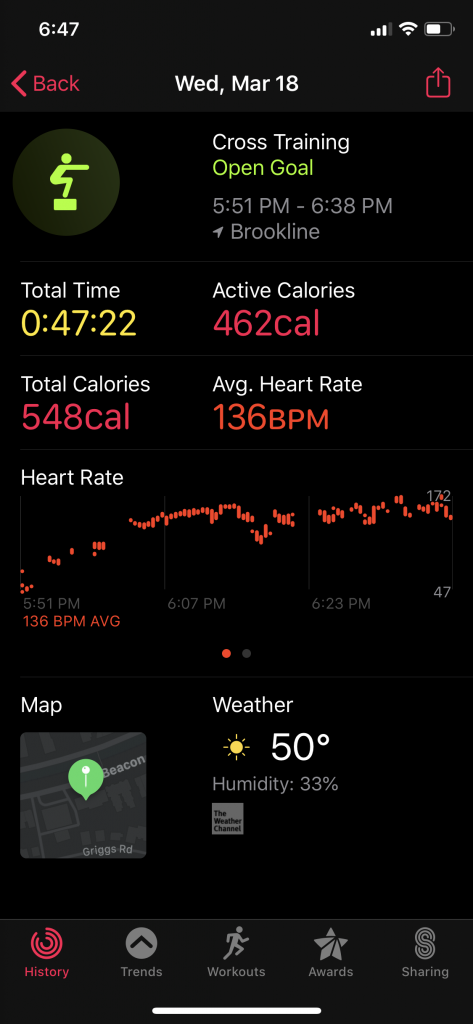
He even sent me a screen shot of his workout stats:

I want more of this.

ADDENDUM: My good friend, John Rusin, had a nice re-frame regarding this whole fiasco. He reminded everyone that while it’s cool we’re all trying our best to serve our clients and inundate them with at home workouts to perform, we also can’t forget about CONNECTING with them.

He’s encouraging fit pros to just talk with their clients, check in. Another coach, Melanie Redd, suggested making a private group on FaceBook or Slack.com to share ideas on books to read or shows to binge or to just co-hyperventilate into a paper bag (my add, not hers).

In short: Remain human with your clients.

4. Distance Coaching – It’s a Thing…;o)

I’d do this discussion a disservice if I didn’t defer to Jon Goodman, founder of Online Trainer Academy:

“You don’t need to pay for software to start online training. But if you do want to use it, any of them are more than adequate. Google Drive and email is fine too for now. It doesn’t matter what video tool you use either. Skype or Zoom both work. And you can accept payments with PayPal.

There, that answers the 10,000+ questions I got yesterday. I know that this is a change and it’s scary and feels foreign and uncomfortable. Everybody is struggling right now. Nobody really knows what’s going on. We’re all scared.

But I beg you, don’t overthink this. Move fast. Speed is paramount right now. Jump all in and it’ll be fine and you’ll figure it out. I promise.”

5. A Brief Rant on Selling Products During This Time

For starters have some feel and use common sense.

While it’s a very small percentage, I’ve seen some health/fitness professionals (not coincidentally ones they have a vested, financial interest) suggesting certain diets or supplement stacks will slow down, stave off, or altogether silence the Coronavirus.

In short: To say they suck is an insult to sucking.

They’re the worst.

Secondly, I’ve seen a rash of Tweets and IG posts from some fitness professionals reprimanding other fitness professionals for having the audacity of selling their products during this time. I can’t help but think these are the same people who just hate and complain about everything; even kitty cuddles.

From what I’ve seen the vast number selling products are adopting this tone:

“Hey, if you’re going to be stuck inside for the next several weeks you may as well get smarter and earn some CEUs!”

I think it’s a completely fair and ethical approach.

Tossing myself to the pitchforks I’ve not only lost income from clients pressing the pause button on their in-person training, but have also had all my workshops in the coming months cancelled as well.

I know others have it far worse, and I am not looking for a pity party.

I’m going to be okay, but still…

…that’s revenue I won’t be getting back.

Is the expectation that I (and others in a similar predicament) am supposed to offer free services and 100% off codes on all products for the foreseeable future? Am I supposed to renege on the endless hours (and $$) I’ve spent producing these resources?

Am I?

Would you?

Listen, it’s one thing to be a dickhole and market things in a way that’s blatant profiteering (not cool). It’s another thing altogether to make a living (totally cool).

All of this to say: Assuming you’re not the former example…if you’re someone who has products to sell amongst a horde of fitness professionals yearning to kill some time and learn I say…sell away.

  • Offer payment plans
  • Give people an option of what they want to pay (you’d be surprised how many will pay more than you think).
  • Free hugs for every purchase?
  • I don’t know.

We’re in a weird time now.

I hope this helped.

Categoriesbusiness

2 More Ways to Stand Out With Integrity in an Industry That Has Little

Last week my friend and colleague, Jill Coleman, wrote a wonderful piece titled “8 Ways to Stand Out With Integrity  in an Industry That Has Little.

You can check it out HERE.

I thought it was the bees knees…and 1) I’m sorry for using the phrase “bees knees,” and 2) I shared it here on this blog (on my weekly Stuff to Read While You’re Pretending to Work series) in addition to tossing it up on my social media outlets.

HINT: it…was…that…good.

Copyright: turgaygundogdu / 123RF Stock Photo

So I Figured I’d Jump In

There isn’t much to add to Jill’s post; she hit on a lot of “big rock” themes I feel behooves any professional, regardless of occupation – to follow.1

To that end, I wanted to add a few salient points into the mix and to expound a bit on some of MY thoughts hovering around the same topic.

You know, just a few tidbits, tiddlywinks, and tickles(?) <— I couldn’t think of another good t-word to finish the alliteration.

1. Practice What You Preach

I’m a coach.

I like helping people get strong(er), feeling better, and/or conjuring their inner meathead. To steal an analogy from my good friend Dean Somerset: I like to think of myself as a fitness Sherpa.

Except in this case, instead of guiding people up Mt. Everest, I guide them through their Goblet Squats or get-ups; or my Gangstarr play list (alliteration!)

My job is to be their support system and direct them from Point A to Point B in the safest, most time efficient path possible.

The key here, of course, is the coaching part.

I actually coach.

Meaning, I work with people in real-life. It boggles my mind that there are some “fitness professionals” out there, a minority to be fair, who sell themselves as these industry messiahs who have worked with 1000’s of people and are “world renowned” despite being 21.

Now, I’m not saying someone can’t be a successful coach or even well-known in this industry at 21.

However, you know it, I know it, your best friend’s second cousin’s dog trainer’s Little League coach knows it…

…you’re full of shit.

Or, even worse, there are some fitness professionals out there – regardless of age – who market themselves as “experts” and write a good game – are featured on popular sites or sell a bunch of E-books – but train zero people.

Ben Bruno and I like to play a game whenever we come across an insane workout or program online. You can always tell those programs written by real, well-seasoned coaches (who work with real people) and those written by wannabes:

Real Coach

A1. Trap Bar Deadlift 3×5
A2. (Loaded) Push-Up 3×8,8,MAX

B1. Front Squat 5×3 @ 75-80%
B2. Chin-Up 5×5

C1. Chest Supported Row 3×12,10,8
C2. BearSaw 3×8-10

Coach Who’s Never Trained Anyone…Ever

A1. Deadlift 10×10
A2. Handstand Walks over Broken Glass 10x400m

B1. Bench Press 10×10
B2. Punch a lumberjack in the beard 10xMAX reps

C1. Back Squat 10×10
C2. Barbell Bicep Curl w/ Weight Releasers, 5/5/5 Tempo – Blindfolded 10×5

Listen, all I am saying is this:

Don’t be a clown. Don’t pretend to be something you’re not. It’s not worth it and (most) people are going to be able to see right through the nonsense anyway, which is not going to help your career in the long run.

Moreover, and this is just my own personal aside: I have rarely programmed an exercise (or protocol) that I haven’t performed myself.

  • 20-rep squats?…yup.
  • 21 straight days of deadlifting?…stupid, but yes.
  • THIS?


Well, the video proves it…;o)

I can think of no better way to hammer home this point than with a story I heard Martin Rooney say years ago centered around the Monk, the Mom and the Toddler (paraphrased):

A mother was incensed she could not get her toddler to stop eating sugar. As a final hail mary she decided to seek the advice of the wise Monk.

Mother: “Oh wise Monk, can you tell me how I to get my toddler to stop eating sugar?”

Monk: “Come back in two weeks and I will tell you.”

Mother: “FML, (like I said, paraphrased) that doesn’t help me, but okay. See you in two weeks.”

(Fast forward two weeks)

Mother: “Alright Monk, it’s been two weeks. How do I get my toddler to stop eating sugar?”

Monk (looks directly at the toddler): “Stop eating sugar.”

Mother (incredulous): Wait, what? That’s what I have been doing all along! This makes no sense. Some wise Monk you are!”

Monk: “I had to stop eating sugar before I could tell someone else to do the same.”

That’s integrity.

via GIPHY

2. Don’t Buy Followers

Recently I watched Bret Contreras’s presentation via the NSCA Personal Trainer’s Virtual Conference on how to grow your Instagram following.

Bret’s someone who has over 800k+ followers so he knows a thing or two about what to do and what not to do.

To Do:

  • Prioritize actionable content
  • Treat it like a job (I.e., good content takes more than 10 minutes to produce. Bret spends, on average, 3-4 hours PER DAY creating content and interacting with his followers)
  • Good content is a combination of training yourself, training other people, and READING
  • A good microphone, lighting, and knowing your angles matters.
  • Be authentic

Not to Do

  • Buy followers

I see it all the time.

Someone has 100,000 followers yet two comments on each post.

Don’t buy followers.

Just. Don’t.

3. I’m Done, Just Realized The Irishman is Now Available to Watch on Netflix

Peace.

Categoriesbusiness

Dangers of the Discount Trainer

thodonal@123rf.com

There’s no shortage of topics to debate in today’s world.

  • Keto vs. CICO?2
  • How to best tackle the issue of healthcare?
  • Is Pluto a planet?

I don’t have a horse in the race on any of the above, except:

  • Keto zealots are the worst.
  • We need to be more PROACTIVE than REACTIVE with regards to healthcare.3
  • You’re goddamn right it’s a planet.

Nevertheless, when it comes to choosing your team – or side of the fence – with any topic I always say the real right answer is…

it depends.

It’s rare for something to be so clear-cut and definitive; there’s always a degree of nuance and extenuating factors to consider.

Seriously, Pluto’s a planet.4

Dangers of the Discount Trainer

I’m going to just come right out and say it: I’m not a fan of trainers offering discounts for their services. Now, I say this with a grain of salt because I completely understand (and respect) that it’s a delicate matter and that there’s a number of factors to consider.

For example, I think it makes a lot of sense for larger, commercial gyms to offer discounts.

In Boston, like any major city, there are several notable, big chain commercial gyms vying for people’s attention (and wallets):

  • Equinox
  • Boston Sports Club
  • HealthWorks
  • LifeTime Fitness
  • 24 Hour Fitness
  • Golds
  • Planet Fitness
  • Beacon Hill Athletic Club

In addition there’s dozens of mid-level commercial gyms (not chains, but pretty big) peppered throughout the city, not to mention a CrossFit box in every major neighborhood. That’s a lot of competition and it makes sense that many of them would offer a free consultation or discounted introductory rates on training to entice more people to join.

Moreover, and as Cressey Sports Performance business director, Pete Dupuis, has noted in the past: Roughly 30% of people who are offered free consultations actually end up taking advantage of them.

“This may be a solid conversion rate from the perspective of the commercial gym owner, but not for the independent contractor who doesn’t see a single penny of the monthly membership dues these potential leads are paying.  A 30% conversion rate tells me that 7 out of 10 people decided that something for nothing was actually worth nothing.”

As a small business – and more to the point, as a gym that only offers personal and semi-private training (no open gym or classes) – I don’t have the luxury of hundreds (if not thousands) of people paying a membership fee just to walk through the doors.

Why would I offer my services and time at a free or discounted rate when I have bills to pay?5

I can hear the cacophony of pitchforks now.

“But Tony, if you offer free/discounted stuff it’s less intimidating and allows people to see whether or not you’re a good fit.

Stop being such an uppity a-hole!”

To that Point

1. Try walking into a hair salon, attorney’s office, or, I don’t know, Gringotts Bank and ask someone for 30-60 minutes of their time in order to sample the goods and to see if “you’re a good fit.”

HAHAHAHAHAHA – no, seriously, do it.

UPDATE: I should add that it’s not lost on me there’s a bit more robustness to the client-coach relationship compared to the client-attorney relationship. Helping someone to change their behavior takes a lot more nuance. That said, it’s one thing to offer complimentary sessions/discounted rates in conjunction with a clear-cut on-boarding protocol geared towards improving the client experience.

My good friend Todd Bumgardner, owner of Beyond Strength Performance in Sterling, VA, remarks that their conversion rates are very high utilizing a heavily discounted first month of training for new members.

But that’s also because they’re laser focused when it comes to their systems; new members go through a thorough “itinerary” in order to proceed.

And it’s another thing altogether to just haphazardly toss out discounts for the sake of generating some quick  revenue. 

2. This is my livelihood, not a garage sale.

Sorry not sorry.

To that end, I don’t want to sit here, come across as some crotchedy old bastard (GET OFF MY LAWN!), and rag on the notion that you should never discount your rates as a trainer.

I mean, only Sith’s deal in absolutes, right?

Some Pros or When to Offer Discounts

1. You’re New

If you’re a new trainer or coach in the industry, need experience and more eyes on you – particularly in a crowded commercial gym scenario where there’s a few dozen trainers vying for the same thing – then it makes sense to offer some discounted training to build your client roster.

It’s not beneath you to do so.

I did it.

When I was a commercial gym trainer I’d often offer free 15-30 minute “Deep Dives” for on my own time for members:

  • Deep Dive: REAL Core Training
  • Deep Dive: Learn How to Deadlift
  • Deep Dive: Shoulder Friendly Strength Training
  • Deep Dive: How Hot is Jennifer Garner in Alias?

As a result I got more eyes on me and would often have members reach out to begin training.

For the more mathematical minded in the crowd, you can also think of it this way courtesy of  Finnish coach, Joni Jaakola of Optimal Performance:

“Offer 45 minute free training sessions + 15 minute consultation => client can experience what they are about to sign into => convert 50% of them => fully booked weekly calendar in two months or so.”

2. One-Time Special Offers

My friends over at Mark Fisher Fitness in NYC are huge proponents of offering special one-time only offers of 20-25% off packages when people attend a special class or charity event.

I like this idea.

If you’re already making the time to be at a certain place at a certain time, go for it.

Offer free shit – training, tickle fights, whatever.

People attend a class, you get their names, you offer the offer, and then you follow-up with a PHONE CALL (or text) – people just delete email – for a few weeks to remind them of when the offer expires.

3. It’s August

In the fitness industry, August (in the Northern hemisphere anyway) is…the…worst.

It’s a dead-zone.

Gym floors often resemble the barren, desolate wastelands of Mordor.

Except in this case it’s because people are on vacation in Martha’s Vineyard (and not so much because of the whole Sauron thing).

So, I get it.

Sometimes you have to discount your rates to attract people’s attention and to get bodies on the gym floor.

Totally legit reason.

However, my buddy and I were headed to get some pizza after a killer squat session last week when we walked past this sign located at the main entrance of a gym chain here in Boston:

Now, admittedly, I have zero insights into this business’s numbers or the inner workings of their operation, maybe they’re crushing it, but to me this is what’s wrong with offering discounts…

…especially ones this, shall we say, aggressive.

My Take (the Cons)

Again, offering discounts is not wrong or altogether a waste of time.

There IS a time and place and a way to implement them that can and will behoove your business as well as the (potential) client.

That said, it’s important to remain aware of the concept of anchoring.

If you’re a fan of behavioral economics – such as myself – and read a lot of books on the topic as it relates to decision making and marketing this should be a familiar term.

Via Wikipedia:

The anchoring effect is a cognitive bias that describes the common human tendency to rely too heavily on the first piece of information offered. … During decision making, anchoring occurs when individuals use an initial piece of information to make subsequent judgments.”

In the case of the above offer ($15 for 70 minutes of training), the more the discount gets away from your full price, the more problems and reticence you’re going to have – from the consumer – when you reveal said full price.


1. Creates Price Sensitivity & Unsustainable Expectations

This is the double-edged sword of anchoring.

“Anchor” your price too far removed from your actual rates and you run the risk of creating a bevy of price sensitive clients who are going to jump ship to the next trainer or gym who offers an even better discount.

Canadian nutritionist, Steph Hnatiuk, agrees:

“I think huge discounts can attract clients who are only willing/able to pay bottom-end rates, and you’re unlikely to wow those people into full-price paying clients if their budget just doesn’t allow it. I think you wind up giving too much of yourself away in the process.”

2. Creates Discounted Effort

Pigging back on the above, in my experience I have found that discounted prices sometimes (not always) creates a culture of discounted effort.

Humans are very loss adverse.

This refers to people’s tendency to prefer avoiding losses to acquiring equivalent gains: it is better to not lose $5 than it is to find $5.

If a client pays my normal rate they have invested in themselves. There’s a degree of “buy in” from the individual to the tune of if they don’t show up – and I enforce my cancelation policy – there’s an inherent loss there.

And people hate loss.

Even more than the Patriots…;o)

Investment = people (usually) go out of their way to put forth some effort and consistency.

They show up.

$15 sessions = “meh, charge me, I gotta catch up on Ballers.

3. Creates Awkwardness

The less mental gymnastics I have to do as a business owner, the better.

  • Who’s coming in today?
  • Who needs a new program?
  • How many sessions does so and so have left in their package?
  • Why am I not wearing pants?

I prefer to keep things simple:

– I use Google Calendar to book my sessions.

– I use Excel to write my programs.

– I have an assistant who tracks all client sessions (and to let me know who needs what when).

– I almost always wear pants.

Too, when it comes to training packages, I also prefer simplicity and go out of my way to not offer a robust array of  options because, frankly, I don’t want to have to deal with that dumpster fire.

If I charge Client A “x” (a discount) and then Client B who is charged “y” (no discount) finds out about it, and is like “dafuq, Tony?”, it makes for some awkwardness I’d rather avoid.

Me touching my wife’s butt in public = awkwardness I can handle.

Me not shaving my head for two weeks = awkwardness I can still kinda-sorta handle.

Me explaining why two clients are charged two different rates = no thank you.

4. You Get What You Pay For

This is 90% meant to be more than tongue-n- cheek than anything.

But, yeah, you get what you pay for.

Categoriesbusiness fitness business

Should You Follow Your Passion into Starting a Fitness Business?

Note From TG: I am passionate about a lot of things:

  • 90’s hip-hop
  • My wife’s butt
  • Tickle fights…to name a few.

I have yet, however, to follow my “passion” in any of those things and attempt to make a career out of them.

There’s a facade in today’s society where we put on our rose colored glasses and think that, so long as we follow our “passion” and pursue something we love doing, that that will be the panacea of a happy life and fulfilling career.

I am not going to rain on everyone’s parade…but it’s not quite that simple.

Today’s guest post by Exercise.com founder, Joel Ohman, hits the nail on the head.

I wish I could make out with it I like it so much.6

Copyright: olegdudko / 123RF Stock Photo

Should You “Follow Your Passion” into Starting a Fitness Business?

It seems that many times, maybe even most of the time, the calculus for entering the fitness industry involves a variant of this internal discussion:

“Well, I like working out, and I like wearing shorts to work, and, at least I’ll never have an excuse to not work out, right? A career in the fitness industry seems great for me!”

And then, quickly thereafter,

“You know, I can’t stand having my boss tell me what to do, and I hate having to share my hourly rate with the gym, so I’ll just go out on my own. I’ll start my own fitness business!”

Tony has long argued that new entrants to the fitness industry should put in their time, working for at least a year, as a personal trainer in a commercial gym setting, but is passion enough to propel you into starting your own fitness business?

At Exercise.com, we encounter trainers, gym owners, and fitness professionals of all stripes. Some of the trainers we work with train professional athletes, Olympians—including a trainer who is himself an Olympian—those with large social media followings, those who are just starting out, and all across the map, but the common denominator to success is that one must be willing to put in the work.

Passion, energy, and excitement are great things, but let’s be honest, there comes a time in any career or business venture where you just have to do the hard things necessary for success, passion plays little to no part in it.

Author Cal Newport in his (excellent) book “So Good They Can’t Ignore You: Why Skills Trump Passion in the Quest for Work You Love” labels this common misconception the Passion Trap.

The Passion Trap

Newport describes the Passion Trap:

“The more emphasis you place on finding work you love, the more unhappy you become when you don’t love every minute of the work you have.”

This seems counterintuitive and certainly runs against the modern advice given to job-seekers to “follow their passion” in a career or business they love. Yet, if this is the case, why do only 20% of workers claim to feel very passionate about their jobs

Rather, Newport argues that we are focusing on exactly the wrong thing.

Similarly to the paradoxical way that focusing on becoming more happy tends not to make us happier, but just more conscious that we are not, in fact, happy, but if we instead focus on something outside of ourselves—helping others or focusing on an important external mission, for example—then happiness is more likely to “just find us” so too, focusing on something besides what we are passionate about in our work will tend to have the same effect.

So what should we concentrate on?

What are some of the things we should focus on to determine whether starting a fitness business or launching a career in the fitness industry is a good fit for us?

Newport outlines a number of things that are important, from autonomy, authenticity, and mission, but the single biggest factor is skill.

Skills Trump Passion

Developing skills by working hard over an extended period of time, by deliberately practicing and improving in a particular area of expertise, trumps any short-term nebulous claims of passion when it comes to finding long-lasting job and career satisfaction.

In other words, when you work hard at something for a long time and become a true expert, viewing your work from the vantage point of a craftsman and true master, then satisfaction naturally follows.

But if you spend all your time chasing after the ephemeral passion bubbles floating by you on the wind then your satisfaction will be temporary and disappointing.

Kevin Mullins echoes Tony’s earlier advice about working in a commercial gym setting with his article, “You Are Never Too Good to Work in a Commercial Gym Setting” because true masters, those with a craftsman’s approach to their work, realize that one must trust the law of the process, and you can’t skip steps on the journey to mastery. Mastery, expertise, a craftsman’s mindset, all of those elements have a much great contribution to lifelong satisfaction in the fitness industry.

Does this mean that you should never start out on your own and build your own fitness business?

Absolutely not!

As a 5x serial entrepreneur I couldn’t imagine doing anything different, so if you are wired the same way—and being wired a particular way is not better or worse than anyone else—then by all means, strike out on your own and start that fitness business!

But don’t skip steps.

Put in the hard work of getting certified, picking up some personal training experience, get some business savvy, learn about marketing, and learn from case studies of other successful personal trainers and fitness business owners.

To be clear, a career in the fitness industry can be a great thing.

But to really succeed and to experience long-lasting satisfaction you must commit to the lifelong deliberate practice of building the skills and craftsmanship necessary to become a true expert.

And, yes, you can wear shorts to work.

SPECIAL DISCOUNT: If you want custom-branded iOS and Android apps for your fitness business, then check out Exercise.com’s fitness business management software to scale your business in-person and online using assessments, clients/class scheduling, gym check-ins, billing, workout software, and more then mention this article to get an extra month free.

About the Author

Joel Ohman is a serial entrepreneur, author, and angel investor. He is the founder and CEO of Exercise.com and a number of tech startups. He lives in Tampa, FL with his wife Angela and their three kids.

His writing companion is Caesar, a slightly overweight Bull Mastiff who loves to eat the tops off of strawberries. He lifts weights six days a week and does Krav Maga twice a week to try to ignore the fact he’s still just a washed up ex-college basketball player.

You can connect with Joel at JoelOhman.com.


Categoriesbusiness fitness business

How Being Radically Candid Can Transform Your Fitness Business and Client Relationships

Wow – do I have a treat for everyone today.

Best selling author and Exercise.com founder & CEO, Joel Ohman, is in the house today with a stellar guest post on “radical candidness,” and how it can make you a better, more successful personal trainer and human.

Enjoy!

Copyright: albund / 123RF Stock Photo

How Being Radically Candid Can Transform Your Fitness Business & Client Relationships

At Exercise.com, we work with fitness business owners of every type, niche, and specialty. From sports performance gym owners and celebrity fitness trainers to incredibly witty and intelligent cat lovers who can deadlift a Buick one-handed while wielding a lightsaber with the other hand.

Did I say that right, Tony?

Oh, wait, the image you made—um, right:

Anyway, all that is to say we work with all different types of fitness professionals, and it gives us a unique insight into the psyche of personal trainers and, specifically, how they communicate with us, their co-workers, and their clients.

Different trainers have different communication styles.

Like all business owners, and people in general, there are certain communication traps we can all fall into that can sabotage our client relationships and undermine the success we are all working so hard for in our fitness businesses.

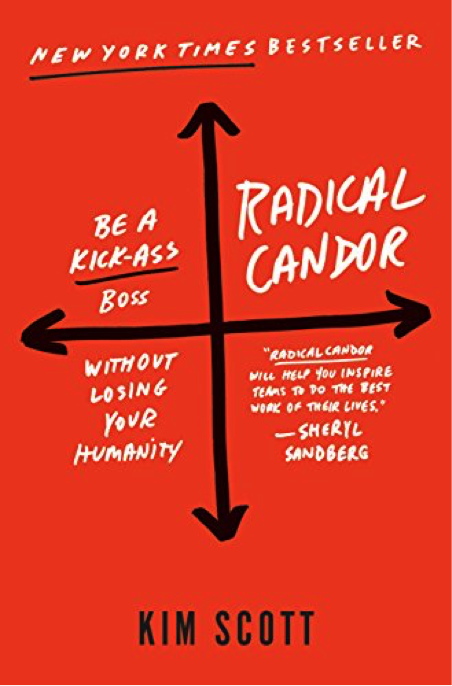
Radical Candor is a book by former Google and Apple executive Kim Scott that outlines a framework to be a better boss, colleague, and human being.

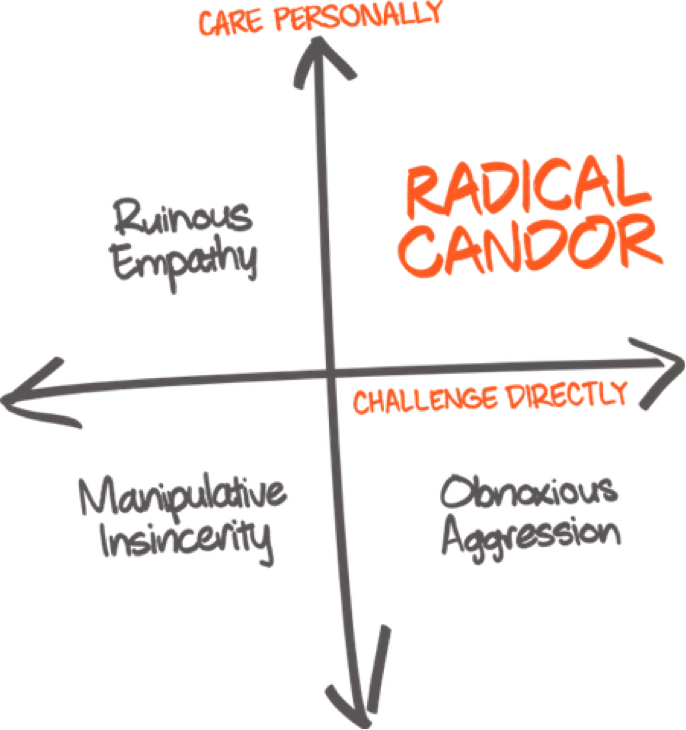
The book outlines a quadrant representing four different very common styles of communication.

On the Y-axis is your level of demonstrated personal care for the person you are communicating with. On the X-axis is your level of willingness to challenge directly in your communication with others.

The ideal stated goal in communication with clients, colleagues, and partners is to land in that top right square titled “Radical Candor,” where you are simultaneously demonstrating that you personally care about the person you are talking to while also not being afraid to challenge them directly and give them the hard truths that they may need to hear.

Radical candor is what happens when you both Care Personally and you Challenge Directly at the same time.


What Radical Candor is Not

But first, it’s important to outline what Radical Candor is NOT.

  • It’s not a license to act like a jerk.
  • It’s not an invitation to get creepily personal.
  • It’s not just for managers, personal trainers, bosses, or those in a position of authority—we all want to succeed.

It’s also helpful to look at each of the four different possible communication approaches/attitudes in the grid and see if you can recognize some common trainer/coach personality types, and then, of course, do the introspective work of seeing which one you tend to land in.

It won’t be hard, you should recognize which one fits you right away (or, just ask one of your clients, your colleagues/partners, or even better: your spouse).

Radical Candor

Radical Candor happens at the intersection of Care Personally and Challenge Directly.

Care Personally means that you care about the other person, not about whether you are winning a popularity contest.

Challenge Directly means that you share your perspective and invite the other person to do the same.

This is the gold standard of where we all want to be.

This is the personal trainer who obviously cares about their clients and wants them to succeed, but is also willing to say the hard truth when it comes to encouraging healthy lifestyle choices, following medical advice when it comes to weight management, and other sensitive topics.

Obnoxious Aggression

Obnoxious Aggression is mean but may be helpful.

Obnoxious Aggression is also called “brutal honesty” or “front stabbing.” This is the classic Marine boot camp instructor or the raging high school football coach that breaks his clipboard

This is the personal trainer who screams at clients but is more invested in checking out their own biceps in the gym mirror than they are in seeing their clients succeed.

We recently created a comprehensive guide on how to become a successful online trainer packed with case studies, and surprise, surprise, yelling and screaming at clients, whether in-person or via video, was not a recipe for success.

In a weird way, we have experienced coaches, trainers, or bosses like this and they have actually made us better people though.

This is why this is the second best square in the quadrant.

Even though that screaming football coach might make you want to hang your head and quietly cry in the shower after a game, can you rely on that coach to ALWAYS tell you exactly where you stand with him?

Can you count on him to communicate directly with you, tell it to you like it is, and give you immediate and specific feedback on what you need to do to improve?

Umm, yes.

At least the communication is clear, direct, and immediate. But, as we probably all know, any success is usually short-term as athletes tend to underperform for coaches who motivate solely with fear.

Ruinous Empathy

Ruinous Empathy is “nice” but ultimately unhelpful or even damaging.

It’s seeing somebody with their fly down, but, not wanting to embarrass them, saying nothing, with the result that 15 more people see them with their fly down—more embarrassing for them.

It’s a personal trainer not wanting to tell their client the hard truth, that yes, their doctor is right, they do need to lose those 60 pounds. It’s a fitness business owner not wanting to confront their head personal trainer when they are not meeting expectations.

Manipulative Insincerity

Manipulative Insincerity is a stab in the back.

This is active sabotage, and the worst of what we all think of when we think of interpersonal relationships and communication, whether that’s office politics or gym politics.

What About You?

In our weekly team meetings we like to start off with a 10-15 minute segment we call “Weekly Wisdom” that has one member of the team sharing something they recently learned, whether business, personal, a book they read, etc. and then we discuss as a team.

We recently discussed, you guessed it, Radical Candor, and here are some of the questions we discussed:

  1. Can you provide an example of someone who communicated something to you using Radical Candor? How did that make you feel?
  2. Can you provide an example of someone who communicated something to you using Obnoxious Aggression, Ruinous Empathy, or Manipulative Insincerity? How did that make you feel?
  3. When faced with difficult conversations, which of the four communication approaches do you find yourself gravitating towards? How might you intentionally become Radically Candid instead?
  4. How might we encourage Radical Candor as a team?
  5. How might you utilize Radical Candor in your personal life?

So, what about you? How might becoming Radically Candid transform your fitness business, your client relationships, and maybe even your personal life?

About the Author

Joel Ohman is a serial entrepreneur, author, and angel investor.

He is the founder and CEO of Exercise.com and a number of tech startups. He lives in Tampa, FL with his wife Angela and their three kids.

His writing companion is Caesar, a slightly overweight Bull Mastiff who loves to eat the tops off of strawberries. He lifts weights six days a week and does Krav Maga twice a week to try to ignore the fact he’s still just a washed up ex-college basketball player.

You can connect with Joel and send your own Radically Candid personal communication to him at JoelOhman.com.

SPECIAL DISCOUNT: If you want custom-branded iOS and Android apps for your fitness business, then check out Exercise.com’s fitness business management software to scale your business in-person and online using assessments, clients/class scheduling, gym check-ins, billing, workout software, and more then mention this article to get an extra month free.

Categoriesbusiness

Remember That Time I Said I Never Wanted to Open a Gym?

Some of you may recall an article I wrote years ago, not long after I left Cressey Sports Performance, where I demonstrably stated I would never want to open a gym on my own.

For those who need their memory jogged – or for those who missed it altogether – you can check it out HERE.

I just re-read it.

LOL – I was cute.

Copyright: wavebreakmediamicro / 123RF Stock Photo

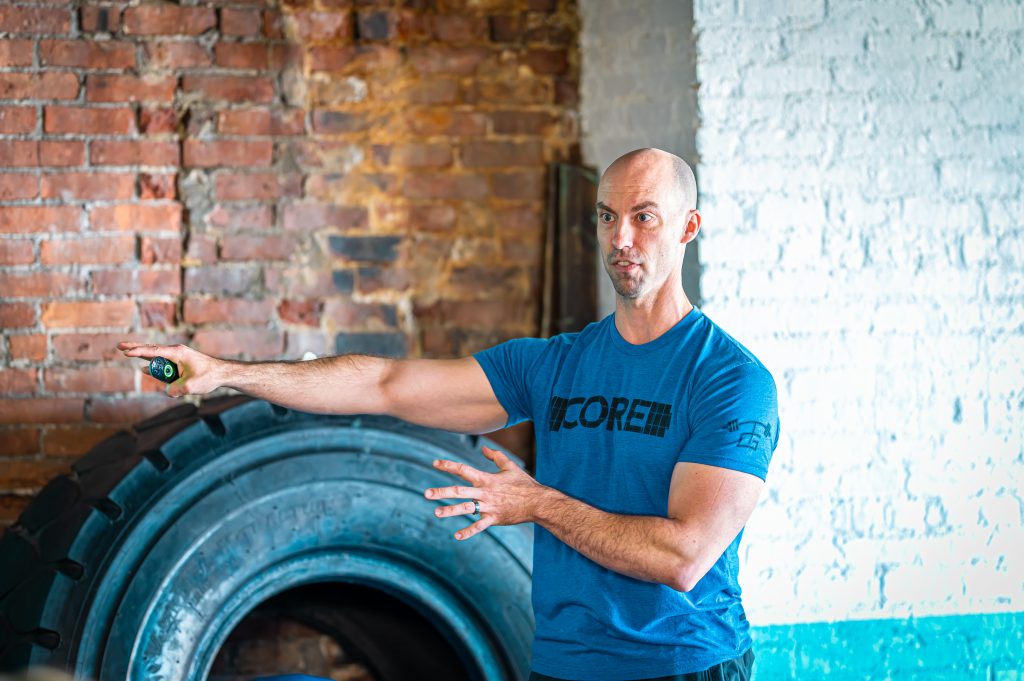
Tony Gentilcore, Gym Owner, Um, Nope

I joke, but there was a time where you would have been more likely to see the words “the next Bachelor” or “Kumite champion” or “vegan” next to my name before you ever saw the words “gym owner.”

To quote the article above:

“All of This To Say….

I have NO interest in opening or owning my own facility.

I’ve spent over a decade building my own brand and a “business,” but I am in no way, shape, or form a businessman.”

There’s still much I agree with in that article:

I still feel, strongly, that gym ownership can often be a facade. We’re programmed to believe that just because someone owns a gym that they’ve somehow reached the pinnacle in this industry, that they’ve “made it,” and that they read scripture to orphaned kittens and shit rainbows and stuff.

That they can do no wrong and they’re inherently better than us.

Pfffft, whatever.

I still feel, strongly, that many fitness professionals enter gym ownership for the wrong reasons.

I still feel, strongly, that as much as hard work, consistency, resiliency, and perseverance play a role in everyone’s success, that luck, too, is an often under-appreciated and under-reported factor.7

And finally, I still feel, strongly, my pecs can cut diamonds.

Alas, time has a funny way of making us eat our words.

I left Cressey Sports Performance in the Fall of 2015 to begin training people out of a small studio in Brookline, MA where I’d was sub-lease underneath another gym owner.

In the summer of 2016 I took over the lease and as a result…

…CORE was established.

It not so many words: I became a bonafide “gym owner.”

Now, I put “gym owner” in quotations marks because, while my name is on the lease, and while I am responsible for making sure the rent is paid every month, liability insurance is covered, and that the utilities are taken care of, I still don’t consider CORE a gym gym.

It sounds silly, but because it’s so tiny – 450 sq. feet – I consider it more of a “place where I happen to train people” more so than it being regaled as a gym.

Studio?

Training Space?

Deadlifting Dojo?

I don’t know.

Gym just seemed/seems like a bit of a stretch.

Moreover, there’s still a degree of imposture syndrome that plagues and festers inside me. I’ve never considered myself a savvy business person. I mean, I still have to Google things like “the difference between net and gross income” or “in the black vs. in the red” or “will I be sued if I don’t wear pants to work?” on a regular basis.

There’s a reason I barely passed (business) economics class in college.

Suffice to say, despite my best efforts to besmirch and (de)aggrandize my success over the course of the past three years of gym ownership – it’s a personality trait I work hard to battle – things have gone quite splendidly.

So splendidly, in fact, that I am on the cusp of moving CORE to a larger location.

Whaaaaaaaaaaaaaaaaaaaaa8

Excuse Me, That’s My Sphincter Clenching It’s Sphincter

If there was ever a more opportune time for Dramatic Chipmunk to make an appearance it’s now…

https://www.youtube.com/watch?v=a1Y73sPHKxw


It’s still in the early stages and nothing is cemented yet, but an LOI (Letter of Intent) has been agreed upon and it’s looking as if I’ll be moving my 450 sq. foot “something-er-other” into a 3,500 sq. foot TECHNO & DEADLIFTING PALACE OF FISTPUMPS.™

(Excuse me while I go destroy the back of my pants).

A lot has gone into this decision, it’s been brewing for a while, but I felt it prudent (and a bit cathartic) to hash out and explain a few details that helped inspire this bold move:

1. My (New) Vision

As it stands now, I coach my own clients 20 hours per week out of CORE. I also have six other coaches running their own businesses out of the same space.

One coach, one space.

There can be only one.

Some, like me, follow a semi-private model (coaching anywhere from 2-4 clients at a time), while others use it solely to train their clients one-on-one.

Either way, each coach pays an hourly rate to use the space. They’re all coaches I know and trust, and who are very competent.

And what’s more to the point, the system has worked very well to help offset my overhead.

My model has proven to work on a small scale.

However, can I make it work on a grander scale?

As in, instead of one coach using the space at a time, maybe two, three, or four coaches could utilize the space simultaneously?

I love the idea of providing a space for other fitness professionals to grow their businesses & brands; a consortium of like-minded fitness professionals supporting and helping one another to create an environment that’s welcoming and inspiring to all.

One of the things I miss most about being at CSP is the camaraderie amongst the coaches; sharing and bouncing ideas off one another.

I also love the idea of actually having showers, changing rooms, a lounge area, and more than one squat rack (something CORE doesn’t have access to at the moment).

Goals.

2) My Jerry Maguire Moment

This idea would only work if 1) I was 100% sure I had reached a tipping point in my own ability to accommodate clients and more importantly 2) the coaches who were sub-leasing under me currently would also be willing to take a risk and follow me to the new space.

So I sent an email a few weeks ago and it said…

“Who’s coming with me?”

I explained my umbrella theme for the new space, how things would benefit everyone – for myself AND them – in addition to outlining some baseline expectations.

They all said yes.

NOTE TO SAID COACHES: You can’t back out now. We pinky swore. WE PINKY SWORE.

3) Onward!

I’m scared to fail.

I’m scared to take a risk.

I’m scared to step outside my comfort zone just like everyone else.

But then I remembered 13 words my friend, Todd Bumgardner, uttered to me years ago when I was going back and forth on whether or not to leave Cressey Sports Performance. They punched me in the face and nothing has resonated with me so much:

“Scare the shit out of yourself. It’s the only way to do it.”

I have the support of my wife. I have the support of my clients and colleagues. And, seemingly, I have the support of my bank account.

The numbers seem to add up.

The move seems to make sense.

The timing seems to be right.

Tony Gentilcore, (real) gym owner.

Well, well, well. Who woulda thought?

Categoriesbusiness

Answers To Your Most Pressing Fitness Business Questions

Last summer I had the honor of being invited to speak at the Elite Fitness & Performance Summit in Chicago.

I don’t say this lightly: It was one of the best experiences as a speaker (and attendee) I’ve ever had in my 15+ years in the industry. The only way it could have been better is if my hosts, Ryan Ketchum and the rest of the Fitness Revolution crew, gave me my own ticker-tape parade.9

It was well-organized, well-paced, provided a ton of actionable content, had an amazing roster of speakers and attendees, and included a plethora opportunities for everyone to mingle and interact.

It was the perfect blend of professionalism, pithiness, and “laidbackness” that I’ve grown to respect and appreciate after attending so many conferences throughout my career.

So to say I was legitimately sad when I had to decline Ryan’s offer to come back this year to present (due to a prior engagement) was an understatement.10

That said, I still wanted to inform all my readers about the event, to let them know why it will help them grow their fitness business(es), and to also let them know they can still save $100 off their registration.

BOOM.

Copyright: langstrup / 123RF Stock Photo

Answers To Your Most Pressing Fitness Business Questions

If you’ve ever wondered what it takes to create a high powered, cash generating fitness business that allows you to live the life you want, YOU ARE NOT ALONE!

A world-class fitness business that pumps out predictable revenue and doesn’t drive you insane trying to manage all the chaos is a fantasy that many fitness business owners and fitness pros only dream of. This can seem like an unattainable business target only achievable by the super-humans you see on social media.

While contemplating multiple locations, building sales funnels and taking several weeks off to spend time on vacation with family may seem like goals for the elite, many fitness business owners struggle with the day to day challenges of running a business. If you resolved those issues you could create a substantial impact on your business, growth, and career.

The most pressing challenges are:

  • How do I attract more quality leads and build my business with Ideal Clients?
  • How do I sell my training at the price I deserve without selling out and being a sleazy salesperson?
  • How can I automate more of my business so that I don’t have to spend 18 hours a day running around with my hair on fire trying to manage the chaos?
  • How I can predict my sales and profits so that I can run my business?
  • How can I build a reliable team of ‘A Players’ who help me grow my business and build my culture?
  • How do I lead a team and become a fitness entrepreneur?
  • The answers to these questions elude most fitness business owners for their entire career.
  • How can making killer cat memes increase my net intake?

That is, until now…

For the past 12 years Fitness Revolution has been helping fitness business owners implement strategies that grow their business and develop the skills needed to reach their full potential as a fitness entrepreneur. From the startup fitness business to well-known gyms that appear in the Men’s Health Top 10 Gyms list, FR has helped them all.

Many fitness business owners wonder how they can achieve more in their business without having to kill themselves doing it. Because of this, FR hosts the Elite Fitness & Performance Summit each year to provide you with TWO full days of strategy and innovation for your business.

If you’ve have ever wanted to the chance to learn from the best in the industry join the Fitness Revolution Team and our top industry experts to learn how to IMMEDIATELY transform your business with more sales, greater efficiency, and more profits, YOUR opportunity has finally arrived…

 Click Here To Book Your Ticket Now (Save $100 Today)