
Categoriespersonal training Program Design Strength Training

The Illusion of Infinite Progression: 3 Strategies to Evolve Without Increasing Weight

I have an excellent guest post for you today. I was recently invited back onto the More Train, Less Pain Podcast hosted by my good friends Dr. Michelle Boland and Dr. Tim Richardt.

This season on their show they’re focusing on training around injury. This is one of my wheel houses (alongside deadlifts, how to look jacked even while wearing sweatpants, and Ted Lasso), as I am always preaching the benefits of finding each client’s or athlete’s TRAINABLE MENU.

My episode – #13 – dropped today (links below), but in concert with that Tim was kind enough to write a little “companion piece” that ties in nicely with the overall theme of the show.

I hope you check both of them out.

Copyright: rawpixel

3 Strategies to Evolve Without Increasing Weight

If you’re reading this blog, chances are you’re a big fan of lifting heavy things. On this we can agree, and be friends. 

via GIPHY

Think back to the first time you consistently trained a squat- Linkin Park blaring, a thin haze of aerosolized pre-workout and chalk filling the air – and being able to add 5-10 pounds, like clockwork, week after week after week.

It’s the honeymoon phase of strength training- nothing hurts and there’s seemingly no impediment to riding this sweet, sweet train of linear progression to, inevitably, being able to sit down and stand up with the weight of a Honda Fit on your back.

But, like all marriages, reality eventually has to settle in.

Over the years, aches, injuries, and movement limitations accumulate and the simple strategy of adding more pounds to the bar is suddenly not so viable.

What, then, is an iron warrior to do?

sports man thinking, feeling doubtful and confused, wondering which decision to make

I host a podcast called More Train, Less Pain (on which the venerable Tony Gentilcore has guested twice), along with another contributor to Tony’s blog- Michelle Boland- where we dive deep on strategies to keep people training hard in the gym despite injuries and mobility restrictions.

The focus of our current season is on maintaining a strength training practice in the setting of persistent pain, something of personal obsession of mine as I’ve struggled with persistent hip pain due to congenital structural hip defects for virtually my entire adult life. Over the past dozen or so episodes, we’ve talked with some of the brightest minds in the industry (Mike Boyle, Bill Hartman, some schlub we’ll call “Tony G”) about this very problem, and one theme keeps re-emerging over and over. We can’t keep progressing load forever. Infinite progression, in the weight room or any other endeavor, is a myth.

NOTE From TG: You can listen to my most recent chat with Tim HERE – titled “Easy Training, Stoplights, and Making Bigger Cups.”

In order to stay in the strength training game and continue to build muscle, power, and movement quality, we need to find ways to evolve our exercise selection and programming strategies so that we can continue to train without creating undesirable tissue damage or reducing access to comfortable range of motion.

Below are three strategies to do just that, lifted directly from this season’s podcast guests and thoroughly vetted by my own personal and professional experience.

1. Timed Sets

In the most straightforward manner of progressing lifts, we add load to the bar every week, keeping the set/rep/rest scheme the same, essentially the missionary of the strength-training world.

An old bible on a wooden table

Not THAT missionary. Head out of the gutter

As we stated – this works…until it doesn’t. What if, instead of increasing load, we simply increase time under tension? In fact, what if we throw away the conventional “rep” dosing structure and just endeavor to dose an exercise by time, increasing the time (under tension) over the course of a 6 week training block.

In practice, that progression might look something like this.

Exercise                                        Week 1         Week 2         Week 3        Week 4

Foam Roller Wall Squat                   3×1′                4×1′               4×90″             4×2′

In this way, we can accumulate absurdly high amounts of workload (and stimulus) with reduced axial loading. If you struggle with SI joint pain every time you get under a bar loaded with over your bodyweight, give a single set of a 2’ timed Roller Wall Squat a try.

With only a fraction of the loading required for a conventionally-dosed barbell back squat, you’ll still feel every bit as fatigued, and continue to stay engaged with the training process as you build time under tension across a program.

This strategy works particularly well for exercises where increasing weight isn’t convenient due to the nature of the position or loading- think anything with a zercher or goblet hold OR a position that requires a more involved set up.

2. EMOM Supersets

People in our industry love talking s&^t about CrossFit, but they’ve popularized several things that have impacted the general fitness landscape for the better – gymnastics skills, concurrent training, snorting lines of grass fed whey protein isolate before a set of 30 hang snatches, and EMOM sets.

In an EMOM set, you’ll keep the load of an exercise the same but perform a certain number of reps every minute on the minute (EMOM).

In my own training, I’ve found it useful to combine two exercises into an EMOM superset – meaning that every minute we’ll do a predetermined number of reps for each exercise, rest for the remainder of that minute, and repeat. In practice, a 6 week progression might look like this:

Exercise                                       Rest                      Week 1   Week 2    Week 3     Week 4   

A1. Trap Bar DL                         0′                                   4×3            5×3              6×3              7×3

A2. Alt. 1-Arm DB Bench         Remainder of 60″      4×8            5×8              6×8              7×8

Trap Bar DL EMOM

1-Arm DB Bench Press EMOM

The cool thing about EMOM sets, especially for athletes making the switch from conventional, load-obsessed strength training, is that they possess an entirely novel strategy for dramatically ramping up total load in a program without increasing axial load for any one particular set.

Mathematically, we can contrast a session of EMOM deadlifts with a session of conventionally-progressed deadlifts, which would look something like this:

Exercise            Week 1               Week 2            Week 3            Week 4            Week 4  Workload

TBDL                     6×3 @ 225           8×3 @ 225        10×3 @ 225       12×3 @ 225          8,100 lbs

TBDL                     6×3 @ 255           6×3 @ 275         6×3 @ 295         6×3 @ 305            5,490 lbs

Over time, this may represent a more sustainable long term strategy for continuing to progress workload when absolute loading on any given repetition can no longer be increased. Additionally, plugging a few EMOM supersets into your training each week can serve as a mild conditioning stimulus for those who struggle to fit in aerobic work.

3. Feel-Based Training

The previous two strategies have emphasized unconventional strategies for increasing the overall workload of a training session, but our final strategy is a different beast altogether.

We love to think about increasing an exercise’s output via weight on the bar or overall pounds lifted throughout working sets. But what if we got “stronger” simply by executing an exercise more efficiently, potentially using a larger range of motion, while making no changes to dosing or loading throughout a cycle?

Depending on a client’s goals and injury history, somewhere between 20%-50% of exercises I program will be progressed by “feel” alone. This means they’re not allowed to do anything “more” over their 4 week cycle. Not more load, not more reps, not faster reps, not even more cowbell.

via GIPHY

We’re deliberately freezing these variables to clear cognitive bandwidth for getting as close as possible to *flawless* execution of the drill.

In something like a FFESS, for example, I may stick to 4 sets of 8 reps per leg throughout the entire cycle, loaded with a #25 KB in a goblet hold, but endeavor to improve other aspects of performance. Can a client maintain foot contacts on both the front and rear foot? Does their pelvis stay fairly level in the frontal plane? Do they control the degree of anterior and posterior pelvic tilt at the top and bottom of the range of motion, respectively?

Can they get the back knee further down towards the ground? Are they able to push UP and BACK to take advantage of the retropropulsive, joint-opening qualities of this drill?

In some ways, this is the most boring option for “progression,” but if you can get it into your and your client’s respective heads that we can freeze dosing and simply work on movement integrity and fidelity, a myriad of other training options open.

And options, more than anything else, help folks train consistently for years to come.

If you liked the content in this article, I’d recommend checking out More Train, Less Pain; Engineering the Adaptable Athlete- S3E13 with Tony drops today.

Available on both Spotify and Apple Podcasts.

About the Author

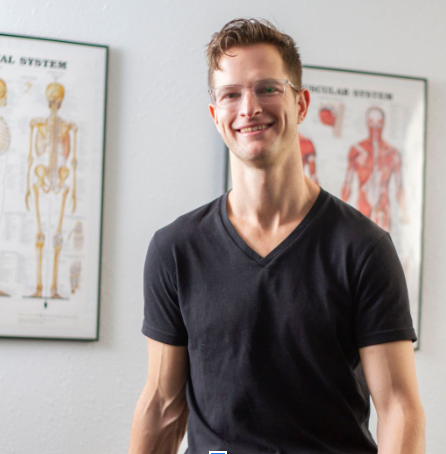
Tim Richardt is a Colorado-based Doctor of Physical Therapy and Strength and Conditioning Coach. He works with runners, climbers, CrossFitters, and tactical/mountain athletes to better help them manage long standing injuries and reach higher levels of physical performance. He also mentors young clinicians and coaches to help them develop their own unique treatment/training model. You can find out more about him at TimRichardt.com or through his IG HERE.

CategoriesProgram Design Strength Training

Getting Stronger is Corrective

Before you move on, I wanted to let you know that Dean Somerset and I have just put our flagship product, the Complete Shoulder & Hip Blueprint, on sale this week.

You can purchase both CSHB 1.0 and CSHB 2.0 separately this week at 30% off the regular price using the coupon code EVOLVE at checkout.

Or you can purchase the bundle pack HERE which gives you the greatest value.1

WU-TANG!

Copyright: noname3132

Getting Strong(er) is Corrective

“Oh, I forgot to tell you…my previous trainer said I have a winged scapula, my left hip is a bit internally rotated, and that my posture isn’t great.”

This was less than five minutes into an initial assessment with a new client and it took everything I had to prevent my eyeballs from rolling out of their sockets. The snarky side of me wanted to say something like, “Oh my god, yes, I totally see it. Did (s)he also mention how your left ear is lower than the right? That’s messed up. We need to fix that.”

But I didn’t.

Nope, all I did was sit there, nod my head, listen intently, and kept repeating to myself “don’t stab yourself with this pen, don’t stab yourself with this pen, no, Tony, NO!”

People Think They’re Broken

It never ceases to amaze me how some people will harp on the most inane things when it comes to their body and performance and then regale me with stories of how their previous coach or trainer was a “corrective exercise specialist.”

I won’t invalidate their stories or experiences, of course, but it’s hard for me to listen to sometimes.

They’ll outline their “training” for the past few months (if not years), and it’s rife with positional breathing drills (which, for the record, I’m a fan of), postural stretches, and describe a foam rolling series that rivals the length of a Ken Burns’ documentary.

I’ll follow with “So, did you actually ever follow a strength training program consistently?”

“Yeah, sure, we did a bunch of corrective exercises and, after 19 weeks, we finally worked up to a bodyweight squat. I still have to work on my big toe dorsiflexion, though. Fingers crossed I can improve that by December.”

Me…

via GIPHY

As an industry – and I’ll call myself out on this too (particularly early in my career) – we’ve done a splendid job at helping people feel like a bunch of walking balls of fail:

  • Your shoulders and upper back are too rounded.
  • Yikes, your pelvis is anteriorly tilted.
  • Oh…my…god…we need to work on your scapular upward rotation.
  • Shit, your FABER screen tested positive. How are you able to walk?
  • Also, FYI: you have Chlamydia.

It doesn’t surprise me in the least why so many people walk around thinking they’re fragile snowflakes who need to correct or “fix” everything before they do any appreciable training.

It’s our fault.

Strength coaches, personal trainers, physical therapists, athletic trainers, sherpas, we’re all culpable.

We can and need to do better.

And it starts with re-acquainting ourselves with what our main role as fitness professionals actually is…

…to elicit a training effect with our clients/athletes.

Again…Getting Strong(er) is Corrective

I say this with a grain of salt because “strong” is subjective, and can mean different things to different people.

  • Being able to deadlift 2x bodyweight is strong.
  • Being able to perform 15 pull-ups is strong.
  • Walking from Trader Joe’s to your apartment without putting down the bags is strong.
  • The ability to pull off wearing white after Labor Day is strong.
  • Doing whatever it is Cirque du Soleil performers can do is strong.

However, since I’m a little biased “getting stronger” in this sense – and more cogent to the conversation – refers to TRAINING.

I.e., lifting heavy things.

Unfortunately, many people have been led to believe lifting weights is dangerous. It seems you can’t go more than three clicks on the internet (or investigate certain certifications available) before being told barbells, dumbbells, machines, kettlebells, squats, deadlifts, high-reps, low-reps, and/or kittens are dangerous.

Cute kitten paws and woman making christmas gingerbread cookies in scandinavian room
Who, me? Dangerous? Noooo. I mean, I’ll slit your fucking throat in your sleep if you don’t pay me any attention, but all in all….cuddles.

And just to set the record straight, and to push back with all my will to those people (worst of all, doctors, PT’s, etc) who keep spreading the message that strength training is dangerous (particularly when addressing a current injury)…

…I give you the LAWS of Loading:

Wolff’s Law – Bones will adapt to loads under which it is placed

Davis’s Law – Soft tissue will heal according to the manner which they are mechanically stressed.

For the “you only have one back” guy…is this then not why we train?2 Squats and deadlifts, when properly loaded and progressed, will do far more good for someone’s recovery from injury than most alternatives.

I hate the “everything makes you dysfunctional or causes dysfunction” crowd.

To which I say…the fuck outta here.

My friend Bret Contreras has the perfect antithesis to this faulty mindset:

“If you think lifting weights is dangerous, try being weak. Being weak is dangerous.”

And this is why I’m a firm ambassador in encouraging people to get strong(er), or more to the point, helping them figure out their “trainable menu.”3

Rather than pointing out everything that’s wrong with someone, I’d rather use the initial assessment (and subsequent training sessions) to highlight what they can do.

Lets use the classic example of someone who has “computer guy” posture. I.e., rounded shoulders, forward head posture, an affinity for pens.

When someone walks in exhibiting this posture a lot of trainers will write down a laundry list of stretches, thoracic (mid-back) mobility drills, and other “corrective” exercises to do.

Well, first, some will go out of their way to make the person feel like Cersei Lannister during her walk of shame.

Shame, shame, shame….

via GIPHY

And then, you know…lets get corrective, son!

They’re not wrong to do so.

I’m not opposed to utilizing corrective modalities to address postural deficits or mobility restrictions.

But I find when these sort of things are accentuated and serve as the “meat-n-potatoes” of a training program, it often sets people up for failure; they become more fixated on perfection at the expense of progress.

And lets be honest: NO ONE gets jazzed-up at the gym to do more T-spine extension drills.


I don’t want my clients to feel like a perpetual patient.

I want them to train, because training tends to be more palatable than Scapular Wall Slides. It helps people stay on task and not bored to tears.

And on that note, wanna know an excellent drill that helps nudge people into a bit more thoracic extension?

Kipping pull-ups.

FRONT SQUATS.


As you descend closer to the ground you have to “fight” to keep from folding over. In many ways the proper execution of the exercise itself is self-coaching; or dare I say, corrective.

If you don’t maintain thoracic extension the barbell rolls off your shoulders.

I may come across as the cantankerous strength coach in saying this, but I find more value in having my clients train – in a way that emphatically demonstrates success to them (by matching the programming to their goals and ability level) – than to corrective exercise them to death.

Get your clients strong(er).

Show them what they can do.

And for the love of god get them training.

Categoriescoaching Program Design rant

Fitness Industry Hyperbole is Exhausting

We all know hyperbole when we see it.

In general, it’s purposeful use of exaggeration as a rhetorical device or figure of speech. It’s often used in writing (and communication as a whole) to evoke strong feelings and reaction from the audience. These reactions can range from a chuckle and an “aww shucks” eye roll to someone getting punched in the throat.

Hyperbole is everywhere (politics, dating, sports, Thanksgiving dinner) – for better or for worse.

More innocuous and inane examples of hyperbole – the “aww shucks” variety – would be:

  • I’m so hungry I could eat a horse.
  • “So and so” is about as intelligent as a ham sandwich.
  • Attack of the Clones is a cinematic masterpiece.4

As a writer I love hyperbole because it can be a useful tool to add a bit of panache and entertainment value to a blog post or article in order to maintain people’s attention for more than 27 seconds.

Where I hate it is where this particular blog post comes into play.

Copyright: iuphotos

Fitness Industry Hyperbole is Exhausting

A few weeks ago I was perusing Twitter when my feed fed me this piece of gargantuan eye wash (because, of course):

“STOP DOING BARBELL SQUATS!!! It’s a useless exercise that does way more harm than good to your body.”

This, my dear reader, is a choice example of the latter example of hyperbole mentioned above. You know, the kind that makes you want to wash your eyes with broken glass.

Now, I don’t know the person who wrote it (I’m choosing not to directly mention them here), and I have zero insights into why this person is so vehemently against barbell squats. What I do know – from checking out this person’s profile – is that they’re a Chiropractor, they seem to build a lot of their online persona around this idea that most people lack mental toughness, and that “bad posture” is the reason why most people are in pain.

Not for nothing, but…

…I’d make the case that the reason why a lot of people are in pain is because they’re chronically weak (muscularly), not because their TL junction needs adjusting every two weeks.

(Which, not ironically, can be improved, drastically – and long-term – with some properly progressed strength training.5 If you don’t force the body to adapt to load or stress, then how can you really expect meaningful change? If the only intervention is adjusting and cracking someone’s bones to fit some “textbook perfect posture” narrative, and it’s something that needs to be repeated over and over and over again, to me, this is akin to using nothing but a band-aid to address a knife wound).

Male osteopath doing a postural evaluation

But let’s move beyond that.

The thing that rubs me the wrong way with this person’s train of thought is that it’s so egregiously self-aggrandizing. One thing that I despise in this industry – and something that makes me lose a lot of respect for someone when they do it – is thinking that THEIR WAY is the ONLY way to do something.

The easy comparison here is Mike Boyle.

I was in the room when, back in 2005, while recording Functional Strength Coach, he revealed to the strength & conditioning world that he no longer included back squats in his athletes’ programs.

I’m pretty sure this was the collective mood in the room when he said it:

via GIPHY

He wasn’t tarred and feathered by the entirety of the profession, but in the years since he’s routinely received flak for his stance.

However, I’ve always respected his take and have never taken issue with it.

Why?

Because he’s never said:

“Stop doing barbell squats with YOUR athletes.”

He’s only said:

“I’ve stopped doing a barbell squats with MY athletes.”

Moreover, he’s always followed that up with a sound rationale & explanation of why he came to that decision in the first place. And whether or not you agree with him isn’t the point:

  • They’re HIS athletes.
  • My man is still producing bonafide beasts in the weight-room and on the playing field.
  • Hard to argue with results.

Bringing things back to our friend from above.

Where I take issue is the insinuation that barbell squats – of any kind, in any situation, with any person, at any moment in time, even if they’re YOUR client and not mine – is dangerous or turning everyone into spinal compression walking balls of dysfunction.

To steal a quote from strength coach Gerry DeFilippo on that matter:

“How about this. Do exercises that fit your anatomical parameters and needs. More information, less fear mongering/cancelling of exercises.”

No diggidy, no doubt.

CategoriesUncategorized

The One Thing Many Lifters Fail to Understand: Easy Training Is Good Training

Forget the more esoteric nuances of things like Heart Rate Variability, the efficacy of cold baths, or whether it’s better to follow a concurrent or linear periodization training program for best results.

For superior results in the weight-room I’d make the argument that the ONE thing many lifters fail to appreciate and understand is that easy training is good training.

Copyright: priatna788

Easy Training Is Good Training

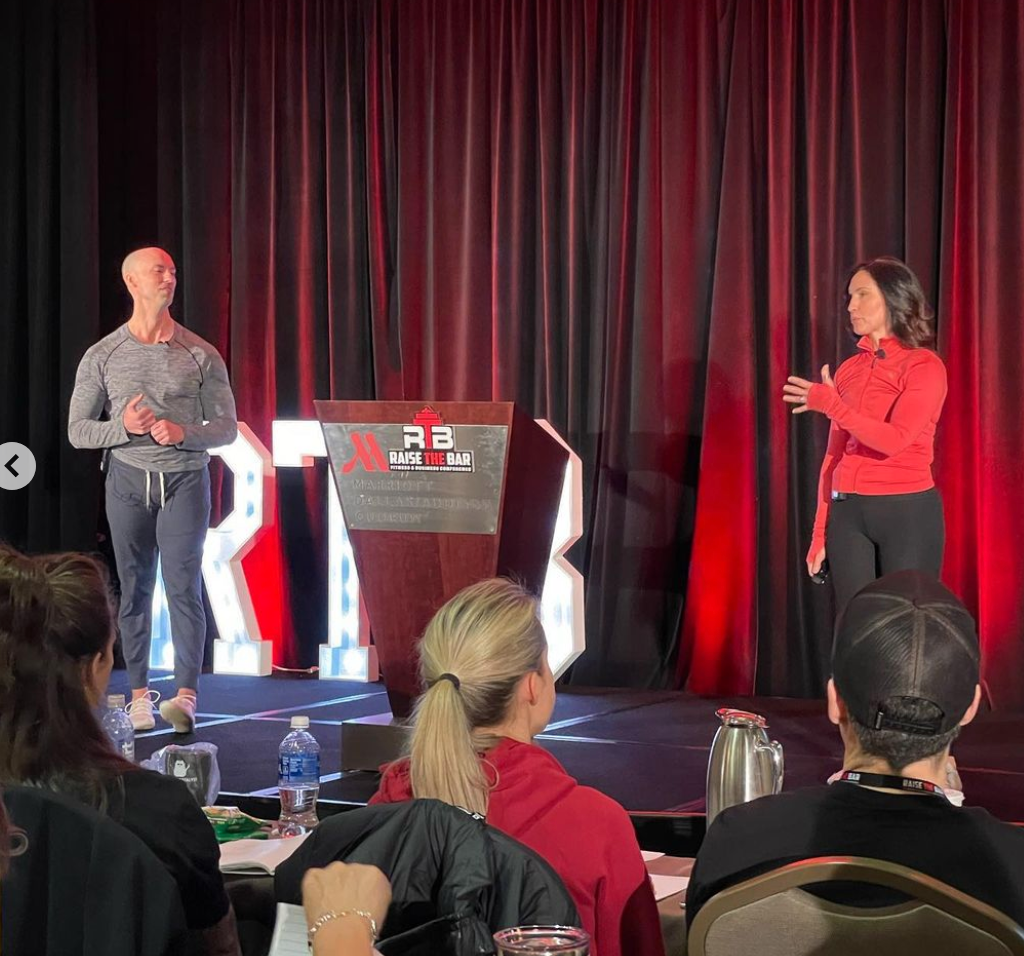
This past weekend I had the lovely experience of performing a rap battle presenting (alongside my wife) at the Raise the Bar Conference in Dallas, TX.

One of the key talking points I attempted to drive home during our talk was this idea that easy training is good training.

I love to explain it like this:

  • 10% of your workouts you’re going to feel like Mick Jagger on cocaine. I.e., The weights will just fly up and you’ll make a run at a PR (or two).
  • 10% of your workouts you’re going to feel like Mick Jagger the day after. I.e., You feel like you got run over by a Mack truck. I.e., warm-up weights feel like they’re cemented to the floor.
  • 80% of your workouts are the ones where you go in and just do the work. You show up, get your reps in, and leave.

I’d argue for most people, most of the time, they should leave the gym wanting more. This is what 80% workouts are all about.

Don’t get me wrong: there’s a time and place for workouts and/or programs that exist solely to be ass-kickers and make you hate life:

  • Smolnov
  • German Volume Training
  • Sheiko
  • Anything involving a chain saw.

The thing to consider, though, and what many fail to recognize, is that programs like the ones mentioned above are designed to be done once a year (if that) and only for a fraction of time.

A small window of hell if you will.

They’re not designed to be done week in and week out for an extended length of time.

I mean heck, if you don’t believe me, take a deep dive into many of the most popular (strength) training programs of all-time (5/3/1, Juggernaut, Cube Method, any of Travis Mash’s programs). If you dissect any of them you’ll find the bulk of the work being done in those programs is in the 75-85% of 1RM territory.

Nothing hardcore or extreme to say the least.

It’s smart training, designed to ensure people feel fresh, recovered, and ready to attack every training session without, hopefully, all the bumps and bruises along the way.

In short: Focus on those 80% workouts. The ones you do on a random Thursday. Those are where you actually make progress over time.

Coming Soon – Strong Body, Strong Mind App

(The first app to combine BOTH strength training AND Mental Skills together from myself and Dr. Lisa Lewis)

Go HERE to learn more and be the first to know when it’s available.

CategoriesCorrective Exercise Program Design Uncategorized

Programming Considerations: Shoulders

Fair warning: This will not be an all-encompassing post on how to train the shoulders or how to program around nagging shoulder injuries.

Frankly, I don’t think anyone wants to read a Dostoyevsky length diatribe on shoulder impingement or how improving scapular upward rotation leaves me sexually aroused.

Yep, I’m weird.

Instead I want to give a quick, bite-sized tidbit on programming for the shoulders that pretty much applies to everyone.6

Copyright: maxriesgo / 123RF Stock Photo

But Before I Continue…

Dean Somerset and I have put our flagship digital course, Complete Shoulder & Hip Blueprint AND (Even More) Complete Shoulder & Hip Blueprint – on sale this week at $50 off the regular price.

Why?

  • We moved both courses to a new platform which will make both the delivery and user experience more enjoyable and seamless.
  • Dean and I both have a bunch of new followers7 since we last put them on sale.
  • It’s a new year and as such a lot of fitness professionals will need to start thinking about ramping up their continuing education and getting their CEU requirements in order.
  • Last but not least, we’re awesome.

Go HERE to enroll in one (or both courses).

IMPORTANT: use the coupon code wutang50 to receive your $50 off credit at checkout.

Now to the Shoulder Stuff

We can easily make the case that the shoulders are the most annoying and often injured part of the body for many people, meatheads in particular. And, to be candid, there are any number of things to consider with regards to why:

  • Rotator cuff weakness
  • Poor scapular stability (<– better term would be Controlled Scapular Mobility)
  • Postural considerations
  • Acromion type
  • Scapular kinematics (inability to upwardly rotate, for example)
  • Poor programming choices
  • Poor technique
  • Losing an arm wrestling match to a Sasquatch.8
  • To name a few….

It’s weird, though, when it comes to programming for the shoulders there’s this dichotomous yin-yang approach we have to consider:

What’s best for optimal (shoulder) performance?

And.

What’s best for optimal (shoulder) health?

Shoulder Performance

I’m in the business of helping people get bigger, faster, stronger, and generally more dieselfied.

This usually (but not always) revolves around lifting objects of appreciable weight. Watch any strong person bench press, squat, or deadlift a lot of weight and there’s a common theme you’ll notice:

1. You’ll likely have to unclench your sphincter after watching someone do something you never thought humanly possible:


2. With regards to the shoulders – specifically the shoulder blades – there’s meticulous attention paid to their positioning.

Those bad boys are locked down. Retracted and depressed.

Or, in non-geek speak: They’re not moving.

Doing so provides an infinite more amount of stability to the joint and also provides a more stable base of support (particularly for the bench press) to push from. When it comes to the deadlift and/or squat it allows one to maintain a more “rigid” torso, stay tight, and decreases the chance of energy leaks.

Force is more efficiently transferred within the kinetic chain.

Also, in non-geek speak: Just fucking trust me.

I’m no Eric Spoto, but I know how to coach the bench press and what to consider when it comes to performing at a high(er) level and making it so your shoulders don’t hate you.

Bench Press Set-Up: Shoulders Together & Down


Shoulder Health

It’s funny, when Dean Somerset and I teach our Complete Shoulder & Hip Blueprint workshop I’ll spend half a day imploring attendees to adopt the strategies mentioned above.

“Lock them down.”

…is what I’ll tell them. Referring to the shoulder blades and how it’s crucial to recognize ideal placement for performance

Then, after the lunch break, I’ll do a complete 180 and spend the rest of the day saying something to the effect of:

“Let those fuckers move.”

The shoulder blades do a lot:

  • Retract and protract
  • Elevate and depress
  • Upwardly and downwardly rotate
  • Posteriorly and anteriorly tilt.

It’s imperative to have “access” to the full spectrum of scapular motion in order to obtain optimal shoulder health.

We spend so much time telling people to squeeze their shoulder blades together – which, all told, isn’t a bad cue in of itself, but can cause a whole host of shoulder ouchies; downward rotation syndrome for starters – that it’s no wonder I get a range of quizzical looks whenever I tell people to let them move.

Protraction (or reaching) is a game changer for many.

1-Arm Quadruped Protraction

Easy Scapular Winging “Fix”


To go a step further and outside the “corrective” realm, when I coach people through a push-up or any kind of row variation a common mistake I find people make is keeping their shoulder blades pinned or glued together.

With push-ups I try to tell my clients to push away or “finish” at the top.

I don’t want their shoulder blades making out the entire time.

And with rows…

This Makes Me Sad


You’ll notice my shoulder blade isn’t moving at all; it’s staying in the retracted position throughout the duration of the set. This often leads to bicep tendon issues and anterior shoulder instability, amongst other things.

Instead I try to tell people I want their scapulae to move around their rib cage. After all that’s what they’re meant to do.

That’s More Like It


It’s profound how much this seemingly minor tweak will help with a lot of shoulder woes.

That’s It

Pretty easy, right?

Short, precise, and won’t require a book report.

Making a concerted effort to recognize and address both ends of the shoulder performance-health spectrum can and will make a huge difference and help you write more effective programs.

CategoriesMotivational personal training

The Most Important Metric of a Training Program Is…

[Cue EPIC drum roll here]

First…lets first delve into what’s not important:

  • Access to special, fancy schmancy equipment.9
  • Being anal about nutrient timing/intake.10
  • Posting a picture or video of every workout and every exercise you performed on Instagram.11
  • Following the programs elite lifters do.12
  • The whole BS notion that muscle confusion is a “thing.”13
Copyright: zamuruev

And Those Things That are Important. But Really Only Kinda-Sorta Important. Actually, We’re All Just a Bunch of A-Holes Who Like to Argue Over the Internet

  • Exercise selection
  • Exercise order
  • Exercise technique
  • Goal(s). Powerlifting vs. bodybuilding vs. OLY lifting vs. CrossFit vs. Fat Loss vs. Mechagodzilla
  • Training history/age
  • Past and current injury history
  • Ideal number of sets/reps
  • Time of day to workout
  • Length of workout
  • Best exercises to make your pecs cut diamonds

[EPIC drum roll is still cued]

man playing the snare drum on a beautiful colored background

Facetious tone aside, all of the things mentioned above are important and play an important role in program design.

However, there’s one metric that seems to always get overlooked.

And that is…..

Attendance

“The most important metric of a training program’s success is…attendance. People need to show up”

You can write the most baller scientifically-based program addressing all the criteria listed above that’s based off block periodization with meticulous percentages written in, laminated with Vladimir Zatsiorsky’s14 chest hair, and none of it will matter if people don’t show up.

Make no mistake…getting people to “show up” is a skill in of itself.

Of course, the monetary commitment to hire a personal trainer or coach is enough to motivate most people to “show up.” But even then it’s often a crap-shoot, let alone entices someone to invest their time (and in themselves) long-term.

There are numerous, outside-the-box factors that often come into play:

  • The ability to listen to and validate someone. Are you a trainer/coach who likes to “win” or prove to everyone how smart you are and how you’re always right? Better, less uppity communication skills can have a profound impact on your sales and retention as a trainer/fitness business.15
  • It’s not about you. It’s about THEM. Get your clients to talk about themselves.16
  • Take the time to introduce your clients to one another. Maybe you have two clients who really enjoy squatting or, I don’t know, old-school Jean-Claude Van Damme movies. Either way, introducing client A to client B often helps build camaraderie and community.
  • With regards to program design: It’s not necessarily about choosing the best exercise possible to entertain people. Rather, it’s about choosing the most appropriate exercise(s) to better set people up for immediate and long-term success. These are really boring.
  • “Think trainer, speak client.”17You in your head: “Dan is really crushing his posterior Mediastinum on those squats.” You to Dan: “don’t arch so much in your lower back.”
  • Design for your space. You don’t always need all the bells and whistles to impress people. Audit your equipment. Almost always, the less you have, the better your programs will be. Most people don’t need as much variety as they think they need anyways.
  • Strive to make your clients autonomous.
  • Play more Wu-Tang. Just, because.

This is by no means an exhaustive list, but I do feel serves as a delicious amuse bouche in helping fitness professionals understand that it’s not always about credentials, certifications, and deadlifts.

Getting people to show up via other means is often the key to effective program writing.

Categoriescoaching

How to Guarantee Your Clients Will Have a Hard Time Actually Getting Results

If you train people for a living, read this.

Copyright: ruigsantos / 123RF Stock Photo

Don’t Guarantee Results

It’s seems counterintuitive, maybe even borderline asinine, not to guarantee your clients results, right? I mean, what the hell are they hiring you for?

HINT: It’s not to trade baseball cards or tickle fights.

I had a new client start with me recently and within ten minutes of her initial assessment she was relaying a story of her previous coach telling her she’d see results in “x” weeks.

Guaranteed.

Guess what didn’t happen?

via GIPHY

I don’t know about you, but I’d hate to set myself up for that kind of standard or expectation as a coach. Unless their goals are any of the following….

  1. Cut diamonds with their pecs.
  2. Build a deadlift that shakes the ground all the way down in Kentucky.
  3. Become a world class hugger.

…I’m not guaranteeing anything, let alone within a specific window of time.

When a new person shows up to CORE I have zero insight into their work ethic, degree of compliance, or any other outside factors that may or may not come into play (family responsibilities, work schedule, Andor marathon watching schedule).

Don’t get me wrong: There should always be an open dialogue and some form of communication with regards to goal setting. But don’t set yourself (or your client) up for a trap by guaranteeing results.

So, Uh, Since We’re Talking About Goals

It behooves any coach to encourage their client to be more specific with their goal setting. Having realistic and tangible goals in sight helps nudge more intent and purpose.

It keeps people more invested in their training.

Just be careful of someone being too vague (“I want to lose weight”), unrealistic (“I want to add 100 lbs to my deadlift in two weeks”), or downright batshit crazy (“I want to pet a Unicorn”).

Lets us a too vague example.

Too Vague = “I want to lose weight” or “I want to get stronger.”

Camera focusing on measuring tape and woman weighting on scales at bedroom. Concept of dieting

Neither is a bad goal. They’re just both vague as shit. It’s like me saying something to the effect of “I want food” when asked what I am in the mood for for dinner.

When someone suggests a vague goal like the ones above I’ll usually try to dig a bit deeper:

  • “Why do you want to lose weight/get stronger?”

  • “What’s prevented you from achieving those goals in the past?”

  • “How will attaining those goals make you feel once you hit them?”

Peeling back the onion with follow-up questions reveals quite a bit. The person soon understands they need to switch gears and latch onto something more concrete.

Which serves as a nice segue to…

Try to Encourage More Performance Based Goals

I’ve been a champion of this approach for a number of years now.

Setting performance-based goals is a game changer.

For example, with many of my female clients, instead of allowing them to default to the “I want to lose weight” trope, I’ll encourage them to pick a performance-based goal to train towards instead:

  • Perform their first strict, unassisted chin-up
  • Deadlift their bodyweight for five reps
  • Perform ten, strict pushups from the floor.
  • Beat Wonder Woman in a fist-fight.

Trap Bar Deadlift.

Setting a performance-based goal makes things so much clearer from a programming standpoint. First off, it makes getting rid of the superfluous foo-foo bullshit easier. Secondly, and most important, is that it gives people purpose in their training.

There’s a WHY behind the madness.

Each exercise, exercise order, load, set/rep, and rest period is curated for the sole purpose of hitting that goal.

To steal a famous quote from strength coach, Dan John:

“The goal is to keep the goal, the goal.”

Either your training program is bringing you one step closer to hitting your goal, or…it’s not.

What I find, more often than not, is when I can get a client to marry him or herself to training for a performance-based goal, the work and effort involved often results in them hitting that aesthetic goal anyways.

It’s a win-win.

The dose of empowerment is priceless.

Set Up Process Goals

This is so simple it’s absurd.

Basically, process goals are smaller, more bite-sized, DAILY, goals people should try to hit that will compliment their ability to hit “big rock” training goals.

I mean, how “strong” is someone going to get if they’re routinely only getting 4-5 hours of sleep a night? What are the chances someone is going to “lose weight” if their idea of a veggie is a piece of lettuce on top of their double bacon cheeseburger?

bacon cheeseburger on toasted pretzel bun served with fries and beer

Setting up 2-3 process goals – getting at least seven hours of sleep a night, shooting for 3-4 servings of vegetables per day, eating out less – for people to strive for every day is a great way to not only keep them on task, but provide an unparalleled sense of accomplishment as well.

As they check off hitting each goal per day, they gain more and more confidence and sense of “holy shit, I can do this.”

Build Autonomy, Competency, and Relatedness

These are just fancy-schmancy ways of saying people want to have a sense of freedom/choice in their training, they want to feel like they can do shit, and they want to be part of a community.18

Autonomy: People don’t like to be told what to do. When someone is told what to do or not to do, the human response is something called reactance.

They revolt. Go against the grain. Tell you to go fuck yourself.

Basically, they do whatever it is you told them not to do anyway.

Admittedly, when someone is paying you to be their coach, there’s a degree of “do what I tell you to do” that comes with territory.

However, I’d encourage any coach or trainer to build a level of CHOICE into their programming.

  • Maybe your client gets to choose what variation of deadlift they perform that day.
  • Maybe you let them choose if they want to use dumbbells or kettlebells for certain movements.
  • Maybe you give them a 5-10 minute window at the end of their session to do some additional glute training.

That sense of freedom/autonomy will undoubtedly build a greater degree of compliance.

Competency: This is easy. People don’t like to fail. I’d argue failing is good and part of the growing process, but that’s besides the point.

People want to feel like they can DO stuff. For example, if someone has little experience strength training, what’s the likelihood they’re going to feel great about barbell back squatting on Day #1.

Now, I’m not saying a good coach can’t teach someone how to back squat in a matter of minutes.

It’s very doable.

However, what I am saying is don’t be a dickhead. It can be intimidating for some people to place a barbell on their back, and you’re not doing them any favors by force-feeding it.

Doing squats with barbell

I feel the squat is a valuable pattern everyone should become competent with. That doesn’t mean everyone has to start with a barbell on their back.

Goblet squats are a splendid starting point for many people. Once they’re comfortable with that, we can progress accordingly.

Relatedness: Keeping this one brief, going out of your way to build a culture where people are surrounded by like-minded individuals and they can be themselves is paramount.

Don’t Be Scared to Dish Out Some Tough Love

Bringing this whole discussion full-circle: Remember that new client I mentioned above, the one who told me her previous trainer guaranteed her results?

She asked me an obvious question:

“When do you think I will see results?”

My response:

“If you kinda-sorta train, you’ll get kinda-sorta results.”

This was a (maybe not so subtle) hint that it’s up to HER.

You get out of training what you put into it.

As someone’s coach I’ll be there to support them and help augment their training experience. However, it’s also important to relay the message that part of the onus on them, too.

They have to take ownership and responsibility.

CategoriesProgram Design

How to Write Effective Training Programs: Foul Shots and Whiteboards

I’ve had a rash of fitness professionals reaching out of late asking the same question in varying iterations…

…a question, mind you, that I think every fitness professional ponders at some point:

When the hell is someone going to green-light a sequel to Over the Top?19

Okay, in all seriousness: the real question revolves around writing training programs. Specifically the process and how to do it(?).

Ready?

Here goes…

Writing training programs is a lot like foul shots.

Copyright: rawpixel / 123RF Stock Photo

You Do It, Then Do It Again, and Then Again

If you want to get better at hitting more foul shots in the 4th quarter…you practice taking foul shots.

Likewise:

  • If you want to get better at chess you play more chess.
  • If you want to get better playing a guitar you play more guitar.
  • If you want to get better at nunchuck skills you practice nunchucking.
  • If you want to get better at not getting laid you join a Lord of the Rings reenactment society.20

I know people reading want me to drum up some esoteric explanation of how to write programs, but really…

that’s the secret.

You just do it.

And over time, by the mere math of it all, and the repeated exposure to the act, you have no other option but to get comfortable, better, and more competent with the process.

I mean, I can click on the folder affectionately titled “Making People Diesel” (<– I.e., the programs I write for my clients) and peruse thousands of programs.

This isn’t to say there hasn’t been a metric shit-ton of reading, studying, and watching a lot of really smart people talk about program design behind my madness.

There’s inevitably a “backbone” of knowledge that’s (constantly) being updated, expounded upon, experimented with, and altogether reconsidered from my vantage point.

That said, when it comes to writing effective training programs there’s nothing more poignant for me to offer other than to say…

“Write them…that’s how you get better at it.”

Moreover, I’ll be the first to admit I have never written a perfect program. I am constantly x’ing stuff out, changing this to that, and/or doing my best not to be an abject failure.

Stop thinking you HAVE to be perfect (<— which is a barrier I feel intimidates a lot of fit pros).

Have a plan, yes.

But be prepared to change something 100% of the time.

Let that sink in.

Coaching people is about adaptability. I am ALL for having a plan and some semblance of “order” to help someone from Point A to Point B.

However, life has an uncanny way, almost comedically so, of peppering us with monkey-wrenches, curveballs, and tomfoolery that can detail the best of plans.

Work happens. Lack of sleep happens. Shitty bosses who keep you late happen. Holidays happen. Kid’s explosive diarrhea happens.

Life happens.

And that often means switching gears.

Speaking personally, and given I work with predominately general pop clients – who’s schedules tend to be a bit more chaotic and unpredictable than that of a professional athlete – I’ll go off script often.

via GIPHY

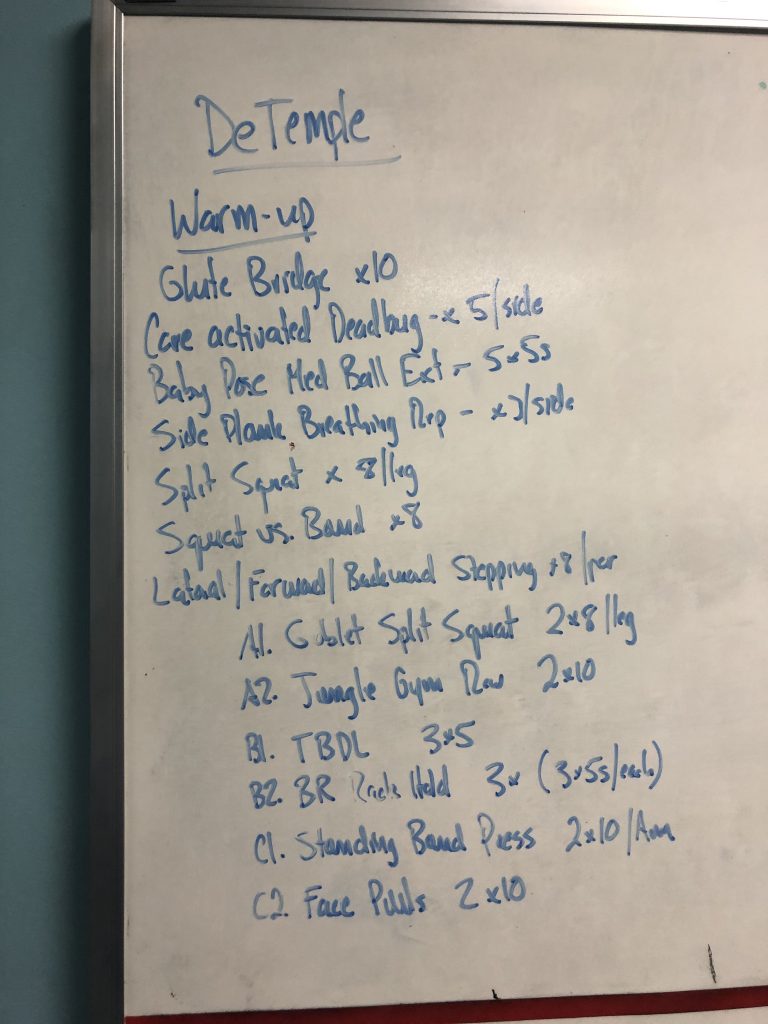
Whiteboard Workouts

Every one of my clients gets an individualized program written for them based off their goals, injury/health history, and ability level.

I pride myself on that.

However, sometimes a client will show up late, or maybe will have a sore shoulder, or worse maybe feel like they crossed paths with a Targaryen when they arrive for their training session.

via GIPHY

Plans change.

I’m not doing them any service by forcing them to hit that heavy deadlift triple because the program calls for it. As my colleague, Zach Even-Esh notes:

“Coaches get too caught up in the ‘We HAVE to do it, it’s on the program!’ Autoregulate. Adjust & adapt.”

In this scenario I’ll do what I like to call a WHITEBOARD WORKOUT.

Nothing fancy here.

I’ll just forego their actual program and write something up on the whiteboard instead.

I know in some circles I should spend a life sentence in Azkaban for doing something so blasphemous. I’d argue I’m being a good coach.

And since this is my website (and my blog) I’m totally right….;O)

And That’s That

I had someone chime in with following comment on Twitter:

“How do you silence the voice that says “if you keep changing things your clients will think you’ve no idea what you’re doing!”

Easy.

I turn my hat backwards and tell it to STFU. I change things under the guise I have their best interests in mind, and not my ego.

via GIPHY

Categoriessport training Strength Training

Why College Athletes Should Not Include Olympic Lifting In Their Programs

It’s not lost on me that the title of this particular blog post may ruffle a few feathers out there. There are many coaches and facilities in the world who implement the OLY lifts with their athletes and find great success with this approach.

Conversely, there are also many coaches and facilities in the world who d0 not use the OLY lifts21 and as a result have been blacklisted from S&C Twitter get resounding results as well.

What follows is one coach’s (Syracuse, NY based strength & conditioning coach Ricky Kompf) opinion with a solid rationale for why he falls into the latter category above.

I hope you give it a read.

Copyright: arseniipalivoda

Why College Athletes Shouldn’t Use Olympic Lifts

First off I want to start this article off by saying Olympic lifts can be a great way to develop power.

(step away from the pitchforks, please)

This is in no way shape or form is a diatribe trying to bash Olympic lifts as a group of exercises. They are a tool and just like any tool in the weight room, they have their time and place.

And that time and place should not be in the college weight room as a main means of training power in their respective sport.

via GIPHY

I see it every year, athletes who we have been working with for years in high school finally gain some respectable competency in the weight-room and reach the point where they can play their sport at the next level.

Their collegiate strength coach sends them their summer training program and there it is:

  • Hang cleans
  • Snatches
  • Power cleans
  • 6 AM lifts

A little piece of me dies inside and I have to fight the urge not to go how and yell at my cats.

How can you except an athlete who you have never trained with or seen workout in person to execute the Olympic lifts correctly and effectively without your watchful eye?  It then becomes our job to teach these lifts to the athletes which I’m happy to do, but it undoubtably takes away from the training due to the time and energy restraints it puts on our training.

To make things worse, when these athlete head off to college, train with these exercises as their key performance indicators and main source of power training, 9 times out of 10 they come back to our gym the next year weaker and many times slower.

Weak man tries to lift heavy dumbbell, wants to be strong and fit, does exercises regularly, dressed

I cannot fully contribute these exercises to the outcome, this is simply an observation I’ve noticed for years.

Here’s why I believe these lifts should not be apart of a college athlete’s training program and are actually causing a decrease in performance.

1. Competing Demands

The Olympic lifts are highly technical.

College athletes are arguably at the peak for their sport’s performance (or at least very close to it). That means the demand of skill in their sport takes up a large portion of their training…

…and rightfully so.

They are trying to reach mastery in their craft.

They are not Olympic weight lifters. They are team sport athletes and should be treated as such.

Learning and training with the Olympic lifts takes a high level of skill, skill that is learned through years and years of training and working at it. By spending the time required to be proficient at these exercises you will be taking away from the motor learning time and energy that could be used in their sport.

Basketball players holding basketball in court

You can only master so much at one time from a motor learning perspective and choosing a highly technical form of exercise during collegiate years will only take away from this mastery.

2. They Won’t Be Good Enough For It To Be Effective

The Olympic lifts do a great job of enhancing powerful triple extension, but you don’t reach peak power until you reach about 80% of you max in an Olympic lift.

For the bulk of collegiate aged athletes who have little experience training with the OLY lifts, they likely won’t truly reach this level for a number of years because of how long it takes to master the skill.

(ideally, one would have started at the age of twelve with a PVC stick and ample time…not at 18 with USC at home next week).

I’d rather utilize an exercise like the Trap Bar Jump, which has a much lower learning curve yet yields comparable peak power production in a matter of minutes (not years).

This way I can develop strength, power and speed with as little amount of time as possible. As a result, the athlete can spend more energy on their sport while still experiencing the benefits of a strength & conditioning program.


An argument can be made that you could, over the course of the four years, systematically teach a college athlete how to perfect the Olympic lifts in order to reap their benefit.

However, in my experience most (not all) collegiate strength coaches incorporate these lifts using max loads and testing them as a key performance indicator right away.

This is not ideal if you ask me.

Some strength coaches do a great job and implement the OLY lifts responsibly, but I’d still argue that teaching these lifts over the course of four years is a drain on athletes’ time, energy and resources.

I’d Recommend the Following Exercises Instead:

Trap Bar Jumps


Trap Bar High Pulls


Trap Bar Speed Pulls


Sumo Speed Pulls


Band Resisted Speed Pulls


Dynamic Effort Box Squats


3. Power Is Plane Specific

Team sport is rarely played in the same plane of motion as the Olympic lifts.

When developing power that transfers over to your sport it’s better to do it in the same or similar planes of movement and joint angles that you’ll see in your sport to have the most transfer.

Using sprints, jumps and throws are great ways to bridge the gap and usually are better options than the Olympic lifts.

Here’s some exercises that can train speed and power with great transfer to sport:

10 Yard Sprints


Max Velocity Sprints


Partner Chase Drills


Rotational Med Ball Toss


Skater Variations


Broad Jump Variations


Overhead Med Ball Throws


Box Jumps


4. Other Variations & Methods

Other variations and methods that have a great effect on power training and can be taught quickly include the use of accommodating resistance with bands and chains as well as contrast training.

Accommodating resistance allows you to accelerate through a full range of motion because the resistance increases as you get into joint angles that can handle greater loads. This allows you to train power at all joint angles in a lift.

In addition to that the use of bands provides a unique training stimulus in which the eccentric portion of the lift is accelerated forcing a great amount deceleration training as well as a high-level reversal strength by using the stretch shortening cycle.

There’re a couple examples of this is the exercises listed above.

Contrast training is a method to peak speed and power production in which you use a heavy compound movement like a squat or deadlift and go right into an explosive expression of speed and power like a sprint, jump or throw.

Note from TG: I posted about contrast sets recently HERE.

The heavy lift provides an activation of higher threshold motor units that will transfer into a more explosive athletic movement.

Here’s some examples of contrast training.

Pre-Season Football Contrast Set


Back Squat —-> Box Jump


Banded Bulgarian Split Squat —-> Half Kneeling Sprint


About the Author

Ricky Kompf is the owner of Kompf Training Systems located in Syracuse New York.  His facility provides semi-private training for predominantly high-school and college level athletes with individualized programming.
You can find Ricky on Instagram HERE.
CategoriesCorrective Exercise Program Design

Never Question Your Exercise Selection Again

I’ve been a fan of “offset” loading for a number of years now. Without getting too deep in the weeds on what offset loading is and what the benefits are…

…it’s when you either stagger your foot or hand position on certain exercises OR you load an exercise a certain way (how you hold a DB or KB) to target or overload a specific limb or joint.

It has implications for both rehab (helping people to move better) AND for getting them jacked (self-explanatory). My good friend and Boston-based colleague, Dr. Michelle Boland, elaborates more on offset loading and how you can use it to your clients’ advantage below.

Enjoy.

Copyright: lightfieldstudios

Never Question Your Exercise Selection Again

I speak from personal experience, as a personal trainer, when I say it can be challenging to navigate through all of your client’s aches, pains, and movement hiccups.

It has caused me some serious headaches in the past. 

In a social media guru filled world, there is so much information about magic tricks to FIX your clients movement struggles. These magic tricks are typically called corrective exercises. 

We then think we are Harry Potter and build our client’s sessions and training programs around corrective exercises, making the perfect potion to have our clients move perfectly. 

Harry Potter cosplay concept. Moment of magic wand action

BUT, what ends up happening is that our FITNESS TRAINING sessions start feeling like a bad physical therapy experience. 

  • Our clients are not TRULY becoming better movers. 
  • Our clients are not TRULY gaining muscle or looking better in a bathing suit.  

They are in no man’s land, not getting results, and being held back from their physical potential.

Not to worry though!

(Check out THIS blog post to learn more about the mental barriers that may be holding your clients back.)

I am here to help!! Because I made these same mistakes and learned from them!

I am going to provide you with four simple rules to make sure your clients are still achieving their fitness goals while ALSO becoming better movers.  

These rules will provide you the ability to build a training program and select exercises without having to choose between a simple corrective exercise that is targeted to help someone move better and a complex lift that is targeted to get them jacked. 

Most coaches’ have go-to exercises for getting jacked and strong which is great but these same exercises can also create some movement restrictions due to the high levels of tension they require, such as a barbell back squat or bench press.

Sports young woman doing exercises with barbell on bench in the gym. Bar Bench Press

However, simple considerations to where the weight is placed, the type of grip, and feet position (stance) can be changed during these typical go-to exercises to prevent some of the possible movement restrictions. 

Below, I am going to provide you with simple, practical programming strategies that will allow you to both load AND improve movement quality for all ages and training levels.

The four simple rules allow you to make small tweaks to exercises in order to help people move better, WHILE still getting 80-90% of a training effect from the loading. In other words, we can still get our clients strong and powerful without turning them into walking refrigerators. 

(If you prefer to watch instead of read, Check out my video presentation of these Rules HERE.)

Rule 1. Choose Offset Positions

Offset positions include separating hands and feet from front to back. These positions will allow your clients to feel stable, so they can still try hard, without robbing them of their rotational abilities along the way.

Offset positions benefits include:

  • Improving rotational abilities from separating hands and feet front to back which helps to turn people’s hips and chests
  • Initiates alternating positions of the hips with one hip more extended and the opposite hip more flexed
  • Provides greater variation in your exercise selection especially for unilateral loading
  • Provides more options to add different weight shifting which helps to create unilateral loading challenges 

Offset positions include:

1. The Staggered Stance position is standing with both feet flat on the ground and split front to back. Feet are typically hip-width apart from side to side and a half foot distance apart front to back, but the distance can be altered in relation to base of support needs. So, if your client has a difficult time balancing in this position, move their feet wider side to side. The position initiates alternating positions of the pelvis with one hip more extended and the opposite hip more flexed and can also create rotation towards the back side leg.

The Staggered Stance position can also be challenged with a variation called the ‘Loaded Step’. The Loaded Step variation is a weight distribution backwards onto the back leg. The center of mass should be about 80% on the back leg and 20% on the front leg. 

Loaded Step benefits:

  • This position variation encourages rotation through the hips and chest
  • You can coach it to be a knee or hip dominant exercise (see examples below)
  • You will feel LOTS of inner thigh (adductor), glute, and hamstring on the back leg
  • It supports hip mobility and eases tight posterior hips by allowing someone to feel a stretch in the back leg posterior hip, but try to avoid squeezing glutes…I know how tempting this can be 😉 
  • It encourages more single leg loading or shared loading

2. The Split Stance position is standing with a front to back separation of the legs and includes a reduction of foot contact on the back side foot. The leg separation is wider front to back than the Staggered Stance position and there is removal of full foot contact on the back side foot, such that the back heel is off the ground and the weight is rolled onto the ball of the foot. The position mimics (not equivalent to) a top of a split squat exercise.

The Staggered Stance position can be challenged with a variation called the ‘Kickstand  Step’. The Kickstand Step Split Stance variation position is a body weight distribution forwards on the front leg with supportive, light weight on the back toe. Body weight distribution should be about 80% on the front leg and 20% on the back leg. 

Kickstand Step Consideration and Benefits:

  • This position variation encourages more single leg loading 
  • This position variation encourages rotation through the hips and chest
  • You will feel LOTS of inner thigh (adductor), glute, and hamstring on the front leg

You can challenge the position with where you hold the weight:

Holding Weight With Two Hands Will Limit Rotation


Holding Weight In Opposite Hand As Front Leg Will Encourage More Rotation


3. The Staggered Hand position is a front to back separation of the hands on the ground. Staggering the hands can help with creating alternating movement in the ribcage. The side of the ribs of the back hand will be lower and the upper body will be more likely to be rotated in that direction. You can also help target more side abdominal wall muscles by staggering the hands. 

Check out some exercises you can start incorporating today with offset positions:  

Contralateral Loaded Step Hip Hinge


Loaded Step Ski Erg


1-Arm Kickstand KB Swing


Staggered KB Hang Clean


Offset Pushup


Salamander Pushups For Staggered Hands


Rule 2. Choose Offset Loading

Offset loading involves having your clients hold weight in less than obvious places that will challenge them in different ways. For example, instead of putting a barbell on your back, hold the barbell between your elbows (see Zercher hold below).

Holding a weight in the front will help target more abdominal wall muscles with less low back issues (see Goblet hold below). Instead of holding a kettlebell with two hands, you can also hold it with one hand to create some unilateral loading challenges.  

Check out some exercises you can start incorporating today with offset loading:  

KB Goblet Split Squat


Contralateral 1-Arm KB Split Squat w/ Opposite Arm Reach


DB Zercher Split Squat


Alternating 1-Arm KB Deadlift


Rule 3. Alternate Grips

Alternating your grip on the weights can improve your client’s ability to rotate, making them super athletes while ALSO being able to pick up heavy things and put them down. Turning one hand into supination and the other hand into pronation causes the upper body to turn towards one side. 

Check out some exercises you can start incorporating today with alternating grips: 

Jefferson Split Squat


Alternating Grip Pull-Up


Rule 4. Reduce Tension When It Is Not Necessary

Have you ever had a client who picks up five pound dumbbells to do a bicep curl and acts like they are 60 pound dumbbells?

I sure have. 

Encourage clients to create tension and substantial effort WHEN THEY HAVE TO.

Other times, encourage them to back off a bit. Exercises that are not too demanding can encourage improvements to joint range of motion and movement quality IF they are performed with low tension, no squeezing, no death grips, or no breath holding. 

Your clients do not need to be squeezing all of their muscles, all of the time, to get a good workout. Low tension exercises can stretch tight areas and improve mobility. For example, the Loaded Step RDL can improve hip mobility and stretch the back side of the hip when it is performed with low weight and low levels of tension. 

Loaded Step RDL


A great start would be to select warm-up or cool-down exercises that can be performed with low tension!

QUICK Programming Tips To Incorporate These RULES:

  1. Combine: Every exercise within your training session include the above four rules
  2. Pair: Pair a heavy, bilateral lift with an exercise that incorporates the rules 
  3. Consider positions in your exercise selection process, to learn more click HERE

Summary

Incorporating offset positions, offset loading, and alternating grips into your exercise selection will help your clients gain some rotational abilities, gain hip and rib cage mobility, and add some excitement into their training while STILL allowing them to get strong.

To learn more, check out my EXERCISE SELECTION PROCESS which layers positions, fitness qualities, then individualized variations. Position selection is the foundation of my exercise selection and all the information included in this article about offset positions comes from my quick and concise Position Principles course. 

The Position Principles course will help you to avoid leaving behind the greatest factor in getting your clients and athletes to move better. The course provides clarity on positional biomechanics, clarity on terminology within the fitness industry for exercises, a downloadable programming template, and easy steps to organize your program design. After this course, you will never question your exercise selection again.

If you have any comments or questions please feel free to email me at [email protected]

If you enjoyed the exercise videos in this article, check out the MBT Exercise Database for 1,200 more videos to use, embed within your programming, and level up your exercise selection game. 

Author: Dr. Michelle Boland