
Categoriescoaching

How to Curate A Winning Gym Culture

What separates good gyms or trainers from the mediocre ones?

Some would make the case it’s a certain style of training, access to state-of-the-art equipment and amenities, the results  their clients/athletes are able to achieve, or even their knowledge on topics like anatomy, assessment, program design, or, I don’t know, long division.

Don’t get me wrong: All of the above can help with separating yourself from the masses, but what really drives client loyalty (as well as woos new ones) isn’t the fancy equipment or the fact you’ve read Mel Siff’s Supertraining 47 times and can cite every page.1

No, what gives you the competitive edge is the culture you create.

Copyright: vadymvdrobot

How To Create a Winning Culture (<– Not An Exhaustive List, But You Should Continue Reading Anyways)

1. It Starts With You, Sherlock

Nothing wraps this message in a nice, neat, eloquent bow than something I read from Alwyn Cosgrove not long ago:

“A team that is tanking brings in a new coach and they totally turn things around.

A company like Apple, removes Steve Jobs, starts to take a nosedive, then brings back Steve Jobs as the leader and the company starts crushing it again.

Or alternatively, an assistant coach takes over a program when the head coach leaves, and even though that assistant is running the same system, that team never reaches the level of where they were before.

Why does this happen?

It all starts at the top.

It all starts with you.

It’s more than just the systems that were in place, it was the culture (or lack thereof) that was created.”

I think it’s safe to say everyone, at some point or another, has experienced the dichotomy between a good leader and a godawful one. It might be hard to put a finger on the exact characteristics that divide the two, but it stands to reason you know it when you see it.

Back in 1997 I earned a scholarship to play baseball at Mercyhurst University in Erie, PA. I loved the the coach who recruited me to transfer there. During my recruiting visit he came across as someone who was a straight-shooter and someone who demanded (and received) the respect from his players.

I spent an entire weekend watching practices and hanging out on campus with guys from the team and there wasn’t one instance where they talked smacked behind the coach’s back.

They described him as someone who was strict, albeit fair, and as someone who stayed consistent with his expectations of everyone. He wasn’t someone who said one thing one day and did a complete 180 the next.

He exemplified leadership.

The guys enjoyed playing there and spoke highly of the program as a whole. And, as it happened, at the time, the team was coming off a successful 40-6 season and a Top 10 ranking in the Division II baseball polls.

Without going into too many details, I arrived in the Fall of 1997 and within a few months the coach who recruited me to come to Mercyhurst left to take over another program.

via GIPHY

I was bummed and more than a bit agitated. But I was confident I had still made the right decision (Humblebrag: I turned down a full-ride at a Division I school to go there) and that the team would still be competitive moving forward.

I was wrong.

The coach who was subsequently brought in was the antithesis of leadership. A ham sandwich would have been a better leader.

He was nothing but a blowhard and an egregious asshat.

By the end of his first (and only) season at Mercyhurst he had burned a lot of bridges with the players and administration at the school, not least of which because it was discovered he had lied about his previous playing and coaching career.

Keep in mind: This was the pre-internet days so it was the Wild West of making shit up. I mean, I once struck out Ken Griffey Jr three times in one game and also made out with Rosario Dawson once.2

Look it up.3

Anyways, as far as culture was concerned…the proof was in the numbers:

1997 Team: 40-6

1998 Team: 26-18.

Now, 1998 wasn’t a complete horror show of a season from a Win-Loss perspective (most teams would love to finish 8 games above .500)…but it was clear the vibe and culture of the program was tainted.

And, honestly, it was the first time I had personally witnessed how poor leadership bred a toxic environment.

Now, as a trainer or coach, think about how this parallels with gym environments you’ve been in? I’ve worked in places that gave zero thought or value in building great trainers, who gave two shits in providing any continuing education, and reneged on cultivating a winning culture, and it showed:

  • High turnover.
  • More concern over whether trainers hit quotas on packages sold rather or even how to hold a genuine conversation with potential clients.
  • General clusterfuckery.

Taking it a step further (and taking the corporateness out of the equation), what does it say about you as a fitness professional if you constantly show up late, you forget appointments, you aren’t prepared, and/or you show up dressed like a homeless pirate?

Leadership always and concretely starts at the top.

And, whether you work in a commercial gym or you’re your own boss, leadership and the culture you curate starts with you.

2. Stop Being a Cantankerous Curmudgeon

One of my favorite comedies of all-time is Grumpy Old Men.

In a nutshell the movie is based around two friends, John (Jack Lemmon) and Max (Walter Matthau), and their lifelong rivalry.

via GIPHY

It’s filled with “old guy” cliches, humor, and amazing Burgess Meredith (of Rocky fame) quotes.

The movie’s theme often reminds me of the fitness industry today and how it’s rife with the same antics and toxic hostility.

We expect a lot from our athletes and clients. We want them to show up and give us their undivided attention and full effort. Moreover, in many ways, we aim for them to be more responsible and to take accountability for their actions…

…to be leaders in their own right.

Yet, we (the so-called integrity police) will hop on Twitter (er, excuse me “X”) the second Dieselchest2277 has the audacity to disagree with us on anything from squat technique to achilles tendinopathy protocols to best keto recipes that taste like sawdust.

It’s kinda hard to develop a civil culture, one that’s respectful of other’s backgrounds and experiences (and opinions), if you have the temperament of a twelve year old. Or, more to the point, a cantankerous old man.

Grow up.

Recognize that not everyone has to agree with you and that maybe, GASP, you may be wrong or out-dated in your line of thinking.

This epitomizes good leaders.

3. Be Human. Not Superhuman

Lastly, I’m a firm believer that people don’t respond well when we demand perfection from them.

It doesn’t bode well for culture and camaraderie when you’re an insufferable douchehole and expect all your athletes and clients to be Captain America 100% of the time.

  • It’s okay if they’re unable to nail that hip hinge on their first try.
  • It’s not the end of the world if they miss a lift. (but it also shouldn’t be happening on a consistent basis)
  • Eating carbs isn’t a punishable offense.

Part of building a winning culture, especially a winning gym culture, is encouraging PROGRESS not perfection.

What’s more, I think relatedness is an underrated component of building a winning culture. Part of the reason why I think some of my clients like training with me is because I’m just as excited to talk about deadlifts and scapular upward rotation as I am There Will Be Blood quotes.

Client: “So, after this set of incline presses what’s next?”

Me: “I…DRINK…YOUR…MILKSHAKE!”

Client: “Huh?”

Me: “I DRINK IT UP!”

via GIPHY

Talk about movies, gossip about the latest season of The Bachelorette, go crazy and listen to boybands radio.

Show your human side. Be authentic to who YOU are. Demonstrate you’re vulnerable and that sometimes you’re wrong, aren’t perfect, and don’t know all the answers. Your athletes and clients will love you for it.

That’s the key to a winning culture.

Come Listen to Me Talk in Person About This Stuff

I’m heading to Europe this fall to put on two separate in-person workshops:

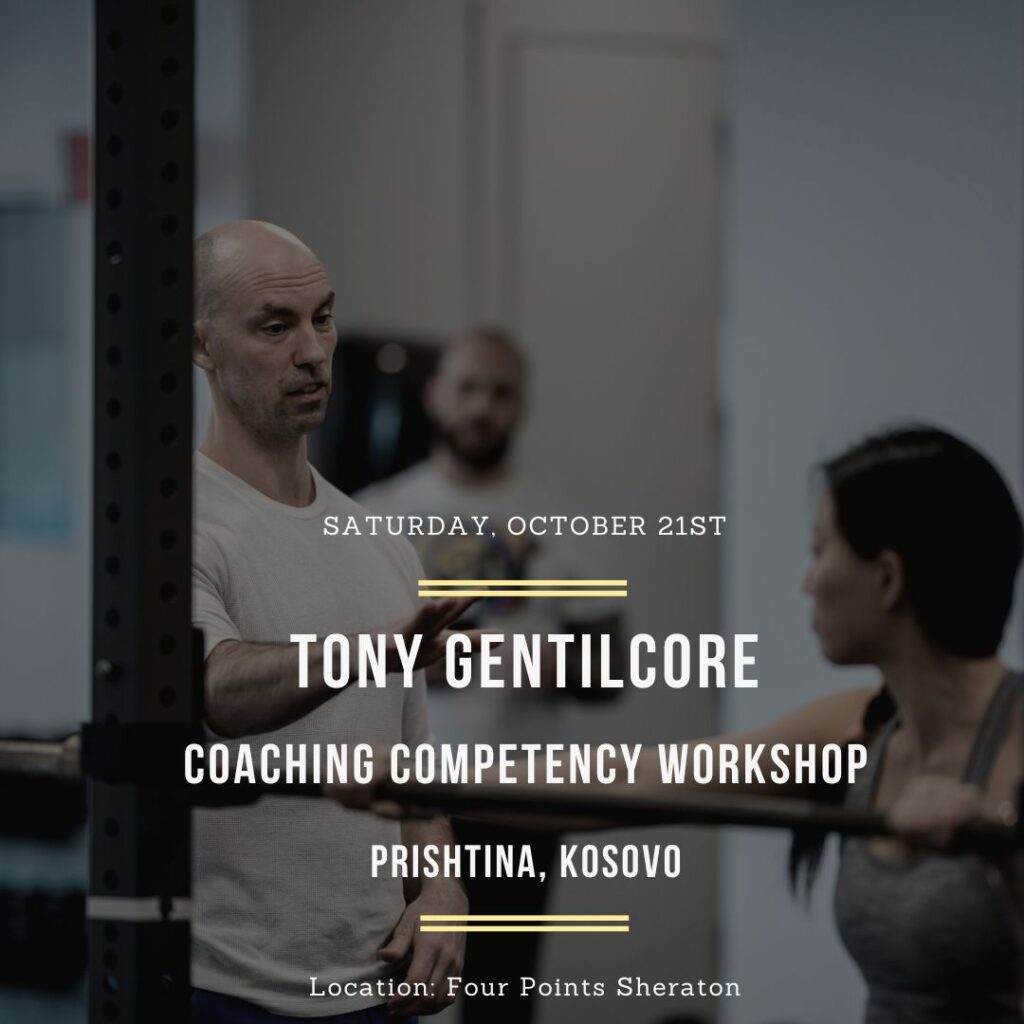
1. Coaching Competency Workshop – Prishtina, Kosovo: Saturday, October 21st

This will be my first visit to Kosovo and I couldn’t be more excited. Topics covered in this event range from how I assess clients and go about writing (strength) programing for gen pop clients to how to work around common injuries and trouble-shooting common exercises like squats and deadlifts (of course).

For more info and to register please email my host Dr. Rita Parashumti at: [email protected].

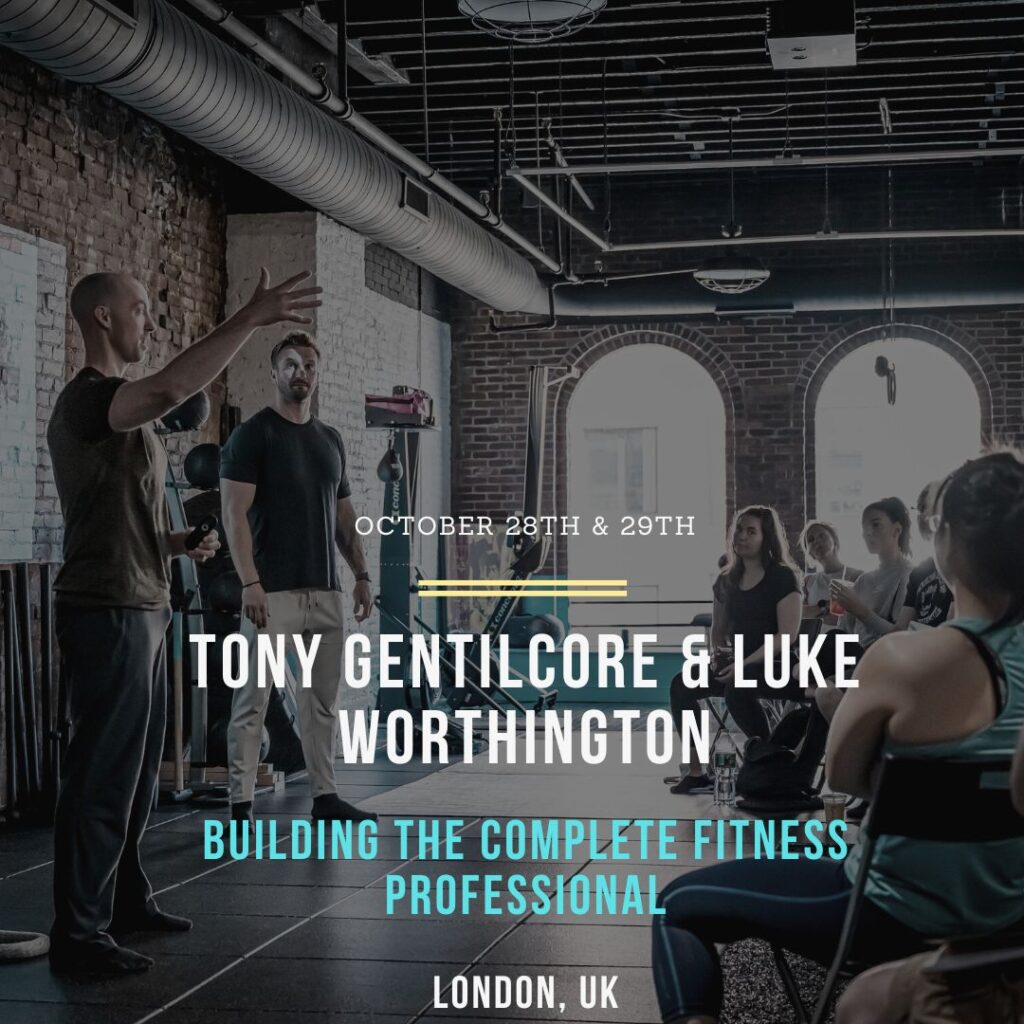
2. Building the Complete Fitness Pro – London, UK: Saturday & Sunday, October 28th & 29th

Full details (including itinerary) can be checked out HERE.

(NOTE: Very limited early bird spots are available for this event, so if you’re even remotely interested pounce NOW)

Categoriescoaching

What Most People Want When They Hire a Personal Trainer

I’m not an asshole.

But I had a real asshole moment recently, and I think it can serve as a teachable moment for many coaches and trainers out there who may be reading.

My abject assholiness affected me so much that it prompted me to go stand out on the ledge of a mountain, look out at nature, pontificate on my life, and ask someone to snap a picture of it.

Copyright: rdonar

Hahahaha. Just kidding.

I didn’t do that shit.

That’s just a random picture I was hoping would add a sense of scope and grandeur to this post; some deeper meaning that would make all of you be like “whoa, Tony’s got something important and salient to write about today, I have to keep reading.”

NOTE: I was gonna photoshop an eagle on the shoulder or maybe a massive spaceship out in the horizon, but felt it would have been a bit of overkill.

Anyway, did it work?

You’re still reading so I’ve hooked you somehow…;o)

Fuck This Intro, Tony. How Were You An Asshole? For the Love of God Get to the Point.

I receive emails each week from people asking me random training questions or maybe to inquire about my services.

Here’s an email I opened a few days ago:

“I’m a 37 year old man looking to transform my body. I’ve done CrossFit, Orangetheory, paleo, Atkins, fat burners and had personal trainers throughout the years……….”

There was more to the email, but the rest of isn’t pertinent to what I want to talk about.

I read the first sentence and I have to be honest: I didn’t have enough eyes to roll.

via GIPHY

I immediately became judgmental and couldn’t help but have the theme music from Jaws reverberate in my head.

Not because I wanted to eat him or anything. But because I’m always a bit leery and skeptical when the following scenario plays out:

  • Random person reaches out.
  • They ask for my help (which is always welcome and a massive compliment).
  • But not before detailing (s)he’s done everything – every diet, every workout program, every trainer at the local gym4, every supplement – with little to nothing to show for it.

In this particular instance I couldn’t help but wonder “why has this person been through so many trainers and has tried so many different things, yet is still stymied as to why they’re not getting results?”

What are they hoping I’ll do (or say) differently?

Generally when I see a laundry list of workout programs and diets staring me in the face I tend to question one’s ability to commit and stay consistent with something for longer than a week.

“I’ve been working out for a week and still don’t look like Henry Cavill. Pfffft, whatever. I’m out.”


Moreover, and this a comment from one of my followers on Twitter:

“I wonder what these people, deep down, really want. Are they genuinely searching, still hoping that you could provide the approach that will (finally) work, or they just want to add you to the long list of what did not work?”

It’s a legitimate question.

Half of me would like to sit here and say “yeah, I’m the shit. I’m a good coach and feel I can offer a bit more in way of experience and guidance. BICEPS!!!”

The other half of me is a bit more humble.

There are a plethora of other coaches and trainers who are equally as (if not more) qualified, and I doubt I’d say or do anything that drastically different than anyone else this person has worked with prior.

  • Many coaches can break down deadlift technique.
  • Many coaches can discuss simple nutritional strategies.
  • Many coaches are program writing ninjas.
  • Many coaches are equally as obsessed with 80’s cartoons.

It behooves any fitness professional to be competent in any of the above, and I do feel what separates the great ones from the subpar ones are their ability to deliver quality programing and coaching.

Maybe the gentlemen who sent me that email was cursed with a lineage of incompetent and lame trainers?

Maybe he’s the problem and is a serial program hopper and lacks discipline?

As it happens he and I came to the conclusion I wasn’t going to be a good fit anyway due to scheduling conflicts and availability.

But the interaction gave me pause.

I’m sure many of you reading have had a similar experience, a similar inner dialogue, and similar initial (irrational?) snap judgement of a potential client.

Here’s Something to Consider

Most people don’t really care if you’re able to write world class training programs, or if you’ve worked with numerous professional athletes and celebrities, or if you place a premium on continuing education, or that, I don’t know, you can make a killer Creme Brulee.

It’s great if or when they have access to a trainer/coach who can do all of the above and knows their ass from their acetabulum.

But do you want to know, above all else, what people REALLY want when they hire a personal trainer or coach?

Connection.

via GIPHY

No, not that kind of connection you weirdo.

The difference maker for most is the connection that’s cultivated with their coach. Knowing the x’s and o’s of program design and improving scapular upward rotation are grand skills to have. But can you find other ways, other than the nerdy fitness stuff, to tether a more meaningful connection with your clients?

  • Can you have a regular conversation with them?
  • Are you able to talk about things other than fitness? Books? Movies? Who’s gonna win Charity’s heart in the latest season of The Bachelorette?5
  • Do you know the name of their pet(s), or children, or spouse, or favorite He-Man character?
  • Do you take the time to stress simple gestures – greeting them by name when they walk in the door, sending out thank you notes for being awesome clients, sending a text to say “good job” after a killer workout – as a way to demonstrate you appreciate them and their support?
  • Do you have the skills necessary to build autonomy (give them more choice in their programming), competence (avoid making them feel inferior or like a failure when they train), and relatedness (helping them feel as if their part of a community)…all of which help foster increased compliance and motivation with exercise
  • Do you play sick 90’s hip hop beats when they workout?

There are a thousand other examples to consider here.

The point being: Rather than think the worst out of the gate and assume the person standing in front of me or at the end of an email is lazy, the better approach will always be to re-frame things and figure out how I can differentiate myself from the masses.

How can I help them gain traction?

The answer is rarely centered around my ability to write a training program that would be Mel Siff’s wet dream, or my ability to regale them with big words like reciprocal inhibition, gluconeogenesis, or vastus laterialis.

Nay.

Rather, it comes down to building a connection.

Sometimes I need a swift reminder of that.

Categoriescoaching Program Design rant

Fitness Industry Hyperbole is Exhausting

We all know hyperbole when we see it.

In general, it’s purposeful use of exaggeration as a rhetorical device or figure of speech. It’s often used in writing (and communication as a whole) to evoke strong feelings and reaction from the audience. These reactions can range from a chuckle and an “aww shucks” eye roll to someone getting punched in the throat.

Hyperbole is everywhere (politics, dating, sports, Thanksgiving dinner) – for better or for worse.

More innocuous and inane examples of hyperbole – the “aww shucks” variety – would be:

  • I’m so hungry I could eat a horse.
  • “So and so” is about as intelligent as a ham sandwich.
  • Attack of the Clones is a cinematic masterpiece.6

As a writer I love hyperbole because it can be a useful tool to add a bit of panache and entertainment value to a blog post or article in order to maintain people’s attention for more than 27 seconds.

Where I hate it is where this particular blog post comes into play.

Copyright: iuphotos

Fitness Industry Hyperbole is Exhausting

A few weeks ago I was perusing Twitter when my feed fed me this piece of gargantuan eye wash (because, of course):

“STOP DOING BARBELL SQUATS!!! It’s a useless exercise that does way more harm than good to your body.”

This, my dear reader, is a choice example of the latter example of hyperbole mentioned above. You know, the kind that makes you want to wash your eyes with broken glass.

Now, I don’t know the person who wrote it (I’m choosing not to directly mention them here), and I have zero insights into why this person is so vehemently against barbell squats. What I do know – from checking out this person’s profile – is that they’re a Chiropractor, they seem to build a lot of their online persona around this idea that most people lack mental toughness, and that “bad posture” is the reason why most people are in pain.

Not for nothing, but…

…I’d make the case that the reason why a lot of people are in pain is because they’re chronically weak (muscularly), not because their TL junction needs adjusting every two weeks.

(Which, not ironically, can be improved, drastically – and long-term – with some properly progressed strength training.7 If you don’t force the body to adapt to load or stress, then how can you really expect meaningful change? If the only intervention is adjusting and cracking someone’s bones to fit some “textbook perfect posture” narrative, and it’s something that needs to be repeated over and over and over again, to me, this is akin to using nothing but a band-aid to address a knife wound).

Male osteopath doing a postural evaluation

But let’s move beyond that.

The thing that rubs me the wrong way with this person’s train of thought is that it’s so egregiously self-aggrandizing. One thing that I despise in this industry – and something that makes me lose a lot of respect for someone when they do it – is thinking that THEIR WAY is the ONLY way to do something.

The easy comparison here is Mike Boyle.

I was in the room when, back in 2005, while recording Functional Strength Coach, he revealed to the strength & conditioning world that he no longer included back squats in his athletes’ programs.

I’m pretty sure this was the collective mood in the room when he said it:

via GIPHY

He wasn’t tarred and feathered by the entirety of the profession, but in the years since he’s routinely received flak for his stance.

However, I’ve always respected his take and have never taken issue with it.

Why?

Because he’s never said:

“Stop doing barbell squats with YOUR athletes.”

He’s only said:

“I’ve stopped doing a barbell squats with MY athletes.”

Moreover, he’s always followed that up with a sound rationale & explanation of why he came to that decision in the first place. And whether or not you agree with him isn’t the point:

  • They’re HIS athletes.
  • My man is still producing bonafide beasts in the weight-room and on the playing field.
  • Hard to argue with results.

Bringing things back to our friend from above.

Where I take issue is the insinuation that barbell squats – of any kind, in any situation, with any person, at any moment in time, even if they’re YOUR client and not mine – is dangerous or turning everyone into spinal compression walking balls of dysfunction.

To steal a quote from strength coach Gerry DeFilippo on that matter:

“How about this. Do exercises that fit your anatomical parameters and needs. More information, less fear mongering/cancelling of exercises.”

No diggidy, no doubt.

Categoriescoaching

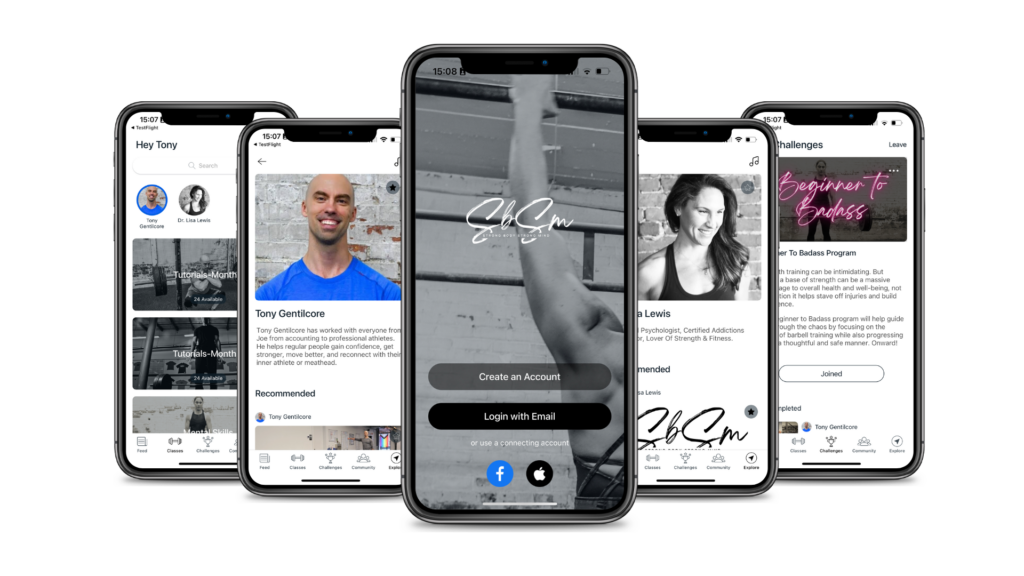
Introducing: Strong Body Strong Mind App

I told you it was coming!

Our app is now available.

Our App: From Strength Coach Tony Gentilcore and Psychologist Dr. Lisa Lewis

Most of you may already know that my wife, Dr. Lisa Lewis, Psychologist (and household director of talking about feelings), has been my partner in our Strong Body, Strong Mind initiative:

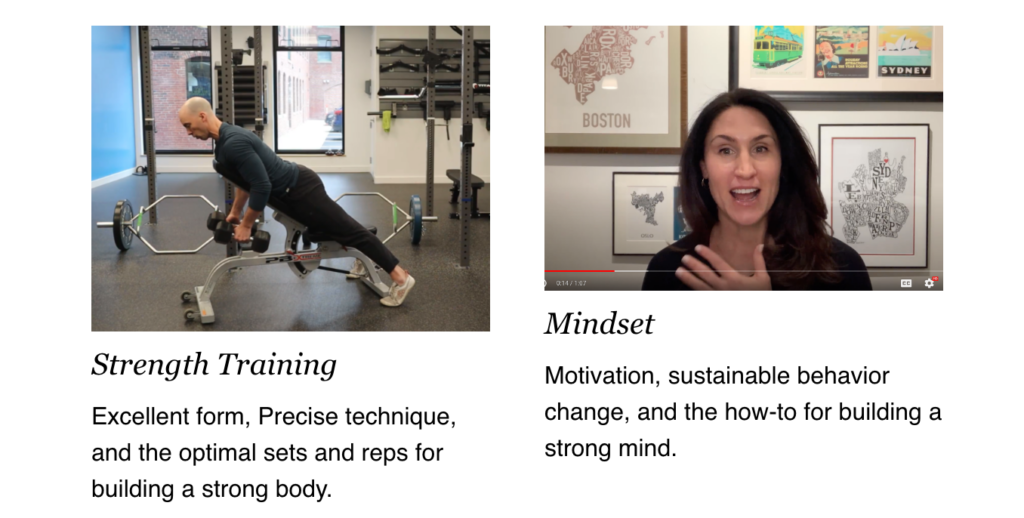
…to mesh together both physical and mental strength training for optimal health and functioning.

After years of presenting together at conferences, seminars, and private workshops, we are THRILLED to release programming in an easy-to-access, affordable application.

—> Say no more, shut up and take my money <—

The inaugural program offered in the Strong Body, Strong Mind app is called “Beginner to Badass” and is specifically designed for those who are stark beginners to barbell training or just looking for some direction.

Whether you (or someone you know) is brand new to lifting weights, returning after a break, or just looking for a nuts and bolts program, Beginner to Badass can meet those needs.

What to Expect From the Program

👉 3 months (3x per week; 36 total sessions) of appropriately progressed strength training. NOTE: You will need access to barbells, dumbbells, etc in order to follow this program.

👉 Videos that demonstrate proper technique alongside voice prompts & coaching cues to help you execute every exercise like a pro.

👉 My biceps looking extra bicepy.

👉 A “Mindset Minute” that coincides with every workout session to help you build resilience and persistent habits.

What Not to Expect

❌ Novelty – Exercise variety has a time and place, but a beginner strength training program isn’t one of them. Using one of my more astute and colloquial quotes:

“The greatest gap is most people’s training isn’t lack of novelty, but rather lack of mastery.”

This is the Beginner to Badass program’s glue.

❌ Guarantees or Promises – I could sit here and regal you with grandiose claims like “I guarantee your bench press will increase 50 lbs in five weeks” or “I promise your pecs will be able to cut diamonds” following this program, but that would be disingenuous.

Because the fact is…I don’t know!

What I do know is that you will learn more about what unabashed consistency can do for progress in addition to gaining more confidence including more barbell training to your repertoire.

❌ Lumberjacks – sorry?

We hope you’re as excited as we are to get started.

Join Now

Categoriescoaching

Coming Soon: The Strong Body Strong Mind App

I’ve been woefully negligent with my writing prowess of late.

But it’s for good reason.

My wife, Dr. Lisa Lewis, and I have been busy for the past few months developing a wellness/fitness app!

Strong Body, Strong Mind

The app is called Strong Body, Strong Mind and we firmly feel it’s going to be quite different than the bulk of fitness apps out there.

How/why?

For starters, the obvious: This app will provide both structured strength training AND mental skills guidance to bolster motivation and confidence.

I’ll be taking the reigns on the training side of the app. The “Beginner to Badass” program is designed to guide those interested in starting a barbell-based strength training program but have otherwise been intimidated to do so on their own.

My goal with this app is to make strength training accessible to the masses and to demonstrate how to properly progress from a beginner to being able to beat Jason Bourne in a hallway battle royale.

Lisa will run the show on the psychological/mindset side. She’s an actual Doctor of Psychology (not an Instagram mindset coach) and has over two decades of experience.

Plus she’s a doctor who actually lifts!

Each workout will have a “Mindset Minute” to coincide with it, and will focus on anything from how to stay motivated when beginning a new exercise routine to ways to overcome speed-bumps with lack of consistency.

In short: Lisa’s there to Jedi mind-trick you into kicking ass and taking names. And maybe, if all goes to plan, get you to summon the force with the strength of your butt cheeks (that’s how it works, right?)

Jedi sword in the desert

More details will be coming in a few days when the app is officially launched. For now, I hope this serves as a bit of an Amuse Bouche of the awesomeness to come.

Keep your eyes peeled…👀

Categoriescoaching psychology

The Story of a Shitty Deadlift Turned State Record

HEADS UP: My newest and latest continuing education resource – Strategic Strength – is now officially available to make out with purchase. It’s on sale all this week at $50 off the regular price.

I hope you’ll check it out. (waves Jedi hand – you WILL check it out).

This is a story about a woman, her deadlifting journey, and how the words we use matter.

Unfortunately there are no dragons involved, but it’s a BALLER tale nonetheless.

It begins in 2019 (remember those carefree days!?!) and takes us all the way to a mere three weeks ago where a Colorado State Record was broken.

👇👇👇👇👇

Copyright: ammentorp

The Words We Use Matter (again)

To serve as slight prelude, I’d be remiss not to point you in the direction of a blog post I wrote in early 2020 titled The Words We Use Matter.

In it I discuss the often negative connotation the words we use have on the psyche of our athletes/clients.

The best example is the initial assessment/evaluation.

Instead of using it as an opportunity to empower someone and to demonstrate to them what they CAN do, we’ll often use the assessment as an invitation to chop them down a peg or two and hone in on their faults thinking, mistakingly, that by doing so we’ll “woo” them into submission; that the only way they can be “fixed” is by purchasing a 24-pack of sessions.

It’s bullshit.

And we need to do better.

You can read the original post HERE.

It’s relevant because 1) I go into detail on what NOT to do during an assessment in Strategic Strength and 2)  in hindsight the seed(s) of that article were very much planted a year prior, in 2019, at a fitness event I was involved in.

The quick backstory is that I was invited to Colorado Springs to record a webinar at NSCA Headquarters for their 2019 Virtual Personal Trainers Conference.

My presentation was on “Hip Assessment” and how fitness professionals should lean more into the idea of asymmetry (brief take: it won’t kill you) and that it behooves us to take time to better individualize one’s squat and deadlift set-up & execution.

I.e., little tweaks here in there with regards to foot position, stance, or even the variation can go a long ways in helping a lift not only feel better, but feel more stable and powerful too.

Part of my presentation involved taking someone in the audience through a real-time assessment in addition to a technique audit.

Here’s visual proof of the interaction:

That’s me on the left and  Jenny (Stein) on the right – you can check her out on IG HERE), a personal trainer located in Colorado Springs.

If I recall correctly, Jenny volunteered her deadlift because, according to her, “it had never felt great.” So I spent a solid 20-30 minutes taking Jenny through some shenanigans.

She had always performed her deadlifts with a conventional stance (feet closer together, hands just outside the knees) but it had always bothered her back.

So I widened her stance to a modified Sumo stance (pictured above) which allowed her to maintain a more upright torso and placed less shearing on her spine. I then got her to have a better appreciation of what it really feels like to ramp up full-body tension:

  • Finding her hamstrings by experimenting with hip position (up, down, back, forth, BAM, okay, right there).
  • Finding her lats: “squeeze an orange in your armpits.”
  • Having her put more force INTO the ground by PUSHING away from the floor rather than pulling.
  • Connecting the bar to the inner circle of the plates – “taking slack out of the bar.”

All these things helped her stay better engaged and helped her to maintain a neutral spine throughout each rep (no more back rounding).

Was she perfect?

No.

All I was after was “better.”

I kept things positive, focused on the “big rocks,” and tried my best to cement the things that were clicking with her at the moment.

(Another really brief digression: I go into MUCH more detail on ALL OF THE ABOVE in Strategic Strength. Hint, Hint Like, you get to SEE it for yourself).

In all, at the end of the live session, her deadlift felt and looked better, which was a win in my book.

Unbeknownst to me (at the time), during one of the breaks in filming, another male trainer in the audience approached Jenny to make some small talk. He asked her in passing if she had ever deadlifted before?

She said yes, but that she hadn’t a ton of experience.

His response:

“Yeah, those looked pretty shitty.”

What profound feedback!

Fucking asshat.

It was weeks later, when Jenny sent me a message thanking me for the coaching cues I gave her, that she told me about her exchange with the other trainer in attendance.

We had a chuckle about it, and shared a few eye rolls…

…but it made me wonder about this guy’s coaching style. Obviously I have no way of knowing for sure, but if he had such callous and insensitive commentary towards a complete stranger, wasn’t it safe to assume it was more of the same with his own clients as well?

Some people may respond positively to such feedback. In my experience, most would crumble.

(shrugs)

The words we use matter.

I mean, what if I had taken the same approach?

Let’s say we had a time machine and went back to my first interaction with Jenny and my initial feedback mirrored his (albeit with a bit more drama):

“OH MY GOD. MY EYES. MY EYES. THEY’RE BLEEDING. MAKE IT STOP. MAKE IT STOOOOOOOOOOOP.

Sorry Jenny, those looked really shitty. Also, your dog is ugly. Next.”

Chances are I’d have turned Jenny off completely and she never would have pursued training with deadlifts ever again.

Instead, This is What Happened

This is a message I received from Jenny in early 2020:

“Hey Tony!

I’m the girl from the NSCA with the “shitty deadlift.” I wanted to tell you that my ugly deadlift is now 335 pounds and I have entered my first powerlifting competition and may even grab a state record next year.

The time you spent with me that day last year sparked something and it may sound ridiculous, but I don’t know where I would be today without the magical creature called the deadlift. For some reason I felt compelled to share this with you today. What may have seemed ordinary and mundane to you completely changed my life.

Again, probably sounds over-dramatic but I truly mean it. You’re a gem. Keep doing what you do.”

Me:

via GIPHY

But the story get’s way cooler.

Fast forward through a pandemic.

I received the following message from Jenny in 2021:

“Hi. This real ugly deadlifter now holds a Colorado state record!!!! I of course had to share with you.”

Jenny pulled a whopping 363 lbs and turned her “shitty” deadlift into a state record.

Fast forward another year (three weeks ago):

Jenny pulled 402 lbs in a recent state powerlifting competition, which I believe solidifies her as a bonafide deadlifting badass.

Way to get Jenny! (and fuck you lame trainer guy who probably couldn’t lift this much anyway):


View this post on Instagram


A post shared by Jenny Stein (@jennypikefitness)

Categoriescoaching

How to Guarantee Your Clients Will Have a Hard Time Actually Getting Results

If you train people for a living, read this.

Copyright: ruigsantos / 123RF Stock Photo

Don’t Guarantee Results

It’s seems counterintuitive, maybe even borderline asinine, not to guarantee your clients results, right? I mean, what the hell are they hiring you for?

HINT: It’s not to trade baseball cards or tickle fights.

I had a new client start with me recently and within ten minutes of her initial assessment she was relaying a story of her previous coach telling her she’d see results in “x” weeks.

Guaranteed.

Guess what didn’t happen?

via GIPHY

I don’t know about you, but I’d hate to set myself up for that kind of standard or expectation as a coach. Unless their goals are any of the following….

  1. Cut diamonds with their pecs.
  2. Build a deadlift that shakes the ground all the way down in Kentucky.
  3. Become a world class hugger.

…I’m not guaranteeing anything, let alone within a specific window of time.

When a new person shows up to CORE I have zero insight into their work ethic, degree of compliance, or any other outside factors that may or may not come into play (family responsibilities, work schedule, Andor marathon watching schedule).

Don’t get me wrong: There should always be an open dialogue and some form of communication with regards to goal setting. But don’t set yourself (or your client) up for a trap by guaranteeing results.

So, Uh, Since We’re Talking About Goals

It behooves any coach to encourage their client to be more specific with their goal setting. Having realistic and tangible goals in sight helps nudge more intent and purpose.

It keeps people more invested in their training.

Just be careful of someone being too vague (“I want to lose weight”), unrealistic (“I want to add 100 lbs to my deadlift in two weeks”), or downright batshit crazy (“I want to pet a Unicorn”).

Lets us a too vague example.

Too Vague = “I want to lose weight” or “I want to get stronger.”

Camera focusing on measuring tape and woman weighting on scales at bedroom. Concept of dieting

Neither is a bad goal. They’re just both vague as shit. It’s like me saying something to the effect of “I want food” when asked what I am in the mood for for dinner.

When someone suggests a vague goal like the ones above I’ll usually try to dig a bit deeper:

  • “Why do you want to lose weight/get stronger?”

  • “What’s prevented you from achieving those goals in the past?”

  • “How will attaining those goals make you feel once you hit them?”

Peeling back the onion with follow-up questions reveals quite a bit. The person soon understands they need to switch gears and latch onto something more concrete.

Which serves as a nice segue to…

Try to Encourage More Performance Based Goals

I’ve been a champion of this approach for a number of years now.

Setting performance-based goals is a game changer.

For example, with many of my female clients, instead of allowing them to default to the “I want to lose weight” trope, I’ll encourage them to pick a performance-based goal to train towards instead:

  • Perform their first strict, unassisted chin-up
  • Deadlift their bodyweight for five reps
  • Perform ten, strict pushups from the floor.
  • Beat Wonder Woman in a fist-fight.

Trap Bar Deadlift.

Setting a performance-based goal makes things so much clearer from a programming standpoint. First off, it makes getting rid of the superfluous foo-foo bullshit easier. Secondly, and most important, is that it gives people purpose in their training.

There’s a WHY behind the madness.

Each exercise, exercise order, load, set/rep, and rest period is curated for the sole purpose of hitting that goal.

To steal a famous quote from strength coach, Dan John:

“The goal is to keep the goal, the goal.”

Either your training program is bringing you one step closer to hitting your goal, or…it’s not.

What I find, more often than not, is when I can get a client to marry him or herself to training for a performance-based goal, the work and effort involved often results in them hitting that aesthetic goal anyways.

It’s a win-win.

The dose of empowerment is priceless.

Set Up Process Goals

This is so simple it’s absurd.

Basically, process goals are smaller, more bite-sized, DAILY, goals people should try to hit that will compliment their ability to hit “big rock” training goals.

I mean, how “strong” is someone going to get if they’re routinely only getting 4-5 hours of sleep a night? What are the chances someone is going to “lose weight” if their idea of a veggie is a piece of lettuce on top of their double bacon cheeseburger?

bacon cheeseburger on toasted pretzel bun served with fries and beer

Setting up 2-3 process goals – getting at least seven hours of sleep a night, shooting for 3-4 servings of vegetables per day, eating out less – for people to strive for every day is a great way to not only keep them on task, but provide an unparalleled sense of accomplishment as well.

As they check off hitting each goal per day, they gain more and more confidence and sense of “holy shit, I can do this.”

Build Autonomy, Competency, and Relatedness

These are just fancy-schmancy ways of saying people want to have a sense of freedom/choice in their training, they want to feel like they can do shit, and they want to be part of a community.8

Autonomy: People don’t like to be told what to do. When someone is told what to do or not to do, the human response is something called reactance.

They revolt. Go against the grain. Tell you to go fuck yourself.

Basically, they do whatever it is you told them not to do anyway.

Admittedly, when someone is paying you to be their coach, there’s a degree of “do what I tell you to do” that comes with territory.

However, I’d encourage any coach or trainer to build a level of CHOICE into their programming.

  • Maybe your client gets to choose what variation of deadlift they perform that day.
  • Maybe you let them choose if they want to use dumbbells or kettlebells for certain movements.
  • Maybe you give them a 5-10 minute window at the end of their session to do some additional glute training.

That sense of freedom/autonomy will undoubtedly build a greater degree of compliance.

Competency: This is easy. People don’t like to fail. I’d argue failing is good and part of the growing process, but that’s besides the point.

People want to feel like they can DO stuff. For example, if someone has little experience strength training, what’s the likelihood they’re going to feel great about barbell back squatting on Day #1.

Now, I’m not saying a good coach can’t teach someone how to back squat in a matter of minutes.

It’s very doable.

However, what I am saying is don’t be a dickhead. It can be intimidating for some people to place a barbell on their back, and you’re not doing them any favors by force-feeding it.

Doing squats with barbell

I feel the squat is a valuable pattern everyone should become competent with. That doesn’t mean everyone has to start with a barbell on their back.

Goblet squats are a splendid starting point for many people. Once they’re comfortable with that, we can progress accordingly.

Relatedness: Keeping this one brief, going out of your way to build a culture where people are surrounded by like-minded individuals and they can be themselves is paramount.

Don’t Be Scared to Dish Out Some Tough Love

Bringing this whole discussion full-circle: Remember that new client I mentioned above, the one who told me her previous trainer guaranteed her results?

She asked me an obvious question:

“When do you think I will see results?”

My response:

“If you kinda-sorta train, you’ll get kinda-sorta results.”

This was a (maybe not so subtle) hint that it’s up to HER.

You get out of training what you put into it.

As someone’s coach I’ll be there to support them and help augment their training experience. However, it’s also important to relay the message that part of the onus on them, too.

They have to take ownership and responsibility.

Categoriescoaching personal training

Training Athletes vs. General Population Clients

A few years ago, while presenting at the NSCA Mid-Atlantic Regional Conference, I mentioned to the crowd that I don’t work with a lot of athletes anymore.

By choice.

Copyright: yuran-78 / 123RF Stock Photo

Training Athletes vs. General Population Clients

Instead, I explained that currently 90-95% of my clientele are made up of general population clients.

You know, “normal” people.

What’s more, I noted that I actually preferred training them over professional athletes.

There was a cacophony of crickets chirping and cold, blank stares. You would have thought I had just told the crowd I had given up everything just so that I could go walk the land and practice kung-fu.

via GIPHY

During the subsequent Q&A later that day I had a handful of people approach to ask if I was okay and whether or not I needed medical attention for saying something so blasphemous me to further elaborate my comment from earlier:

“So, uh, you said you stopped training athletes to work with general population clients.

Like, why?”

Here’s What I Said

Before I peel back that onion, I think it’s important to address the elephant in the room.

I think the overlying credo in the fitness industry is that once you get to the point where you’re working with (professional) athletes or celebrities you’ve somehow “made it.”

You’re elite.

You can now write your memoir.9

Woman hold notebook. Book notes for the Story of my life. Personal memoirs notes concept.

Quick Aside: I also feel there’s a tendency for people within the industry to give more credence or credibility to certain certifications over others. For example if someone is a CSCS (Certified Strength and Conditioning Specialist) they’re obviously smarter and more qualified than a lowly CPT (Certified Personal Trainer)….and they can probably walk on water.10

Certifications are great and all (and necessary to some degree), but I guess I fall into the camp that tries not to place too much weight on the letters next to someone’s name, and more so on their experience and overall track record.

I get it: Training Gary from accounting doesn’t attach itself to as much prestige and luster as, say, an NFL player or Zac Efron.

However, as my friend and colleague, Mike Connelly, eloquently stated back in the day:

We all train people. Whether or not they get paid to play a sport does not change their “peopleness” nor does it impact your status as an elite trainer. You either know what you’re doing or you don’t and there is plenty of both on either side.

Training professional athletes and actors has its benefits and setbacks, as does training general population clients.

I’ve been fortunate to work with people on both sides of the fence.

I can tell you that throughout my career I’ve been every bit as excited watching one of my female clients nail her first strict, bodyweight chin-up as when I was watching an athlete of mine make his Major League debut.

Fun Tony Factoid: I watched one of my former athletes make his Big League debut the night of my Bachelor party.

Anyways, far be it from me to tell you which is the better fit or more rewarding route to take.

All I can do is speak for myself.

Speaking of which, how about I finally STFU and get to the meat and potatoes of the post.

“Tony, why did you CHOOSE to not work with pro athletes?”

Here’s What I Actually Said

1. You’re not my Mom, you can’t tell me what to do.

2. The truth is I still do train athletes.  My previous coaching position was at an institution – Cressey Sports Performance – which is known for working with a metric boat load of professional athletes.

Especially overhead athletes.

So, in effect, me switching gears and not training (professional) athletes at the same abundance was very much a result of that.

I simply am not around them as much compared to the past.

Rest assured, though, if Mike Trout wanted to train at CORE I wouldn’t turn him away….;o)

3. When I decided to leave CSP and open up my own small studio in Boston I knew the demographic I’d be catering to the most would be normal, everyday, all-I-want-to-do-is-to-be-able-to-pick-my-kid-up-and-not-hate-life people.

Partly because of the location of my studio, and partly because that’s what I wanted to do.

Don’t get me wrong: I loved working with athletes – and I still do.

However, as far as absolute joys in my life are concerned, outside of a good tickle fight, a heaping bowl of ice-cream, or rough-housing with my 5-year old, I have always gotten more out of helping “regular peeps” nail their first 2x bodyweight squat or helping someone finally conquer his or her’s chronic low-back pain.

I wanted to get back to former and the joy it brought me.

So that’s what I did.

Bye Felicia.


Besides, I don’t feel there’s any less pedigree of coaching involved at accomplishing any of the things mentioned above compared to improving someone’s VO2 max or vertical jump from 31 to 32 inches.

In fact, this quote from Vince Gabriele sums things up nicely:

I get more satisfaction helping a level 3 become a level 7, than a level 8 becoming a level 9. The former is so much more rewarding.

4. Also, if I really wanted to be honest with any young fitness professionals reading:

  • There’s more general population clients out there in the world than there are professional athletes. It’s an inevitable mathematical likelihood that, despite how important you feel you are and that only the elite of the elite can (and should) be privy to your superior training methodologies, you may, never, work with professional athletes.
  • But if you do, training athletes can provide a level of prestige that can be leveraged to garner more business.11 That said, and I think a lot of gym owners will agree with this, it’s general population clients that pay the rent and often result in more consistent revenue.

Something to think about.

And That’s That

If anything I hope this little rant resonates with those who may struggle with the notion that they’re “less qualified” because they don’t work with athletes , models, actors, or clowns.

That’s a bunch of hogwash.

Maturity in a trainer/coach is revealed in ‘the process of progress’ rather than who’s connected to it.12

Categoriescoaching fitness business

6 Reasons to Consider the Semi-Private Training Model

I started my career as a personal trainer back in 2002.

To give a little perspective on how long ago that was:

  • Joe Millionaire was one of the top-rated television shows that year.
  • The standard reaction to anyone requesting almond milk was one of two things: 1) a cold, blank stare into the abyss or 2) a cold, blank stare into the abyss followed by a definitive “the fuck outta here. Making milk out of almonds? What’s next…making pizza crust out of cauliflower?”
  • MTv still played music videos.
  • Smart phones and social media didn’t exist.

More to the point…the concept of semi-private training didn’t really exist either.

Copyright: ramain / 123RF Stock Photo

What Is Semi-Private Training?

There are a few iterations of semi-private training, so I think it behooves the conversation to make a clarification first:

Example #1 = One program for a small group, generally in the ballpark of 10+ people.

Example #2 = Individual programs with a group of people (usually 2-4) training at the same time.

Example #3 = One program, one chain saw, 14 ninjas, last person standing wins.

For this article I’m referring to option #2.13

As I mentioned above I started my career as a personal trainer working almost exclusively with clients in a one-on-one fashion.

I can’t stress this enough:

“You need to be good at training ONE person before you start training a group.”

I have zero doubts the five years I spent working with people one-on-one helped to dampen the shock when I eventually started working with several people at once.

To that end, it wasn’t until 2007, when I co-founded Cressey Sports Performance with Eric Cressey and Pete Dupuis, that I got first-hand experience with the semi-private training model.

Up until then there weren’t many fitness professionals, let alone commercial or privately owned facilities, utilizing this model…and full credit has to go to Alwyn Cosgrove for serving as the nudger and architect for us adopting it.

He and Eric had many, many conversations on the matter, and considering Alwyn had built one of the most successful training studios in the country – Results Fitness located in Newhall, CA – utilizing this approach, who were we to question it?

That would have been like telling Gandalf “nah, I think we’re good. We can handle Mordor on our own”


Compound that with the fact Eric, Pete, and myself knew we’d be catering to the athletic population and that we very much wanted to emulate more of a collegiate strength & conditioning vibe it seemed like a no-brainer.

Long Story Short: The model worked (for us) and today more and more facilities (and individual coaches) are seeing the merits of the semi-private training approach.

Long Story Short (Part II): I left CSP in 2015 to start my own small studio in Boston. And even though I now work predominately with gen’ pop’ clients I still use this model and see many benefits.

Long Story Short (Part III): I am not implying CSP is responsible for the semi-private explosion. But I’d like to think we – along with other facilities such as I-FAST (Mike Robertson & Bill Hartman), Mike Boyle Strength & Conditioning, Mark Fisher Fitness, and many others – have helped to promote its popularity over the years.

WU-TANG!

via GIPHY

Tony, For the Love of God, Shut up, and Tell Me WHY I Should Adopt the Semi-Private Training Model?

1. Yes, It’s Safe

The most prominent argument I’ve seen against semi-private training is that it’s dangerous. The rationale being that people aren’t getting the attention they need and, as a result, things inevitably deteriorate to the point where everyone’s running around with scissors in their hands.

Well, if that’s the case then CrossFit, Bootcamps, and Aerobic and Spin classes are the fitness industry’s equivalent of getting into a hugging match with a grizzly bear while wearing a steak vest.

I think it was Alwyn Cosgrove, fittingly enough, who made the best rebuttal of date to this train of thought:

People learn to swim and shoot guns in a group setting.”

I think we can pump the brakes on the whole “danger wagon” scenario.

2. People Stay Motivated

I think most people have an inherently competitive side and to that end tend to work harder and (are more motivated) when they’re surrounded by like-minded individuals getting after it in the gym.

total body workout group training

Most humans feed off the energy of others. On many occasions I can think of instances where clients end up getting competitive and try to push each other’s envelope.

Of course, it’s important to reiterate to clients not to compare themselves to others and that it’s no big deal if “so and so” can perform seven chin-ups or squat a house and they can’t.

I often use the term “progress, not perfection” when certain clients get too caught up the comparison game. So long as they see improvements (even small, incremental ones) over the course of time that’s all that matters.

That said, it’s uncanny how a group environment will often bring out people’s competitive side and nudge them to work a little harder.

3. Be Part of a Community

I’m biased, but my clients are the shit.

They’re cool.

They’re jacked.

And they’re just overall a bunch of amazing human beings with diverse backgrounds, interests, and experiences.

It’s not uncommon for clients to want to schedule sessions at the same time or to hang out outside of the gym to hit up a concert together, go out to dinner, or, I suspect, sit around and write about how poetic my deadlift looks:


View this post on Instagram


A post shared by Tony Gentilcore (@tonygentilcore)

The sense of being part of a community and the camaraderie it yields is an underrated if not unparalleled advantage to the semi-private model, and why so many people tend to stick around for the long haul.

4. See More Clients – Leverage Your Time – Make More Money

This past Monday I coached from 4 pm to 8 pm.

I saw ten clients during that time

I don’t know about you, but I’d rather have a four-hour “work day” compared to ten hours.14

Not only that, on a per hour basis, all someone has to do is basic math to see why the semi-private model works well from a money-making standpoint.

Lets say the average trainer makes $75 per session working with clients one-on-one.

That’s not too shabby.

The same trainer, however, could charge $50-$60/person in the semi-private format and make 2x (if not 3x) that much depending on the numbers:

Two People = $100-$120

Three People = $150-$180

Four People = $200-$240

via GIPHY

No doubt these numbers will need to be adjusted to take into account varying cost of living in different regions, but math is math.

As far as leveraging one’s time, the semi-private model is a strong candidate for most fitness professionals.

5. More Cost Effective For Clients

Pigging back on the above, the semi-private model is financially prudent for the client as well; it lowers the financial barrier.

Generally speaking this approach is 10-15% (maybe a smidge higher) cheaper compared to one-on-one training.

That may be the lone incentive someone needs to get them over the hump to seek out coaching services.

6. A Godsend For Introverts

This last point takes a bit of personal angle and may not resonate with some of you reading, but as a self-proclaimed introvert, I can say the semi-private format has helped me a ton as a coach.

It sounds counterintuitive, but hear me out.

I can turn on the charm and be extroverted when I need to. The common misconception about introvertedness and extrovertedness is that they’re both on a spectrum; neither is a stagnant, set-in-stone thing. What’s more, those who identify as introverted are (usually) not socially awkward or a recluse.

A person deprived of communication with society. Difficulties in integrating into society

Sure, they may like to spend more time with cats than the average person, but they can turn it on or otherwise be the center of attention if need be

However, what “being introverted” really refers to is how a certain individual prefers to re-charge. After marinating in social circles yhey tend to re-charge by being in their own thoughts, at a bookstore, watching a movie alone, or, I don’t know, looking out the window contemplating when season 2 of Squid Game will finally come out.

Now, it’s not lost on me that part of why some people hire a coach is so that the coach can serve as the spark or center of energy.

I find this latter point infinitely more challenging when working strictly one-on-one with clients (especially with fellow introverts) and the impetus falls on me to be the curator of conversation.

Me: “Soooo, you watch Game of Thrones?”

Client: “Yeah.”

Me: “Dragons are cool.”

Client: “Yeah.”

Me: “Okie dokie, ready for your next set of deadlifts?”

Client: “Yeah.”

Me: “Excuse me while I go throw an ax into my face.”

When on the gym floor with a group of people, and the music’s blaring, and everyone’s moving around doing their thing, I typically don’t have to generate any gab.

It just happens organically amongst the group.

THANK GOD.

Some Cons to Semi-Private Training

Semi-private training isn’t all butterfly kisses and rainbows.

1. Some Clients Get Less Attention

Semi-private training is akin to hosting a party, and every client is a guest. The last thing I want to do is socialize with one lone person the entire night (unless it’s Kate Beckinsale) while everyone else is left twiddling their thumbs in the foyer.

Some clients may get irritated and feel they’re not getting enough coaching, and that’s a very valid point to bring up.

I do feel if you take the time to do your due diligence and structure things accordingly – maybe offer a few “ramping” or introductory classes so people can learn some basics, cueing, etc – this is a non-issue.

However, some people just won’t be a good fit for the semi-private model and it’s important to have referrals (or systems) set in place to accommodate them.

2. I Wouldn’t Jump In Right Away

After reading this post the last thing you need to do is contact all your clients and tell them you’re revamping your entire business model and that everyone’s going to be training BFF’s moving forward.

If you do I guarantee you’ll be receiving a few emails with the title:

“Fuck this shit, I’m out.”

Ease your way into things.

Maybe block out a few set hours per week to give the semi-private approach a test drive and to allow an opportunity for a few of your clients to get their feet wet with the concept.

3. It Can Be Draining

Working with several people at once isn’t everyone’s bag.

It can be very draining.

I get it.

Some people prefer working with people one-on-one and that’s totally cool. Many fitness pros still do it, do it very well, and are very successful with it.

There’s no real right or wrong here.

Except, you know, you should do it….;o)

Categoriesbusiness coaching

The 4 Steps to Never Ending Growth

My good friend and colleague, Gavin McHale, is back with another excellent guest post today. He’s been on a tear of late writing some stellar content for this site.

We’re all our own worst enemy, and for many, stepping outside our comfort zones and taking risks (calculated or not) in an attempt to grow our fitness business can be a daunting (if not sphincter clenching) task.

Gavin provides some sage advice how how to NOT let this happen moving forward.

Enjoy!

Copyright: olegdudko

The 4 Steps to Never Ending Growth

It was the summer of 2014 when I first read a blog article alluding to the “laptop lifestyle.” 

I was immediately hooked.

Not because I was hoping to sip mai tai’s on the beach while my clients worked their asses off to a shitty, templated training program like the article seemed to suggest would be the case, though.

While I had some thoughts of grandeur that my life would drastically change, I was mostly aware that this lifestyle the blogger spoke of wasn’t all rainbows and butterflies.

So I did what any 27-year-old personal trainer with zero business or marketing experience would do. I paid someone too much money to build me a (shitty) website and started an Instagram page for my business. I had no plan or idea what I was doing, but I knew this was part of the path to laptop lifestyle freedom.

It had to be, right?

I’ll throw a few blogs up on the website and make some educational posts on Instagram and they’ll be flinging their credit cards my way, salivating to buy my yet-to-be-figured-out online training programs.

I’m sure you already know that didn’t happen.

For the weeks and months following, I got crickets.

via GIPHY

So, like any savvy business person would do when no one is buying the high-priced 1-on-1 online training option, I lowered my prices. In fact, I went all the way from offering $1000 training services to $29 e-books.

Guess how many of those I sold.

And even though this little story is quite fun in hindsight, neither of those decisions were where I truly went wrong, but I’ll get to that in a minute.

As my online business continued to flounder and take up more and more of my time and energy, I began to become soured to the whole process. 

My in-person training business was still ticking along as it had been for several years now. 

  • 6:30AM-12:30PM – chalk full semi-private sessions
  • 3:30PM-6:30PM – mostly full private and semi-private sessions

Evening hockey practice to make some extra cash, toiling away in a freezing cold rink once a week all winter.

Rinse, repeat.

via GIPHY

The issue wasn’t even really the money at the time.

I was making enough to pay the bills and live comfortably.

I could pay the mortgage and put food on the table, but it was the way in which I was making it that wasn’t working for me.

I now realized my potential income was choked out by the amount of hours and energy I had, and that if I ever wanted a different lifestyle that included things like seeing my spouse or having a family, things would need to be different.

And as I continued to grind for 60 hours a week, while trying unsuccessfully to build a more sustainable business online during every single non-gym-floor hour, my ego led me to believe this wasn’t for me anymore.

What had started off as such a promising option 18 months before had become a stupid idea that “wasn’t for me.” 

I told myself I was an in-person coach (and I was a good one) and that online coaching was stupid and only for those who couldn’t make it in person.

I thought I was taking the righteous road.

I told myself this was the path and stood strong in that belief.

Except I kept seeing other good coaches, whom I respected, rapidly building online businesses. They were leveraging their skills into something that kept the quality while also being scalable. Some got to the point they were so busy they had to give up their in-person clients so they could focus on working from anywhere, at any time while raking in the cash.

Seriously… what the actual fuck?

Let’s get back to what went wrong here. I was caught in the Vicious Cycle of Imposter Syndrome.

Let me explain the steps of this cycle.

1. Feel Fear

Evil forest: Fear from the dark
Hey, Tony here. I attempted to look for an “inspirational” fear image to put here, but opted for this one instead. Excuse me while I go destroy the back of my pants.

It was scary to do something I wasn’t good at.

I had always been good at everything I tried – school, hockey, in-person training –  and when I wasn’t very good at marketing or using social media, I quit (because I was scared).

2. Make Excuses

The excuses comin’ out of me were so fast and believable, that I became an expert in them.

  • I was too good in-person.
  • I wasn’t built to work with people online; I’d rather be in person.
  • The market was saturated.
  • No one knew the guy from little old Winnipeg, Canada (as if location had anything to do with working online…).

I made such compelling arguments that even I started to believe them.

I see this in the trainers I speak to regularly. They have become so entrenched in this set of false truths that it’s hard to pull them out of it.

3. Don’t Take Action

Take action

Like I said earlier, I did take action originally. I started a social media page and made a website. I tried to sell training and e-books.

When none of it worked the way I expected it should, I stopped taking the actions required to build an online business. 

At the very least, I half-assed them, telling myself they wouldn’t work before I even hit publish or post.

I stonewalled my success before it even had a chance.

When that action proved to be more trouble than it was worth (fulfilling my prophecy), I gave up on it before it had a chance to succeed. 

And as you’ll see in the virtuous cycle of growth below, I missed one crucial step on the path to success, bringing it all crumbling down.

4. Expect Different Results

Through all of this, even though I was quickly spiraling and not seeing any results with the actions I was taking, I continued to hope for someone to fall through the cracks. 

I continued to make the same type of boring, educational, poorly written posts, expecting for more likes or thinking “this one will go viral”.

And what’s worse than going all in on something and failing is half-assing it, hoping it will work out but deep down knowing what you’re doing is not working and will never work.

Because I didn’t look for another way, I just kept ramming a square peg into a round hole, while it kept trying to tell me to do something different.

I allowed a lack of results to strengthen the resolve that I wasn’t good enough.

Does that pattern sound vaguely familiar?

I know this pattern too well, not only because I repeated it over and over for 18 months (and still fall into it sometimes), but because I see and hear trainers – really good trainers – saying the exact same things to me on a weekly basis.

So the goal of my program is now to flip the script from the vicious cycle of imposter syndrome to the virtuous cycle of growth.

Virtuous Cycle of Growth

1. Feel Fear

Evil forest: Fear from the dark
Yup, still creepy AF

Notice how this step is the same in both the vicious and virtuous cycle? 

You’re never going to outrun fear. Fear will always be present. Your job is to feel it, harness it, and act anyway.

Fear and the parts of you that bring it to the surface are just doing their job. They’re just trying to keep you safe. 

It’s an evolutionary trait that has kept humans alive and evolving for thousands of years.

But being afraid of getting attacked by a lion in the desert is a lot different than being scared to ask someone if they need help with their training.

One results in possible (probable) death.

The other results in a hit to the fragile ego.

Very different.

2. Take Messy Action (Knowing It Will Be Incomplete Or Wrong)

Action is a funny thing, because it’s often the thing that’s scariest, but also the thing that will help you see that it’s not as scary as you think.

I’ve noticed that we’re all very good fiction writers in our own brains. We pen tragic and imaginative stories about what will happen when we ask the person out, how our clients will react to a price increase and what all our friends will say behind our backs when we make that vulnerable post.

And the only way to know that’s not the case, is to take the fucking action.

  • Ask them out.
  • Raise your prices (more than you think).
  • Make the post.

The messier, the better. 

Because I never learned anything from an A+ on a test. But, if you handed me back a D, I’d sure as shit study harder next time.

3. Seek Feedback

Here’s the super important step I missed in my first attempt at building an online business.

I felt the fear and took action anyway. Maybe I was so naive that the fear didn’t even register, but I can give myself that.

What I missed was asking for feedback, or even looking for feedback. The pure lack of engagement on my social media content was trying to give me feedback. The lack of clicks and website visits after the initial surge from family and friends was trying to give me feedback.

The overall lack of any measurable results was trying to give me feedback.

Customer feedback and satisfaction conceptual image

But I was too proud to see it.

See, I always thought the only feedback came from parents or coaches or people who otherwise knew better than me.

I thought I had to ask, but in this case I had no one to ask.

And while a coach or mentor is absolutely valuable as an outside observer, feedback can be found after every single intentional action you take.

Did it produce the results I hoped for? Why or why not?

Keep asking questions and you’ll get the feedback you need to either change course or double down on what you’re doing.

I look at feedback as the final number in those annoying high school combination locks. You can do everything else – take messy action in the face of fear, but without feedback, you’re left running around like an idiot doing everything for everyone and never knowing what’s worked.

4. Recalibrate and Take More Messy Action

Here’s where the virtuous cycle really takes off.

Once you take an action (any action, really) and seek feedback, your next action is even more calibrated. The more you can repeat this process, the more calibrated and purpose-driven your actions will become.

In this scenario, there is no way you can lose.

You will either hit it out of the park, or you’ll learn, tinker and keep iterating until you hit it out of the park. 

Closing Thoughts

So, if you’re anything like I was back in my laptop lifestyle chasing days, things are probably going pretty well for you.

I will leave you with one final piece of advice before signing off, because the drive to take action on a blog post can be low when things are going pretty well.

The question you must ask is, “Is this what I want to be doing in 10 years?”

Is this my version of my “best life”?

If it is, GREAT

Use that as feedback and double the fuck down.

If it’s not, then it’s time you take some action, no matter how scared you are, towards the lifestyle and business you truly want. 

And believe me, it is possible.

After several coaches and tens of thousands of dollars invested, I built a hybrid business that paid me 6-figures a year and allowed me to travel for 3 weeks at a time while my clients still got great results and were waiting for me when I came back.

If I can do this, so can you.

About the Author

As a Kinesiology graduate, Gavin McHale quickly realized that following the traditional business model would lead to trading more time for more money.

Over the course of 8 years, Gavin built a 6-figure hybrid training business before founding the Maverick Coaching Academy in 2019.

Since then, Gavin has left the gym and gone all in helping other strength coaches build their businesses. He has made it his mission to fix the broken fitness industry and connect other amazing humans to the highest version of themselves.

Check out his FREE course for trainers, coaches and therapists that will kickstart your path to a more sustainable business.

The Coach’s Playground Podcast

MaverickCoachingAcademy.ca

IG – @gavinmchale1