CategoriesInterview muscle growth Program Design Strength Training

Becoming a Brick Shit House 101

Pat Davidson is a savage. He’s one of the most passionate and knowledgable coaches I know. What’s more, he’s someone who’s not afraid to express his opinion and tell it like it is. Case in point he was kind enough to take part in an interview as part of the re-launch of his flagship training program – MASS.
Copyright: <a href='http://www.123rf.com/profile_rangizzz'>rangizzz / 123RF Stock Photo</a>
Copyright: rangizzz / 123RF Stock Photo


He….does…..not……hold…..back.

It’s amazing.

In the year or so since it’s original (soft) release it has accumulated a cult-following. It’s brutal, it makes people hate life, but no one – male or female – who has completed it has ever not gotten amazing results. I know, I’ve seen it in action.

It makes people into brick shit houses – hence the title of this post.

MASS is on sale starting today though the end of this week. Enjoy the interview.

Tony Gentilcore (TG):Pat, thanks for doing this interview: 1) can you give my audience a bit of your background and 2) can you do so with at least two f-bombs included.

Pat Davidson (PD):  Hi Tony, I’d like to start off by saying thank you for letting me do this interview. You’re somebody I really respect in our industry, and getting the opportunity to do something in conjunction with you is big time.

It’s funny, I’ve done a number of podcasts and other kinds of interviews at this point in my life now, and this question always comes up, and I always think, “God, I fucking hate this question.” I feel animosity towards this question, because it’s so hard to know how to approach telling other people about yourself.

You have to come up with some kind of elevator pitch version of your professional life, and it always sucks. There’s virtually no way to accurately answer the question. So here’s my shitty answer to this question that provides evidence that I am a fucking authority in our field.

Note from TG:I could have just as well introduced Pat myself, told everyone he’s a savage, that he makes people into savages (as evident by his book MASS), and is one of the most passionate and intense people I have ever met in this industry. I’m pretty sure he found out arm wrestling a grizzly would increase protein synthesis by 22% he’d put it as A2 in a program.

My name is Pat Davidson. I have an B.A. in History, an M.S. in Strength and Conditioning, and a Ph.D in Exercise Physiology. I have worked as a professor for two different schools, Brooklyn College and Springfield College. I have also been the Director of Continuing Education and Training at Peak Performance in NYC.

My background in athletics has been that I played baseball and football in high school, tried to play baseball in college, but ultimately was too immature to be able to manage classes, sports, and partying as an 18 year old. After that I got into jiu jitsu, submission grappling, and MMA. I competed in those sports for 7 years.

I got more and more into the science and practice of training by the end of my MMA days and eventually just became a lifter. I did a few weightlifting meets, broke down physically from trying to do that sport, and then eventually made my way into strongman. I competed in strongman for about 3 years. During that time I finished top 10 at two National Championships, competed in two World Championships, and finished top 10 at Worlds once.

I’ve done my fair share of writing and speaking gigs in the field. These days I’m not competing in anything. I’m just trying to consume knowledge at the highest rate I possibly can, write more books, give more presentations, and be the best professional I can be.

TG: I had the chance to listen to you speak at a Cressey Sports Performance staff in-service something like two years ago, and I was so impressed not only by your knowledge base, but your passion as well. Watching and hearing you speak it was hard not to stand up and run straight through a brick wall.

I feel MASS is the end-result of both your knowledge and passion. Can you explain WHY you wrote this program (you know, other than making people hate life)?

PD: The reason I wrote MASS is actually a very straight forward concept. The project began when I was contacted by an editor from Men’s Health who commonly did stories with myself and a couple other guys at Peak.

He said that a new intern just showed up to start working with him. The kid was a former college cross-country runner, and he was essentially way too skinny to be working for Men’s Health. The editor and a couple other people thought it would be fun to see how much mass they could put on him for his 16 week internship, and they were hoping that I could put a program together for him.

Copyright: <a href='http://www.123rf.com/profile_varijanta'>varijanta / 123RF Stock Photo</a>

Copyright: varijanta / 123RF Stock Photo

I got to meet the intern for a day, do some measures on him, and, “teach” him how to do everything. He was about 5’8″, and slightly less than 130 pounds. He had no previous strength training experience. I could tell that he was a very driven young man though, and the cross-country background is one that from my experience comes with a psychological paradigm of not being afraid to work.

Wrestlers and racers are people who often times will do whatever it takes no matter how difficult. My challenge was that I had to come up with a plan that would give this person maximum results without hurting him, and this was especially difficult because of his lack of experience.

From my experience everyone does everything wrong, regardless of how well versed in training they think they are. I don’t feel comfortable having people do anything unless I’m there to watch and coach them…so I had to get outside my comfort zone in actually writing MASS. So I designed this thing to intrinsically reward him with the programming, push him to his physical limits, and make absolutely sure he wouldn’t get hurt.

He did phenomenally well on the program. He gained 19 pounds of lean body mass in the 16 weeks according to our InBody equipment at Peak, which is absolutely preposterous when you consider he started off in the 120s.

At this point in time, Men’s Health was going to do a big story on Peak, because Peak was getting ready to move into a 25,000 sqft futuristic palace gym in Manhattan. Included in the story on Peak was going to be the intern story as well, and they were going to do something like name the program, “Best Program of the Year” or something like that.

I saw this as a golden opportunity to possibly earn some money from this, and I put a book together that would go along with this program. So I sat down on a weekend where I had nothing else to do and I wrote the book. It was a grueling weekend, and I probably looked a little bit like a bleary eyed Unibomber by the end of it, but the book was done.
mass-image

Unfortunately the Peak project fell through due to business side logistical complications, so the Men’s Health stories also never materialized, but by that point, MASS was born, and it has managed to create its own following, and it has steadily sold and continued to make people both hate and love me in expanding spheres.

TG: I have witnessed it in action – several coaches I know have done the program1 – and can vouch for its effectiveness.

Straight up: would you agree most people DO NOT train nearly hard enough?

PD: I honestly don’t know if people don’t work hard enough. I think people are just disorganized with training. When I design training sessions, I think about things like somebody would if they had to design a factory assembly line to produce at the highest level of efficiency.

I have zero time to waste, I have a valuable commodity that I have to pump out, and I don’t care about your feelings.

I time everything. I’ve never been a huge fan of technology in the weight-room other than the clock.

I’m familiar with different energy systems, loaded movement types, types of muscular contractions, speed and agility, movement quality…you know, the endless list of qualities that actually need to be developed in a performance oriented gym.

There are so many qualities that are necessary for athletes that you need 15 day weeks and 34 hour days to actually do everything you need to do. You always have to scrap certain concepts and qualities, short time (I can’t have you sitting around for 6 minutes during rest periods to maximize your phosphagen system’s substrate stores), and generally compromise the perfect textbook physiology development of things…but you blend, mix and match, and do the smartest things you possibly can to make it look right, and let people feel like they’re having a worthwhile training experience.

With MASS, there was only one goal, and it was purely body composition optimization. I wasn’t trying to help people with peaking for a race or a strength contest, or get ready for the football season, so in reality organizing it was a breeze…no movement prep, no power production development, no reactive components.

It just comes down to what is the goal, and how do I get to the goal?

With body composition goals involving muscle mass, it’s not that hard…mechanical load, mechanical work, heat, and acidity…works every time.

People are willing to work hard to get there if they want that goal, and you can explain why those variables are the ticket to that goal. Now you just have to organize things for people to to do, and give them something they feel like is a meaningful challenge. That’s where the MASS book actually comes into play.

  • It’s written in a way that explains why taking a certain approach is the correct approach.
  • It explains why a certain mindset is the right way to carry yourself. It gives you the organization of the programming, which is very efficient, and basically guaranteed to change your body composition.
  • It gives you guidance, direction, and order. It will also motivate you, and the program itself will motivate you, because you have to keep trying to beat yourself, and if you actually manage to do so, you will feel rewarded.

I don’t think people are unwilling to work hard. Everybody who has done this program has worked hard and loved it. People just haven’t put themselves into the right situations or environments to be able to appropriately work hard in a very directed manner.

TG: Well stated my man, thank you. I respect your approach to training and program design because it’s simple. Nothing about MASS says “fancy” or “elaborate,” which is why I LOVE the constant references to Rocky IV. Why is it so hard for many people to understand this concept? That training doesn’t have to advanced or nuanced?

PD: This is a great question. I think I could answer this in a million different ways, but I’m going to stick with one thread here.

Our industry is generally full of people who were failed athletes…but specifically failed athletes who were incredibly driven, tried hard, and were willing to do whatever they had to do to make it.

Coaches are probably people who, when they were athletes, were the people that their coaches loved…because they were the scrappy athlete, the kid who studied the game…and they were rewarded for this behavior with the praise, attention, and approval of the coach…all of this creates a cycle.

The people who fit into this failed athlete/future coach pedigree are routinely the people who believe that if they just did this, “one thing” differently, then it would have been all different.

We are a population of people who are always looking for the secret ingredient…it’s this new thing where you press on weird spots and the person moves like a baby, and now they can magically move better forever…wrong…it’s this new thing where you find and feel your left pterygoid, and now you can throw a baseball 5 mph faster…wrong…it’s this new thing where you touch these lights on a board that light up randomly, and you can save any shot from any direction as a goalie…wrong.

The dirty secret is that consistency, habit, intelligence, and managing the big picture is the only thing that has ever and will ever matter.

Photo Credit: www.jtsstrength.com

When I think of improving performance, I’m always trying to improve biomechanics and fitness, because the two compliment each other. Biomechanics is this positional, mechanical, psycho-social, sensory, contextual, and environmental monster of inputs and outputs that the smartest people in our field spend their entire waking hours and lives trying to wrap their mind around to figure out.

And then you hear some ass-clown trainer spit the dumbest shit imaginable about how fucking ankle band lateral walks and spreading the knees are going to be the magic bullet fix for some jumbo shrimp looking 140 pound 20 year old bag of dicks that can’t do a fucking pull-up and runs a mile in 12 minutes.

TG: HAHAHAHAHAHA. How do you really feel Pat?

That’s the kind of shit that makes me want to tombstone piledrive somebody into that pit of needles from the Saw movie franchise.

All day in NYC I see trainers taking fat women and having them do endless stupid movement prep drills with them and overhead squatting them with dowels. Maybe this fat woman can’t move because her gut is in the way.

Maybe she just needs to do something she can’t fuck up, like the most basic hip hinge possible…and oh by the way a bench press is a good fucking exercise.

Copyright: halfpoint / 123RF Stock Photo

From what I can tell, almost everybody in our industry sucks at movement…and we try to do seriously fancy shit that we fuck up left and right.

Maybe your cocky trainer ass should stick to basics. If you suck at it, do you really think your dumbass motor moron client is going to have a fucking chance? Hell no dummy.

That person needs to sweat and do basics, and feel like they actually accomplished something. Give that person some damn pride, and let them work hard in a way where they won’t hurt themselves.

Christ, I could go on all day on this one, and you finally got me swearing…this one did it.2

No, trainer/strength coach, you never were going to make it in the sport you loved. The cream always rises to the top. No, you’re never going to be an elite weightlifter unless you started somewhere around 10…but feel free to destroy your joints in your pursuit of this goal.

No handstands are not going to improve anything other than your ability to do a shitty handstand because you didn’t start gymnastics when you were 8 years old.

Shut your mouth, do basic lifts, sprint, do agility drills, and probably some basic cardio, and guess what you’ll probably stop being as fat, weak, and hurt as you are right now. Fuck.

TG: WHEW – that was an EPIC rant Pat. I hope all the walls are safe wherever you were when you wrote that….;o)

I know it’s a cliche question – sorry – but can you give your “top 3” reasons why many people fail to see much progress in the gym? How is MASS going to address them?

PD: Top 3 reasons why people go nowhere in the gym.

1. People Pick the Wrong Exercises for Their Goals.

If your goal is to change body composition, you need to do as much mechanical work with load as possible. Mechanical work is the result of force times distance. Do not pick low force exercises with small excursions built into the movement. The right exercises are hinges, squats, split squats, presses, and pulls. I’m not against direct arm and calf work, but that’s the spices you sprinkle on at the end of cooking a dish.

2. People Pick the Wrong Sets and Reps Schemes.

Most People are weak and unimpressive. If I do a 5 rep set of bench press with such people, they might be using 145…but then I take 5 or 10 pounds away and they do it for 20. There’s no rhyme or reason to most people…their muscles aren’t working synchronously, they’re more psychology cases than physiology cases.

They’re going to build more strength doing 15 reps with slightly less weight compared to 5 reps with slightly more. People need practice and volume.

Everybody thinks they’re a damn international weightlifter who needs Prilepin’s table applied to all their programming. Do more mechanical work…push that variable and you’ll be amazed at what happens.

3. People Don’t Time Their Rest.

Easily the most powerful adjustment I’ve ever made. It’s so simple and so powerful. Nobody is accountable, and perception of time is something that nobody experiences accurately while exercising.

If you’re not timing things, you are wasting a ton of time, guaranteed. MASS addresses all of these factors. You’re going to deadlift, squat, press, and pull your face off.

Everything is timed.

Everybody sees crazy results.

TG: BOOM. Want to find out for yourself why MASS has garnered such a loyal following? Go HERE and see for yourself. It’s on sale this week only (until 10/23).
mass-download
Categoriescoaching Corrective Exercise Exercise Technique Program Design Strength Training

How Unilateral Strength Training Can Improve Your Squat, Bench, and Deadlift

Another fantastic guest post today from Shane McLean. This time he tackles the importance of unilateral strength training and offers some neat ideas as to the best accessory movements to compliment the “big 3.”

Copyright: vadymvdrobot / 123RF Stock Photo


Don’t you love “that” guy who always stands between you and the dumbbells while doing single arm curls and making faces only his mother could love? What if I told you that he’s actually on to something, minus the faces and grunting?

Bilateral exercises (not biceps curls) should form the foundation of your strength program because this is where you’ll get most of your gains. However, unilateral training often gets neglected in the quest to get bigger and stronger because it’s just not as sexy (or cool) as a big squat, deadlift or overhead press.

However, unilateral training will help you get stronger, improve the big lifts (by shoring up weakness) and provide the following benefits.

Reduce Muscle Imbalances

Due to activities of daily living almost everybody has a dominant and non-dominant side. For instance, carrying more groceries on one side over the other over time may get one arm stronger.

During bilateral exercises such as a press or squat variation, your dominant side can pick up the slack for the weaker side.

Have you ever seen a lifter struggle to lock out one side over the other during a barbell bench press? I rest my case. Improving your “weaker” side will reduce your injury risk and help increase overall lifting numbers.

Improved Muscle Recruitment

Unilateral training makes you work harder and recruit more muscle fibers to perform the exact same movement, such as a split squat.

Taking one leg out of the equation forces your abductors and core to stabilize your pelvis while the working leg performs a split squat. Working more muscle with less weight will help correct strength imbalances between sides, also.

Core Work Without Crunches

When training unilaterally, you automatically throw your body off balance, forcing your core muscles to engage in order to keep yourself upright.

Trust me when I say that’s a good thing.

And we can double-down on the core training ante by utilizing offset loading:


Programming Guidelines

Unilateral exercises are best performed as an accessory movement after your big lift for the day.

Choose one or two single limb movements per session and perform three to four sets on both sides. The repetitions performed will depend on your goal.

For example:

  • Strength: 4 – 6 reps
  • Hypertrophy/Fat Loss: 8 – 15 reps

If you have a strength or muscle size imbalance always start with the weaker/smaller side first and let the weaker side determine the weight/reps you do on the stronger side.

Without further ado, here are my top two accessory exercises you should be doing to improve your squat, dead lift and press numbers. Sorry, this is a biceps curl free zone.

1) Deadlift

 Suitcase Carries


Not only will carries change your life in three weeks, according to Dan ‘the man’ John, they can strengthen grip imbalances between hands which can be a limiting factor when pulling heavy from the floor or opening the pickle jar.

When you’re doing carries (you do, right?), pair them with a movement that doesn’t demand a lot of grip strength, so you can get more out of it. For example:

1A. Goblet squat/press variation.

1B. Suitcase carry- (25-50% of your bodyweight) 30 steps one hand then 30 steps with the opposite hand.

Form considerations – cues “shoulders down and back” or “chest up” work well here. Checking your form in a mirror will help if you having trouble knowing if you’re overcompensating or not.

Front Racked Kettlebell Bulgarian Split Squat

These were first introduced to me by Anthony Dexmier to improve my pulling ability from the floor. Let’s just say after doing them, we weren’t the best of friends.

Hardcore dead lifters knows that hip mobility, upper back strength and leg drive are essential elements for pulling heavy, and this exercise covers all those bases, if somewhat brutally.


Pairing this exercise with a single arm row variation is a real upper back whammy that you’re sure to enjoy. For example

1A. Front racked kettle bell elevated split squat – 12 reps on each leg

1B. 3 point dumbbell row – 12 reps on each arm


Form considerations – Perform a bodyweight elevated split squat and notice where your big toe is, and then place weight plate in front of it. This will give you a reference point and shorten your set up time between sets. This is courtesy of the one and only Jordan Syatt.

Keep a nice tall chest and your wrists in neutral during this entire movement and smile through the pain.

2) Bench Press

Landmine Press

The single arm landmine press is a mix between a vertical and horizontal movement which makes this great for individuals who lack the shoulder mobility for overhead pressing and for those looking to improve their press numbers.

Note From TG (to Shane): How could you not include a link to THIS article I wrote discussing how to assess overhead mobility and drills to help improve it?

Why Shane…….WHY?!?!?

The beginning of this exercise (initial push of the shoulders) is the hardest part of the movement. This will assist you with pushing the bar off your chest during the bench press or pushing the barbell overhead from a dead stop. The extra core work doesn’t go astray either.

This press can be done from a variety of positions. For example, it can be done standing, tall kneeling and this half kneeling variation courtesy of Eric Cressey:


Pairing this landmine variation with a hip flexor stretch works well and provides an active rest between sides and sets. For example

1A. Half kneeling landmine press (right hand)

1B. Half kneeling hip flexor stretch (right knee down) – 30 seconds

1C. Half kneeling landmine press (left hand)

1D. Half kneeling hip flexor stretch (left knee down) – 30 seconds

Form considerations- Make sure the barbell is close to the front of your shoulder and actively squeeze the barbell. This provides Irradiation, allowing you to produce more force and lift more weight. This also turns on the rotator cuff, which helps with shoulder stability.

Single Arm Dumbbell Floor Press

The reduced range of motion of the floor press makes this a great triceps builder (when the elbows are close to your side) and will assist you in getting stronger with the lockout part of any press variation.

The single arm variation will turn on your core and shoulder stabilizers due to the offset load that can get neglected during bench/overhead pressing. It’s a shoulder saver because it eliminates the lower half of the press where the shoulder is externally rotated and nasty things like shoulder impingements can happen.


Pairing this with a side plank or a suitcase carry gives your shoulders and core the extra work they deserve. For example

1A. Floor press

1B. Side plank variation 30 sec/ Suitcase carry – (25-50% of your bodyweight) 30 steps one hand then 30 steps in the opposite hand.

Form considerations- Grip the dumbbell tight or strangle the handle and keep the elbow close to your side but not touching. Touch the entire upper arm to the ground at the start of each rep.

3) Squat

Single Leg Negative Calf Raise

It’s a common issue to lack ankle mobility as we wear shoes that inhibit the movement of the ankles, like wearing high heels, for example. The ability to dorsiflex the ankle (how far the knees can go over the toes without raising the heel) can get compromised and this can show up in the squat.

As the squat movement has to come from somewhere, lacking dorsiflexion can negatively affect the joints further up the kinetic chain especially the knee, and who hasn’t had sore knees (and everything else) at the end of an intense squat session?

If hammering away at ankle mobility isn’t working for you, try this single leg negative calf raise drill from Dr. Ryan DeBell before your squat session. This will help with ankle dorsiflexion under load.


Form considerations- Having something solid to hold on to is a must. If you have pain bending the knee during this drill, please use a pain free range of motion. Do 5-10 reps on each leg before you squat. Your knees will thank you.

Barbell Reverse Lunge- Front Squat Grip

Most lunge variations are interchangeable because they work on knee stability (knees that go out instead of in) and core (reduced base of support) hip mobility (active stretch of the hip flexors) and help build your quad strength and size. Sounds like everything a good squat needs, right?

This variation does this and more. The front squat grip works on your anterior core upper back strength and thoracic mobility which are also needed for a strong squat.


Pairing this with an upper back or anterior core exercise in a superset works well. For example

1A. Barbell Reverse Lunge – Front Squat Grip – 8-12 reps on both legs

1B. Chin up

Or

1A. Barbell reverse lunge- Front squat grip 8-12 reps on both legs

1B. RKC Front Plank

Form considerations- Start on the light side until you nail the technique and feel confident that you’re not going to bite the floor. Keep the ears away from the shoulders and maintain an upright torso during this exercise.

Wrapping Up

Don’t forget about unilateral training when it comes to getting bigger, stronger and more awesome. Including these exercises into your routine will improve your lifting numbers and overall balance and will help keep you off the lifting DL.

You can throw in some single arm curls (for the girls) to keep Ron happy, if you must. J

Author’s Bio

 Shane “The Balance Guy” McLean, is an A.C.E Certified Personal Trainer working deep in the heart of Dallas, Texas.

No, Shane doesn’t wear a cowboy hat or boots.  After being told that his posture blows by Eric Cressey, he has made it his mission to rid the world of desk jockeys and have fun while doing so.

After all exercise is fun and never a “work” out.

You can follow Shane on Twitter HERE, and Facebook HERE.

Categoriescoaching personal training Program Design Strength Training

Are the Weights You’re Using Heavy Enough? Too Heavy?

Today’s post is more or less an addendum or brief update to THIS article I wrote a few months ago answering the question “how much weight should I be using?

Copyright: maximkostenko / 123RF Stock Photo


For many lifters – rookies in particular – it’s a perplexing task to figure out what’s an appropriate load to be using on any given lift or exercise. Is it too little, too much, just right? It’s a Goldilocks paradox to say the least.

Some people have an innate sense of intuition that kicks in and are able to figure things out over the course of a few weeks or months. They’re able to adopt the concept of consistent progressive overload (making the effort to do more work over time) and make continued improvements and progress towards their goal(s).

[NOTE: keeping a daily training log helps tremendously here. If you’re not doing this 1) please smack your forehead 2) do it again and 3) no, really, do it.]

Others, however, lack the Spidey-sense. I mean, I get it: walking into a weight room is daunting enough. You have some guys grunting louder than an elephant passing a kidney stone, and the fume of AXE body spray you have to walk through is enough to give you a contact high. Those two things alone are super intimidating for some people.3

What’s more, there are a bevy of other factors to consider: optimal # of sets/reps, rest periods, tempo, exercise order, and, of course, how much weight to use? And then, most important of all, is technique on point? It’s no wonder some people end up feeling like this:


To no fault of their own many fall into the trap of “winging it” and haphazardly choosing a weight to use for any particular exercise and stay there; week in and week out, month after month, and in worse case scenarios, even years, and often end up frustrated due to lackluster results.

How many times have you heard this from a friend, family member, or colleague:

“Can you please put some pants on? I’ve been working out for [insert “x” number of weeks/months/years here] and I never seem to get results.”

My suspicion is that 9/10 times the culprit is the fact most people are UNDERestimating their ability and not challenging themselves enough.

This is where AMRAP (As Many Reps as Possible) sets can be handy. If I program an exercise for 8-10 reps, I’ll sometimes have the last set be for AMRAP. If, on the last set, they hit 10, maybe 11 reps I know they’re using a weight that’s challenging enough. If they end up hitting 23 reps I know they’re low-balling themselves and we need to up the load.

I’m fortunate in that I live in this pretty baller strength & conditioning bubble where I can control most – if not all – the variables when it comes to the clients and athletes I train.4

Especially for those I work with in-person.

I’m there to observe how they’re feeling on any given day, to watch technique and bar speed, and I can serve a judge and jury when it comes to weight selection during any given session.

Where things become suspect is when I’m not there to offer advice in person or when I’m working with a distance-based client and am unable to provide instant feedback.

How do I help them gauge whether or not they’re using enough weight? Or maybe too much? What happens then?

In recent years I’ve grown to be more of a fan of using percentage-based training with the programs I write, particularly for those whom I do not work with in a one-on-one fashion. I’m a firm believer in programming out workouts with specific weight and rep guidelines – if for nothing else to give them a sense of purpose or “goal” for the day. Hit “this” number then do “that.”

That said, lifters don’t always feel the same everyday. Some days they feel like a rockstar and end up deadlifting a bulldozer for reps. Other days the feel like they got run over by a bulldozer, and what was planned for that day just isn’t going to happen.

35136856 - view of tired girl after weight lifting

Copyright: bialasiewicz / 123RF Stock Photo

This is where the concept of AUTOREGULATION enters the conversation. Coaches like David Dellanave and Jen Sinkler have done a fantastic job of speaking to this phenomenon (more specifically referred to as BIOFEEDBACK) in recent years and how it behooves trainees to use ROM testing to figure out what variation of a particular lift is the best fit for that day.

Here’s an example (say it’s deadlift day…yay):

  • Perform a toe touch screen, and note where you begin to feel tension.
  • Set up as if you were going to do a conventional deadlift and perform a few reps.
  • Re-test your toe touch. Is it better or worse?
  • If the former, you know you’re good to go with conventional deadlift that day. If it’s latter, maybe perform the same sequence, albeit with a sumo stance or Jefferson stance?

  • Re-test and see if there’s an improvement. If so, roll with that variation for the day.
  • Travis Pollen wrote an excellent review on the concept HERE.

We can take the idea of autoregulation and use it to dictate our loads on a daily basis too. More to the point: we can start to introduce the concept of Auto-regulatory Progressive Resistance Exercise (or APRE).

To quote the great Tim Henriques:

“A beginner gets stronger just by lifting. Any program works for a beginner. An intermediate powerlifter needs strength specific programming to get stronger. An advanced lifter with many years of competitive experience, lifting very heavy weights, needs to program recovery into his work outs. The beauty of the APRE (Auto-regulatory Progressive Resistance Exercise) programs is that all categories of lifters from novices to experts can benefit with this type of program.”

It’s by no means a new concept. Many coaches have written about it in the past (and I have linked to their respective articles in this post).

In short, APRE is a great way to introduce flexible training and to better match loads you use to how you feel on a daily basis.

It’s not so much a workout as it is a guideline.

Here’s an easy breakdown taken from Myosynthesis.com:

3RM Protocol 6RM Protocol 10RM Protocol
50% of 3RM – 6 reps 50% of 6RM – 10 reps 50% of 10RM – 12 reps
75% of 3RM – 3 reps 75% of 6RM – 6 reps 75% of 10RM – 10 reps
Reps to failure with 3RM Reps to failure with 6RM Reps to failure with 10RM
Adjusted reps to failure Adjusted reps to failure Adjusted reps to failure

And to adjust after the test set:

Reps in third set (6RM protocol) Adjustment for fourth set (kg)
0-2 -2.5 to -5
3-4 0 to -2.5
5-7 No change
8-12 +2.5 to +5
> 13 +5 to +7.5

I’ll explain in a second, but the cool thing about this approach – and as Eric Helms noted in THIS review via the NSCA – is that it proved very successful in one study compared to traditional linear progression with regards to strength gains.

“The APRE group improved by an average of 21 lb more in the 1RM bench press test, 35 lb more in the 1RM squat test, and three repetitions more in the bench press to fatigue test than the LP group.”

Granted it’s only one study – and a relatively short-lived one (6 weeks) at that – but holy shit.

APRE is a four set system. The first two are build-up sets with the second two involving two sets to failure. The third set is a “test” set where you perform as many reps as possible with your 3RM, 6RM, or 10RM. From there, depending on how many repetitions you get, you adjust the weight on your fourth (and last set).

This is a brilliant system, and one that can be implemented to help people better ascertain their weight selection on any given day depending on how they feel.

Lets use an example (squat – 6 RM protocol): 315 lbs

Set #1 = 50% of 6RM x 10 reps (155 lbs)

Set #2 = 75% of 6RM x 6 reps (235 lbs)

Set #3 (Test Set) = AMAP with 6RM (315)

Here is where day-to-day shenanigans come into play. How much sleep someone got the night before, hydration levels, stress at work, stress at home, and any number of other factors can affect performance on any given day. The TEST SET serves as a form or AUTOREGULATION.

Depending on the number of reps completed in the test set will dictate the load on the LAST set. See chart above.

Set #4 = ???

Can you see the value in this approach? Especially when it comes to weight selection with main lifts such as squats, deadlifts, and bench press?

I hope so, because it’s very effective and simple to implement. And I know what some of you may be wondering: “what about the 3RM and 10RM protocols?” Well, as it happens, Tim Henriques constructed a BOMB spreadsheet that you can download for free – HERE – which allows you to pluck in numbers at your discretion for each protocol. Holla!

Now you have no excuses not to push yourself harder in the gym. Go get it.

Categoriesmuscle growth Program Design Strength Training

The Pecification of Pecs

In case you aren’t picking up what I’m putting down from the title of this post, what you’re about to read is not about climate change, political reform, or ranking the best painters and architects from the Rococo Era.5

No, no…what you’re about to embark on is a little journey and discussion on pecs. You know, these guys:

27301664 - strong athletic man fitness model torso showing six pack abs. holding towel

Copyright: pjphotography / 123RF Stock Photo

Every since man first noted how lifting heavy things – rocks, tree trunks, people – over and over again often resulted in a more muscular physique, he’s been obsessed with building his pectoral muscles, or pecs for short.6

“Obsessed” is a bit of a downplay here. You know how young teenage girls are obsessed with Justin Bieber and how their lives were ruined the other day when he decided to delete his Instagram account?

Well, that pales in comparison to how much guys are obsessed with training their chest. Take that away from them, and you’re bound to see an uptick in the sales of pitchforks.

So, um, yeah…guys like to train their pecs.7 The question, then, is why do so few have sub-par pec development?

Walk into just about any gym on the planet on Monday, Tuesday, Wednesday, Thursday, Friday, Saturday, or Sunday and you’re bound to see any number of guys finishing up the 47th set of bench press.

What gives?

NEWSFLASH: The Bench Press Isn’t a Super, Duper Pec Developer to Begin With

[Cue Dramatic Chipmunk here]

https://www.youtube.com/watch?v=a1Y73sPHKxw


Sorry fellas: it isn’t.

I get it. Me saying the bench press isn’t the most “pecy” exercise is akin to me saying Kate Upton isn’t attractive, or that pizza isn’t delicious, or that The Empire Strikes Back isn’t the best Star Wars movie.8

Don’t get me wrong, it’s still a very effective exercise to build both mass and strength (there’s a reason why the bench press is 1/3 of the holy trinity or “Big 3” of any successful strength & conditioning program). Hoisting a barbell off your chest thousands of times is going to result in something happening.

However, if you want to get geeky about it, and if your goal is to actually build your pecs (and not necessarily gain some powerlifting street cred), then you could make an argument that the bench press isn’t the ideal way to go about things.

Your pec (namely, Pectoralis Major) muscles have two origin points:

  • Clavicular Head – on the anterior border of the (medial half) of the clavicle.
  • Sternal Head – on the anterior surface of the sternum.

As far as actions are concerned, the Clavicular Head aids in flexing the humerus; the Sternal Head aids in extension and adduction of the humerus…neither of which are optimally “stimulated” with the bench press.

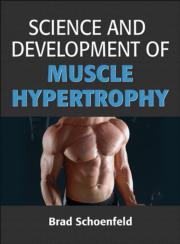
Do the pecs get targeted during a set of bench press? Yes, absolutely. Does the bench press, typically, allow for a person to use the most weight in overloading their chest musculature? Yep. And does Dr. Brad Schoenfeld, in his recently released book, Science and Development of Muscle Hypertrophy state, repeatedly, that one of the major drivers of hypertrophy (muscle growth) is mechanical tension?

YES…GOSH. GET OFF MY BACK!

The bench press can (and should) be part of an overall approach to building pecs that would make Superman swoon. However, as Schoenfeld notes:

“Research indicates that mechanoreceptors are sensitive to both the magnitude and temporal aspects of loading.”

In non-Elvish speak this basically refers to the differentiation of peak concentric, eccentric, and isometric actions of muscles and how research demonstrates that time under tension is often the de-facto consideration with regards to hypertrophy.9

Cool, we’re all on board with that.

However, in addition, Schoenfeld notes:

“Mechanoreceptors also appear to be sensitive to the type of load imposed on muscle tissue. Stretch-induced mechanical loading elicits the deposition of sarcomeres longitudinally.”

During the barbell bench press, the pecs are rarely (if ever) taken through their full ROM, and this can be a significant strike against why it’s not the best choice when it comes to developing pecy pecs.

https://www.youtube.com/watch?v=1ytCEuuW2_A


What to do, what to do?

1) Relax, You Don’t Need To Ditch the Bench Press

Not that I was worried this was going to happen, mind you.

The bench press is still relevant to the discussion…it’s just sometimes, you know, a bit overplayed. To that end, it bodes in your favor to experiment. Flat, decline, incline, close-grip, wide-grip, rest/pause, clusters, high-rep, low rep, whatever the case me be…..use them all.

However, if your goal is to really engage the pecs you may be better off doing all of the above with DUMBBELLS.

Dumbbells allow for a bit more wiggle-room with ROM (humeral extension), in addition to involving more of an adduction component.

Also, if you wanted to up the ante even more, try some squeeze presses:


2) Perform More DB Flyes

Yeah, I said it. DB flyes, yo.

Now, of course, I wouldn’t say this should be your main movement of the day (since you’re less likely to use a ton of weight on these compared to bench variations), however flyes are an excellent secondary or accessory movement to compliment things.

Namely because they really work the pecs in adduction…..something that doesn’t happen with a barbell.

These can be tricky with regards to shoulder health, so if you’re someone with a history of shoulder issues, one way to make these are more “user friendly” is to perform Pause DB Floor Flyes:

https://www.youtube.com/watch?v=d1lVf6–0aQ


Doing so will help you stay out of end ranges of motion that may compromise the shoulder, yet you’re still working the pecs in an action they’re designed to do (at least concentrically): humeral adduction.

3) Push-Up Adduction Holds

I stole this concept from fellow strength & performance coach, Eric Bach. Assume the starting position of a push-up, but then instead of going up and down…try to “bunch up” the floor with your hands and hold for a 10-20s count.


You want to talk about feeling a major burn/pump in your pecs, this it. And, to bring flyes back into the conversation try this killer superset I also stole from Eric Bach:

A1. Push-Up Adduction Hold x 10-20s
A2. Pause DB Floor Flyes x 8-10
A3. Bounce a quarter off your chest x infinity.

4) Add Accentuated Eccentrics

The idea of accentuated eccentrics was first introduced to me by Christian Thibaudeau back in the early 2000’s.

It’s no secret to any meathead that the eccentric portion of a lift (yielding, lowering) is where we’re strongest and where the most muscle damage occurs.

This can elicit profound gains in muscle and strength.

One method to take advantage of that fact is accentuated eccentrics, the more popular of which are super slow eccentrics and negative training.

Taken from Thibaudeau’s Accentuated Eccentric Training article from T-Nation:

“Super Slow Eccentrics

This technique is fairly simple: using a moderate to heavy load (60-85% of your max) you execute a super slow yielding phase while lifting (overcoming) the bar explosively. The following table gives you the parameters to use depending on the load you select:

Load Yielding Portion Reps/Set Load Yielding portion Reps/Set
60% 14 sec. 3 75% 8 sec. 2
65% 12 sec. 3 80% 6 sec. 1
70% 10 sec. 2 85% 4 sec. 1

This type of accentuated eccentric training is fairly easy to do and can yield impressive muscle size and tendon strength improvements.

Negative Training

“Negatives” basically refer to performing only the yielding portion of an exercise and having spotters lift the bar for you. You should use a load that’s between 110 and 130% of your maximum when performing negatives. The time of the action (lowering) depends on the load:

10 seconds if the load is 110-115%

8 seconds if the load is 115-120%

6 seconds if the load is 120-125%

4 seconds if the load is 125-130%”

Another, albeit less sexy approach, is to add an accentuated eccentric during a set of push-ups. I know Dr. John Rusin is a fan of these. Often I’ll have my athletes/clients perform a set of 5-10 reps and then hold their last rep in the bottom position for a count of 10-20s:


Again it’s a nice way to emphasize the eccentric portion of a lift AND increase time under tension (under stretch).

And that’s it on my end.

Have any tricks of the trade to add yourself? Share them below in the comments section or mozy on over to Facebook and leave a comment there.

CategoriesAssessment Corrective Exercise Strength Training

Strong Traps, Healthy Shoulders

A funny thing happens whenever I inform someone (namely, guys) they need to hit their upper traps more. The immediately go into Bane mode:

Visions of heavy barbell shrugs, breaking Batman’s back, and walking around asking people “do you feel in charge?” run rampant.

It’s all well and good, I have nothing against shrugs. I draw the line against breaking people’s backs though. BAD BANE, NO!

Shrugs are undoubtedly a great exercise to build the upper traps. And the upper traps are kind of important when it comes to the ability to bring one’s arms overhead – they’re one of three muscles that help to upwardly rotate the scapula.

Via my time as a coach at Cressey Sports Performance (and even now) I work with a lot of people with shoulder issues. Training the upper traps directly has gotten a bad rap in recent years. But for athletes and lifters who are stuck in spine-extension based postures and can’t raise their arms overhead, training the upper traps can be a game changer for overall shoulder health and performance.

The key? Ensure they’re trained with upward rotation.

Continue reading my latest article on T-Nation.com HERE.

CategoriesAssessment coaching personal training Program Design Strength Training youth/sports training

Addressing the Stone Cold Facts of Training Athletes

Remember that show diary on MTV? You know, the one that aired back in the early to mid-2000s?

The documentary style show centered mostly on musicians and celebrities and followed them through their daily lives.

Each episode started with said celebrity looking into the camera and saying…..

“You think you know, but you have no idea.”

And then for the next 60 minutes we got a true taste of the celebrity lifestyle, given an opportunity to witness their trials and tribulations with the paparazzi, hectic travel schedules, demands on their time, and what it’s like to demand a bowl full of green only M&Ms in their dressing room (and actually get it), not to mention the inside scoop on what it’s really like to be able to bang anyone you want.

Stupid celebrities. They suck….;o)10

Sometimes I feel like strength coaches should have their own version of the show diary, because when it comes to training athletes I feel like many people out there “think they know….

“…..but they have no idea.”

Oh snap, see what I just did there?

While I don’t think it’s rocket science, I’d be lying if I said there isn’t a lot of attention to detail when it comes to training athletes – or any person for that matter – and getting them ready for a competitive season. Everyone is different, with different backgrounds, ability level, injury history, strengths, weaknesses, goals, anthropometry, as well as considerations with regards to the unique demands of each sport and position(s) played.

By contrast, there are numerous parallels in training despite athletic endeavors or whether or not someone is an athlete to begin with.

We can take the Dan John mantra of:

Push, pull, hinge, squat, lunge, carry

Do those things, do them well, and do them often….and you’ll be better off than most. It’s complicated in its simplicity.

Much like Dan I prefer to train everyone I work with as if they’re an athlete. There’s something magical that happens when I can get Joe from accounting or Dolores from HR to deadlift 2x bodyweight or to start tossing around some medicine balls. Even better if it’s done while listening to Wu-Tang Clan.

They wake up!

They’re less of a health/fitness zombie, haphazardly meandering and “bumping” into exercises. Once they start to train with intent and purpose – and move – it’s game time.

That said, lets be honest: when it does come to training athletes there are many other factors to consider; many more than an article like this can cover. However, I do want to discuss a few philosophical “stamps” that some coaches deem indelible or permanent when it comes to training athletes, when in fact they’re anything but.

1) Strong At All Costs

There’s a part of me that cringes to admit this, but it needs to be said: strength isn’t always the answer.

Don’t get me wrong, I still believe strength is the foundation for every other athletic quality we’d want to improve.

If you want to run faster (<— yes, this matters for endurance athletes too), jump higher, throw things harder or further, or make other people destroy the back of their pants, it’s never a bad thing to be stronger.

When working with athletes, though, there’s a spectrum. If you’re working with a college freshman who’s never followed a structured program and is trying to improve their performance to get more playing time, you can bet I’ll take a more aggressive approach with his or her’s training and place a premium on strength.

When working with a professional athlete – who’s already performing at a high level, and is worth millions of dollars – is it really going to make that much of a difference taking their deadlift from 450 lbs to 500 lbs?

Moreover, we’ve all seen those snazzy YouTube and Instagram videos of people jumping onto 60″ boxes:


It may get you some additional followers and IG “street cred”…but man, the risk-reward is pretty steep if you ask me. I’m not willing to risk my career (and that of my athletes) for some stupid gym trick.

Besides, if I wanted to I’d up the ante and have them do it while juggling three chainsaws. BOOM! Viral video.

To that end, I like Mike Robertson’s quote which sums my thoughts up the best:

“I think athletes need to be using the weight room as a tool to improve efficiency and athleticism, not simply push as much weight as possible – MR”

2) You Don’t Have to OLY Lift

Some coaches live and die by the OLY lifts, and I can’t blame them…..they work. But as with anything, they’re a tool and a means to an end. They’re not the end-all-be-all-panacea-of-athletic-and-world-domination.

I don’t feel any coach should receive demerit points – or be kicked out of Gryffindor – because he or she chooses not to implement them into their programming.

Lets be real: If you know you have an athlete for a few years, and have the time to hone technique and progress them accordingly, the OLY lifts are a good fit. It’s another thing, too, if you’re competent.

I for one am never guaranteed four years with an athlete, nor am I remotely close to feeling competent enough to teaching the OLY lifts. And that’s okay….

I can still have them perform other things that’ll get the job done:

Jumps:

https://www.youtube.com/watch?v=QUbClRjpLGk


https://www.youtube.com/watch?v=kn5v85ekXFs


NOTE: both videos above courtesy of Adam Feit.

Starts/Acceleration

5 yd Starts

https://www.youtube.com/watch?v=TklqD8uN_Ds


5 yd Jog to 10 yd Acceleration

https://www.youtube.com/watch?v=HM-BPJKTslg


Change of Direction

Up 2, Back 1 Drill

https://www.youtube.com/watch?v=YSFDp1QSA2w


That One Time I Looked Athletic

Medicine Balls Drills

Scoop Toss


OH Stomp


Kettlebell Swings


Punching Ramsay Bolton in the Mouth

No video available.11

3) Single Leg Work Matters

This is probably the part where some people roll their eyes or maybe scroll past, but hear me out.

I think it’s silly when I see coaches on Facebook argue over bilateral vs. unilateral movements and try to win everyone over as to which is best.

They’re both fantastic and warrant attention.

Where I find the most value in single leg training:

  • Serves as a nice way to reduce axial loading on the spine when necessary.
  • It can be argued all sports are performed – in one way or another – on one leg, so from a specificity standpoint it makes sense to include it.
  • Helps to address any woeful imbalance or weakness between one leg and the other.
  • Places a premium on hip stability and core/pelvic control.

All that said, I do find many people are too aggressive with their single leg training. It’s one thing to push the limits with your more traditional strength exercises like squats and deadlifts, but when I see athletes upping the ante on their single leg work to the point where knees start caving in and backs start rounding that’s when I lose it.

I’m all about quality movement with any exercise, but more so with single leg training. I’d rather err on the side of conservative and make sure the athlete is owning the movement and not letting their ego get in the way.

Like that one time I posted this video and Ben Bruno shot back a text showing me a video of Kate Upton using more weight than me. Thanks Ben! Jerk….;o)

Unfortunately, some coaches are so set in their ways that they’ll never cross the picket lines. They’re either team bilateral or team unilateral.

How about some middle ground with B-Stance variations?


4) Recognize Positions Matter

I’m not referring to Quarterback or Right Fielder here. But rather, joint positions and how that can play into performance in the weight room and on the field.

If you work with athletes you work with extension.

As I noted in THIS post, anterior pelvic tilt is normal. However, when it’s excessive it can have a few ramifications, particularly as it relates to this discussion.

Without going into too much of the particulars, people “stuck” in extension will exhibit a significant rib flair and what’s called a poor Zone of Apposition.

Basically the pelvis is pointing one way and the diaphragm is pointing another way, resulting in a poor position; an unstable position.

Anyone familiar with the Postural Restoration Institute and many of their principles/methods will note the massive role they’ve played in getting the industry to recognize the importance of breathing.

Not the breathing that’s involved with oxygen exchange – evolution has made sure we’re all rock stars on that front.

Instead, PRI emphasis the importance of the reach and EXHALE; or positional breathing.

It’s that exhale (with reach) that helps put us into a more advantageous position to not only encourage or “nudge” better engagement of the diaphragm, but also better alignment….which can lead to better stability and better ability to “display” strength.

NOTE: this is why I’m not a huge fan of telling someone to arch hard on their squats.


When joints aren’t stacked or in ideal positions, it can lead to compensation patterns and energy leaks which can compromise performance.

5) You Need to Control Slow Before You Can Control Fast

It’s simple.

Learn More With Elite Athletic Development 3.o

Mike Robertson and Joe Kenn released their latest resource, Elite Athletic Development 3.0 this week.

I can’t begin to describe how much information they cover, but if you’re someone who trains athletes then this is a no-brainer.

Many of the concepts I discuss above are covered, in addition to twelve more hours worth of content over the course of ten DVDs

Point Blank: You’ll learn from two of the best in the biz.

The seminar is on SALE this week at $100 off the regular price, and it ends this Friday (7/22), so act quickly.

Go HERE for more details.

CategoriesCorrective Exercise personal training Rehab/Prehab Strength Training

Bridging the Gap Between Physical Therapy and Strength and Conditioning. How Much of a Gap Is There?

Today’s guest post comes courtesy of Andrew Millett – a good friend of mine and brilliant physical therapist outside of Boston.

The term “bridging the gap” is always brought up when the discussion of physical therapy and strength and conditioning comes up. There’s no doubt a melding of the two when discussing the most successful outcomes for patients and athletes. However, in a day and age where more and more personal trainers are taking it upon themselves to play the role of “therapist” (and vice versa), it’s important to note that, while it behooves us to dip our toes in both ponds, there IS a distinction between the two.

And we need to respect that.

Enjoy.

Bridging the Gap Between Physical Therapy and Strength and Conditioning

In the fields of strength and conditioning, human performance, physical therapy, etc., we interact with people on a daily basis.  We learn about their family, their job, their goals, and what they want to get out of their training or rehab.  The majority of the people in this field did not get into their respective field for the money.

I am not saying that any of these fields can’t be lucrative.  The majority of us share a common bond:  the desire to help people.

Whether you are a physical therapist trying to help someone get rid of their pain and get back to doing what they want to be doing or a personal trainer trying to help someone lose some weight, most of us want to help people.

When we see a client who is in pain or has some type of movement dysfunction, most of us want to help them get out of pain, whether or not we are a healthcare practitioner.  Personal trainers, strength and conditioning coaches, etc. are well-qualified to assess and correct movement.

There are many schools of thought such as the Functional Movement Screen (FMS), Selective Functional Movement Assessment (SFMA), and Functional Range Conditioning (FRC) – to name a few – that teach trainers and coaches how to assess movement so that they can make their programming more effective based off of how their client presents on their assessment.


More often than not, a strength coach or trainer will see a movement fault they would like to fix in order to optimize their client’s training in order for their client’s to succeed.  There is nothing wrong with wanting more for your client and for your client to achieve their goals.  When assessing a client, if some type of movement limitation is present (I.e., decreased joint mobility and range of motion), then by all means, use the tools in your toolbox to attempt to correct it.

Tools such as a foam roller, lacrosse ball, or other self-myofascial release device, can be beneficial in attempting to increase soft tissue flexibility that could be limiting a client’s movement pattern.


Self-myofascial release can be very effective for improving movement quality and at reducing pain.  By doing something such as this, you are doing your due diligence in trying to help your client to the best of your abilities.

If you use an implement suggested above and someone moves or feels better, GREAT!

If someone doesn’t move or feel any better after something like that, then as Charlie Weingroff has said,

“4th and 10, you have to punt.”

As he described in his DVD, Training = Rehab, if you have a client who has some type of mobility limitation and they aren’t improving, “punt” them, not literally, to another provider…I.e., physical therapist, sports chiropractor, or a massage therapist.

If someone has pain, punt!  Per the Functional Movement Screen (FMS), if someone presents with pain, the test is over and they should be referred to a healthcare practitioner.

Now, if you referred all of your clients who are in pain to another healthcare practitioner, you would probably have a lot of free time on your hands.

Most clients have some type of ache or pain they are dealing with.

By “punting” them, this does not mean you have to get rid of them.  You can use a multi-disciplinary approach and continue to train them without worsening their pain or dysfunction while they are treated for whatever ails them.

Don’t try to be a jack of all trades and a master of none.  Don’t try to be the strength coach or personal trainer who trains their clients, but also attempts to treat their pain or soft tissue dysfunction by performing some form of manual therapy.

This is where you need to know what you are good at and what someone else may be able to do better.  If a patient or client presents to me and I know another practitioner that is better at it than me, they are definitely going to continue their care with that better clinician.

Keep the manual therapy to the physical therapists, sports chiropractors, etc.  These clinicians have hours upon hours of training on various manual therapy techniques to assist in improving movement, pain, and dysfunction.

By meeting with local PTs and chiropractors in your area and developing a network of providers you can refer to, you should have no problem sending a client to a colleague who can help improve their current state.  Your client will think the world of you for having the humility to refer them out to someone who can help them properly.

Even if the physical therapist helps decrease their pain, that client will always remember that you had their best interests at heart and you were thinking of them first.

Think of your client’s needs first, not your ego!

Now, just because I am a physical therapist, doesn’t mean I am not going to “bash” on personal trainers and strength coaches.  I have a background in physical therapy and strength and conditioning.  I consider myself a hybrid physical therapist, bridging the gap between rehab and strength training.

I know that I am not the smartest trainer or coach out there.  I have the confidence in my skill-set to start the programming process and teach and help clients squat, deadlift, lunge, carry, push/pull, etc.

There eventually comes a time where I can have a personal trainer or strength coach take over and continue the process.  My goal for my clients when they leave me is that they have some type of basic foundation of the various movements just mentioned so they can effectively and safely progress towards their health and fitness goals.

If you are a physical therapist, sports chiropractor, etc. and you either do not have the confidence in how to teach basic movements and program them OR you have not educated yourself on how to program and teach basic movements, then leave that to the strength and conditioning or personal training professionals.

The message goes both ways: as much as we encourage personal trainers not to be too “bridge gappy,” the same goes for physical therapists.

The major point of this post is not to bash either side of the health and performance spectrum.  The point is that we need to coexist and develop connections with various healthcare and performance disciplines so that we are in the position to help the most important person in this process:  the client or patient.

About the Author


Andrew Millett is a Metro-West (Boston) based physical therapist

Facebook: From The Ground Up

Twitter: @andrewmillettpt

Instagram: andrewmillettpt
Categoriescoaching Exercise Technique Strength Training

Big Rock Cues That Work For Pretty Much Everyone

As I’ve gotten older I’ve learned to be more succinct in many facets of my life.

– When I was 25 I’d consider it a travesty if I didn’t spend at least two hours in the gym. Now? A few “top sets” of my main movement, followed by an accessory movement to compliment that movement, and 45 minutes later I’m good.

– I’ve learned to trim my prose over the years, too. One of the best pieces of advice I ever learned on the topic came from my good friend (and my former editor at T-Nation.com), Bryan Krahn.

“Write your first draft, and then cut 20% of it, no matter what. Get rid of the fillers, fluff, and extraneous jargon12 that doesn’t do anything to support your message.”

– When I first met my wife and was wooing her I was all about impressing her with my collection of vintage Teenage Mutant Ninja Turtles t-shirts culinary skills. I remember a time or two13 attempting to drum up a four-course meal without burning down my apartment.

Now? “Babe, how about some tacos?”

The same can be said about my coaching career.

In a presentation I did last weekend at Iron Village Strength & Conditioning in Beverly, MA titled The Art of Coaching I discussed how, early in my career, I made the mistake of trying too hard to win-over my clients with big words like reciprocal inhibition, proprioceptive neuromuscular facilitation, post activation potentiation, and plethora (<— because, you know, that word is a boss).

Moreover, I made another huge mistake: Peppering my clients with too many coaching cues.

A set of squats would sound like this:

“Okay, squeeze the bar.”

“Push your knees out.”

“Don’t forget to spread the floor with your feet.”

“Big air!”

“Chest up.”

“Drive out of the hole.”

“Finish with your hips.”

“Stay tight, stay tight, I said STAY TIGHT!”

It was a juxtaposition on how not to coach clients. More often than not, they would end up feeling overwhelmed, frustrated, and thiiiiiiis close to wanting to drop kick me in the kidneys.

So today I’d like to share some succinct, BIG ROCK cues I feel work for pretty much everyone. At the expense of sounding like a fitness cliche, less coaching is more.

The Deadlift: Place Shoulder Blades in Your Back Pocket/Squeeze the Orange in the Armpit

Anything we can do to ensure (and maintain) upper back tightness throughout a set is going to be money. I could wax poetic and quote Dr. Stuart McGill here and all the work he’s done over the past 10-15 years to demonstrate how counteracting sheer force is kind of important for spinal stability and reducing the likelihood of back injury.

Instead, go read Ultimate Back Fitness and Performance.

“Place shoulder blades in your back pocket” or “squeeze the orange in your armpit” do an amazing job at engaging the lats, which are a big player in spinal stability.


The Squat: Sit Down, Not Back

Like many young, impressionable coaches at the time, back in 2002-2005 I read many, many articles written by Dave Tate and the crew over at Westside Barbell.

And why wouldn’t I? If you were (and still are) remotely interested in getting yourself or your clients strong, you’d be hard pressed to find better information. More to the point, if you were/are a powerlifter or training powerlifters those were the guys to read.

There’s no question there’s validity in using the cue “sit back” when coaching the squat. We can break down the biomechanics and draw lever arms…but at the end of the day, if the goal is to lift as much weight as humanly possible it makes sense to target the hips and posterior chain more by sitting back.

However, as the years passed and as I coached the squat more, I started to see a trend where people’s lower backs started flipping them the middle finger. They didn’t feel good.

This is when I started putting two and two together and understanding that the cues that work very well for powerlifters – specifically, geared powerlifters, where squat suits help with providing more stability – don’t necessarily jive well with un-geared lifters.

The cue “sit back” (and subsequently: arch!) places a lot of people in a compromising position where they fall into excessive anterior pelvic tilt, which can promote a more unstable position…to the point where they’re relying more on their “passive restraints” (ligaments) and bone(s) to stabilize their spine and not their “active restraints” (muscles).

“Sit Down, Not Back” (bracing abs, moving through the hips (not initiating with lower back), and pushing knees forward/out) works very well here. The squat is equal parts knees coming forward and hips going back

You know, a squat.

NOTE: Yes, there is still a forward lean in the torso. Relax. Deep breaths, internet.

Individual differences need to be taken into consideration, of course, in terms of injury history14 mobility restrictions, anthropometry, stance width, depth, etc, but I’d encourage you to give this cue a try and see if it feels better.

The Bench Press: Wrapping the Barbell

The bench press is a much more nuanced lift than some people give it credit for. As far as technique is concerned, I find it’s a black hole for many lifters – myself included.

There are many things to consider here.

For starters: is it Monday?

Secondly, cues like “meet the bar with the chest,” “shoulder blades together and down” and “put force into the ground with your feet” (leg drive) all have merit.

However, one cue that has resonated with me (and that of my clients) is the idea of wrapping the barbell. It’s a great way of ensuring lat activation/upper back stiffness without having to cue someone to “turn your lats on” when they have no idea what the fuck that even means.

Cressey Sports Performance coach, Miguel Aragoncillo, explains it better than I:


These Cues Don’t Mean I’m Right15

My objective here was not to insinuate these are the best cues for everyone. Only “pretty much everyone.” (<— It’s a fact. A true, fact).

Rather, the idea was to demonstrate various cues that have worked for me and my athletes/clients throughout my time as a coach. They may not be a good fit for you and your clients, and that’s cool. I’d be honored if you’d consider them nonetheless.

If not, “I HATE YOU. YOU’RE RUINING MY LIFE!!!”

[Slams door]

CategoriesProgram Design Strength Training

Stronger Back = Better Everything

What’s more impressive or baller than a muscular, strong-looking backside?16

Any Joe Schmo can walk around with decent sized biceps or a six-pack that would make Tyler Durden jealous. Walk into any commercial gym and you’ll see both.

However, it’s a bit of a rarer occurrence to see someone with an impressive upper back. Not JD Salinger making a public appearance rare or even unicorn rare; but rare nonetheless.

It’s a shame, too, because having a strong upper back provides many advantages.

1) It Makes You Look Yoked

Remember that opening scene from the movie Troy when Achilles (<— I know, second Brad Pitt reference in less than ten seconds. Last one I promise) “fights” Boagrius?

To help jog your memory, this is Boagrius:

You can’t technically see his upper back, but do really need to in order recognize he’s a ginormous human being?

Yeah, sure, the fight between him and Achilles was over in a blink of an eye, but we’re still talking about those traps.

And speaking of traps, who can forget Tom Hardy in the movie Warrior.

For starters, it’s a fantastic movie about brothers, fathers, and some of the best MMA fight scenes ever filmed – even my wife liked it.

Secondly, between his role as Tommy in Warrior (as well as Bane in The Dark Knight Rises), Hardy pretty much sealed the title for “Best Traps in Hollywood” and subsequently spawned a tsunami of “Get Traps Like Tom Hardy” workouts.

Traps, indeed, are the new abs.

2) Increased Overall Strength (DUH)

Having a bigger “anything” generally assumes increased strength. Trying really hard not to include a penis joke here.

A larger muscle can generate more force. More force equates to increased strength. Increased strength is never a bad thing.

To be more specific, though, having a bigger/stronger upper back can have huge carryover to improved performance in many lifts – especially as it relates to the “big 3.”

Squat

Having a bigger/stronger backside can translate very well to a better squat.

  • A bigger upper back makes it easier to allow the bar to rest on the “shelf.”
  • The back musculature must fire isometrically during a set to prevent falling forward and to prevent any excessive rounding.
  • Anyone who thinks the lats aren’t involved with squat performance is kidding themselves. The lats have attachment points in the intertubicular groove of the humerus, scapulae, portions of the vertebrae (T7-T12), the thoraco-lumbar fascia, as well as the iliac crest.
  • Activating the lats during squats provides significant more spinal stability and allowance of force transfer between the lower/upper halves of the body. This is partly the reason why people can back squat more than they can front squat.

Bench Press

Ask any powerlifter what’s more important for a big bench press – chest or upper back – and most will likely say “both!,” however default to the upper back (and technique) as being more of a limiting factor.

Chad Wesley-Smith of Juggernaut Training likes to use the analogy of the upper back serving as a “base of support” during the bench press. A thicker/wider upper back will:

  • Get you closer to the barbell (less distance the bar as to travel).
  • Assuming technique is on point, will act as a “springboard” to propel the barbell off the chest.

Deadlift

Similar to what was noted above with squats, a bigger/stronger backside will almost always equate to a better, less vomit-in-my-mouth looking deadlift.

Everything – traps, rhomboids, lats, erectors – work in concert, isometrically, to counteract both compressive and shear forces playing tug-of-war with your spine.

The stronger your back, the stronger your deadlift.

3) Illusion of a Bigger Chest

I work with a lot of men who’s #1 goal is to have more sex have a bigger chest. Common sense tells us that in order to have larger chest muscles (pecs) we need to train them.

And I agree.

Unfortunately, guys tend to be so enamored with training their chest that “chest day”  becomes “chest week.”

52 weeks a year.

As a result, many are left with an overly kyphotic posture (rounded upper back and shoulders) because they’ve developed a muscular imbalance between their front and backside, which ends up “hiding” their chest development.

So what ends up happening?

More chest exercises.

Which only feeds into the problem.

Many are left flummoxed when I suggest the answer is to perform more BACK exercises. Often, the answer is to strengthen and focus more on their backside, which will then “open” things up and give the illusion of a larger chest.

It’s like being Gandalf. Except, you know, not.

Back Strategery

Which leads us to the obvious question: Tony, will you just STFU and tell me WTF do I do?

This is a blog post, not a dissertation on anything & everything back training…but I’d be remiss (and an a-hole) if I didn’t provide at least some actionable advice.

1) Horizontal Pulls vs. Vertical Pulls

It’s generally accepted that back training can (and should) be divided into two camps: horizontal pulls and vertical pulls.

According to lore – and every bodybuilder in the history of ever – horizontal pulling tends to target upper back thickness, while vertical pulling tends to target width.

Bodybuilders are jacked and know a thing or two about putting on muscle, so who are we to disagree?

Horizontal Pulls = deadlifts, bent over rows, Seal Row, Yates row, DB rows, chest supported rows, Batwing rows, inverted rows (which are more of a hybrid, but certainly fall into this category), etc.


Vertical Pulls = chin-ups, pull-ups, lat pulldowns.

This is not an exhaustive list, but hopefully gets the point across.

If you’re someone who follows more of an Upper/Lower split during the week (4x per week), it may help to divide your upper body pulling days into horizontal vs. vertical.

If you’re someone who follows more of a full-body split (say, 3x per week) you could approach your back training in an A/B fashion.

A = horizontal pulls.
B = vertical pulls.

Week 1 = A, B, A
Week 2 = B, A, B

So on and so forth.

2) Train Your Back More Often

I honestly feel back training is something most people could get away with doing every training session. This doesn’t mean, of course, you need to go heavy or balls-to-the-wall every time.

On days you squat or deadlift or both if you’re a badass (or Wolverine), your back is getting plenty of work, and it probably wouldn’t bode well to follow suit with some heavy Bent-Over Rows or Pendlay Rows.


You can, however, toss in some moderate to high(er) rep (not to failure) accessory work afterwards in the form of DB rows or maybe some Band Face Pulls.

In any given week I like to include at least ONE heavy (3-5 reps) horizontal pulling variation, in addition to a moderate (8-12) and high-rep (12+) variation.

The same goes for vertical pulling – although, options are a little more limited here.

It’s undulated periodization 101.

It may look something like this:

Day 1

A. Deadlift: 3×4-6
B1. Speed Squat: 6×2
B2. Speed Chin-up/Pull-Up: 6×3
C1. Flat Bench DB Press: 3×10
C2. 1-Legged Hip Thrust: 3×8-10/leg
D. Band Face Pulls 3×15-20

Day 2

A1. Front Squats: 3×4-6
A2. 1-Arm DB Row: 3×8-12/arm
B. Speed Bench Press 6×3 OR DB Bench Press 4×6-8
C1. 1-Arm Landmine Press 3×10/arm
C2. Hinge Row: 3×10
D1. DB Goblet Squat: 3×8
D2. Pallof Press 3×8/side

Day 3

A1. Bench Press: 4×5
A2. Weighted Chin-Up: 4×3-4
B. Speed Deadlift: 6×1
C1. Cable Pull-Through 3×10-12
C2. Ab Rollout 3×10-12
D1. Seated Cable Row: 2×10
D2. High Rep Band Tricep Pressdowns: 2×20

And then you can tinker with varying set/reps each week.

3) Sneak It In

You can also “sneak” more back exercises into the mix and increase volume.

  • Pair a light row exercise with all warm-up sets on bench press.


  • Every time you walk past a chin-up/pull-up bar during a workout, perform 1-3 reps. Or, perform 1-3 reps every time you go to get a drink of water.
  • One option I like is to combine a unilateral row exercise with any additional speed (or technique) work I have a client perform. So, if I have someone doing 8 sets of “technique” work on squats, I’ll pair that with 8 sets of 1-Arm DB Rows (albeit only 4 sets per side)
    • Set of Squats paired with 1-Arm DB Row – Right Arm Only
    • Set of Squats paired with 1-Arm DB Row – Left Arm Only
    • Fist Pumps x Infinity.

I don’t know, just some ideas.

Categoriesspeed training Strength Training

Getting My Athleticism Back

The saying “if you don’t use it, you lose it” can be applied to many facets of life. Vacation time for some people applies here. Within some companies here in the U.S, if you don’t use your vacation time, you lose it.

Which is BS.

And, of course, I could easily toss in an obligatory dick joke here.

But I won’t.

Because I’m mature.


Athleticism is another one of those “things” we tend to lose when we don’t use it. In fact, I’d garner a guess that athleticism is one of the first attributes that diminishes once many of us enter into adulthood.17

But for the sake of brevity, and legally speaking, lets just say adulthood is when someone hits the age of 18.

At this age, unless you’re a high-level athlete and offered/recruited to play a sport at the next level (college), you typically either:

1. Go to college, stop playing sports, and discover beer.

2. Not go to college, stop playing sports, and get a boring desk job. Or, live in your parent’s basement and play World of Warcraft.

OR

3. If you’re me: go to college, play sports, watch way too much 90210, not hang out with chicks, stay active (even after college), still not hang out with chicks (at this point watch way too much Alias), eventually get a job in the fitness industry, get jacked, playing “sports” gets diluted to slow-pitch softball leagues, start working with high-level athletes, still stay jacked though, finally find a chick that will hang out with me, and eventually realize that, while certainly not un-athletic, I’m not close to where I once was.

That sound like you too?

Now, I’m not insinuating athleticism in this case means you’re ready to enter the NFL Combine or that you could win American Ninja Warrior.

Understandably, athleticism can mean different things to different people. But again, for the sake of brevity, lets just say athleticism can equate to the ability to do several things such as sprint, jump, hop, skip, punch a zombie in the throat, change direction, shuffle, accelerate, decelerate, and just move without looking like a drunk pirate.

IMPORTANT NOTE: Many people confuse athleticism with conditioning

And that’s not what I am referring to.

Yes, athletic drills can be a form of conditioning…however, that’s not their main objective. There’s a lot of technical proficiency and skill involved with developing specific athletic skills and athleticism in general.

Too, athleticism favors those who started at an early age. We’re motor learning sponges when we’re young. Not so much as adults when motor patterns and CNS pathways have been engrained for far too long.

Elite athletes and people who stay active their entire lives can do stuff without even thinking about it.

They can change direction on a dime or catch a frisbee with pulling a hamstring.

They can react.

They have to work at it, of course, and they’ve accumulated hours upon hours of “purposeful practice,” (in the form of actual practice and casual recreational activity) but they make athleticism look easy and seamless.

You don’t become more athletic by incessantly accumulating more and more fatigue. Mind you: the most successful athletes in the world are able to perform at a high-level – repeatedly – in the presence of fatigue. They do need to develop conditioning and endurance amongst many other abilities.

However, I feel many people operate under the assumption that conditioning (or getting tired) is equivalent to athleticism. 

And it’s not.

Hitting up your local CrossFit joint is cool. I think that’s amazing. There are many amazing athletes involved with it.

But don’t assume that just because you’re completing some crazy WOD 3x per week, gasping for air by the end, and are thiiiiis close to shitting a spleen, that you’re somehow improving your athleticism.

Getting My Athleticism Back

Make no mistake: I can still move well. I haven’t turned into the Tin Man or anything (although, lets be honest: dude could dance).

I still participate in athletic endeavors and sometimes look athletic when I demonstrate exercises and drills. However, as a former athlete (and as someone who trains athletes) I’d be lying if I said I was happy with my current situation.

Slight abject disdain would seem more fitting

Which is why I was so happy to see Jen Sinkler type these words the other day:

“I missed feeling athletic in almost any situation. I missed it lot.

So, I told my friends Angie Brambley Moyer and Tim Moyer, both world-class strength-and-sport coaches, that I wanted to get it back. That I wanted to get it allllll back.

I ALSO told them that I wanted to invite others who were in the same boat — former athletes, not-yet athletes, or current athletes who wanted to level up their game — to join me in my quest.

I was positive there were others who, like me, wanted to become lean, mean, athletic machines. Again, or for the very first time.

I was right.”

I’m Not Alone!!

I think many fitness professionals feel the same way I do. We’re in an industry where we often put other’s health, well-being, and goals before our own.

Likewise, there are many people reading who, despite being former athletes themselves, don’t have as much pep in their step as they used to.  Or, maybe there are some reading who have never played a sport in their life, but would like to be able to perform a pro-agility without breaking their hip?

I’m taking some initiative and putting myself through the Lighting & Thunder program. I’m even setting my ego aside and starting with the beginner program.

Here’s what I did today:

5 Yd Starts

https://www.youtube.com/watch?v=TklqD8uN_Ds


  • Objective here is to drop down into a proper starting “athletic” position (weight forward, CoG low).
  • Think long backside (toss back arm back as aggressively as possible)
  • Push away as fast as you can (aggressive first step).

5 Yd Jog to 10 Yd Sprint (With Stop Within 10 Yds)

https://www.youtube.com/watch?v=HM-BPJKTslg


  • Objective here is more or less the same as above (except without the athletic start position).
  • When you transition into sprint, you should get low and have an aggressive lean with positive shin angle.
  • You still want an aggressive backside.
  • Also, you want to “stutter step” to a stop within 10 yds, which works on deceleration and better emulates athletic activities.

5 Yd Jog to 10 Yd Sprint (To Coast)

  • I didn’t take a video of this.
  • Just imagine the same video as above, except me without a shirt on or something. Or pants.
  • Also, no need for aggressive deceleration…just a “coast” to finish.

Up 2, Down 1 Drill

https://www.youtube.com/watch?v=YSFDp1QSA2w


My sock game is ON-POINT!!!

  • This drill helps to hammer home the start/stop/start/stop nature of athletic activities and sport.
  • Performing this drill with hands touching the floor helps to cue weight forward and low (you’d obviously not do this in a REAL sport).
  • Important to note that if you stop with right foot forward, you’d want to tap floor with left hand (and vice versa).
  • Rest is 1:3 ratio. Rest for 3x as long as it takes to to complete the drill. This ensures ample recovery for top performance with each set.

It’s nothing fancy, but it doesn’t need to be.

I’ll be doing this program 1-2x per week all summer. If day 1 is any indication, I’m going to be Carl Lewis by September.

You Should Join Me

Lightning & Thunder is on sale now for HALf-OFF until Friday, June 3.

On top of being a top-rate speed/agility program, what’s great about it is that it can easily compliment any strength program.

It comes with a strength program in fact.

However, for those who purchase Lighting & Thunder via the links provided by the end of June 3rd, I’m going to offer you a FREE month of my Group Training Membership on Exercise.com.

NOTE: I’m only going to email the discount codes out to the exact same email address you use to purchase L&T.

You get two killer programs for one!

So, to review:

1. It was bullshit when Kelly chose Brandon over Dylan on 90210. I mean, it’s freakin Dylan McKay. How do you say no to someone like that?

2. The Lighting & Thunder program is pretty baller.

3. I’m doing the entire thing myself, even starting with the beginner program cause I’m cool like that.

4. You should totally do it with me.

5. As incentive…go HERE, and then I’ll send you a code for a FREE month in my Group Training Membership.

6. We’ll be BFFs.