Categoriescoaching Exercise Technique personal training Program Design Strength Training

The Beginner’s Checklist for Deadlift Badassery

It’s the start of a new year and with it a proverbial reboot or rejuvenation towards one’s health and fitness. Well that, and a metric boat load1 of Facebook statuses of people complaining about all the “newbies” crowding the gym.

Copyright: langstrup / 123RF Stock Photo


I am not one to complain because 1) I don’t typically work out in a commercial gym 2) Nah nah nana naaaaah and 3) I think it’s a good thing when people decide to be more proactive, take an active role towards their health and well-being, and join a gym. I mean, really? Are you that inconvenienced? I can appreciate it’s slightly annoying when there’s a traffic jam at the power rack (made worse when people are using it to perform bicep curls) or that it’s more or less an obstacle course to walk around all the meandering patrons doing this thingamajiggy or that whateverthef***.

Relax. Deep breaths. It’ll all be over by the second week of February…;o)

Nevertheless, as pumped as I am that people take the initiative to begin an exercise regime, I’d be remiss not to cringe – just a little bit – at the overzealousness of some as they begin their fitness journey.

Last week was one of the rare weeks where I trained every day in a commercial gym (my wife was on vacation and I joined her at her gym) and while it was great to observe people getting after it, the coach in me couldn’t help but start to hyperventilate into a paper bag want to be a coach.

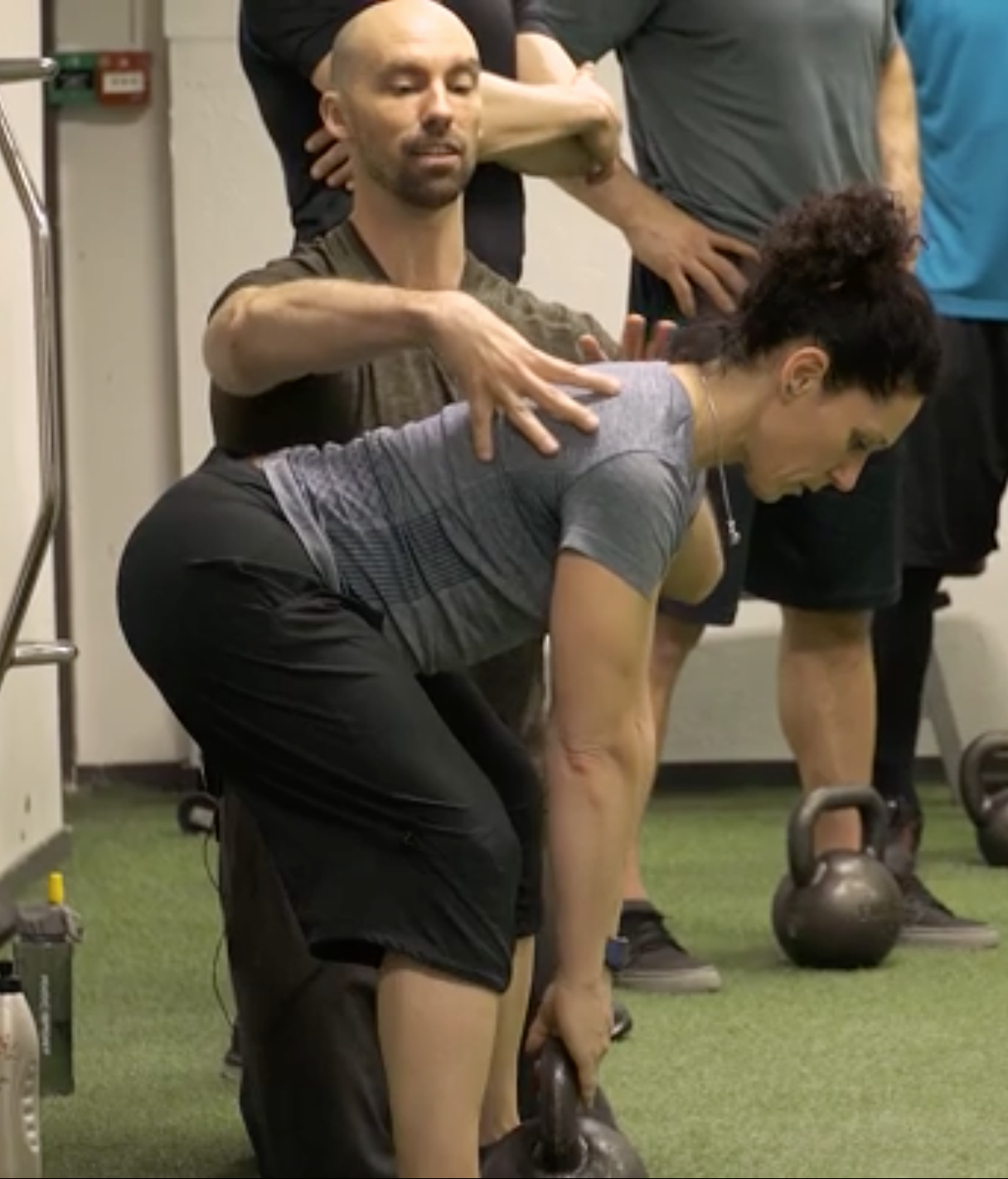
For example I saw a lot of people deadlifting. It was cool. I wanted to go over and high-five every single person. However, that would have been weird and possible justification for a restraining order I kept to myself, but past all of that was an insatiable desire to want to fix a lot of deadlifts.

I admired their intent, but I’d be lying if I said a small piece of my soul didn’t die watching a few people doing their thing.

You see, for a lot of beginners what I “think” ends up happening is that they watch a re-run of the CrossFit games on ESPN or watch videos like this:


…and are all like “that’s badass, I want to do that,” not recognizing that 1) a deadlift is much more than just bending over and lifting a barbell off the ground (regardless of whether it’s 1000+ lbs or 50 lbs) and 2) a straight bar deadlift (from the floor) is the most advanced variation of a deadlift there is. Not many people are ready or prepared enough on Day #1 to perform this safely and with proper technique.

So I figured I’d offer a sort of “check-list” for beginners to consider, and what I feel would be the appropriate progressions to follow to work up to a straight bar deadlift.

Note to Internet Hero Trainer Guy/Girl Who Will Inevitably Call Me Out On Why I Didn’t Address This Thing Or That: This is not a dissertation, it’s a blog post highlighting a few candid thoughts and processes. This is no where near an exhaustive breakdown of deadlift technique or programming.2

Checks and Balances

Everyone is different and there’s no ONE right way or variation or cue that applies across the board. People have different leverages, injury histories, and experience levels and it’s important to take all those things into heavy consideration when coaching anyone up on the deadlift.

I will say: I know what I DON’T want to see. This:

That’s pretty much THE golden rule.

Because it makes me do this:

There are any number of reasons someone’s deadlift may look like the above picture:

  • Lack of hip mobility to “access” the hip flexion required to get that low to floor.
  • Lack of t-spine mobility (specifically extension).
  • Lack of ankle dorsiflexion.
  • Lack of kinesthetic awareness.
  • The novelty of the exercise.
  • They were born on a Wednesday. I don’t know.

Obviously step #1 would be to address and musculoskeletal/mobility restrictions that may be present.

Lack of Hip Mobility

Wall Hip Flexor Mobilization


Dynamic Pigeon to Half Kneeling


Shin Box


Lack of T-Spine Mobility

Side Lying Windmill


T-Spine Extension (Done Right)


Lack of Ankle (and Big Toe) Dorsiflexion

This is a component that’s often overlooked. If someone can’t access dorsiflexion it’s going to compromise their ability to get into deep(er) hip flexion to get down to grab the barbell.

Active Ankle Dorsiflexion


Metatarsal Active Squat Drill


Lack of Kinesthetic Awareness

Oftentimes it’s lack of awareness of what the body/joints are doing in space that’s the limiting factor. I like to use the Cat-Camel drill to build context and to demonstrate what I don’t want to see (rounded back) and what I do want to see (neutral spine)


Addressing Novelty (<— This is HUGE)

Here we have the nuts and bolts. Much of time, even though the stuff discussed above is very important, it comes down to the novelty or “newness” of the exercise as to why some people fail. To be blunt, and as alluded to earlier, much of the reason why many fail at deadlifting from the get go (and end up hurt and using the lame excuse that deadlifts are dangerous for everyone) is because they’re too aggressive and end up gravitating towards variations (and loads) they’re not ready for.

They either don’t understand what it actually means to hinge through the hips (which is all a deadlift really is: it doesn’t always have to mean pulling a heavy barbell off the ground) and/or they fail to progress accordingly based off their experience and leverages.

Learning what it means to dissociate hip movement from lumbar movement step #1 in grooving a bonafide hip hinge. One of the most popular drills to do so is the Wall Hip Hinge. Unfortunately, as harmless and innocuous as it looks it’s easily butchered. Here’s how I like to coach it up:


Another drill I like is the Tall Kneeling Handcuff Hip Hinge. Here we can take some joints of the equation and place a KB behind the back, which, for some reason, works. I think Gandalf made it up.


If you’re’ interested in learning some more hip hinge drills you can check out in THIS article I wrote a few months ago.

Assuming I’m comfortable with someone’s hip hinge now it’s time to start adding some load.

Remember: You DO NOT have to use a straight bar, and I’d caution against it for more beginners. The only people who have to use a straight bar are competitive powerlifters and Olympic lifters. Generally the people who say otherwise are those who don’t coach people. So if some Joe Schmo internet warrior tells you otherwise tell him to f off.

While there are always exceptions to the rules my progression series is as follows:

1. Master Hip Hinge Drills.

2. Cable or Band Pull-Through.


3. Kettlebell Deadlift: Elevated if need be. And from there we can progress to pulling from the floor as well as ramping things up to 1-Arm KB Deadlift (which adds an additional rotary component), 2-KB Deadlift, and even Hover Deadlifts:


4. Trap Bar Deadlift: The trap bar (or hex bar) deadlift is an excellent choice for beginners or those with limited experience because of its user friendliness. This is often my “go to” variation for everyone I begin working with.

https://www.youtube.com/watch?v=p-sA3PG1kGY


  • For starters one’s center of gravity is inside the bar, which makes it easier to maintain an upright torso angle and a better neutral spinal position. All of which translates to less shear loading on the spine.
  • The elevated handles make it easier for those with mobility issues/restrictions – such as limited hip flexion and/or ankle dorsiflexion – to perform in a safe and successful manner.

5. Rack Pulls or Block Pulls: Here we can start adding anterior load. With the barbell now in front of the body the axis of rotation is further away which can result in more stress on the lower back. This is fine so long as neutral spine is maintained.

I’d note here that I much prefer Block Pulls. I find they have more carryover to the actual deadlift as you’re still able to get slack out of the bar (which you’re unable to do with a rack pull). Both are great options, though, when introducing straight bar variations.

Is your spine still attached? Can you still feel your legs? Good. Lets move on.

6. Sumo Deadlift/Conventional Deadlift: Look at you, son! Pulling from the floor now. Whatever variation allows for the most success, feels better, and guarantees proper spinal position is the one I’ll run with.

Sometimes people picked the wrong parents and their anatomy dictates what will be the best fit long-term. Generally speaking those with mobility restrictions, longer torsos, and short(er) arms will prefer sumo style over conventional. I prefer a middle-ground approach for many and often use a Modified Sumo Stance with my clients/athletes:

https://www.youtube.com/watch?v=q6Xjb72gGTE


None of this speaks to the other particulars I like to go over with trainees with regards to foot placement, hand placement, leg drive, common mistakes with lockout and the descent, not to mention appreciating, getting, and maintaining body tension. You can do a search on the site and find an abyss of other deadlift articles that go over all those things.

The goal today was to showcase my (general) approach to deadlifting with beginners. I hope it helped.

Addendum (Other Stuff I Wanted to Say)

1. Consider hiring a competent coach to show you the ropes. A good litmus test to figure out whether or not they know what they’re talking about:

  • Ask them if they know who Andy Bolton is.
  • Have him or her point to their posterior chain. If they point to their abs. Walk away.
  • They can differentiate between a deadlift and a squat.
  • They actually look like they lift weights.

2. Stop BOUNCING your repetitions. It’s a DEADlift, not a BOUNCElift. On each rep, when you return to the floor, you should come to a complete stop. “Reset” your air and spinal position, and repeat.

3. I HATE high-rep deadlifts, especially for beginners. Fatigue is going to compromise form. Try to stick to no more than 5-reps per set.

4. Home base – in terms of loading – should be in the 65-80% range of 1-rep max. Not that this means you should test your 1RM right away. The thing to consider is that you don’t NEED to train heavy to start. Beginners or un-trained individuals can train with as low as 40% of 1RM (Hint: that’s super light) and still reap all the benefits and gain a training effect. Honing technique should be the main goal at this point.

5. Anyone see La-La Land yet?

CategoriesAssessment coaching Corrective Exercise Exercise Technique Program Design

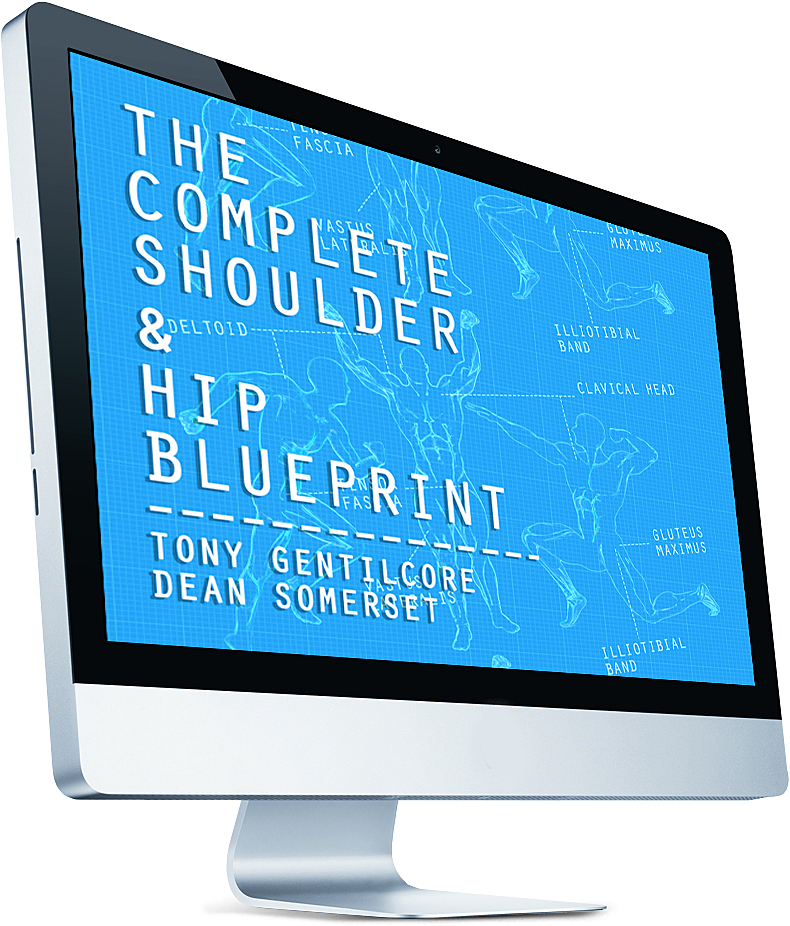
A Peek Inside Complete Shoulder and Hip Blueprint

WHEW – talk about a whirlwind day yesterday. I spent the bulk of it glued to my laptop3 making sure things ran smoothly with the launch, answering questions and emails, and trying to stay on top of social media engagement.

1) THANK YOU to everyone who has gone of their way to mention and/or plug Complete Shoulder and Hip Blueprint. Your support means a lot.

2) To those who may be on the fence, how about a sneak peek?

Copyright: eenevski / 123RF Stock Photo


This sucker contains 11+ hours of content covering everything from upper and lower extremity assessment, corrective exercise strategies, numerous hands-on breakouts, as well as program design and exercise technique troubleshooting (with maybe, 37 seconds worth of Star Wars references).

Here are two sneak peak segment from both Dean and I.

The One Where Tony Discusses Scapular Motion


The One Where Dean Talks Hip Integration (and makes a bunch of fitness pros groan)


And there is tooooooons more where that came from.

If you’re a fitness professional I can almost guarantee you’ll pick up something valuable (hopefully several) that will help your clients or athletes. And even if you’re not a fitness pro, and just like listening to two dudes talk shop about training or you’re just looking to pick up some cool new exercise variations to keep your shoulders and hips healthy this resource would be a home run.

cshb-screen

Complete Shoulder and Hip Blueprint is on SALE all this week (until midnight on Saturday, November 5th) at $60 off the regular price.

CategoriesAssessment Corrective Exercise Exercise Technique personal training Program Design

Complete Shoulder and Hip Blueprint Now Available

I gotta say, I could barely sleep last night.

Dean Somerset and I have spent the better part of the past two years traveling all across North America and parts of Europe presenting our Complete Shoulder & Hip Workshop. All told, we’ve presented it 10-15 times4.

hipshoulder-landscape

I’m not kidding, either: I…could…not…sleep last night.

I kept waking up every few hours as if I were 11 years old again waiting for Christmas morning to arrive. To say I am excited for this would be an understatement. There’s also a small fraction of me doing the best I can not to destroy the back of my pants out of shear terror.

As of this moment it’s 99.2% excitement, and 0.8% “hoooooooly shit this is happening.”5

I mean, there’s always a degree of vulnerability anytime you put something out there for the masses. However I KNOW this is going to be a resource that will help tons of people.


What Is It

The Complete Shoulder and Hip Blueprint is an 11+ hour digital product that takes you through the systems that both Dean and I use with our athletes and clients to improve upper and lower body function, strength, endurance, and resiliency.

We show you how to connect the dots between a thorough assessment, understanding what corrective strategies (if any) will work best, and how to build a training program to help you and your clients in the most direct way possible.

And there’s a few cat memes and light saber jokes tossed in for good measure.

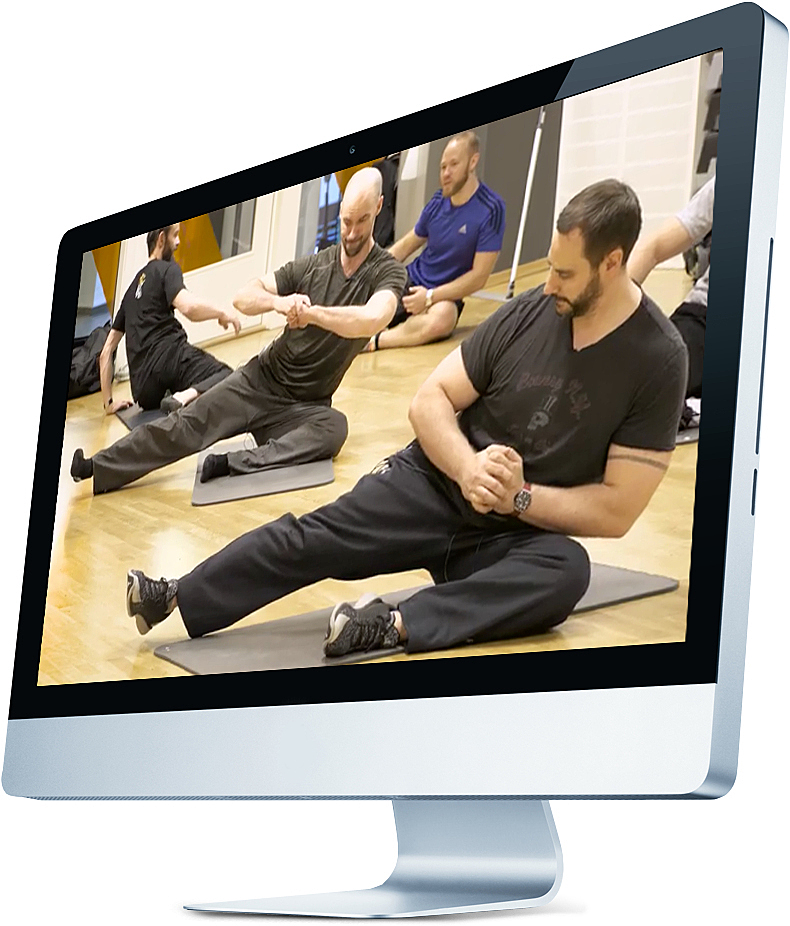
dean-tony-cshb

Why This Matters to You

Are you a fitness professional? Do you work with people with shoulders? What about hips?

Well then, this sucker is right up your alley.

More specifically here’s what you can expect:

  • Help your clients get through common shoulder issues more effectively.
  • Streamline your assessment and program design, helping you get faster results and more efficient use of your time, and that of your clients’
  • Help you see the details of shoulder motion you didn’t notice before, and whether something you’re using in your exercise program is working or not.
  • Upgrade your exercise toolbox to address commonly overlooked movement issues.
  • You can help clients see IMMEDIATE improvements, sometimes in as little as a minute or two, which will help them buy in to your abilities.
  • Help you target in on what will work best for the person in front of you, saving you both the time spent on useless exercises or drills.
  • Connect the dots between assessments, mobility, strength, and conditioning program considerations
  • Break down a system you can use today with yourself or your clients to see instant benefit while removing the guess work.

And you don’t necessarily have to be a fitness professional in order to reap the benefits of this resource. Dean and I offer tons of practical information in the form of hands-on applications in addition to breaking down many common exercises such as the deadlift, squat, chin-up, and Landmine variations.

tony-dl-technique

The Part Where I Entice You More (or Guilt You) Into Buying

Choose any of the following that resonates with you:

1. “What is this, Napster? Pay for something once, would you?”

2. “Pretty please?”

3. “I got kids! Well, I’ll have one soon, in January, and that shit’s expensive.”

4. “I’ve written tons of free content over the years. Each time I’ve written an article or blog post that’s helped you out, I put a dollar on your tab. It’s collection time, you son of a bitch.”

Okay, for real: I think it’s a great resource, I feel it’s going to help a lot of people, and I’d be honored if you’d consider checking it out.

We’ve put Complete Shoulder & Hip Blueprint on sale this week. From today through Saturday, November 5th you can purchase it at $60 off the regular price. What’s more there are Continuing Education Credits (CEUs) available through the NSCA, which makes this a solid professional development investment.

—> Complete Shoulder & Hip Blueprint <—

CategoriesInterview muscle growth Program Design Strength Training

Becoming a Brick Shit House 101

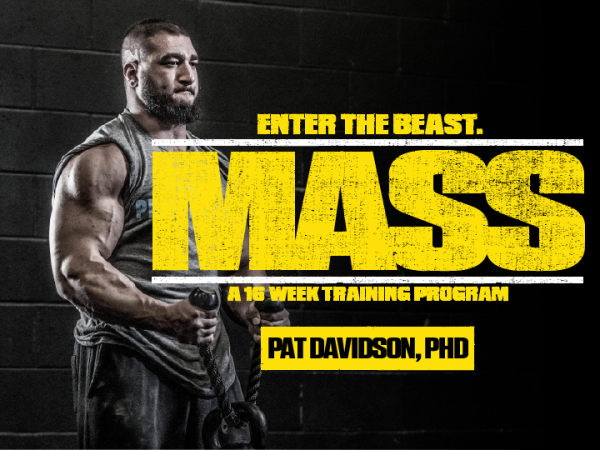
Pat Davidson is a savage. He’s one of the most passionate and knowledgable coaches I know. What’s more, he’s someone who’s not afraid to express his opinion and tell it like it is. Case in point he was kind enough to take part in an interview as part of the re-launch of his flagship training program – MASS.

Copyright: <a href='http://www.123rf.com/profile_rangizzz'>rangizzz / 123RF Stock Photo</a>
Copyright: rangizzz / 123RF Stock Photo


He….does…..not……hold…..back.

It’s amazing.

In the year or so since it’s original (soft) release it has accumulated a cult-following. It’s brutal, it makes people hate life, but no one – male or female – who has completed it has ever not gotten amazing results. I know, I’ve seen it in action.

It makes people into brick shit houses – hence the title of this post.

MASS is on sale starting today though the end of this week. Enjoy the interview.

Tony Gentilcore (TG):Pat, thanks for doing this interview: 1) can you give my audience a bit of your background and 2) can you do so with at least two f-bombs included.

Pat Davidson (PD):  Hi Tony, I’d like to start off by saying thank you for letting me do this interview. You’re somebody I really respect in our industry, and getting the opportunity to do something in conjunction with you is big time.

It’s funny, I’ve done a number of podcasts and other kinds of interviews at this point in my life now, and this question always comes up, and I always think, “God, I fucking hate this question.” I feel animosity towards this question, because it’s so hard to know how to approach telling other people about yourself.

You have to come up with some kind of elevator pitch version of your professional life, and it always sucks. There’s virtually no way to accurately answer the question. So here’s my shitty answer to this question that provides evidence that I am a fucking authority in our field.

Note from TG:I could have just as well introduced Pat myself, told everyone he’s a savage, that he makes people into savages (as evident by his book MASS), and is one of the most passionate and intense people I have ever met in this industry. I’m pretty sure he found out arm wrestling a grizzly would increase protein synthesis by 22% he’d put it as A2 in a program.

My name is Pat Davidson. I have an B.A. in History, an M.S. in Strength and Conditioning, and a Ph.D in Exercise Physiology. I have worked as a professor for two different schools, Brooklyn College and Springfield College. I have also been the Director of Continuing Education and Training at Peak Performance in NYC.

My background in athletics has been that I played baseball and football in high school, tried to play baseball in college, but ultimately was too immature to be able to manage classes, sports, and partying as an 18 year old. After that I got into jiu jitsu, submission grappling, and MMA. I competed in those sports for 7 years.

I got more and more into the science and practice of training by the end of my MMA days and eventually just became a lifter. I did a few weightlifting meets, broke down physically from trying to do that sport, and then eventually made my way into strongman. I competed in strongman for about 3 years. During that time I finished top 10 at two National Championships, competed in two World Championships, and finished top 10 at Worlds once.

I’ve done my fair share of writing and speaking gigs in the field. These days I’m not competing in anything. I’m just trying to consume knowledge at the highest rate I possibly can, write more books, give more presentations, and be the best professional I can be.

TG: I had the chance to listen to you speak at a Cressey Sports Performance staff in-service something like two years ago, and I was so impressed not only by your knowledge base, but your passion as well. Watching and hearing you speak it was hard not to stand up and run straight through a brick wall.

I feel MASS is the end-result of both your knowledge and passion. Can you explain WHY you wrote this program (you know, other than making people hate life)?

PD: The reason I wrote MASS is actually a very straight forward concept. The project began when I was contacted by an editor from Men’s Health who commonly did stories with myself and a couple other guys at Peak.

He said that a new intern just showed up to start working with him. The kid was a former college cross-country runner, and he was essentially way too skinny to be working for Men’s Health. The editor and a couple other people thought it would be fun to see how much mass they could put on him for his 16 week internship, and they were hoping that I could put a program together for him.

Copyright: <a href='http://www.123rf.com/profile_varijanta'>varijanta / 123RF Stock Photo</a>

Copyright: varijanta / 123RF Stock Photo

I got to meet the intern for a day, do some measures on him, and, “teach” him how to do everything. He was about 5’8″, and slightly less than 130 pounds. He had no previous strength training experience. I could tell that he was a very driven young man though, and the cross-country background is one that from my experience comes with a psychological paradigm of not being afraid to work.

Wrestlers and racers are people who often times will do whatever it takes no matter how difficult. My challenge was that I had to come up with a plan that would give this person maximum results without hurting him, and this was especially difficult because of his lack of experience.

From my experience everyone does everything wrong, regardless of how well versed in training they think they are. I don’t feel comfortable having people do anything unless I’m there to watch and coach them…so I had to get outside my comfort zone in actually writing MASS. So I designed this thing to intrinsically reward him with the programming, push him to his physical limits, and make absolutely sure he wouldn’t get hurt.

He did phenomenally well on the program. He gained 19 pounds of lean body mass in the 16 weeks according to our InBody equipment at Peak, which is absolutely preposterous when you consider he started off in the 120s.

At this point in time, Men’s Health was going to do a big story on Peak, because Peak was getting ready to move into a 25,000 sqft futuristic palace gym in Manhattan. Included in the story on Peak was going to be the intern story as well, and they were going to do something like name the program, “Best Program of the Year” or something like that.

I saw this as a golden opportunity to possibly earn some money from this, and I put a book together that would go along with this program. So I sat down on a weekend where I had nothing else to do and I wrote the book. It was a grueling weekend, and I probably looked a little bit like a bleary eyed Unibomber by the end of it, but the book was done.

mass-image

Unfortunately the Peak project fell through due to business side logistical complications, so the Men’s Health stories also never materialized, but by that point, MASS was born, and it has managed to create its own following, and it has steadily sold and continued to make people both hate and love me in expanding spheres.

TG: I have witnessed it in action – several coaches I know have done the program6 – and can vouch for its effectiveness.

Straight up: would you agree most people DO NOT train nearly hard enough?

PD: I honestly don’t know if people don’t work hard enough. I think people are just disorganized with training. When I design training sessions, I think about things like somebody would if they had to design a factory assembly line to produce at the highest level of efficiency.

I have zero time to waste, I have a valuable commodity that I have to pump out, and I don’t care about your feelings.

I time everything. I’ve never been a huge fan of technology in the weight-room other than the clock.

I’m familiar with different energy systems, loaded movement types, types of muscular contractions, speed and agility, movement quality…you know, the endless list of qualities that actually need to be developed in a performance oriented gym.

There are so many qualities that are necessary for athletes that you need 15 day weeks and 34 hour days to actually do everything you need to do. You always have to scrap certain concepts and qualities, short time (I can’t have you sitting around for 6 minutes during rest periods to maximize your phosphagen system’s substrate stores), and generally compromise the perfect textbook physiology development of things…but you blend, mix and match, and do the smartest things you possibly can to make it look right, and let people feel like they’re having a worthwhile training experience.

With MASS, there was only one goal, and it was purely body composition optimization. I wasn’t trying to help people with peaking for a race or a strength contest, or get ready for the football season, so in reality organizing it was a breeze…no movement prep, no power production development, no reactive components.

It just comes down to what is the goal, and how do I get to the goal?

With body composition goals involving muscle mass, it’s not that hard…mechanical load, mechanical work, heat, and acidity…works every time.

People are willing to work hard to get there if they want that goal, and you can explain why those variables are the ticket to that goal. Now you just have to organize things for people to to do, and give them something they feel like is a meaningful challenge. That’s where the MASS book actually comes into play.

  • It’s written in a way that explains why taking a certain approach is the correct approach.
  • It explains why a certain mindset is the right way to carry yourself. It gives you the organization of the programming, which is very efficient, and basically guaranteed to change your body composition.
  • It gives you guidance, direction, and order. It will also motivate you, and the program itself will motivate you, because you have to keep trying to beat yourself, and if you actually manage to do so, you will feel rewarded.

I don’t think people are unwilling to work hard. Everybody who has done this program has worked hard and loved it. People just haven’t put themselves into the right situations or environments to be able to appropriately work hard in a very directed manner.

TG: Well stated my man, thank you. I respect your approach to training and program design because it’s simple. Nothing about MASS says “fancy” or “elaborate,” which is why I LOVE the constant references to Rocky IV. Why is it so hard for many people to understand this concept? That training doesn’t have to advanced or nuanced?

PD: This is a great question. I think I could answer this in a million different ways, but I’m going to stick with one thread here.

Our industry is generally full of people who were failed athletes…but specifically failed athletes who were incredibly driven, tried hard, and were willing to do whatever they had to do to make it.

Coaches are probably people who, when they were athletes, were the people that their coaches loved…because they were the scrappy athlete, the kid who studied the game…and they were rewarded for this behavior with the praise, attention, and approval of the coach…all of this creates a cycle.

The people who fit into this failed athlete/future coach pedigree are routinely the people who believe that if they just did this, “one thing” differently, then it would have been all different.

We are a population of people who are always looking for the secret ingredient…it’s this new thing where you press on weird spots and the person moves like a baby, and now they can magically move better forever…wrong…it’s this new thing where you find and feel your left pterygoid, and now you can throw a baseball 5 mph faster…wrong…it’s this new thing where you touch these lights on a board that light up randomly, and you can save any shot from any direction as a goalie…wrong.

The dirty secret is that consistency, habit, intelligence, and managing the big picture is the only thing that has ever and will ever matter.

Photo Credit: www.jtsstrength.com

When I think of improving performance, I’m always trying to improve biomechanics and fitness, because the two compliment each other. Biomechanics is this positional, mechanical, psycho-social, sensory, contextual, and environmental monster of inputs and outputs that the smartest people in our field spend their entire waking hours and lives trying to wrap their mind around to figure out.

And then you hear some ass-clown trainer spit the dumbest shit imaginable about how fucking ankle band lateral walks and spreading the knees are going to be the magic bullet fix for some jumbo shrimp looking 140 pound 20 year old bag of dicks that can’t do a fucking pull-up and runs a mile in 12 minutes.

TG: HAHAHAHAHAHA. How do you really feel Pat?

That’s the kind of shit that makes me want to tombstone piledrive somebody into that pit of needles from the Saw movie franchise.

All day in NYC I see trainers taking fat women and having them do endless stupid movement prep drills with them and overhead squatting them with dowels. Maybe this fat woman can’t move because her gut is in the way.

Maybe she just needs to do something she can’t fuck up, like the most basic hip hinge possible…and oh by the way a bench press is a good fucking exercise.

Copyright: halfpoint / 123RF Stock Photo

From what I can tell, almost everybody in our industry sucks at movement…and we try to do seriously fancy shit that we fuck up left and right.

Maybe your cocky trainer ass should stick to basics. If you suck at it, do you really think your dumbass motor moron client is going to have a fucking chance? Hell no dummy.

That person needs to sweat and do basics, and feel like they actually accomplished something. Give that person some damn pride, and let them work hard in a way where they won’t hurt themselves.

Christ, I could go on all day on this one, and you finally got me swearing…this one did it.7

No, trainer/strength coach, you never were going to make it in the sport you loved. The cream always rises to the top. No, you’re never going to be an elite weightlifter unless you started somewhere around 10…but feel free to destroy your joints in your pursuit of this goal.

No handstands are not going to improve anything other than your ability to do a shitty handstand because you didn’t start gymnastics when you were 8 years old.

Shut your mouth, do basic lifts, sprint, do agility drills, and probably some basic cardio, and guess what you’ll probably stop being as fat, weak, and hurt as you are right now. Fuck.

TG: WHEW – that was an EPIC rant Pat. I hope all the walls are safe wherever you were when you wrote that….;o)

I know it’s a cliche question – sorry – but can you give your “top 3” reasons why many people fail to see much progress in the gym? How is MASS going to address them?

PD: Top 3 reasons why people go nowhere in the gym.

1. People Pick the Wrong Exercises for Their Goals.

If your goal is to change body composition, you need to do as much mechanical work with load as possible. Mechanical work is the result of force times distance. Do not pick low force exercises with small excursions built into the movement. The right exercises are hinges, squats, split squats, presses, and pulls. I’m not against direct arm and calf work, but that’s the spices you sprinkle on at the end of cooking a dish.

2. People Pick the Wrong Sets and Reps Schemes.

Most People are weak and unimpressive. If I do a 5 rep set of bench press with such people, they might be using 145…but then I take 5 or 10 pounds away and they do it for 20. There’s no rhyme or reason to most people…their muscles aren’t working synchronously, they’re more psychology cases than physiology cases.

They’re going to build more strength doing 15 reps with slightly less weight compared to 5 reps with slightly more. People need practice and volume.

Everybody thinks they’re a damn international weightlifter who needs Prilepin’s table applied to all their programming. Do more mechanical work…push that variable and you’ll be amazed at what happens.

3. People Don’t Time Their Rest.

Easily the most powerful adjustment I’ve ever made. It’s so simple and so powerful. Nobody is accountable, and perception of time is something that nobody experiences accurately while exercising.

If you’re not timing things, you are wasting a ton of time, guaranteed. MASS addresses all of these factors. You’re going to deadlift, squat, press, and pull your face off.

Everything is timed.

Everybody sees crazy results.

TG: BOOM. Want to find out for yourself why MASS has garnered such a loyal following? Go HERE and see for yourself. It’s on sale this week only (until 10/23).

mass-download
Categoriescoaching personal training Program Design

Program Design Considerations for the New Personal Trainer

With more and more personal trainers entering the industry faster than Marvel and DC Comics can resurrect D-list characters to put into their movies8, it’s becoming more readily apparent how ill-prepared some (not all) are when it comes to writing effective training programs.

Today’s guest post, courtesy of Tennessee-based coach, Andy van Grinsven, helps to shed some light on the topic and remedy the situation. Enjoy.

Program Design Considerations For the New Personal Trainer: What You’re Missing

49090294 - sport, fitness, lifestyle, technology and people concept - close up of trainer hands with clipboard writing and woman working out on exercise bike in gym

Copyright: dolgachov / 123RF Stock Photo

It’s five after, and my client is running late. Like an owl I spin my head round and round checking first the door, then the suspiciously empty squat rack, and back to the door, tapping my clip board with feverish anxiety.

My client arrives. “Hey there! How was your weekend? Ready to get started?” Like Fred Jones I wave of my arm as if to say “come on, gang!” I’m listening to my client while trying to break the speed-walking world record on my way to the rack.

Then it happens. Like a swarm of vultures a group of teenagers snag the only squat rack in the gym. Nut punch. Now what?

Personal trainers and coaches pride themselves in their ability to write programs: sets and reps, rest periods, organization, periodization, and all the other details that make a program, a program. And at the end of the day, we hope this program turns our clients into card-carrying certified badasses.

50685511 - sport, fitness, teamwork, weightlifting and people concept - close up of young woman and personal trainer with barbell flexing muscles in gym

Copyright: dolgachov / 123RF Stock Photo

But here’s the thing:

Any trainer worth his weekend certification can put together a program. It’s not that hard: pick some exercises, assign some stuff to them, and voila! You’re a coach.

But what happens when you actually hit the trenches and start training these clients? Does your program actually work? Does it fit the context of the gym and client? Does it make them better?

I’ve been training, largely in community gyms, for the better part of 7 years. I’ve written countless programs. However, the number of times I’ve been able to execute a program 100% as written is likely less than 10.

Why?

Because when life throws you a bunch of teenagers in the squat rack, you make do with what you’ve got left (after cursing the Gods, and maybe, crop-dusting them).

Suddenly, your perfect program gets shot down because the equipment you needed is occupied.

Or your client just got back from a 2-week vacation. Or your client slept poorly. Or they stayed up late watching Friends reruns.

Your program means nothing if it can’t roll with the punches.

Exercise selection, sets, reps, and rest periods are great. But there’s a few things you ought to consider along with the meat and potatoes of your program:

Program Design Considerations: What Your Certification Course Forgot to Mention

1.) WHO is your client?

Are they an athlete? Are they a bodybuilder? Powerlifter? Or just some regular Joe trying to lose

Copyright: spotpoint74 / 123RF Stock Photo

belly fat?

This question might sound silly, but you may be surprised to see many coaches and trainers blindly fit all their clients to one style of training:

Powerlifters like the “Big 3,” so every client is barbell benching, squatting, and deadlifting.

Bodybuilders chase max muscle, and often write programs with titles like “chest day” or “leg day.”

This is, of course, appropriate, if the client is a powerlifter or bodybuilder. But what if they’re not? How do you write a program for the regular Joe?

Do both styles of training, and the tools they prefer, have a place in your program? (<–the answer is probably, yes)

2.) What’s Important?

You’ve got your exhaustive list of exercises: squat variations, different hand position, barbells, TRX, medicine balls, boxes, and the list goes on.

In this crazy world of fitness and exercises, which ones are most important for your client? What do you choose, and how do you implement them?

Develop your own “10 Most Important Things” list. This list will serve as the foundation for your program design.

Here are my 10 Most Important Things (in no particular order):

  • Squat
  • Hip Hinge
  • Push-ups
  • Chin-ups
  • Lunge
  • Row
  • Carry
  • “Power movement”


  • Crawl
  • Anti-movements (planks, Pallof presses, etc.)


For me, these 10 represent the most important things I need to coach all my clients. The style of squat; the type of hip hinge; how many push-ups they can do; and the “power movement” will all differ client-to-client, but they’re all things my clients will do with me. If I’ve covered these 10 things, we’re going to be in good shape for both the gym and life.

If you must leave your client with only 10 things, what would they be?

3.) What Are the Client’s Goals?

I get it: squatting is a ton is fun. Being super strong is awesome. But does your client want to squat a metric shit-load? Do they even know if they do or don’t? Further, how strong is “strong enough?”

Remember: you’re in business to help your client. If being as strong as humanly possible is their goal, then get after it. If not, reassess “why” you’re designing your program to include heavy squat sessions. They might not be appropriate for this client, or many of your others.

Now before you go writing me off as some soft coach, hear me out: I agree that everyone needs to be “strong.” Helping your client get stronger is helping them build muscle, boost confidence, and reduce their risk of injury.

But, how we get them stronger is through progressive overload, not necessarily the tool: dumbbells, barbells, and TRX each provide a stimulus to help your client get stronger.

I encourage you to evaluate how you define strong and evaluate the methods you use to make your clients strong.

Sometimes, a goblet squat is all you’re ever going to need.


4.) What Does Your Client Need?

You’ve established the client’s goals: shed body fat, get stronger, and look great naked again.

What if your client wants to squat a brick shit-house, but can’t squat to parallel with body weight?

Maybe they want to run next year’s full marathon, but they’re carrying an extra 50 pounds of fat.

Get your clients to their goals, but assess their needs along the way. If they have the body awareness of a 2-year old and joint mobility that would make the Tin Man cringe, we’ve got some work to do first.

Whether these things pan out during your first few sessions or are discovered through your screen is up to you, but make sure you’re using the safest and most effective methods for their abilities right now, and not where they think they are.

5.) What CAN You Do?

It’s not what you want to do, it’s what you can do.

There have been numerous times I’ve walked into the gym, program in hand, and had to make adjustments, X-out exercises, and switch my order.

Why? The teenagers in the squat rack. My client didn’t sleep well. The lat-pulldown is out for maintenance.

What are you going to do now?

1. Roll with it

Copyright: ammentorp / 123RF Stock Photo

I’m all for program writing and I love the enthusiasm but have progressions, regressions, and other options that can get the job done.

For most everyone, like 99% of the people you’re going to work with, it won’t matter whether you squat them with a bar, dumbbell, or kettlebell. It won’t matter if your hip hinge movement is KB swings instead of deadlifts. It won’t matter if you choose to do push-ups over DB presses.

All that will matter is that you’ve provided a stimulus and a fun training experience.

Why? Because good, hard work, trumps no work at all. And in the grand scheme of things, most of your clients just want to move well and feel well, get a good workout in, and be on their way.

2. Assess Readiness

Many coaches, many smarter and more experienced than I, will use Heart Rate Variability or some other tool to assess “readiness” of the client or athlete before the training sessions starts.

If you have the tools and like to use them, great. If not, borrow my “RPF,” or 0-10 Rating of Perceived Feels scale:

A zero (0) on the scale roughly means “Andy, I’d rather throat punch you than work out today.”

Ok. No problem. Maybe we’ll de-load or reduce the volume on some things.

A 10 on the scale roughly means “Andy, I’d like to fight Superman today.” Great! Let’s get after it: slap on more weight; more sets; and more intensity.

Your 0-10 might mean different things to you and your client, but make it fun and relatable. At the very least, you’ll get a laugh out of them with the silliness.

My RPF scale is a simple, subjective tool that gives you an idea of the state your client is in before you start hitting the weights. Make changes accordingly.

Conclusion

Writing a program doesn’t have to be complicated, however, these are considerations most don’t take into account when designing a program.

It’s easy to jot down the program that *you* would want to do, but is it appropriate for the client? Is it appropriate for the context of the gym and client’s goals?

Answer these questions before you even sit down to write the program, and have progressions, regressions, and built-in flexibility with your exercise selection.

If you can do that, I promise you’ll write better programs and rarely run into trouble.

About the Author

Andy is a personal trainer and strength coach based in Nashville, TN. He likes deadlifting, coffee, and BBQ. His clients range from college age to retirement, but the message is still the same: lift safely and progressively, then rule the world. You can find him on Facebook and Instagram, or on his website HERE.

CategoriesAssessment coaching personal training Program Design Strength Training youth/sports training

Addressing the Stone Cold Facts of Training Athletes

Remember that show diary on MTV? You know, the one that aired back in the early to mid-2000s?

The documentary style show centered mostly on musicians and celebrities and followed them through their daily lives.

Each episode started with said celebrity looking into the camera and saying…..

“You think you know, but you have no idea.”

And then for the next 60 minutes we got a true taste of the celebrity lifestyle, given an opportunity to witness their trials and tribulations with the paparazzi, hectic travel schedules, demands on their time, and what it’s like to demand a bowl full of green only M&Ms in their dressing room (and actually get it), not to mention the inside scoop on what it’s really like to be able to bang anyone you want.

Stupid celebrities. They suck….;o)9

Sometimes I feel like strength coaches should have their own version of the show diary, because when it comes to training athletes I feel like many people out there “think they know….

“…..but they have no idea.”

Oh snap, see what I just did there?

While I don’t think it’s rocket science, I’d be lying if I said there isn’t a lot of attention to detail when it comes to training athletes – or any person for that matter – and getting them ready for a competitive season. Everyone is different, with different backgrounds, ability level, injury history, strengths, weaknesses, goals, anthropometry, as well as considerations with regards to the unique demands of each sport and position(s) played.

By contrast, there are numerous parallels in training despite athletic endeavors or whether or not someone is an athlete to begin with.

We can take the Dan John mantra of:

Push, pull, hinge, squat, lunge, carry

Do those things, do them well, and do them often….and you’ll be better off than most. It’s complicated in its simplicity.

Much like Dan I prefer to train everyone I work with as if they’re an athlete. There’s something magical that happens when I can get Joe from accounting or Dolores from HR to deadlift 2x bodyweight or to start tossing around some medicine balls. Even better if it’s done while listening to Wu-Tang Clan.

They wake up!

They’re less of a health/fitness zombie, haphazardly meandering and “bumping” into exercises. Once they start to train with intent and purpose – and move – it’s game time.

That said, lets be honest: when it does come to training athletes there are many other factors to consider; many more than an article like this can cover. However, I do want to discuss a few philosophical “stamps” that some coaches deem indelible or permanent when it comes to training athletes, when in fact they’re anything but.

1) Strong At All Costs

There’s a part of me that cringes to admit this, but it needs to be said: strength isn’t always the answer.

Don’t get me wrong, I still believe strength is the foundation for every other athletic quality we’d want to improve.

If you want to run faster (<— yes, this matters for endurance athletes too), jump higher, throw things harder or further, or make other people destroy the back of their pants, it’s never a bad thing to be stronger.

When working with athletes, though, there’s a spectrum. If you’re working with a college freshman who’s never followed a structured program and is trying to improve their performance to get more playing time, you can bet I’ll take a more aggressive approach with his or her’s training and place a premium on strength.

When working with a professional athlete – who’s already performing at a high level, and is worth millions of dollars – is it really going to make that much of a difference taking their deadlift from 450 lbs to 500 lbs?

Moreover, we’ve all seen those snazzy YouTube and Instagram videos of people jumping onto 60″ boxes:


It may get you some additional followers and IG “street cred”…but man, the risk-reward is pretty steep if you ask me. I’m not willing to risk my career (and that of my athletes) for some stupid gym trick.

Besides, if I wanted to I’d up the ante and have them do it while juggling three chainsaws. BOOM! Viral video.

To that end, I like Mike Robertson’s quote which sums my thoughts up the best:

“I think athletes need to be using the weight room as a tool to improve efficiency and athleticism, not simply push as much weight as possible – MR”

2) You Don’t Have to OLY Lift

Some coaches live and die by the OLY lifts, and I can’t blame them…..they work. But as with anything, they’re a tool and a means to an end. They’re not the end-all-be-all-panacea-of-athletic-and-world-domination.

I don’t feel any coach should receive demerit points – or be kicked out of Gryffindor – because he or she chooses not to implement them into their programming.

Lets be real: If you know you have an athlete for a few years, and have the time to hone technique and progress them accordingly, the OLY lifts are a good fit. It’s another thing, too, if you’re competent.

I for one am never guaranteed four years with an athlete, nor am I remotely close to feeling competent enough to teaching the OLY lifts. And that’s okay….

I can still have them perform other things that’ll get the job done:

Jumps:

https://www.youtube.com/watch?v=QUbClRjpLGk


https://www.youtube.com/watch?v=kn5v85ekXFs


NOTE: both videos above courtesy of Adam Feit.

Starts/Acceleration

5 yd Starts

https://www.youtube.com/watch?v=TklqD8uN_Ds


5 yd Jog to 10 yd Acceleration

https://www.youtube.com/watch?v=HM-BPJKTslg


Change of Direction

Up 2, Back 1 Drill

https://www.youtube.com/watch?v=YSFDp1QSA2w


That One Time I Looked Athletic

Medicine Balls Drills

Scoop Toss


OH Stomp


Kettlebell Swings


Punching Ramsay Bolton in the Mouth

No video available.10

3) Single Leg Work Matters

This is probably the part where some people roll their eyes or maybe scroll past, but hear me out.

I think it’s silly when I see coaches on Facebook argue over bilateral vs. unilateral movements and try to win everyone over as to which is best.

They’re both fantastic and warrant attention.

Where I find the most value in single leg training:

  • Serves as a nice way to reduce axial loading on the spine when necessary.
  • It can be argued all sports are performed – in one way or another – on one leg, so from a specificity standpoint it makes sense to include it.
  • Helps to address any woeful imbalance or weakness between one leg and the other.
  • Places a premium on hip stability and core/pelvic control.

All that said, I do find many people are too aggressive with their single leg training. It’s one thing to push the limits with your more traditional strength exercises like squats and deadlifts, but when I see athletes upping the ante on their single leg work to the point where knees start caving in and backs start rounding that’s when I lose it.

I’m all about quality movement with any exercise, but more so with single leg training. I’d rather err on the side of conservative and make sure the athlete is owning the movement and not letting their ego get in the way.

Like that one time I posted this video and Ben Bruno shot back a text showing me a video of Kate Upton using more weight than me. Thanks Ben! Jerk….;o)

Unfortunately, some coaches are so set in their ways that they’ll never cross the picket lines. They’re either team bilateral or team unilateral.

How about some middle ground with B-Stance variations?


4) Recognize Positions Matter

I’m not referring to Quarterback or Right Fielder here. But rather, joint positions and how that can play into performance in the weight room and on the field.

If you work with athletes you work with extension.

As I noted in THIS post, anterior pelvic tilt is normal. However, when it’s excessive it can have a few ramifications, particularly as it relates to this discussion.

Without going into too much of the particulars, people “stuck” in extension will exhibit a significant rib flair and what’s called a poor Zone of Apposition.

Basically the pelvis is pointing one way and the diaphragm is pointing another way, resulting in a poor position; an unstable position.

Anyone familiar with the Postural Restoration Institute and many of their principles/methods will note the massive role they’ve played in getting the industry to recognize the importance of breathing.

Not the breathing that’s involved with oxygen exchange – evolution has made sure we’re all rock stars on that front.

Instead, PRI emphasis the importance of the reach and EXHALE; or positional breathing.

It’s that exhale (with reach) that helps put us into a more advantageous position to not only encourage or “nudge” better engagement of the diaphragm, but also better alignment….which can lead to better stability and better ability to “display” strength.

NOTE: this is why I’m not a huge fan of telling someone to arch hard on their squats.


When joints aren’t stacked or in ideal positions, it can lead to compensation patterns and energy leaks which can compromise performance.

5) You Need to Control Slow Before You Can Control Fast

It’s simple.

Learn More With Elite Athletic Development 3.o

Mike Robertson and Joe Kenn released their latest resource, Elite Athletic Development 3.0 this week.

I can’t begin to describe how much information they cover, but if you’re someone who trains athletes then this is a no-brainer.

Many of the concepts I discuss above are covered, in addition to twelve more hours worth of content over the course of ten DVDs

Point Blank: You’ll learn from two of the best in the biz.

The seminar is on SALE this week at $100 off the regular price, and it ends this Friday (7/22), so act quickly.

Go HERE for more details.

CategoriesProgram Design Strength Training

Stronger Back = Better Everything

What’s more impressive or baller than a muscular, strong-looking backside?11

Any Joe Schmo can walk around with decent sized biceps or a six-pack that would make Tyler Durden jealous. Walk into any commercial gym and you’ll see both.

However, it’s a bit of a rarer occurrence to see someone with an impressive upper back. Not JD Salinger making a public appearance rare or even unicorn rare; but rare nonetheless.

It’s a shame, too, because having a strong upper back provides many advantages.

1) It Makes You Look Yoked

Remember that opening scene from the movie Troy when Achilles (<— I know, second Brad Pitt reference in less than ten seconds. Last one I promise) “fights” Boagrius?

To help jog your memory, this is Boagrius:

You can’t technically see his upper back, but do really need to in order recognize he’s a ginormous human being?

Yeah, sure, the fight between him and Achilles was over in a blink of an eye, but we’re still talking about those traps.

And speaking of traps, who can forget Tom Hardy in the movie Warrior.

For starters, it’s a fantastic movie about brothers, fathers, and some of the best MMA fight scenes ever filmed – even my wife liked it.

Secondly, between his role as Tommy in Warrior (as well as Bane in The Dark Knight Rises), Hardy pretty much sealed the title for “Best Traps in Hollywood” and subsequently spawned a tsunami of “Get Traps Like Tom Hardy” workouts.

Traps, indeed, are the new abs.

2) Increased Overall Strength (DUH)

Having a bigger “anything” generally assumes increased strength. Trying really hard not to include a penis joke here.

A larger muscle can generate more force. More force equates to increased strength. Increased strength is never a bad thing.

To be more specific, though, having a bigger/stronger upper back can have huge carryover to improved performance in many lifts – especially as it relates to the “big 3.”

Squat

Having a bigger/stronger backside can translate very well to a better squat.

  • A bigger upper back makes it easier to allow the bar to rest on the “shelf.”
  • The back musculature must fire isometrically during a set to prevent falling forward and to prevent any excessive rounding.
  • Anyone who thinks the lats aren’t involved with squat performance is kidding themselves. The lats have attachment points in the intertubicular groove of the humerus, scapulae, portions of the vertebrae (T7-T12), the thoraco-lumbar fascia, as well as the iliac crest.
  • Activating the lats during squats provides significant more spinal stability and allowance of force transfer between the lower/upper halves of the body. This is partly the reason why people can back squat more than they can front squat.

Bench Press

Ask any powerlifter what’s more important for a big bench press – chest or upper back – and most will likely say “both!,” however default to the upper back (and technique) as being more of a limiting factor.

Chad Wesley-Smith of Juggernaut Training likes to use the analogy of the upper back serving as a “base of support” during the bench press. A thicker/wider upper back will:

  • Get you closer to the barbell (less distance the bar as to travel).
  • Assuming technique is on point, will act as a “springboard” to propel the barbell off the chest.

Deadlift

Similar to what was noted above with squats, a bigger/stronger backside will almost always equate to a better, less vomit-in-my-mouth looking deadlift.

Everything – traps, rhomboids, lats, erectors – work in concert, isometrically, to counteract both compressive and shear forces playing tug-of-war with your spine.

The stronger your back, the stronger your deadlift.

3) Illusion of a Bigger Chest

I work with a lot of men who’s #1 goal is to have more sex have a bigger chest. Common sense tells us that in order to have larger chest muscles (pecs) we need to train them.

And I agree.

Unfortunately, guys tend to be so enamored with training their chest that “chest day”  becomes “chest week.”

52 weeks a year.

As a result, many are left with an overly kyphotic posture (rounded upper back and shoulders) because they’ve developed a muscular imbalance between their front and backside, which ends up “hiding” their chest development.

So what ends up happening?

More chest exercises.

Which only feeds into the problem.

Many are left flummoxed when I suggest the answer is to perform more BACK exercises. Often, the answer is to strengthen and focus more on their backside, which will then “open” things up and give the illusion of a larger chest.

It’s like being Gandalf. Except, you know, not.

Back Strategery

Which leads us to the obvious question: Tony, will you just STFU and tell me WTF do I do?

This is a blog post, not a dissertation on anything & everything back training…but I’d be remiss (and an a-hole) if I didn’t provide at least some actionable advice.

1) Horizontal Pulls vs. Vertical Pulls

It’s generally accepted that back training can (and should) be divided into two camps: horizontal pulls and vertical pulls.

According to lore – and every bodybuilder in the history of ever – horizontal pulling tends to target upper back thickness, while vertical pulling tends to target width.

Bodybuilders are jacked and know a thing or two about putting on muscle, so who are we to disagree?

Horizontal Pulls = deadlifts, bent over rows, Seal Row, Yates row, DB rows, chest supported rows, Batwing rows, inverted rows (which are more of a hybrid, but certainly fall into this category), etc.


Vertical Pulls = chin-ups, pull-ups, lat pulldowns.

This is not an exhaustive list, but hopefully gets the point across.

If you’re someone who follows more of an Upper/Lower split during the week (4x per week), it may help to divide your upper body pulling days into horizontal vs. vertical.

If you’re someone who follows more of a full-body split (say, 3x per week) you could approach your back training in an A/B fashion.

A = horizontal pulls.
B = vertical pulls.

Week 1 = A, B, A
Week 2 = B, A, B

So on and so forth.

2) Train Your Back More Often

I honestly feel back training is something most people could get away with doing every training session. This doesn’t mean, of course, you need to go heavy or balls-to-the-wall every time.

On days you squat or deadlift or both if you’re a badass (or Wolverine), your back is getting plenty of work, and it probably wouldn’t bode well to follow suit with some heavy Bent-Over Rows or Pendlay Rows.


You can, however, toss in some moderate to high(er) rep (not to failure) accessory work afterwards in the form of DB rows or maybe some Band Face Pulls.

In any given week I like to include at least ONE heavy (3-5 reps) horizontal pulling variation, in addition to a moderate (8-12) and high-rep (12+) variation.

The same goes for vertical pulling – although, options are a little more limited here.

It’s undulated periodization 101.

It may look something like this:

Day 1

A. Deadlift: 3×4-6
B1. Speed Squat: 6×2
B2. Speed Chin-up/Pull-Up: 6×3
C1. Flat Bench DB Press: 3×10
C2. 1-Legged Hip Thrust: 3×8-10/leg
D. Band Face Pulls 3×15-20

Day 2

A1. Front Squats: 3×4-6
A2. 1-Arm DB Row: 3×8-12/arm
B. Speed Bench Press 6×3 OR DB Bench Press 4×6-8
C1. 1-Arm Landmine Press 3×10/arm
C2. Hinge Row: 3×10
D1. DB Goblet Squat: 3×8
D2. Pallof Press 3×8/side

Day 3

A1. Bench Press: 4×5
A2. Weighted Chin-Up: 4×3-4
B. Speed Deadlift: 6×1
C1. Cable Pull-Through 3×10-12
C2. Ab Rollout 3×10-12
D1. Seated Cable Row: 2×10
D2. High Rep Band Tricep Pressdowns: 2×20

And then you can tinker with varying set/reps each week.

3) Sneak It In

You can also “sneak” more back exercises into the mix and increase volume.

  • Pair a light row exercise with all warm-up sets on bench press.


  • Every time you walk past a chin-up/pull-up bar during a workout, perform 1-3 reps. Or, perform 1-3 reps every time you go to get a drink of water.
  • One option I like is to combine a unilateral row exercise with any additional speed (or technique) work I have a client perform. So, if I have someone doing 8 sets of “technique” work on squats, I’ll pair that with 8 sets of 1-Arm DB Rows (albeit only 4 sets per side)
    • Set of Squats paired with 1-Arm DB Row – Right Arm Only
    • Set of Squats paired with 1-Arm DB Row – Left Arm Only
    • Fist Pumps x Infinity.

I don’t know, just some ideas.

CategoriesProgram Design rant

Porcelain Post: Exercise Variety

NOTE: the term “Porcelain Post” was invented by Brian Patrick Murphy and Pete Dupuis. Without getting into the specifics, it describes a post that can be read in the same time it takes you to go #2.

Huh, I guess that was more specific than I thought.

Enjoy.

Know what I say about exercise variety?

“Exercise variety, shmeshmercise flafliriety.”

As in, “Exercise variety? Meh.”

As in, “You don’t need as much of as you think you need.”

Or, to put it another way: “fuck it, it’s overrated.”

I’ve reached a tipping point of tolerance, hovering in the vicinity of going bat-shit crazy as it relates to watching people wasting repetitions (and their time) performing superfluous exercises in the name of Likes and Instagram bragging rights.

Don’t get me wrong: I understand that for some of you reading, this comes across as nothing more than me playing the role of ornery, cantankerous strength-coach…hellbent on reminding everyone that, “when I was your age, I worked out without Tweeting about it, barbells were pretty much it, and I didn’t even CrossFit.”

Now, please excuse me while I go yell at the kids to get off my lawn (and then peel out of my driveway in my Gran Torino).

Exercise variety has its place. I want to make that clear. For some people it’s the “variety” that keeps them sane and motivated to show up day in and day out.

Sometimes, it is about having fun, and there’s a degree of excitement and anticipation when we head to the gym to try something new.

I’m all for it.

In addition, exercise variety can also be a valuable asset to help address technique flaws or weaknesses with any one particular lift. It’s that subtle jolt in doing something different – while attacking something specific – that can make all the difference in the world.

Conversely, it’s the vanilla nature of doing the same exercises, in the same order, for the same sets/reps for weeks, months, and years on end that oftentimes derails progress.

So, in many ways, exercise variety is a crucial component in long-term, consistent, and systemic (improved) performance in the weight room.

On the flip side….

Exercise Variety Can Stagnate Mastery

Far too often I find trainees grow infatuated with the “newness” of new. They turn into Dug, the dog from the movie Up:

SQUIRREL!!!


Before they’re able to demonstrate any semblance of understanding and “mastery” of an exercise – in this case lets default to the “big 3 (squat, bench press, deadlift) – they’re distracted by the squirrel, or the shiny, gimmicky, whateverthef*** exercise that that guy is doing over there in the corner of the gym.

Weeeeeeeeeeeeeeeeeeeee.

I am right there with you: the hip hinge looks boring, and it is boring.

https://www.youtube.com/watch?v=dZufiCSUTjc


It’s not a sexy exercise, and it most certainly will not win you any social media followers; but I gotta tell ya, as a coach, nothing is more valuable to me than the hip hinge.

Once someone masters that, their exercise toolbox grows exponentially.

I can more or less do whatever I want with him or her.

Deadlift? Check.

Squat? Check.

KB Swing? Check.

Fight Jason Bourne? Check.

It behooves me to drill the “big 3,” to the point of boredom and nausea, over and over and over and over again.

The Pareto Principle almost always applies here: 80% of your results are going to come from 20% of the work. If someone wants to get strong, more athletic, or even shredded…the basic, boring, “stuff” is going to get the job done.

I mean, if you want to get better at back squatting…back squat!

I know, I’m full of good ideas.

Besides, you can add plenty of “variety” playing with bar position, foot position, stance width, in addition to fluctuating sets/reps, tempo, and rest intervals.

Granted it’s an “old school” approach, but what good does it do to spend a week or even a month on a given exercise only to move on before any level of competence or motor learning has transpired?

What good does it do to add variety for the sake of adding variety?

We are providing a service, and we must take into consideration our client’s goals and preferences. There is a degree of compromise.

However

Mastering the basics, using less variety, at least in the beginning, for most people, most of the time, is going to supersede exercise flamboyance.

giggsy25@123rf.comCategoriesMotivational

I Encourage You To Fail

I’m going to fill you in on a little TG trivia from back in the day. And it’s something I’m not too proud of.

I owned a Kenny G cd.

I failed my driver’s license exam…twice.

Yeah, yeah…..ha, ha, ha. Laugh it up.

I deserve it.

I didn’t get my license until I was 18. Which, in hindsight, wasn’t the end of the world because there wasn’t much to do in my hometown in the first place, in good ol’ Groton, NY. Driving down Main St. took all of about 30 seconds, and outside of the local bowling alley the “hang out” spots were the parking lot of the local Sunoco station or any number of various corn fields.

There’s that, and I was pretty much a tool of teenager anyways. My idea of fun was staying at home lifting weights, thumbing through my baseball card collection, or watching 90210.

As you can likely surmise, it was like shooting fish with a shotgun when it came to my dating life in high school. And it’s not like I was in any hurry to be seen driving around in my parent’s car. Because nothing says “sexy mofo” than a 1992 Chevy minivan. With wood paneling on the side. Holla!

But yeah, I failed my driver’s exam twice. The first time was because, after successfully parallel parking the car (which was/is every teenager’s Mt. Everest), I was then asked to perform a 3-point turn. I put the car in reverse, and then kept it in reverse…and nailed the curb.

Oops. Mulligan?

I don’t even remember what happened the second time. I think it had something to do with failing to use the blinker, following the speed limit, not hitting pedestrians, whatevs.

The third time was the charm, though. I passed with flying colors, and no civil lawsuits were filed.

via GIPHY

I’ll tell you what: I prepped my ass off for that third test. I was determined to pass, and I made it my mission to bug my mom every chance I got to let me drive to the store with her. I’d pop in my Tribe Called Quest cassette tape, and off my mom and I went…in the minivan. Like two bosses.

I practiced my parallel parking, made sure my 3-point turns didn’t involve any roadside curbs, and kept my hands on the steering wheel at ten and two o’clock at all times.

I used my past failures as a woefully inept driver to get better and to help prepare myself for future success.

So What Does Any Of This Have To Do With Anything?

A lot, actually.

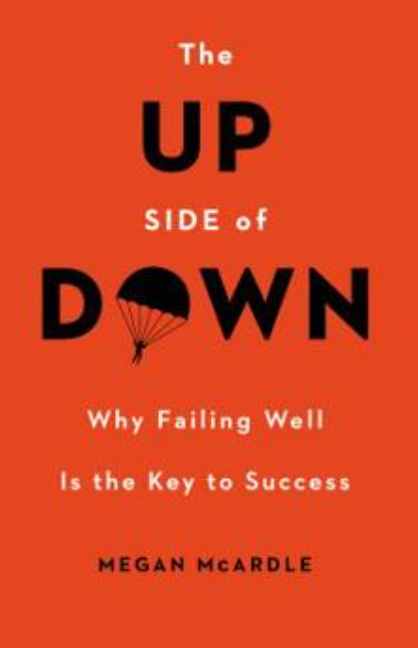
Not long ago I read a fantastic book titled The Up Side of Down: Why Failing Well Is the Key to Success.

In it, the author, Megan McArdle, discusses why we shouldn’t fear failure or think of it as our enemy. More specifically she describes the concept of “normalcy bias,” which explains why so many people freeze when confronted with a crisis or why once successful companies like General Motors find it so hard to get out of their own way and learn from past mistakes.

Failing, in her opinion, and I agree, is the only way to get better.

Leaving alone the current debate over youth athletics and the “no one gets cut from a team, and everyone gets a trophy” mentality (which is grossly absurd, and a discussion for another time), people often forget that failing is what often builds resiliency.

If everyone wins all the time, or never faces adversity, or always gets the girl…how does that help better prepare him or her to change their ways, adapt, or grow?

It’s doesn’t. It leads to stagnancy, narrow-mindedness, and an inability to not stop sucking.

And that’s unfortunate, because there’s a lot everyone can learn from failing, and learning to fail well. Better yet: there’s a lot everyone can learn from understanding that failing is normal. It’s going to happen. How you interpret and handle it is going to be what helps separate you from the masses.

Take the fitness industry for example.

I can go back and look at programs I’ve written 15 years ago and chuckle. Actually, cringe. They’re that bad.

I can remember a time when I was at Cressey Sports Performance and we used the Sleeper Stretch on every baseball player that walked into our facility. We’d test them for GIRD (Glenohumeral Internal Rotation Deficit), and if we saw they presented with it (generally: a lack of internal rotation range of motion), we’d have the athlete implement more Sleeper Stretches into their arm-care routines.

via GIPHY

Fast forward a year or two later and we soon came to realize that GIRD was, holy shit!, a normal adaptation of the throwing shoulder! It’s when there’s a lack of IR in conjunction with a lack of TOTAL ROM where more of a red flag exists.

All those Sleeper Stretches we’d been programming were probably making the issue(s) worse, not better.

We learned from our “failure,” and subsequently overhauled or approach to not only assessing the throwing shoulder, but how we went about programming for our overhead athletes in general.

And this speaks to writing training programs as a whole. I don’t think I’ve ever written a “perfect” program.

I’ll assess someone, ask all the relevant questions with regards to training history, injury history, favorite Mutant Ninja Turtle, and then write a program I feel will be the most efficient, effective, and safest way to get them from Point A (sucky) to Point B (less sucky).

Almost always I’ll have to re-arrange stuff, cross things out, or scratch certain drills or exercises from their program altogether. Sometimes stuff works, and sometimes it doesn’t.

Basically, I fail all the time.

But I use those failures to “correct my wrongs,” to learn, to get better, and to hopefully not make those mistakes again down the road.

So, what about you?  How “well” do you fail?

Categoriescoaching personal training Program Design

“How Much Weight Should I Be Using?”

As a fitness professional part of the job description is the ability to answer questions. Specifically those questions posed by your athletes and clients.

This makes sense given, outside of their primary care practitioner, you’re the person your clients are trusting with their health and well-being.

Granted, you’re not curing cancer or writing prescriptions for irritable bowel syndrome or anything12. But it stands to reason that as a personal trainer or strength coach you’re numero Uno when it comes to being most people’s resource for health & fitness information.

You’re it.

You’re the go to.

And like or not…You’re “the guy (or girl)” whenever someone says “I gotta a guy (or girl)” whenever they’re asked a fitness or health related question.

Stuff like:

“Does putting a stick of butter in my coffee make it healthier?”

“Will intermittent fasting help me lose 20 lbs of fat while also increasing my squat by 55 lbs AND give me x-ray vision?”

“Is it normal not to be able to feel the left side of my face after performing last night’s WOD? Also, it stings when I pee.”

I don’t know about you, but it’s a “challenge” I don’t take lightly.

I want to be a reliable and valuable source of information for my clients. They have (a lot of) questions, and I want to be able to answer them to the best of my ability.

I don’t know everything.13 I’m not a pompous a-hole who’s afraid to say “I don’t know.”

It’s rare when I get stumped with a question, but when I do I’m fortunate to have a long-list of people I can reach out to to get the answer(s).

I know when to stay in my lane and refer out when needed. You want to train for a figure competition? Not my strong suit. You need some manual therapy? Definitely not my strong suit. That irritable bowel problem mentioned above? Don’t worry, I gotta guy.

Most questions I receive are generally un-original in nature and something I can handle on the spot.

One question I get on an almost weekly basis, while inert and mundane (but altogether apropos), is this:

How much weight should I be using?”

It’s a very relevant question to ask. And one that, unfortunately, takes a little time to answer.

To be honest whenever I’m asked this question two things inevitably happen:

1) The theme music from Jaws reverberates in my head.14

2) The smart aleck in me wants nothing more than to respond with “all of it.”

That would be the dick move, though.

Like I said: it’s a very relevant question and one that many, many people have a hard time figuring out on their own.

As it happens I was asked this question last week by a client of mine during his training session. It wasn’t asked with regards to that particular session per se. Rather, he was curious about how much weight he should be using on the days he wasn’t working with me in person.

NOTE: the bulk of my clients train with me “x” days per week at the studio and also “x” number of days per week on their own at their regular gym. I write full programming that they follow whether they’re working with me in person or not. Because I’m awesome.

When working with people in person I have this handy protocol I like to call “coaching” where I’m able to give them instant feedback on a set-by-set basis.

I’ll tell them to increase/decrease/or maintain weight on any given exercise as I see fit.

Sometimes I even give them a sense of autonomy and allow them to choose how much weight to use.

The idea is to give them a maximal training effect using the minimum effective dose without causing harm or pain.

Challenge people, encourage progressive overload, but not to the point where they feel like they’re going to shit a kidney.

Pretty self-explanatory stuff.

Where things get tricky is when people are on their own and don’t have someone telling them what to do.

What then?

Here Are Some Options/Suggestions/Insights/WhatHaveYou

1) Write That Shit Down

In the case of my client above, when he asked “how much weight should I be using?” I responded with “how much weight did you use last week?”

[Crickets chirping]

He hadn’t been keeping track of anything.

He’d simply been putting a check-mark when he completed a set, and then moved on.

I, of course, was like “nooooooooooooo.”

I can’t blame him. It was on ME for not being clearer on the importance of writing things down and being more meticulous with tracking everything.

But the fix was/is easy: write down what you did, and try to do “more work” the following week.

I realize we like to overcomplicate things, but that’s part of the problem.

Write shit down. Really, it’s that simple.

2) What Is “Do More Work?”

What does that even mean? Do more work?

It means that in order for the body to adapt, you need to give it a stimulus and then nudge it, over time, to do more work. There are numerous ways to do this in the weight room, but for the sake of simplicity we can think of “more work” as more sets/reps or load.

Do the math. If you’re keeping track of things take your total sets and reps (and the weight you lifted) and figure out your total tonnage.

Try to increase that number week by week.

One strategy I like is something I call the 2-Rep Window.

If I prescribe 10 repetitions for a given exercise, what I really mean is 8-10 repetitions.

If someone picks a weight and they can easily perform more than 10 on every set, they’re going too light. If they can’t perform at least 8, they’re going too heavy.

The idea is to fall within the 2-Rep Window with each set and to STAY WITH THE SAME WEIGHT until the highest number within the range is hit for ALL sets.

**I’d rather someone cut a set short a rep or two rather than perform technically flawed reps or worse, miss reps.

If I have someone performing a bench press for 3 sets of 10 repetitions it may look something like this:

Week 1:

Set 1: 10 reps

Set 2: 8 reps

Set 3: 8 reps

Week 2:

Set 1: 10 reps

Set 2: 10 reps

Set 3: 9 reps

Once they’re able to hit ALL reps on ALL sets, they’re then given the green light to increase the weight and the process starts all over again.

Another simple approach is one I stole from strength coach Paul Carter.

Simply prescribe an exercise and say the objective is to perform 3×10 or 15 (30-45 total reps) with “x” amount of weight. The idea is to overshoot their ability-level and force them to go heavier, but within reason.

They stay with the same weight until they’re able to hit the upper rep scheme within the prescribed number of sets.

It’s boring, but it works.

Another layer to consider is something brought up by Cincinnati-based coach, PJ Striet:

“I’ve went over and above in my program notes to explain this subject. I used to just give 2 rep brackets, and, like you pointed out here, told clients to increase weight when they could achieve the high end of the range on all sets, and then drop back down to the lower end of the bracket and build back up again.

The problem though, as I soon figured out, was that people were doing say, 4 sets of 8 (bracket being 6-8) with a weight they could have probably gotten 15 reps with on their 4th set. This isn’t doing anything/isn’t enough of a stimulus. This isn’t meaningful progression. Feasibly, one could run a 12+ week cycle in the scenario above before the 4 sets of 8 actually became challenging. And this was on me because I should have realized most people will take the path of least resistance (literally).

Now, in my notes, I tell clients to do as many AMRAP on the final set of to gauge how much to progress. If the bracket is 4×6-8, and they get 8-8-8-9, weight selection is pretty good and a 2-5% increase and dropping back down to 6 reps is going to be a good play and productive. If they get 8-8-8-20, there is a problem and I should either stab myself in the eye for being a crap coach or schedule a lobotomy for the client.”

Brilliant.

3) Challenging Is Subjective

I feel much of the confusion, though, is people understanding what’s a challenging weight and what should count as a set.

Many people “waste” sets where they’re counting their warm-up/build-ups sets as actual sets, and thus stagnating their progress.

A few ideas on this matter:

  • I like to say something to the effect of “If your last rep on your last set feels the same as your first rep on your first set, you’re going too light.”
  • Using a Rate of Perceived Exertion (RPE) scale is useful here. Give them some criteria using a scale of 1-10. A “1” being “super easy” and “10” being “who do you think I am, Wolverine?” Ask them to be in the 7-8 RPE range for ALL sets.

And That’s It

There’s a ton of trial-and-error involved here, but it’s your job as the fitness professional and coach to educate your clients on the matter.

It’s important to consider context and everyone’s starting point, of course…comfort level, ability, past/current injury history, goals, etc.

However, beginners are typically going to have a much harder time differentiating “how much weight to use” compared to advanced lifters. There’s definitely a degree of responsibility on the trainer and coach to take the reigns on this matter.

But the sooner they realize it’s not rocket science, that there are some simple strategies that can be implemented to make things less cumbersome (and maybe even more importantly, that there’s a degree of personal accountability involved), the sooner things will start to click.